Renewable Energy Technologies Market Analysis & Forecast: 2026-2033

Renewable Energy Technologies Market Size and Forecast – 2026 – 2033
The Global Renewable Energy Technologies Market size is estimated to be valued at USD 950 billion in 2026 and is expected to reach USD 1,930 billion by 2033, exhibiting a compound annual growth rate (CAGR) of 11.2% from 2026 to 2033.
Global Renewable Energy Technologies Market Overview
The renewable energy technologies market is driven by rising global energy demand, increasing concerns over carbon emissions, and strong government support for clean energy adoption. Policies promoting net-zero targets, tax incentives, and investments in solar, wind, hydro, and bioenergy projects are accelerating market growth. Declining costs of renewable power generation technologies and advancements in energy storage systems are making renewable energy more affordable and efficient. Growing corporate sustainability initiatives and increasing electrification across industries are also boosting demand. In addition, energy security concerns, grid modernization efforts, and rapid urbanization are encouraging countries to expand renewable energy infrastructure and reduce dependence on fossil fuels.
Key Takeaways
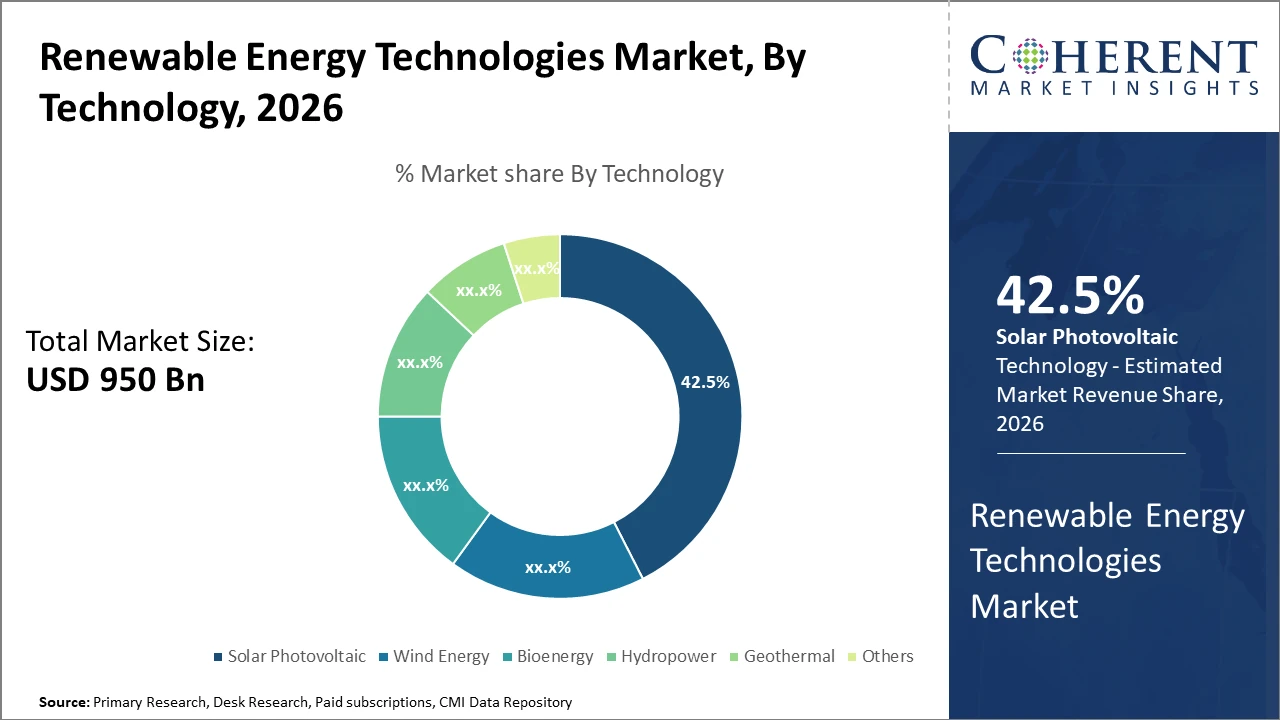
Solar photovoltaic technology dominates the renewable energy technologies market with more than 42.5% share, supported by continuous improvements in panel efficiency, declining installation costs, and widespread adoption across residential, commercial, and utility-scale applications.
Utility-scale renewable energy projects represent the leading application segment due to large-scale solar and wind deployments across Asia Pacific and North America, while generation equipment remains the dominant component category because of ongoing capacity expansion and infrastructure modernization.
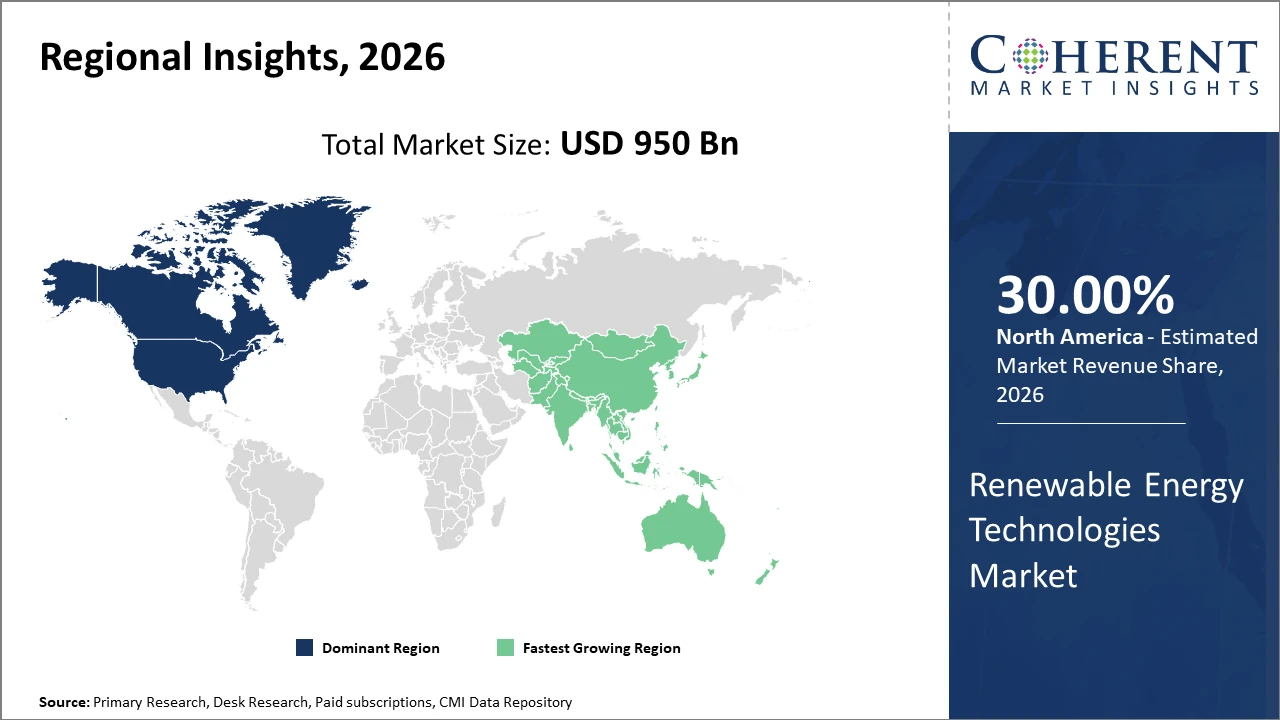
North America holds a major share of the global market through strong policy support and clean energy investments, whereas Asia Pacific is the fastest-growing region driven by rapid renewable energy installations in China and India along with expanding wind, solar, and battery storage projects.
Renewable Energy Technologies Market Segmentation Analysis
To learn more about this report, Request Free Sample
Renewable Energy Technologies Market Insights, By Technology
Solar photovoltaic technology dominates the renewable energy technologies market with approximately 42.5% share due to continuous improvements in panel efficiency, declining manufacturing costs, and widespread global deployment across residential, commercial, and utility-scale projects. Offshore wind energy is the fastest-growing segment, driven by advancements in larger turbine systems, floating platform technologies, and increasing investment in deep-water wind farms. Bioenergy continues to expand steadily through innovations in waste-to-energy and biomass conversion technologies, although it represents a comparatively smaller market share. Hydropower and geothermal energy provide reliable base-load renewable power but are constrained by geographic and environmental factors. Emerging technologies such as tidal and wave energy remain niche but show long-term development potential.
Renewable Energy Technologies Market Insights, By Application
Utility-scale applications dominate the renewable energy technologies market because of large infrastructure investments in solar farms, wind parks, hydroelectric facilities, and grid-scale energy storage systems that significantly contribute to electricity generation and grid decarbonization. Commercial applications are the fastest-growing segment, driven by corporate sustainability goals and increasing adoption of onsite renewable energy generation and battery storage systems. Residential applications continue expanding through growing rooftop solar installations supported by favorable financing options and government incentives. Industrial applications are also witnessing steady growth due to electrification initiatives and rising demand for clean energy in manufacturing operations. Community energy projects and localized renewable systems remain emerging segments with promising long-term growth potential.
Renewable Energy Technologies Market Insights, By Component
Generation equipment dominates the renewable energy technologies market because continuous expansion of renewable power capacity requires large-scale deployment of solar panels, wind turbines, hydroelectric systems, and associated generation infrastructure. Ongoing replacement and modernization of aging energy assets further support strong demand in this segment. Energy storage systems are the fastest-growing component category due to increasing adoption of advanced lithium-ion batteries, flow batteries, and hybrid storage technologies that improve renewable energy integration and grid stability. Grid infrastructure upgrades, including smart grids and microgrid systems, are also expanding to manage intermittent renewable power sources efficiently. Additional components such as monitoring, automation, and control systems help optimize operational performance and energy management.
Renewable Energy Technologies Market Trends
Renewable energy technologies are increasingly evolving toward integrated hybrid systems that combine solar, wind, and energy storage solutions to provide stable power generation and improve grid flexibility.
Digital transformation and artificial intelligence-driven predictive maintenance systems are enhancing operational efficiency, reducing equipment downtime, and lowering maintenance costs across renewable energy facilities.
Growing emphasis on sustainability and circular economy practices is accelerating battery recycling and second-life energy storage initiatives, particularly among manufacturers in Asia Pacific seeking to reduce material scarcity risks and improve environmental performance.
Renewable Energy Technologies Market Insights, By Geography
To learn more about this report, Request Free Sample
North America Renewable Energy Technologies Market Analysis and Trends
North America dominates the renewable energy technologies market due to supportive government policies, extensive tax incentive programs, and substantial investments in clean energy infrastructure. The region accounts for nearly 30% of the global market share, driven by rapid deployment of utility-scale solar farms, wind energy projects, and advanced battery storage systems. Major companies such as NextEra Energy and Tesla continue expanding renewable energy portfolios and grid-scale storage capabilities. Ongoing grid modernization initiatives, diversified energy strategies, and increasing corporate sustainability commitments further strengthen North America’s leadership in renewable energy technology adoption and infrastructure development.
Asia Pacific Renewable Energy Technologies Market Analysis and Trends
Asia Pacific is the fastest-growing region in the renewable energy technologies market, registering a CAGR exceeding 13% due to extensive investments in clean energy infrastructure and supportive government policies. China continues to lead regional growth through massive investments in solar, wind, hydroelectric, and battery storage projects, while India is accelerating renewable adoption through policy incentives supporting rooftop solar systems and large-scale wind developments. Strong collaboration among state utilities, original equipment manufacturers, and emerging clean technology providers is creating a dynamic renewable energy ecosystem. Rapid industrialization, rising electricity demand, and decarbonization goals are further strengthening market expansion across the Asia Pacific region.
Renewable Energy Technologies Market Outlook for Key Countries
USA Renewable Energy Technologies Market Analysis and Trends
The United States renewable energy technologies market is experiencing strong growth driven by supportive government initiatives, corporate sustainability commitments, and increasing investments in clean energy infrastructure. Policies such as the Inflation Reduction Act continue accelerating deployment of solar, wind, and energy storage projects across utility, commercial, and residential sectors. Companies including NextEra Energy and Tesla are expanding renewable energy and battery storage portfolios to meet rising electricity demand and decarbonization goals. Ongoing grid modernization programs and growing adoption of hybrid renewable systems further reinforce the country’s leadership position in global renewable energy market development and revenue generation.
Germany Renewable Energy Technologies Market Analysis and Trends
The Germany renewable energy technologies market is expanding rapidly due to strong government support for clean energy transition and carbon neutrality goals. The country is heavily investing in solar power, wind energy, battery storage, hydrogen infrastructure, and smart grid modernization to reduce dependence on fossil fuels. Germany’s Energiewende policy continues driving large-scale deployment of renewable technologies across residential, industrial, and utility sectors. Technological advancements in offshore wind turbines, photovoltaic systems, and energy storage solutions are strengthening market growth. In addition, increasing collaborations between energy companies, technology providers, and research institutions are accelerating innovation and supporting the integration of renewable energy into Germany’s national power infrastructure.
Analyst Opinion
Rapid expansion of solar photovoltaic installations, particularly in China and India, continues driving renewable energy market growth through higher generation capacity, improved panel efficiency, and declining installation costs.
Offshore wind energy is gaining strong momentum globally as advancements in turbine technology, floating platforms, and energy storage systems improve grid integration and expand renewable power generation capacity.
Innovations in bioenergy conversion technologies and supportive policy frameworks are increasing adoption of biomass and biofuel solutions, especially across Southeast Asia and Brazil, strengthening global renewable energy supply chains.
Favorable pricing strategies, tax incentives, and tariff reductions in emerging markets are lowering renewable project costs and accelerating solar and wind energy adoption across commercial and industrial sectors.
Market Scope
| Report Coverage | Details | ||
|---|---|---|---|
| Base Year: | 2025 | Market Size in 2026: | USD 950 billion |
| Historical Data for: | 2020 To 2024 | Forecast Period: | 2026 To 2033 |
| Forecast Period 2026 to 2033 CAGR: | 11.2% | 2033 Value Projection: | USD 1930 billion |
| Geographies covered: |
|
||
| Segments covered: |
|
||
| Companies covered: | Orsted, ABB Ltd., Vestas, Tesla Energy, Pattern Energy Group, Enphase Energy, First Solar Inc., SunPower Corporation, Iberdrola, Plug Power Inc. | ||
| Growth Drivers: |
|
||
Uncover macros and micros vetted on 75+ parameters: Get instant access to report
Renewable Energy Technologies Market Growth Factors
The renewable energy technologies market is experiencing strong growth due to supportive government policies, rising clean energy investments, and ambitious carbon reduction targets worldwide. Incentive programs and renewable energy mandates are accelerating deployment of utility-scale solar, wind, and energy storage projects across major economies. Technological advancements such as high-efficiency bifacial solar panels and advanced wind turbine systems are reducing electricity generation costs and improving operational performance. Increasing integration of battery storage systems and smart grid modernization initiatives is also strengthening renewable energy reliability and grid stability. In addition, growing corporate commitments toward net-zero emissions and sustainability reporting are increasing renewable energy adoption across industrial, commercial, and utility sectors globally.
Renewable Energy Technologies Market Development
In May 2026, HSBC launched a $4 billion credit facility in mainland China to help clean energy and low-carbon companies expand internationally, with a strong focus on Vietnam.
Key Players
Leading Companies of the Market
Orsted
ABB Ltd.
Vestas
Tesla Energy
Pattern Energy Group
Enphase Energy
First Solar Inc.
SunPower Corporation
Iberdrola
Plug Power Inc.
Several major companies in the renewable energy technologies market are adopting aggressive expansion and partnership strategies to strengthen their competitive positions globally. Siemens Gamesa expanded its offshore wind project pipeline through strategic technology collaborations and large-scale renewable infrastructure agreements in 2025. At the same time, First Solar increased revenue growth by deploying advanced thin-film photovoltaic modules across emerging renewable energy markets, improving cost efficiency and project scalability. Additionally, Vestas secured multiple long-term wind energy contracts in the United States, strengthening its regional market presence and expanding renewable energy deployment capacity across North America.
Renewable Energy Technologies Market Future Outlook
The renewable energy technologies market is expected to witness substantial growth in the coming years due to increasing global investments in clean energy infrastructure and rising commitments toward carbon neutrality. Expanding deployment of solar, wind, hydro, biomass, and hydrogen energy systems will continue driving market demand across residential, commercial, industrial, and utility sectors. Advancements in battery storage, smart grid technologies, and digital energy management solutions are improving efficiency, reliability, and integration of renewable power sources. Governments worldwide are introducing supportive policies, subsidies, and decarbonization programs to accelerate energy transition. In addition, growing electricity demand and concerns over energy security will further strengthen long-term adoption of renewable energy technologies globally.
Renewable Energy Technologies Market Historical Analysis
The renewable energy technologies market has evolved significantly over the past several decades as global demand for sustainable and low-carbon energy sources increased. Early development focused primarily on hydropower and biomass, followed by rapid advancements in solar photovoltaic and wind turbine technologies during the 1990s and 2000s. Declining equipment costs, supportive government policies, and international climate agreements accelerated large-scale adoption worldwide. Technological innovations in energy storage, smart grids, and digital monitoring systems further improved renewable energy efficiency and reliability. Growing concerns regarding fossil fuel dependency, energy security, and environmental sustainability encouraged substantial public and private investment, transforming renewable energy technologies into a major component of the global energy infrastructure.
Sources
Primary Research Interviews:
Renewable energy technology companies, solar panel manufacturers, wind turbine producers, battery storage suppliers, hydrogen infrastructure developers, utility providers, and procurement specialists responsible for sourcing renewable power generation systems and energy storage technologies.
Market analysts, R&D directors, clean energy researchers, and regulatory experts involved in renewable energy innovation, smart grid development, energy efficiency technologies, and decarbonization strategies.
Magazines:
Renewable Energy World – Insights into solar, wind, battery storage, and clean energy technology developments.
PV Tech – Coverage of photovoltaic innovations, solar manufacturing trends, and energy storage advancements.
Windpower Monthly – Updates on offshore and onshore wind energy technologies, projects, and market developments.
Journals:
Renewable Energy – Research on sustainable energy systems, renewable power generation, and energy storage technologies.
Applied Energy – Studies focused on energy efficiency, smart grids, and renewable energy integration.
Energy Policy – Research on clean energy regulations, renewable infrastructure investments, and global decarbonization strategies.
Newspapers:
Financial Times – Coverage of renewable energy investments, clean technology expansion, and global energy transition trends.
Reuters – Reporting on renewable energy project developments, government clean energy policies, and technology launches.
Bloomberg – Insights into mergers, acquisitions, renewable energy financing, and strategic developments among global energy companies.
Associations:
International Renewable Energy Agency – Research updates, policy frameworks, and renewable energy market developments.
Solar Energy Industries Association – Industry standards, solar market trends, and clean energy policy updates.
Global Wind Energy Council – Research, technology advancements, and market intelligence related to global wind energy development.
Share
Share
Yash Doshi is a Senior Management Consultant. He has 12+ years of experience in conducting research and handling consulting projects across verticals in APAC, EMEA, and the Americas.
He brings strong acumen in helping chemical companies navigate complex challenges and identify growth opportunities. He has deep expertise across the chemicals value chain, including commodity, specialty and fine chemicals, plastics and polymers, and petrochemicals. Yash is a sought-after speaker at industry conferences and contributes to various publications on topics related commodity, specialty and fine chemicals, plastics and polymers, and petrochemicals.

Credibility and Certifications

860519526


9001:2015

27001:2022


Need a Custom Report?
We can customize every report - free of charge - including purchasing stand-alone sections or country-level reports
Customize NowJoining thousands of companies around the world committed to making the Excellent Business Solutions.
View All Our Clients