Self-heating Food Packaging Market Analysis & Forecast: 2026-2033

Self-heating Food Packaging Market Size and Forecast – 2025 – 2032
The Global Self-heating Food Packaging Market size is estimated to be valued at USD 2.3 billion in 2025 and is expected to reach USD 4.8 billion by 2032, exhibiting a compound annual growth rate (CAGR) of 10.5% from 2025 to 2032.
Global Self-heating Food Packaging Market Overview
Self-heating food packaging products are containers designed to heat food automatically without external power sources. These packages use internal chemical heating systems, typically based on exothermic reactions, to generate heat when activated. The food is separated from the heating element to ensure safety and quality. Such packaging is commonly used for ready-to-eat meals, military rations, emergency food supplies, and outdoor consumption. The products emphasize portability, convenience, controlled heating, and user safety.
Key Takeaways
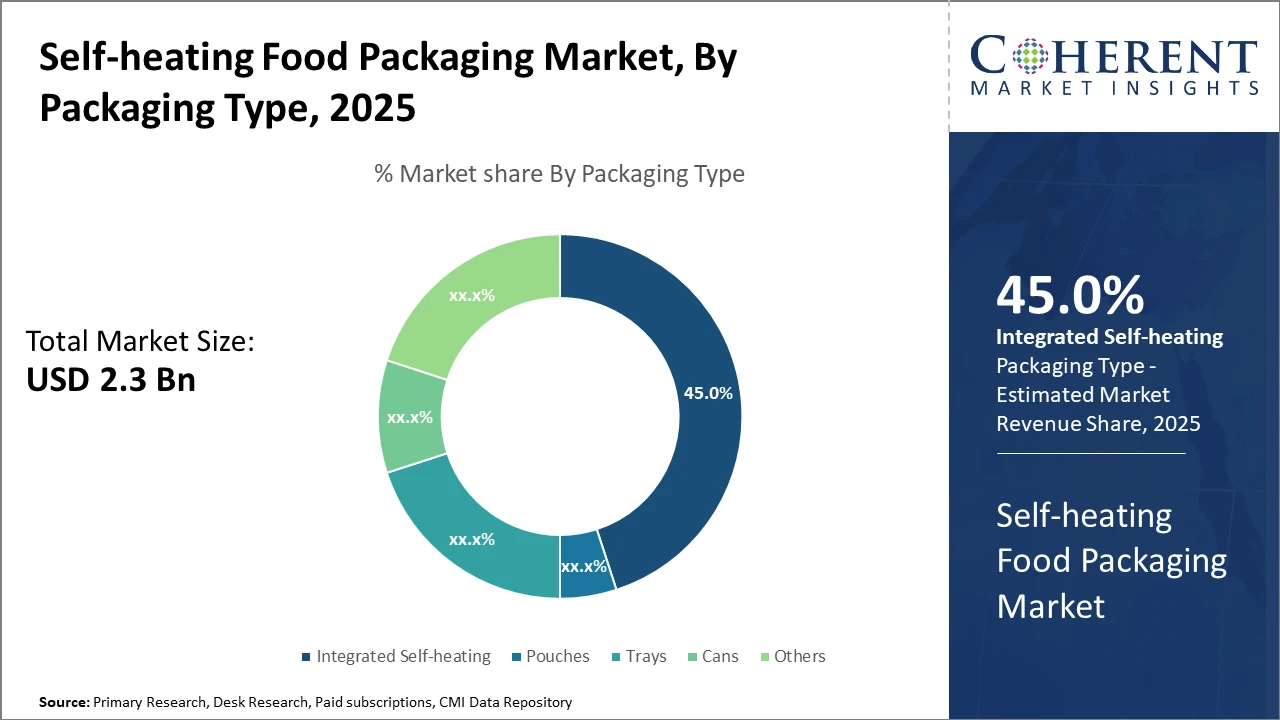
Integrated Self-heating Containers dominate the packaging type segment with a commanding 45% market share due to their ease of use and heating efficiency.
The Military and Defense end-user segment is the fastest growing, supported by increasing defense budgets and field ration modernization initiatives globally.
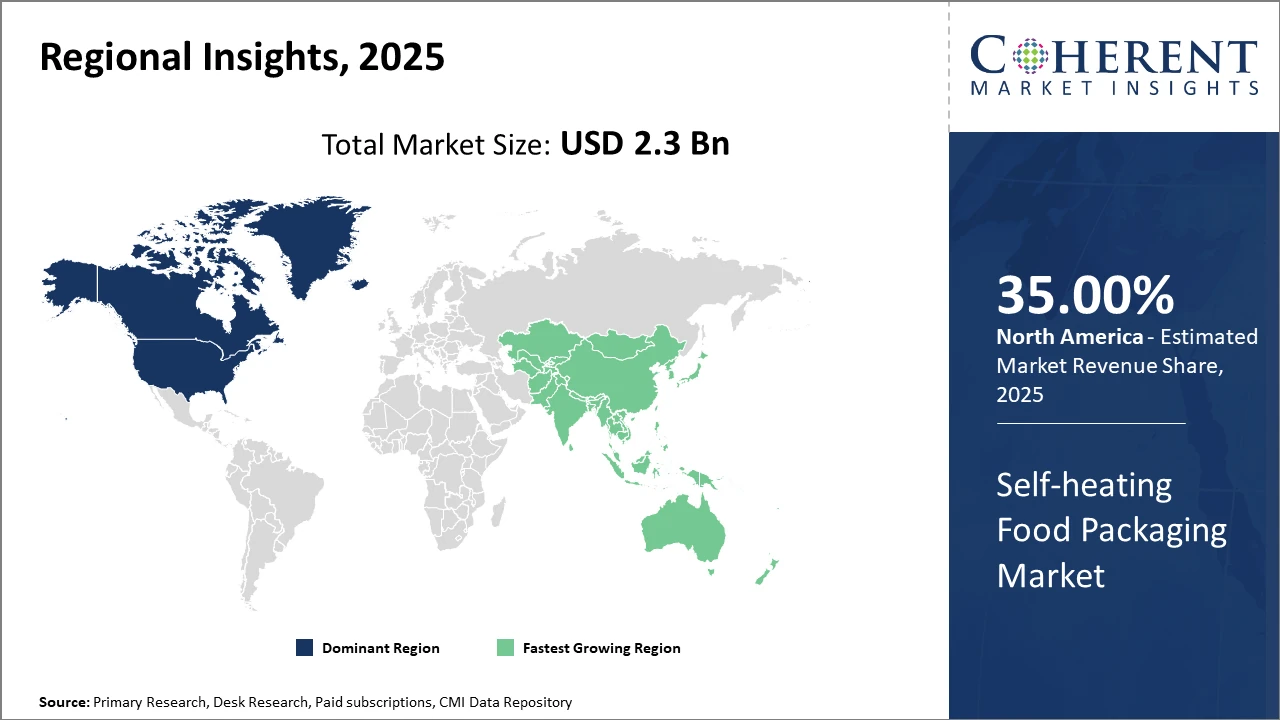
North America holds the largest industry share attributed to advanced supply chains, a dominant food delivery market, and government procurement programs.
Asia Pacific exhibits the most rapid growth rate, fueled by rising disposable incomes, urbanization, and expanding outdoor recreational activities across countries such as China and India.
Self-heating Food Packaging Market Segmentation Analysis
To learn more about this report, Request Free Sample
Self-heating Food Packaging Market Insights, By Packaging Type
Integrated Self-heating Containers dominate the market share. These containers gain preference due to their ease of use, robust heating performance, and compatibility across multiple end-use scenarios. Integrated containers feature built-in heat sources that activate instantly, allowing meals to reach ideal temperatures within 10 to 15 minutes. This segment's dominance is further supported by growth in the military and food delivery sectors, which prioritize reliability and convenience. The fastest-growing subsegment within this category is Pouches, driven by their lightweight design and flexibility, making them suitable for outdoor enthusiasts and emergency kits. Pouches provide easy storage and disposal, catering to sustainability trends. Trays and Cans, while less prevalent, continue to serve niche markets requiring rigid packaging and extended shelf life, respectively.
Self-heating Food Packaging Market Insights, By Heat Activation
Exothermic Chemical Reaction-based packaging dominates market share due to its simplicity, cost efficiency, and independence from external power sources. This method employs chemical substances such as quicklime mixed with water to generate heat, a reliable technology widely adopted in military rations and emergency food kits. Increased safety and environmental compliance efforts have led to innovations in non-toxic chemical formulations, expanding market acceptance. The fastest-growing segment is Electrical Heating, gaining momentum primarily in urban food delivery applications where rechargeable battery systems and induction heating surfaces are feasible. This method enables precise temperature control and potential integration with smart packaging, but faces higher production costs. T
Self-heating Food Packaging Market Insights, By End-User Industry
Military and Defense is the dominating segment due to the continuous demand for heat-resistant, portable meal solutions critical in field operations worldwide. This segment accounts for the largest revenue share supported by consistent government procurement and rations modernization programs. The Outdoor and Recreational segment is the fastest-growing, spurred by a global increase in hiking, camping, and adventure tourism activities. Consumers in this category demand lightweight, easy-to-activate packaging that ensures meal warmth in remote locations. Emergency and Relief applications also represent a significant portion, driven by escalating natural disasters and humanitarian efforts demanding reliable food warming solutions in challenging environments. Foodservice and Delivery is emerging rapidly, leveraging self-heating technology to improve urban meal delivery quality through temperature maintenance.
Self-heating Food Packaging Market Trends
The Self-heating Food Packaging market is increasingly influenced by the rising emphasis on sustainability and convenience.
One of the most notable trends is the surge in biodegradable packaging solutions, with companies incorporating plant-based materials to reduce environmental impact.
For instance, in 2024, a major manufacturer launched compostable self-heating containers that saw a 30% increase in adoption among eco-conscious consumers in Europe.
Another growth trend is the integration of IoT-enabled sensors in packaging, enabling real-time temperature monitoring, which was piloted in military ration packs in the U.S. in early 2025, reflecting a move toward smarter packaging.
Additionally, the increase in meal delivery services during and post-pandemic has led to a notable spike in demand for heat-activated packaging capable of maintaining food temperature for extended durations, particularly in urban centers.
Self-heating Food Packaging Market Insights, By Geography
To learn more about this report, Request Free Sample
North America Self-heating Food Packaging Market Analysis and Trends
In North America, the dominance in the Self-heating Food Packaging market is credited to the mature infrastructure for food delivery, strong military and defense funding, and early adoption of innovative packaging technologies. This region holds over 35% of the overall market share, supported by the established presence of key players and regulatory encouragement for sustainable practices. The U.S., in particular, benefits from robust R&D investments and large-scale government contracts for field-grade rations that contribute heavily to market revenue.
Asia Pacific Self-heating Food Packaging Market Analysis and Trends
Meanwhile, the Asia Pacific exhibits the fastest growth, with a CAGR surpassing 12% between 2025 and 2032. This acceleration is driven by significant urban population expansion, increased outdoor lifestyle activities, and rising disposable incomes in countries like China and India. Government initiatives promoting food security and emergency preparedness also bolster demand for thermal packaging in the region. Rapid industrialization in manufacturing hubs like China has lowered production costs, fueling widespread adoption.
Self-heating Food Packaging Market Outlook for Key Countries
USA Self-heating Food Packaging Market Analysis and Trends
The USA's market leads due to substantial investments in defense and emergency preparedness sectors, with military procurement increasing by 16% annually since 2023. The presence of prominent companies such as HeatMate Solutions and ThermoPack Technologies enhances the competitive landscape, driving innovation in sustainable chemical heating systems. Moreover, growing demand from food delivery platforms emphasizing meal freshness and temperature control has stimulated product diversification. Regulatory support focused on safety and environmental standards further aligns with evolving consumer preferences, positioning the USA as a central growth facilitator.
China Self-heating Food Packaging Market Analysis and Trends
China's Self-heating Food Packaging market is bolstered by rapid urbanization and expansion of the outdoor recreational market; government funding in disaster relief systems catalyzes demand for reliable thermal food solutions. Local manufacturers have enhanced production capabilities, offering cost-competitive products highly favored within the Asia Pacific. The country's food delivery sector, expanding at over 20% annually, frequently incorporates self-heating packaging to assure quality, driving the market substantially. Key domestic market players actively innovate in biodegradable materials to comply with tightening environmental guidelines, further strengthening market momentum.
Analyst Opinion
Production Capacity and Innovation Trends: Manufacturing capacity expansions in Asia Pacific and North America significantly influence market share, with several facilities adopting automation techniques that boost production output by over 15% year-on-year. In 2024, production upgrades in thermal material formulations increased packaging efficacy by 20%, offering longer heating durations and more reliable temperature control.
End-User Diversification Impact: The demand from military and emergency preparedness sectors surged by 18% in 2025, substantially impacting market revenue and growth trajectories. Adoption by food delivery service providers rose by 22% in 2024, propelled by the need to maintain temperature integrity during last-mile delivery operations.
Pricing and Cost Optimization Dynamics: Advances in cost-effective activator substances and biodegradable packaging materials in 2025 led to a 12% reduction in average unit costs. This enabled broader penetration in emerging markets, especially in Latin America and parts of Asia, stimulating market growth.
Import-Export Flow and Regional Demand: Export volumes from European manufacturers increased by 17% in early 2025, primarily targeting North American and Middle Eastern markets, which saw a compounded import growth of 14%. Such trade dynamics underscore the importance of regulatory compliance adaptation and localization strategies.
Market Scope
| Report Coverage | Details | ||
|---|---|---|---|
| Base Year: | 2025 | Market Size in 2025: | USD 2.3 billion |
| Historical Data for: | 2020 To 2024 | Forecast Period: | 2025 To 2032 |
| Forecast Period 2025 to 2032 CAGR: | 10.5% | 2032 Value Projection: | USD 4.8 billion |
| Geographies covered: |
|
||
| Segments covered: |
|
||
| Companies covered: | MealHeat Solutions, On-Track Heat Products, SolarHeat Packaging Ltd., HeatWave Systems Corp., SwiftWarm Packaging, SpeedHeat Technologies, ReadyHeat Industries, PackHeat Innovations, ThermoTray Makers, RapidWarm Solutions. | ||
| Growth Drivers: |
|
||
Uncover macros and micros vetted on 75+ parameters: Get instant access to report
Self-heating Food Packaging Market Growth Factors
Increasing consumer shift toward convenient, heat-activated packaging solutions amid busy lifestyles serves as a primary market driver, with demand from urban segments growing by nearly 20% in recent years. Military and emergency services require reliable, self-sufficient warming methods for field operations, contributing to a 15% annual increase in procurement by government agencies globally. Technological advancements in heating mechanisms and sustainable packaging materials have decreased production costs and elevated product performance, fostering market growth. Furthermore, the expansion of e-commerce food delivery platforms accelerated the inclusion of self-heating packaging in meal kits, stimulating wider adoption, particularly in North America and the Asia Pacific in 2024 and 2025.
Self-heating Food Packaging Market Development
In November 2024, VarieT° Technology launched its “Smart Heat Battery” for cans, introducing an eco-friendly, self-heating solution powered by solar-rechargeable fuel. The innovation allows beverages to be heated via app-based control or simple twist activation, delivering reliable performance even in extreme cold conditions and expanding use cases for outdoor, defense, and on-the-go consumption.
In November 2025, Japanese manufacturers introduced next-generation self-heating meal boxes, designed to warm food through a chemical pouch activated by pulling a string. The solution targets office workers, students, and commuters by offering convenient, electricity-free meal heating, reflecting growing demand for portable, ready-to-eat food innovations in urban lifestyles.
Key Players
Leading Companies of the Market
MealHeat Solutions
On-Track Heat Products
SolarHeat Packaging Ltd.
HeatWave Systems Corp.
SwiftWarm Packaging
SpeedHeat Technologies
ReadyHeat Industries
PackHeat Innovations
ThermoTray Makers
RapidWarm Solutions
Several leading companies have strategically invested in R&D to develop eco-friendly, non-toxic chemicals for exothermic reactions, significantly enhancing consumer safety and environmental compliance. For example, ThermoPack Technologies introduced biodegradable self-heating containers in 2024, boosting its product portfolio appeal and capturing a 7% increment in market share. Additionally, HeatMate Solutions' partnership with major foodservice operators helped elevate its market presence by streamlining packaging integration with logistics platforms, ensuring quicker customer response times in urban locales.
Self-heating Food Packaging Market Future Outlook
The self-heating food packaging market is expected to grow as convenience and on-the-go eating habits intensify, supported by populations with limited time for conventional food preparation. Technological improvements will likely center on more controlled heating profiles, reduced activation effort, and integration with sustainable and biodegradable packaging materials to meet environmental expectations. Expansion into institutional food service, disaster relief logistics, and emerging retail channels will broaden market reach. Consumer demand for premium ready-to-eat meals, combined with advances in thermal energy storage and reaction control, may lead to smarter, modular self-heating solutions. Partnerships between food producers and packaging innovators will further refine product offerings to balance performance, cost, and environmental impact.
Self-heating Food Packaging Market Historical Analysis
The self-heating food packaging market originated from military and emergency rations developed to provide on-demand heating without external heat sources. Early versions in the 20th century relied on rudimentary exothermic chemical reactions and were bulky with limited temperature control. As outdoor recreation and convenience food culture grew in the late 1990s and early 2000s, commercial self-heating meal solutions appeared for hikers, campers, and disaster preparedness kits. Advances in packaging engineering, including better insulation materials and safer, food-grade reactive heating elements, improved both reliability and consumer acceptance. As urban lifestyles became more hectic, demand expanded beyond niche applications to everyday convenience foods, fostering innovation in compact, user-activated heating systems. Regulatory and food safety frameworks evolved in parallel to ensure consumer safety and product performance.
Sources
Primary Research Interviews:
Food Packaging Engineers
Ready-to-Eat Meal Manufacturers
Defense Supply Officers
Packaging Material Suppliers
Product Designers
Databases:
UN Comtrade Packaging
OECD Food Industry Data
Magazines:
Packaging Worl
Food Packaging Forum
Flexible Packaging Magazine
Food Engineering
Packaging Europe
Journals:
Journal of Food Packaging
Packaging Technology and Science
Food Quality and Safety Journal
Journal of Food Engineering
Applied Packaging Research
Newspapers:
Financial Times (Food)
Reuters Consumer Goods
The Guardian (Food)
The Hindu BusinessLine
Bloomberg Industry
Associations:
Institute of Packaging Professionals
World Packaging Organisation
Flexible Packaging Association
Food Packaging Institute
Institute of Food Technologists
Share
Share
Kalpesh Gharte is a senior consultant with approximately 5 years of experience in the consulting industry. Kalpesh holds an MBA in Operations and Marketing Management, providing him with a strong foundation in market strategy and analysis. He has contributed to various consulting and syndicated reports, delivering valuable insights that support informed business decisions

Credibility and Certifications

860519526


9001:2015

27001:2022


Need a Custom Report?
We can customize every report - free of charge - including purchasing stand-alone sections or country-level reports
Customize NowJoining thousands of companies around the world committed to making the Excellent Business Solutions.
View All Our Clients