Semantic Knowledge Graphing Market Analysis & Forecast: 2026-2033
Semantic Knowledge Graphing Market Size and Forecast – 2026 – 2033
The Global Semantic Knowledge Graphing Market size is estimated to be valued at USD 4.94 billion in 2026 and is expected to reach USD 15.47 billion by 2033, exhibiting a compound annual growth rate (CAGR) of 17.7% from 2026 to 2033.
Global Semantic Knowledge Graphing Market Overview
Semantic knowledge graphing involves creating linked data structures that represent entities, relationships, and contextual information to enable intelligent data interpretation. These graphs allow machines to understand meaning, not just data, supporting advanced functions such as natural language processing, enterprise search, fraud detection, and recommendation systems. Knowledge graph platforms integrate data from diverse sources, enrich it with semantic annotations, and allow dynamic querying. With the growth of AI and big data, businesses are using semantic graphs to power decision-making, automate reasoning, and enhance data interoperability across systems.
Key Takeaways
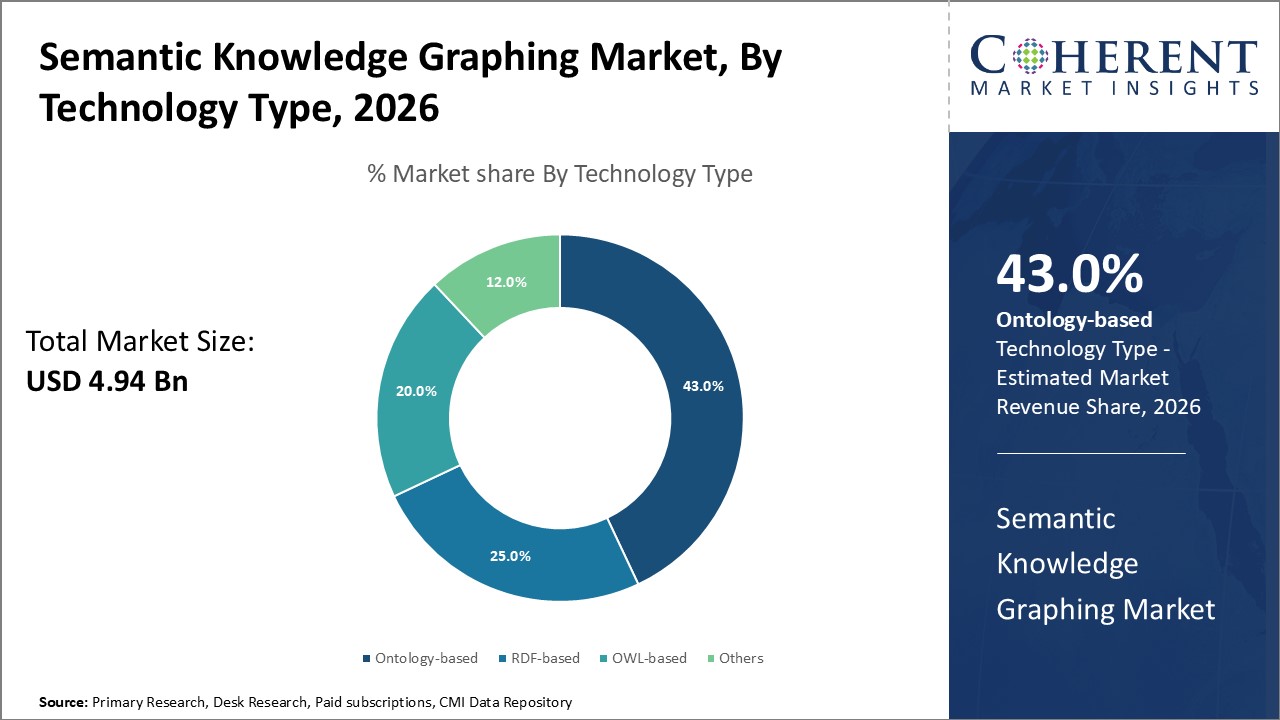
Ontology-based technology leads the Semantic Knowledge Graphing market with a 43% share, driven by its ability to represent complex domain-specific vocabularies.
Software components dominate with a 56% market share, reflecting the increasing emphasis on robust semantic tools and platforms.
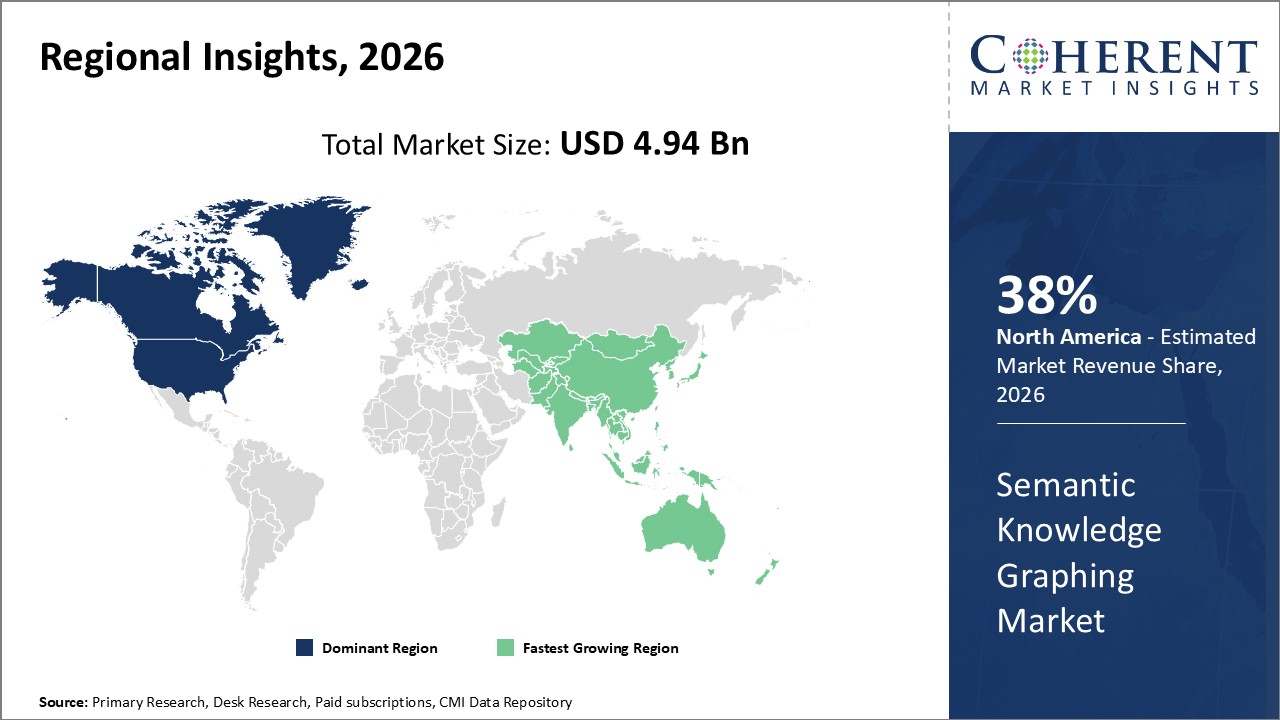
North America retains dominance in the market, accounting for approximately 38% of the industry share, fueled by strong technology adoption and government initiatives promoting big data analytics.
Asia Pacific emerges as the fastest-growing region, with a CAGR surpassing 19%, attributed to rising digital transformation efforts, increasing startup ecosystems focused on AI, and favorable regulatory frameworks in countries like China and India.
Semantic Knowledge Graphing Market Segmentation Analysis
To learn more about this report, Request Free Sample
Semantic Knowledge Graphing Market Insights, By Technology Type
Ontology-based dominates the market share with 43%. Ontology-based semantic knowledge graphs are renowned for their ability to formalize domain knowledge into hierarchical structures, enabling superior context representation, which is highly essential in complex sectors like healthcare. The fastest-growing subsegment within this category is RDF-based, supported by its flexibility and wide adoption in linked data applications. RDF-based graphs excel in interoperability and are favored for semantic web implementations. OWL-based technology, offering ontology description languages for more expressive domain modeling, holds a steady position alongside emerging proprietary graphing frameworks.
Semantic Knowledge Graphing Market Insights, By Component
Software is commanding a dominant 55% market share. Software solutions constitute core platforms enabling data modeling, querying, and visualization within semantic environments, anchored by enterprises seeking integrated semantic ecosystems. The fastest-growing subsegment under Services pertains to Consulting, which aids businesses in tailoring semantic knowledge graphing strategies and optimizing deployment workflows. Integration services exhibit significant usage alongside technical support offerings, catering primarily to large-scale, cross-industry semantic ecosystem implementations.
Semantic Knowledge Graphing Market Insights, By Application
Data Integration leads with approximately 40% market share. Data Integration’s dominance stems from its critical role in harmonizing heterogeneous data sources into unified semantic formats, significantly reducing data silos prevalent in enterprise environments. NLP is the fastest-growing application, propelled by advances in context-aware AI and conversational analytics. NLP leverages semantic graphs to derive accurate language understanding and enrich search relevancy. Knowledge Management, benefiting from centralized semantic frameworks, continues to offer value by enabling effective organizational knowledge retention and accessibility.
Semantic Knowledge Graphing Market Trends
The Semantic Knowledge Graphing market is increasingly moving towards hybrid and decentralized graph solutions to address diverse industry requirements and data governance standards.
For example, 2025 saw a 29% increase in hybrid semantic graph deployments, balancing the flexibility of cloud platforms and the security of on-premises systems.
Additionally, AI-driven semantic search capabilities continue to evolve, with companies reporting 20-31% gains in search relevancy and speed powered by knowledge graph technologies.
Furthermore, standardization efforts around graph query languages such as SPARQL and open vocabularies improve interoperability, facilitating cross-sector adoption and boosting market revenue potential.
Semantic Knowledge Graphing Market Insights, By Geography
To learn more about this report, Request Free Sample
North America Semantic Knowledge Graphing Market Analysis and Trends
In North America, the dominance in the Semantic Knowledge Graphing market is driven by mature technology ecosystems, large numbers of AI startups, and supportive governmental policies that encourage digital innovation. The U.S. leads with extensive investments in semantic technologies across sectors like defense, healthcare, and finance, resulting in roughly 38% market share.
Asia Pacific Semantic Knowledge Graphing Market Analysis and Trends
Meanwhile, the Asia Pacific exhibits the fastest growth, registering a CAGR exceeding 19%, propelled by rapid digital transformation, expanding cloud infrastructure, and increasing governmental adoption of AI-driven initiatives. China and India are at the forefront, integrating semantic knowledge graphs for industrial IoT and smart city projects, markedly boosting regional market dynamics.
Semantic Knowledge Graphing Market Outlook for Key Countries
USA Semantic Knowledge Graphing Market Analysis and Trends
The USA’s market benefits from vast R&D funding, significant corporate investments, and a highly innovative ecosystem. Entities like Neo4j and MarkLogic contribute extensively to the market’s growth by continuously evolving semantic graph applications, especially in sectors such as defense analytics and customer experience enhancement. U.S. federal initiatives support semantic technology integration, driving demand and business growth, making it a leading contributor to the global market revenue streams.
China Semantic Knowledge Graphing Market Analysis and Trends
China’s Semantic Knowledge Graphing market has witnessed exponential growth attributed to governmental smart city projects and accelerating AI ecosystem maturity. Major players have partnered with local cloud providers to enable large-scale semantic graph deployments catering to manufacturing optimization and digital twin initiatives. This has produced an innovative market scenario focusing on scalable, high-performance semantic datasets facilitating robust business growth.
Analyst Opinion
The supply-side dynamics reveal a significant boost in production capacities of semantic graphing platforms, driven by advancements in cloud infrastructure and scalable knowledge graph frameworks. For instance, 2025 witnessed a 26% increase in enterprise-level deployments, primarily facilitated by heightened investments in AI platforms integrating semantic graphing solutions. This directly impacts market revenue and overall industry size.
Demand-side indicators suggest robust adoption across verticals such as e-commerce and biopharma, where semantic knowledge graphs enhance product discovery and drug discovery workflows, respectively. Recent case studies from 2026 report a 41% increase in operational efficiency for leading biopharma firms leveraging semantic graphs for compound data integration, underlining the market’s growth potential.
Micro-indicators demonstrate the growing relevance of real-time data integration and graph augmentation capabilities. In 2025, developments in dynamic graph updating led to a 16% rise in preference for semantic knowledge graphing among data-driven financial institutions, supporting more accurate risk assessments and fraud detection models.
Nano-level insights include the impact of open-source graph databases and RDF standards adoption, which expanded accessibility and customization options. 2026 data highlights a 31% surge in smaller enterprises integrating these solutions, contributing to decentralized market growth and an increase in total market share.
Market Scope
| Report Coverage | Details | ||
|---|---|---|---|
| Base Year: | 2025 | Market Size in 2026: | USD 4.94 billion |
| Historical Data for: | 2020 To 2024 | Forecast Period: | 2026 To 2033 |
| Forecast Period 2026 to 2033 CAGR: | 17.7% | 2033 Value Projection: | USD 15.47 billion |
| Geographies covered: |
|
||
| Segments covered: |
|
||
| Companies covered: | Neo4j, Cambridge Semantics, Ontotext, PoolParty, Franz Inc., Stardog, MarkLogic, Grakn Labs, DataStax, Anzo, and Diffbot. | ||
| Growth Drivers: |
|
||
Uncover macros and micros vetted on 75+ parameters: Get instant access to report
Semantic Knowledge Graphing Market Growth Factors
The surge in unstructured data volumes necessitates advanced semantic tools capable of interpreting complex relationships. By the end of 2026, enterprises reported a 50% increase in data ingestion demands, incentivizing the adoption of graph databases. Accelerating AI and machine learning deployments creates a strong dependency on semantic frameworks that improve data contextuality. For example, in 202,4 AI-powered recommender systems integrating knowledge graphs reported a 30% enhanced relevance, boosting user engagement. Growing demand for enhanced data interoperability in heterogeneous IT environments encourages semantic graphing solutions that enable seamless integration. Cross-industry collaborations, such as those in healthcare and finance, have leveraged semantic technologies to break data silos.
Semantic Knowledge Graphing Market Development
In April 2025, Altair acquired Cambridge Semantics, a leading provider of graph-powered data fabric technology, to strengthen its analytics and AI portfolio for generative AI (GenAI) and advanced decision intelligence. The acquisition enabled Altair to integrate semantic graph capabilities into its data analytics platforms, improving data connectivity, contextual understanding, and scalability for complex enterprise AI use cases.
In March 2025, Neo4j and Microsoft announced a strategic collaboration to enhance enterprise AI and data solutions through graph database technology. The partnership focused on integrating Neo4j’s graph capabilities with Microsoft’s cloud and AI ecosystem, enabling organizations to build more intelligent, context-aware applications that improve reasoning, recommendation systems, and GenAI-driven insights.
Key Players
Leading Companies of the Market
Neo4j
Cambridge Semantics
Ontotext
PoolParty
Franz Inc.
Stardog
MarkLogic
Grakn Labs
DataStax
Anzo
Diffbot
Competitive strategies widely adopted comprise aggressive acquisitions to integrate complementary AI capabilities; for example, a prominent player’s acquisition of a start-up specializing in graph-based AI search in 2025 improved their product portfolio and expanded global market reach, resulting in a 21% uplift in enterprise clients. Strategic partnerships for joint innovation, such as cloud service integrations and co-development with major hyperscalers, have enhanced solution scalability and lowered deployment costs, accelerating business growth and boosting estimated market share by 16%.
Semantic Knowledge Graphing Market Future Outlook
In the future, semantic knowledge graphing will become foundational for AI-driven enterprises. Knowledge graphs will serve as core infrastructure for generative AI, autonomous reasoning engines, and enterprise decision systems. Real-time, self-updating graphs integrated with machine learning will enhance predictive analytics and automated workflows. Industries like healthcare, finance, cybersecurity, and supply chain will adopt graph-based intelligence for risk detection, compliance monitoring, and relationship mapping. Graph visualization tools, low-code ontology builders, and cloud-native graph platforms will democratize adoption for non-technical users. As organizations aim for explainable AI and transparent data lineage, semantic knowledge graphs will become indispensable.
Semantic Knowledge Graphing Market Historical Analysis
Semantic knowledge graphing emerged as a crucial tool for data-intensive industries as organizations moved from relational databases to interconnected, context-aware data structures. Historically, knowledge graphs were primarily used in academic research and early AI systems, but adoption expanded as enterprises embraced big data analytics, natural language processing, and digital transformation. Over the past decade, major tech companies began leveraging knowledge graphs to power search engines, chatbots, fraud detection systems, and recommendation engines. Increasing data complexity, the need for interoperability, and advancements in ontology engineering fueled rapid growth. Enterprises sought semantic richness to connect disparate data sources and enable more intelligent decision-making.
Sources
Primary Research Interviews:
Data Scientists
AI Engineers
Enterprise Architects
Semantic Web Experts
Knowledge Management Consultants
Databases:
Gartner AI Reports
OECD Digital Economy Data
World Bank ICT Indicators
UN Data Innovation Lab
Magazines:
MIT Technology Review
AI Magazine
Data Science Weekly
InfoWorld
CIO Magazine
Journals:
Journal of Web Semantics
Artificial Intelligence Journal
IEEE Knowledge & Data Engineering
Semantic Web Journal
Data & Knowledge Engineering
Newspapers:
The Wall Street Journal (Tech)
Financial Times (AI)
Reuters Technology
The Guardian (Tech)
The New York Times (Technology)
Associations:
W3C (World Wide Web Consortium)
Association for the Advancement of Artificial Intelligence
IEEE Big Data Initiative
ACM Knowledge Discovery Group
Open Data Institute
Share
Share
Monica Shevgan has 9+ years of experience in market research and business consulting driving client-centric product delivery of the Information and Communication Technology (ICT) team, enhancing client experiences, and shaping business strategy for optimal outcomes. Passionate about client success.

Credibility and Certifications
860519526


9001:2015
27001:2022


Need a Custom Report?
We can customize every report - free of charge - including purchasing stand-alone sections or country-level reports
Customize NowJoining thousands of companies around the world committed to making the Excellent Business Solutions.
View All Our Clients