Transcatheter Embolization And Occlusion Devices Market Analysis & Forecast: 2026-2033

Transcatheter Embolization And Occlusion Devices Market Size and Forecast – 2026 – 2033
The Global Transcatheter Embolization and Occlusion Devices Market size is estimated to be valued at USD 4.8 billion in 2026 and is expected to reach USD 8.3 billion by 2033, exhibiting a compound annual growth rate (CAGR) of 8.2% from 2026 to 2033.
Global Transcatheter Embolization And Occlusion Devices Market Overview
The Transcatheter Embolization and Occlusion Devices market is driven by the rising prevalence of cardiovascular diseases, cancer, vascular disorders, and gastrointestinal bleeding, which increase the demand for minimally invasive treatment procedures. Growing preference for catheter-based interventions due to shorter hospital stays, reduced recovery time, and lower procedural risks is further supporting market growth. Technological advancements in embolization coils, vascular plugs, liquid embolics, and image-guided procedures are improving treatment precision and clinical outcomes. In addition, increasing healthcare expenditure, expanding interventional radiology infrastructure, and rising adoption of advanced surgical techniques in emerging economies are accelerating market expansion. Favorable reimbursement policies and a growing elderly population also contribute significantly to demand.
Key Takeaways
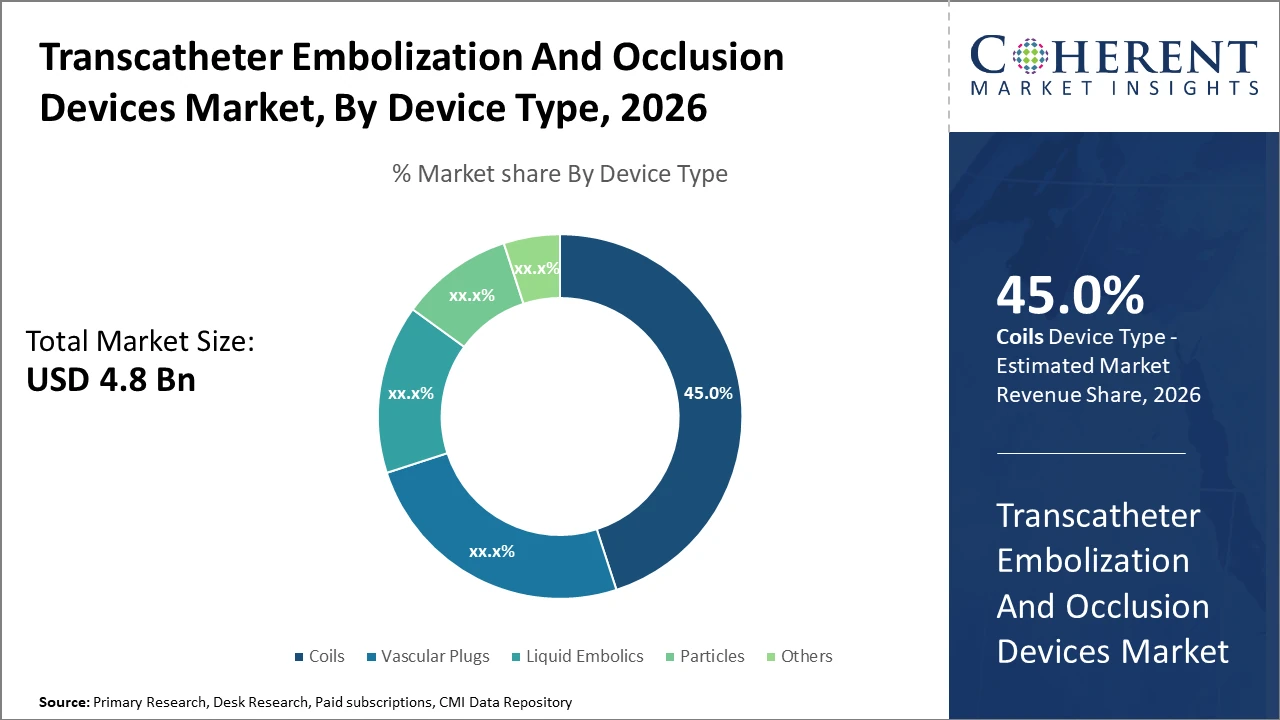
The coils segment dominates the Transcatheter Embolization and Occlusion Devices market, accounting for nearly 45% of market share in 2026 due to its clinical versatility, procedural reliability, and widespread adoption in embolization therapies.
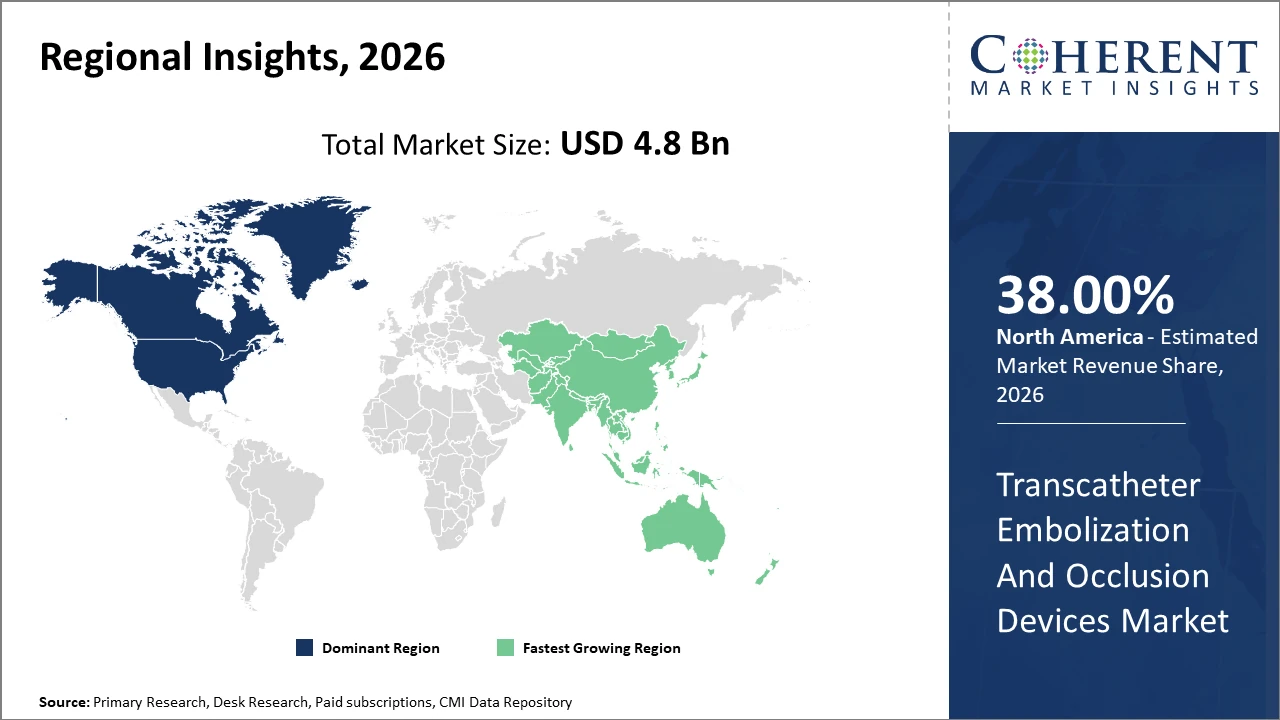
North America holds the largest regional market share, contributing more than 38% of industry revenue owing to advanced healthcare infrastructure, high adoption of innovative catheter-based technologies, and strong presence of major medical device manufacturers.
Asia Pacific is projected to witness the fastest growth, registering a CAGR above 9% due to rising healthcare investments, expanding hospital infrastructure, and growing incidence of cardiovascular and oncological disorders. Europe also remains a major market contributor, supported by stringent regulatory standards, advanced interventional radiology practices, and strong participation from leading medical technology companies.
Transcatheter Embolization And Occlusion Devices Market Segmentation Analysis
To learn more about this report, Request Free Sample
Transcatheter Embolization And Occlusion Devices Market Insights, By Device Type
Coils dominate the Transcatheter Embolization and Occlusion Devices market with approximately 45% share due to their proven effectiveness in treating neurovascular aneurysms and peripheral vascular disorders. Their precision, flexibility, and adaptability in complex embolization procedures continue to support widespread clinical adoption. Ongoing advancements in detachable coil technologies and delivery systems further strengthen their market position. Vascular plugs represent the fastest-growing subsegment, driven by increasing peripheral vascular interventions and demand for simplified large-vessel occlusion techniques. Liquid embolic agents are extensively used in tumor embolization and arteriovenous malformation treatments, while particle embolics support specialized oncology procedures such as chemoembolization. Emerging products, including microspheres and resorbable implants, are expanding therapeutic applications globally.
Transcatheter Embolization And Occlusion Devices Market Insights, By Application
Neurovascular applications dominate the Transcatheter Embolization and Occlusion Devices market with nearly 35% share, primarily driven by the increasing prevalence of cerebral aneurysms and strong clinical adoption of embolization therapies. Continuous advancements in coil technologies and image-guided intervention systems further reinforce this segment’s leadership. Peripheral vascular applications are emerging as the fastest-growing segment due to rising cases of peripheral arterial disease and traumatic bleeding requiring minimally invasive embolization procedures. Oncology applications are also expanding rapidly, particularly through growing use of transarterial chemoembolization (TACE) for liver cancer treatment. Cardiovascular applications support congenital defect closure and vascular malformation management, while other applications include gastrointestinal bleeding and uterine fibroid embolization procedures.
Transcatheter Embolization And Occlusion Devices Market Insights, By End User
Hospitals dominate the Transcatheter Embolization and Occlusion Devices market with approximately 58% share due to their advanced interventional radiology infrastructure, multidisciplinary clinical expertise, and capability to manage complex neurovascular and oncology procedures. These healthcare facilities remain primary centers for high-risk embolization interventions requiring sophisticated imaging technologies and specialized care teams. Ambulatory Surgical Centers (ASCs) represent the fastest-growing end-user segment, driven by increasing preference for outpatient minimally invasive procedures and cost-effective treatment options for peripheral vascular and select neurovascular conditions. Specialized clinics continue to support niche embolization therapies such as vein occlusion and fertility-related procedures, while other healthcare facilities contribute through expanding decentralized care delivery and outpatient interventional services.
Transcatheter Embolization And Occlusion Devices Market Market Trends
The Transcatheter Embolization and Occlusion Devices market is increasingly adopting advanced polymer-coated coils and bioresorbable vascular plugs designed to improve occlusion efficiency, reduce complications, and lower re-intervention rates in neurovascular and peripheral procedures.
Integration of digital imaging technologies and AI-based catheter navigation systems is enhancing procedural precision, optimizing embolization workflows, and reducing overall procedure times across interventional radiology settings.
Oncology applications, particularly transarterial chemoembolization (TACE) for liver cancer treatment, are experiencing rapid growth due to increasing demand for minimally invasive targeted therapies and advancements in embolic delivery systems.
Expanding use of minimally invasive embolization procedures in outpatient and ambulatory care settings is driving broader clinical adoption, supported by shorter recovery times, reduced hospitalization costs, and improved patient outcomes.
Transcatheter Embolization And Occlusion Devices Market Insights, By Geography
To learn more about this report, Request Free Sample
North America Transcatheter Embolization And Occlusion Devices Market Analysis and Trends
North America dominates the Transcatheter Embolization and Occlusion Devices market due to high healthcare spending, advanced medical infrastructure, and rapid adoption of innovative minimally invasive technologies. The United States accounts for more than 85% of the regional market share, supported by sophisticated hospital systems, favorable reimbursement frameworks, and increasing preference for catheter-based interventions. Strong clinical research activities and widespread availability of interventional radiology services further strengthen market growth. Major companies such as Medtronic and Boston Scientific continue investing heavily in research, product innovation, and clinical trials, reinforcing North America’s leadership position in advanced embolization and occlusion therapies.
Asia Pacific Transcatheter Embolization And Occlusion Devices Market Analysis and Trends
Asia Pacific is projected to witness the fastest growth in the Transcatheter Embolization and Occlusion Devices market, registering a CAGR exceeding 9% during the forecast period. Growth is fueled by the rising prevalence of cardiovascular disorders, neurovascular diseases, and oncological conditions across rapidly developing economies such as China and India. Expanding healthcare infrastructure, increasing investments in interventional radiology facilities, and supportive government healthcare initiatives are accelerating adoption of minimally invasive procedures. In addition, growing regional manufacturing capabilities and strategic expansion by global medical device companies are improving product accessibility and affordability. Rising patient awareness regarding minimally invasive therapies and improved healthcare access continue to strengthen long-term regional market growth.
Transcatheter Embolization And Occlusion Devices Market Outlook for Key Countries
USA Transcatheter Embolization And Occlusion Devices Market Analysis and Trends
The United States leads the Transcatheter Embolization and Occlusion Devices market through substantial investments in healthcare innovation and a highly advanced interventional cardiology and radiology ecosystem. Neurovascular procedures represent a major share of device utilization, supported by favorable reimbursement policies and strong adoption across hospitals and specialized care centers. Leading companies such as Medtronic, Boston Scientific, and Penumbra continue introducing advanced device iterations focused on procedural efficiency, precision, and patient safety. In addition, streamlined regulatory approval pathways and extensive clinical research activities enable rapid commercialization of innovative embolization technologies, reinforcing the country’s global leadership position.
Germany Transcatheter Embolization And Occlusion Devices Market Analysis and Trends
Germany represents a significant market for Transcatheter Embolization and Occlusion Devices in Europe due to its advanced healthcare infrastructure, strong interventional radiology expertise, and growing adoption of minimally invasive procedures. Increasing prevalence of cardiovascular diseases, neurovascular disorders, and cancer is driving demand for embolization therapies across hospitals and specialized care centers. The country is witnessing rising utilization of advanced coils, vascular plugs, and liquid embolic agents supported by continuous technological innovation and favorable reimbursement frameworks. Government investments in healthcare modernization and expanding access to image-guided interventions further support market growth. Additionally, strong participation from leading medical device manufacturers and research institutions continues to shape technological advancements and clinical adoption trends.
Analyst Opinion
Rising adoption of transcatheter procedures for treating brain aneurysms and arteriovenous malformations (AVMs) is significantly driving market growth, with neurovascular interventions representing a major share of overall device utilization due to improving clinical outcomes and expanding procedural access.
Cost-effective polymer-based occlusion devices are gaining stronger market acceptance because they provide competitive pricing advantages while maintaining comparable clinical performance to traditional metallic embolization coils.
Oncology applications are expanding rapidly, particularly in transarterial chemoembolization procedures for hepatocellular carcinoma treatment, creating diversified revenue opportunities and broadening clinical use cases for embolization devices.
Supply chain challenges involving precision-engineered catheter components have encouraged manufacturers to develop modular and more resilient device designs, improving production flexibility and supporting long-term market sustainability.
Market Scope
| Report Coverage | Details | ||
|---|---|---|---|
| Base Year: | 2025 | Market Size in 2026: | USD 4.8 billion |
| Historical Data for: | 2020 To 2024 | Forecast Period: | 2026 To 2033 |
| Forecast Period 2026 to 2033 CAGR: | 8.2% | 2033 Value Projection: | USD 8.3 billion |
| Geographies covered: |
|
||
| Segments covered: |
|
||
| Companies covered: | Medtronic PLC, Terumo Corporation, Boston Scientific Corporation, Balt Extrusion, Cook Medical LLC, Teleflex Incorporated, Siemens Healthineers, Stryker Corporation | ||
| Growth Drivers: |
|
||
Uncover macros and micros vetted on 75+ parameters: Get instant access to report
Transcatheter Embolization And Occlusion Devices Market Growth Factors
The Transcatheter Embolization and Occlusion Devices market is experiencing strong growth due to the rising prevalence of vascular disorders such as aneurysms, arteriovenous malformations (AVMs), and peripheral arterial diseases worldwide. Increasing adoption of minimally invasive procedures is accelerating demand for advanced embolization technologies that improve procedural precision and patient recovery outcomes. Technological advancements in biodegradable, polymer-based, and bioresorbable embolic devices are enhancing clinical effectiveness while reducing complications. In addition, broader regulatory approvals for applications including post-surgical bleeding management and targeted cancer embolization are expanding market opportunities. Rising healthcare expenditures, modernization of hospital infrastructure, and increasing procurement of interventional devices across emerging economies further continue to support sustained market expansion globally.
Transcatheter Embolization And Occlusion Devices Market Development
In January 2026, Instylla, Inc. announced the first commercial use of its Embrace Hydrogel Embolic System, a resorbable embolic device for peripheral vascular embolization, performed by Dr. Ripal Gandhi.
Key Players
Leading Companies of the Market
Medtronic PLC
Terumo Corporation
Boston Scientific Corporation
Cook Medical LLC
Stryker Corporation
Balt Extrusion
Teleflex Incorporated
Siemens Healthineers
Companies operating in the Transcatheter Embolization and Occlusion Devices market are increasingly focusing on product portfolio expansion, acquisitions, and strategic regional collaborations to strengthen competitive positioning. Medtronic introduced next-generation detachable coils in 2025 featuring improved procedural visibility and precision, supporting growth in neurovascular intervention revenues. Similarly, Boston Scientific strengthened its oncology embolization portfolio through acquisition of a liquid embolics technology company, helping expand hospital partnerships across Europe. In addition, Terumo enhanced market penetration throughout Asia Pacific by collaborating with regional distributors, improving product accessibility and driving stronger sales growth in emerging healthcare markets.
Transcatheter Embolization And Occlusion Devices Market Future Outlook
The future outlook for the Transcatheter Embolization and Occlusion Devices market remains highly promising, driven by growing demand for minimally invasive vascular interventions and continuous technological advancements in embolization therapies. Increasing prevalence of neurovascular disorders, peripheral artery disease, and cancer-related vascular conditions will continue to accelerate device adoption globally. Innovations in bioresorbable embolic materials, AI-assisted navigation systems, and image-guided catheter technologies are expected to improve procedural precision and patient outcomes. Expanding applications in oncology, trauma care, and hemorrhage management will further broaden market opportunities. Rising healthcare investments, improved reimbursement frameworks, and growing adoption of outpatient interventional procedures are anticipated to support sustained long-term market growth worldwide.
Transcatheter Embolization And Occlusion Devices Market Historical Analysis
The Transcatheter Embolization and Occlusion Devices market has evolved significantly with the growing shift from open surgical procedures toward minimally invasive vascular interventions. Initially driven by the adoption of metallic embolization coils for aneurysm treatment, the market expanded rapidly with advancements in catheter technologies, imaging systems, and embolic materials. Rising prevalence of neurovascular disorders, peripheral artery disease, and cancer-related vascular complications accelerated clinical adoption globally. Over time, the introduction of liquid embolics, vascular plugs, and bioresorbable devices improved procedural precision and patient outcomes. Expanding interventional radiology infrastructure, favorable reimbursement policies, and continuous technological innovation have consistently supported long-term market growth across developed and emerging healthcare markets.
Sources
Primary Research Interviews:
Medical device manufacturers, interventional radiologists, neurovascular specialists, cardiologists, hospital procurement managers, catheter technology providers, and distributors involved in embolization and occlusion device supply chains.
Biomedical engineers, clinical researchers, regulatory experts, and R&D directors specializing in minimally invasive vascular interventions, embolic materials, catheter navigation systems, and interventional oncology technologies.
Magazines:
Medical Device and Diagnostic Industry – Insights into interventional devices, embolization technologies, and minimally invasive procedure advancements.
NeuroNews International – Coverage of neurovascular intervention technologies, aneurysm treatment trends, and embolization device innovations.
Endovascular Today – Updates on vascular intervention procedures, catheter technologies, and occlusion device developments.
Journals:
Journal of NeuroInterventional Surgery – Research on neurovascular embolization procedures, aneurysm therapies, and interventional radiology innovations.
Cardiovascular and Interventional Radiology – Studies focused on embolization devices, vascular occlusion technologies, and minimally invasive interventions.
Journal of Vascular and Interventional Radiology – Research related to catheter-based therapies, oncology embolization, and vascular disease management.
Newspapers:
Financial Times – Coverage of healthcare technology investments, medical device industry expansion, and interventional healthcare trends.
Reuters – Reporting on medical device approvals, embolization technology advancements, and healthcare policy developments.
Bloomberg – Insights into mergers, acquisitions, and strategic initiatives among global interventional device manufacturers.
Associations:
Society of Interventional Radiology – Research updates, clinical guidelines, and advancements in embolization and minimally invasive vascular procedures.
Cardiovascular and Interventional Radiological Society of Europe – Industry standards, educational resources, and interventional radiology developments.
American College of Cardiology – Insights into cardiovascular intervention trends, vascular disease management, and catheter-based treatment innovations.
Share
Share
Komal Dighe is a Management Consultant with over 8 years of experience in market research and consulting. She excels in managing and delivering high-quality insights and solutions in Health-tech Consulting reports. Her expertise encompasses conducting both primary and secondary research, effectively addressing client requirements, and excelling in market estimation and forecast. Her comprehensive approach ensures that clients receive thorough and accurate analyses, enabling them to make informed decisions and capitalize on market opportunities.

Credibility and Certifications

860519526


9001:2015
27001:2022


Need a Custom Report?
We can customize every report - free of charge - including purchasing stand-alone sections or country-level reports
Customize NowJoining thousands of companies around the world committed to making the Excellent Business Solutions.
View All Our Clients