Voice Prosthesis Device Market Analysis & Forecast: 2026-2033

Voice Prosthesis Device Market Size and Forecast – 2026 – 2033
The Global Voice Prosthesis Device Market size is estimated to be valued at USD 225.5 million in 2026 and is expected to reach USD 371.7 million by 2033, exhibiting a compound annual growth rate (CAGR) of 7.4% from 2026 to 2033.
Global Voice Prosthesis Device Market Overview
Voice prosthesis devices are medical implants used to restore speech in patients who have undergone total laryngectomy, most commonly due to laryngeal cancer. These one-way valve devices are placed between the trachea and esophagus, allowing airflow into the esophagus for voice production while preventing aspiration. Products are available as indwelling or non-indwelling prostheses, made from medical-grade silicone with varying valve lifespans and airflow resistance. Key attributes include speech clarity, ease of maintenance, durability, and patient comfort.
Key Takeaways
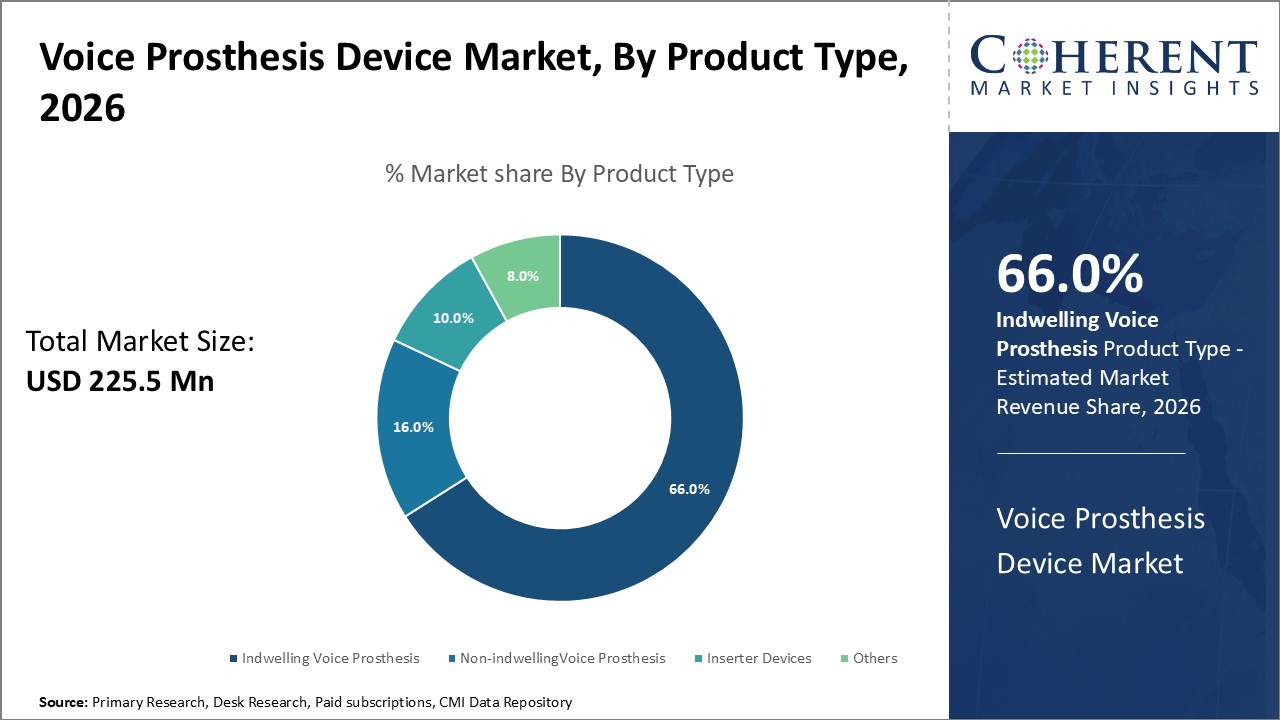
The Indwelling Voice Prosthesis segment continues to dominate the market, accounting for 66% of the market share, driven by its ease of use and longer lifespan compared to other types.
Post-laryngectomy voice rehabilitation remains the largest application sector, underscoring the critical role of voice prosthesis devices in restoring patients’ communicative abilities post-cancer treatment.
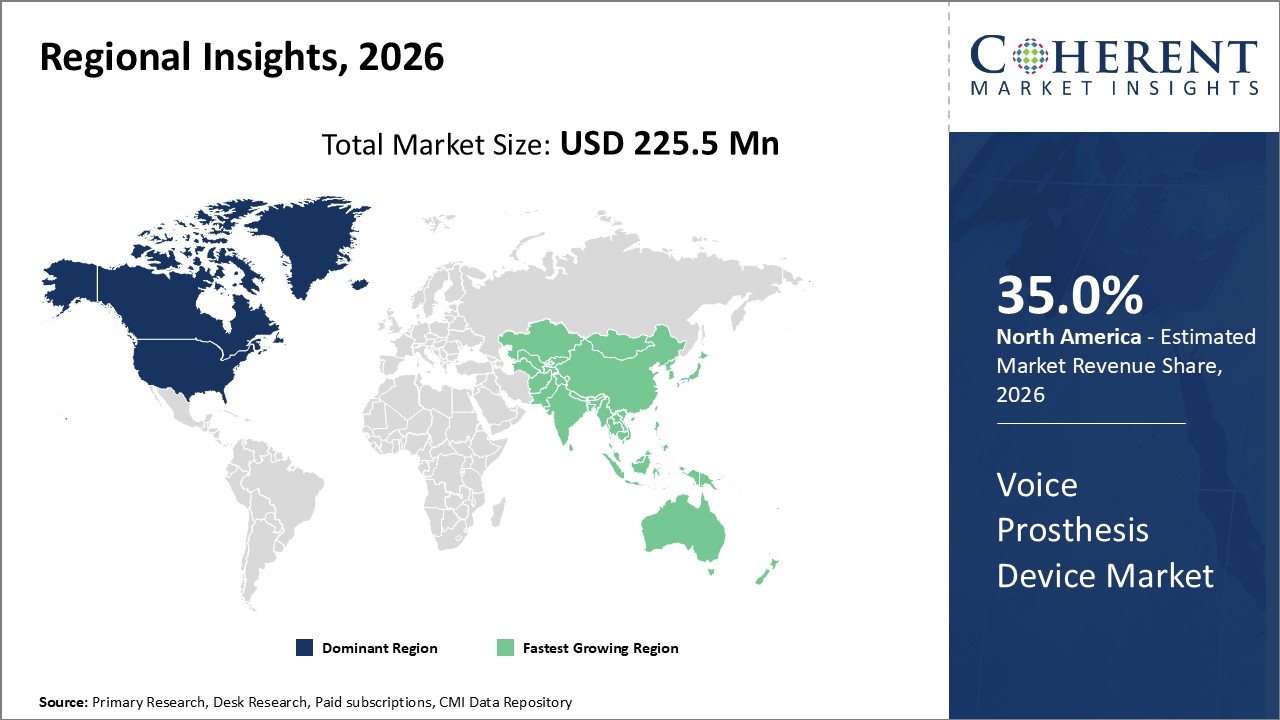
North America holds the leading position with over 35% market share, attributable to advanced healthcare infrastructure, higher reimbursement rates, and increasing patient awareness.
Asia Pacific exhibits the highest CAGR, supported by rising healthcare expenditure, growing incidence of head and neck cancers, and expanding access to modern medical devices.
Voice Prosthesis Device Market Segmentation Analysis
To learn more about this report, Request Free Sample
Voice Prosthesis Device Market Insights, By Product Type
Indwelling Voice Prosthesis is dominating the market share. Indwelling devices assure prolonged use with minimal maintenance, offering up to 6 months lifespan due to their biofilm-resistant coatings, which has driven their preference among clinicians and patients. The fastest-growing subsegment is Non-indwelling Voice Prosthesis, favored for short-term use and greater ease of cleaning, leading to increasing adoption rates, particularly in emerging markets. Inserter Devices hold a smaller share but are critical accessories facilitating device placement and improving procedural efficiency. The Others category includes ancillary products essential for maintenance and device optimization.
Voice Prosthesis Device Market Insights, By Application
Post-Laryngectomy Voice Rehabilitation is dominating the market share due to the critical need for functional voice restoration post-cancer surgery. This segment witnesses consistent growth owing to rising laryngeal cancer cases globally and an increasing shift toward early rehabilitation protocols. The fastest-growing subsegment is Speech Therapy Aid, where voice prostheses complement traditional speech therapy for other vocal impairments, driven by increasing recognition of multidisciplinary treatments. The Others segment includes niche applications such as temporary voice assistance following trauma or other surgeries.
Voice Prosthesis Device Market Insights, By End-User
Hospitals dominate the market share due to high patient inflow, surgical interventions, and integrated rehabilitative care facilities. These settings provide comprehensive voice prosthesis fitting and management, supported by multidisciplinary teams. The fastest-growing subsegment is Home Care Settings, propelled by telemedicine advancements and patient preference for home-based rehabilitation programs. Specialty Clinics and Rehabilitation Centers, though smaller segments, play pivotal roles in follow-up care and specialized therapy services.
Voice Prosthesis Device Market Trends
The Voice Prosthesis Device market is increasingly benefiting from technological convergence with digital health tools.
Sensor-embedded prostheses introduced in 2025 enable clinicians to remotely monitor device performance, reducing complications and enhancing patient adherence.
Additionally, the advent of 3D printing for customized prostheses is transforming production cycles, enabling rapid prototyping tailored to patient-specific anatomical requirements, improving patient satisfaction and speech outcomes.
Moreover, minimally invasive surgical approaches married to voice prosthesis implantation are reducing hospital stays and accelerating rehabilitation timelines, signaling a significant shift in procedural standards.
Voice Prosthesis Device Market Insights, By Geography
To learn more about this report, Request Free Sample
North America Voice Prosthesis Device Market Analysis and Trends
In North America, the dominance in the Voice Prosthesis Device market is driven by strong healthcare infrastructure, extensive insurance coverage, and a well-established clinical adoption pathway. The region commands over 35% of the market share, supported by key market companies such as Atos Medical and BD, which consistently expand product portfolios and collaborations with specialized voice rehabilitation centers.
Asia Pacific Voice Prosthesis Device Market Analysis and Trends
Meanwhile, the Asia Pacific exhibits the fastest growth, with a CAGR surpassing 9%. Factors propelling this growth include expanding patient pools due to increasing head and neck cancer cases, improved healthcare spending, and government initiatives aimed at improving cancer care. Countries like China and India are at the forefront, with local manufacturers and international players scaling operations to meet burgeoning demand.
Voice Prosthesis Device Market Outlook for Key Countries
USA Voice Prosthesis Device Market Analysis and Trends
The USA commands the largest national market share, supported by advanced technology adoption and reimbursement policies favoring voice prosthesis devices. Patients benefit from extensive rehabilitation programs integrated into oncology care protocols. Leading companies like BD have reported a 15% increase in revenue in the U.S. market in 2025, driven by innovations in product design and expanded clinical education efforts. The FDA’s regulatory frameworks also facilitate efficient product approvals, accelerating new device launches.
Germany Voice Prosthesis Device Market Analysis and Trends
Germany’s market stands as a major hub within Europe, driven by robust healthcare infrastructure and high laryngeal cancer incidence. Market players have concentrated on tailored voice prosthesis products adapted for the German healthcare system's reimbursement policies. Partnerships between device manufacturers and rehabilitation centers have increased device penetration, with an estimated 10% year-on-year growth in market revenue through 2025.
Analyst Opinion
Increasing Production Capacity and Innovation Drive Market Growth: Manufacturing capabilities for voice prostheses have expanded notably in 2025, with new materials enhancing device durability and patient comfort. For instance, the introduction of silicone-based tracheoesophageal prostheses with biofilm-resistant coatings increased product lifecycle by 21%, stimulating higher supply-side output and lowering replacement frequency.
Demand-Side Surges Fuel Market Revenue Expansion: Rising global incidences of laryngeal cancer, which the World Health Organization estimated at over 200,000 new cases in 2025, have amplified the demand for voice rehabilitation devices. Additionally, expanding applications in speech restoration beyond oncology settings are diversifying end-use profiles, contributing to a 15% increase in market revenue in North America alone.
Pricing Strategies Adapt to Reimbursement Landscape: Price elasticity remains a pivotal factor, with device manufacturers aligning pricing models to comply with evolving insurance reimbursement policies, especially in the U.S. and Europe. Recent data suggests a 10% decrease in out-of-pocket expenses for patients due to policy shifts, thus broadening market accessibility and stimulating business growth.
Export Volume Gains Expand Market Reach: Export volumes of voice prostheses soared by 12% in 2025, particularly across emerging markets in Asia Pacific, reflecting growing regional healthcare investments and the rise of middle-income patient segments seeking advanced rehabilitative solutions.
Market Scope
| Report Coverage | Details | ||
|---|---|---|---|
| Base Year: | 2025 | Market Size in 2026: | USD 225.5 million |
| Historical Data for: | 2020 To 2024 | Forecast Period: | 2026 To 2033 |
| Forecast Period 2026 to 2033 CAGR: | 7.4% | 2033 Value Projection: | USD 371.7 million |
| Geographies covered: |
|
||
| Segments covered: |
|
||
| Companies covered: | Smiths Medical, Cook Medical, Medtronic PLC, Boston Medical Products, Sanovas Inc., Biocomp Labs, Intertron, Gyrus Medical Limited, Hollister Incorporated, HME Corp. | ||
| Growth Drivers: |
|
||
Uncover macros and micros vetted on 75+ parameters: Get instant access to report
Voice Prosthesis Device Market Growth Factors
Key growth drivers include a significant rise in head and neck cancer prevalence, which necessitates voice rehabilitation solutions. The technological advancements in voice prosthesis devices, such as improved biofilm resistance and ease of insertion techniques, are catalyzing higher acceptance rates among clinicians and patients alike. Additionally, expanded healthcare infrastructure in emerging economies and favorable reimbursement frameworks in developed markets further underpin the market's upward trajectory. Lastly, growing awareness of post-laryngectomy voice restoration benefits is propelling demand among patients and medical practitioners, supported by clinical guidelines recommending early rehabilitation interventions.
Voice Prosthesis Device Market Development
In early 2025, Atos Medical launched enhanced voice prostheses designed to improve speech quality and long-term patient outcomes for individuals undergoing laryngectomy. The upgraded devices focused on improved airflow control, durability, and ease of use, strengthening Atos Medical’s position in advanced voice rehabilitation solutions.
In mid-2025, Servona GmbH introduced a new line of biocompatible voice prostheses, developed to enhance patient comfort, reduce tissue irritation, and support long-term implantation. The launch aligned with growing demand for safer, patient-centric prosthetic solutions in ENT care.
In mid-2025, Smiths Medical released a new generation of digital voice prostheses, integrating advanced design features to deliver more consistent voice quality and improved clinical outcomes. The innovation reinforced Smiths Medical’s commitment to technology-enabled solutions in post-laryngectomy rehabilitation.
Key Players
Leading Companies of the Market
Smiths Medical
Cook Medical
Medtronic PLC
Boston Medical Products
Sanovas Inc.
Biocomp Labs
Intertron
Gyrus Medical Limited
Hollister Incorporated
HME Corp
Several market players have leveraged strategic collaborations with regional healthcare providers to enhance product distribution and patient support services. For instance, Atos Medical AB’s partnership with leading rehabilitation hospitals in Europe has resulted in a 25% increase in device adoption over 2025. Meanwhile, BD’s enhancement of its non-indwelling prosthesis portfolio through R&D investment led to a 15% revenue uplift in North America.
Voice Prosthesis Device Market Future Outlook
The future outlook for the voice prosthesis device market is positive, supported by ongoing improvements in device longevity, patient comfort, and speech quality. Innovations are expected in biofilm-resistant materials, hands-free valve systems, and digital speech-assistive technologies. Growing emphasis on quality-of-life outcomes in cancer care will further encourage adoption. Expansion of healthcare access in emerging markets and greater training for clinicians and speech therapists are also expected to broaden market penetration.
Voice Prosthesis Device Market Historical Analysis
Historically, the voice prosthesis device market emerged from advances in surgical techniques for laryngectomy patients. Early devices offered limited durability and speech clarity, restricting widespread adoption. Over time, improvements in biomaterials and valve engineering led to more reliable and longer-lasting prostheses. Increased awareness of post-cancer rehabilitation and improved access to speech therapy services helped expand the market. Healthcare systems in developed regions began integrating voice prosthesis devices into standard laryngectomy care, driving consistent market demand
Sources
Primary Research Interviews:
ENT Surgeons
Speech Therapists
Medical Device Distributors
Oncology Specialists
Hospital Procurement Heads
Databases:
WHO Medical Devices Data
FDA Device Database
OECD Health Statistics
Magazines:
Medical Device Network
ENT Today
MedTech Dive
Healthcare Design
Diagnostic Imaging
Journals:
Journal of Voice
Laryngoscope
Head & Neck Journal
Clinical Otolaryngology
Journal of Speech Language Pathology
Associations:
American Speech-Language-Hearing Association
International Association of Laryngectomees
American Academy of Otolaryngology
WHO
MedTech Europe
Share
Share
Komal Dighe is a Management Consultant with over 8 years of experience in market research and consulting. She excels in managing and delivering high-quality insights and solutions in Health-tech Consulting reports. Her expertise encompasses conducting both primary and secondary research, effectively addressing client requirements, and excelling in market estimation and forecast. Her comprehensive approach ensures that clients receive thorough and accurate analyses, enabling them to make informed decisions and capitalize on market opportunities.

Credibility and Certifications

860519526


9001:2015

27001:2022


Need a Custom Report?
We can customize every report - free of charge - including purchasing stand-alone sections or country-level reports
Customize NowJoining thousands of companies around the world committed to making the Excellent Business Solutions.
View All Our Clients