Wood Adhesives And Binders Market Analysis & Forecast: 2026-2033

Wood Adhesives And Binders Market Size and Forecast – 2026 – 2033
The Global Wood Adhesives and Binders Market size is estimated to be valued at USD 10.20 billion in 2026 and is expected to reach USD 15.3 billion by 2033, exhibiting a compound annual growth rate (CAGR) of 7.4% from 2026 to 2033.
Global Wood Adhesives And Binders Market Overview
Wood adhesives and binders are specialized formulations used to bond wooden components and engineered wood products such as plywood, particleboard, MDF, and laminated timber. They include urea-formaldehyde (UF), phenol-formaldehyde (PF), melamine-urea-formaldehyde (MUF), polyurethane (PU), epoxy, and soy-based bioadhesives, each offering different strengths, curing speeds, moisture resistance, and environmental profiles. UF adhesives dominate interior applications due to cost-effectiveness and strong bonding, while PF and MUF provide superior water and weather resistance for structural uses. Modern wood binders also incorporate low-formaldehyde and formaldehyde-free technologies to meet stringent emission standards. These products are engineered to deliver durable, long-lasting bonds in furniture manufacturing, construction, flooring, and woodworking.
Key Takeaways
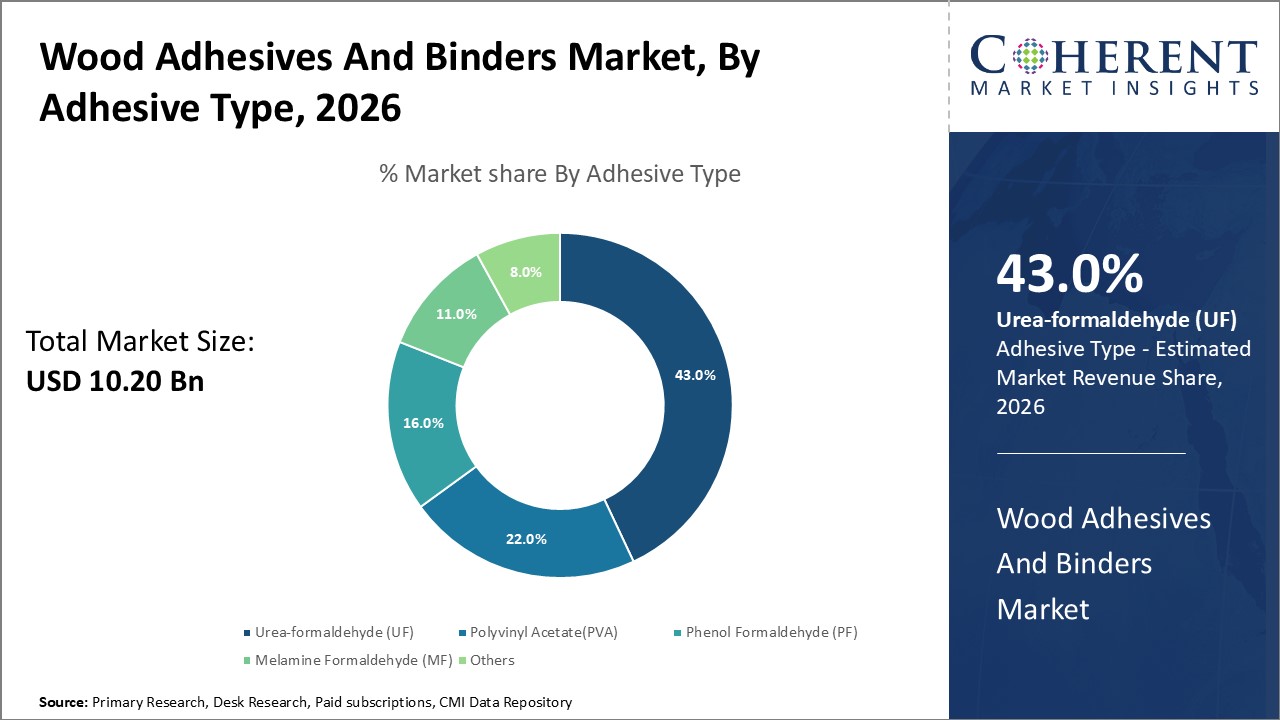
The Urea-formaldehyde adhesive segment continues to dominate the market share with 43% due to its affordability and strong bonding properties, while bio-based adhesive subsegments are rapidly growing owing to increasing environmental concerns.
The furniture sector holds the largest application share of 38%, influenced by expanding furniture production hubs in the Asia-Pacific and North America.
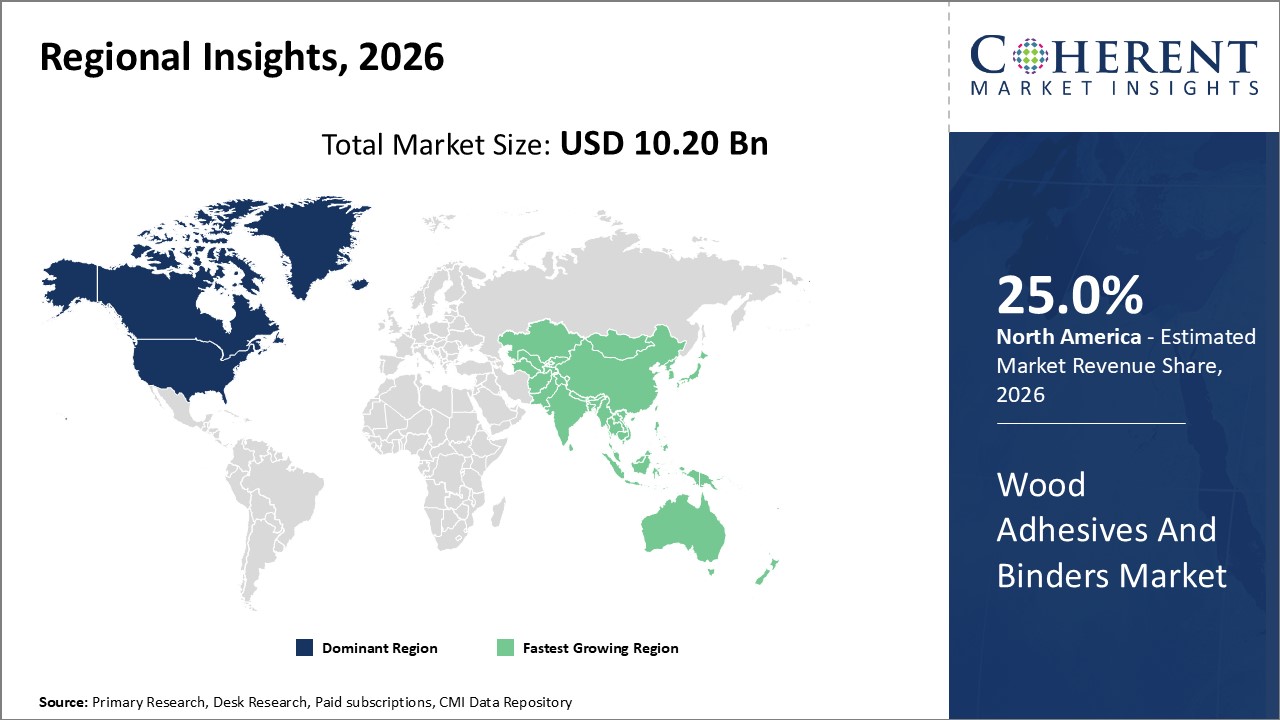
North America leads regionally, contributing over 25% to the market revenue, driven by stringent emissions regulations and advanced infrastructure development.
Asia-Pacific exhibits the fastest CAGR due to robust industrialization, urban migration, and favorable government policies promoting sustainable construction materials.
Wood Adhesives And Binders Market Segmentation Analysis
To learn more about this report, Download Free Sample
Wood Adhesives And Binders Market Insights, By Adhesive Type
Urea-formaldehyde (UF) dominates the market share due to its cost-effectiveness, fast curing time, and strong bonding strength in various wood products such as plywood and particleboard. Its widespread application in the furniture and construction industries continues to solidify its dominance. Meanwhile, polyvinyl acetate (PVA) shows the fastest growth as a water-based adhesive, gaining traction for indoor applications due to low toxicity and ease of use. Phenol formaldehyde (PF) adhesives maintain demand in exterior-grade and high durability applications, while melamine formaldehyde (MF) finds niche applications in premium-grade wood products needing moisture resistance.
Wood Adhesives And Binders Market Insights, By Application
The furniture segment leads, driven by increasing demand for lightweight, durable, and eco-friendly products, particularly in North America and the Asia Pacific. Rapid urbanization and evolving consumer preferences for sustainable furnishings stimulate growth here. The construction application grows rapidly, propelled by modular and engineered wood products requiring high-strength adhesives. Packaging adhesives witness moderate growth supported by eco-packaging trends and lightweight requirements. The automotive sector's use of adhesives increases steadily as manufacturers opt for wood-based composites in interiors for improved aesthetics with environmental compliance.
Wood Adhesives And Binders Market Insights, By Technology
Synthetic Adhesives are dominating the market share due to their superior bonding strength, cost-effectiveness, and versatile applicability in traditional wood products. However, bio-based adhesives represent the fastest-growing segment, fueled by environmental regulations and increased consumer demand for sustainable materials. Recent innovations have improved bio-based formulations' performance, enabling competitive positioning against synthetics. Hybrid adhesives, combining synthetic and bio-based elements, are gaining momentum by offering balanced mechanical properties and ecological benefits. The Others segment includes emerging technologies like UV-curing adhesives focused on niche applications.
Wood Adhesives And Binders Market Trends
The Wood Adhesives and Binders market is significantly influenced by evolving sustainability mandates and technological advancements.
In 2026, over 31% of the new adhesive products introduced globally utilized bio-based components, highlighting a market trend towards replacing petrochemical resins with renewable alternatives.
Additionally, cross-sector collaboration between chemical innovators and end-users has accelerated the development of faster-curing and higher-strength adhesives, exemplified by the commercial adoption of nano-cellulose binders in the automotive sector.
Another ongoing trend is the digitalization of supply chains and production processes, improving material tracking, reducing waste, and aligning with global ESG (Environmental, Social, Governance) frameworks.
Wood Adhesives And Binders Market Insights, By Geography
To learn more about this report, Download Free Sample
North America Wood Adhesives And Binders Market Analysis and Trends
In North America, the dominance in the Wood Adhesives and Binders market stems from rigorous environmental regulations set by agencies like the EPA, which have spurred the adoption of low-emission adhesives and binders. The U.S. alone accounts for over 25% of regional market revenue, bolstered by the thriving furniture manufacturing and construction industries demanding advanced adhesive technologies. Established players actively invest in R&D facilities across this region, further consolidating their market leadership.
Asia Pacific Wood Adhesives And Binders Market Analysis and Trends
Meanwhile, the Asia Pacific exhibits the fastest growth with a CAGR exceeding 9%, spurred by rapid urbanization, expanding infrastructure projects, and a surge in furniture exports from countries such as China and India. Favorable government initiatives supporting bio-based material manufacturing and import-export reforms have enhanced market accessibility. Leading companies have localized production to exploit cost efficiencies and demand centers, increasing regional market share progressively.
Wood Adhesives And Binders Market Outlook for Key Countries
USA Wood Adhesives And Binders Market Analysis and Trends
The United States maintains a pivotal role due to its advanced construction and furniture manufacturing sectors, with increasing adoption of state-of-the-art adhesives that meet strict emission guidelines. Several infrastructure modernization projects in 2025 included specifications requiring formaldehyde-free adhesives, catalyzing demand. Major players like Henkel and 3M have ramped local production capacities and innovation centers in the U.S., underpinning the country’s substantial market share and influence on global market trends.
China Wood Adhesives And Binders Market Analysis and Trends
China represents a vital market influenced by rapid industrialization and housing demand. Concentrated growth in engineered wood products and modular construction practices supports robust consumption of high-performance adhesives. Companies such as Wanhua Chemical Group and Hexion have significantly expanded their manufacturing footprint here. Policy emphasis on green building materials also incentivizes bio-based adhesive investments, making China a strategic growth hub within the Asia Pacific region.
Analyst Opinion
Demand-side shifts indicate a surge in engineered wood product manufacturing, particularly cross-laminated timber (CLT), influencing the wood adhesives and binders market share upward. Reports from 2025 show over 15% annual growth in CLT installations in North America, emphasizing robust end-use applications.
On the supply side, enhancements in polymer chemistry have driven the development of formaldehyde-free resins, increasing production capacity by 12% in Europe in early 2026. This supply expansion catalyzes market revenue by enabling manufacturers to meet stringent environmental norms while maintaining superior bonding strength.
Nano-sized cellulose-based binders are capturing attention for their sustainable profile and improved performance parameters. Trials conducted by a leading furniture manufacturer in 2025 demonstrated a 21% reduction in drying time and a 11% cost saving, signifying strong growth drivers behind biobased adhesive adoption.
Pricing dynamics influenced by fluctuations in raw material availability, specifically petrochemical derivatives and soy-based components, impacted the market’s growth trajectory. The surge in crude oil prices in 2026 notably elevated synthetic adhesive costs by approximately 9%, altering market trade-offs between synthetic and natural binders.
Market Scope
| Report Coverage | Details | ||
|---|---|---|---|
| Base Year: | 2025 | Market Size in 2026: |
USD 10.20 billion |
| Historical Data for: | 2020 To 2024 | Forecast Period: | 2026 To 2033 |
| Forecast Period 2026 to 2033 CAGR: | 7.4% | 2033 Value Projection: |
USD 15.3 billion |
| Geographies covered: |
|
||
| Segments covered: |
|
||
| Companies covered: | Dow Inc., Arkema S.A., Hexion Inc., Wanhua Chemical Group Co., Ltd., Synthomer plc, Cargill, Incorporated, DIC Corporation, Sumitomo Chemical Co., Ltd., Georgia-Pacific LLC, Chemtura Corporation | ||
| Growth Drivers: |
|
||
Uncover macros and micros vetted on 75+ parameters: Get instant access to report
Wood Adhesives And Binders Market Growth Factors
The steady shift toward eco-conscious building permits has intensified the uptake of low-emission wood adhesives, accelerated by government mandates in Europe mandating formaldehyde-free products. Secondly, the growth in modular construction techniques supports demand for rapid-curing binders that enhance assembly efficiency. Additionally, the booming furniture manufacturing industries in the Asia-Pacific, driven by rising disposable incomes and urbanization, further stimulate market growth. Lastly, the integration of bio-based polymers, propelled by consumer preferences and regulatory incentives, provides a pronounced competitive advantage, expanding market scope and introducing new applications in packaging and automotive sectors.
Wood Adhesives And Binders Market Development
In 2023, Sika introduced its MB EZ Rapid system, a fast-drying moisture barrier and adhesive solution optimized for wood flooring installations. The product enabled contractors to significantly reduce installation times while ensuring strong adhesion, improved moisture control, and compatibility with a wide range of engineered and solid wood surfaces.
In 2023, Henkel showcased its next-generation sustainable adhesive technologies for the mass timber industry at LIGNA, emphasizing enhanced fire performance, structural reliability, and reduced environmental impact. The solutions supported the growing adoption of cross-laminated timber (CLT) and other engineered wood systems in modern construction, reinforcing Henkel’s leadership in high-performance, eco-focused bonding technologies.
Key Players
Leading Companies of the Market
Dow Inc.
Arkema S.A.
Hexion Inc.
Wanhua Chemical Group Co., Ltd.
Synthomer plc
Cargill, Incorporated
DIC Corporation
Sumitomo Chemical Co., Ltd.
Georgia-Pacific LLC
Chemtura Corporation
Leading players have employed diverse competitive strategies, including focusing on product innovation and sustainability commitments. For instance, Henkel's 2026 launch of a bio-based adhesive series led to a 19% increase in market penetration in Europe. Similarly, Sika AG secured several long-term supply agreements in North American infrastructure projects, boosting its market share by 11% in 2025.
Wood Adhesives And Binders Market Future Outlook
Future growth will be influenced by the global shift toward sustainable construction and eco-certified wood products. Demand for engineered wood—including CLT and laminated timber—will accelerate adoption of high-strength, moisture-resistant adhesives in structural applications. Bio-based adhesives, ultra-low-emission UF systems, and advanced PU binders will gain traction as manufacturers respond to stricter emission standards. Continued expansion of modular construction, prefabricated homes, and mass timber buildings will further strengthen market demand. Technological advances in resin chemistry will deliver stronger, faster-curing, and more durable adhesives suited for automated manufacturing lines.
Wood Adhesives And Binders Market Historical Analysis
The wood adhesives and binders market has historically been shaped by the expansion of engineered wood products such as plywood, particleboard, and MDF. As mass-production furniture, flooring, and construction materials scaled globally through the 1980s–2000s, urea-formaldehyde (UF) and phenol-formaldehyde (PF) systems dominated due to their affordability and strong bonding performance. Over time, environmental regulations limiting formaldehyde emissions drove demand for low-emission and formaldehyde-free binders. Polyurethane, epoxy, and soy-based bioadhesives saw rising adoption in high-performance and green-building applications. Growth in housing construction and interior décor, particularly in Asia and North America, has consistently kept consumption strong.
Sources
Primary Research Interviews:
Wood Panel Manufacturers
Adhesive Chemists
Furniture Producers
Construction Contractors
Resin Product Developers
Databases:
FAOSTAT Forestry Data
ICIS Adhesive Pricing
Forest2Market Datasets
UN Comtrade Wood Products
Magazines:
Woodworking Network
Adhesives & Sealants Magazine
Timber Industry Magazine
Construction Review
Furniture Production Magazine
Journals:
Journal of Adhesion Science and Technology
Wood Science and Technology
Journal of Materials Processing
Industrial Adhesives Journal
Composite Structures
Newspapers:
Construction Business Today
Financial Express (Industry)
The Wall Street Journal (Construction)
Business Standard (Materials)
The Economic Times (Manufacturing)
Associations:
Adhesive and Sealant Council (ASC)
American Wood Council (AWC)
Forest Products Society
European Panel Federation
Building Materials Association
Share
Share
Yash Doshi is a Senior Management Consultant. He has 12+ years of experience in conducting research and handling consulting projects across verticals in APAC, EMEA, and the Americas.
He brings strong acumen in helping chemical companies navigate complex challenges and identify growth opportunities. He has deep expertise across the chemicals value chain, including commodity, specialty and fine chemicals, plastics and polymers, and petrochemicals. Yash is a sought-after speaker at industry conferences and contributes to various publications on topics related commodity, specialty and fine chemicals, plastics and polymers, and petrochemicals.

Credibility and Certifications

860519526


9001:2015
27001:2022


Need a Custom Report?
We can customize every report - free of charge - including purchasing stand-alone sections or country-level reports
Customize NowJoining thousands of companies around the world committed to making the Excellent Business Solutions.
View All Our Clients