Online Travel Market Analysis & Forecast: 2026-2033

Online travel market is estimated to be valued at USD 684.2 Bn in 2026 and is expected to reach USD 1,370 Bn by 2033, exhibiting a compound annual growth rate (CAGR) of 10.4% from 2026 to 2033.
The global online travel market is witnessing significant growth, driven by increasing internet penetration, widespread adoption of smartphones, and the convenience of online booking platforms. Travelers are increasingly preferring online channels for flight, hotel, and tour bookings due to ease of comparison, flexible payment options, and personalized recommendations. The rising number of business travelers, growing solo travel trends, and the popularity of experiential travel are further boosting online travel market demand.
|
Current Events |
Impact |
|
Geopolitical Tensions and Travel Restrictions |
|
|
AI Technology Integration and Platform Evolution |
|
Uncover macros and micros vetted on 75+ parameters: Get instant access to report
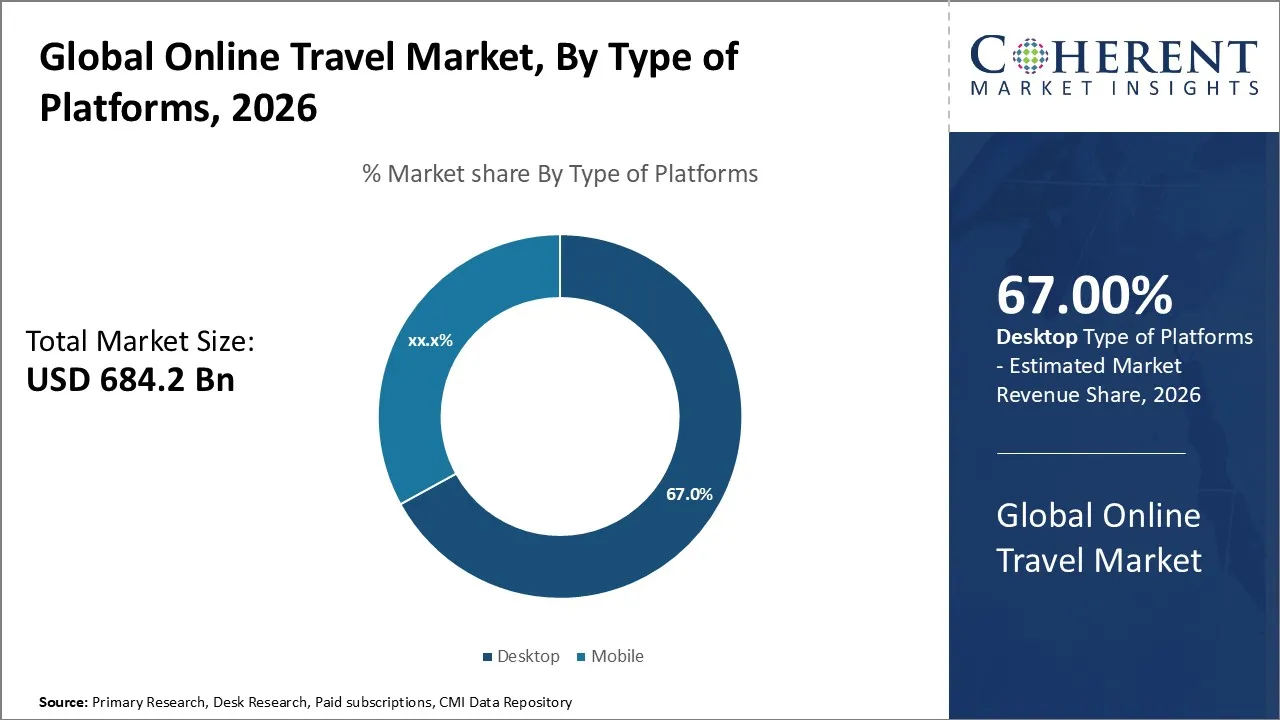
In terms of type of platform, the desktop segment is estimated to contribute the highest market share of 67% in 2026, owing to its ability to provide a more comprehensive booking experience, larger screens for comparison, and higher transaction values. Desktop platforms are preferred for complex itineraries, multi-destination trips, and detailed hotel or package selections. They offer advanced filtering, interactive maps, and access to loyalty programs, which make them the go-to choice for serious travelers.
For instance, in October 2025, Expedia Group introduced Comet, a new AI‑powered travel browser and assistant developed with Perplexity, designed to simplify trip planning, destination comparisons, personalized itinerary generation, and booking links all in one interface.
In terms of age group, the 32–43 years segment is estimated to contribute the highest market share of 35% in 2026, driven by higher disposable income, professional mobility, and frequent travel needs. This demographic is highly tech-savvy, often planning both business and leisure trips online, and prefers platforms that offer convenience, reliability, and personalization.
For instance, In December 2025, a travel report revealed that millennials and Gen Z travelers accounted for nine out of ten international trips from India in 2025, illustrating how digital‑first, experience‑oriented travelers, including those in the 32–43 years age group, are reshaping global travel patterns through smart planning and online bookings.
To learn more about this report, Download Free Sample
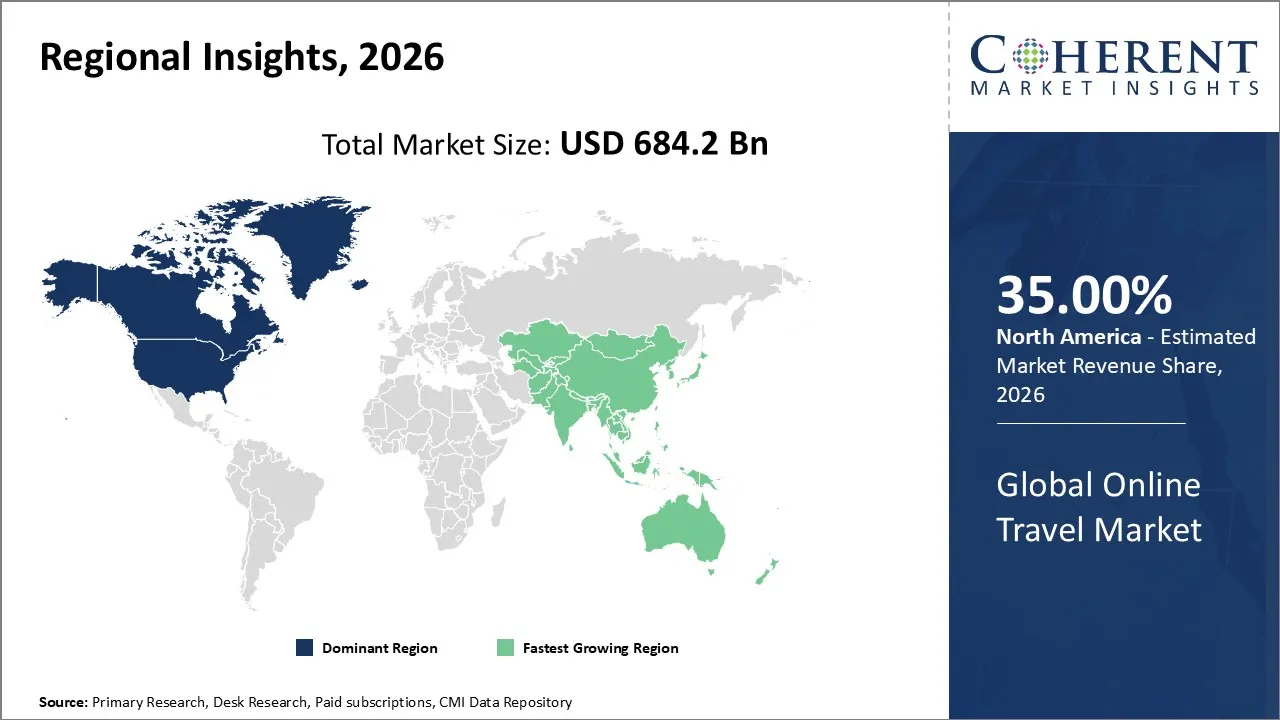
North America is expected to dominate the online travel market in 2026, with an estimated market share of 35%. The region’s market growth can be attributed to factors such as high internet penetration, advanced OTA infrastructure, widespread adoption of digital payment methods, and strong demand for both business and leisure travel. North American travelers increasingly rely on desktop and mobile platforms for complex bookings, multi-destination trips, and loyalty program management.
For instance, in October 2025, Expedia launched its AI-powered travel browser Comet on desktop in the U.S., offering personalized itinerary suggestions, integrated destination content, and dynamic pricing insights.
The Asia Pacific region is anticipated to be the fastest-growing market for online travel due to rising internet and smartphone penetration, growing disposable incomes, increasing business and leisure travel, and the popularity of mobile-first travel platforms. Countries like China, India, and Japan are seeing a surge in solo travelers and experiential tourism, which is boosting demand for online bookings. Emerging regional OTAs and travel startups are offering competitive pricing, mobile apps, and tailored packages to attract new travelers.
For instance, in December 2025, Trip.com expanded its mobile-first booking platform in Southeast Asia, integrating AI-driven recommendations and local experiences for travelers. The platform allows users to book flights, hotels, and tours seamlessly while highlighting personalized travel options to meet the demands of younger, tech-savvy travelers.
The U.S. online travel market plays a leading role globally, driven by high internet penetration, widespread use of digital booking platforms, and strong demand for personalized trip planning. Travelers increasingly rely on both desktop and mobile platforms to research, compare, and book complex trips, whether for leisure or business. The market is further supported by loyalty programs, integrated travel services, and tech‑savvy consumers who value convenience and customization.
For instance, in July 2025, MakeMyTrip expanded access for Indian travelers to over 200,000 global tours and experiences across 130 countries, reflecting how major platforms continue to innovate and attract U.S. and global users via comprehensive online offerings.
China remains a pivotal market for global travel trends as outbound travel continues to rebound and expand. Industry insights from 2026 suggest that Chinese travelers are increasingly seeking authentic, high‑quality travel experiences across destinations such as Europe and Southeast Asia, and are shaping travel platform innovations toward personalization, curated itineraries, and mobile or desktop‑based planning tools.
For instance, In October 2025, Fliggy announced a strategic focus on “omni‑intelligent travel agents” by embedding artificial intelligence across its services, aiming to enhance personalized trip recommendations and simplify booking processes on both desktop and mobile platforms
| Report Coverage | Details | ||
|---|---|---|---|
| Base Year: | 2025 | Market Size in 2026: | USD 684.2 Bn |
| Historical Data for: | 2020 To 2024 | Forecast Period: | 2026 To 2033 |
| Forecast Period 2026 to 2033 CAGR: | 10.4% | 2033 Value Projection: | USD 1,370 Bn |
| Geographies covered: |
|
||
| Segments covered: |
|
||
| Companies covered: |
OpenTable, Sky Park Secure, Viator, FancyHands, Routehappy, Adioso, Tripit, Eater, Euan’s Guide, Hipmunk, Skyscanner, Owners Direct, and Accuweather. |
||
| Growth Drivers: |
|
||
| Restraints & Challenges: |
|
||
Uncover macros and micros vetted on 75+ parameters: Get instant access to report
The growing adoption of digital technologies, including desktop and mobile booking platforms, AI-powered recommendations, and online payment solutions, is driving the growth of the online travel market. Travelers increasingly prefer the convenience of researching, comparing, and booking trips online, whether for leisure or business. The rising demand for personalized itineraries, seamless multi-destination bookings, and loyalty program integrations further fuels market expansion, as consumers seek faster and more efficient travel planning solutions.
Share
Share
About Author
Ankur Rai is a Research Consultant with over 5 years of experience in handling consulting and syndicated reports across diverse sectors. He manages consulting and market research projects centered on go-to-market strategy, opportunity analysis, competitive landscape, and market size estimation and forecasting. He also advises clients on identifying and targeting absolute opportunities to penetrate untapped markets.
Missing comfort of reading report in your local language? Find your preferred language :
Transform your Strategy with Exclusive Trending Reports :
Frequently Asked Questions
Joining thousands of companies around the world committed to making the Excellent Business Solutions.
View All Our Clients
 Schedule a meeting with report Author