

Brain Training Apps Market Size & Forecast 2026-2033
Brain Training Apps Market is estimated to be valued at USD 20,069.9 Mn in 2026 and is expected to reach USD 87,448.2 Mn in 2033, exhibiting a compound annual growth rate (CAGR) of 23.4% from 2026 to 2033.
Key Takeaways
- Based on App Type, the Memory segment remains the leading segment in the brain training apps market, accounting for an estimated 28.1% share in 2026, due to its ability in improving memory is one of the most common cognitive needs across diverse user groups.
- Based on User Type, the Android segment is expected to dominate with the largest share in 2026, largely due to its massive global penetration and affordability.
- Based on Region, North America is expected to lead the market, holding a projected share of 32.8% in 2026. While, Asia Pacific is anticipated to be the fastest growing region, with a market share of 19.9% in 2026.
Market Overview
The brain training apps market is witnessing strong momentum as rising awareness about cognitive health and mental well-being drives adoption among both younger and elderly populations. These apps, which focus on enhancing memory, concentration, problem-solving, and reasoning skills, are increasingly being used for preventive healthcare and lifestyle improvement. Growing smartphone penetration, coupled with easy accessibility of gamified brain exercises, has boosted engagement levels globally. Furthermore, the rising prevalence of stress, anxiety, and age-related cognitive decline is fueling demand for scientifically designed training modules. Education, corporate wellness programs, and healthcare sectors are also emerging as major contributors to the brain training apps market demand, as institutions adopt these solutions for improving productivity and learning outcomes.
Current Events and their Impact on the Brain Training Apps Market
Current Event | Description and its Impact |
Regulatory Tightening and Compliance Evolution |
|
Global Aging Demographics and Neurodegenerative Disease Prevalence |
|
Role of AI Artificial Intelligence (AI) in Brain Training Apps
AI plays a transformative role in brain training apps by enabling personalized, adaptive, and data-driven experiences. Through real-time analysis of user behavior, cognitive performance, and biometric data, AI tailors exercises to individual needs and learning patterns. It continuously adjusts difficulty levels, recommends targeted training modules, and tracks progress over time to maximize effectiveness. Additionally, AI enhances neurofeedback by interpreting brain signals and providing precise feedback loops for better mental conditioning.
Sens.ai, a leader in neurofeedback and personalized brain training, has announced the global launch of its advanced brain training system. Combining a high-tech headset with a gamified app, the system delivers measurable progress in cognitive performance, inner wellbeing, and self-awareness. It uniquely integrates neurofeedback, heart coherence training, transcranial photobiomodulation, brain performance testing, and meditation, making it the most advanced and personalized solution available.
- Current Industry Events of 2026
- Market Size Estimation
- Regional Breakdown
- Competitive Landscape
- Customer Intelligence
- Segmental Analysis
- Pricing Analysis
- Key Market Drivers, Challenges & Future Trends
- Customized Insights Section
Brain Training Apps Across Various Industries
- Healthcare and Mental Wellness
Healthcare providers and wellness programs are increasingly integrating brain training apps to support patients with cognitive impairments, memory loss, or age-related decline. These apps aid in mental rehabilitation, stress reduction, and preventive cognitive care, offering clinicians and patients accessible, cost-effective solutions.
- Education
Schools, universities, and online learning platforms are leveraging brain training apps to improve students’ memory, attention, problem-solving, and critical thinking skills. Gamified exercises help engage students while providing measurable progress insights, supporting both classroom learning and remote education.
- Corporate and Professional Training
Companies are incorporating brain training apps into employee wellness and professional development programs. Cognitive exercises help enhance focus, decision-making, and productivity, while also reducing work-related stress. Organizations see these apps as a tool to boost workforce efficiency and maintain mental health in high-pressure environments.
- Gaming and Entertainment
The gamification aspect of brain training apps makes them attractive to the gaming and entertainment industry. Users engage with interactive challenges, leaderboards, and rewards, creating opportunities for subscription-based revenue models and brand partnerships.
Segmental Insights
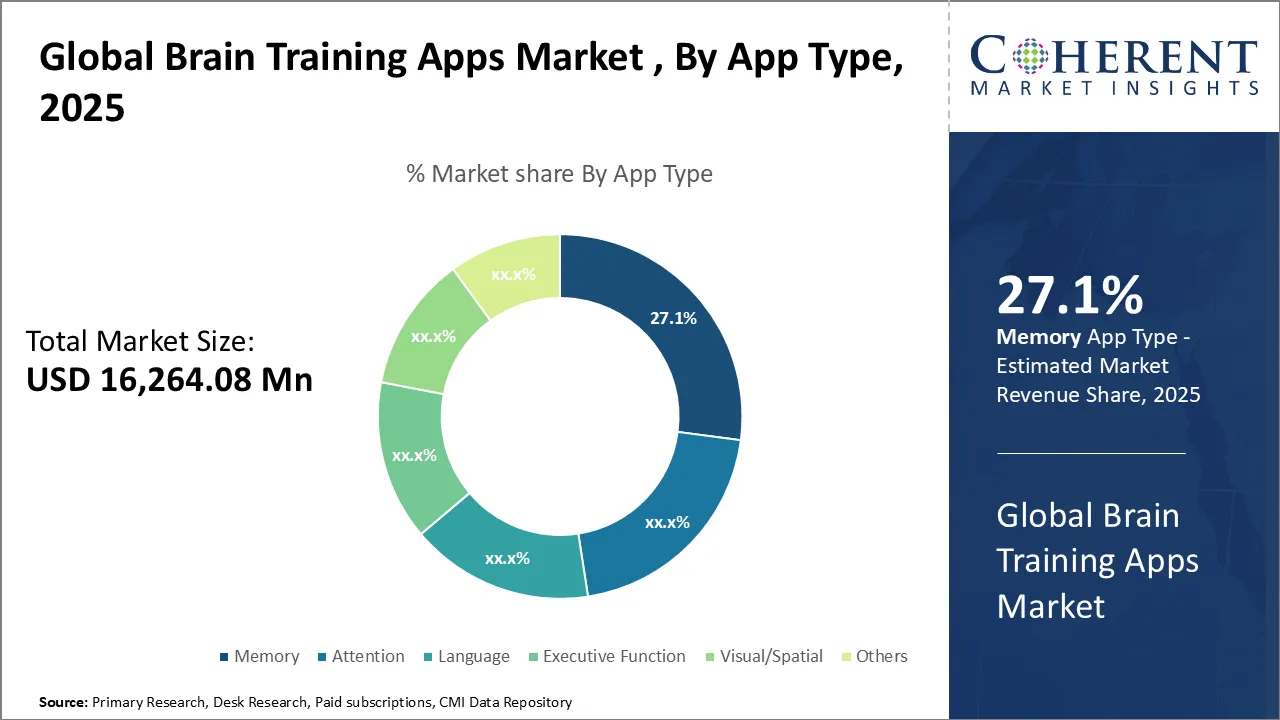
Brain Training Apps Market Insights, By App Type, Memory Segment Leads Owing to its Ability in Improving Memory
In terms of app type, the memory segment is leading the brain training apps market in 2026 with 28.1% share, due to its ability in improving memory is one of the most common cognitive needs across diverse user groups. Rising concerns about memory decline due to aging, stress, and lifestyle-related factors are driving consumers toward apps that focus on short-term and long-term memory enhancement. Students and young professionals are also increasingly using these apps to improve academic performance, focus, and productivity. Moreover, the growing incidence of dementia and Alzheimer’s disease among the elderly population has further heightened awareness about preventive cognitive training, with memory-focused apps seen as an accessible tool for brain health. The gamified and interactive nature of these apps enhances user engagement, making them a preferred choice and contributing significantly to Brain Training Apps Market demand.
For instance, in September 2023, the Centre for Memory Studies at IIT Madras launched MovingMemory, an innovative spatial app that merges augmented reality (AR) and virtual reality (VR) to digitally reconstruct “moving models of memory”. The app enables users to select avatars and traverse immersive 3D environments enriched with video, audio, images, and interactive layers.
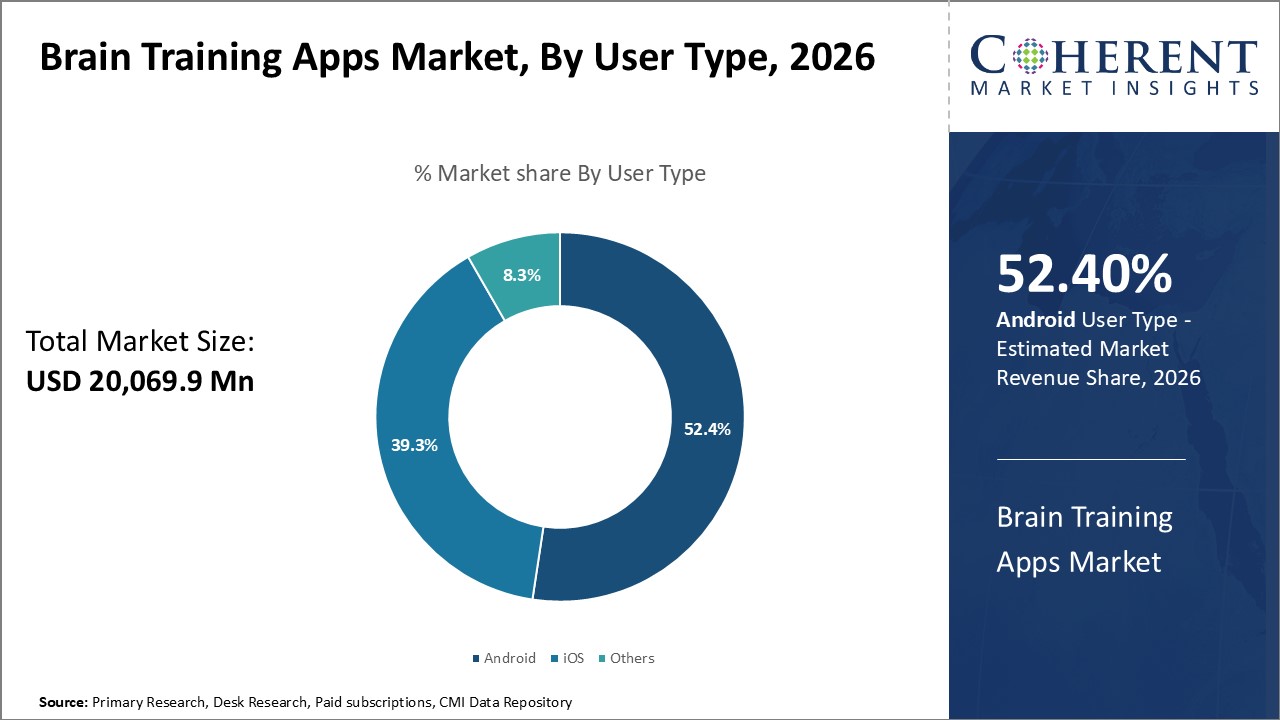
Brain Training Apps Market Insights, By User Type, Android Leads Owing to Massive Global Penetration and Affordability
In terms of user type, the android segment is expected to hold a commanding position with largest share in 2026, largely due to its massive global penetration and affordability. A large share of the world’s smartphone users, particularly in Asia Pacific, Latin America, Africa, and parts of the Middle East—are Android-based, making it the most accessible platform for brain training app developers. The availability of budget-friendly Android devices allows users across diverse income groups to access cognitive training solutions, thereby expanding the user base. Additionally, the Google Play Store offers a wider variety of brain training apps, including free, freemium, and subscription-based models, which cater to different consumer needs. Frequent updates, compatibility with a broad range of devices, and integration with wearable technology further enhance the appeal. Collectively, these factors position Android as the most demanded platform in driving overall Brain Training Apps Market demand.
For instance, in March 2025, Glisn, a new mobile cognitive training app, aims to counteract shrinking attention spans by enhancing active listening, focus, and memory retention. Unlike traditional brain-training apps, Glisn emphasizes auditory processing with real-world scenarios, adaptive listening challenges, AI-driven exercises, quizzes, and memory tests. The app features progress tracking, personalized feedback, and customizable training paths. Available on Android, it offers a free tier and a premium subscription for advanced features.
Regional Insights
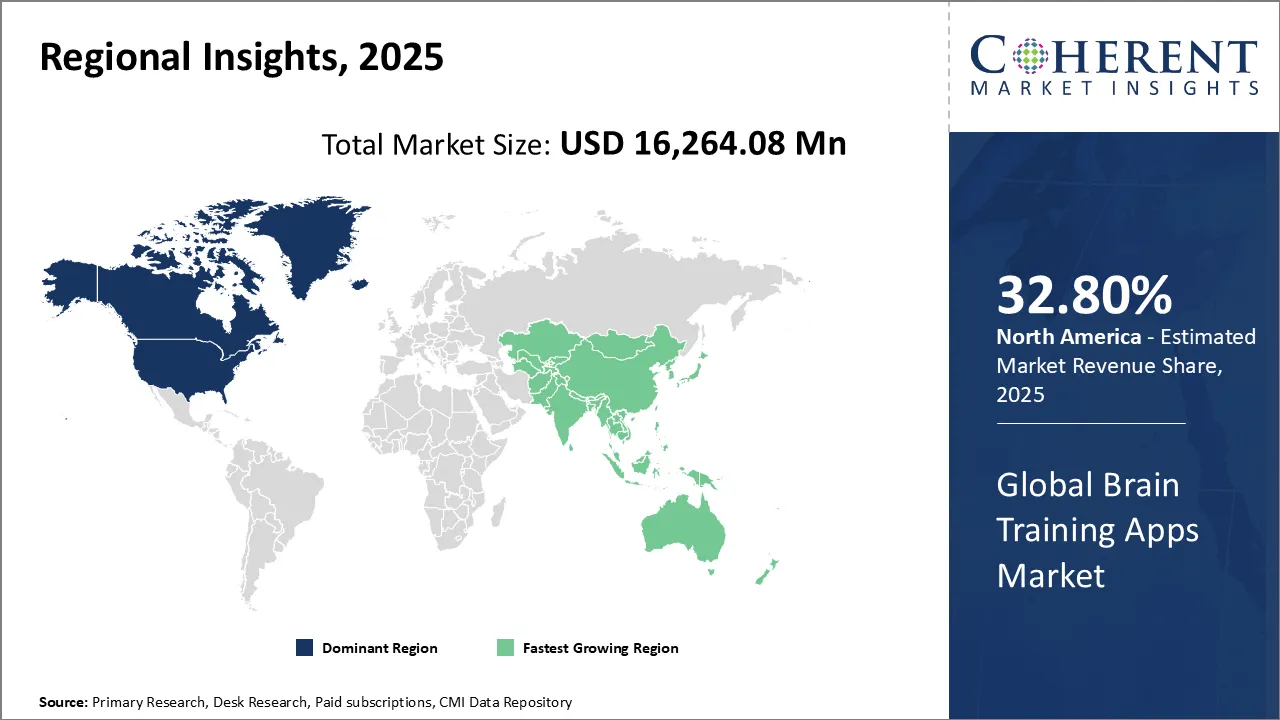
North America Brain Training Apps Market Analysis & Trends
North America brain training apps market is expected to dominate globally, accounting for 32.80% share in 2026. Rising awareness about cognitive health, memory retention, and mental fitness is driving adoption among both younger and elderly populations. The region has a high prevalence of age-related cognitive decline, including dementia and Alzheimer’s disease, which fuels demand for scientifically designed apps that support preventive brain health. Additionally, the strong presence of healthcare-focused startups and advanced digital infrastructure enables rapid integration of AI and personalized learning in brain training apps, further proliferating the brain training apps market share.
For instance, in May 2026, Mental Health America inaugurated its 2026 Mental Health Month with the release of alarming screening data from its online National Prevention and Screening Program. In 2024, over 5.9 million people worldwide completed a mental health screening; in the U.S., 78 percent of respondents reported moderate to severe symptoms. The annual theme, "Turn Awareness into Action," encourages actionable engagement. The widely used screening platform now offers 11 tests in English and two in Spanish, and since 2014 has helped more than 32 million individuals access support and resources immediately upon finishing a screen.
Asia Pacific Brain Training Apps Market Analysis & Trends
The Asia Pacific region is projected to record the fastest growth, capturing a 19.9% share in 2026. Rapid smartphone adoption and affordable internet access across countries such as India, China, and Southeast Asian nations have significantly expanded the user base for mobile applications. Increasing academic competitiveness among students, coupled with rising awareness of cognitive enhancement tools, is boosting adoption among younger demographics. Additionally, the region’s aging population, particularly in Japan and China, is creating demand for brain training solutions aimed at delaying cognitive decline and improving memory retention. The surge in digital learning tools, corporate wellness initiatives, and healthcare integration further contribute to rising brain training apps market demand in Asia Pacific.
For instance, in February 2026, the SingHealth Duke-NUS Global Health Institute and the Mental Health Innovation Network (MHIN) unveiled the MHIN Asia Hub, during the inaugural Global Mental Health in Asia Symposium. The three-day event (Feb 17–19) brought together more than 15 global and regional health leaders as well as over 300 delegates from 25 countries. The Asia Hub, now with over 2,000 members which aims to foster collaboration, localize mental health solutions and amplify awareness across the continent.
Brain Training Apps Market Outlook Country-Wise
The U.S. Brain Training Apps Market Trends
The U.S. represents the largest share of 25.3% in the market due to high smartphone penetration, a growing aging population concerned with cognitive health, and widespread adoption of digital wellness solutions. Consumers increasingly use brain training apps for memory enhancement, stress management, and cognitive fitness, supported by corporate wellness programs and healthcare initiatives.
For instance, in June 2026, BlissTrax, a new wellness app, launched with the aim of transforming stress management through personalized soundscapes. Utilizing cutting-edge audio technology, the app tailor’s music to individual preferences, promoting relaxation, focus, and emotional balance. Designed for users seeking holistic well-being, BlissTrax offers a range of sound profiles that adapt to various moods and environments. The app's innovative approach combines neuroscience and music therapy principles to enhance mental and physical health.
The U.K. Brain Training Apps Market Trends
In the U.K., the market share is 4.6%, the demand is driven by rising awareness of mental well-being and preventive healthcare. Schools and universities are integrating brain training exercises into educational programs, and working professionals are adopting apps to improve productivity and cognitive performance.
For instance, in May 2026, Mental Health Awareness Week 2026, held from May 12 to 18, focused on the theme "Community," emphasizing the importance of social connections in mental well-being. The campaign encouraged open conversations, challenged stigma, and reminded individuals to care for their mental health as they would their physical health.
China Brain Training Apps Market Trends
China’s market share is 5.2% and the demand is fueled by a tech-savvy population, rapid smartphone adoption, and a growing focus on educational apps for children and young adults. Brain training apps are also promoted as tools to support cognitive development and academic performance.
For instance, in August 2026, China unveiled a strategic roadmap to advance its brain-computer interface (BCI) technology by 2027, aiming to position itself as a global leader in this field. The policy, released by seven ministries including the Ministry of Industry and Information Technology, outlines objectives to achieve breakthroughs in key technologies such as electrodes, chips, and integrated products, aligning with international standards. This initiative underscores BCI as a critical frontier in the ongoing US-China tech rivalry. China envisions cultivating two to three global industry leaders in BCI by 2030, marking a significant step in its state-backed neuroscience revolution.
Saudi Arabia Brain Training Apps Market Trends
In Saudi Arabia, the market share is 3% which is driven by rising smartphone penetration and increasing interest in digital health and lifestyle apps are driving adoption. Government initiatives promoting digital health and wellness awareness also contribute to market demand.
For instance, in August 2026, Saudi Arabia's "Quality of Life" program, a key component of Vision 2030, is transforming the nation's approach to well-being by integrating health, happiness, and quality of life into public and private sector policies. This shift emphasizes proactive engagement, moving from reactive care to integrated wellness ecosystems. A notable development is the Kingdom's mental wellness market, which is projected to exceed $1.8 billion by 2029, reflecting a growing societal focus on mental health.
Market Report Scope
Brain Training Apps Market Report Coverage
| Report Coverage | Details | ||
|---|---|---|---|
| Base Year: | 2025 | Market Size in 2026: | USD 20069.9 Mn |
| Historical Data for: | 2020 To 2024 | Forecast Period: | 2026 To 2033 |
| Forecast Period 2026 to 2033 CAGR: | 23.4% | 2033 Value Projection: | USD 87448.2 Mn |
| Geographies covered: |
| ||
| Segments covered: |
| ||
| Companies covered: | CogniFit, Elevate, Peak, Rosetta Stone Ltd.m, Lumosity, and LearningRx | ||
| Growth Drivers: |
| ||
| Restraints & Challenges: |
| ||
Brain Training Apps Market Driver
Rising adoption of brain training apps for cognitive assessment
The rising adoption of brain training apps for cognitive assessment is significantly driving the brain training apps market share. These apps are increasingly used by individuals, educational institutions, and healthcare providers to evaluate cognitive functions such as memory, attention, problem-solving, and reasoning skills. In healthcare, clinicians leverage brain training apps to monitor cognitive performance in patients with neurological disorders, age-related cognitive decline, or mental health conditions, enabling early intervention and personalized treatment plans. In educational settings, students use these apps to strengthen learning abilities, enhance focus, and track cognitive development over time. Additionally, the gamified and user-friendly design of these apps encourages consistent usage, making them an accessible and cost-effective tool for ongoing cognitive assessment. This growing emphasis on preventive mental health and cognitive fitness is expanding the brain training apps market share globally.
For instance, in March 2025, Glisn launched a groundbreaking cognitive training application aimed at improving active listening, focus, and memory retention among professionals. The app offers personalized, science-backed exercises tailored to individual cognitive profiles, enabling users to enhance their mental performance in work and daily life. Utilizing advanced algorithms, Glisn adapts to users' progress, providing real-time feedback and tracking improvements over time.
Analyst Opinion (Expert Opinion)
The Brain Training Apps Market value is shifting from casual gaming toward evidence-based cognitive tools. Demand is increasingly driven by consumers seeking measurable results, with the APA reporting that 69% of U.S. adults are interested in maintaining or improving cognitive health.
Personalized, AI-driven platforms like Elevate and Peak demonstrate higher retention, over 30% better than static apps, highlighting their potential as digital therapeutics. Clinical studies reinforce this trajectory: structured digital training improved memory recall in older adults by 25% (Frontiers in Aging Neuroscience).
Institutional adoption strengthens this trend. In Asia, apps are used in student learning, while U.S. firms such as Ernst & Young have piloted cognitive training to boost productivity. FDA clearance of Akili Interactive’s EndeavorRx for ADHD further legitimizes clinical pathways for such apps.
The future of this market hinges on neuroscience-backed validation and institutional integration. Gamified, unverified apps risk obsolescence, while adaptive, clinically proven solutions are poised to define long-term growth.
Speak to the analyst
Want personalized insights?
Take the findings above to one of our principal consultants, or have the report rebuilt around the segments, geographies and competitors you actually track.
Recent Developments
- In August 2024, Neuriva introduced the Neuriva Brain Gym App, offering free access to premium cognitive training features. Designed to enhance focus, memory, reasoning, and comprehension, the app provides a comprehensive suite of brain games and personalized training programs. Users can benefit from customized sessions tailored to their unique cognitive profiles, advanced performance tracking, and new games added monthly at no extra cost.
- In January 2024, Sandbox Group launched the FOCUS cognitive training app, designed to enhance mental fitness for users aged 40 and above. Developed in collaboration with neuropsychologists and medical experts at Hospital Universitario Cruces in Bilbao, the app offers over 30 engaging games targeting five core cognitive areas: attention, reasoning, coordination, memory, and visuospatial skills.
- In March 2023, A NASA pilot study demonstrated that the BrainHQ app can enhance astronauts' cognitive abilities, potentially aiding them in managing the mental challenges of space travel. The study involved five Johnson Space Center employees who underwent 18 sessions of brain training over 90 days. Results showed a 71% improvement in BrainHQ performance metrics and a 19% increase on NASA's Cognition Test Battery. The app's exercises, such as "Double Decision," aim to boost attention and processing speed.
Market Segmentation
- By App Type (Revenue, USD Mn, 2021 - 2033)
- Memory
- Attention
- Language
- Executive Function
- Visual/Spatial
- Others
- By User Type (Revenue, USD Mn, 2021 - 2033)
- Android
- iOS
- Others
Regional Insights (Revenue, USD Mn, 2021 - 2033)
- North America
- U.S.
- Canada
- Latin America
- Brazil
- Argentina
- Mexico
- Rest of Latin America
- Europe
- Germany
- U.K.
- Spain
- France
- Italy
- Russia
- Rest of Europe
- Asia Pacific
- China
- India
- Japan
- Australia
- South Korea
- ASEAN
- Rest of Asia Pacific
- Middle East
- GCC Countries
- Israel
- Rest of Middle East
- Africa
- South Africa
- North Africa
- Central Africa
- North America
- Brain Training Apps Market Companies
- CogniFit
- Elevate
- Peak
- Rosetta Stone Ltd.
- LearningRx
- Lumosity
Sources
Primary Research Interviews from the following stakeholders
Stakeholders
- Interviews with app developers, UX designers, cognitive scientists, clinical psychologists, neurologists, corporate HR managers, school administrators, wellness program heads, and IT procurement leads across leading global markets.
Specific Stakeholders
- Product managers and developers at brain training and digital health app companies (e.g., app design leads, gamification specialists).
- Clinical psychologists and cognitive therapy practitioners at mental health clinics and rehabilitation centers.
- Neurology and neuropsychology experts at hospitals and research institutions.
- Corporate wellness program directors at large enterprises (e.g., Google, Infosys, Deloitte).
- Education technology (EdTech) decision-makers at K–12 schools, universities, and online learning platforms.
- Sports performance coaches and trainers at professional sports clubs and academies.
- IT infrastructure heads at healthcare providers and digital therapeutics firms.
- Mobile app platform managers from app stores and distribution networks (e.g., Google Play, Apple App Store).
Databases
- World Health Organization (WHO) – Mental Health & Cognitive Health Statistics
- OECD Health Data and Digital Transformation Statistics
- World Bank – ICT & Education Statistics
- Centers for Disease Control and Prevention (CDC) – Cognitive and Behavioral Health Data
- Eurostat – Health and Wellness Digital Adoption Statistics
- Ministry of Health & Family Welfare (India) – Digital Health & e-Health Reports
- U.S. National Institutes of Health (NIH) Cognitive Research Database
- UNESCO – ICT in Education Statistics
- Japan Ministry of Health, Labour and Welfare – e-Health and Cognitive Programs
- Korea Ministry of Science and ICT – Digital Health Reports
Magazines
- MobiHealthNews
- Digital Health News
- mHealth Intelligence
- App Developer Magazine
- EdTech Magazine
- Healthcare IT News
- Mindful Tech Journal
- Psychology Today – Digital Wellness Section
Journals
- Journal of Cognitive Enhancement
- Frontiers in Psychology
- Journal of Medical Internet Research (JMIR)
- Nature Digital Medicine
- Cognitive Science Journal
- Journal of Educational Psychology
- IEEE Transactions on Neural Systems and Rehabilitation Engineering
- Computers in Human Behavior (Elsevier)
Newspapers
- The Wall Street Journal – Health & Tech
- The Economic Times – Health Tech & Startups
- The Guardian – Digital Health & Wellness
- Financial Times – Healthcare Innovation
- The Hindu Business Line – Digital Health and Education
- Nikkei Asia – Health Tech & Digital Applications
- South China Morning Post – Digital Health Trends
Associations
- American Psychological Association (APA) – Digital Psychology Research
- International Society for Mental Health Online (ISMHO)
- Global Digital Health Partnership (GDHP)
- Cognitive Neuroscience Society (CNS)
- Society for Neuroscience (SfN)
- European Society for Cognitive Psychology (ESCoP)
- Mobile Health (mHealth) Alliance
- Digital Therapeutics Alliance (DTA)
Public Domain Sources
- National Institute of Mental Health (NIMH), U.S.
- National Health Service (NHS), UK – Digital Health Library
- Ministry of Electronics and IT (MeitY), India – Digital Health & Education Reports
- European Commission – Digital Health and AI Initiatives
- U.S. Food and Drug Administration (FDA) – Digital Health Programs
- NITI Aayog – Digital Health and Education Reports (India)
- UNICEF – ICT in Learning Programs
- Reserve Bank of India (RBI) – Digital Transactions for Health Apps
Proprietary Elements
- CMI Data Analytics Tool, and Proprietary CMI Existing Repository of information for last 8 years
Get access to 250+ pages report
Every segment, forecast, competitor profile and data table behind the analysis above — available for instant download.
- ESOMAR Member
- ISO 9001:2015 Certified
- D-U-N-S Registered
- GDPR & CCPA Compliant
Missing comfort of reading report in your local language? Find your preferred language:
Transform your Strategy with Exclusive Trending Reports
Frequently Asked Questions
The global Brain Training Apps Market size was valued at USD 16,264.08 Mn in 2026 and is expected to reach USD 87,448.2 Mn in 2033.
The global Brain Training Apps market is expected to reach USD 87448.2 Mn by 2033.
The market is expected to witness a CAGR of 23.4% during the forecast period (2026-2033).
Rising adoption of brain training apps for cognitive assessment and increasing cases of mental disorders.
Major players operating in the global Brain Training Apps market include CogniFit, Elevate, Peak, Rosetta Stone Ltd.m, Lumosity, and LearningRx.
Experts often mention Peak and Lumosity for cognitive skills, though scientific backing is limited.
They improve game-specific skills; evidence for broader cognitive benefits remains limited and mixed.