

Global 3D Printed Drugs Market Size and Forecast – 2026 to 2033
According to Coherent Market Insights, the global 3D printed drugs market is estimated to be valued at USD 371.9 Mn in 2026 and is expected to reach USD 688.2 Mn by 2033, exhibiting a compound annual growth rate (CAGR) of 8.9% from 2026 to 2033. This steady growth underscores the expanding adoption of 3D printing technology in pharmaceutical manufacturing, driven by the demand for personalized medicine and improved drug delivery systems. Increasing investments and advancements in 3D printing materials and techniques are further contributing to market expansion.
Key Takeaways of the 3D Printed Drugs Market
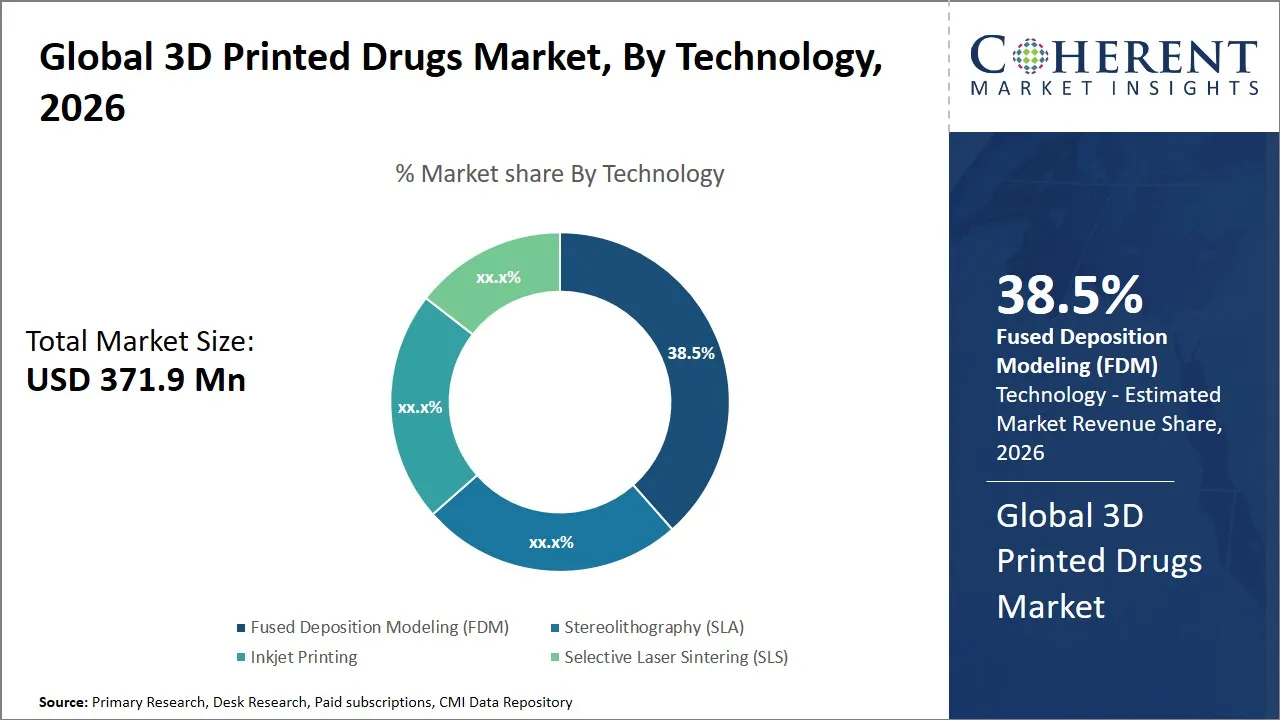
- By technology, Fused Deposition Modeling (FDM) segment is expected to lead the global 3D printed drugs market with a 38.5% share in 2026.
- By application, personalized medicine segment is estimated to hold the largest share at 33.5% in 2026.
- In terms of end user, pharmaceutical companies segment is projected to dominate the market with a 23.4% share in 2026.
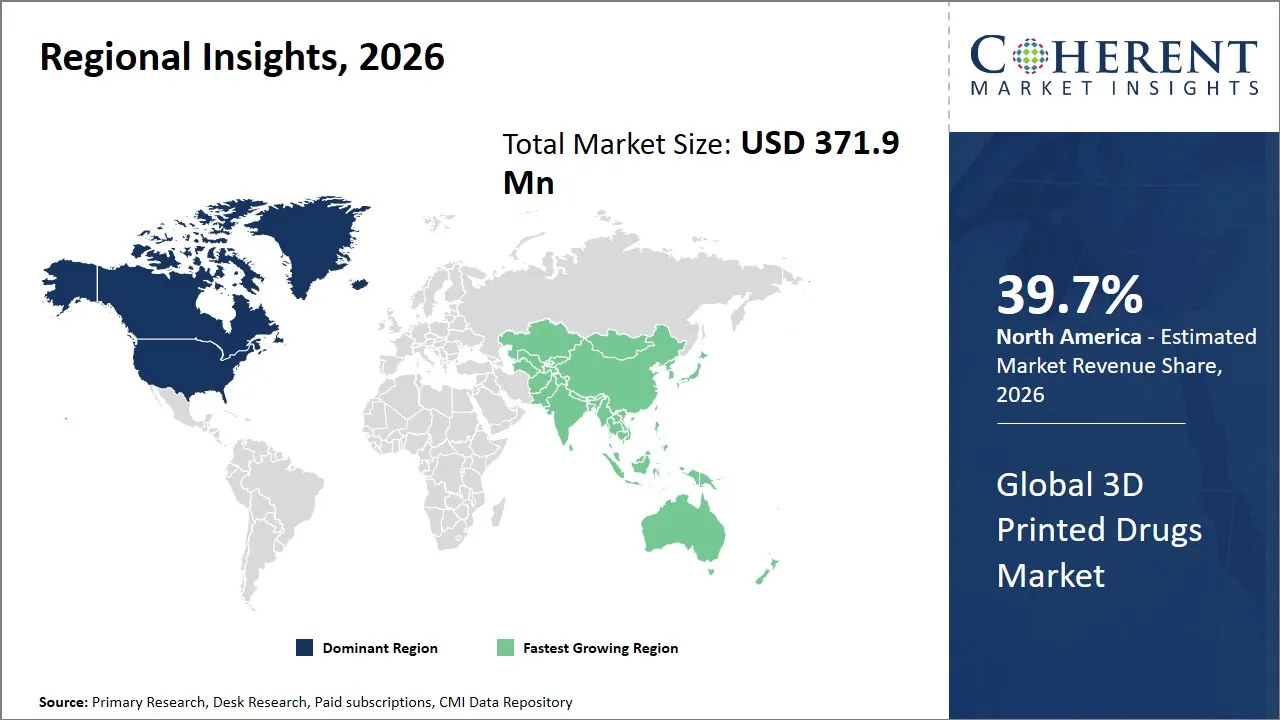
- North America is expected to lead the market, holding a share of 39.7% in 2026.
- Asia Pacific is anticipated to be the fastest-growing region, with 24.5% share in 2026.
Market Overview
- A key trend shaping the 3D printed drugs market is the rise of personalized medicine, allowing for tailor-made drug formulations suited to individual patient needs, improving therapeutic efficacy.
- Additionally, collaborations between pharmaceutical companies and 3D printing technology providers are accelerating innovation, such as multi-drug tablet printing and on-demand drug production.
- Regulatory bodies are also evolving their frameworks to accommodate 3D printed pharmaceuticals, which is expected to boost market acceptance and commercialization in the forthcoming years.
Current Events and Its Impact
Current Events | Description and its Impact |
Regulatory Advancements in 3D Printing for Pharmaceuticals |
|
Strategic Partnership Between a Major Pharma (e.g., GSK) and a 3D Printing Tech Firm (e.g., Stratasys) |
|
Segmental Insights
- Current Industry Events of 2026
- Market Size Estimation
- Regional Breakdown
- Competitive Landscape
- Customer Intelligence
- Segmental Analysis
- Pricing Analysis
- Key Market Drivers, Challenges & Future Trends
- Customized Insights Section
What Factors Contribute to the Dominance of Fused Deposition Modeling (FDM) Segment in the 3D Printed Drugs Market?
The Fused Deposition Modeling (FDM) represents the largest portion of the 3D printed drugs market, with a projected share of 38.5% in 2026, due to its flexibility, affordability, and flexibility to satisfy the pharmaceutical manufacturing needs. The FDM technology works through printing thermoplastic materials in layers to create three dimensional objects thus is quite compatible with the creation of personalized dosage delivery and complex delivery systems.
A major factor that contributes to the dominance of FDM is that it has relatively lower equipment and material cost than other forms of 3D printing technology such as Stereolithography (SLA) or Selective Laser Sintering (SLS).
For example, in March 2023, Triastek, a healthcare company specializing in 3D printing technology, announced a collaboration with Boehringer Ingelheim China. The partnership aims to use Triastek’s proprietary MED 3D printing technology to advance the development of new chemical entity dosage forms. The collaboration focuses on accelerating the creation of innovative pharmaceutical products using 3D printed drugs. Their research focuses on creating customized drug delivery systems for complex treatments.
(Source: https://www.triastek.com/detail/19.html)
How Does Personalized Medicine Drive Growth in the 3D Printed Drugs Market?
In the 3D printed drugs market, the personalized medicine segment is expected to take the largest market share of 33.5% in 2026, due to the increased need of personalized therapeutic regimen and improved therapeutic performances. Personalized medicine is the customization of drug formulations, dosage and route of delivery to the individual genetic composition, disease pathology, lifestyle, and metabolic characteristics of a patient.
In this field, 3D printing has become an enabling technology since it enables the use of physical and chemical properties of drugs to be controlled precisely. One of the contributing factors to the rising popularity of personalized medicine in this industry is the growing clinical awareness of the shortcomings of the one-size-fits-all approach to pharmacotherapy.
3D Printed Drugs Market Insights, By End User – Pharmaceutical Companies Lead the Market by Driving Innovation and Scale
Pharmaceutical companies have the highest share of the 3D printed drugs market with an estimated 23.4% share in 2026, due to their central position in the drug development, commercialization, and investment in new manufacturing technologies.
They are on the leading edge of adopting 3D printing technologies into their product development cycle to transform drug formulation and delivery technologies. The nature of the competitive advantage presented by the 3D printed drugs like customization, rapid prototyping, and improvement of bioavailability compels the pharmaceutical firms to lead the uptake of these new processes.
Regulatory Approvals and Pilot Programs Boosting 3D Printed Drug Adoption
- Regulatory recognition, particularly early USFDA approvals, plays a crucial role in accelerating the adoption of 3D printed drugs. The approval of novel drugs like Spritam, the first 3D printed drug to gain USFDA approval, exemplifies how regulatory backing builds trust in this technology, paving the way for broader industry acceptance. Such approvals validate the safety and efficacy of 3D printing in pharmaceuticals, prompting other stakeholders to follow suit.
- Pilot programs further de-risk investment by allowing manufacturers to test 3D printing technologies in real-world settings before large-scale production. These programs provide valuable insights into manufacturing processes, scalability, and cost-efficiency, while fostering innovation. As more companies engage in these pilots, the market gains momentum, reducing uncertainty and encouraging investments in 3D printed drugs.
- In June 2024, Aprecia Pharmaceuticals made history with the USFDA approval of Spritam, the first 3D printed drug. This breakthrough uses 3D printing to improve dosage accuracy, reduce pill burden, and enhance patient care. Aprecia's success highlights the potential of additive manufacturing in the pharmaceutical industry, offering benefits like increased absorption and efficacy.
(Source: https://aprecia.com/resources/press/fda-approves-the-first-3d-printed-drug-product/)
Regional Insights
North America 3D Printed Drugs Market Analysis and Trends
North America, with a mature pharmaceutical ecosystem, advanced healthcare infrastructure, and progressive regulatory systems, is expected to dominate the global 3D printed drugs market, holding a 39.7% share in 2026. The area also enjoys heavy investment in healthcare innovation and the U.S Food and Drug Authority (FDA) also encourages development of the 3D printing technology with clear guidelines and easy approvals to develop personalized medicine.
Indicatively, Merck has been experimenting with 3D printing in development of drugs. The firm has been involved in some pilot projects to determine the scalability of 3D printing technology in personalized medicines. The involvement of Merck shows the increased interest in using 3D printing to simplify the production process, minimize expenses, and improve the accuracy of drug formulations, which is consistent with the trends in regulation and innovation in the North American market.
Asia Pacific 3D Printed Drugs Market Analysis and Trends
The Asia Pacific region is expected to exhibit the fastest growth in the market contributing 24.5% share in 2026, because of the rapid progress of the Asian healthcare infrastructure, the intensification of the governmental efforts to facilitate pharmaceutical development, and the increase in the number of patients requiring individual medicines. Regulatory developments, including positive trends in public-private investment and regulatory approach, have been facilitating active investment in additive manufacturing technologies to develop drugs by countries such as China, India, and Japan.
The Made in China 2025 program of China and India concentration on increasing the domestic production of pharmaceuticals help in the implementation of such transformative technology as 3D printing. The main industry suppliers like Sandoz (Novartis branch in the APAC market), Suzhou Medical Appliance Technology Co., and Fuji 521 Diosynth Biotechnologies are using the cost-efficiency and local talent to innovate on the same.
3D Printed Drugs Market Outlook for Key Countries
How Fast is the U.S. 3D Printed Drugs Market Growing?
The market for 3D printed drugs in the U.S. has a well-developed ecosystem that includes regulatory support, innovation centers, and pharmaceutical giants that are interested in the development of 3D printed drugs. Aprecia Pharmaceuticals pioneered the way to receive the first FDA approval of a 3D printed drug, and further developments may be made.
Johnson and Johnson and Pfizer are studying 3D printing that can improve the dosage forms and lower production expenses. The focus of the country on personalized medicine, with government funding and venture capital, makes the U.S. one of the leaders in clinical trials to determine the effectiveness and safety of 3D printed drugs.
What Factors are Driving the Adoption of 3D Printed Drugs in China’s Pharmaceutical and Healthcare Sectors?
The China 3D printing drugs market is one of the fast-developing industries with the government putting huge investments to align advanced manufacturing technologies such as 3D printing in drug production. Drug delivery solutions are increasingly being adjustable within regulatory frameworks.
The contribution of domestic firms like Suzhou Medical Appliance Technology Co., and even the partnership with international firms like Novartis is increasing research and commercialization efforts. The large size of Chinese healthcare market and increased demand of complex drug formulations support the fast adoption of 3D printed pharmaceuticals.
Japan 3D Printed Drugs Market Trends
The market for 3D printed drugs in Japan is characterized by the fact that the government supports the innovation of medical technologies and has a well-structured pharmaceutical sector that focuses on precision medicine. Such companies as FujiFIlm Diosynth Biotechnologies are involved in research of new approaches to drug delivery based on the 3D printing.
There is also the intervention of the country in favor of public-private partnerships that stimulate the creation of R&D relating to the integration of additive manufacturing with the production of biopharmaceuticals. Ageing demographics in Japan boost the demand of customized drugs, thus promoting the development of 3D printed drugs.
Germany 3D Printed Drugs Market Trends
Germany is the most dominant European market, which has developed pharmaceutical and engineering industries. Regulatory authorities have quite careful yet progressive attitudes towards 3D printed drugs, allowing pilot programs and regulated commercialization.
Big businesses like Bayer and Merck KGaA invest in technological alliances with technology startups in 3D printing. The high export orientation of Germany and the powerful intellectual property system promote trade in technology across borders and market growth in Europe.
End User Feedback and Unmet Needs for the Global 3D Printed Drugs Market:
- End user feedback in the global 3D printed drugs market shows both satisfaction and concerns. Positive feedback highlights the precision and customization offered by 3D printing, with products like Aprecia Pharmaceuticals' Spritam praised for better dosage accuracy and patient adherence. However, scalability remains a challenge, as users report high production costs and limited material options for large-scale manufacturing.
- Unmet needs include a lack of affordable, customizable solutions, especially for patients in underserved regions. Addressing these issues, such as reducing production costs and improving material access, could drive market growth, improve patient care, and inspire further innovation, opening new opportunities for on-demand drug printing and expanding customization in treatment.
Market Players, Key Developments, and Competitive Intelligence
Key Developments
- On January 13, 2026, CurifyLabs unveiled its latest innovation, the PharmaPrinter Aurum, designed to enhance pharmaceutical compounding. This advanced 3D printer speeds up the compounding process by up to 9x compared to manual methods. It features a modern, compact design that is ideal for smaller labs but still supports high-volume production. The PharmaPrinter Aurum also offers ease of use with a large touchscreen, quick-lock syringe mounts, and integrated quality control.
- On January 12, 2026, the British Columbia Cancer Kelowna Centre announced the use of a 3D printer to create patient-specific tools for brachytherapy. This innovation allows for more accurate radiation delivery in patients with cervical, vaginal, and recurrent endometrial cancers. The 3D-printed applicators, tailored to each patient's MRI and CT scans, improve radiation precision and protect surrounding healthy tissue, leading to better treatment outcomes.
- In June 2024, FABRX, a U.K.-based pharmaceutical printing startup, announced the establishment of FABRX U.S. to cater to the growing demand for personalized medicine across the American market. This move allows the company to better serve the U.S. healthcare sector by leveraging its advanced pharmaceutical 3D printing technology. FABRX is known for its M3DIMAKER 3D printers and innovative software, which enables the creation of custom drug formulations.
- In May 2024, researchers from the University of Nottingham developed a new method for 3D printing personalized pills using Multi-Material InkJet 3D Printing (MM-IJ3DP). This innovation allows multiple drugs in a single pill with controlled release, improving treatment accuracy. The technology, capable of printing 56 pills in one batch, shows great potential for scaling personalized medicine production.
Top Strategies Followed by Global 3D Printed Drugs Market Players
Player Type | Strategic Focus | Examples |
Established Market Leaders | Focus on large-scale production, international expansion, and acquiring patents to dominate the market. They prioritize building extensive distribution networks and investing in cutting-edge 3D printing technologies to expand their portfolios. | Companies like Aprecia Pharmaceuticals and FabRx lead the market by creating partnerships with pharmaceutical giants and providing innovative solutions for personalized drug formulations. They scale up production and focus on global reach. |
Mid-Level Players | Develop specialized applications and targeted solutions for specific healthcare needs, often in partnership with healthcare providers, universities, and smaller pharma companies to provide tailored offerings. | Mid-level players such as CurifyLabs and 3D4MD collaborate with hospitals and specialized clinics to create 3D printed solutions that meet specific needs in personalized medicine or small-batch drug production. |
Small-Scale Players | Focus on experimental drugs, niche markets, and small-scale manufacturing. They often work with academic institutions or healthcare centers to push the boundaries of 3D printing and drug customization. | Small players such as TRIPHARMA and BioFab3D develop prototypes for customized drugs, often experimenting with bioprinting and aiming to create high-value solutions for rare or specific health conditions. |
Market Report Scope
3D Printed Drugs Market Report Coverage
| Report Coverage | Details | ||
|---|---|---|---|
| Base Year: | 2025 | Market Size in 2026: | USD 371.9 Mn |
| Historical Data for: | 2020 To 2024 | Forecast Period: | 2026 To 2033 |
| Forecast Period 2026 to 2033 CAGR: | 8.9% | 2033 Value Projection: | USD 688.2 Mn |
| Geographies covered: |
| ||
| Segments covered: |
| ||
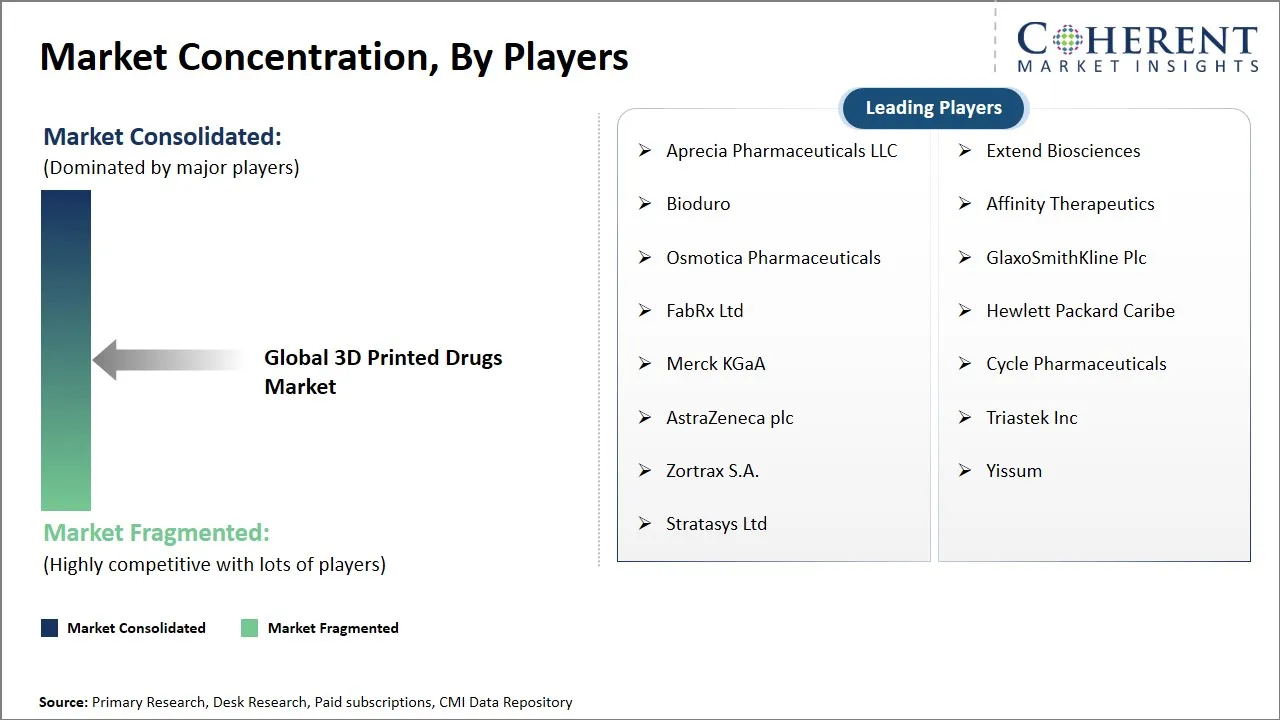
| Companies covered: | Aprecia Pharmaceuticals LLC, Extend Biosciences, Bioduro, Affinity Therapeutics, Osmotica Pharmaceuticals, GlaxoSmithKline Plc, FabRx Ltd, Hewlett Packard Caribe, Merck KGaA, Cycle Pharmaceuticals, AstraZeneca plc, Triastek Inc, Zortrax S.A., Yissum, and Stratasys Ltd | ||
| Growth Drivers: |
| ||
| Restraints & Challenges: |
| ||
3D Printed Drugs Market Dynamics
3D Printed Drugs Market Driver - Rising Demand for Personalized Medicine and On ‑Demand Drug Production
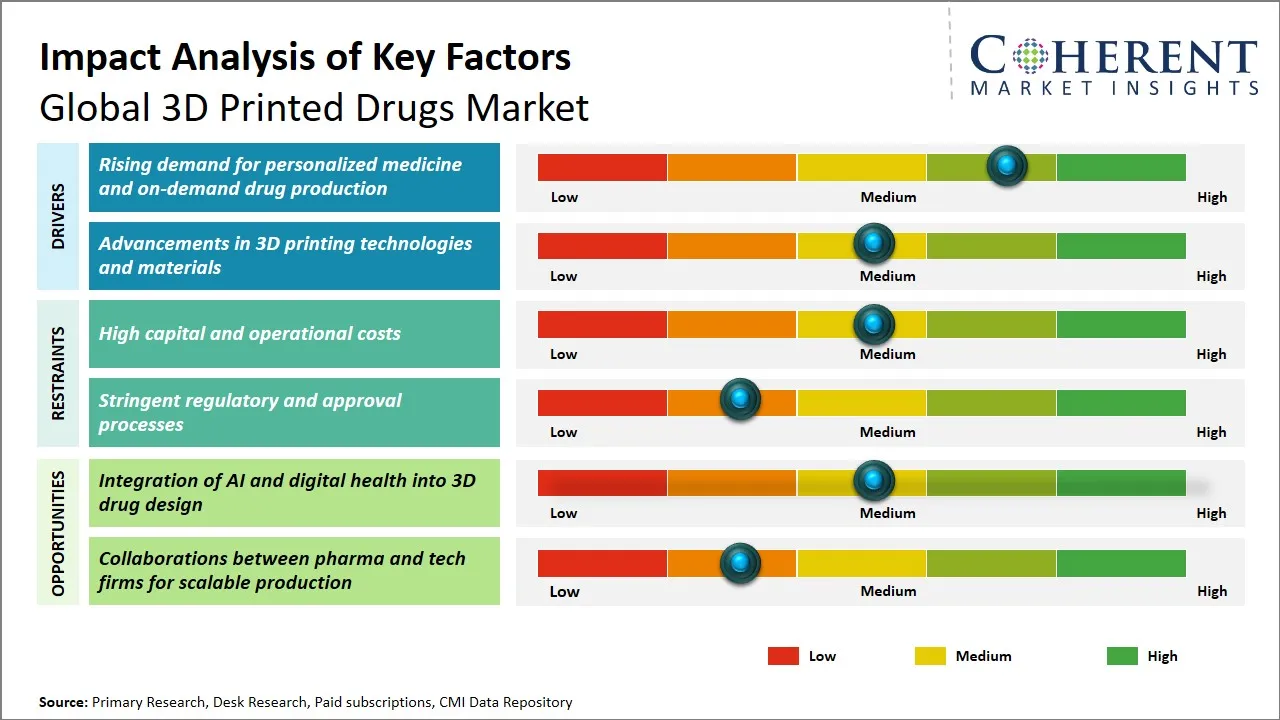
The increasing trend of personalized medicine is also driving the use of 3D printed drugs to a major degree, because the innovation enables the personalization of pharmaceutical dosages and formula to meet the needs of specific patients. The methods of traditional mass production are not always the most flexible to provide treatment of unique genetic profiles, age groups, or co-morbidities, but 3D printing allows a very accurate control over the composition of drugs, effects and shape of their release, leading to a better treatment effect and reduced side effects. The on-demand, point of care production of drugs also minimizes reliance on high quantities of inventories and complicated supply chains, which is particularly important in rare diseases or fast-changing leagues of diseases. Such agility does not only enhance patient outcomes because of timely access to personalized medications but also helps medical workers to optimize treatment protocols.
For example, companies like Aprecia Pharmaceuticals have leveraged 3D printing to develop Spritam, a medication for epilepsy, which is designed to dissolve rapidly in the mouth. This customization improves patient compliance, especially for those who have difficulty swallowing pills. Another example is FabRx, which offers M3DIMAKER 3D printers that enable pharmaceutical manufacturers to create personalized drug dosages tailored to specific patient needs.
(Source: https://aprecia.com/resources/additive-manufacturing-3d-printed-pills/)
3D Printed Drugs Market Opportunity - Integration of AI and Digital Health into 3D Drug Design
The combination of artificial intelligence (AI) and digital health technology in 3D drug design is posing a revolutionary opportunity in the worldwide market of 3D printed drugs. The convergence makes it possible to create highly personalized medication and optimize the drug formulations on the individual patient level, depending on genetic, metabolic, and lifestyle information. The algorithms based on AI can examine large amounts of data to forecast drug interactions, dose optimization, and improve the accuracy of the release pattern of drugs in 3D-printed medicines.
In addition, online health systems provide uninterrupted monitoring of patients, which can provide real-time feedback to adjust the regimen of the administered drug dynamically, thereby enhancing treatment and reducing side effects. This synergy will result in shorter time lines in drug development, because it allows rapid prototyping and testing of more complex drug structures, which is not possible with conventional manufacturing.
For example, CurifyLabs exemplifies how digital health platforms are enhancing 3D drug design. The company's PharmaPrinter Aurum integrates with digital health tools to monitor patients' responses to medication in real-time. Another prominent example is XtalPi, a digital pharmaceutical company that applies AI and quantum computing to drug discovery and formulation.
(Source: https://news.curifylabs.com/)
Analyst Opinion (Expert Opinion)
- The 3D printed drugs market is rapidly expanding because of technological innovations, patient need to have personalized medicine, and regulatory favoritism. 3D printing enables drug formulations to be precisely tailored to every patient, which is in line with the move towards patient-centered medicine. It has also been facilitated by regulatory bodies like USFDA. Nonetheless, there is the problem of scalability, cost and infrastructure.
- Conferences such as the 3D printing in medicine conference and additive manufacturing pharmaceuticals summits have been instrumental in bringing about the discussion on regulation, innovation and industry collaboration. The push of the market by companies such as Merck and pilot projects in the U.S. and EU are creating the basis of more efficient production of drugs that are more personalized.
Speak to the analyst
Want personalized insights?
Take the findings above to one of our principal consultants, or have the report rebuilt around the segments, geographies and competitors you actually track.
Market Segmentation
- Technology Insights (Revenue, USD Mn, 2021- 2033)
- Fused Deposition Modeling (FDM)
- Stereolithography (SLA)
- Inkjet Printing
- Selective Laser Sintering (SLS)
- Application Insights (Revenue, USD Mn, 2021- 2033)
- Personalized Medicine
- Drug Delivery Systems
- Tissue Engineering
- Clinical Research and Trials
- End User Insights (Revenue, USD Mn, 2021- 2033)
- Pharmaceutical Companies
- Biotechnology Companies
- Contract Research Organizations (CROs)
- Academic and Research Institutes
- Hospitals and Clinics
- Drug Type Insights (Revenue, USD Mn, 2021- 2033)
- Small Molecule Drugs
- Biologics (e.g., Proteins Monoclonal Antibodies)
- Product Form Insights (Revenue, USD Mn, 2021- 2033)
- Tablets
- Capsules
- Injectable
- Other Forms (e.g., Microparticles Patches)
- Material Type Insights (Revenue, USD Mn, 2021- 2033)
- Polymers
- Biodegradable Materials
- Hydrogels
- Metals
- Distribution Channel Insights (Revenue, USD Mn, 2021- 2033)
- Online
- Offline
- Regional Insights (Revenue, USD Mn, 2021- 2033)
- North America
- U.S.
- Canada
- Latin America
- Brazil
- Argentina
- Mexico
- Rest of Latin America
- Europe
- Germany
- U.K.
- Spain
- France
- Italy
- Russia
- Rest of Europe
- Asia Pacific
- China
- India
- Japan
- Australia
- South Korea
- ASEAN
- Rest of Asia Pacific
- Middle East
- GCC Countries
- Israel
- Rest of Middle East
- Africa
- South Africa
- North Africa
- Central Africa
- North America
- Key Players Insights
- Aprecia Pharmaceuticals LLC
- Extend Biosciences
- Bioduro
- Affinity Therapeutics
- Osmotica Pharmaceuticals
- GlaxoSmithKline Plc
- FabRx Ltd
- Hewlett Packard Caribe
- Merck KGaA
- Cycle Pharmaceuticals
- AstraZeneca plc
- Triastek Inc
- Zortrax S.A.
- Yissum
- Stratasys Ltd
Sources
Primary Research Interviews
Industry Stakeholders List
- Pharmaceutical Manufacturers
- Medical Device Companies
End users List
- Hospitals
- Compounding Pharmacies
Government and International Databases
- U.S. Food and Drug Administration (FDA)
- European Medicines Agency (EMA)
- World Health Organization (WHO)
- U.S. National Institutes of Health (NIH)
- Medicines and Healthcare products Regulatory Agency (MHRA)
- U.S. Centers for Disease Control and Prevention (CDC)
Trade Publications
- Pharmaceutical Technology
- 3D Printing Industry
- Drug Development and Delivery
- The Pharmaceutical Journal
- Pharma Manufacturing
- Pharmaceutical Processing
Academic Journals
- Journal of Pharmaceutical Sciences
- International Journal of Pharmaceutics
- Additive Manufacturing
- Journal of Controlled Release
- Journal of Drug Delivery Science and Technology
- European Journal of Pharmaceutics and Biopharmaceutics
Reputable Newspapers
- The New York Times
- The Wall Street Journal
- The Guardian
- Financial Times
- The Washington Post
- BBC News
Industry Associations
- International Pharmaceutical Federation (FIP)
- American Pharmaceutical Association (APhA)
- The Pharmaceutical Society of Australia (PSA)
- European Federation of Pharmaceutical Industries and Associations (EFPIA)
- Biotechnology Innovation Organization (BIO)
- The Royal Pharmaceutical Society (RPS)
Public Domain Resources
- U.S. National Library of Medicine (PubMed)
- National Institutes of Health (NIH) Database
- European Medicines Agency (EMA) Public Access
- U.S. Patent and Trademark Office (USPTO)
- ClinicalTrials.gov
- National Center for Biotechnology Information (NCBI)
Proprietary Elements
- CMI Data Analytics Tool: Proprietary analytics tool to analyze real-time market trends, consumer behavior, and technology adoption in market
- Proprietary CMI Existing Repository of Information for Last 8 Years
Get access to 250+ pages report
Every segment, forecast, competitor profile and data table behind the analysis above — available for instant download.
- ESOMAR Member
- ISO 9001:2015 Certified
- D-U-N-S Registered
- GDPR & CCPA Compliant
Missing comfort of reading report in your local language? Find your preferred language:
Transform your Strategy with Exclusive Trending Reports
Frequently Asked Questions
The global 3D printed drugs market is estimated to be valued at USD 371.9 Mn in 2026 and is expected to reach USD 688.2 Mn by 2033.
The CAGR of global 3D printed drugs market is projected to be 8.9% from 2026 to 2033.
Rising demand for personalized medicine and on‑demand drug production and advancements in 3D printing technologies and materials are the major factors driving the growth of the global 3D printed drugs market.
High capital and operational costs and stringent regulatory and approval processes are the major factors hampering the growth of the global 3D printed drugs market.
In terms of technology, Fused Deposition Modeling (FDM) is estimated to dominate the market revenue share in 2026.
Aprecia Pharmaceuticals LLC, Extend Biosciences, Bioduro, Affinity Therapeutics, Osmotica Pharmaceuticals, GlaxoSmithKline Plc, FabRx Ltd, Hewlett Packard Caribe, Merck KGaA, Cycle Pharmaceuticals, AstraZeneca plc, Triastek Inc, Zortrax S.A., Yissum, and Stratasys Ltd are the major players.
3D printing allows for more precise drug formulations, personalized doses, and faster production cycles compared to traditional methods.