

Global Active Wear Market Size and Forecast – 2026 to 2033
According to Coherent Market Insights, the global active wear market is estimated to be valued at USD 338.97 Bn in 2026 and is expected to reach USD 526.75 Bn by 2033, exhibiting a compound annual growth rate (CAGR) of 6.5% from 2026 to 2033.
Key Takeaways of the Active Wear Market
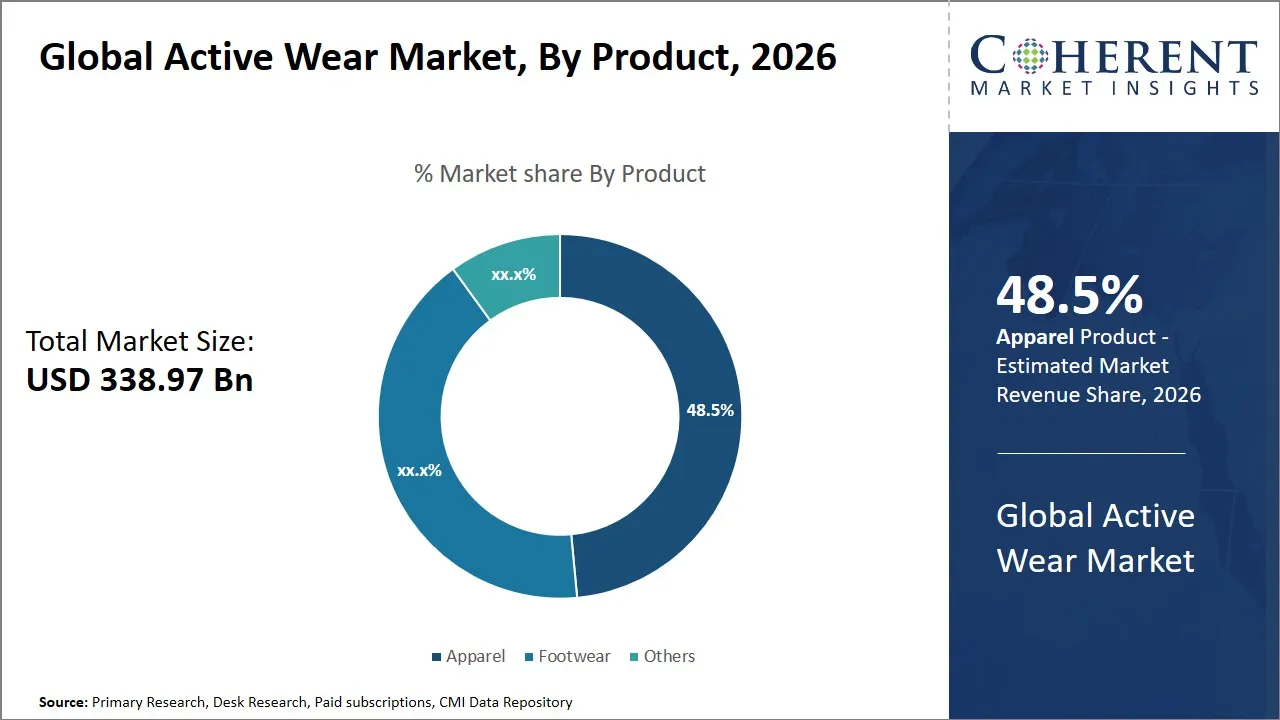
- The apparel segment is expected to account for a dominant 48.5% share of the global active wear market in 2026.
- Cotton emerges as the dominant material, accounting for an estimated 45.2% share of the global active wear market in 2026, driven by its superior comfort, breathability, and natural appeal.
- The men segment is projected to command 72.7% share of the global active wear market in 2026, driven by rising health awareness and shifting social trends in men’s fashion and fitness.
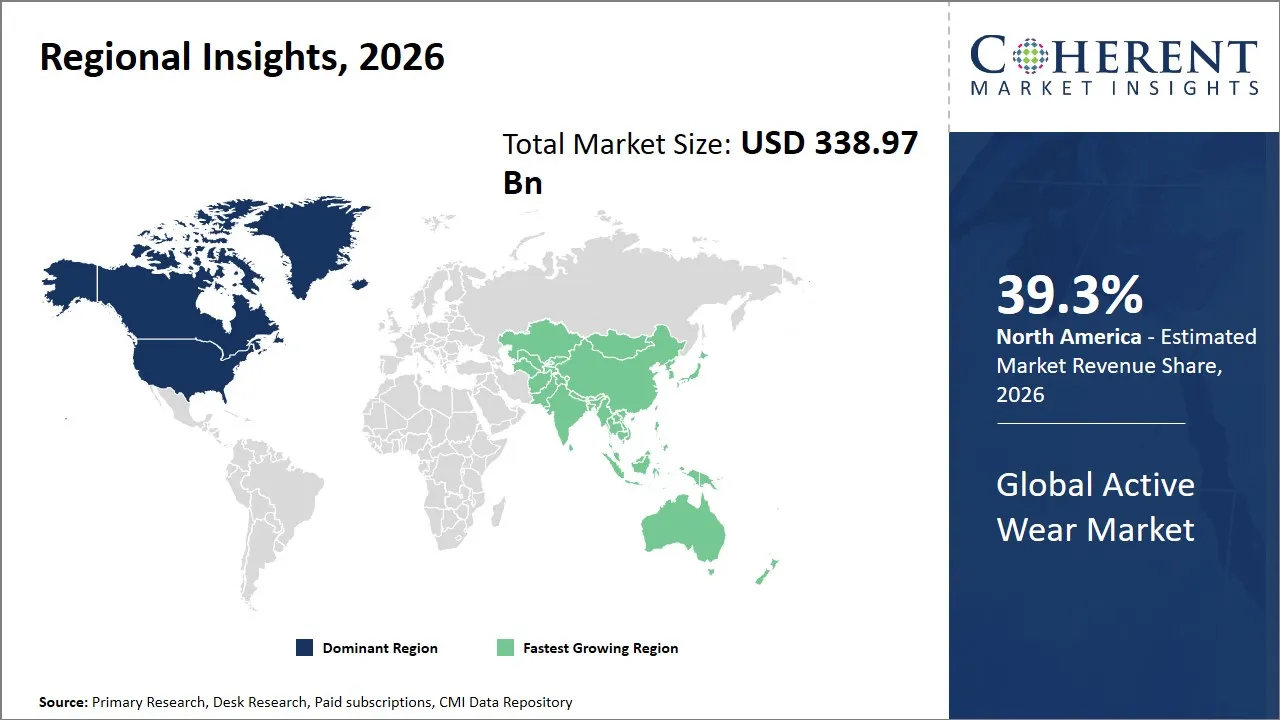
- North America is projected to lead the market with a 39.3% share in 2026, driven by high consumer awareness, a strong sports culture, and robust fitness-related spending.
- Asia Pacific is expected to be the fastest-growing region, accounting for 21.3% share in 2026, driven by urbanization, rising health awareness, and expanding middle-class incomes.
Market Overview
- Market trends indicate a strong shift towards sustainable and eco-friendly active wear, as consumers prioritize environmental impact alongside functionality.
- Additionally, digital transformation in retail, including augmented reality for virtual try-ons and personalized shopping experiences, is reshaping market dynamics.
- The rise of athleisure as a fashion statement further blurs the line between sportswear and casual wear, fast fashion, expanding the target demographic and boosting market demand globally.
Currents Events and Its Impacts
Current Events | Description and its impact |
U.S. import tariff pressure on apparel/footwear supply chains |
|
EU’s implementation of Extended Producer Responsibility (EPR) for textiles and footwear |
|
Segmental Insights
- Current Industry Events of 2026
- Market Size Estimation
- Regional Breakdown
- Competitive Landscape
- Customer Intelligence
- Segmental Analysis
- Pricing Analysis
- Key Market Drivers, Challenges & Future Trends
- Customized Insights Section
Why is the Apparel Segment Expected to Dominate the Active Wear Market in 2026?
Apparel segment is expected to command 48.5% share in the global active wear market in 2026. This supremacy is highly contributed by the fact that more consumers are becoming attracted to versatile and comfortable wear that is both functional and stylish. Active wear fashion, which includes leggings, sports bras, shorts, jackets and tops, has become so popular in the world as a trend of clothing not only in exercises but also in everyday life due to the increasing trend of athleisure.
Customers want clothes that will be easy to wear during fitness but also after the gym during down time and even semi-formal events, thus stimulating the development of lightweight, breathable, and moisture-wicking products.
For example, brands like Lululemon have capitalized on this shift, blending high-performance fabrics with sleek designs, creating clothing that is not only suitable for exercise but also for everyday activities. The brand's leggings and tops, often worn in both workout settings and casual outings, exemplify the growing demand for multifunctional clothing.
Why is Cotton the Preferred Material in the Active Wear Market?
Cotton segment is expected to hold 45.2% share of the active wear market in 2026. The natural softness of cotton and its ability to absorb moisture makes it the most appropriate in the active wear category especially amongst consumers who are after comfort in their daily activities and at the same time require their active wear to be quite useful. Its capacity to control the temperature and ensure ventilation of the skin makes cotton a favored fabric among a wide group of customers such as those with sensitive skin and who are more inclined to use natural rather than synthetic fabrics.
The issue of sustainability has been very relevant in ensuring cotton retains its market share. Consumers are becoming more concerned with green products, as the environmental awareness level increases. Sustainable and organic cotton is on the rise and this is in tandem with the world adopting the move towards minimizing environmental footprints. Responsibly grown cotton brands, in combination with transparent supply chains are appealing to environmentally conscious customers who do not sacrifice comfort or performance.
Men Dominates the Active Wear Market
Men segment is projected to hold 72.7% share of the global active wear market in 2026. Male consumers have demonstrated a more active lifestyle, with a tendency to take up many forms of sports, physical workouts at the gym, and other recreational activities. This trend in behavior has given rise to a constant need in regard to specialized active wear that deals with performance enhancement, life cycle as well as practical comfort.
Some of the reasons behind men’s active wear include the emphasis on technological fabrics advancement to match the strict activity requirements. Active wear by men frequently incorporates performance fabrics that provide attributes such as sweat-wicking, antimicrobial and thermal properties which are highly applicable to vigorous exercise programs and outdoor activities. These features are particularly attractive to young and middle-aged men who are concerned with the utility and style of their fitness wardrobe.
Regional Insights
North America Active Wear Market Analysis and Trends
The North America region is projected to lead the market with a 39.3% share in 2026, because of a well-developed market ecosystem with high rate of consumer awareness, strong sports culture and high discretionary income on fitness and lifestyle apparel. Having giant players in the industry like Nike, Under Armour and Lululemon Athletica fortifies the markets’ role in the region due to its relentless innovation in the fabric technology and wide ranges of stores.
Health and wellness promotion by governments, as well as the large number of people engaging in recreational and professional sports activities, are also stimulating demand. Also, there are strong supply chains and well-developed e-commerce platforms, which allow effective distribution and an omnichannel. The dynamics of trade with the countries of the surrounding area also presuppose the inflow of various active wear, which contributes to the market growth as well as promotes the competitiveness of the domestic brand.
Asia Pacific Active Wear Market Analysis and Trends
The Asia Pacific region is expected to exhibit the fastest growth in the market contributing 21.3% share in 2026, because of increasing urbanization, rising health consciousness, and broadening middle-class demographic with more disposable income. The demand in countries such as China, India, and Southeast Asian countries is increasing due to the transition of youth population to fitness trends and athleisure products as daily apparel.
The policies by the government to promote sports activities and investments on sports facilities help enhance the market base. The fact that improved manufacturing capacities and the presence of global and local brands (Adidas, Puma, Lululemon and Decathlon) are increasing is also benefiting the regional ecosystem. Consumer reach is increasing due to trade liberalization and widening e-commerce penetration that drives active wear to expand its branded products, making them more accessible and driving a high market penetration.
Global Active Wear Market Outlook for Key Countries
Why is the U.S. the World’s Most Influential Active Wear Market?
The U.S. active wear market is driven by a blend of sophisticated consumer preferences and robust brand loyalty toward established players such as Nike, Under Armour, and Lululemon. Such companies never stop investing in innovation and to meet the needs of eco-conscious and tech-savvy consumers are incorporating sustainable material and smart fabrics. The large fitness demographic in the country, including yoga and running, to CrossFit, can be used to accommodate a variety of product segments. Physical and online retail giant companies offer excellent distribution, and partnerships with athletes and influencers allow keeping the brand visible and engaging consumers.
China Active Wear Market Trends
China’s active wear market reflects rapid expansion due to rising urban fitness trends and governmental promotion of a healthy lifestyle. Local brands, such as Anta Sports, are posing challenges to international brands like Adidas and Nike as they seek to expand their competitiveness by making acquisitions and improving their quality. The manufacturing process of the regions enables the effective production and quick reaction to the trends in the markets. In addition, online shopping websites such as Tmall and JD.com increase the coverage, and branded active wear can reach a large number of consumers, including developing smaller cities and tier-two areas.
India Active Wear Market Trends
The active wear market of India is growing due to rising fitness awareness, young demographic, and increased sports and gym culture. International brands such as Puma and Adidas, along with domestic brands like HRX by Hrithik Roshan, leverage celebrity endorsements to target younger audiences. The Khelo India program and the other government initiatives are helping encourage sports activity and the development of online retailing infrastructure.
Why is Germany Leading the European Active Wear Market?
Germany has remained on the top of the European active wear segment. There are also companies such as Adidas which are based here and are pivotal in the global and local environment since they focus on performance-oriented products and environmentally sustainable practices. There are a lot of sport clubs and recreation, which contributes to constant demand. Also, the policies of the governments promote physical exercise, which stimulates the market. Germany is also used as a center of distribution in Europe which consists of both effective logistics and retail eco-systems.
Brazil Active Wear Market Trends
The active wear market in Brazil is supported by the dynamic culture of sports activities, especially soccer, and fitness activities, and an increasing urban consumer culture. Companies like Olympikus, and global brands like Nike take advantage of active wear. The retail environment comprises of both physical stores and the growing online platforms, which enable penetration on a larger scale. Policies that are related to local manufacturing and trade also contribute to the formation of competitive pricing and product availability.
Price vs Performance Elasticity for the Active Wear Market
Segment | Price Sensitivity | Elasticity Insight |
Professional Athletes | Low | Performance-driven buyers; price is secondary to measurable gains |
Serious Fitness Enthusiasts | Medium | Will pay premiums if performance benefits are clear and credible |
Outdoor & Adventure Users | Medium | Performance and durability justify moderate price premiums |
Women-Specific Performance Wear | Medium | Balanced elasticity; value placed on fit, comfort, and function |
Lifestyle/Athleisure Consumers | High | Style and price dominate; performance is a secondary filter |
Macro and Micro Economic Factors Impacting Active Wear Market
Factor Category | Factor | Mechanism |
Macro – Consumer Spending | Inflation & Purchasing Power | Persistent inflation can suppress luxury activewear purchases. |
Macro – Demographics | Urbanization & Health Consciousness | Urban middle class prioritizes wellness apparel. |
Macro – Technology & Innovation | Fabric Tech & Digital Retail | Tech increases product differentiation; online boosts penetration. |
Market Players, Key Development, and Competitive Intelligence
Key Developments
- In August 2025, Columbia Sportswear Company unveiled a bold new brand chapter in its nearly 90-year history with a campaign that harkens back to the brand’s irreverent spirit of the '80s and '90s. “Engineered for Whatever” revives the humor and gritty gear testing that made Columbia a maverick in the outdoor industry and a beloved brand around the world.
- In March 2024, Columbia Sportswear Company, a U.S.-based manufacturer and distributor of footwear, athletic wear, ski apparel, camping equipment, and other outdoor accessories, announced the opening of its new store in Ahmedabad, India.
- In September 2023, New Balance, a U.S.-based multinational athletic performance wear company, announced the launch of its new version of the Fresh Foam X series with the latest Fresh Foam X 1080 v13 shoes.
- In October 2022, Under Armour, Inc., a U.S.-based manufacturer and marketer of branded athletic performance wear, introduced its running shoe line under the UA HOVER Phantom 3 brand for athletes and trainers.
- In October 2022, PUMA SE, a German multinational company specializing in casual and athletic footwear, opened one of the largest stores in Mumbai, India. This experiential store has dedicated sections catering to the needs of women, men, and children, and includes a customization studio for shoppers to choose the designs of their accessories and sneakers.
Top Strategies Followed by Global Active Wear Market Players
Player Type | Strategic Focus | Example |
Established Market Leaders | Heavy investment in R&D and innovation | Companies such as Nike and Adidas are always coming up with high performance fabrics, moisture controlling, and ergonomic designs to boost both output and lifespan of athletes. Lululemon specializes in textile science, precision in the fitting and they have community based product testing, which enables them to set high prices. |
Mid-Level Players | Cost-effective solutions/Partnerships with balanced quality | Puma strikes a balance between performance and lifestyle, and will frequently use designers and sports teams and celebrities to reach more people without breaking the budget. The collaboration with the suppliers of materials and local manufacturers assists these players to maximize the margins and improve product refresh cycles. |
Small-Scale Players | Niche specialization & innovative variants | For instance, brands like Gymshark gained traction through social-media-first marketing and influencer-led communities, and Girlfriend Collective differentiates itself by using recycled materials, transparent supply chains, and inclusive sizing. |
Market Report Scope
Active Wear Market Report Coverage
| Report Coverage | Details | ||
|---|---|---|---|
| Base Year: | 2025 | Market Size in 2026: | USD 338.97 Bn |
| Historical Data for: | 2020 To 2024 | Forecast Period: | 2026 To 2033 |
| Forecast Period 2026 to 2033 CAGR: | 6.5% | 2033 Value Projection: | USD 526.75 Bn |
| Geographies covered: |
| ||
| Segments covered: |
| ||
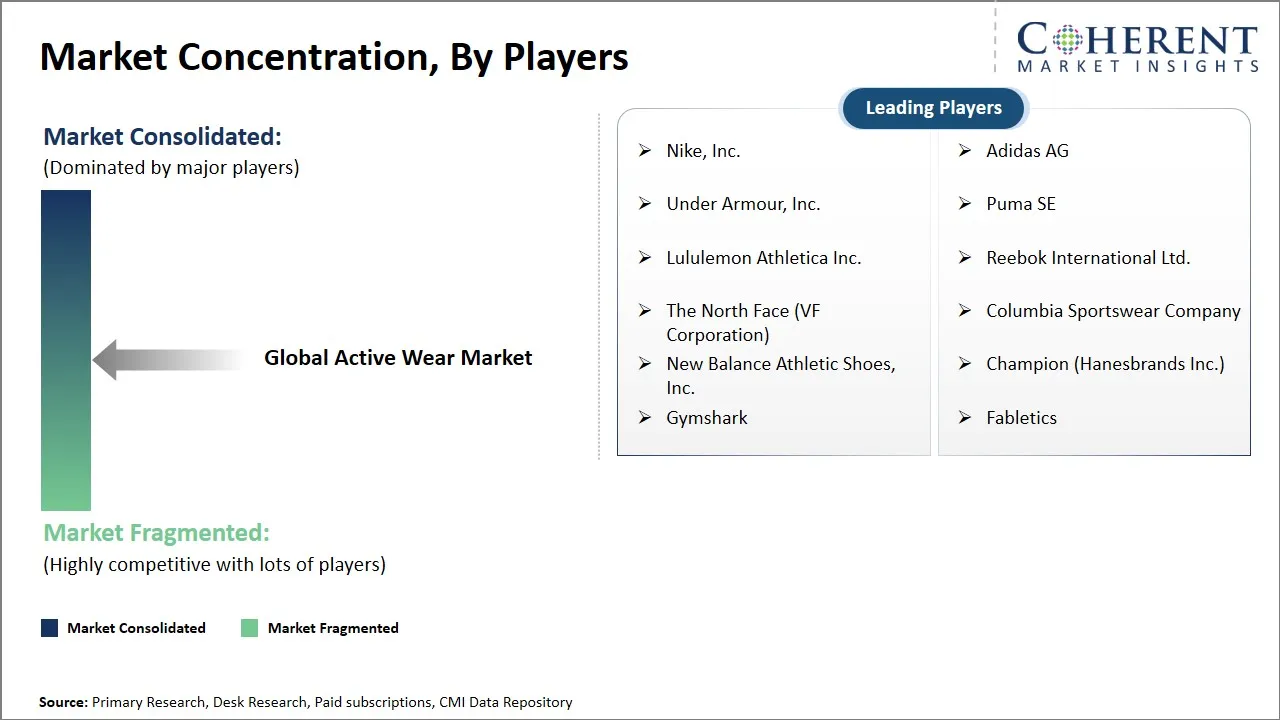
| Companies covered: | Nike, Inc., Adidas AG, Under Armour, Inc., Puma SE, Lululemon Athletica Inc., Reebok International Ltd., The North Face (VF Corporation), Columbia Sportswear Company, New Balance Athletic Shoes, Inc., Champion (Hanesbrands Inc.), Gymshark, and Fabletics | ||
| Growth Drivers: |
| ||
| Restraints & Challenges: |
| ||
Active Wear Market Dynamics
Active Wear Market Driver - Increasing Health Awareness and Fitness Trends among Consumers
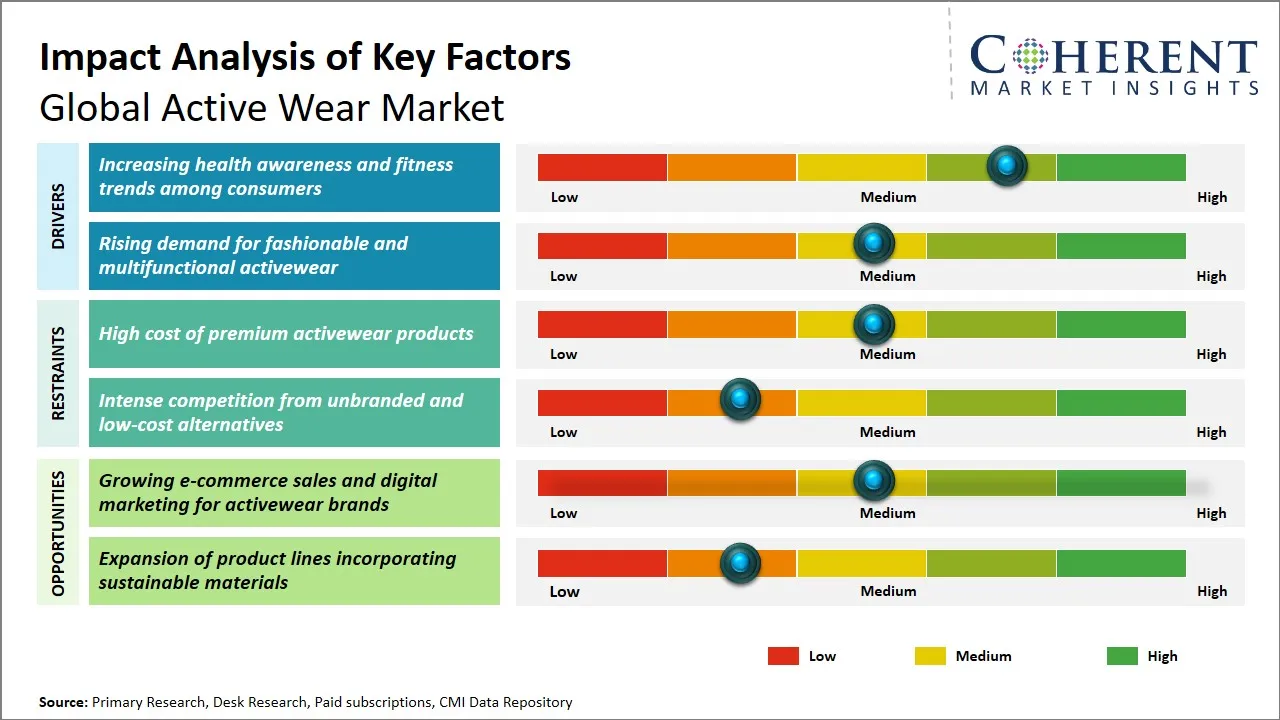
The increased interest of consumers in health and wellness is a key driver of the demand for active wear in the world. Along with the growing awareness of the necessity to keep a healthy lifestyle, the constantly increasing trend toward routine workouts, yoga, and outdoor activities is observed, which also drives the demand toward comfortable, practical, and stylish sportswear, sports equipment. The rising trend of fitness programs among all ages and the impact of social media that promotes the culture of fitness is stimulating consumers to invest in multi-purpose active wear that can easily convert into a casual apparel during the workout programs.
For example, Peloton-style workouts at home, CrossFit gyms, posh yoga studios, and even marathon culture have resulted in a direct impact on the demand for active wear, moisture-wicking, stretch, and breathable garments.
Active Wear Market Opportunity - Growing E-commerce Sales and Digital Marketing for Active wear Brands
The active wear market is experiencing a major opportunity that is due to the high rate of growth of online shopping sites and the emerging use of digital marketing campaigns by active wear clothing companies. With consumers turning to online shopping as a result of convenience, increased product choices, customization, and the customization of shopping experiences, active wear brands are using e-commerce platforms to access a larger and more varied customer base. Online marketing platforms like social media advertising, influencer partnering and target content marketing will help the brands to connect to the younger generation of consumers who are more inclined towards both style and functionality when making their decisions on active wear.
For example, digital-first brands, like Gymshark and Alo Yoga, revealed that influencer-led promotions, Instagram drops, and limited-edition launches can be used to build fast demand with minimal offline infrastructure.
Analyst Opinion (Expert Opinion)
- The active wear sector is a booming business and the reason is the cultural shift towards health and fitness coupled with the growing trend in athleisure wear. The Active wear Summit (2023) and the Global Sports Apparel Expo (2022) reflected the introduction of the most significant innovations where the companies of Lululemon and Nike are at the forefront of creating high-performance fabrics that are comfortable and styleable. The recent move by Lululemons to launch a sustainable active wear brand using recycled materials is an indication of the industry interest in being environmentally responsible as well as serving the consumer who would be eco-conscious.
- At these conferences, there was also a discussion on the growing relevance of integrating technology, including moisture-wicking and temperature control options, to improve user experience in a workout. Nevertheless, other issues such as strong competition, and the necessity to develop a new design continuously were often mentioned as obstacles to market leadership.
- Fashion brands that tap into consumer trends of personalization and wellness are probably to have huge growth opportunities. In the end, the active wear market will grow due to its capability to keep innovating as well as meeting the life changing trends and new consumer demands in sportswear that are functional, stylish and sustainable.
Speak to the analyst
Want personalized insights?
Take the findings above to one of our principal consultants, or have the report rebuilt around the segments, geographies and competitors you actually track.
Market Segmentation
- Product Insights (Revenue, USD Bn, 2021 - 2033)
- Apparel
- Footwear
- Others
- Material Insights (Revenue, USD Bn, 2021 - 2033)
- Cotton
- Polyester
- Nylon
- Others
- End User Insights (Revenue, USD Bn, 2021 - 2033)
- Men
- Women
- Kids
- Distribution Channel Insights (Revenue, USD Bn, 2021 - 2033)
- In-Store
- Online
- Regional Insights (Revenue, USD Bn, 2021 - 2033)
- North America
- U.S.
- Canada
- Latin America
- Brazil
- Argentina
- Mexico
- Rest of Latin America
- Europe
- Germany
- U.K.
- Spain
- France
- Italy
- Russia
- Rest of Europe
- Asia Pacific
- China
- India
- Japan
- Australia
- South Korea
- ASEAN
- Rest of Asia Pacific
- Middle East
- GCC Countries
- Israel
- Rest of Middle East
- Africa
- South Africa
- North Africa
- Central Africa
- North America
- Key Players Insights
- Nike, Inc.
- Adidas AG
- Under Armour, Inc.
- Puma SE
- Lululemon Athletica Inc.
- Reebok International Ltd.
- The North Face (VF Corporation)
- Columbia Sportswear Company
- New Balance Athletic Shoes, Inc.
- Champion (Hanesbrands Inc.)
- Gymshark
- Fabletics
Sources
Primary Research Interviews
- CEO – Leading Active wear Brand (e.g., Nike Inc. or Lululemon Athletica equivalent)
- Supply Chain Director – Major Apparel Distributor (e.g., VF Corporation equivalent)
- Production Lead – Athleisure Manufacturer Specialist
- Sustainability Officer – Active wear Certification Authority (e.g., Global Organic Textile Standard)
Stakeholders
- Manufacturers
- End-use Sectors
- Fitness and Gym Apparel (Yoga, Running Gear)
- Athleisure and Casual Wear Producers
- Sports Team and Outdoor Activity Suppliers
- Regulatory & Certification Bodies (e.g., FTC for apparel labeling, GOTS for sustainable textiles)
- E-commerce Platforms and Retailers (Amazon, Dick's Sporting Goods, ASOS)
- Technology Integration Players: Performance fabric and smart textile innovators
Databases
- UN Comtrade Database (Apparel Trade HS Codes 61-62)
- India Import Export (EXIM) Database (Active wear Imports)
- USITC Trade Data (Athletic Apparel)
- Eurostat Trade Statistics for Textiles and Apparel
- Global Apparel Trade Statistics (ITA)
Magazines
- Apparel Magazine – Active wear trends and supply chains
- Athletic Business – Fitness apparel innovations
- Sportswear International – Athleisure market dynamics
- Footwear Plus – Active footwear and apparel integration
- SGB Media (Sports Business Journal) – Active wear retail updates
Journals
- Journal of Fashion Marketing and Management – Consumer behavior in active wear
- Textile Research Journal – Performance fabrics for athleisure
- International Journal of Sports Marketing and Sponsorship – Brand dynamics
- Sustainability (MDPI) – Eco-friendly active wear materials
- Journal of Retailing and Consumer Services – E-commerce in apparel
Newspapers
- The Wall Street Journal – Global apparel demand for active wear
- Financial Times – Athleisure trends and luxury sportswear
- Business Standard (India) – Active wear imports and Asia growth
- Women's Wear Daily – Fashion shifts to athletic apparel
- Reuters – Supply chain disruptions in textiles
Associations
- International Textile Manufacturers Federation (ITMF)
- Sport Industry Association (SGMA)
- Athletic Footwear Association
- European Apparel and Textile Confederation (Euratex)
- Apparel Impact Institute
- Global Fashion Agenda
Public Domain Sources
- FTC – Guidelines for apparel advertising and labeling
- European Commission – Textile regulations and sustainability
- World Health Organization – Fitness promotion standards
- USITC – Apparel trade assessments
- OECD – Textile trade and sustainability reports
Proprietary Elements
- CMI Data Analytics Tool
- Proprietary CMI Existing Repository of information for last 8 years.
Get access to 250+ pages report
Every segment, forecast, competitor profile and data table behind the analysis above — available for instant download.
- ESOMAR Member
- ISO 9001:2015 Certified
- D-U-N-S Registered
- GDPR & CCPA Compliant
Missing comfort of reading report in your local language? Find your preferred language:
Transform your Strategy with Exclusive Trending Reports
Frequently Asked Questions
The global active wear market is estimated to be valued at USD 338.97 Bn in 2026 and is expected to reach USD 526.75 Bn by 2033.
The CAGR of global active wear market is projected to be 6.5% from 2026 to 2033.
Increasing health awareness and fitness trends among consumers and rising demand for fashionable and multifunctional active wear are the major factors driving the growth of the global active wear market.
High cost of premium active wear products and intense competition from unbranded and low-cost alternatives are the major factors hampering the growth of the global active wear market.
In terms of product, apparel is estimated to dominate the market revenue share in 2026.
Nike, Inc., Adidas AG, Under Armour, Inc., Puma SE, Lululemon Athletica Inc., Reebok International Ltd., The North Face (VF Corporation), Columbia Sportswear Company, New Balance Athletic Shoes, Inc., Champion (Hanesbrands Inc.), Gymshark, and Fabletics are the major players.
North America is expected to lead the global active wear market in 2026.