

Global Agricultural Sprayer Market Size and Forecast – 2026-2033
The global agricultural sprayer market is estimated to be valued at USD 5.78 Bn in 2026 and is expected to reach USD 8.41 Bn by 2033, exhibiting a compound annual growth rate (CAGR) of 5.5% from 2026 to 2033.
Key Takeaways of the Agricultural Sprayer Market
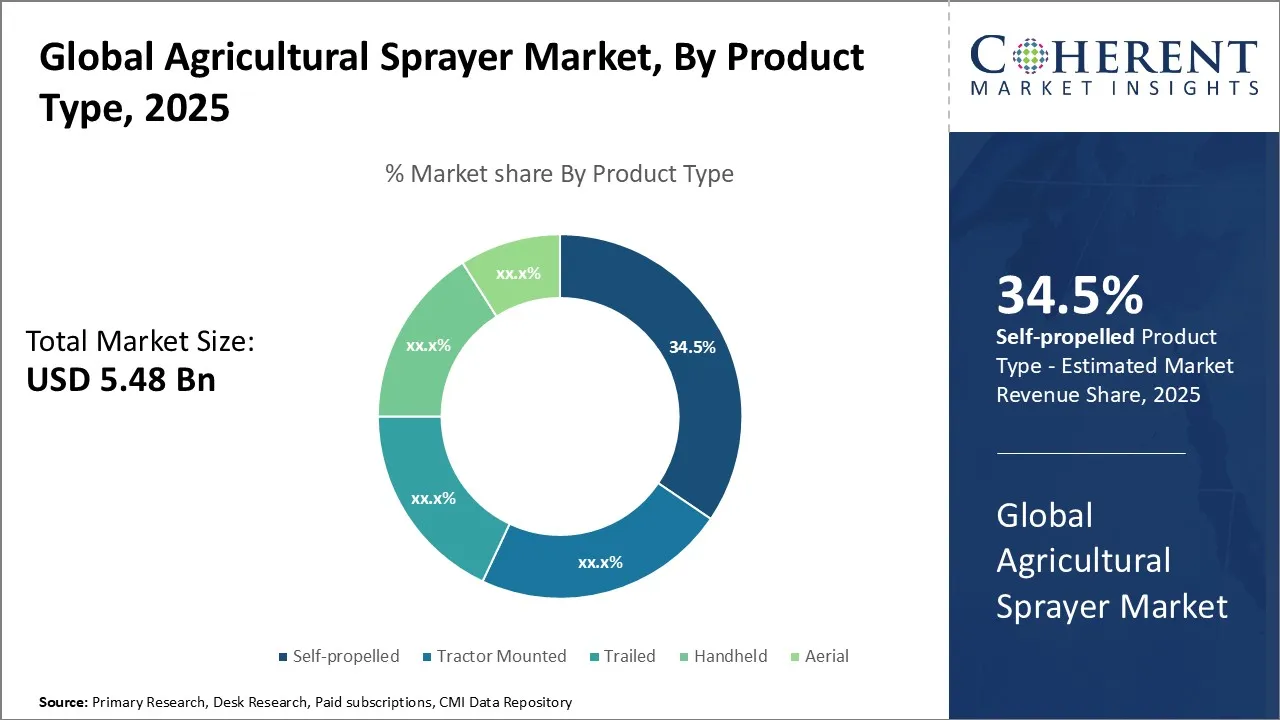
- The self-propelled segment is projected to account for 35.5 % of the market share in 2026.
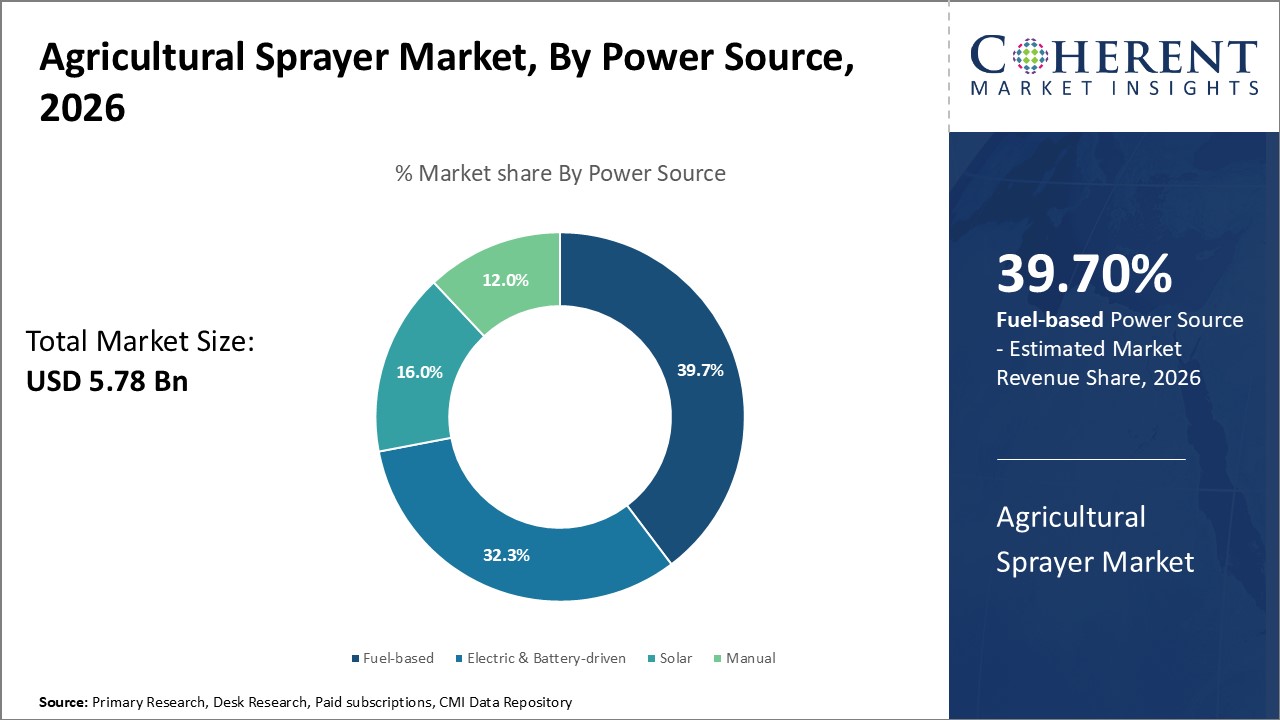
- The fuel-based segment is expected to capture 39.7 % share in 2026.
- The crop protection segment is projected to account for 34.7 % of the agricultural sprayer market share in 2026.
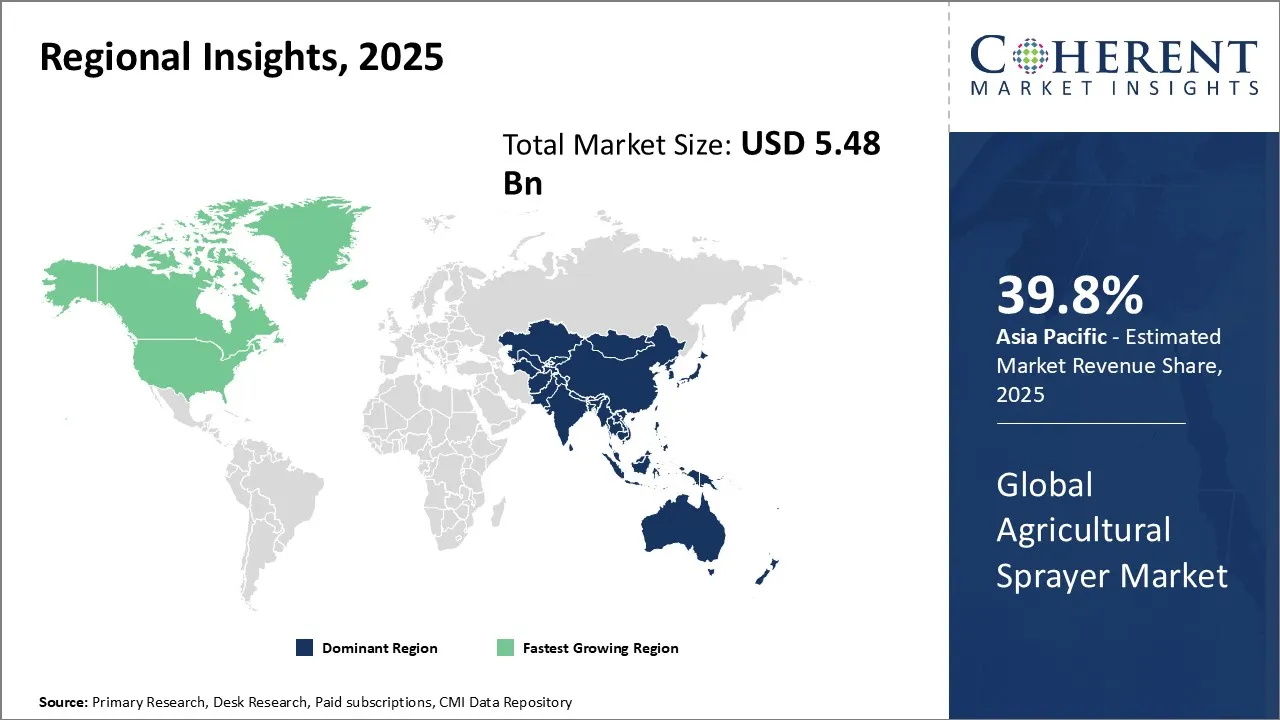
- Asia Pacific is expected to lead the global agricultural sprayer market in 2026 with a 39.8 % share. North America, with an estimated share of 21.5% in 2026, is projected to be the fastest-growing region.
Market Overview
A key market trend is the rising integration of smart and precision spraying systems enabled by IoT and AI technologies. These innovations allow for efficient pesticide and fertilizer application, minimizing waste and environmental impact. Additionally, the growing focus on labor efficiency and crop yield optimization is further propelling demand for automated and drone-based agricultural sprayers, shaping the future of the market toward more innovative and eco-friendly solutions.
Current Events and Its Impact
Current Events | Description and its Impact |
AGCO × Bosch BASF Smart Farming integrate “Smart Spraying” on Fendt Rogator |
|
India Slashes GST on Farm Machinery/Irrigation to 5% (September 08, 2025) |
|
Segmental Insights
- Current Industry Events of 2026
- Market Size Estimation
- Regional Breakdown
- Competitive Landscape
- Customer Intelligence
- Segmental Analysis
- Pricing Analysis
- Key Market Drivers, Challenges & Future Trends
- Customized Insights Section
Agricultural Sprayer Market Insights, by Product Type - Self-propelled Segment Dominates the Market Due to Enhanced Operational Efficiency and Adaptability
The self-propelled segment is expected to hold 35.5% share in 2026, driven by their superior operational capabilities that cater to large-scale farming demands. Unlike tractor-mounted or trailed sprayers, self-propelled units are built with integrated power systems and advanced chassis technology, enabling them to cover extensive fields with greater speed and precision. This independent functionality reduces reliance on external towing vehicles, significantly minimizing setup time and labor requirements, which is especially valuable during critical spraying windows for crop protection and fertilization.
For example, John Deere’s R4038 self-propelled sprayer, equipped with advanced features such as ExactApply nozzle control and AutoTrac guidance, has been widely adopted across North America. Large farms in the U.S. Midwest report a 15–20% increase in spraying efficiency compared to trailed sprayers, particularly during peak herbicide and fungicide application seasons, where timeliness is crucial to protecting yields.
Agricultural Sprayer Market Insights, by Power Source - Fuel-based Segment Dominate Due to Robust Performance and Extensive Operational Flexibility
The fuel-based segment is projected to account for 39.7% of the market share in 2026, because they offer reliable power and endurance that align well with the diverse needs of modern agriculture. The internal combustion engines powering these sprayers provide ample torque and operational hours necessary for demanding spraying tasks, especially on large-scale farms where continuous operation over expansive areas are essential. Fuel-based machines are widely adopted because they can operate independently of electrical infrastructure, which is crucial in remote or underdeveloped agricultural regions where access to electrical power or charging facilities remains limited.
Agricultural Sprayer Market Insights, by Application - Crop Protection Segment Dominates the Market Driven by the Imperative for Pest and Disease Management
The crop protection segment is expected to capture 34.7% share in 2026, stems from the critical need to safeguard crops from pests, diseases, and weeds that can severely impact yield and quality. Crop protection involves the targeted application of pesticides, herbicides, and fungicides, which necessitates precise spraying technologies to ensure effective coverage while minimizing chemical use and environmental impact. Agricultural producers worldwide are increasingly adopting advanced spraying solutions designed specifically to optimize crop protection, driven by both economic incentives and regulatory pressures.
A chief factor fueling growth in this segment is the rise in global food demand coupled with the need to maximize productivity on limited arable land. Efficient crop protection helps maintain plant health, reduces crop losses, and supports sustainable farming practices by controlling infestation and disease outbreaks early. The continuous evolution of pest resistance also demands that spraying equipment deliver uniform application and consistent droplet size control to enhance efficacy, which has intensified focus on developing sprayer technologies geared for crop protection.
Regional Insights
Asia Pacific Agricultural Sprayer Market Analysis and Trends
The Asia Pacific region is projected to lead the market with a 39.8% share in 2026, attributed to the expanding agricultural sector, rapid mechanization of farming operations, and rising adoption of modern farming technologies in countries such as China, India, and Southeast Asian nations. Increased government focus on enhancing agricultural productivity to support growing populations has led to subsidies and support schemes promoting the use of agricultural sprayers.
Moreover, the region’s diverse agriculture, spanning from smallholder farms to large commercial farms, creates vast demand for different types of sprayers, including portable, tractor-mounted, and drone sprayers. The emergence of domestic players like Mahindra & Mahindra and TYM Corporation, alongside international brands establishing local manufacturing and distribution networks, propels market expansion. Trade liberalization and infrastructure development also facilitate enhanced market penetration across the region.
North America Agricultural Sprayer Market Analysis and Trends
The North America region is expected to exhibit the fastest growth in the market, contributing 21.5% share in 2026, driven by a well-established agricultural ecosystem, advanced technological adoption, and strong government support for precision farming and sustainable agriculture practices. The United States and Canada have highly mechanized and large-scale farming operations that demand efficient spraying equipment for crop protection and yield enhancement.
Government initiatives encouraging the use of eco-friendly and automated sprayers, along with subsidies for modernizing farm equipment, fuel market growth. The presence of major agricultural equipment manufacturers like John Deere, AGCO Corporation, and Raven Industries strengthens the market with continual product innovation and comprehensive after-sales services. Trade policies supporting agricultural exports further boost investment in advanced sprayer technologies, solidifying North America’s position as the dominating region.
Global Agricultural Sprayer Market Outlook for Key Countries
U.S. Agricultural Sprayer Market Analysis and Trends
The U.S. remains a pivotal market for agricultural sprayers due to its extensive acreage of commercial farms and technological advancements in precision agriculture. Leading companies such as John Deere and AGCO Corporation focus on integrating GPS, IoT, and smart-spraying technologies to optimize herbicide and pesticide application, improving efficiency and reducing environmental impact. Strong government incentives promoting sustainable farming complement industry innovations, while a robust supply chain ensures prompt availability. This combination of factors keeps the U.S. agricultural sprayer market at the forefront of agricultural sprayer adoption globally.
China Agricultural Sprayer Market Analysis and Trends
China agricultural sprayer market is rapidly evolving with government efforts aimed at modernizing farming practices to increase food security. Large-scale mechanization programs and subsidies for purchasing sophisticated sprayers have spurred demand. Companies like TYM Corporation and Foton Lovol have gained prominence with affordable, technologically equipped sprayers tailored to the needs of both smallholder and commercial farmers. Additionally, collaborations with global players bring advanced spraying solutions into the market. China's expanding export orientation in agricultural products further encourages investment in effective crop protection technologies.
India Agricultural Sprayer Market Analysis and Trends
India showcases one of the fastest-growing markets for agricultural sprayers, driven by its predominantly agrarian economy and the push for increased agricultural productivity. The government’s schemes such as subsidies for equipment purchase and promotion of sustainable farming practices have been critical in boosting mechanization at the farm level. Domestic manufacturers, including Eicher Tractors and Premier, alongside multinational companies, have expanded product offerings ranging from manual knapsack sprayers to tractor-mounted systems. Improving rural infrastructure and increasing farmer awareness about pesticide efficacy contribute significantly to the market growth in India.
Brazil Agricultural Sprayer Market Analysis and Trends
Brazil agricultural sprayer market benefits from the country’s role as a leading global exporter of crops like soybeans, corn, and coffee. The large-scale commercial farming model logically demands efficient crop protection solutions, driving adoption of high-capacity and precision sprayers. Ministry of Agriculture programs focus on integrated pest management, encouraging the use of sprayers that optimize chemical use and safeguard crop health. Multinational companies such as Jacto and Valmont Industries have strong local operations, offering technologically advanced and climate-resilient spraying equipment adapted to Brazil’s diverse agroecological zones.
Macro and Micro Economic Factors Impacting on Agricultural Sprayer Market Growth
Macro-Economic Factors
- Interest Rates and Credit Access: Higher borrowing costs are significantly constraining farm equipment purchases, including agricultural sprayers. Interest rates on agricultural loans in India are projected at approximately 8.2% per annum in 2025, down from 8.7% in 2024, while tractor loans range from 8-10% annually. The elevated interest environment has made financing more expensive, limiting farmers' access to capital for equipment investments.
- Commodity Price Pressures: Declining farm incomes due to lower commodity prices are creating significant headwinds for the market. U.S. net farm income is projected to fall by 25.5% year-over-year to US$ 116.1 billion in 2024, negatively impacting farmers' purchasing power for new equipment. This trend is causing farmers to delay equipment purchases and preserve working capital.
- Inflation and Raw Material Costs: Raw material inflation has substantially impacted equipment manufacturing costs. Steel prices more than doubled from €550 to €1,250 per ton, representing 30-40% of average production costs for agricultural equipment. Other materials have seen significant increases: aluminum (+50%), copper (+63%), plastic materials (+70%), and foundry products (+90%).
Micro Economic Factors
- Farm Size and Mechanization Trends: Large-scale operations are driving market demand, with large farms expected to account for over 40% of the agricultural sprayer market in 2024. The shift from labor-intensive handheld equipment to mechanized solutions is reducing spray-window delays and improving operational efficiency.
- Precision Agriculture Adoption: Technological advancement is a key growth driver, with farmers increasingly adopting GPS-enabled sprayers, variable rate application systems, and drone-based platforms. These technologies enable optimal resource utilization while reducing chemical waste and environmental impact.
- Labor Cost Pressures: Rising labor costs are accelerating the adoption of automated and semi-automated spraying solutions. This economic pressure is particularly pronounced in developed markets where manual labor availability is declining and wage rates are increasing.
Market Players, Key Development, and Competitive Intelligence
Key Developments
- On September 15, 2025, Envirotech Vehicles, Inc. (EVTV), a leader in advanced transportation and defense innovation, announced the successful launch of the first American-made heavy-lift drone with a payload capacity of 1,500 pounds. Equipped with dual-use technology for agricultural spraying and wildfire protection, the drone features a 100-gallon liquid capacity. This breakthrough offers farmers and cooperatives across the U.S. a scalable solution for crop spraying, fertilization, and pest control—helping reduce labor costs, boost yield efficiency, and access challenging terrains.
- In August 2025, John Deere announced the acquisition of California-based GUSS Automation, a company recognized for its semi-autonomous sprayer technology designed for high-value crop segments such as orchards, vineyards, and bedded crops (including vegetables and melons). This move strengthens John Deere’s precision agriculture portfolio and enhances its focus on automation in specialty crop production.
- In May 2024, Thanos Technologies, an agricultural drone design and manufacturing firm, entered into a memorandum of agreement with the Indian Farmers Fertiliser Cooperative (IFFCO) to deploy drone-based aerial spraying of fertilizers. The initiative will cover 10 lakh acres of farmland across Telangana, Andhra Pradesh, Gujarat, Madhya Pradesh, and Tamil Nadu.
- In April 2023, Bosch BASF Smart Farming and AGCO Corporation announced a collaboration to jointly develop and commercialize smart spraying capabilities. As part of this partnership, Bosch BASF Smart Farming’s Smart Spraying technology will be integrated into Fendt Rogator sprayers, with both companies also working together to create and launch additional innovative features.
Top Strategies Followed by Global Agricultural Sprayer Market Players
- Established players dominate the market through substantial investments in research and development (R&D), driving innovations that lead to the creation of high-performance, efficient, and technologically advanced sprayers. These companies continuously upgrade their product portfolios with features such as precision spraying, automated controls, and environmentally friendly solutions to meet evolving agricultural demands and regulatory standards.
- For example, John Deere, developed precision sprayers integrated with See & Spray Select technology, which uses computer vision and machine learning to detect weeds and apply herbicides only where needed, reducing chemical use significantly.
- Mid-level participants in the agricultural sprayer market concentrate on delivering cost-effective solutions that strike a balance between quality and affordability, appealing primarily to price-sensitive farmers and smallholder agricultural enterprises. Their product strategies often revolve around simplifying advanced technologies to reduce production and retail costs without significantly compromising on performance. This approach enables mid-level manufacturers to capture substantial market segments where budget constraints limit the adoption of high-end products.
- For example, Mahindra, emphasized affordable tractor-mounted sprayers in India that cater to price-sensitive agricultural communities while still maintaining decent efficiency and durability. Hardi International, on the other hand, simplifies advanced spraying technologies into mid-range models to provide budget-conscious farmers access to semi-automated spraying solutions.
- Small-scale players occupy a distinctive niche within the global agricultural sprayer market by focusing on specialized features or innovative product designs tailored to unique customer needs. These players often emphasize agility and adaptability, adopting cutting-edge technologies such as IoT integration, battery-powered sprayers, or ultra-precise application mechanisms to differentiate themselves from larger competitors.
- For instance, DJI’s agricultural drones are now widely adopted in countries like India and China, enabling ultra-precise aerial spraying for smallholder farms where traditional sprayers are less effective.
Market Report Scope
Agricultural Sprayer Market Report Coverage
| Report Coverage | Details | ||
|---|---|---|---|
| Base Year: | 2025 | Market Size in 2026: | USD 5.78 Bn |
| Historical Data for: | 2020 To 2024 | Forecast Period: | 2026 To 2033 |
| Forecast Period 2026 to 2033 CAGR: | 5.5% | 2033 Value Projection: | USD 8.41 Bn |
| Geographies covered: |
| ||
| Segments covered: |
| ||
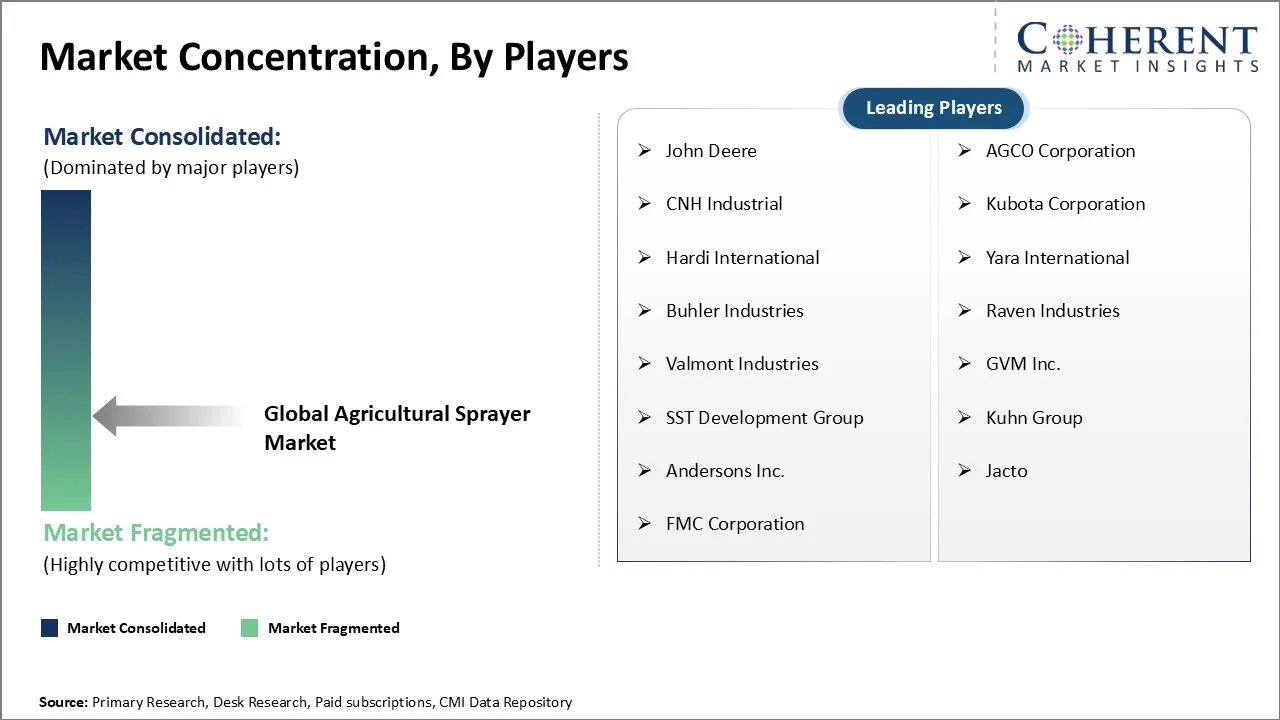
| Companies covered: | John Deere, AGCO Corporation, CNH Industrial, Kubota Corporation, Hardi International, Yara International, Buhler Industries, Raven Industries, Valmont Industries, GVM Inc., SST Development Group, Kuhn Group, Andersons Inc., Jacto, and FMC Corporation | ||
| Growth Drivers: |
| ||
| Restraints & Challenges: |
| ||
Agricultural Sprayer Market Dynamics
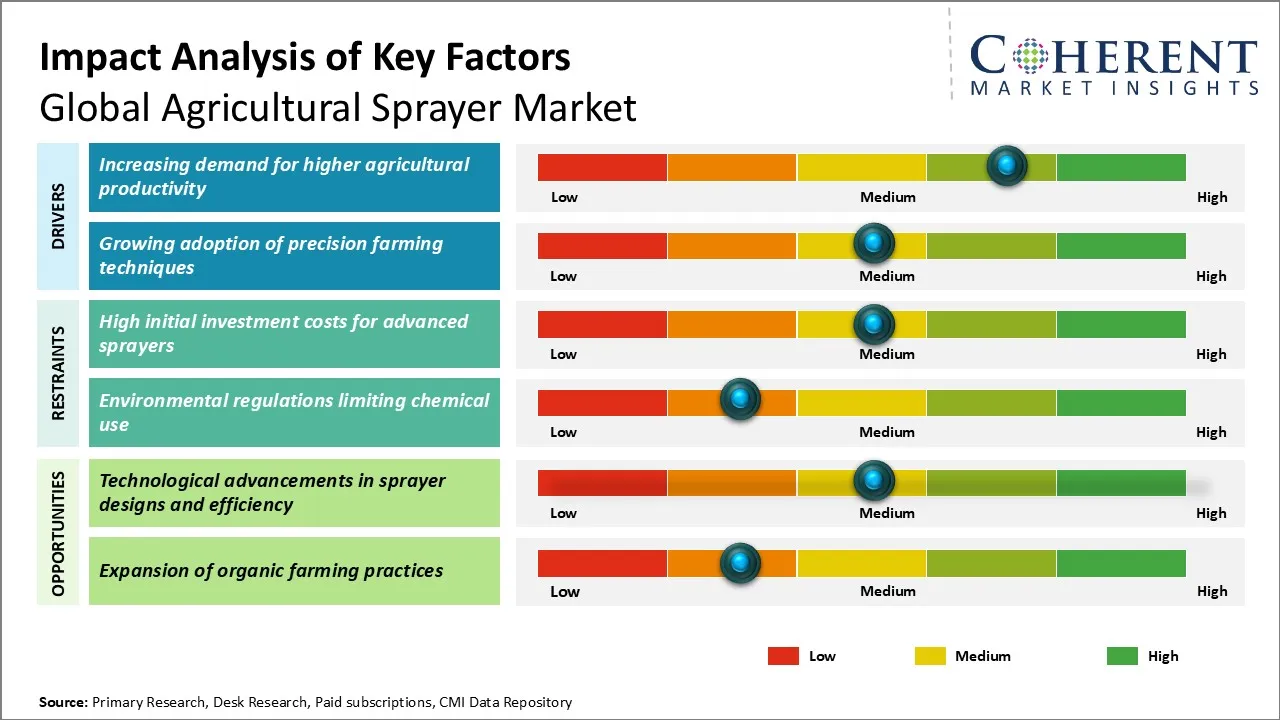
Agricultural Sprayer Market Driver - Increasing Demand for Higher Agricultural Productivity
The rising global population and the consequent need for enhanced food production have significantly intensified the demand for higher agricultural productivity. Farmers and agricultural practitioners are increasingly adopting advanced technologies and mechanized solutions such as agricultural sprayers to optimize crop protection and improve yield efficiency. Agricultural sprayers play a critical role in the precise application of fertilizer, pesticides, and herbicides, enabling uniform coverage and minimizing wastage of chemicals. This precision improves crop health and reduces the risk of pest infestations and diseases, ultimately leading to better yield outcomes.
For instance, in India, the government’s Sub-Mission on Agricultural Mechanization (SMAM) scheme has been actively promoting the adoption of farm equipment, including sprayers, to improve productivity among small and marginal farmers.
Agricultural Sprayer Market Opportunity - Technological Advancements in Sprayer Designs and Efficiency
The global agricultural sprayer market presents a significant opportunity driven by rapid technological advancements in sprayer designs and operational efficiency. Innovations such as precision spraying technologies, smart sensors, and automated control systems are transforming traditional sprayer equipment into highly efficient and environmentally friendly tools. These advancements enable targeted application of agrochemicals, minimizing waste and reducing overall input costs for farmers. Integration of GPS and real-time data analytics allows for variable rate application, optimizing coverage and improving crop yields.
For example, in May 2024, Bosch BASF Smart Farming and AGCO Corporation announced the commercialization of Smart Spraying technology on Fendt Rogator sprayers, enabling farmers to apply herbicides with pinpoint accuracy and reduce chemical use significantly.
Analyst Opinion (Expert Opinion)
- The global agricultural sprayer market is witnessing transformative growth, driven by the increasing need for efficient pest and weed management amid rising agricultural demands. Insights from the International Conference on Precision Agriculture (2023) and the AgriTech Expo (2022) highlighted pivotal advancements, with companies like John Deere and Buhler Industries innovating with smart sprayer technologies.
- John Deere's recent introduction of a GPS-guided sprayer that optimizes chemical application based on real-time data exemplifies a strategic move towards precision agriculture, enhancing both crop yield and sustainability. Discussions at these conferences emphasized the critical role of regulatory support and environmental considerations in shaping the market dynamics, particularly as farmers face stricter guidelines on chemical use. However, challenges such as high initial investment costs and the need for farmer education on new technologies were acknowledged.
- Companies that can offer flexible financing options and robust training programs will likely gain a competitive edge. Furthermore, integrating IoT capabilities for data analytics can significantly enhance operational efficiency. Ultimately, the agricultural sprayer market’s growth will depend on its ability to innovate while addressing the pressing needs for sustainability and productivity in modern farming practices.
Speak to the analyst
Want personalized insights?
Take the findings above to one of our principal consultants, or have the report rebuilt around the segments, geographies and competitors you actually track.
Market Segmentation
- Product Type Insights (Revenue, USD Bn, 2021 - 2033)
- Self-propelled
- Tractor Mounted
- Trailed
- Handheld
- Aerial
- Power Source Insights (Revenue, USD Bn, 2021 - 2033)
- Fuel-based
- Electric & Battery-driven
- Solar
- Manual
- Application Insights (Revenue, USD Bn, 2021 - 2033)
- Crop Protection
- Fertilization
- Others
- Capacity Insights (Revenue, USD Bn, 2021 - 2033)
- High
- Low
- Ultra Low
- Regional Insights (Revenue, USD Bn, 2021 - 2033)
- North America
- U.S.
- Canada
- Latin America
- Brazil
- Argentina
- Mexico
- Rest of Latin America
- Europe
- Germany
- U.K.
- Spain
- France
- Italy
- Russia
- Rest of Europe
- Asia Pacific
- China
- India
- Japan
- Australia
- South Korea
- ASEAN
- Rest of Asia Pacific
- Middle East
- GCC Countries
- Israel
- Rest of Middle East
- Africa
- South Africa
- North Africa
- Central Africa
- North America
- Key Players Insights
- John Deere
- AGCO Corporation
- CNH Industrial
- Kubota Corporation
- Hardi International
- Yara International
- Buhler Industries
- Raven Industries
- Valmont Industries
- GVM Inc.
- SST Development Group
- Kuhn Group
- Andersons Inc.
- Jacto
- FMC Corporation
Sources
Primary Research Interviews
- R&D Director – Leading Agricultural Sprayer Manufacturer
- Procurement Head – Agrochemical Distribution Company
- Product Development Manager – Precision Farming Equipment Firm
- Sustainability Officer – Agricultural Machinery Standards & Certification Body
Stakeholders
- Manufacturers (self-propelled sprayers, tractor-mounted, trailed sprayers, UAV/drones)
- End Use Sectors:
- Crop Cultivation (Cereals, Oilseeds, Fruits & Vegetables)
- Large-scale Commercial Farms
- Small & Medium Farmers (SMEs)
- Regulatory & Certification Bodies
- Agrochemical Companies (herbicides, pesticides, fertilizers)
- Distribution & Retail Channels (offline equipment dealers, online agri-machinery platforms)
- Technology Integration Players (IoT, AI, drone-based spraying solutions)
Databases
- UN Comtrade Database (exports/imports of agricultural machinery)
- FAOSTAT (Food and Agriculture Organization statistics on farming equipment use)
- India Import Export (EXIM) Database
Magazines
- AgriBusiness Global – Trends in crop protection and spraying equipment
- Farm Equipment Magazine – New machinery launches and dealer updates
- PrecisionAg Alliance – Technology integration in agricultural spraying
- Agricultural Today – Equipment adoption across regions
- CropLife International – Innovations in crop protection and spraying
Journals
- Journal of Agricultural Engineering – Sprayer design & efficiency studies
- Precision Agriculture Journal – IoT & sensor-enabled sprayer applications
- Biosystems Engineering – Advances in mechanized spraying systems
- Journal of Crop Protection – Impact of spraying technology on pest/disease control
Newspapers
- The Financial Times – Agri-machinery market investment trends
- The Hindu Business Line – Agricultural mechanization growth in India
- Nikkei Asia – Asia-Pacific farm equipment and spraying adoption
- European Agribusiness News – EU regulatory framework on sprayers
- The Wall Street Journal – Global demand for farm mechanization
Associations
- Agricultural Engineers Association (AEA)
- European Agricultural Machinery Association (CEMA)
- American Society of Agricultural and Biological Engineers (ASABE)
- International Commission of Agricultural and Biosystems Engineering (CIGR)
Public Domain Sources
- FAO – Reports on sustainable mechanization of agriculture
- OECD – Mechanization and farm productivity studies
- European Commission – Machinery Directive for Agricultural Equipment
- Bureau of Indian Standards (BIS) – Standards for sprayers and agro-machinery
- EPA (U.S.) – Regulations on pesticide application equipment
Proprietary Elements
- CMI Data Analytics Tool, Proprietary CMI Existing Repository of information for last 8 years.
Get access to 250+ pages report
Every segment, forecast, competitor profile and data table behind the analysis above — available for instant download.
- ESOMAR Member
- ISO 9001:2015 Certified
- D-U-N-S Registered
- GDPR & CCPA Compliant
Missing comfort of reading report in your local language? Find your preferred language:
Transform your Strategy with Exclusive Trending Reports
Frequently Asked Questions
The global agricultural sprayer market is estimated to be valued at USD 5.78 Bn in 2026 and is expected to reach USD 8.41 Bn by 2033.
The CAGR of the global agricultural sprayer market is projected to be 5.5% from 2026 to 2033.
Increasing demand for higher agricultural productivity and growing adoption of precision farming techniques are the major factors driving the growth of the global agricultural sprayer market.
High initial investment costs for advanced sprayers and environmental regulations limiting chemical use are the major factors hampering the growth of the global agricultural sprayer market.
In terms of product type, the self-propelled segment is estimated to dominate the market revenue share in 2026.
John Deere, AGCO Corporation, CNH Industrial, Kubota Corporation, Hardi International, Yara International, Buhler Industries, Raven Industries, Valmont Industries, GVM Inc., SST Development Group, Kuhn Group, Andersons Inc., Jacto, and FMC Corporation are the major players.
Asia Pacific is expected to lead the global agricultural sprayer market in 2026.