

Global AI Digital Boards Market Size and Forecast – 2026-2033
The Global AI Digital Boards Market is estimated to be valued at USD 1.83 Bn in 2026 and is expected to reach USD 7.61 Bn by 2033, exhibiting a compound annual growth rate (CAGR) of 22.6% from 2026 to 2033.
Key Takeaways of the AI Digital Boards Market
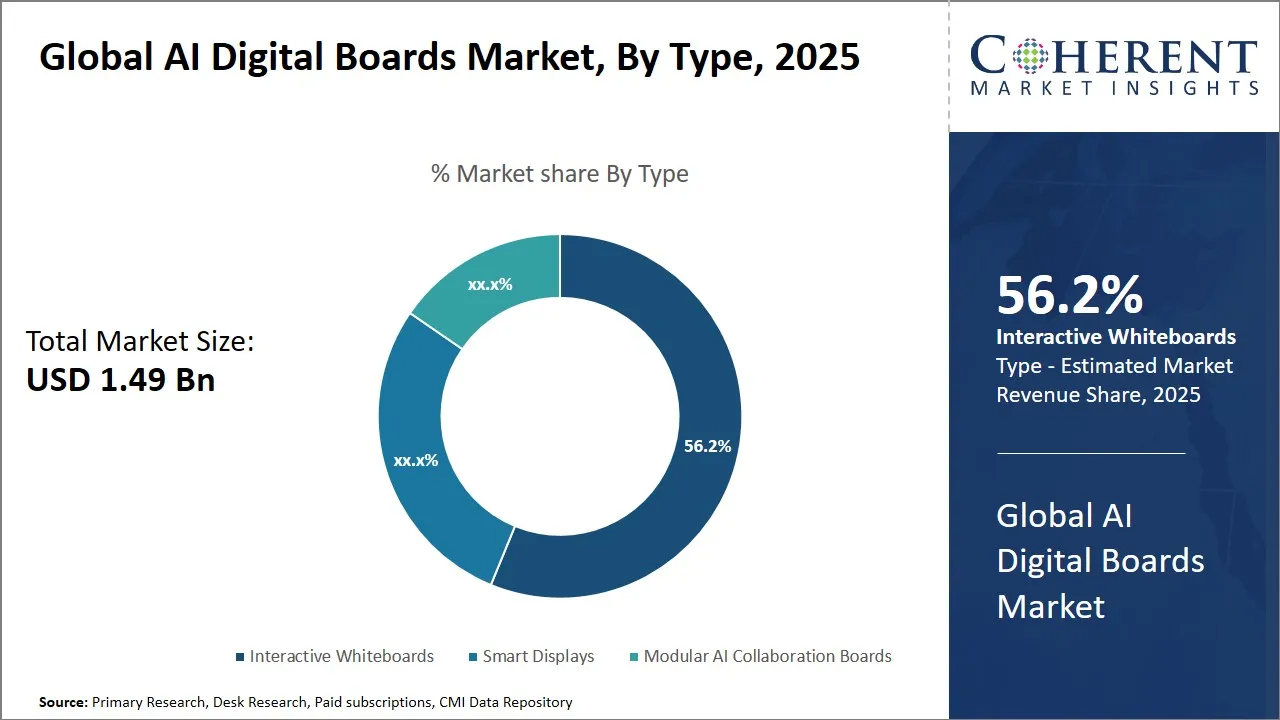
- The interactive whiteboards segment is expected to lead the market holding an estimated share of 57.2% in 2026.
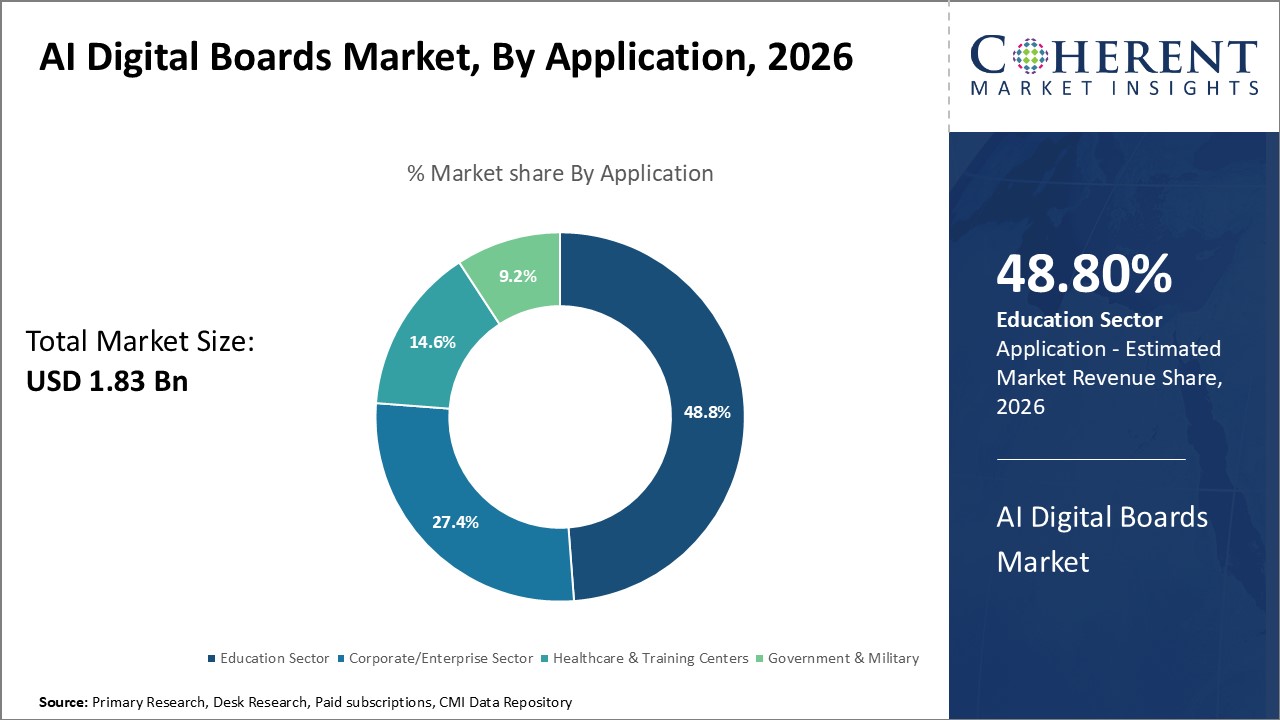
- The education sector segment is projected to dominate with a share of 48.8% in 2026.
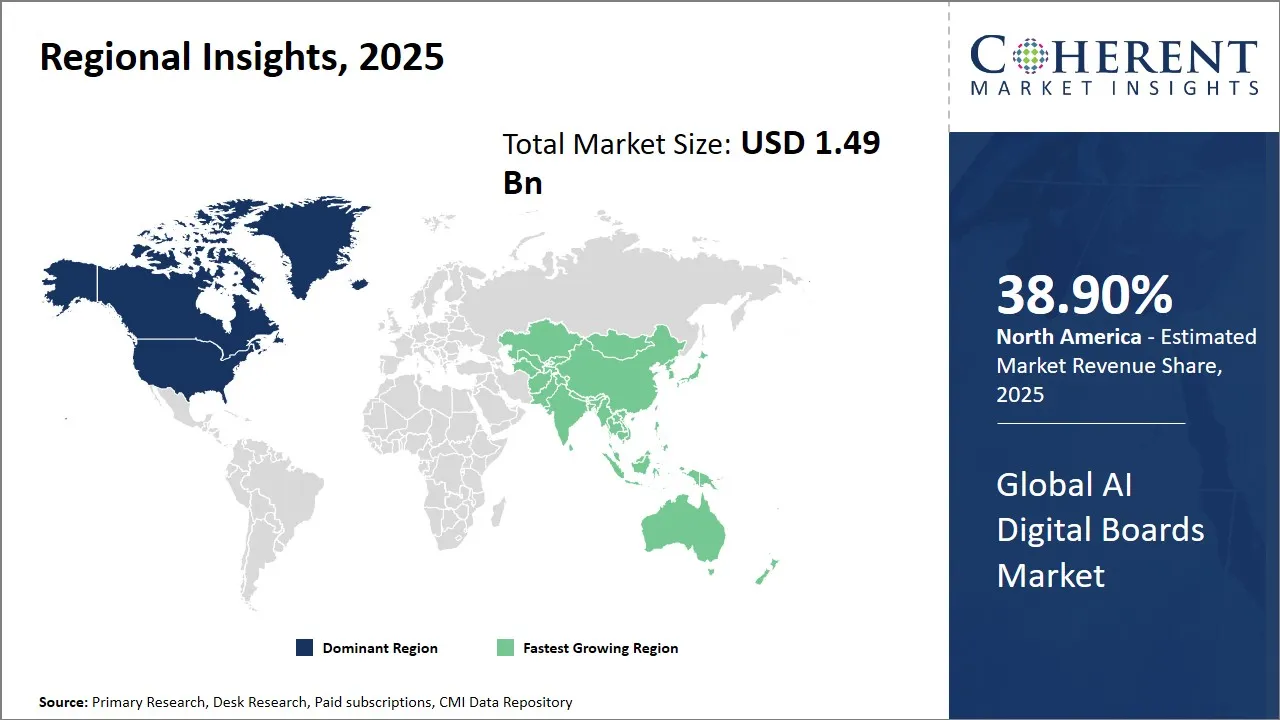
- North America is estimated to lead the market with a share of 38. 9% in 2026.
- Asia Pacific, holding a share of 27. 8% in 2026, is projected to be the fastest growing region.
Market Overview
The market is seeing the use of AI capabilities within digital boards to facilitate real-time data analysis, interactive user interfaces, and seamless connectivity with other smart office technologies. Enterprises are working on digital transformation and remote collaboration, which is creating a lot of demand for AI-powered digital boards. Also, the rising investments in smart infrastructure and evolving workplace dynamics are adding to market expansion.
Current Events and Its Impact
Current Events | Description and its impact |
Technological Advancements in AI and Display Technologies |
|
Geopolitical and Trade Dynamics |
|
Segmental Insights
- Current Industry Events of 2026
- Market Size Estimation
- Regional Breakdown
- Competitive Landscape
- Customer Intelligence
- Segmental Analysis
- Pricing Analysis
- Key Market Drivers, Challenges & Future Trends
- Customized Insights Section
Global AI Digital Boards Market Insights, by Type - Interactive Whiteboards Lead Owing to Enhanced User Engagement and Seamless Collaboration Capabilities
Interactive whiteboards have emerged as the foremost contributors to the global AI digital boards market, holding an estimated share of 57.2% in 2026. These boards offer real-time responsiveness and smooth integration with digital content, making them useful in different environments. As multiple users can interact with the board at the same time, brainstorming and collaboration become easier in physical and virtual spaces. AI algorithms add to this interactivity by helping recognize handwriting and convert speech to text.
Moreover, interactive whiteboards are compatible with different software ecosystems, making connectivity possible with cloud platforms, video conferencing tools, and learning management systems. This interoperability ensures that content is easily sharable and accessible, supporting hybrid work and learning models that are becoming prevalent worldwide.
The market is seeing a lot of emphasis on improving collaborative workflows within organizations and academic institutions, which has made interactive whiteboards attractive investments. They enhance productivity by reducing dependency on multiple devices and streamlining information sharing. AI capabilities such as predictive analytics and user behavior insights are transforming these boards into smart assistants that anticipate needs and personalize experiences.
Global AI Digital Boards Market Insights, by Application - Education Sector Dominates Driven by the Growing Demand for Smart Learning Environments and Personalized Education
The education sector leads, holding an estimated share of 48.8% in the global AI digital boards market in 2026, driven primarily by the transforming landscape of education where technology plays an indispensable role in enhancing teaching and learning methodologies. Educational institutions worldwide are leveraging AI digital boards to create smart classrooms that cater to diverse learning styles and improve student engagement.
A significant growth driver is the increasing focus on personalized education enabled through AI capabilities embedded within these digital boards. By analyzing student interactions and performance in real-time, AI helps educators tailor content and instructional approaches according to individual learning speeds and preferences. This personalization enhances knowledge retention and motivation among students, making learning more effective and enjoyable.
Additionally, the digital transformation in education encompasses the integration of interactive content such as multimedia presentations, virtual labs, and augmented reality experiences facilitated by AI digital boards. These boards empower teachers to go beyond traditional rote learning by incorporating dynamic content that stimulates critical thinking and creativity. The ability to access extensive educational resources through cloud connectivity further supports continuous learning inside and outside the classroom.
The rising demand for hybrid learning models post-pandemic has accentuated the importance of AI digital boards in the education sector. These boards serve as central hubs where in-person and remote learners can participate in lessons concurrently with equal interaction opportunities. AI-driven functionalities such as voice recognition, speech-to-text conversion, and automated attendance help simplify classroom management and improve administrative efficiency.
Moreover, governments and educational bodies are increasingly investing in digital infrastructure to bridge gaps in education quality and accessibility. AI digital boards play a critical role in leveling the playing field by providing interactive and inclusive learning environments, especially in rural or underserved areas. The boards’ ability to support multiple languages and adapt to different curricula makes them versatile tools for global education systems aiming to foster digital literacy from an early age.
End User Feedback and Unmet Needs in the AI Digital Boards Market
- Despite their growing adoption in classrooms and corporate settings, end users frequently report challenges around intuitive usability and contextual adaptability of AI digital boards. Teachers, for instance, have expressed the need for smoother integration with existing learning management systems (LMS) and better multilingual support.
- While many boards offer voice assistance and handwriting recognition, several educators find the AI unable to adapt well to regional accents, subject-specific terminology, or real-time collaborative disruptions.
- In corporate environments, IT teams often cite data privacy concerns related to cloud syncing and voice recognition—especially in regions governed by stringent compliance standards such as GDPR.
- A recent example comes from the Delhi Public School (DPS), Bangalore, India, where AI-enabled smart boards were deployed in over 40 classrooms in late 2024. While the administration praised the boards’ interactive features and AI-assisted note summarization, teachers reported that the auto-summarization tool misrepresented technical content in subjects like physics and economics, forcing them to rely on manual corrections.
Regional Insights
North America AI Digital Boards Market Analysis and Trends
North America, holding a share of 38.9% in 2026, is expected to dominate the global AI digital boards market, driven by a mature technology ecosystem, advanced infrastructure, and proactive adoption of AI-driven solutions in education, corporate sectors, and government institutions. The presence of pivotal technology hubs in the U.S. and Canada fosters continuous innovation and integration of AI in digital board solutions. Government policies supporting smart education initiatives and digital transformation, alongside substantial R&D investments, further bolster market leadership. Additionally, large enterprise and start-up collaborations enhance product offerings and market penetration. Major companies, such as Microsoft, Google, and SMART Technologies, play a critical role in North America with their advanced AI-powered digital boards, blending cloud computing, interactive interfaces, and collaborative tools that cater to diverse sectors.
Asia Pacific AI Digital Boards Market Analysis and Trends
The Asia Pacific, holding a share of 27.8% in 2026, is expected to exhibit the fastest growth in the AI digital boards market due to rising digital literacy, expanding educational infrastructure, and increasing adoption of smart technologies in both government and private sectors across developing and developed countries. Aggressive governmental initiatives, such as China’s “Smart Campus” projects and India’s “Digital India” campaign, are pivotal in driving AI integration in classrooms and corporate environments. The presence of major tech manufacturing hubs and increasing investments in AI startups foster innovation and accessibility. Regional players like Samsung Electronics, Huawei, and NEC Corporation are influential in proliferating AI digital boards by offering customized, cost-effective solutions suited to the diverse demands of the Asia Pacific market.
Global AI Digital Boards Market Outlook for Key Countries
U.S. AI Digital Boards Market Analysis and Trends
The U.S. is characterized by strong adoption of AI-driven educational tools and enterprise collaboration platforms, supported by high technology penetration and robust infrastructure. Leading companies, such as Microsoft with its Surface Hub and Google, with its Jamboard have revolutionized digital collaboration. Government programs like the U.S. Department of Education’s push for digital learning environments further propel adoption, while partnerships with educational institutions and businesses ensure ongoing innovation and utilization.
China AI Digital Boards Market Analysis and Trends
China AI digital boards market benefits from large-scale governmental investments in smart education and digital transformation. Companies, such as Huawei and TCL, are prominent contributors, leveraging AI to enhance interactive learning and business communication. The country’s focus on integrating AI technologies into classrooms and conference rooms, combined with a growing middle class and rapid digital infrastructure expansion, fuels widespread deployment.
Germany AI Digital Boards Market Analysis and Trends
Germany continues to lead the Europe AI digital boards market through a blend of precision engineering and innovative technology integration in AI digital boards. Corporations like Siemens and Bosch contribute to maintaining high standards in digital display technology and AI software development. The German government’s support for Industry 4.0 and digital education programs encourages adoption in both manufacturing training environments and academic institutions.
India AI Digital Boards Market Analysis and Trends
India is expanding with strong government initiatives focusing on digital empowerment and smart classrooms, catalyzing AI digital board adoption in urban and rural areas. Companies, such as Infosys and Wipro are key players, collaborating with international technology providers to deliver AI-enhanced education and enterprise solutions tailored for Indian contexts. The country’s youthful population and increasing smartphone penetration create a favorable environment for innovative AI digital board applications.
Japan AI Digital Boards Market Analysis and Trends
Japan AI digital boards market benefits from a technological-savvy population and highly developed infrastructure. Corporations like Panasonic and NEC lead in integrating AI with digital display hardware to support corporate training, education, and healthcare sectors. Government policies aimed at workforce upskilling and digital innovation, along with strong private sector R&D investments, reinforce Japan’s steady market growth and innovation leadership.
Market Players, Key Development, and Competitive Intelligence
Key Developments
- In March 2025, BenQ, an internationally renowned provider of visual display and collaboration solutions, announced MagicSchool is now available on BenQ Boards. MagicSchool is the leading AI platform for schools, empowering over 2 million teachers. It saves time by using AI to assist with lesson plans and more.
- In October 2024, Cisco unveiled new AI-fueled solutions to enhance employee connection and collaboration. The company announced several new innovations, including Cisco Spatial Meetings, Ceiling Microphone Pro, and new Cisco AI Assistant for Webex capabilities
- In January 2024, Promethean, a leading global tech company, released the unified interactive flat panel display (IFPD) and software solution, the ActivPanel 10 and Promethean ActivSuite.
- In September 2023, Microsoft released its Surface Hub 3, which offers an all-in-one hybrid device for meetings and cross-collaborations. The collaborative board has been fully designed from Microsoft to provide end-to-end consistency for organizations with Surface Hubs and Microsoft Teams Rooms.
Top Strategies Followed by the AI Digital Boards Market Players
- Established players dominate the arena by investing heavily in research and development to continuously innovate high-performance AI digital boards with enhanced functionalities such as improved responsiveness, integrated AI-driven analytics, and seamless connectivity.
- In March 2025, Microsoft announced a USD 420 million expansion of its Applied AI Lab, a portion of which is dedicated to enhancing Surface Hub’s AI collaboration capabilities.
- Mid-level players in the AI digital boards market adopt a different approach focused primarily on offering cost-effective yet reliable digital board solutions. Their strategic emphasis lies in striking a balance between quality and affordability to appeal to price-sensitive consumers such as small to medium-sized educational institutions and businesses in developing regions.
- In February 2025, Newline Interactive launched the Newline Lyra AI Lite, a budget-friendly smart board designed for schools and SMEs. It includes AI-powered handwriting-to-text and voice command features, priced nearly 40% lower than comparable enterprise solutions
- Small-scale players carve out their niche in the global AI digital boards ecosystem by focusing on specialized features or highly innovative product variants that address specific user needs or regional preferences.
- In late 2024, InnoBoard Tech (Singapore) introduced a specialized AI digital board for medical colleges, equipped with gesture recognition for anatomical simulations and integration with AR overlays.
Market Report Scope
AI Digital Boards Market Report Coverage
| Report Coverage | Details | ||
|---|---|---|---|
| Base Year: | 2025 | Market Size in 2026: | USD 1.83 Bn |
| Historical Data for: | 2020 To 2024 | Forecast Period: | 2026 To 2033 |
| Forecast Period 2026 to 2033 CAGR: | 22.6% | 2033 Value Projection: | USD 7.61 Bn |
| Geographies covered: |
| ||
| Segments covered: |
| ||
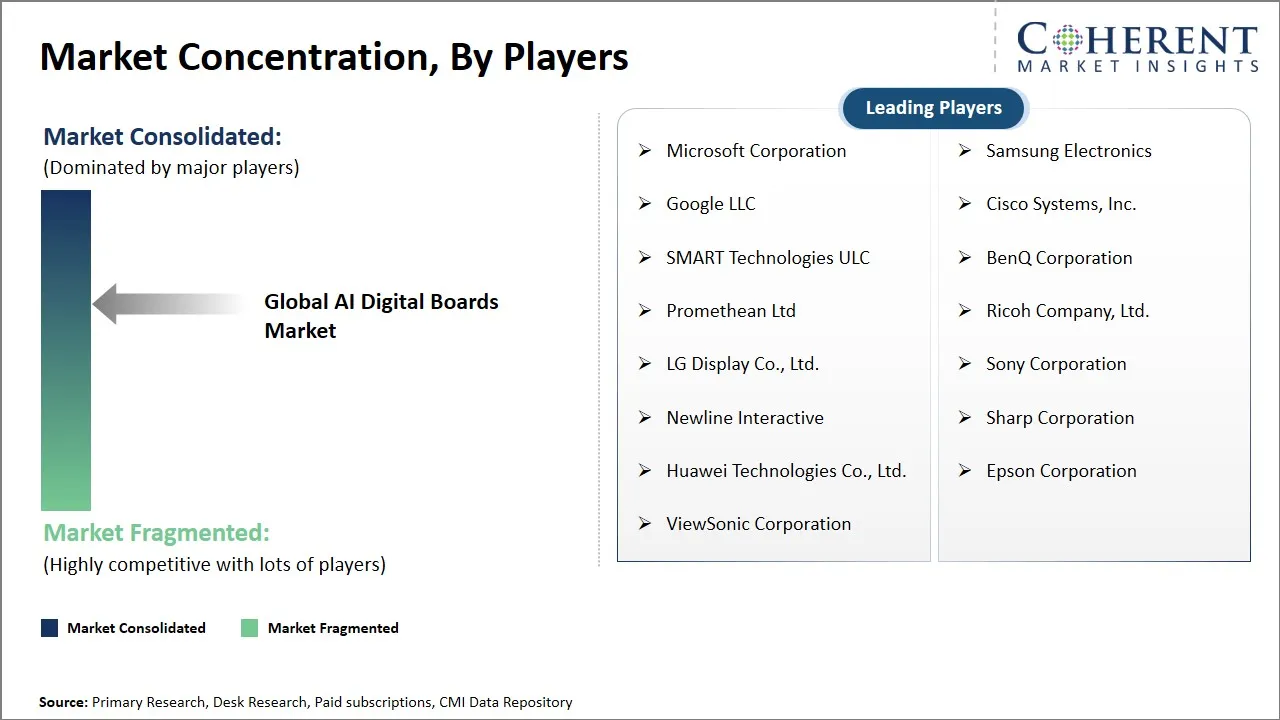
| Companies covered: | Microsoft Corporation, Samsung Electronics, Google LLC, Cisco Systems, Inc., SMART Technologies ULC, BenQ Corporation, Promethean Ltd, Ricoh Company, Ltd., LG Display Co., Ltd., Sony Corporation, Newline Interactive, Sharp Corporation, Huawei Technologies Co., Ltd., Epson Corporation, and ViewSonic Corporation | ||
| Growth Drivers: |
| ||
| Restraints & Challenges: |
| ||
Market Dynamics
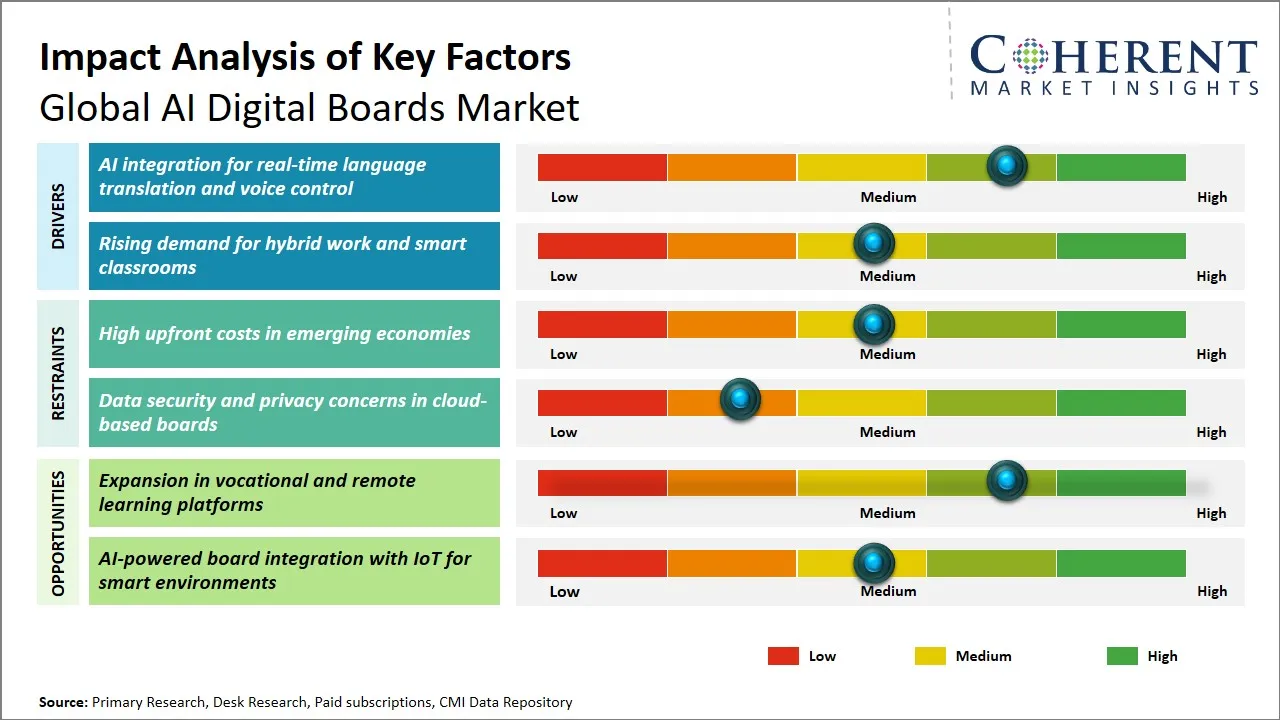
Global AI Digital Boards Market Driver – AI Integration for Real-time Language Translation and Voice Control
The integration of AI technologies, particularly real-time language translation and voice control, is significantly enhancing the functionality and appeal of digital boards across various sectors. By enabling seamless communication across language barriers, AI-powered translation features facilitate more inclusive and efficient interactions in multinational corporate meetings, educational environments, and global conferences. This capability not only accelerates decision-making processes but also fosters collaboration among diverse teams without the need for human interpreters.
Furthermore, voice control supported by advanced natural language processing allows users to interact with digital boards hands-free, improving ease of use and accessibility. The combination of real-time translation and voice-enabled commands positions AI digital boards as intuitive, adaptive tools that cater to the evolving demands of modern workplaces and learning spaces, driving their adoption and strengthening their role as central communication hubs.
In February 2025, Google announced a major update to its Jamboard AI Suite, integrating its Live Translate API and Gemini-powered voice assistant. The new feature enables real-time, on-screen translation in over 40 languages during collaborative sessions, allowing global teams to ideate and annotate simultaneously without language barriers.
Global AI Digital Boards Market Opportunity – Expansion in Vocational and Remote Learning Platforms
As educational institutions and corporate training centers increasingly adopt hybrid and fully remote learning models, the demand for interactive and intelligent digital boards that enhance engagement and facilitate seamless communication is rising sharply. Vocational education, which focuses on practical skills development, requires specialized teaching tools that can simulate real-world scenarios and provide instant feedback. AI-powered digital boards, equipped with features such as real-time language translation, adaptive learning capabilities, and data analytics, can address these requirements effectively, making learning more personalized and accessible. In April 2025, the government of Malaysia, in collaboration with BenQ Southeast Asia, rolled out over 800 AI-enabled smart boards in vocational training institutes under its "Skilling Malaysia 2030" initiative.
Additionally, remote learning platforms can integrate AI digital boards to support collaborative sessions, virtual workshops, and interactive assessments, thereby overcoming geographical and logistical barriers. The expansion of government initiatives promoting skill development and digital literacy further fuels the adoption of advanced learning technologies.
Analyst Opinion (Expert Opinion)
- Education is shifting from passive learning to AI-personalized instruction. AI digital boards are now capable of real-time learner analytics, multilingual translation, and adaptive content delivery. This is transforming K–12 and higher education, especially in multilingual and resource-limited settings, by enabling inclusivity and personalized engagement at scale.
- Enterprises are leveraging AI boards for intelligent collaboration and decision-making. In hybrid workplaces, these boards are used not just for meetings, but for AI-driven brainstorming—summarizing discussions, suggesting tasks, and visualizing data contextually. This makes them indispensable tools for agile teams, project sprints, and client pitches.
- Specialized sectors like healthcare and design are adopting AI boards for simulation and training. In hospitals and med-schools, AI boards with gesture tracking and AR overlays are enabling procedural rehearsals. In creative industries, AI-enhanced boards assist in real-time prototyping, collaborative design annotation, and cross-border ideation.
Speak to the analyst
Want personalized insights?
Take the findings above to one of our principal consultants, or have the report rebuilt around the segments, geographies and competitors you actually track.
Market Segmentation
- Type Insights (Revenue, USD Bn, 2021 - 2033)
- Interactive Whiteboards
- Smart Displays
- Modular AI Collaboration Boards
- Application Insights (Revenue, USD Bn, 2021 - 2033)
- Education Sector
- Corporate/Enterprise Sector
- Healthcare & Training Centers
- Government & Military
- Regional Insights (Revenue, USD Bn, 2021 - 2033)
- North America
- U.S.
- Canada
- Latin America
- Brazil
- Argentina
- Mexico
- Rest of Latin America
- Europe
- Germany
- U.K.
- Spain
- France
- Italy
- Russia
- Rest of Europe
- Asia Pacific
- China
- India
- Japan
- Australia
- South Korea
- ASEAN
- Rest of Asia Pacific
- Middle East
- GCC Countries
- Israel
- Rest of Middle East
- Africa
- South Africa
- North Africa
- Central Africa
- North America
- Key Players Insights
- Microsoft Corporation
- Samsung Electronics
- Google LLC
- Cisco Systems, Inc.
- SMART Technologies ULC
- BenQ Corporation
- Promethean Ltd
- Ricoh Company, Ltd.
- LG Display Co., Ltd.
- Sony Corporation
- Newline Interactive
- Sharp Corporation
- Huawei Technologies Co., Ltd.
- Epson Corporation
- ViewSonic Corporation
Sources
Primary Research Interviews
Stakeholders:
- School District Technology Directors and Curriculum Coordinators
- Corporate IT Managers and Digital Transformation Leads
- AI Display and Collaboration Hardware Manufacturers
- EdTech Solution Providers and SaaS Collaboration Vendors
- Facilities & AV Integration Contractors in Education and Enterprises
- Training Coordinators in Medical and Defense Simulation Environments
- Learning Experience Designers and Education Consultants
Databases
- National Center for Education Statistics (NCES)
- U.S. Bureau of Economic Analysis (BEA)
- Digital Education Index (DEI Global)
- OECD EdTech Integration Dataset
Magazines
- EdTech Review Weekly
- CIO Insight Magazine
- Learning Spaces & AV Technology
- Digital Classroom Monthly
- Boardroom Technology Today
Journals
- Journal of Educational Technology & Society
- IEEE Transactions on Learning Technologies
- Journal of Human-Computer Interaction and Collaboration
- Enterprise Technology & Systems Management Journal
- International Journal of Smart Learning Environments
Newspapers
- The EdTech Times (US)
- Global Enterprise Newswire
- The Guardian – Education Supplement (UK)
- The Economic Times – Tech & Education (India)
- Nikkei Asia – Technology Focus
Associations
- International Society for Technology in Education (ISTE)
- Consortium for School Networking (CoSN)
- Association for Educational Communications and Technology (AECT)
- AVIXA (Audiovisual and Integrated Experience Association)
- Global Collaboration Technology Forum (GCTF)
Public Domain Sources
- UNESCO Institute for Statistics
- EUROSTAT – Digital Economy and Society
- United Nations ICT Task Force
- U.S. Department of Education – EdTech Division
- World Bank – Education Technology Reports
- ResearchGate (peer-reviewed AI and HCI studies)
Proprietary Elements
- CMI Data Analytics Tool, Proprietary CMI Existing Repository of Information for last 8 years
Get access to 250+ pages report
Every segment, forecast, competitor profile and data table behind the analysis above — available for instant download.
- ESOMAR Member
- ISO 9001:2015 Certified
- D-U-N-S Registered
- GDPR & CCPA Compliant
Missing comfort of reading report in your local language? Find your preferred language:
Transform your Strategy with Exclusive Trending Reports
Frequently Asked Questions
The global AI digital boards market is estimated to be valued at USD 1.83 billion in 2026 and is expected to reach USD 7.61 billion by 2033.
The CAGR of the global AI digital boards market is projected to be 22.6% from 2026 to 2033.
AI integration for real-time language translation and voice control and rising demand for hybrid work and smart classrooms are the major factors driving the growth of the global AI digital boards market.
High upfront costs in emerging economies and data security and privacy concerns in cloud-based boards are the major factors hampering the growth of the global AI digital boards market.
In terms of type, interactive whiteboards segment is estimated to dominate the market revenue share in 2026.
Microsoft Corporation, Samsung Electronics, Google LLC, Cisco Systems, Inc., SMART Technologies ULC, BenQ Corporation, Promethean Ltd, Ricoh Company, Ltd., LG Display Co., Ltd., Sony Corporation, Newline Interactive, Sharp Corporation, Huawei Technologies Co., Ltd., Epson Corporation, and ViewSonic Corporation are the major players.
North America is expected to lead the global AI digital boards market in 2026.