

Global Anti-Aging Vitamins Market Size and Forecast – 2026 to 2033
According to Coherent Market Insights, the global anti-aging vitamins market is estimated to be valued at USD 4.90 Bn in 2026 and is expected to reach USD 9.13 Bn by 2033, exhibiting a compound annual growth rate (CAGR) of 9.3% from 2026 to 2033. This significant growth is driven by increasing consumer awareness about skin health and the rising adoption of preventive healthcare measures worldwide. The expanding aging population and growing demand for natural, effective anti-aging solutions further fuel the market's robust progression during the forecast period.
Key Takeaways of the Anti-Aging Vitamins Market
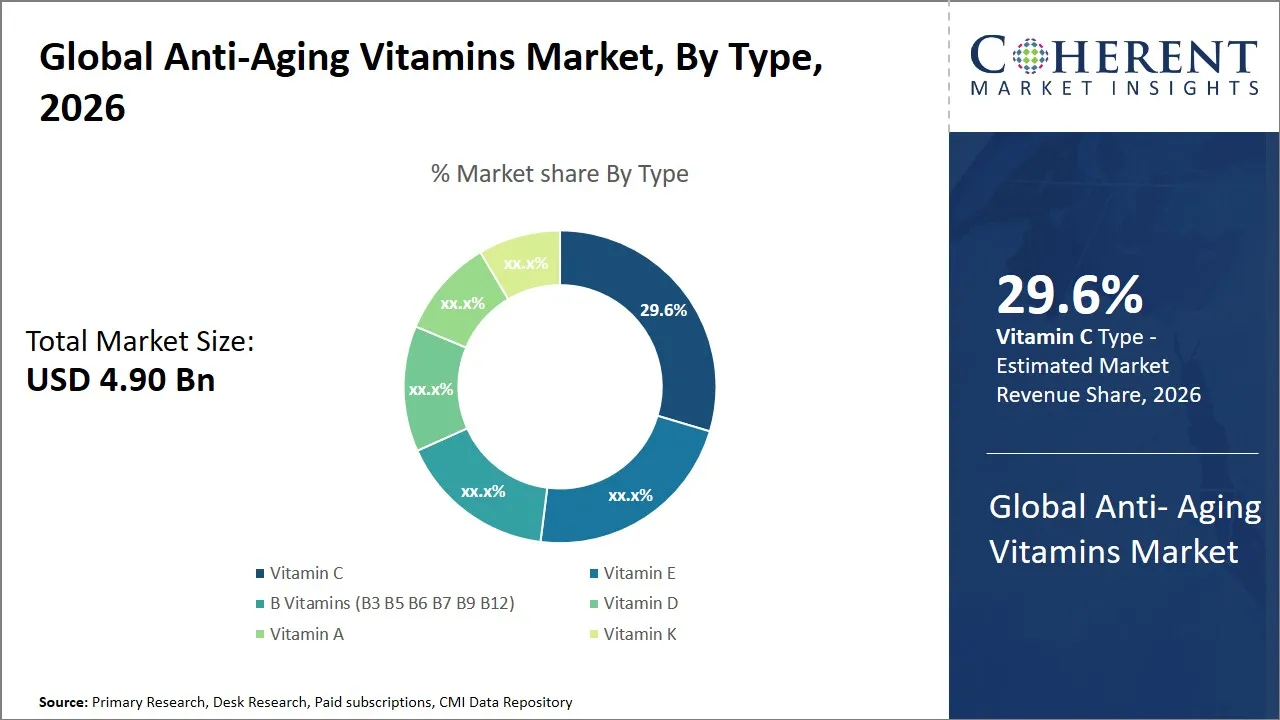
- Vitamin C segment is expected to lead the anti-aging vitamins market capturing 29.6% share in 2026.
- Skin Care segment is estimated to represent 21.4% of the market share in 2026.
- Women segment is projected to dominate with 37% of the global anti-aging vitamins market share in 2026.
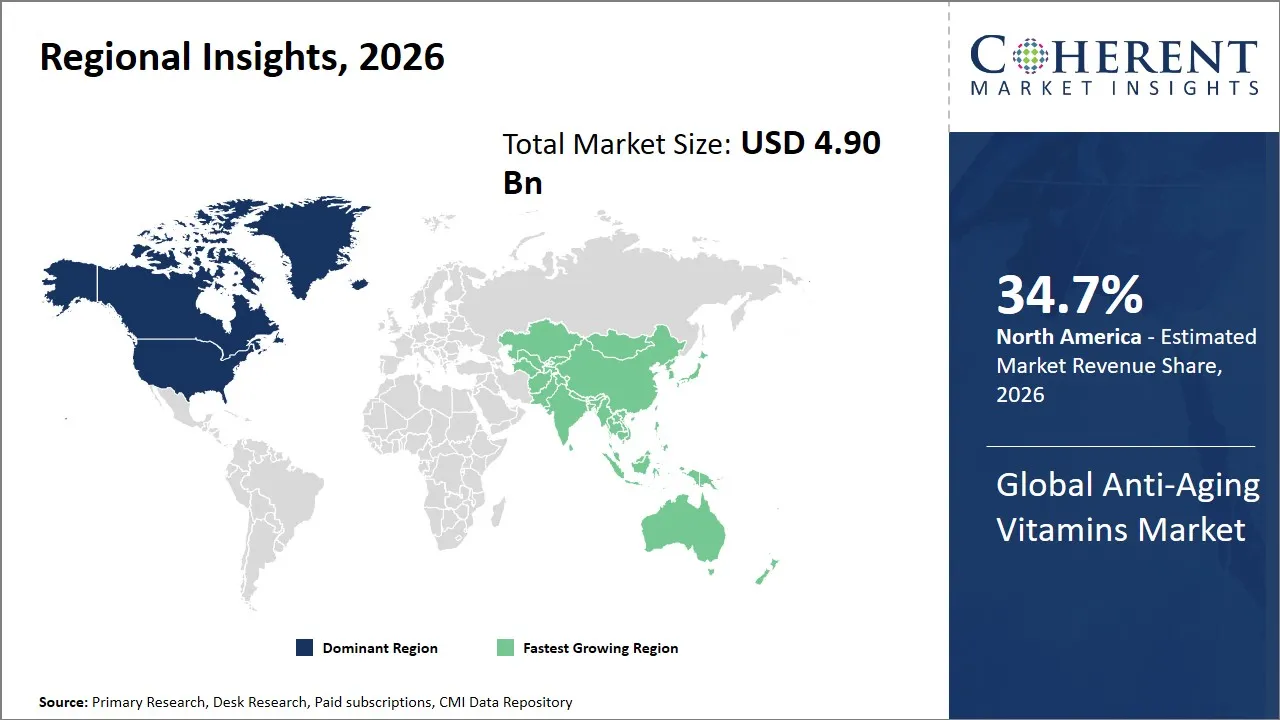
- North America is expected to lead the market, holding a share of 34.7% in 2026. Asia Pacific is anticipated to be the fastest-growing region, with 21.8% share in 2026.
Market Overview
- Rising global aging population is driving long-term demand for anti-aging vitamins and preventive health supplements
- Innovation in multifunctional formulations combining vitamins, collagen, antioxidants, and beauty nutrients is accelerating market expansion
- Increasing awareness of skin, joint, and cognitive aging is expanding supplement consumption across younger age groups
- Partnerships between nutraceutical, beauty, and healthcare companies are driving innovation in beauty-from-within and healthy aging solutions
Currents Events and Its Impact
Current Events | Description and its Impact |
Product Innovations in Anti-Aging Supplements |
|
Rise of E-Commerce in Wellness Products |
|
Segmental Insights
- Current Industry Events of 2026
- Market Size Estimation
- Regional Breakdown
- Competitive Landscape
- Customer Intelligence
- Segmental Analysis
- Pricing Analysis
- Key Market Drivers, Challenges & Future Trends
- Customized Insights Section
Why Does the Vitamin C Segment Dominate the Global Anti-Aging Vitamins Market in 2026?
The Vitamin C segment is expected to hold the largest share of 29.6% in 2026, owing to its well-established role as a powerful antioxidant and collagen booster. The ability of vitamin C to counteract the free radicals renders it to be especially useful in counteracting oxidative stress which is a major contributor to aging of cells and the destruction of skin. This anti-aging attribute of cells resonates with a wide spectrum of consumers who want products that slow the appearance of the signs of aging like wrinkles, lines, folds as well as disappearance of skin elasticity. Furthermore, Vitamin C is essential in collagen production, thus it is invaluable in keeping the skin firm and young with a pleasant texture which explains why it is of choice in skin care formulations.
For instance, in October 2025, Cymbiotika, renowned for its science-backed liquid and liposomal supplements, launched its product range at Target stores and online. This move introduces enhanced delivery formats and premium Vitamin C formulations to mainstream U.S. consumers, marking a significant step in the retail expansion of anti-aging nutrients.
Why Does the Skin Care Segment Dominate the Global Anti-Aging Vitamins Market in 2026?
The skin care segment is projected to hold the largest share of 21.4% in 2026, driven primarily by growing consumer emphasis on aesthetic appearance and the increasing integration of vitamins into topical and ingestible beauty products. The most apparent and direct sphere where the influence of aging is visible is skin, so the consumers are willing to spend a lot of money on preventive and curative measures. Vitamins that mitigate elasticity, hydration, pigmentation, and skin renewal are much desired because of their physical effects of keeping the skin very young.
For instance, in March 2025, Olay launched its highly popular Regenerist Micro-Sculpting Cream, combining niacinamide (Vitamin B3) with peptides and hyaluronic acid to target the appearance of fine lines, wrinkles, and improve skin elasticity. Designed to provide a youthful, sculpted appearance, this product addresses key concerns of aging skin, making it one of the top-selling skincare lines in the anti-aging vitamins market.
Women Dominates the Global Anti-Aging Vitamins Market
Women segment is expected to capture the highest share of 37% in 2026, reflecting stronger health consciousness combined with a pronounced focus on aesthetic upkeep relative to other demographic groups. Women are more involved with their self-care routines and more inclined to seek preventive interventions against aging due to social, cultural, and individual reasons. The hormonal changes during various periods of time in life like menstruation, pregnancy, and menopause predispose women to certain aging issues such as skin drying, lack of skin elasticity and body pains, which can be alleviated using anti-aging vitamins.
Advancements in Vitamin Technology: Exploring Serums, Liposomal, and Nano-Enhanced Delivery Systems for Anti-Aging Skincare
- Vitamin technology and delivery systems: Vitamin technology and delivery systems have been developing rapidly over the last few years, with serums, liposomal and nano-enhanced formulations growing in popularity as anti-aging skincare. Serums are created to be absorbed quickly and contain high levels of active ingredients that can be deposited directly to the skin and give specific anti-aging effects such as wrinkles and skin elasticity. Such products usually include such vitamins as Vitamin C, Vitamin E, retinol, etc. that are used against free radicals and collagen formation.
- The liposomal and nano enhanced delivery systems have also improved the technology in skincare, where vitamins and nutrients can be entrained inside the lipid or nanoparticle shell to enhance absorption and stability. Such systems increase bioavailability of active ingredients and make sure they penetrate deeper layers of the skin, which is more effective. These delivery technologies especially are used treating more intractable skin diseases such as fine lines, pigmentation, and loss of firmness, and thus are major players in the future of anti-aging skincare.
Regional Insights
North America Anti-Aging Vitamins Market Analysis and Trends
The North America region is projected to lead the market with a 34.7% share in 2026, driven by a well-established healthcare infrastructure, high consumer awareness, and a significant focus on preventative health and wellness. There are strict regulatory measures that poses safety and efficacy of the products used in the region, enhancing consumer confidence. Moreover, the main industry players which include Amway, GNC, and the Nature Bounty have significant presence and have heavily invested in research and development to come up with formulations that incorporate optimization of vitamins with other anti-aging nutrients.
For instance, in August 2025, Nature’s Way Apple Cider Vinegar + Vitamin C gummies have gained popularity in the U.S., thanks to the combination of Vitamin C’s antioxidant benefits and wellness-focused ingredients. This product reflects the growing North American consumer demand for supplements that promote skin health, boost immunity, and support overall aging-related wellness.
Asia Pacific Anti-Aging Vitamins Market Analysis and Trends
The Asia Pacific region is expected to exhibit the fastest growth in the market contributing 21.8% share in 2026, fueled by rising disposable incomes, increasing health consciousness, and expanding urbanization. Countries such as China, Japan, and India have established measures that promote the growth of the nutraceutical industry such as lax laws surrounding dietary supplements which spur both manufacturing and importation of the same.
For instance, in November 2025, Visionary Holdings launched a new line of stem cell‑based anti‑aging products from its Asia Pacific headquarters in Hong Kong, with initial rollouts planned across Hong Kong, Singapore, and Mainland China. The company aims to build a cross‑border sales network and partner with regional medical institutions to drive adoption of its advanced anti‑aging offerings.
Anti-Aging Vitamins Market Outlook for Key Countries
What are the Current Trends Shaping the U.S. Anti-Aging Vitamins Market?
The U.S. anti-aging vitamins market can be discussed as one of the global leaders because of its complex healthcare system, high level of research and high demand of the consumers for high quality supplements. Development is being driven by major competitors such as Pfizer (under Centrum), Amway, and the Nature’s way with formulations aimed at skin health, mental and overall vitality. Strong retail network such as supermarkets, pharmacies and online sales platforms are guaranteed to deliver broad distribution. Furthermore, the growing use of preventive health behaviors by the Americans highlights the growing demand with U.S. FDA policies that facilitate safe supplement use.
How is Germany Helping in the Growth of the Anti-Aging Vitamins Market?
The anti-aging vitamins market in Germany is characterized by a good regulatory control of the European Food Safety Authority (EFSA) that enhances the high product ingredient and manufacturing standards. The wellness culture in the country is mature, and the trend is more inclined towards natural and organic anti-aging solutions and it is evident in the services provided by the companies like Bayer and BioTech USA. Germany anti-aging vitamins market is served by the established pharmaceutical and healthcare sectors, and certified quality, and the growing consumer demands for scientifically proven vitamins. The European Union provides a broad spectrum of market integration through trade.
Key Drivers for the Growth of the China Anti-Aging Vitamins Market
The anti-aging vitamins market of China is growing at a very fast rate because of the changing patterns of population, rising consciousness about health supplements, and the promotion of the health and wellness industry by the government. Domestic brands such as By-Health and international brands such as Amway have created large footprints and they have been operating together on the product development based on the local consumer preferences around the traditional herbal ingredients mixed with the vitamins. A developing environment of e-commerce facilitates penetration into urban and semi-urban regions, creating a direct contact between the manufacturers and the health-conscious population.
Japan Anti-Aging Vitamins Market Trends
Japan has become a leader in anti-aging and longevity within the Asia Pacific region, driven by its aging population. The regulatory environment supports innovation in functional foods and supplements, backed by scientific research. Industry leaders like Yakult Honsha and Otsuka Pharmaceutical leverage advanced research and development to create vitamin preparations with improved bioavailability. The Japanese market blends traditional supplement use with modern wellness trends, where consumer expectations are high, and strong healthcare policies ensure that products are both effective and safe.
Regulatory and Scientific Validation Landscape in the Global Anti-Aging Vitamins Market
Aspect | Description | Impact |
Regulatory Authorities | U.S. Food and Drug Administration (FDA), European Food Safety Authority (EFSA), Health Canada, TGA (Therapeutic Goods Administration, Australia) | Ensures safety and efficacy of anti-aging supplements before market approval, affecting product development timelines and formulation strategies.
|
Product Claims Regulation | Strict guidelines on allowable health claims for vitamins and supplements. | Limits exaggerated anti-aging claims, requiring scientific evidence to back up marketing messages. |
Ingredient Safety Evaluations | Pre-market safety data submission for novel ingredients, periodic re-evaluation of existing ingredients | Ensures consumer safety but increases time-to-market and potential for reformulation based on new findings. |
Clinical Validation Requirements | Growing demand for clinical trials to validate anti-aging claims, with studies focusing on biomarkers (e.g., collagen synthesis, wrinkle reduction) | Drives companies to invest in research, providing more credible products but raising R&D costs.
|
Labeling & Advertising Regulations | Mandatory disclosure of ingredient amounts, daily values, and restrictions on disease treatment claims (e.g., "prevents aging"). | Improves transparency and ensures consumer protection, limiting misleading marketing.
|
Market Players, Key Developments, and Competitive Intelligence
Key Developments
- On February 1, 2026, Ms. Kourtney Kardashian’s Lemme and Ms. Kylie Jenner’s Kylie Cosmetics launched limited-edition Skin Glaze Gummies, a beauty-focused, anti-aging supplement aimed at enhancing skin hydration, elasticity, and radiance. Released on February 1, 2026, the pomegranate, strawberry, and tart cherry flavored gummies feature a blend of clinically-studied spermidine, pro-retinol, and pro-collagen vitamins.
- In April 2025, Longevity Health Holdings, a leader in the regenerative health and wellness sector, announced a strategic merger with 20/20 Biolabs, a company specializing in innovative nutrition products. This merger is set to significantly expand Longevity Health's capabilities in regenerative health and nutrition products aligned with healthy aging.
- In March 2025, Elysium Health, a leader in cutting-edge wellness solutions, announced the launch of Cofactor, a new 4-in-1 collagen supplement designed to support collagen production and enhance skin and joint health as part of its ongoing commitment to tackling age-related health concerns.
Top Strategies Followed by Global Anti-Aging Vitamins Market Players
Player Type | Strategic Focus | Examples |
Established Market Leaders | Established players in the anti-aging vitamins market invest heavily in R&D to develop high-performance products, leveraging advancements in nutrition and dermatology. They also form strategic partnerships with OEMs to strengthen supply chains and expand market presence. | Amway, which combines innovative product development with global distribution and strategic alliances to maintain leadership in the anti-aging vitamins sector. |
Mid-Level Players | Mid-level players in the anti-aging vitamins market focus on offering cost-effective products that balance quality and affordability. They engage in collaborations with specialized manufacturers to optimize production and enhance product features without raising costs. | Swanson Health offers affordable, high-quality vitamins and supplements while strengthening its market presence through online sales and partnerships with specialized manufacturers. |
Small-Scale Players | Small-scale players in the anti-aging vitamins market differentiate themselves by offering specialized products, such as plant-based formulations or allergen-free options, targeting specific consumer needs. They use cutting-edge technologies and form local alliances to build strong customer segments. | Aloette is a niche brand that focuses on organic, bioactive ingredients in its anti-aging vitamin products, catering to consumers seeking clean and targeted wellness solutions. |
Market Report Scope
Anti-Aging Vitamins Market Report Coverage
| Report Coverage | Details | ||
|---|---|---|---|
| Base Year: | 2025 | Market Size in 2026: | USD 4.90 Bn |
| Historical Data for: | 2020 To 2024 | Forecast Period: | 2026 To 2033 |
| Forecast Period 2026 to 2033 CAGR: | 9.3% | 2033 Value Projection: | USD 9.13 Bn |
| Geographies covered: |
| ||
| Segments covered: |
| ||
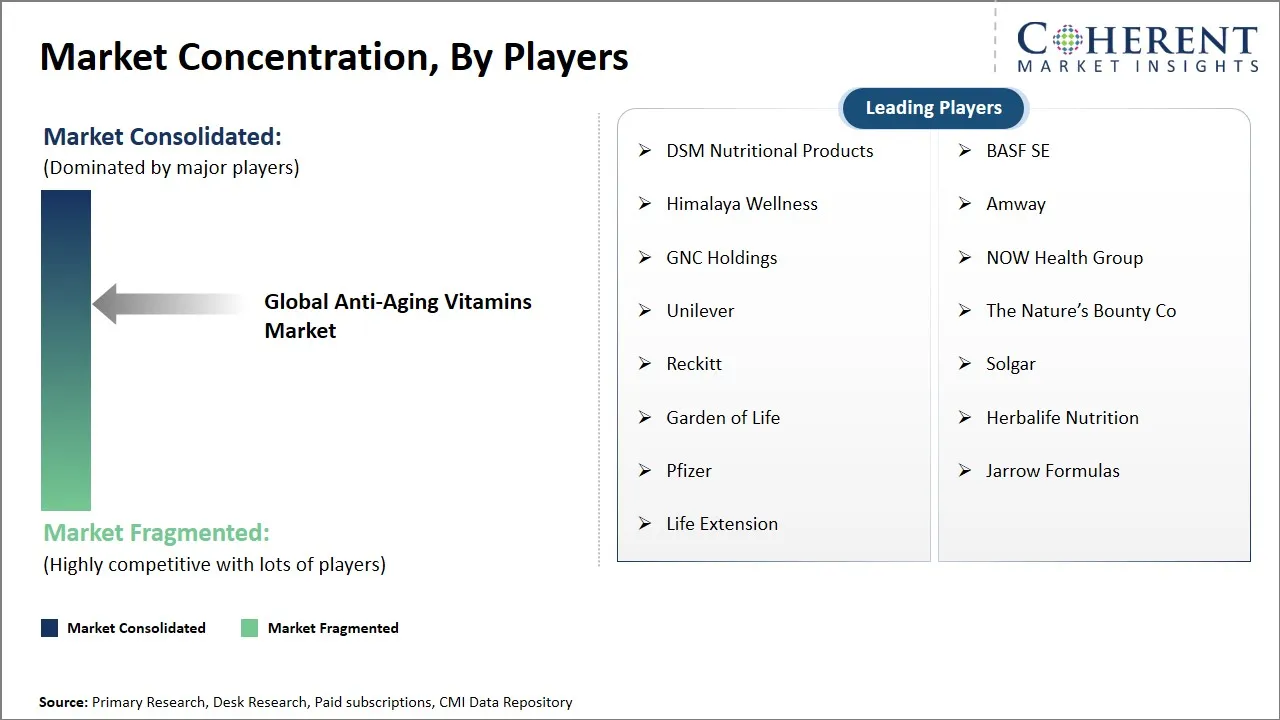
| Companies covered: | DSM Nutritional Products, BASF SE, Himalaya Wellness, Amway, GNC Holdings, NOW Health Group, Unilever, The Nature’s Bounty Co, Reckitt, Solgar, Garden of Life, Herbalife Nutrition, Pfizer, Jarrow Formulas, and Life Extension | ||
| Growth Drivers: |
| ||
| Restraints & Challenges: |
| ||
Market Dynamics
Anti-Aging Vitamins Market Driver - Growing Consumer Awareness of Preventive Health
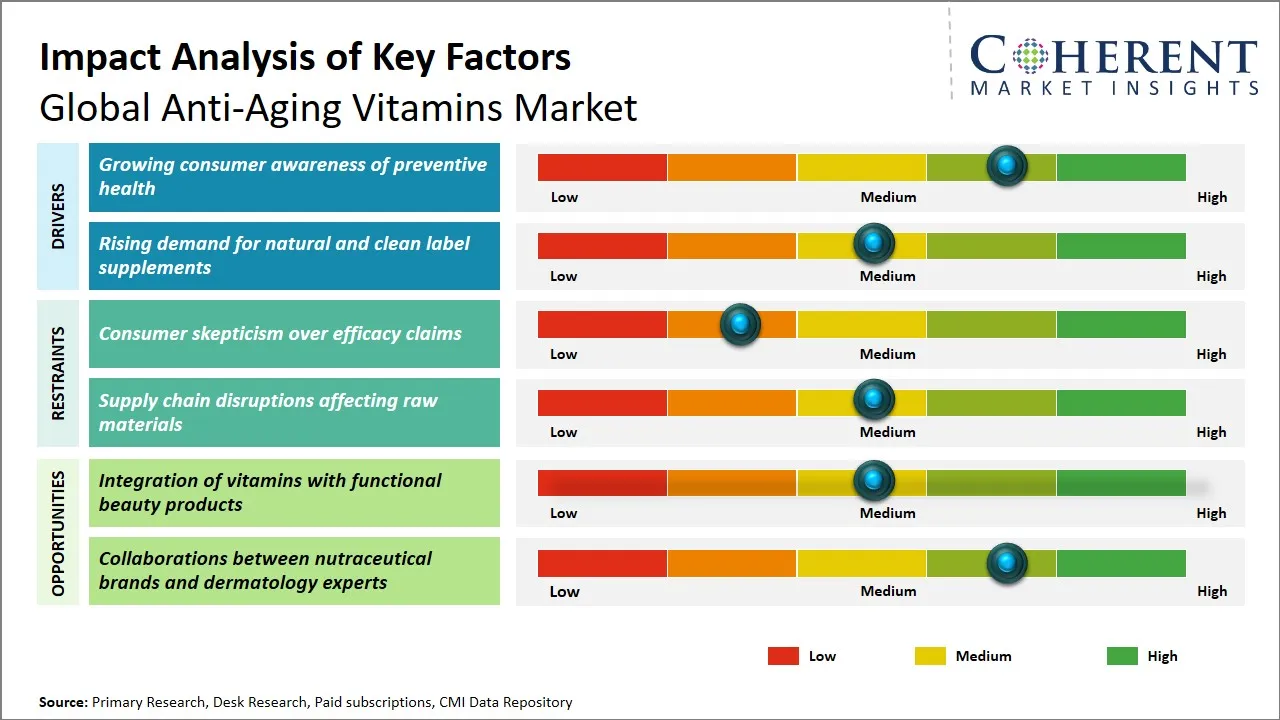
People are increasingly becoming proactive regarding their overall well-being, and this has greatly increased the demand for anti-aging vitamins. Individuals are changing their attention to only treating age-related illnesses to prevention of heat to prevent health leading to slowing down of physiological impacts of aging. This increased consciousness is mainly due to the increased availability of health knowledge via digital media as well as the increasing levels of education and the focus on the holistic wellness of lifestyle decisions. Consumers are now aware of vitamins and supplements not only as a nutritional supplement but as a vital constituent in skin elasticity, energy levels, and cellular health to address oxidative stress.
For instance, Garden of Life has expanded its range of organic, non-GMO vitamins and supplements. The brand targets health-conscious consumers focused on maintaining wellness through proactive, clean-label products like mykind Organics, reflecting the shift toward preventive health care.
Anti-Aging Vitamins Market Opportunity - Integration of Vitamins with Functional Beauty Products
Anti-aging vitamins can be integrated with functional beauty products, and this is a great opportunity of growth in the global market of anti-aging vitamins products. Consumers now are also expecting multifunctional products that can provide not only cosmetic value but also provide nutritional value to help the consumer maintain skin health internally. This trend is driving the merge of skincare and nutraceuticals, leading to the creation of unique formulations that combine Vitamin C, E, D, and collagen-enhancing complexes with popular beauty products like serums, creams, and masks. These hybrid products serve the emerging trends of holistic wellness products, whereby beauty regimes represent the preventive and maintenance aspects of holistic wellness using science-based ingredients.
For instance, Care/of is a direct-to-consumer health and wellness company that offers personalized daily vitamin, mineral, and supplement packs tailored to individual health goals and lifestyle. Established in 2016 and acquired by Bayer in 2020, the brand distinguishes itself by using an online assessment to create a customized 30-day regimen, which is delivered directly to the consumer in sustainable, compostable packets.
Analyst Opinion (Expert Opinion)
- The market of anti-aging vitamins is expanding with the development of the ingredient formulations and delivery mechanisms that enhance the efficacy of the product. This is being driven by increasing consumer demand of preventive health and especially among the aged population. Plant-based products are also getting a favorable environment through regulatory backing of clean-label products. The field of individual nutrition has become a promising opportunity, and there are still difficulties in terms of scientific validation and regulatory adherence.
- Recent conferences such as the International Conference on Anti-Aging Medicine 2023 and the Global Wellness Summit 2024 have provided the knowledge-sharing opportunity and presented new innovations. Firms such as Elysium Health with its Basis supplement are on the front line with new products that promote the health of the cells. The future of the market of anti-aging vitamins is being determined by these market initiatives as well as increasing interest in wellness.
Speak to the analyst
Want personalized insights?
Take the findings above to one of our principal consultants, or have the report rebuilt around the segments, geographies and competitors you actually track.
Market Segmentation
- Type Insights (Revenue, USD Bn, 2021 - 2033)
- Vitamin C
- Vitamin E
- B Vitamins (B3 B5 B6 B7 B9 B12)
- Vitamin D
- Vitamin A
- Vitamin K
- Application Insights (Revenue, USD Bn, 2021 - 2033)
- Skin Care
- Hair Care
- Cognitive Health
- Joint Health
- Eye Care
- End User Insights (Revenue, USD Bn, 2021 - 2033)
- Women
- Men
- Elderly
- General Population
- Distribution Channel Insights (Revenue, USD Bn, 2021 - 2033)
- Online
- Offline
- Formulation Insights (Revenue, USD Bn, 2021 - 2033)
- Capsules/Tablets
- Powders
- Liquid Supplements
- Topical Formulations
- Regional Insights (Revenue, USD Bn, 2021 - 2033)
- North America
- U.S.
- Canada
- Latin America
- Brazil
- Argentina
- Mexico
- Rest of Latin America
- Europe
- Germany
- U.K.
- Spain
- France
- Italy
- Russia
- Rest of Europe
- Asia Pacific
- China
- India
- Japan
- Australia
- South Korea
- ASEAN
- Rest of Asia Pacific
- Middle East
- GCC Countries
- Israel
- Rest of Middle East
- Africa
- South Africa
- North Africa
- Central Africa
- North America
- Key Players Insights
- DSM Nutritional Products
- BASF SE
- Himalaya Wellness
- Amway
- GNC Holdings
- NOW Health Group
- Unilever
- The Nature’s Bounty Co
- Reckitt
- Solgar
- Garden of Life
- Herbalife Nutrition
- Pfizer
- Jarrow Formulas
- Life Extension
Sources
Primary Research Interviews
Industry Stakeholders List
- Dermatologists and skincare professionals
- Nutritional scientists specializing in aging
End-Users List
- Consumers using anti-aging vitamin supplements
- Healthcare providers and wellness coaches
Government and International Databases:
- U.S. Food and Drug Administration (FDA)
- European Food Safety Authority (EFSA)
- World Health Organization (WHO)
- National Institutes of Health (NIH)
- Health Canada
- U.S. Centers for Disease Control and Prevention (CDC)
Trade Publications
- Nutraceuticals World
- Natural Products Insider
- The International Journal of Cosmetic Science
- Journal of Nutritional Biochemistry
- Cosmetics & Toiletries
- Nutritional Supplement News
Academic Journals
- The Journal of Clinical Investigation
- The American Journal of Clinical Nutrition
- Aging Cell
- The Journal of Dermatology
- Journal of Medicinal Food
- Experimental Gerontology
Reputable Newspapers
- The New York Times
- The Wall Street Journal
- The Guardian
- Washington Post
- Financial Times
- The Independent
Industry Associations
- American Nutraceutical Association (ANA)
- International Society for Research in Aging (ISRA)
- Council for Responsible Nutrition (CRN)
- Natural Products Association (NPA)
- European Federation of Associations of Health Products (EHPM)
- American Society for Nutrition (ASN)
Public Domain Resources
- National Institute on Aging (NIA)
- U.S. Department of Agriculture (USDA)
- National Library of Medicine
- Open Access Journal of Clinical Nutrition
- European Journal of Clinical Nutrition
Proprietary Elements
- CMI Data Analytics Tool: Proprietary analytics tool to analyze real-time market trends, consumer behavior, and technology adoption in market
- Proprietary CMI Existing Repository of Information for Last 8 Years
Get access to 250+ pages report
Every segment, forecast, competitor profile and data table behind the analysis above — available for instant download.
- ESOMAR Member
- ISO 9001:2015 Certified
- D-U-N-S Registered
- GDPR & CCPA Compliant
Missing comfort of reading report in your local language? Find your preferred language:
Transform your Strategy with Exclusive Trending Reports
Frequently Asked Questions
The global anti-aging vitamins market is estimated to be valued at USD 4.90 Bn in 2026 and is expected to reach USD 9.13 Bn by 2033.
The CAGR of global anti-aging vitamins market is projected to be 9.3% from 2026 to 2033.
Growing consumer awareness of preventive health and rising demand for natural and clean label supplements are the major factors driving the growth of the global anti-aging vitamins market.
Personalized formulations are shaping the anti-aging vitamins market by offering products tailored to individual health needs, enhancing their effectiveness. Customization allows for precise targeting of issues like skin elasticity and joint health, improving consumer engagement and satisfaction.
Long-term use of anti-aging vitamins can pose safety risks, especially with fat-soluble vitamins like Vitamin A and D, which can cause toxicity in excessive amounts. There may also be interactions with medications and long-term effects of high-dose antioxidants, so consultation with healthcare professionals is recommended.
Consumer skepticism over efficacy claims and supply chain disruptions affecting raw materials are the major factors hampering the growth of the global anti-aging vitamins market.
In terms of type, Vitamin C is estimated to dominate the market revenue share in 2026.