

Global Aromatic Hydrocarbon Market Size and Forecast – 2026-2033
The Global Aromatic Hydrocarbon Market is estimated to be valued at USD 11.12 Bn in 2026 and is expected to reach USD 17.42 Bn by 2033, exhibiting a compound annual growth rate (CAGR) of 6.6% from 2026 to 2033.
Key Takeaways of the Aromatic Hydrocarbon Market
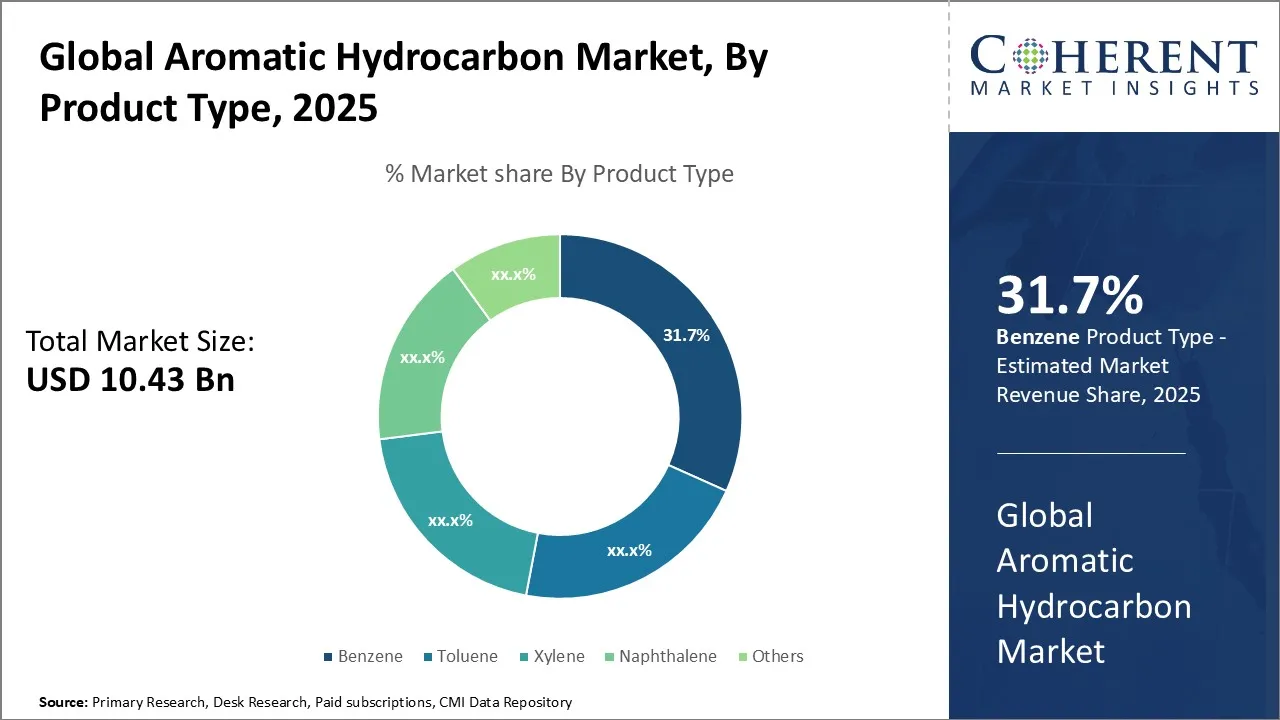
- The benzene segment is projected to command a 32.7 % share of the aromatic hydrocarbon market in 2026, driven by its exceptional versatility and critical role as a cornerstone of the chemical industry.
- The chemical production segment is expected to account for 33.9 % of the market in 2026, as aromatic hydrocarbons like benzene, toluene, and xylene remain essential intermediates in the synthesis of a wide range of chemical compounds.
- Asia Pacific is expected to lead the global aromatic hydrocarbon market in 2026 with a 37.5 % share, driven by rapid industrialization, robust petrochemical demand, and expanding automotive and construction sectors. Europe, with a 22.5% share, will be the fastest-growing region, supported by stringent environmental regulations, increasing investments in sustainable chemical production, and rising demand for specialty chemicals.
Market Overview
A prominent market trend is the rising focus on sustainable and environment-friendly production methods, prompting companies to innovate with bio-based aromatic hydrocarbons. Additionally, the growing adoption of advanced refining technologies and stricter environmental regulations are reshaping market dynamics. Moreover, expanding applications in pharmaceuticals and agrochemicals are further propelling market growth, as manufacturers seek efficient and versatile chemical intermediates to meet evolving consumer and industrial needs.
Current Events and Its Impact
Current Events | Description and its impact |
Energy Companies’ Diversification into Petrochemicals |
|
Asia Pacific Industrialization and Market Expansion |
|
Segmental Insights
- Current Industry Events of 2026
- Market Size Estimation
- Regional Breakdown
- Competitive Landscape
- Customer Intelligence
- Segmental Analysis
- Pricing Analysis
- Key Market Drivers, Challenges & Future Trends
- Customized Insights Section
Aromatic Hydrocarbon Market Insights, By Product Type – Benzene Segment Dominates the Market due to its Extensive Industrial Applications and Vital Role as a Chemical Building Block
The benzene segment is expected to hold 32.7% share of the aromatic hydrocarbon market in 2026, due to its unparalleled versatility and foundational presence in the chemical industry. It serves as a critical feedstock for manufacturing a wide array of downstream chemicals, including styrene, phenol, and cyclohexane, all of which are essential raw materials in producing plastics, resins, synthetic fibers, and rubber. This extensive integration into the supply chains of various industries drives the sustained demand for benzene.
A key factor propelling benzene’s market dominance is its irreplaceable function in producing styrene, which is then polymerized into polystyrene—a widely used plastic in packaging, insulation, and consumer products. Similarly, phenol derived from benzene is indispensable in manufacturing epoxy resins and polycarbonates, materials crucial to the automotive, construction, and electronics sectors. The continuous growth of these end-use industries, fueled by urbanization and rising consumer spending, directly boosts benzene demand.
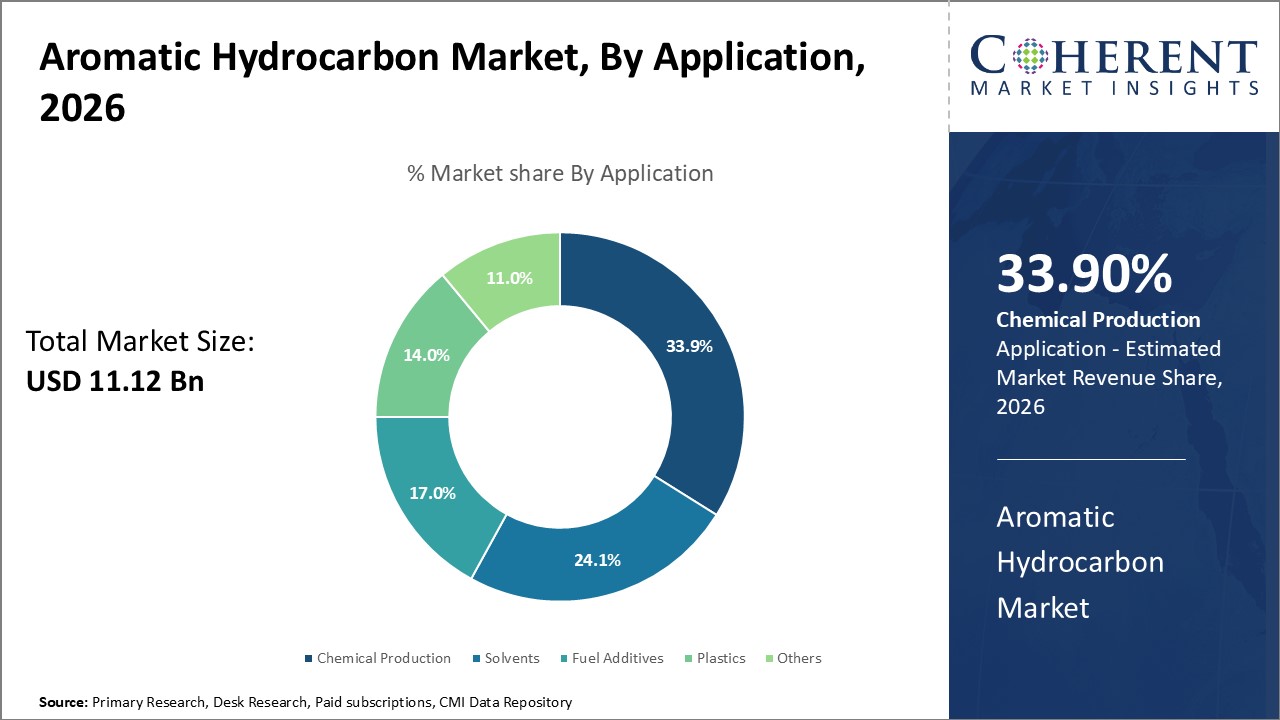
Aromatic Hydrocarbon Market Insights, By Application - Chemical Production Segment Dominates the Market Driven by the Fundamental Role of Aromatic Hydrocarbons as Essential Intermediates in Synthesizing Diverse Chemicals
The chemical production segment is projected to hold 33.9% share of the market in 2026, because aromatic hydrocarbons such as benzene, toluene, and xylene serve as indispensable intermediates in the manufacture of numerous chemical compounds. Their unique molecular structures enable a wide variety of chemical reactions, making them critical raw materials for producing essential substances across industries.
The paramount driver in this segment is the synthesis of plastics, synthetic fibers, resins, and solvents, all of which originate from base chemicals derived from aromatic hydrocarbons. For instance, benzene’s conversion into styrene and phenol, toluene’s use in producing benzene and other derivatives, and xylenes’ role in making terephthalic acid highlight the reliance of chemical manufacturing processes on these hydrocarbons.
Regional Insights
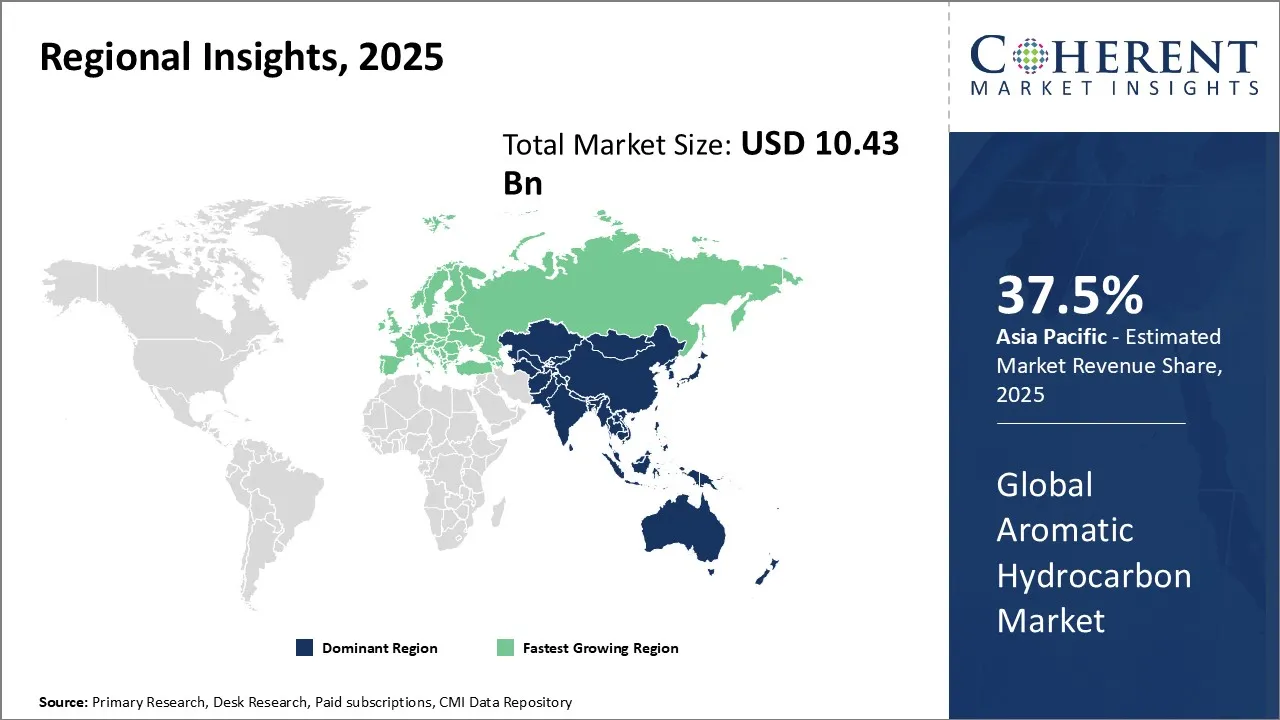
Asia Pacific Aromatic Hydrocarbon Market Analysis and Trends
The Asia Pacific region is projected to lead the market with a 37.5% share in 2026, driven by rapid industrialization, urbanization, and increasing demand from several end-use industries including automotive, packaging, and electronics. Emerging economies such as China, India, South Korea, and Southeast Asian nations benefit from favorable government initiatives encouraging foreign investment, infrastructure development, and export facilitation.
The expanding refining capacities and rising consumption of petrochemical derivatives significantly bolster the demand for aromatic hydrocarbons. Regional key players like Sinopec, Reliance Industries, SABIC (operating through regional subsidiaries), and LG Chem are investing heavily in capacity expansions and technology upgrades, enabling Asia Pacific to quickly gain market share and establish a formidable competitive edge.
Europe Aromatic Hydrocarbon Market Analysis and Trends
The Europe region is expected to exhibit the fastest growth in the market contributing 22.5% share in 2026, bolstered by strong petrochemical hubs in Germany, France, the Netherlands, and Italy, alongside strict EU regulations that push cleaner technologies and sustainable feedstock use. Major players like BASF, LyondellBasell, and TotalEnergies drive R&D and investments, while the region’s advanced infrastructure and skilled workforce further strengthen its global market position.
Global Aromatic Hydrocarbon Market Outlook for Key Countries
U.S. Aromatic Hydrocarbon Market Trends
The U.S. continues to lead the aromatic hydrocarbon market with its comprehensive value chain from upstream crude oil production to high-end chemical processing. Major corporations such as ExxonMobil and Chevron Phillips Chemical play pivotal roles by continuously innovating and enhancing production efficiencies. The focus on green technologies and sustainable chemical synthesis has positioned the U.S. as a market leader, fostering the development of bio-based aromatics and circular economy models. The presence of established infrastructure, coupled with strong domestic demand and export capabilities, solidifies the country’s market dominance.
China Aromatic Hydrocarbon Market Trends
China's aromatic hydrocarbon market is characterized by robust growth supported by massive investments in refinery and petrochemical complexes by companies like Sinopec and PetroChina. The country’s industrial growth, increasing consumer base, and government-backed initiatives such as “Made in China 2026” drive the demand across sectors including textiles, plastics, and automotive manufacturing. China’s strategic position in global trade, along with efforts to improve environmental standards and innovate cleaner production methods, rapidly expand its footprint in the global aromatic hydrocarbon landscape.
India Aromatic Hydrocarbon Market Trends
India’s aromatic hydrocarbon market is evolving amid a surge in infrastructure projects and manufacturing activities. Reliance Industries, a notable player in this sector, has significantly contributed through expansions in refining capacities and petrochemical integration. Government policies promoting “Make in India” and energy sector reforms have attracted investments, improving downstream capabilities. The growing automotive and packaging industries particularly fuel aromatic hydrocarbon consumption, while enhanced trade logistics allow Indian producers to access international markets effectively.
Germany Aromatic Hydrocarbon Market Trends
Germany maintains a crucial position in Europe’s aromatic hydrocarbon market, with its strong chemical manufacturing base and emphasis on sustainability. Companies such as BASF and Lanxess lead the industry by integrating cutting-edge technology and environmental compliance into aromatic hydrocarbon production. The country’s stringent regulatory environment drives innovation towards eco-friendly solvents and intermediates, supporting stable market demand in automotive, pharmaceuticals, and coatings sectors. Germany's role as a key exporter within the European Union further anchors its market significance.
Saudi Arabia Aromatic Hydrocarbon Market Trends
Saudi Arabia’s aromatic hydrocarbon market is shaped by its vast crude oil reserves and strategic investments in downstream petrochemicals. Saudi Aramco, SABIC, and other regional giants leverage the country’s energy resources to produce high volumes of aromatic hydrocarbons with a focus on petrochemical exports. The government’s Vision 2030 plan emphasizes diversification and industrial innovation, enabling infrastructure development and encouraging joint ventures with global chemical companies. Saudi Arabia’s position as a key supplier for global aromatic hydrocarbons enhances its influence and growth prospects in the market.
End User Feedback and Unmet Needs in the Aromatic Hydrocarbon Market
- One recurring theme from industrial end-users, particularly in the petrochemical and plastics sectors, is the high reliability of aromatic hydrocarbons as feedstock for downstream production. For example, large-scale manufacturers of synthetic resins and polymers consistently cite the superior yield and stability of benzene-based derivatives compared to alternative raw materials.
- These users note that the consistency in quality and availability has enabled smoother integration into high-volume production lines, reducing the risk of bottlenecks and ensuring predictable output. Government utilities monitoring industrial applications also report satisfaction with improvements in supply-chain integration, where enhanced logistics and long-term supply contracts have minimized volatility in regional markets.
- Despite the broad utility of aromatic hydrocarbons, several unmet needs persist across the end-user landscape. Key gaps include the limited availability of affordable low-carbon alternatives, the lack of customized formulations tailored to niche applications, and insufficient technical support for mid-market users transitioning to more sustainable practices.
- Affordability remains a central concern, particularly for smaller industrial buyers who struggle with volatility in crude oil derivatives. Additionally, end-users in emerging markets consistently note challenges with accessing high-quality aromatic hydrocarbons due to fragmented supply networks and uneven distribution infrastructure.
Market Players, Key Development, and Competitive Intelligence
Key Developments
- In June 2025, scientists reported the discovery of the largest aromatic molecule ever detected in deep space. The newly identified compound, cyanocoronene—consisting of seven fused benzene rings and a cyano group—was found in the cold, dark Taurus molecular cloud, a region rich in star-forming chemistry. This breakthrough, which reveals a molecule twice the size of the previous record holder, indicates that far more complex organic structures may be widespread across the cosmos.
- In March 2025, researchers from Karlsruhe Institute of Technology (KIT) in Germany successfully synthesized a five-membered aromatic bismuth ring, marking a significant milestone in synthetic chemistry. This achievement, which overcomes a long-standing challenge, represents the first isolation of a complex containing the motif. With this breakthrough, analogues of the classic cyclopentadienide anion have now been created using all naturally occurring pnictogen elements, opening a new era for aromatic compound research.
Top Strategies Followed by Global Aromatic Hydrocarbon Market Players
- Established market leaders distinguish themselves through substantial investments in research and development, striving to innovate high-performance aromatic hydrocarbon products that meet increasingly stringent quality and environmental standards. The global expansion remains a critical axis of their growth strategies, with these companies broadening their distribution networks to penetrate emerging markets in Asia Pacific, Latin America, and Africa, where rising industrialization and demand for petrochemical derivatives present lucrative opportunities for sustained growth.
- For example, Exxon Mobil Corporation has advanced its reforming and aromatics production facilities in Singapore, positioning itself to supply high-purity benzene and para-xylene to Asian end-use industries such as packaging, textiles, and automotive.
- Mid-level players in the aromatic hydrocarbon market adopt a balanced approach, focusing primarily on delivering cost-effective solutions that meet the essential quality requirements demanded by price-sensitive consumers. Their market strategy revolves around optimizing production efficiency and quality control to strike a competitive balance between affordability and product reliability. To strengthen their competitive positioning, mid-level manufacturers often engage in strategic collaborations and joint ventures that enhance their production capabilities and technological know-how.
- For example, Reliance Industries Limited balances affordability with quality and has leveraged joint ventures with global players to strengthen its refining capacity and aromatic hydrocarbon output, targeting both domestic and Southeast Asian demand.
- Small-scale players in the global aromatic hydrocarbon sector carve out niche markets by developing specialized products with unique features tailored to specific industrial or regional requirements. Innovation remains central to their strategy, with these companies often adopting cutting-edge technologies to maintain competitiveness against larger competitors. Unlike multinational giants, small players focus on agility and customization, providing bespoke solutions that meet localized demand patterns.
- For example, Kuraray Co., Ltd. (Japan) develops niche aromatic derivatives tailored for specialty chemical markets such as adhesives, coatings, and high-performance resins, catering to customized industrial needs.
Market Report Scope
Aromatic Hydrocarbon Market Report Coverage
| Report Coverage | Details | ||
|---|---|---|---|
| Base Year: | 2025 | Market Size in 2026: | USD 11.12 Bn |
| Historical Data for: | 2020 To 2024 | Forecast Period: | 2026 To 2033 |
| Forecast Period 2026 to 2033 CAGR: | 6.6% | 2033 Value Projection: | USD 17.42 Bn |
| Geographies covered: |
| ||
| Segments covered: |
| ||
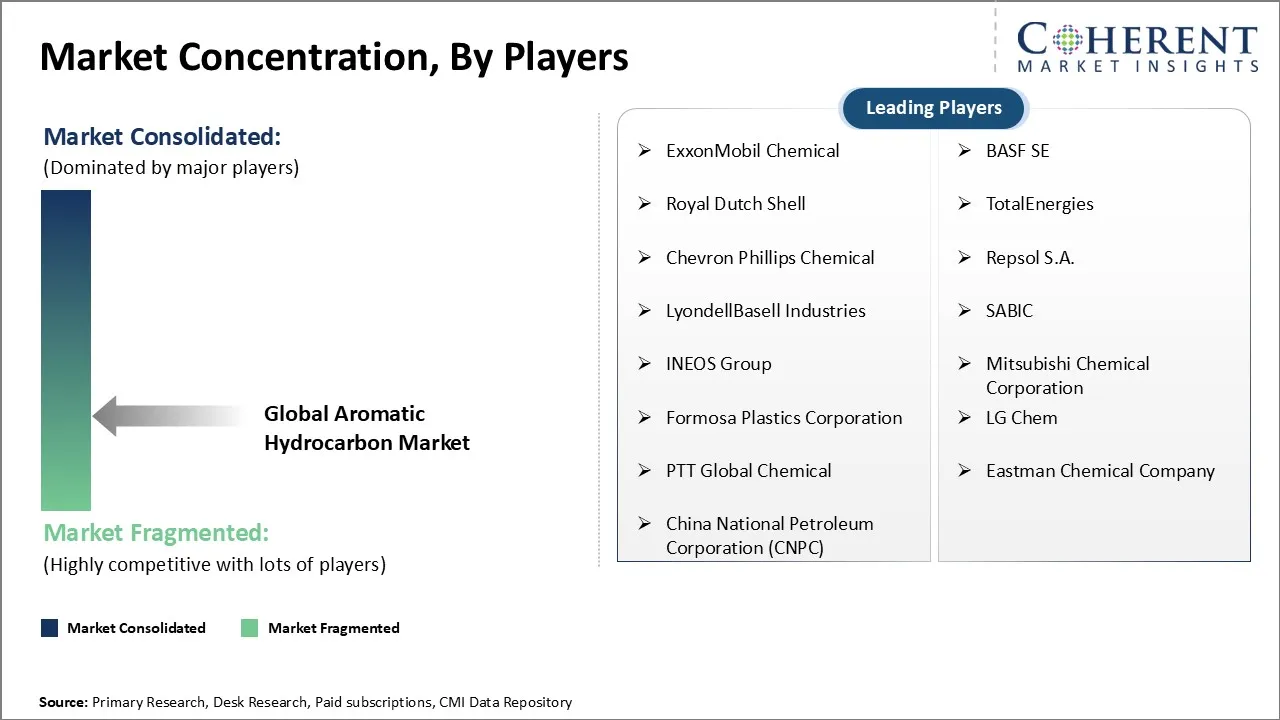
| Companies covered: | ExxonMobil Chemical, BASF SE, Royal Dutch Shell, TotalEnergies, Chevron Phillips Chemical, Repsol S.A., LyondellBasell Industries, SABIC, INEOS Group, Mitsubishi Chemical Corporation, Formosa Plastics Corporation, LG Chem, PTT Global Chemical, Eastman Chemical Company, and China National Petroleum Corporation (CNPC) | ||
| Growth Drivers: |
| ||
| Restraints & Challenges: |
| ||
Aromatic Hydrocarbon Market Dynamics
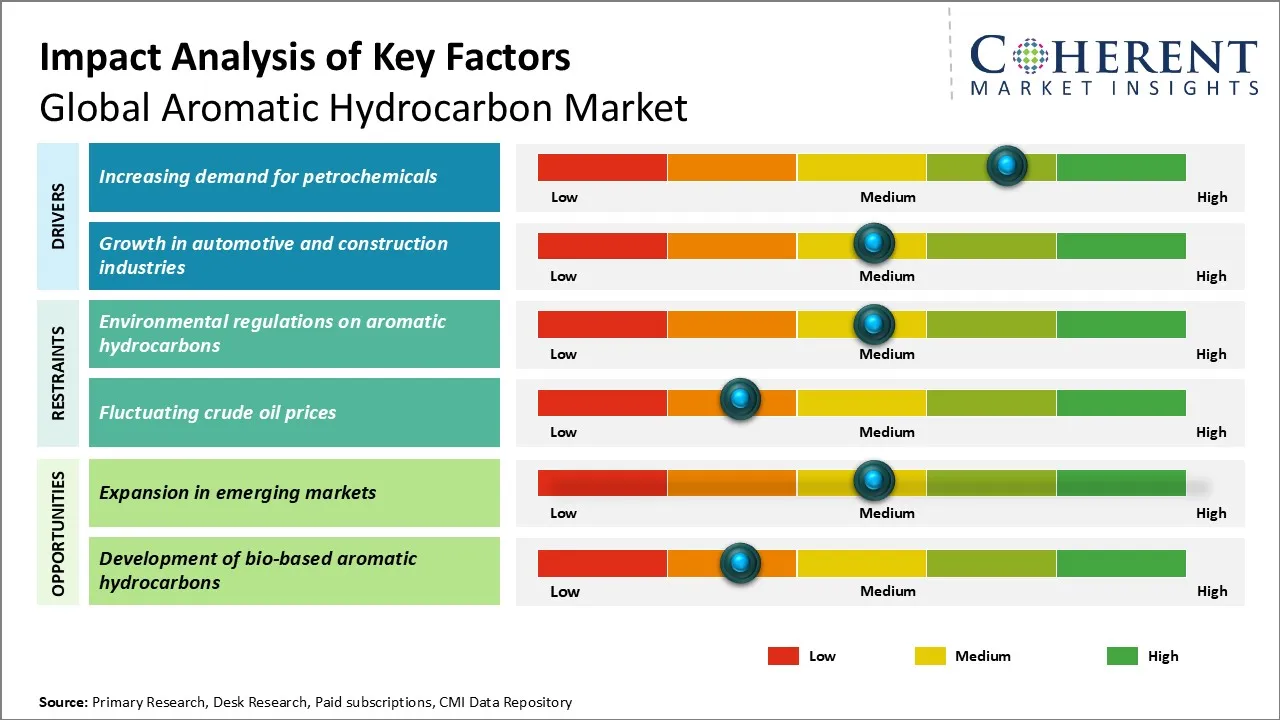
Aromatic Hydrocarbon Market Driver - Increasing Demand for Petrochemicals
The escalating demand for petrochemicals across various end-use industries serves as a significant driver for the global aromatic hydrocarbon market. Aromatic hydrocarbons such as benzene, toluene, and xylene are fundamental building blocks in the production of numerous chemicals and polymers that are extensively used in manufacturing plastics, synthetic fibers, resins, rubber, and solvents. As industries like automotive, packaging, construction, and textiles continue to expand, the requirement for high-performance materials derived from petrochemical intermediates intensifies.
For example, in 2024, India’s petrochemical sector witnessed an estimated consumption of over 3.2 million tons of benzene, largely directed toward the production of styrene and phenol for plastics and resins. Similarly, the U.S. Energy Information Administration (EIA) noted that para-xylene demand in Asia Pacific surged due to its extensive use in producing polyethylene terephthalate (PET) for packaging bottles and polyester fibers in the textile industry.
Aromatic Hydrocarbon Market Opportunity - Expansion in Emerging Markets
The global aromatic hydrocarbon market presents significant growth potential through expansion in emerging markets, driven by rapid industrialization and increasing demand from key end-use industries such as automotive, construction, and consumer goods. Countries in Asia Pacific, Latin America, and the Middle East are witnessing accelerated urbanization, rising disposable incomes, and expanding manufacturing bases, which collectively fuel the need for aromatic hydrocarbons in the production of polymers, synthetic fibers, and specialty chemicals. For instance, the robust growth of the automotive sector in India and Southeast Asia propels the demand for petrochemical derivatives like benzene and toluene, essential for producing high-quality rubber and plastic components.
For example, India’s automobile production reached 25.9 million units in FY 2023–24 (Society of Indian Automobile Manufacturers – SIAM), while Southeast Asia recorded double-digit growth in vehicle sales. This rapid automotive expansion directly increases the demand for petrochemical derivatives such as benzene and toluene, which are crucial for producing synthetic rubber, engineering plastics, and coatings.
Analyst Opinion (Expert Opinion)
- The global aromatic hydrocarbon market is poised for robust growth, driven by increasing demand from key sectors such as automotive, construction, and consumer goods. Insights from the Aromatic Compounds Conference (2023) and the Global Petrochemical Forum (2022) underscored significant innovations, with companies like ExxonMobil and Benzene International leading efforts in developing high-purity aromatic hydrocarbons.
- ExxonMobil's recent advancements in refining technologies to enhance the yield of aromatics reflect a strategic response to the escalating demand for high-performance materials. Discussions at these events highlighted the rising trend of integrating bio-based feedstocks, which aligns with the industry’s shift towards sustainability. However, challenges such as regulatory pressures and fluctuating crude oil prices were identified as potential constraints.
- Companies that prioritize R&D to innovate cleaner production methods and expand their product offerings will likely achieve a competitive edge. Furthermore, fostering collaborations with downstream manufacturers can enhance market penetration and drive growth. Ultimately, the aromatic hydrocarbon market's future will hinge on its ability to innovate while addressing environmental concerns and navigating the complexities of the global supply chain.
Speak to the analyst
Want personalized insights?
Take the findings above to one of our principal consultants, or have the report rebuilt around the segments, geographies and competitors you actually track.
Market Segmentation
- Product Type Insights (Revenue, USD Bn, 2021 - 2033)
- Benzene
- Toluene
- Xylene
- Naphthalene
- Others
- Application Insights (Revenue, USD Bn, 2021 - 2033)
- Chemical Production
- Solvents
- Fuel Additives
- Plastics
- Others
- Regional Insights (Revenue, USD Bn, 2021 - 2033)
- North America
- U.S.
- Canada
- Latin America
- Brazil
- Argentina
- Mexico
- Rest of Latin America
- Europe
- Germany
- U.K.
- Spain
- France
- Italy
- Russia
- Rest of Europe
- Asia Pacific
- China
- India
- Japan
- Australia
- South Korea
- ASEAN
- Rest of Asia Pacific
- Middle East
- GCC Countries
- Israel
- Rest of Middle East
- Africa
- South Africa
- North Africa
- Central Africa
- North America
- Key Players Insights
- ExxonMobil Chemical
- BASF SE
- Royal Dutch Shell
- TotalEnergies
- Chevron Phillips Chemical
- Repsol S.A.
- LyondellBasell Industries
- SABIC
- INEOS Group
- Mitsubishi Chemical Corporation
- Formosa Plastics Corporation
- LG Chem
- PTT Global Chemical
- Eastman Chemical Company
- China National Petroleum Corporation (CNPC)
Sources
Primary Research Interviews
- R&D Director – Major Aromatic Hydrocarbon Producer
- Procurement Manager – Large Petrochemical Company
- Head of Product Development – Specialty Chemicals Manufacturer
- Sustainability Manager – Global Chemical Industry Certification Body
Stakeholders
- Manufacturers (Aromatic hydrocarbons, BTX producers, downstream chemical manufacturers)
- End-use Sectors:
- Petrochemicals (plastics, synthetic fibers, resins)
- Automotive & Transportation (fuels, lubricants, solvents)
- Construction (paints, adhesives, coatings)
- Consumer Goods (detergents, dyes, fragrances)
- Regulatory & Certification Bodies
- E-commerce Platforms and Industrial Distributors
- Technology Integration Players – AI-driven chemical process optimization providers
Databases
- UN Comtrade Database – Import/export trends for aromatic hydrocarbons
- United States Geological Survey (USGS) Minerals Yearbook – Aromatic hydrocarbon production data
- India Import Export (EXIM) Database – Regional trade statistics
Magazines
- Chemical Week – Global petrochemical and aromatic hydrocarbon trends
- ICIS Chemical Business – Aromatic feedstocks, pricing, and supply chain
- Petrochemical Update – Market dynamics and investment trends
- Hydrocarbon Processing – Process technologies for aromatic hydrocarbons
Journals
- Journal of Petroleum & Petrochemical Engineering – Refining and processing of aromatics
- Fuel Processing Technology – Hydrocarbon conversion and utilization
- Journal of Chemical Engineering & Technology – Applications of aromatic hydrocarbons in chemicals
- Journal of Hazardous Materials – Safety and environmental impact of aromatic hydrocarbons
- Energy & Fuels (ACS Publications) – Market and energy role of aromatics
Newspapers
- The Financial Times – Oil, gas, and petrochemical market insights
- The Economic Times – India’s chemical and petrochemical industry updates
- The Guardian – Environmental concerns around aromatics and petrochemicals
- China Daily – Asia-Pacific aromatic hydrocarbon consumption trends
- The Wall Street Journal – Global petrochemical investments and market growth
Associations
- American Fuel & Petrochemical Manufacturers (AFPM)
- European Petrochemical Association (EPCA)
- International Council of Chemical Associations (ICCA)
- American Chemistry Council (ACC)
- PetroChemicals Europe
Public Domain Sources
- U.S. Environmental Protection Agency (EPA) – Regulations for aromatic hydrocarbons and VOC emissions
- European Chemicals Agency (ECHA) – REACH compliance and safety rules for aromatics
- World Health Organization (WHO) – Health impact of aromatic hydrocarbon exposure
- OECD – Chemical safety and environmental assessments
- International Energy Agency (IEA) – Aromatic hydrocarbons in global energy supply chains
Proprietary Elements
- CMI Data Analytics Tool, Proprietary CMI Existing Repository of information for last 8 years.
Get access to 250+ pages report
Every segment, forecast, competitor profile and data table behind the analysis above — available for instant download.
- ESOMAR Member
- ISO 9001:2015 Certified
- D-U-N-S Registered
- GDPR & CCPA Compliant
Missing comfort of reading report in your local language? Find your preferred language:
Transform your Strategy with Exclusive Trending Reports
Frequently Asked Questions
The global aromatic hydrocarbon market is estimated to be valued at USD 11.12 Bn in 2026 and is expected to reach USD 17.42 Bn by 2033.
The CAGR of global aromatic hydrocarbon market is projected to be 6.6% from 2026 to 2033.
C6–C9 hydrocarbons are aromatic and aliphatic compounds containing 6 to 9 carbon atoms, widely used as solvents, chemical intermediates, and fuel components.
The market for aromatic solvents is driven by their extensive use in paints, coatings, adhesives, and chemical manufacturing, with strong demand from the construction, automotive, and industrial sectors.
Increasing demand for petrochemicals and growth in automotive and construction industries are the major factors driving the growth of the global aromatic hydrocarbon market.
Environmental regulations on aromatic hydrocarbons and fluctuating crude oil prices are the major factors hampering the growth of the global aromatic hydrocarbon market.
In terms of product type, benzene is estimated to dominate the market revenue share in 2026.