

Asia Pacific Energy Bar Market Size and Forecast – 2026 To 2033
The Asia Pacific Energy Bar Market is estimated to be valued at USD 1.34 Bn in 2026 and is expected to reach USD 2.52 Bn by 2033, exhibiting a compound annual growth rate (CAGR) of 9.5% from 2026 to 2033. This growth is supported by measurable shifts in consumer behavior and health trends in the region. For example, the e-commerce sales of functional and nutritional snacks grew by 12% year-on-year between 2023 and 2025; urban gym and fitness memberships increased by ~35% from 2018–2023; and sales of multi-pack energy bars now account for nearly 69.5% of the regional market, reflecting strong consumer preference for convenient, value-oriented, and daily-use nutrition products.
(Source: FICCI)
Key Takeaways of the Asia Pacific Energy Bar Market
- The conventional segment is projected to account for 73.6 % of the Asia Pacific energy bar market by 2026, as it is widely accessible and has a more affordable price tag which is suitable for regular snacking occasions. For instance, a common place to find a conventional grain bar in India and China is in supermarkets and local grocery stores, which is priced within better reach of students and working professionals needing an energy boost without being top dollar. With mass market distribution, the affordability factor continues to fuel increased market penetration of the conventional energy bar segment across the region. For example, Eat Anytime Multigrain Millet Energy Bars, 6 Bars — a pack of multigrain millet‑based energy bars are affordable and made from familiar cereals like ragi, quinoa, and jowar, aligning well with the conventional segment’s accessibility and value‑oriented positioning.
- The multi pack segment is expected to account for 69.5 % of the market share by 2026. In urban Asia Pacific, consumers typically purchase energy bars in bundles for daily use—whether for pre-workout or gym routines—making individual bar purchases less frequent. This has been further strengthened by the growing e-commerce penetration which drives multi-pack product offerings as ‘value-bundles'. For example, Yogabar Energy Bars Chocolate Chunk Pack of 20 – a 20‑bar multipack of energy bars are commonly sold on e‑commerce platforms, catering to daily snacking and workout fuel needs. Multipacks like this one appeal to urban Asia Pacific buyers seeking convenience and better value per unit, especially with rising e‑commerce penetration driving ‘value bundle’ offerings.
- Cereals & grains segment is expected to be 32.1 % in 2026, reflecting their connection to sustained energy and familiar eating habits in this region. Traditional sources such as oats, rice, and millet are common in dietary guidelines by governments such as The Dietary Guidelines for Americans 2025–2030 recommend including whole grains as a core part of daily eating patterns and grain-based bars are a logical extension considering that health-conscious consumers are looking for slow-release energy via complex carbohydrates.
- Health & Fitness Alignment: Energy bars with high protein, fiber, and functional ingredients are increasingly meeting the nutritional needs of fitness enthusiasts, athletes, and urban consumers seeking convenient, on-the-go healthy snacks.
- Market Expansion Catalysts: Rising gym participation, growing awareness of balanced diets, and expansion of modern retail and e-commerce channels across Asia Pacific are driving demand for innovative flavors, clean-label formulations, and plant-based energy bar.
Segmental Insights
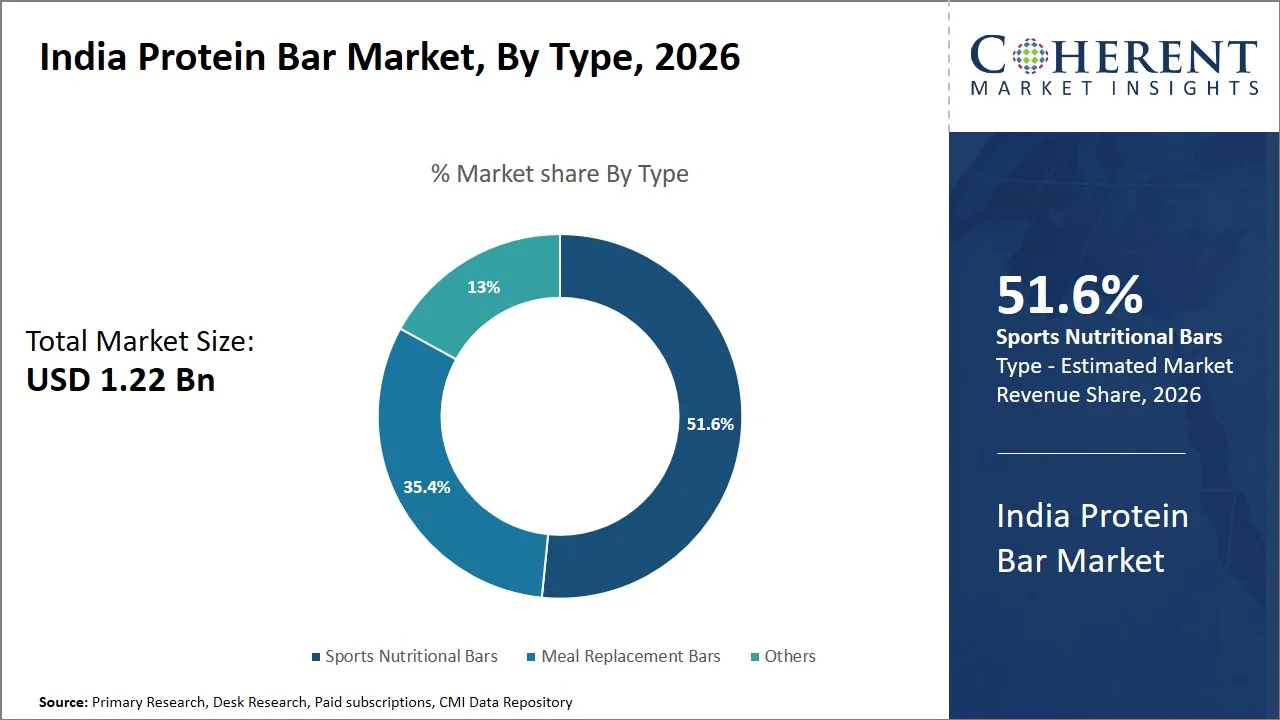
Why Does the Conventional Segment Dominate the Asia Pacific Energy Bar Market?
Conventional is projected to account for 73.6% of the energy bar market in Asia Pacific in 2026, as it is readily available and affordable and widely accepted by consumers. They are available in a wide variety of forms, including bars featuring staples like oats, nuts, cereals, and plain protein sources, and are popular among consumers looking for fast snacks on the go, but not as expensive as premium protein bars. Unlike specialty or fitness bars, they are simple, familiar and easy to eat, whereas specialty bars would appeal more to the fitness crowd or diet-conscious shoppers.
For example, in April 2026, products like Nature Valley Crunchy Oats & Honey Bars remain widely purchased across India, China, and Australia. Their strong retail presence in supermarkets, competitive pricing, and established brand recognition continue to make them a popular choice for on‑the‑go snacking.
- Current Industry Events of 2026
- Market Size Estimation
- Regional Breakdown
- Competitive Landscape
- Customer Intelligence
- Segmental Analysis
- Pricing Analysis
- Key Market Drivers, Challenges & Future Trends
- Customized Insights Section
Why are Multi Pack Gaining Popularity in Asia Pacific Energy Bar Market?
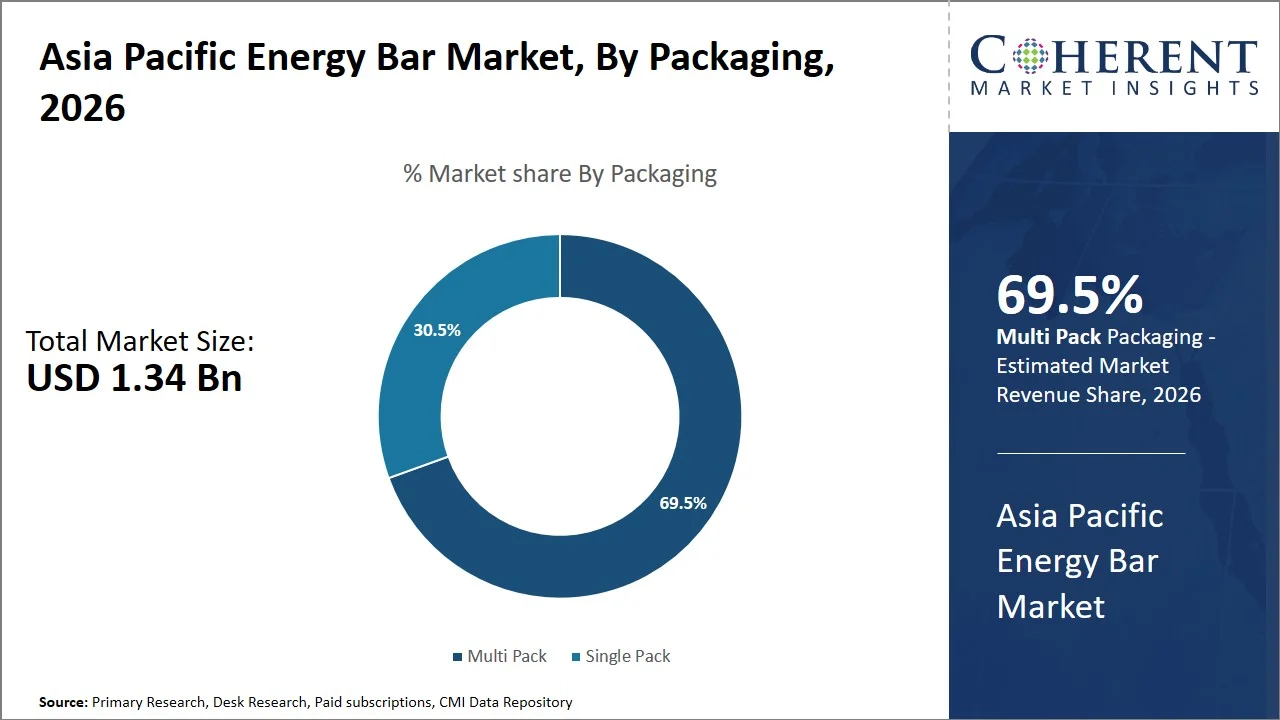
The multi pack segment is expected to hold 69.5% share of the market in 2026, due to its convenience, cost-effectiveness, and suitability for frequent or bulk consumption. Multi-packs offer an added benefit of portion control, convenience, and a lower per-unit price than single nutrition bars, appealing to consumers, particularly fitness enthusiasts, people who work in the office, and students. Multi-packs can also be advantageous to retailers and e-commerce platforms, as they can increase sales revenue and improve logistics.
In April 2026, THG (the owner of MyProtein) reported that its nutrition division, led by MyProtein, returned to profit with 6.4% revenue growth, underlining its omni‑channel expansion and broadening appeal across regions including Asia Pacific, although detailed product and packaging breakdowns were not disclosed.
The Cereals & Grains Segment Dominates the Asia Pacific Energy Bar Market
The cereals & grains segment is projected to hold 32.1% share of the market in 2026. The nutritional characteristics and cultural acceptability of the use of cereals and grains as basic food components are key to their popularity. Cereals and grains such as oats, rice, barley and millet are known for their high levels of complex carbohydrates, dietary fiber and essential micronutrients and make a good base for energy bars that help provide a slow release of energy and aid digestion.
Cereals and grains have a long history in the diet of consumers in the Asia Pacific region, making it easy for these consumers to accept and trust bars made from these ingredients. For example, Quaker Chewy Granola Bars (Oats & Honey) made with whole-grain oats and honey, providing fiber and sustained energy, widely available in India, Australia, and Southeast Asia. (Source: The Quaker Oats Company)
Currents Events and their Impact
Current Events | Description and its Impact |
Australia–New Zealand moves toward mandatory Health Star Rating for packaged foods |
|
India quick-commerce regulation and delivery-speed scrutiny |
|
(Source: Australian Government, Reuters)
Asia Pacific Energy Bar Market Dynamics
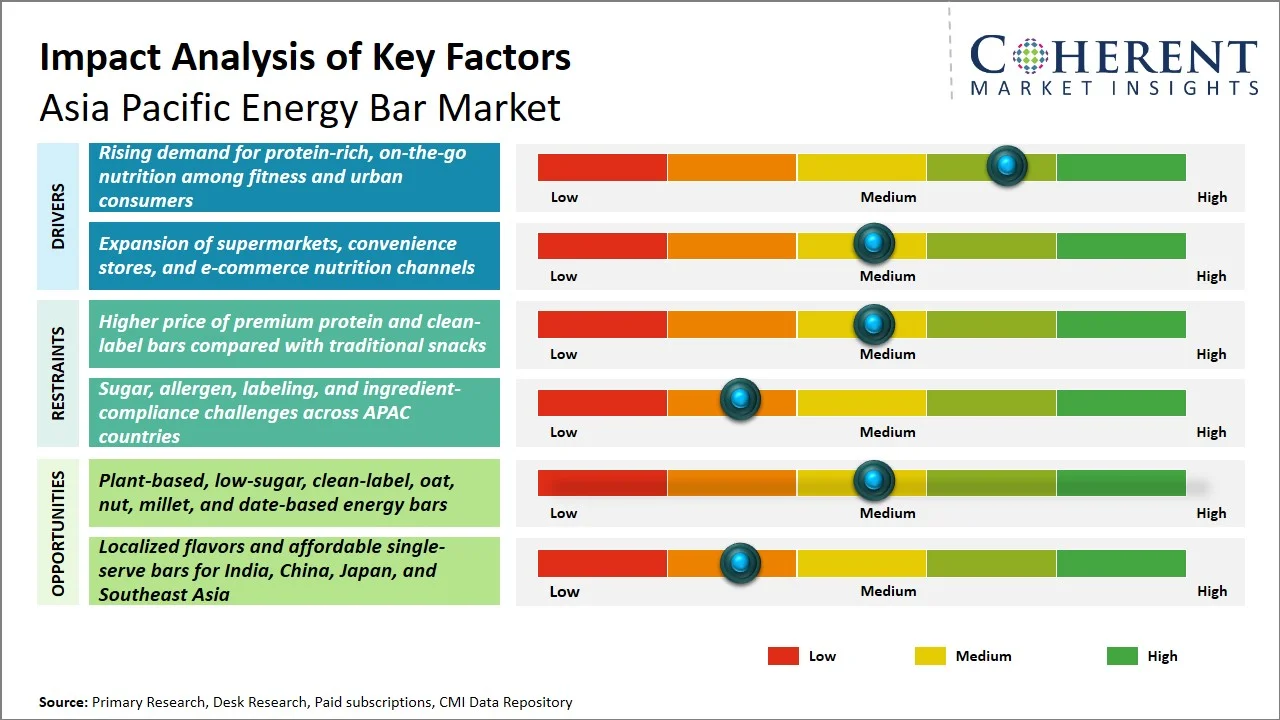
Market Drivers
Rising demand for protein-rich, on-the-go nutrition among fitness and urban consumers
Asia Pacific energy bar market is gaining significant momentum due to the preference for protein-rich, convenient nutrition among the fitness and urban consumers. With the rising awareness of health, people are looking for more convenient, portable foods with long-lasting energy and nutrient benefits without sacrificing taste and quality. Protein, which is essential for muscle repair, satiety and wellness, has emerged as a main concern for people leading an active lifestyle and those who have very busy schedules, which is why protein rich energy bars are gaining popularity.
Expansion of supermarkets, convenience stores, and e-commerce nutrition channels
The expansion of supermarkets, convenience stores, and e-commerce channels is a major contributor to the energy bar market in the Asia Pacific region. Health snacks like energy bars are becoming more accessible and prominent for urban consumers, as more space is being allocated to them in both supermarket and convenience stores. At the same time, e-commerce and niche nutrition brands are helping brands to penetrate tier-2 and metropolitan cities, where customers are either fitness enthusiasts or busy professionals or health-conscious consumers, bypassing the limitations of traditional retail.
As an example, in April 2026, e-commerce channels, such as Lazada (Southeast Asia) and JD.com (China), saw functional snacks, such as energy and protein bars, grow by 20% and 30%, respectively, as the internet has become an increasingly important channel for product adoption. (Source: JD.com Inc.) Furthermore, supermarkets in Singapore like NTUC FairPrice and in Malaysia, AEON have beefed up their health and wellness section, providing greater variety of energy bars from local and overseas brands, so that shoppers have more options and are more convenient.
Emerging Trends
- Premiumization and Experiential Offerings: Energy bars in the Asia Pacific region are moving beyond basic nutrition to premium, indulgent, and functional options. Brands are introducing artisanal flavors, superfood-infused bars, protein-packed variants, and visually appealing packaging. Limited-edition launches and seasonal or fitness-event-specific offerings are helping brands increase consumer engagement and justify higher price points.
- Shift Toward Health-Conscious Variants: Rising health awareness is driving the demand for clean-label, low-sugar, high-protein, vegan, gluten-free, and natural ingredient-based energy bars. This trend enables brands to target fitness enthusiasts, diet-specific consumers, and busy professionals seeking functional snacking solutions, fostering product innovation and market differentiation.
How is the growing demand for plant-based, low-sugar, and clean-label products creating new growth opportunities in the Asia Pacific energy bar market?
Consumers' preference for plant-based, low-sugar and clean-label products are driving the energy bar market to grow strongly in the Asia Pacific region. The increasing health awareness among consumers is fueling the demand for bars that are made from natural and easy-to-identify ingredients like oats, nuts, millets and dates, which resonate with health-conscious consumers and align with the desire for transparency and low processing. The plant-based division is seeing an even more rapid expansion in view of the increasing number of people who are becoming vegetarian and vegan, or prefer to consume plants in an environmentally friendly and sustainable manner.
One of such initiatives was the launch of a plant-based, low-sugar energy bar by the brand The Simply Bar by Nourish Organics (India) in 2026, showcasing the clean label ingredients in the pack.
Import Dependency For Protein Ingredients
Country | Import Dependency (%) | Key Protein Ingredients Imported |
China | 35–40% | Whey Protein, Soy Protein, Pea Protein |
India | 45–50% | Whey Protein, Casein, Soy Protein |
Japan | 25–30% | Whey Protein, Soy Protein, Collagen Protein |
Market Players, Key Development, and Competitive Intelligence
Key Developments
- In August 2025, Phab introduced India's first Savory Protein Bar, inspired by the iconic Street Snack, Bhel. This addition to Phab's new Street Collection reimagines one of the country's most cherished snacks as a portable, protein-packed, and healthier alternative.
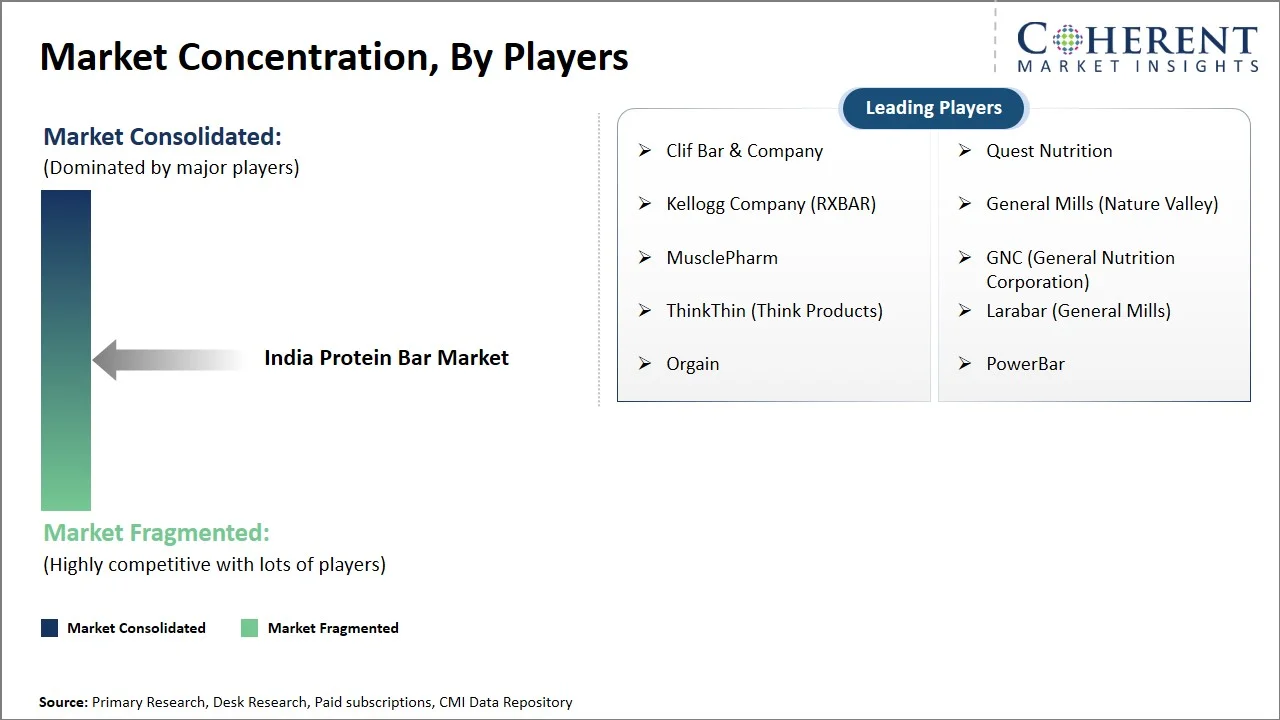
- In October 2024, Zydus Wellness Limited acquired Naturell India Pvt. Ltd., the manufacturer of RiteBite Max Protein energy bars. This acquisition strengthens the fragmented protein bar market in India and enables Zydus Wellness Limited to expand its distribution network through modern trade and e-commerce channels.
Competitive Landscape
The Asia Pacific energy bar market is a highly competitive one, fueled by an increase in the demand for convenient nutrition, active lifestyles, fitness-focused snacking and on-the-go meal replacement. While established global brands build on their powerful retail distribution, brand equity, and product innovation, regional and local brands emphasize low prices, local flavors, clean labelling, and digital-first distribution systems and channels. Focus areas are:
- Made from healthy, convenient and functional energy bars
- Product diversification with protein bars, vegan, low sugar, gluten-free and natural ingredient protein bars.
- Growth via ecommerce, fitness collaborations, retail partnerships and regional flavor innovations
Market Report Scope
Asia Pacific Energy Bar Market Report Coverage
| Report Coverage | Details | ||
|---|---|---|---|
| Base Year: | 2025 | Market Size in 2026: | USD 1.34 Bn |
| Historical Data for: | 2020 To 2024 | Forecast Period: | 2026 To 2033 |
| Forecast Period 2026 to 2033 CAGR: | 9.5% | 2033 Value Projection: | USD 2.52 Bn |
| Segments covered: |
| ||
| Companies covered: | Mondelez International, Inc., Kellanova, General Mills Inc., Post Holdings Inc., Mars, Incorporated, Post Holdings Inc., Nestlé S.A., PROBAR LLC, The Simple Good Foods Company, and Glanbia plc | ||
| Growth Drivers: |
| ||
| Restraints & Challenges: |
| ||
Analyst Opinion (Expert Opinion)
- The Asia Pacific energy bar market is expected to experience robust growth in the coming decade owing to the growing health consciousness, urbanization and high disposable income among consumers. There is a growing trend for consumers to look for plant-based, low-sugar and clean label products as they move towards functional and preventative nutrition. Innovation in new protein sources, natural ingredients, and on-the-go packaging will shape the market's future, aligning with the demands of active lifestyles and hectic urban living.
- The highest potential lies in plant-based high protein bars geared towards urban fitness enthusiasts and young professionals in India, China and Japan. These nations feature high population, increasing awareness about health, premiumization trends, and also expanding organized retail and e-commerce channels, which make them perfect focus points for early adoption and market penetration.
Speak to the analyst
Want personalized insights?
Take the findings above to one of our principal consultants, or have the report rebuilt around the segments, geographies and competitors you actually track.
Market Segmentation
- Type Insights (Revenue, USD Bn, 2021 - 2033)
- Organic
- Conventional
- Packaging Insights (Revenue, USD Bn, 2021 - 2033)
- Multi Pack
- Single Pack
- Ingredient Insights (Revenue, USD Bn, 2021 - 2033)
- Cereals & Grains
- Nuts & Seeds
- Fruits
- Protein
- Chocolate Coated
- Distribution Channel Insights (Revenue, USD Bn, 2021 - 2033)
- Hypermarkets & Supermarkets
- Traditional Grocery Store
- Pharmacy & Drug Store
- Convenience Stores
- Online
- Others
- Key Players Insights
- Mondelez International, Inc.
- Kellanova
- General Mills Inc.
- Post Holdings Inc.
- Mars, Incorporated
- Post Holdings Inc.
- Nestlé S.A.
- PROBAR LLC
- The Simple Good Foods Company
- Glanbia plc
Sources
Primary Research Interviews
- Energy bar manufacturer
- Supply chain director of packaged food producer
- Nutrition/functional foods ingredient specialist
- Sustainability officer of food certification authority
Stakeholders
- Manufacturers of energy bars and nutrition bars (e.g., Kellogg’s, General Mills, Clif Bar & Company, KIND, The Simply Good Foods Company)
- End-use sectors
- Consumer retail shoppers
- Fitness and sports nutrition consumers
- On-the-go convenience buyers
- Travel retail and vending channel buyers
- Regulatory & Certification Bodies:
- FSSAI (India food safety and labeling)
- Food Standards Australia New Zealand (FSANZ)
- China State Administration for Market Regulation (food labeling and claims)
- Japan Consumer Affairs Agency (health claims)
- Codex Alimentarius (international food standards)
- E-commerce Platforms and Retailers:
- Amazon
- Flipkart
- Lazada
- Shopee
- Tmall / JD.com
- Modern trade retailers and convenience chains
- Technology Integration Players:
- Ingredient innovators in protein, fiber, plant-based, and clean-label formulations
- Packaging and shelf-life technology providers
- Functional ingredient suppliers and contract manufacturers
Databases
- UN Comtrade Database
- India Import Export (EXIM) Database
- Eurostat Trade Statistics
- USITC DataWeb
- ITC Trade Map
Magazines
- FoodNavigator-Asia – energy bar and functional snack trends
- Nutrition Insight – sports nutrition and ingredient innovation
- Food & Drink Business Asia – packaged food and retail developments
- The Grocer – snack and convenience trends
- Food Manufacturing Asia – production and supply chain updates
Journals
- British Food Journal – consumer behavior and functional foods
- Food Quality and Preference – nutrition bar purchase drivers
- Journal of Food Science – formulation and shelf-life studies
- Food Chemistry – ingredient stability and nutritional composition
- Nutrients – sports nutrition, protein, fiber, and functional food evidence
Newspapers
- The Wall Street Journal – consumer packaged goods and retail demand
- Business Standard (India) – FMCG and health snack market growth
- The Economic Times – retail, food, and wellness trends
- Nikkei Asia – consumer health foods and Asia Pacific retail shifts
- Reuters – packaged food, inflation, and supply chain coverage
Associations
- Food Industry Asia
- Asia Pacific Food Industry Association
- National Association of Convenience Stores-related regional bodies
- Indian Dietetic Association
- Australian Institute of Food Science and Technology
- International Food Information Council
Public Domain Sources
- FAO – food trade, nutrition, and agricultural supply data
- WHO – nutrition and labeling guidance
- Codex Alimentarius – food labeling and claim standards
- FSSAI – Indian labeling and nutrition requirements
- FSANZ – Australia/New Zealand food standards
Proprietary Elements
- CMI Data Analytics Tool, Proprietary CMI Existing Repository of information for last 10 years.
Get access to 250+ pages report
Every segment, forecast, competitor profile and data table behind the analysis above — available for instant download.
- ESOMAR Member
- ISO 9001:2015 Certified
- D-U-N-S Registered
- GDPR & CCPA Compliant
Missing comfort of reading report in your local language? Find your preferred language:
Transform your Strategy with Exclusive Trending Reports
Frequently Asked Questions
The Asia Pacific energy bar market is estimated to be valued at USD 1.34 Bn in 2026 and is expected to reach USD 2.52 Bn by 2033.
The Asia Pacific energy bar market includes packaged snack bars formulated for quick energy, satiety, and nutrition support. These products are commonly consumed by working professionals, students, gym users, athletes, travelers, and consumers seeking convenient on-the-go snacks.
The CAGR of the Asia Pacific energy bar market is projected to be 9.5% from 2026 to 2033.
Key consumers include fitness enthusiasts, working professionals, students, travelers, hikers, and weight-management consumers. Urban consumers prefer energy bars because they are portable, portion-controlled, and easy to consume between meals, after workouts, or during commuting.
Rising demand for protein-rich, on-the-go nutrition among fitness and urban consumers and expansion of supermarkets, convenience stores, and e-commerce nutrition channels are the major factors driving the growth of the Asia Pacific energy bar market.
Higher price of premium protein and clean-label bars compared with traditional snacks and sugar, allergen, labeling, and ingredient-compliance challenges across APAC countries are the major factors hampering the growth of the Asia Pacific energy bar market.
In terms of type, conventional is estimated to dominate the market revenue share in 2026.