

Cold Pressed Juice Market Analysis & Forecast
Cold Pressed Juice Market size is estimated to be valued at USD 1019.4 Mn in 2026 and is expected to reach USD 1,816.2 Mn in 2033, exhibiting a compound annual growth rate (CAGR) of 8.6% from 2026 to 2033.
Key Takeaways
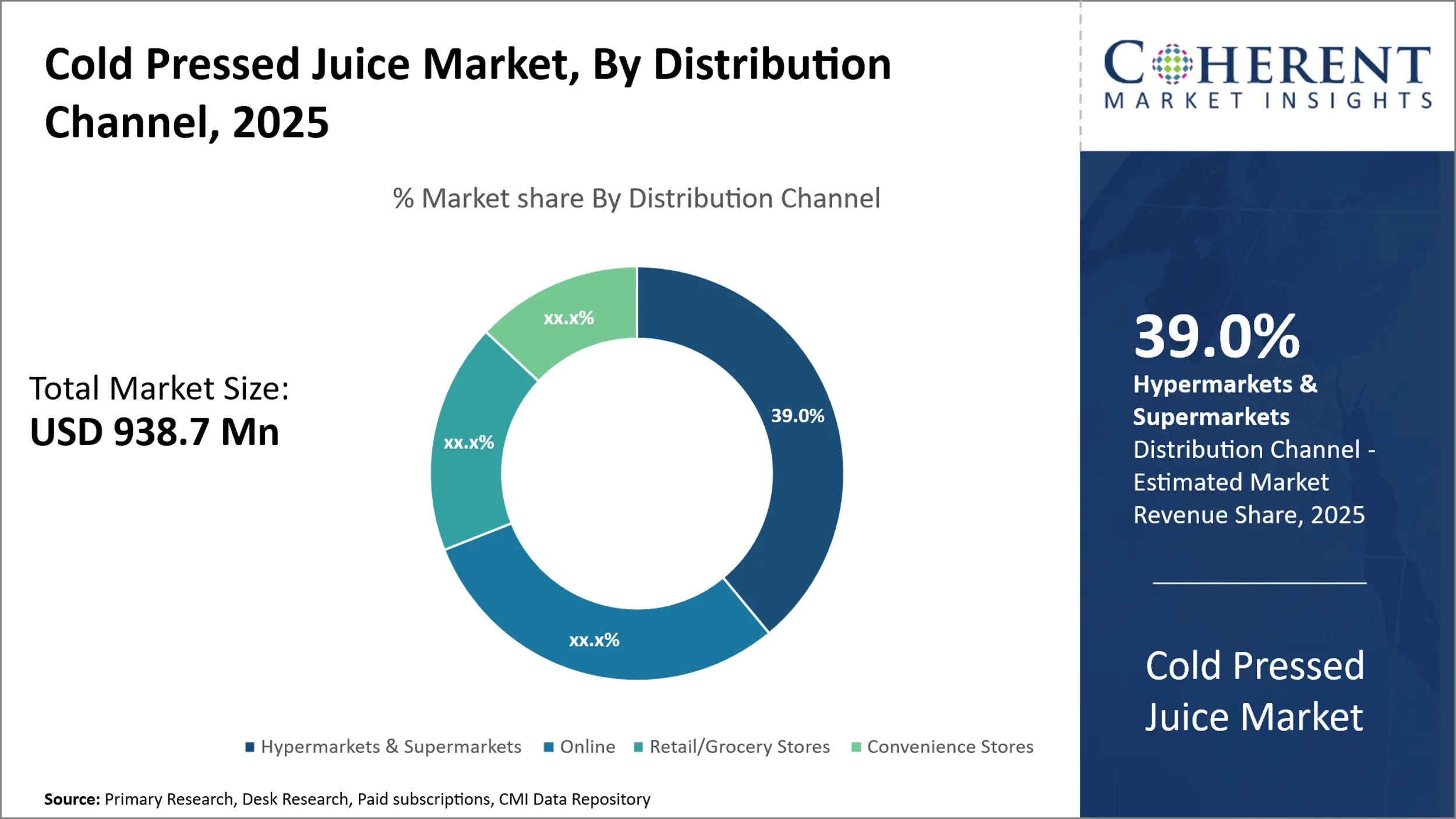
- By Distribution Channel: In 2026, hypermarkets and supermarkets took the biggest slice of the cold-pressed juice market outlook, capturing nearly 40% of market share. Their winning position stems from the sheer range they stock and shoppers desire for a single-stop grocery run.
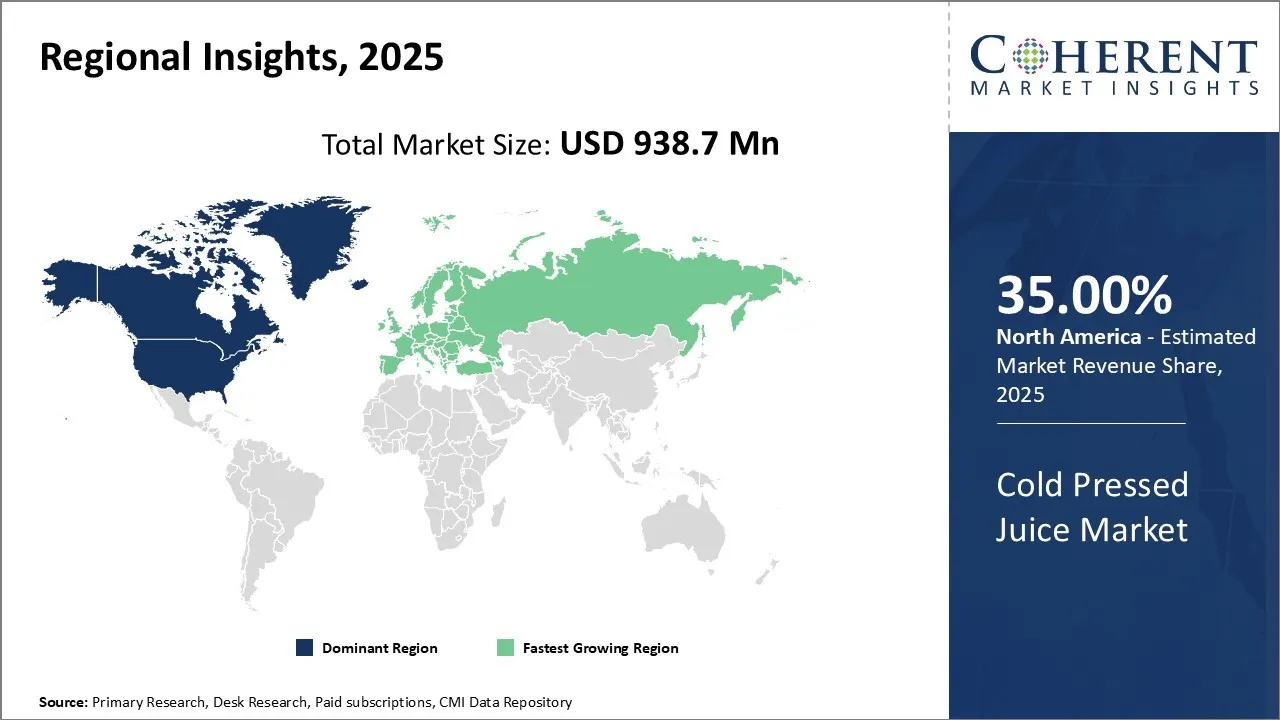
- By Region: North America is expected to stay on top globally, holding around 35% of the market throughout the forecast window. The region benefits from a deep-rooted health culture and an extensive network of grocery and specialty outlets.
- Europe ranks second with roughly 26%, share due to interest in organic, clean-label drinks continues to grow steadily across many countries.
Market Overview
Worries about different health problems and the perceived benefits of cold-pressed beverages have pushed consumers toward blended fruit-and-vegetable juices. In this method, a hydraulic press slowly squeezes the produce to release pure liquid. Because the process avoids heat and excessive air, most nutrients stay intact. Unlike regular store-bought juices, cold-pressed ones keep more vitamins, amino acids, phytonutrients, minerals, trace elements, and active enzymes. This retention gives the mixed-fruit-and-veggie category fresh momentum in the worldwide cold-pressed juice market.
Current Events and Its Impact on the Global Cold Pressed Juice Market
Event | Description and Impact |
Geopolitical Tensions and Trade Policy Shifts |
|
Agricultural Supply Chain Volatility |
|
Regulatory and Tax Reforms |
|
Pricing Analysis
Cold pressed juice prices stay high around the world because the extraction keeps more nutrients, the ingredients are often organic, and the drinks last only a brief time on the shelf. The industry tends to sort products into layers, so small-batch or so-called functional blends can cost much more than everyday supermarket labels. In the United States, premium names such as Pressed Juicery and Blueprint ask between $8.95 and $13.00 for a 16-ounce bottle, while concentrated wellness shots run $4.95 to $6.95 each.
Organic mixes from Suja go for $4.99 to $7.99 per 12 ounces, and larger mass-market brands such as Evolution Fresh or Naked Juice keep their prices lower, between $2.99 and $5.99. Across Europe, labels like Plenish and True Fruits sit in a similar range starting around 3.49 and reaching almost eight euros for250ml, and the same pricing pattern appears in the U.K., France and Germany.
In Canada and Australia costs climb further because of import taxes and shipping, so basic bottles usually sell for more than CAD $9.99 or AUD $8.95. Markets in the Asia-Pacific region, including Japan and Singapore, also lean toward higher price points, with sales tags that vary from ¥580 to ¥1,200 and SGD $8 to $12. Packaging design, brand story and added functional ingredients are the main levers that separate one price tier from another.
- Current Industry Events of 2026
- Market Size Estimation
- Regional Breakdown
- Competitive Landscape
- Customer Intelligence
- Segmental Analysis
- Pricing Analysis
- Key Market Drivers, Challenges & Future Trends
- Customized Insights Section
Role of Artificial intelligence and Advanced Technology
Artificial intelligence is transforming the cold pressed juice industry, driving improvements in efficiency, quality, and personalization. From farm to shelf, artificial intelligence helps producers fine-tune sourcing, cut waste, and elevate the shopper experience in a marketplace where freshness rules. Leading names such as Suja Organic rely on AI-driven supply-chain platforms that read weather, fruit supply, and demand forecasts, trimming ingredient costs by nearly 15 percent while keeping stock steady.
Blueprint Juice uses AI-based cameras and sensors for quality checks, spotting ripeness and flaws with 98-percent accuracy, which has slashed raw-material waste by a fifth. Production lines benefit too; algorithms set the best extraction pressures and storage climates, locking in nutrients and stretching shelf life. Predictive maintenance alerts, along with smart inventory dashboards, further boost uptime and guard against spoilage.
On the consumer side, Daily Harvest taps AI for tailored juice suggestions that match each shopper's health goals and diets. That kind of data-fueled personal touch has lifted customer loyalty and raised average order size. As the technology spreads, it is reshaping how cold-pressed juice brands dream up, scale, and relate to tomorrow's wellness-minded drinkers.
Segmental Insights
Cold Pressed Juice Market Insights, By Distribution Channel
In terms of distribution channel, the hypermarkets & supermarkets segment dominated the global cold pressed juice market in 2026, accounting for approximately 40% of the total market share in revenue terms. Supermarket volume is driven mainly by diverse inventory organised in eye-catching aisles that highlight health themes. Most large chains now set aside a prominent zone for wellness drinks, from cold-pressed juices to coconut water, positioning these items where nutrient-conscious shoppers naturally linger. That added visibility sparks impulse purchases, reinforcing the categorys frontline status. Small groceries and convenience outlets rank just behind, riding high foot traffic and their homes-on-the-way location.
These stores serve as speedy pit stops for customers wanting take-along refreshers between errands or after school. Digital ordering still lags the physical channel, yet it is fast emerging as a true growth engine. Many shoppers now prefer the click-and-deliver model because it saves time, offers flexible delivery windows and often matches shelf pricing. Online sites also let consumers read ingredient details, scan peer reviews or sign up for regular health subscriptions. As smartphones spread, cold-chain technology improves and marketplaces fine-tune the buying journey, analysts expect double-digit online gains in the next few years.
Regional Insights
North America Cold Pressed Juice Market Analysis and Trends
North America is expected to lead the global cold pressed juice market, accounting for approximately 35.00% of the total market share over the forecast period. The region’s dominance is driven by strong consumer awareness around clean-label nutrition and a shift toward minimally processed beverages. In contrast to traditional pasteurized juices, cold pressed juice is gaining traction due to its high vitamin and enzyme retention.
However, regulatory oversight from the U.S. Food and Drug Administration (FDA), which requires warning labels on unpasteurized products due to risks like Clostridium botulinum contamination, is encouraging the adoption of advanced non-thermal pasteurization technologies to ensure consumer safety and extend shelf life.
Europe Cold Pressed Juice Market Analysis and Trends
Europe represents the second-largest market for cold pressed juice, with the highest share of 26% in 2026. Health-conscious consumers are replacing sugary carbonated drinks with fresh, nutrient-dense alternatives. The increasing popularity of vegan and plant-based diets is further amplifying demand.
Countries such as the U.K., France, and Spain offer favorable environments for market expansion due to growing wellness trends and consumer receptivity to natural beverages. Manufacturers are increasingly tailoring offerings to meet regional taste preferences and sustainability expectations.
Asia Pacific Cold Pressed Juice Market Analysis and Trends
Asia Pacific is projected to be the fastest-growing market, bolstered by rising disposable income, urbanization, and increased consumer awareness of nutritional health. China and India are key contributors to regional growth, fueled by the growing influence of western dietary habits and a shift toward healthier food and beverage choices.
Cold pressed juice brands are capitalizing on this trend by highlighting immunity-boosting and detoxifying benefits through aggressive marketing and digital campaigns. Increasing investments in modern retail and e-commerce are further driving market penetration in urban centers.
Dominating Countries in the Cold Pressed Juice Market
United States Cold Pressed Juice Market Analysis and Trends
The United States leads the North American market due to a well-established health and wellness industry, high per capita juice consumption, and broad availability of cold pressed products through retail and foodservice channels. Regulatory oversight has spurred investment in cold chain logistics and High Pressure Processing (HPP) technologies to enhance product safety without compromising nutritional value.
Germany Cold Pressed Juice Market Analysis and Trends
Germany is the dominant player in the European market, driven by a mature organic food sector and strong consumer preference for fresh, additive-free beverages. The country’s robust retail infrastructure and demand for sustainable packaging options are prompting both domestic and international brands to strengthen their market presence.
India Cold Pressed Juice Market Analysis and Trends
India is a rapidly growing market in the Asia Pacific region, supported by a booming health-conscious urban population and expanding cold chain infrastructure. Increasing demand for functional beverages, such as juices infused with ayurvedic ingredients or vitamins, is shaping product innovation and consumer engagement strategies.
Market Report Scope
Cold Pressed Juice Market Report Coverage
| Report Coverage | Details | ||
|---|---|---|---|
| Base Year: | 2025 | Market Size in 2026: | USD 1019.4 Mn |
| Historical Data for: | 2020 To 2024 | Forecast Period: | 2026 To 2033 |
| Forecast Period 2026 to 2033 CAGR: | 8.6% | 2033 Value Projection: | USD 1,816.2 Mn |
| Geographies covered: |
| ||
| Segments covered: |
| ||
| Companies covered: | PepsiCo Inc., Suja Life, LLC, RAW Pressery, Juice Press, Preshafood, Evolution Fresh, Inc., Juice Generation, Liquiteria, Hain Celestial, and Juice Warrior | ||
| Growth Drivers: |
| ||
| Restraints & Challenges: |
| ||
Global Cold Pressed Juice Market: Growth Drivers
- Increased demand for vitamin and mineral-rich cold pressed juice products
These juice products are obtained through the application of high-pressure processing technology on fruits and vegetables, as opposed to juices prepared in a centrifugal juicer. This technique ensures that the products contain 100% real juice and that the vitamins and minerals are not destroyed during the manufacturing process.
As a result of the high-pressure process technology, the product is highly nutritious, making it ideal for people who prefer to drink nutritious fruit juices and blends. Consumption of 100% fruit juice also aids in the prevention of chronic diseases such as diabetes and promotes a healthy lifestyle. This is a major factor driving the growth of the global cold pressed juice market.
Furthermore, numerous studies have shown that drinking sugary drinks like cola and soda is harmful to one's health. Sugary drinks are also linked to obesity, kidney disease, and cardiovascular disease. As a result, fruit juices are a suitable substitute for sugary drinks due to their high nutritional profile, resulting in market growth.
For instance, in December 2021, The ParmCrisps and Thinsters snack brands were purchased by The Hain Celestial Group Inc. ParmCrisps is a manufacturer of snack products. Their products include tubs, pouches, cream and onion pouches, cheese, cheddar pouches, muiltipacks, and more. The company claims that the purpose of this acquisition is to provide customers with fruit and vegetable juice with every purchase. As a result, the business is working to establish its brand and maintain its position of leadership.
- Increased Demand for Ready-To-Drink Juice Products
Consumers can enjoy a healthy lifestyle with the convenience of packaged drink products without having to spend extra time preparing them. Consumers in developing nations like China and India are constantly looking for wholesome and delicious juice products due to the increase in employment and rapid urbanization in these countries.
Since these juices are packaged in PET (Polyethylene Terephthalate) bottles and glass bottles, which makes them easy for consumers to transport, their demand among the younger generation is rapidly rising. For instance, in June 2022, Michigan-based The company expanded its selection with the launch of Blake's Cold-Pressed juices, a line of fruit juices produced at the farm of Blake Farms in Armada, Michigan.
Analyst Viewpoint
- The Global Cold Pressed Juice Market is poised for sustained growth, driven by rising health awareness and a shift toward natural, nutrient-rich beverages. Consumers increasingly favor cold pressed juices for their high vitamin content, enzyme preservation, and clean-label appeal—products free from additives, preservatives, and excess sugar.
- Despite this growth, challenges remain. High production and distribution costs contribute to premium pricing, limiting access for price-sensitive consumers. Short shelf life and seasonal raw material availability also complicate supply chain management, requiring investment in advanced cold chain logistics.
- North America continues to lead due to its established wellness culture and widespread retail availability. Meanwhile, Asia-Pacific is witnessing rapid growth fueled by urbanization, increasing disposable incomes, and a growing interest in preventive health.
- Key opportunities lie in innovation—functional blends with superfoods, probiotics, or adaptogens are gaining traction. Online direct-to-consumer (DTC) models and subscription services are expanding reach, especially among millennials.
- Collaborations with gyms, health clinics, and corporate wellness programs further support market expansion. Moreover, consumer demand for organic, locally sourced ingredients enhances brand positioning in this increasingly competitive space.
Global Cold Pressed Juice Market: Key Developments
- In May 2025, HPP Europe installed advanced high-pressure processing lines across its partner cold pressed juice facilities to enhance shelf life while maintaining nutrient integrity, supporting clean-label trends.
- In April 2025, Pressed Juicery partnered with Equinox Fitness to launch branded cold pressed juice bars inside select gym locations, expanding its presence in the wellness and fitness segment.
- In March 2025, Raw Pressery deployed AI-enabled juice vending machines across major Indian metros, offering on-demand cold pressed blends tailored to local preferences and health needs.
- In February 2025, PepsiCo’s Naked Juice brand introduced fully recyclable plant-based bottles in North America as part of its sustainable packaging initiative.
- In January 2025, Suja Life expanded its product portfolio with a new line of cold pressed functional juice shots targeting immunity, digestion, and energy, capitalizing on growing demand for wellness-focused beverages.
Market Segmentation
- Global Cold Pressed Juice Market, By Nature (Revenue, USD Mn, 2021 - 2033)
- Organic
- Conventional
- Global Cold Pressed Juice Market, By Ingredient Type (Revenue, USD Mn, 2021 - 2033)
- Fruits
- Apples
- Citrus fruits
- Mixed fruits
- Berries
- Tropical fruits
- Others
- Vegetables
- Spinach
- Carrot & Cucumber
- Mixed vegetables
- Beetroot
- Mixed Fruits & Vegetables
- Fruits
- Global Cold Pressed Juice Market, By Distribution Channel (Revenue, USD Mn, 2021 - 2033)
- Retail/Grocery Stores
- Convenience Stores
- Online
- Hypermarkets & Supermarkets
- Global Cold Pressed Juice Market, By Region (Revenue, USD Mn, 2021 - 2033)
- North America
- U.S.
- Canada
- Latin America
- Brazil
- Mexico
- Rest of Latin America
- Europe
- Nordic
- Benelux
- Russia
- Poland
- Rest of Europe
- Asia Pacific
- China
- India
- Japan
- ASEAN
- Rest of Asia Pacific
- Middle East & Africa
- GCC
- South Africa
- North Africa
- Rest of Middle East & Africa
- North America
- Company Profiles
- PepsiCo Inc.
- Suja Life, LLC
- RAW Pressery
- Juice Press
- Preshafood
- Evolution Fresh, Inc.
- Juice Generation
- Liquiteria,
- Hain Celestial
- Juice Warrior
Sources
Primary Research Interviews
- Cold pressed juice manufacturers and producers
- Distributors and retailers in health food segment
- Health and wellness industry experts
- Nutrition consultants and dietitians
- Others
Databases
- Euromonitor International
- IBISWorld Industry Reports
- Others
Magazines
- Natural Products Insider
- Food Business Magazine
- Beverage Industry Magazine
- Nutraceuticals World
- Specialty Food Magazine
- Others
Journals
- Journal of Food Science and Technology
- Food and Nutrition Sciences
- International Journal of Food Sciences and Nutrition
- Others
Newspapers
- The Wall Street Journal
- Financial Times
- Food Business News
- Beverage Daily
- Natural Products Insider News
- Others
Associations
- International Fresh-Cut Produce Association (IFPA)
- Natural Products Association (NPA)
- Juice Products Association
- Organic Trade Association (OTA)
- Global Health and Wellness Association
- Others
Public Domain Sources
- FDA (Food and Drug Administration) reports
- USDA (United States Department of Agriculture) data
- European Food Safety Authority (EFSA) publications
- WHO (World Health Organization) nutrition reports
- Company annual reports and press releases
- Others
Proprietary Elements
- CMI Data Analytics Tool
- Proprietary CMI Existing Repository of information for last 8 years
Get access to 250+ pages report
Every segment, forecast, competitor profile and data table behind the analysis above — available for instant download.
- ESOMAR Member
- ISO 9001:2015 Certified
- D-U-N-S Registered
- GDPR & CCPA Compliant
Missing comfort of reading report in your local language? Find your preferred language:
Transform your Strategy with Exclusive Trending Reports
Frequently Asked Questions
The Cold Pressed Juice Market size is estimated to be valued at USD 1019.4 Mn in 2026, and is expected to reach USD 1,816.2 Mn by 2033.
Global cold pressed juice market is estimated to reach USD 1,816.2 Mn by 2033.
Key players active in the market are PepsiCo Inc., Suja Life, LLC, RAW Pressery, Juice Press, Preshafood, Evolution Fresh, Inc., Juice Generation, Liquiteria, Hain Celestial, and Juice Warrior.
High cold pressed juice prices due to high production costs limit is expected to hamper the growth of the market during the forecast period.
Increased demand for vitamin and mineral-rich juice products & increased demand for ready-to-drink juice products due to busier lifestyles is fuelling the growth of the market in the region.
The CAGR of the global Market is projected to be 8.6% from 2026 to 2033.
Among region, North America is expected to hold a dominant position in the market over the forecast period.