

Oilseed Market Size and Forecast – 2026-2033
The global oilseed market is estimated to be valued at USD 339.00 Bn in 2026 and is expected to reach USD 493.19 Bn by 2033, exhibiting a compound annual growth rate (CAGR) of 5.5% from 2026 to 2033.
Key Takeaways
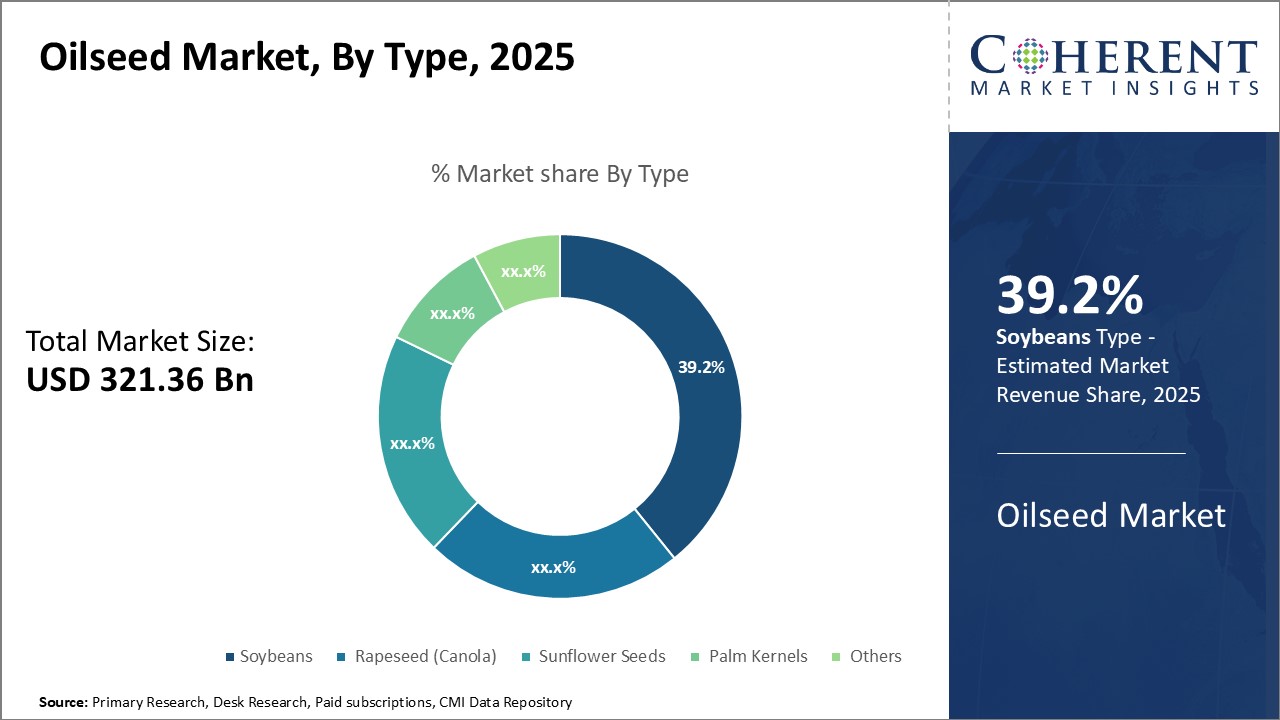
- By Type, the Soybeans Segment is estimated to dominate the global oilseed market with a 40.2% share in 2026.
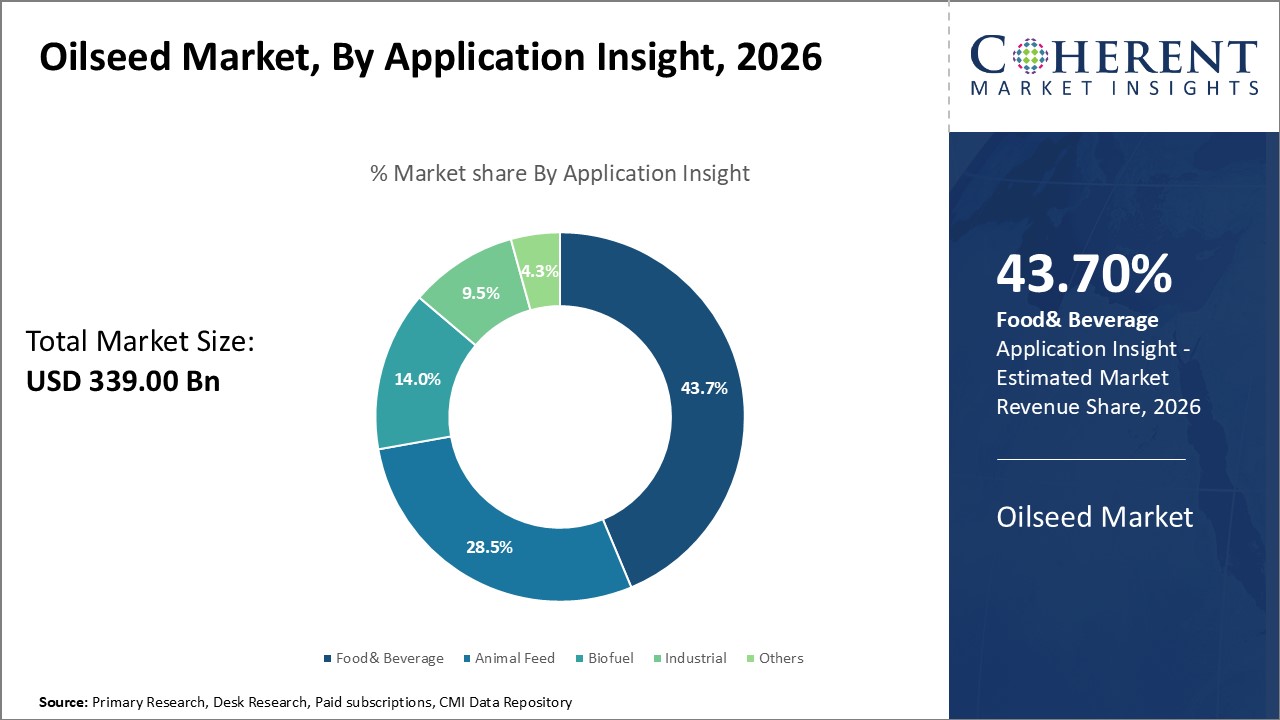
- By Application, the Food & Beverage segment is expected to lead the oilseed market with a 43.7% share in 2026.
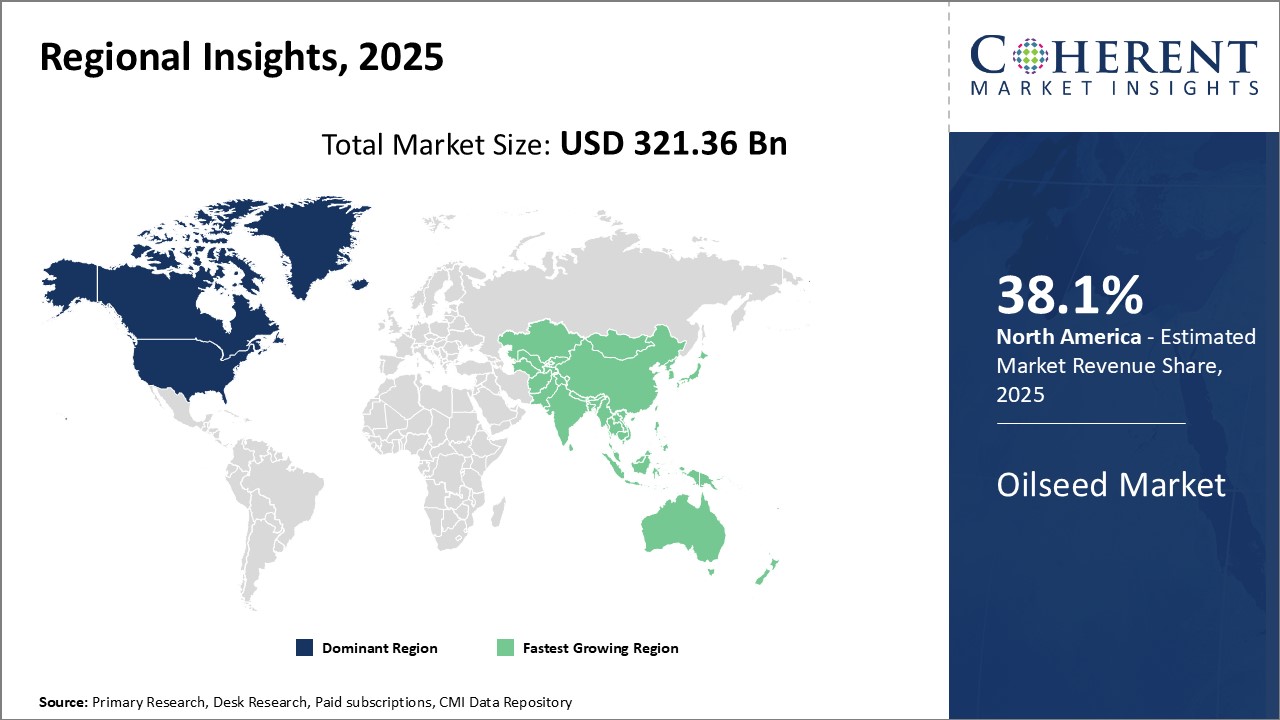
- Regionally, North America is anticipated to maintain its leadership position in the global oilseed market, capturing an estimated 38.1% share in 2026.
Market Overview
The global oilseed market is experiencing steady growth, driven by rising demand for plant-based oils, protein-rich animal feed, and biofuel production. Soybeans lead the market due to their diverse applications and high yield. Technological advancements in seed development and sustainable farming practices are enhancing productivity. Increasing health awareness and changing dietary preferences are also contributing to market expansion.
Current Events and its Impact on the Oilseed Market
Current Event | Description and its impact |
Increased Demand for Biodiesel Feedstock |
|
Trade Policy Shifts in Major Producing Nations |
|
Technological Integration in Oilseed Farming |
|
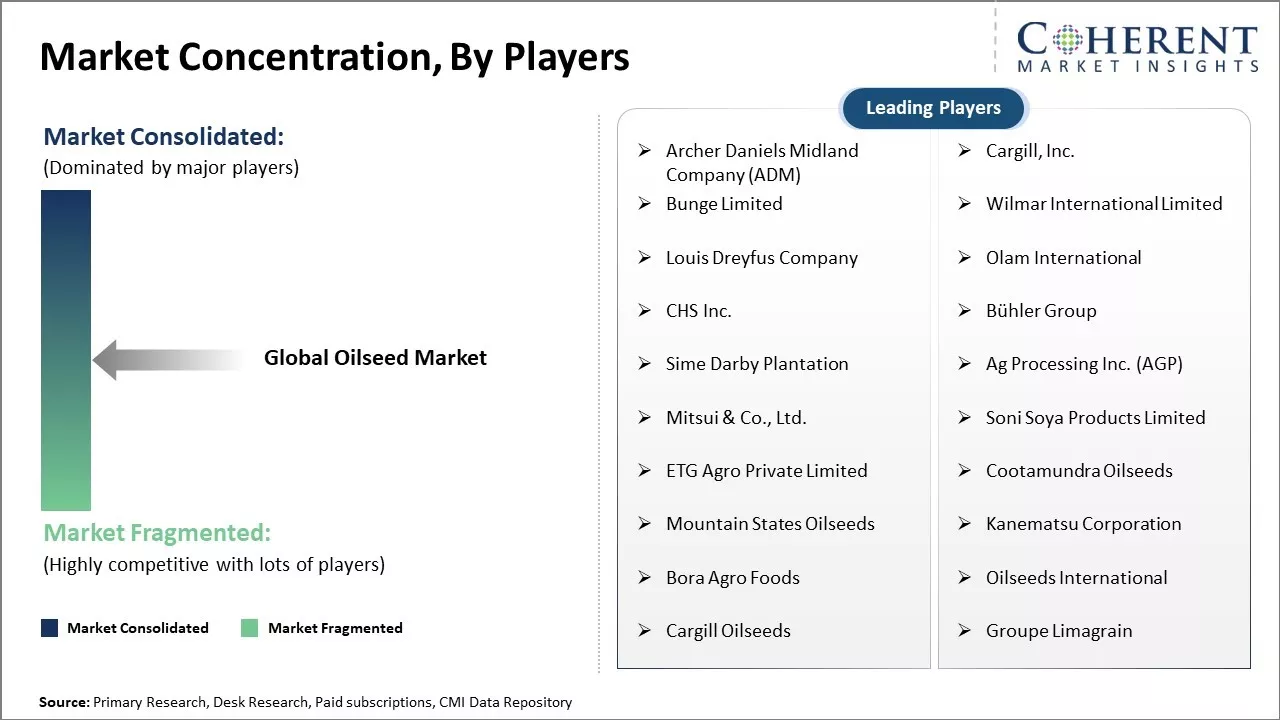
Market Concentration and Competitive Landscape
- Current Industry Events of 2026
- Market Size Estimation
- Regional Breakdown
- Competitive Landscape
- Customer Intelligence
- Segmental Analysis
- Pricing Analysis
- Key Market Drivers, Challenges & Future Trends
- Customized Insights Section
Oilseed Market Trends
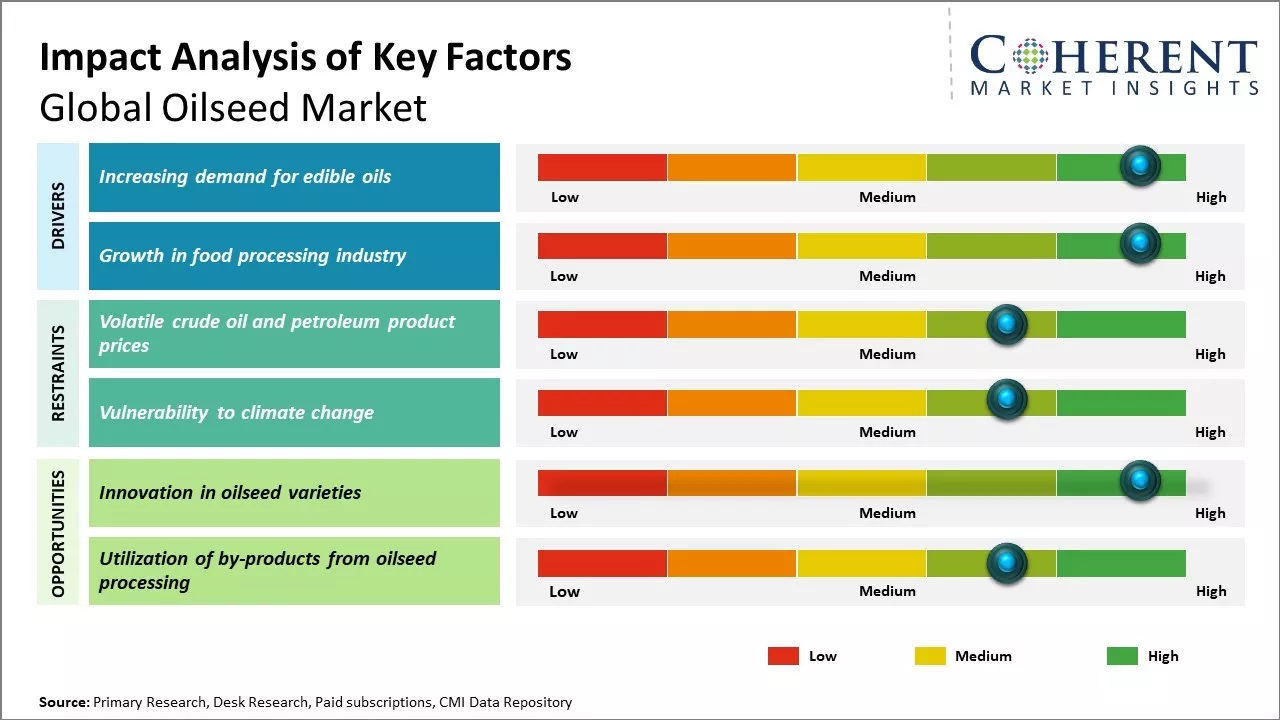
- Increasing demand for edible oils
Global demand for edible oils is on a constant rise over the past few decades. As population and income levels continue to grow across major economies, the consumption of food products which use edible oils as a key ingredient has seen a significant surge. Edible oils are widely used in preparation of various cuisine styles around the world and are also utilized as raw materials in food manufacturing industries.
Countries like India, China, Indonesia, and other emerging Asian markets have experienced rising living standards and changing dietary patterns of the consumers which is translating to increase per capita consumption of edible oils.
In January 2025, India’s market-intervention agencies, NAFED and NCCF, procured a record 1.63 million of soybean at the Minimum Support Price (MSP), up from just 70,000 t in the 2023 kharif season. Purchases were heavy in Maharashtra (0.78 MT) and Madhya Pradesh (0.62 MT), aimed at cushioning farmers from a global soymeal glut that had driven mandi prices below the MSP of INR 4,892/quintal. Officials noted this step is part of a broader strategy to bolster domestic oilseed output and lessen import dependence.
- Growth in food processing industry
The food processing industry has made significant advancements over the past few decades and has become one of the largest economic sectors worldwide. For example, the expanding food industry is anticipated to propel market growth.
For instance, according to data published by Invest India in 2022, by 2025, the Indian Food Processing market is estimated to reach US$ 535 Bn, growing at a compound annual growth rate of 15.2%. Constant technology advancement, shifting consumer needs, and favourable regulatory environment have propelled investments and innovations in this industry. Food manufacturers are introducing an array of new product variants targeting diverse consumer segments.
In May 2025, Argentina’s agricultural heartland was inundated by torrential rains—up to 400 mm in parts of northern Buenos Aires province—submerging key soybean fields around San Antonio de Areco and Salto. Farmers described the scene as a “sea of water,” with waterlogged pods at risk of disease and spoilage. The Buenos Aires Grains Exchange, which had pegged 2024/25 soybean output at 50 million tons, signaled a likely downward revision. As fields began to dry, growers worked to repair rural roads and resume harvesting.
Opportunities in the Oilseed Market
- Innovation in oilseed varieties
The global oilseed market provides significant opportunities for companies involved in research and development of new and innovative oilseed varieties. Development of oilseed varieties with greater resistance against pests and diseases can help improve crop yields as well as reduce production cost for farmers. There is also a scope for developing varieties with enhanced oil content and improved oil quality which allows extraction of oil with superior properties suitable for specific industrial applications.
Innovation in oilseed varieties adapted to diverse agro-climatic conditions help expand oilseed production to new geographic regions. This can help address supply security issues. Development of varieties with modified oil composition enables production of feedstock oils fitting the evolving needs of food processing and biofuel industries.
Segmental Insights
Oilseed Market Insights, By Type Insight
The Soybeans segment is estimated to dominate the global oilseed market with a 40.2% share in 2026. This significant share is driven by soybeans' extensive use across food, feed, and industrial applications. High protein and oil content make soybeans a top choice for edible oil production and animal feed formulations.
Moreover, their growing importance in biodiesel production and plant-based protein alternatives further supports the sustained dominance of this segment. Global trade and biotechnology advancements continue to strengthen soybean supply chains and productivity.
Oilseed Market Insights, By Application Insight
The Food & Beverage segment is expected to lead the oilseed market with a 43.7% share in 2026. This growth is primarily driven by rising health awareness and a strong global shift toward nutritious and plant-based diets. Oilseeds like soybean, sunflower, and canola are widely used for extracting edible oils rich in unsaturated fats.
Innovations in oil refining technologies and the increasing incorporation of oilseed derivatives into functional foods and packaged goods are further enhancing the market potential of this segment.
Regional Insights
North America Oilseed Market
North America is anticipated to maintain its leadership position in the global oilseed market, capturing an estimated 38.1% share in 2026. The region’s dominance is driven by the United States and Canada, which are major producers of key oilseeds such as soybeans and canola. According to a report from the Economic Research Service, the United States ranks as the world’s second-largest producer and exporter of soybeans. Soybeans account for more than 90% of the country’s total oilseed production, while other oilseeds such as peanuts, sunflower seeds, canola, and flax constitute the rest. Advanced agricultural technologies, extensive processing infrastructure, and continuous investments in biotechnological research bolster the region’s production efficiency and output quality. Additionally, strong export capabilities and supportive government policies contribute to North America’s competitive edge. These factors collectively ensure the region’s sustained growth and significant influence in the evolving global oilseed market landscape.
Market Report Scope
Oilseed Market Report Coverage
| Report Coverage | Details | ||
|---|---|---|---|
| Base Year: | 2025 | Market Size in 2026: | USD 339.00 Bn |
| Historical Data for: | 2020 To 2024 | Forecast Period: | 2026 To 2033 |
| Forecast Period 2026 to 2033 CAGR: | 5.5% | 2033 Value Projection: | USD 493.19 Bn |
| Geographies covered: |
| ||
| Segments covered: |
| ||
| Companies covered: | Archer Daniels Midland Company (ADM), Cargill, Inc., Bunge Limited, Wilmar International Limited, Louis Dreyfus Company, Olam International, CHS Inc., Buhler Group, Sime Darby Plantation, Ag Processing Inc. (AGP), Mitsui & Co., Ltd., Soni Soya Products Limited, ETG Agro Private Limited, Cootamundra Oilseeds, Mountain States Oilseeds, Kanematsu Corporation, Bora Agro Foods, Oilseeds International, Cargill Oilseeds, and Groupe Limagrain | ||
| Growth Drivers: |
| ||
| Restraints & Challenges: |
| ||
Analyst Viewpoint – Oilseed Market
- The global oilseed market is experiencing steady growth, underpinned by rising demand for plant-based oils, sustainable agriculture, and protein-rich diets. Analysts note that soybeans continue to dominate the market due to their versatile applications in edible oils, animal feed, biodiesel, and processed foods. With increasing consumer focus on health and nutrition, the demand for oilseeds such as sunflower, canola, and flaxseed is also on the rise, particularly in functional food and organic product segments.
- Technological advancements in oil extraction and refining, coupled with innovations in genetically modified and high-yield crop varieties, are enhancing production efficiency and oil quality. Analysts emphasize the importance of sustainable farming practices and traceability in influencing consumer preferences, especially in mature markets.
- Regionally, North America leads the oilseed market, supported by advanced agricultural infrastructure, favorable agro-climatic conditions, and strong export capabilities. Meanwhile, Asia Pacific is emerging as the fastest-growing region due to rising population, urbanization, and dietary shifts toward vegetable oils and protein alternatives. Experts highlight that continued investment in agricultural biotechnology, supportive trade policies, and growing consumer awareness of clean-label and non-GMO products will play pivotal roles in shaping the future landscape of the oilseed market.
Oilseed Market: Key Development
- In April 2025, Archer Daniels Midland (ADM) announced the expansion of its oilseed processing facility in Illinois to meet the growing global demand for soybean oil and meal. This move enhances ADM’s production capacity and reinforces its commitment to sustainable sourcing and supply chain efficiency.
- In March 2025, Bunge Limited partnered with Chevron to increase investment in renewable diesel production using oilseed feedstocks such as canola and soybean oil. The partnership is aimed at supporting the global transition to low-carbon energy and increasing oilseed utilization in biofuel applications.
- In February 2025, Cargill launched a new line of high-oleic sunflower and canola oils to cater to the rising demand for heart-healthy and shelf-stable cooking oils in foodservice and packaged food industries.
- In January 2025, Corteva Agriscience introduced a drought-resistant soybean seed variety in Brazil to improve crop yields under extreme weather conditions, addressing climate change challenges in oilseed farming.
- In December 2024, Wilmar International Ltd. invested in a new oilseed crushing plant in India to strengthen its regional presence and cater to the growing edible oil consumption in South Asia.
Market Segmentation
- By Type Insights (Revenue, USD Bn, 2021 - 2033)
- Soybeans
- Rapeseed (Canola)
- Sunflower Seeds
- Palm Kernels
- Others
- By Application Insights (Revenue, USD Bn, 2021 - 2033)
- Food & Beverage
- Animal Feed
- Biofuel
- Industrial
- Others
- Regional Insights (Revenue, USD Bn, 2021 - 2033)
- North America
- U.S.
- Canada
- Latin America
- Brazil
- Argentina
- Mexico
- Rest of Latin America
- Europe
- Germany
- U.K.
- Spain
- France
- Italy
- Russia
- Rest of Europe
- Asia Pacific
- China
- India
- Japan
- Australia
- South Korea
- ASEAN
- Rest of Asia Pacific
- Middle East
- GCC Countries
- Israel
- Rest of Middle East
- Africa
- South Africa
- North Africa
- Central Africa
- Key Players Insights
- Archer Daniels Midland Company (ADM)
- Cargill, Inc.
- Bunge Limited
- Wilmar International Limited
- Louis Dreyfus Company
- Olam International
- CHS Inc.
- Bühler Group
- Sime Darby Plantation
- Ag Processing Inc. (AGP)
- Mitsui & Co., Ltd.
- Soni Soya Products Limited
- ETG Agro Private Limited
- Cootamundra Oilseeds
- Mountain States Oilseeds
- Kanematsu Corporation
- Bora Agro Foods
- Oilseeds International
- Cargill Oilseeds
- Groupe Limagrain
Sources
The Stakeholders Consulted
- Agricultural economists and oilseed commodity traders
- Farm cooperatives and oilseed processing plant managers
- Manufacturers and suppliers of oilseed crushing and refining equipment
- Sustainability and agribusiness consultants
- Government agriculture departments and regulatory bodies
- Research institutions specializing in crop science, biotechnology, and agricultural economics
- End-users across sectors such as food & beverage, animal feed, biofuels, and industrial oil applications
Databases Opened
- United States Department of Agriculture (USDA) – Oilseeds: World Markets and Trade
- Food and Agriculture Organization (FAO) – FAOSTAT Crop Production and Trade Data
- International Grains Council (IGC) – Oilseed Market Reports
- Ministry of Agriculture & Farmers Welfare (India) – Oilseed Production Statistics
Magazines & Trade Publications
- The Oilseed & Grain News
- Feed & Grain Magazine
- AgriBusiness Global
- Milling and Grain
- Oilseed Processing Report
- Biofuels International Magazine
Scientific and Industry Journals
- Industrial Crops and Products
- Journal of Oilseed Research
- Renewable and Sustainable Energy Reviews
- Agronomy Journal
- Journal of Agricultural and Food Chemistry
- Crop Science
Newspapers & Media Outlets
- The Wall Street Journal – Commodities & Agribusiness
- Bloomberg – Agriculture & Biofuel Markets
- Reuters – Global Agricultural Trade and Production
- The Economic Times – Agri-commodities and Policy Updates
- Business Standard – Crop Economics & Food Processing Industry
Associations and Regulatory Bodies
- United States Department of Agriculture (USDA)
- Food and Agriculture Organization (FAO)
- International Oilseed Producers Dialogue (IOPD)
- American Oil Chemists' Society (AOCS)
- Solvent Extractors’ Association of India (SEA)
- European Vegetable Oil and Protein meal Industry (FEDIOL)
Public Domain Sources
- USDA Foreign Agricultural Service – GAIN Reports
- European Commission – Agri-food Data Portal
- World Bank – Agricultural Development Reports
- International Renewable Energy Agency (IRENA) – Bioenergy Resources
- OECD – Agricultural Outlook
Proprietary Research Elements
- CMI Data Analytics Tool
- Proprietary CMI Repository of Global Oilseed Market Data (last 8 years)
- CMI Expert Interviews and Transcripts (focused on oilseed farming practices, trade dynamics, processing technologies, and regulatory shifts)
Get access to 250+ pages report
Every segment, forecast, competitor profile and data table behind the analysis above — available for instant download.
- ESOMAR Member
- ISO 9001:2015 Certified
- D-U-N-S Registered
- GDPR & CCPA Compliant
Missing comfort of reading report in your local language? Find your preferred language:
Transform your Strategy with Exclusive Trending Reports
Frequently Asked Questions
The Oilseed Market size is estimated to be valued at USD 339.00 Bn in 2026, and is expected to reach USD 493.19 Bn by 2033.
The CAGR of the Market is projected to be 5.5% from 2026 to 2033.
Increasing demand for edible oils and growth in food processing industry are the major factors driving the growth of global oilseed industry.
Volatile crude oil and petroleum product prices and vulnerability to climate change are the major factors hampering the growth of global oilseed market.
In terms of type, soybeans, estimated to dominate the market revenue share 2026.
Archer Daniels Midland Company (ADM), Cargill, Inc., Bunge Limited, Wilmar International Limited, Louis Dreyfus Company, Olam International, CHS Inc., Bühler Group, Sime Darby Plantation, Ag Processing Inc. (AGP), Mitsui & Co., Ltd., Soni Soya Products Limited, ETG Agro Private Limited, Cootamundra Oilseeds, Mountain States Oilseeds, Kanematsu Corporation, Bora Agro Foods, Oilseeds International, Cargill Oilseeds, and Groupe Limagrain are the major players.
North America is expected to lead the global oilseed market.