

Global Baby Drinks Market Size and Forecast – 2026-2033
The global baby drinks market is estimated to be valued at USD 184.00 Bn in 2026 and is expected to reach USD 342.89 Bn by 2033, exhibiting a compound annual growth rate (CAGR) of 9.3% from 2026 to 2033.
Key Takeaways of the Baby Drinks Market
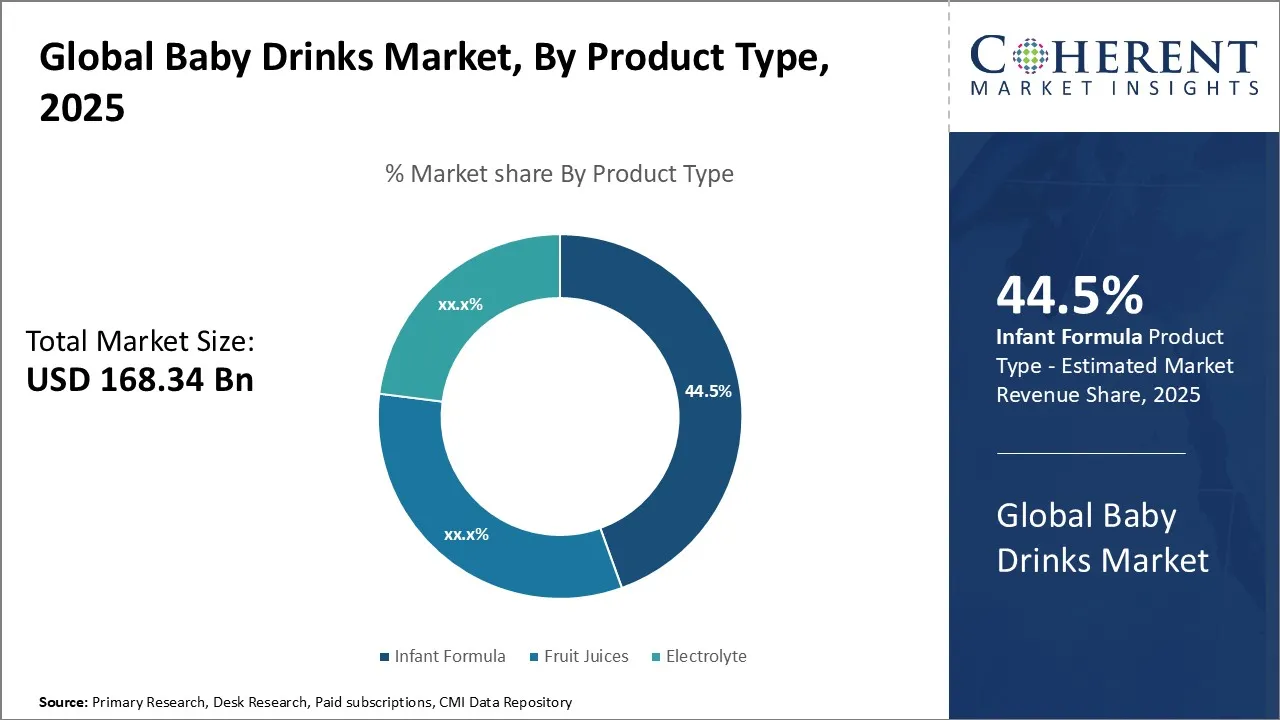
- The infant formula segment is projected to account for 45.5% share in 2026.
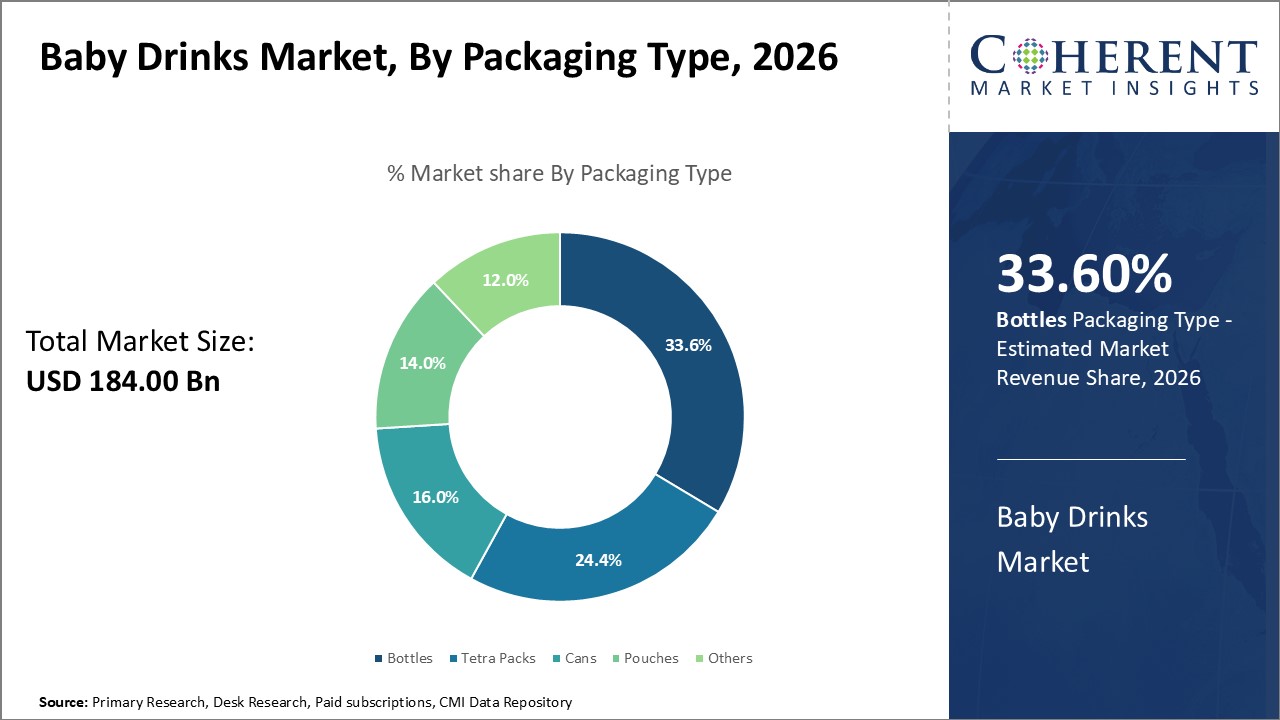
- The bottles segment is expected to capture 33.6 % share in 2026.
- The pharmacies segment is projected to hold 62.8 % share in 2026.
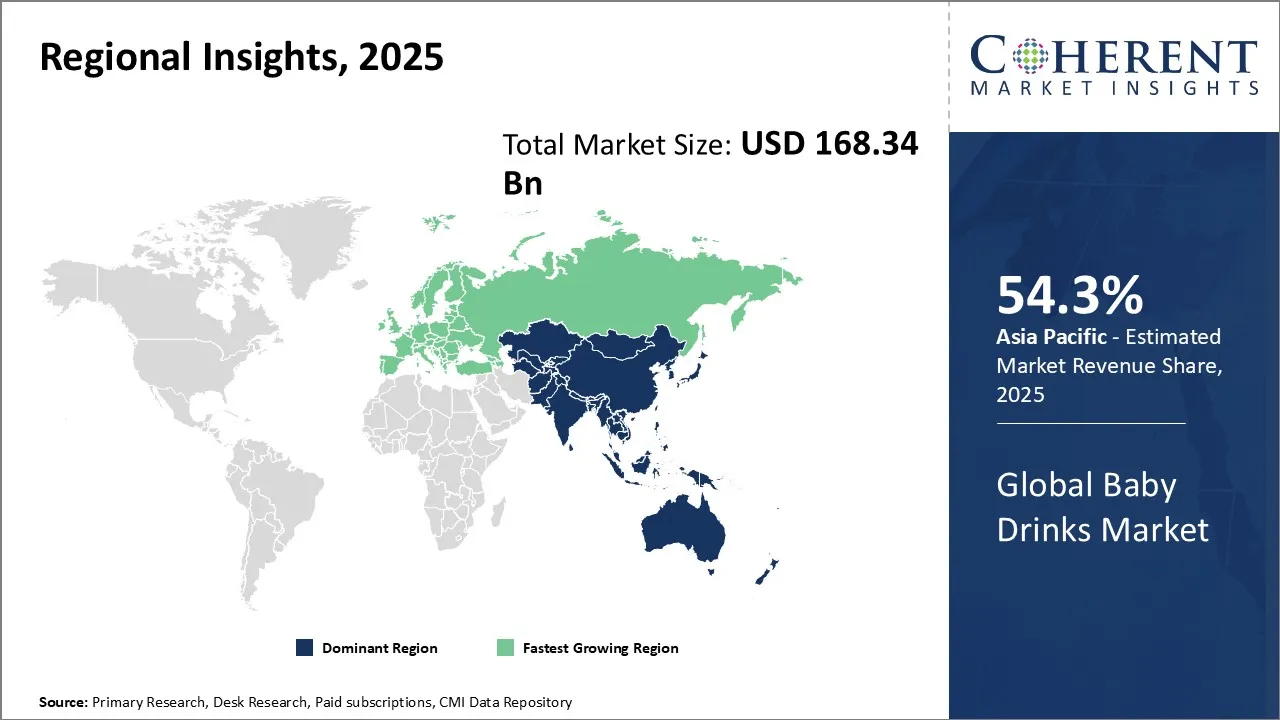
- Asia Pacific is set to lead the global baby drinks market in 2026 with a 54.3 % share. Europe, with an estimated share of 27.2% in 2026, is projected to be the fastest-growing region.
Market Overview
Market trends indicate a strong demand for organic and fortified baby drinks, reflecting a shift towards healthier and more natural options among parents. Additionally, innovation in packaging and formulation, combined with the rise of e-commerce platforms, is significantly enhancing product accessibility and convenience. Infant formula continues to play a vital role as a trusted choice for parents seeking nutritional assurance, while functional beverage offerings are gaining traction for their added health benefits. Moreover, emerging markets are witnessing rapid adoption due to urbanization and improved healthcare infrastructure, further propelling the market expansion in the coming years.
Current Events and Its Impact
Current Events | Description and its Impact |
Surge in E-Commerce & Q-Commerce Partnerships |
|
Rapid Adoption of HMO/probiotic fortification |
|
Segmental Insights
- Current Industry Events of 2026
- Market Size Estimation
- Regional Breakdown
- Competitive Landscape
- Customer Intelligence
- Segmental Analysis
- Pricing Analysis
- Key Market Drivers, Challenges & Future Trends
- Customized Insights Section
Baby Drinks Market Insights, by Product Type - Infant Formula Segment Dominates the Market Driven by Nutritional Assurance and Parental Preferences
The infant formula segment is expected to capture 45.5% share in 2026, owning to its robust nutritional profile and increasing parental awareness regarding infant health. Infant formula serves as a scientifically developed alternative to breast milk, containing essential nutrients such as proteins, fats, vitamins, and minerals necessary for an infant’s growth and development. This product type appeals particularly to working parents or those facing lactation challenges, making it an indispensable component of baby nutrition globally.
In 2024, Abbott Laboratories reported strong sales growth of its Similac infant formula brand in Asia and North America, reflecting heightened demand among urban families who seek reliable nutritional assurance for infants amid rising dual-working households.
Baby Drinks Market Insights, by Packaging Type – Bottles Segment Dominates the Market Due to Convenience and Safety Perception
The bottles segment is projected to hold 33.6% share in 2026, driven by consumer preference for convenience, safety, and ease of use. Bottles offer an intuitive and familiar feeding method for both parents and infants, which significantly supports their dominance over alternatives such as Tetra Packs, Cans, or Pouches. The ergonomic design of baby bottles, combined with features like anti-colic nipples and BPA-free materials, instill a strong sense of safety and reliability among caregivers.
Another key factor propelling bottle packaging is its compatibility with infant feeding habits. Bottles allow parents to precisely control feeding quantity and pace, which is critical during early developmental stages where digestion tolerance varies widely among infants. This counseling advantage makes bottles highly favored in hospitals, clinics, and home settings where measured feeding is essential. Additionally, the reusable nature of bottles appeals to environmentally conscious consumers who seek sustainable options, further boosting their acceptance in the market.
Baby Drinks Market Insights, by Distribution Channel - Pharmacies Segment as Preferred Distribution Channel Due to Trust and Product Expertise
The pharmacies segment is projected to account for 62.8% share in 2026, attributable to their reputation as trusted sources for infant nutrition products and personalized consumer service. Parents often seek baby drinks—especially sensitive items like infant formula—from pharmacies because these outlets provide an assured environment for product authenticity, storage standards, and expert advice, which is critical when feeding infants.
Pharmacies benefit from knowledgeable staff who can offer guidance on product selection, address concerns related to ingredients or allergies, and recommend appropriate options tailored to an infant’s specific needs. This professional consultation role engenders confidence, encouraging repeat purchases through pharmacies rather than less specialized retail outlets. Furthermore, pharmacies tend to maintain strict inventory turnover and storage conditions, ensuring product freshness and compliance with health regulations, which is vital in baby nutrition.
Regional Insights
Asia Pacific Baby Drinks Market Analysis and Trends
The Asia Pacific region is projected to lead the market with a 54.3% share in 2026 driven by rising disposable incomes, and growing middle-class populations who prioritize infant nutrition. Rapid modernization in countries such as China, India, and Southeast Asia has heightened demand for premium baby drinks, including organic and fortified variants. Government initiatives aimed at reducing infant malnutrition and increasing awareness around early childhood nutrition have positively influenced the market expansion.
The Asia Pacific also sees strong local and international players like Meiji Holdings, Himalaya Wellness, and Yakult investing in innovation and localized product development aligned with regional dietary preferences. Trade reforms and the expansion of modern retail chains and digital commerce further stimulate accessibility and the market penetration in this region.
Europe America Baby Drinks Market Analysis and Trends
The Europe region is expected to exhibit the fastest growth in the market contributing 27.2% share in 2026, driven by stringent regulatory frameworks such as the European Food Safety Authority (EFSA) standards, which ensure high levels of safety, nutritional adequacy, and transparency in infant products. Consumer demand is strongly shaped by a preference for organic, clean-label, and allergen-free formulations, reflecting the region’s heightened focus on sustainability and health-conscious lifestyles. Government-backed initiatives, including parental support programs and child nutrition campaigns across the EU, further bolster awareness and adoption of fortified and specialized baby drinks.
The market benefits from the presence of leading companies such as Danone, Nestlé, HiPP, and Arla Foods, which continuously innovate to cater to varied dietary requirements, including lactose-free, plant-based, and fortified options. Europe’s well-structured retail ecosystem, combined with rapid digitalization and the growth of e-commerce platforms, ensures extensive accessibility of products. Additionally, cross-border trade synergies within the EU support the smooth distribution of baby drinks, reinforcing the region’s position as a dynamic and competitive market hub.
Global Baby Drinks Market Outlook for Key Countries
U.S. Baby Drinks Market Analysis and Trends
The U.S. baby drinks market is characterized by well-informed consumers who demand high-quality, fortified, and organic baby drink products. Key players such as Abbott Laboratories and Nestlé have a significant presence, focusing on innovation through clinical research and tailored formulations. The regulatory environment, managed by the U.S. FDA, ensures rigorous safety standards that contribute to consumer trust. E-commerce and specialty retail outlets enhance distribution reach, and government programs promoting childhood nutrition indirectly support the market growth.
China Baby Drinks Market Analysis and Trends
China represents a rapidly expanding the market influenced by changing lifestyles and increasing health consciousness among parents. The Chinese government’s focus on improving child nutrition and stringent quality regulations has encouraged both domestic and international brands to develop specialized baby drinks. Companies like Feihe International and Yili Group have a dominant foothold, focusing on formula innovation and localized product offerings. Rising penetration of modern retail formats and online sales channels boosts accessibility and consumer engagement in the market.
India Baby Drinks Market Analysis and Trends
India baby drinks market is fueled by growing awareness of infant nutrition and rising urban middle-class populations. Government initiatives targeting malnutrition reduction and improving maternal health create favorable conditions for the market growth. Multinational corporations such as Danone and Nestlé work alongside strong domestic players like Amul to target diverse consumer segments, including affordable fortified drinks for lower-income groups. The expansion of distribution in rural and semi-urban areas via both modern trade and traditional retail facilitates market accessibility.
Germany Baby Drinks Market Analysis and Trends
Germany baby drinks market remains mature, with a strong focus on organic and premium baby drink products driven by rising consumer health consciousness. Strict European Union regulations ensure high standards for product safety and labeling, fostering consumer confidence. Nestlé and Hipp are notable players emphasizing innovation in organic and lactose-free baby drinks. The country’s robust retail network, including pharmacies and health food stores, supports extensive consumer choice and availability.
Brazil Baby Drinks Market Analysis and Trends
In Brazil, increasing urbanization and rising awareness of infant nutrition drive the market demand. Government programs promoting child health, coupled with improving healthcare access, create strong market fundamentals. Local companies like Danone Brazil play significant roles alongside global entrants such as Nestlé. The growing penetration of supermarkets and expanding e-commerce platforms aid distribution, while product innovations tailored to regional tastes and nutritional needs resonate well with consumers.
End User Feedback and Unmet Needs: Baby Drinks Market
- One consistent area of satisfaction lies in infant formula fortified with probiotics and DHA. Parents have reported improved digestive comfort and observable developmental benefits in infants consuming these advanced formulations.
- For example, several working mothers in urban markets highlight that such products not only provide nutritional assurance but also fit seamlessly into daily routines, particularly where breastfeeding is not always feasible. This positive feedback underscores the value of science-backed formulations that address both nutritional and lifestyle needs, reinforcing the premium positioning of specialized baby drinks.
- Technological Gaps: Limited innovation in sustainable packaging and recyclable formats leaves eco-conscious consumers underserved.
- Customization Needs: Lack of tailored formulations for infants with lactose intolerance, allergies, or specific nutritional deficiencies continues to be a significant gap.
- Affordability Concerns: Price sensitivity remains high across emerging markets, where premium formulations are often beyond the reach of lower-income households.
Market Players, Key Development, and Competitive Intelligence
Key Developments
- In August 2024, Abbott, a prominent player in the pharmaceutical and baby drinks market, unveiled its implementation plans for expanding the Pure Bliss by Similac range of organic infant formulas. This move aims to offer parents a variety of formula options to meet their babies' specific needs. The brand also revealed that these products would be distributed through major retailers, including Amazon, Target, and Walmart.
- In April 2024, Else Nutrition, a leading brand in the plant-based baby cereal and infant formula market, launched its ‘Follow-On’ formula for infants aged 6 to 12 months in Australia. Additionally, the company introduced a toddler drink product for children aged 12-36 months, also targeted to the Australia baby drinks
Top Strategies Followed by Global Baby Drinks Market Players
- Established players dominate the sector through significant investments in research and development (R&D), driving innovation to create high-performance, safe, and nutritionally enhanced baby drinks. These companies prioritize the development of advanced formulations that cater to the evolving preferences of health-conscious parents, integrating organic ingredients, probiotics, and allergen-free options. This global expansion is often coupled with localized marketing campaigns and product customization to meet regional nutritional guidelines and cultural preferences, consolidating their position at the forefront of the baby drinks market.
- For instance, Nestlé introduced Gerber Good Start GentlePro formula enriched with probiotics to support infant gut health, while Danone launched an organic baby drink line in Europe, integrating allergen-free options to cater to health-conscious parents. These companies also employ localized strategies, such as Danone’s tailored product formulations to meet strict EU nutritional guidelines and Nestlé’s fortified drinks designed to address iron deficiency in Asia Pacific baby drinks markets, reinforcing their global leadership.
- Mid-level players in the baby drinks market often adopt a strategy centered on delivering cost-effective solutions that strike a balance between quality and affordability. Recognizing a significant segment of price-sensitive consumers, these companies focus on optimizing production costs without compromising safety or nutritional value. Their product portfolios typically feature value-for-money options that appeal to a broad demographic, often emphasizing essential nutrients and basic formulations.
- For example, Mead Johnson expanded its Enfamil range in Southeast Asia with more affordable variants that retain essential nutrients, targeting middle-income parents.
- Small-scale players in the global baby drinks market often differentiate themselves by focusing on niche segments and innovative product features. These companies typically cater to specialized needs such as organic, allergen-free, or ethnic-specific formulations that may be overlooked by larger corporations. To maintain competitiveness, small-scale players frequently adopt cutting-edge technologies, including advanced processing methods, natural ingredient extraction, and eco-friendly packaging solutions.
- For example, Else Nutrition launched a plant-based toddler drink in the U.S. that is dairy- and soy-free, appealing to parents seeking allergen-free and vegan alternatives. Bellamy’s Organic, on the other hand, focuses on premium organic offerings tailored for Asian consumers, particularly in China, where demand for imported organic baby products is rising.
Market Report Scope
Baby Drinks Market Report Coverage
| Report Coverage | Details | ||
|---|---|---|---|
| Base Year: | 2025 | Market Size in 2026: | USD 184.00 Bn |
| Historical Data for: | 2020 To 2024 | Forecast Period: | 2026 To 2033 |
| Forecast Period 2026 to 2033 CAGR: | 9.3% | 2033 Value Projection: | USD 342.89 Bn |
| Geographies covered: |
| ||
| Segments covered: |
| ||
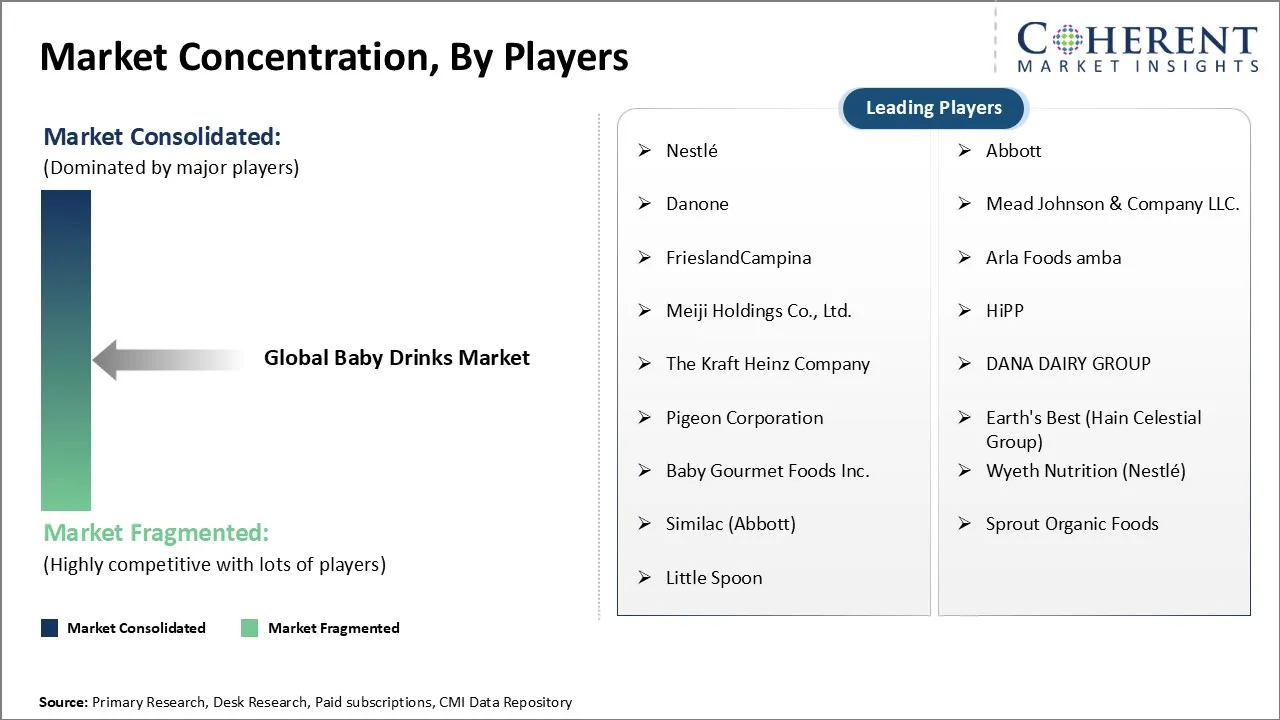
| Companies covered: | Nestlé, Abbott, Danone, Mead Johnson & Company LLC., Friesland Campina, Arla Foods amba, Meiji Holdings Co., Ltd., HiPP, The Kraft Heinz Company, DANA DAIRY GROUP, Pigeon Corporation, Earth's Best (Hain Celestial Group), Baby Gourmet Foods Inc., Wyeth Nutrition (Nestlé), Similac (Abbott), Sprout Organic Foods, and Little Spoon | ||
| Growth Drivers: |
| ||
| Restraints & Challenges: |
| ||
Baby Drinks Market Dynamics
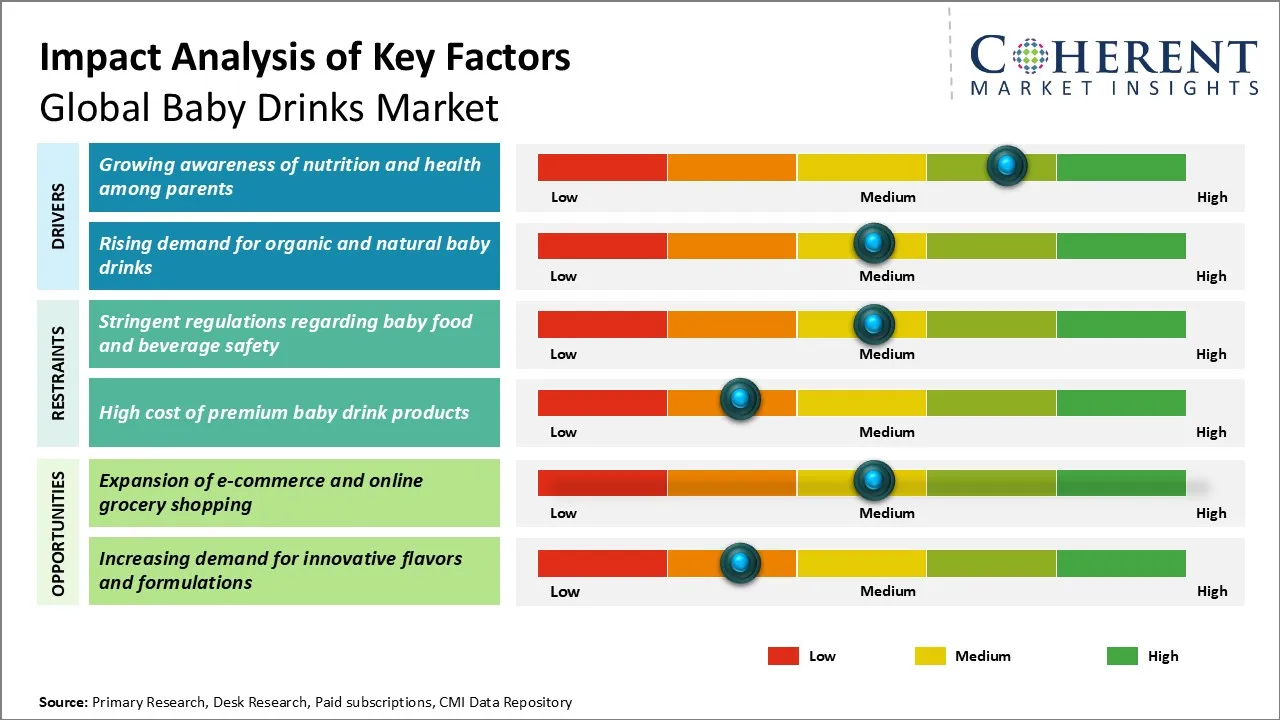
Baby Drinks Market Driver - Growing Awareness of Nutrition and Health Among Parents
In recent years, there has been a significant shift in parental attitudes toward infant nutrition, driven by greater access to information and growing concern for long-term child health. Modern parents are more informed than ever about the critical role that balanced nutrition plays in early childhood development, prompting them to carefully scrutinize the ingredients and nutritional content of baby drinks. This heightened awareness is fueled by the proliferation of health education through digital platforms, healthcare professionals, and social communities, resulting in a demand for products that offer enhanced nutritional benefits such as fortified vitamins, minerals, and natural ingredients.
For instance, the launch of Abbott’s Similac Pure Bliss organic infant formula, enriched with essential vitamins and minerals, has seen strong uptake among health-conscious parents in the U.S. and Europe, highlighting how awareness directly translates into demand for premium, nutritionally balanced baby drinks.
Baby Drinks Market Opportunity - Expansion of E-Commerce and Online Grocery Shopping
The rapid expansion of e-commerce and online grocery shopping presents a significant growth opportunity for the global baby drinks market. Increasing internet penetration and the widespread adoption of smartphones have transformed consumer purchasing behavior, making online platforms a preferred channel for buying baby products. Parents, particularly millennials and Gen Z consumers, prioritize convenience, variety, and quick delivery, which online retailers effectively offer. E-commerce platforms enable manufacturers and brands to reach a broader, geographically dispersed audience without the limitations of traditional retail distribution.
For instance, Amazon’s “Subscribe & Save” program allows parents to schedule recurring deliveries of baby formula and juices, ensuring continuous supply without repeated store visits. Similarly, Walmart and Target have expanded their online grocery sections to include baby nutrition products, often paired with same-day delivery or curbside pickup options.
Analyst Opinion (Expert Opinion)
- The global baby drinks market is poised for notable expansion, driven by increasing parental awareness of nutrition and health-conscious choices. Insights from the Global Baby Food and Drink Conference (2023) and the Child Nutrition Summit (2022) highlighted significant trends, with brands like Nestlé and Danone innovating their formulations to meet evolving consumer demands.
- Nestlé’s recent launch of an organic baby drink line underscores a strategic pivot towards cleaner labels and premium ingredients, catering to health-focused parents. Discussions at these conferences emphasized the importance of transparency and ingredient sourcing, as parents increasingly seek products free from artificial additives. However, challenges such as stringent regulatory environments and competition from niche brands were noted as potential hurdles.
- Companies that invest in R&D to create fortified, functional beverages will likely gain a competitive edge. Additionally, enhancing e-commerce capabilities and leveraging social media marketing can effectively reach health-conscious consumers. Ultimately, the baby drinks market's growth will depend on its ability to innovate while aligning with parents' aspirations for high-quality, nutritious options that support their children's health and development.
Speak to the analyst
Want personalized insights?
Take the findings above to one of our principal consultants, or have the report rebuilt around the segments, geographies and competitors you actually track.
Market Segmentation
- Product Type Insights (Revenue, USD Bn, 2021 - 2033)
- Infant Formula
- Fruit Juices
- RTD
- Concentrate
- Electrolyte
- Packaging Type Insights (Revenue, USD Bn, 2021 - 2033)
- Bottles
- Tetra Packs
- Cans
- Pouches
- Others
- Distribution Channel Insights (Revenue, USD Bn, 2021 - 2033)
- Pharmacies
- Hypermarket & Supermarket
- Online
- Regional Insights (Revenue, USD Bn, 2021 - 2033)
- North America
- U.S.
- Canada
- Latin America
- Brazil
- Argentina
- Mexico
- Rest of Latin America
- Europe
- Germany
- U.K.
- Spain
- France
- Italy
- Russia
- Rest of Europe
- Asia Pacific
- China
- India
- Japan
- Australia
- South Korea
- ASEAN
- Rest of Asia Pacific
- Middle East
- GCC Countries
- Israel
- Rest of Middle East
- Africa
- South Africa
- North Africa
- Central Africa
- North America
- Key Players Insights
- Nestle
- Abbott
- Danone
- Mead Johnson & Company LLC.
- FrieslandCampina
- Arla Foods amba
- Meiji Holdings Co., Ltd.
- HiPP
- The Kraft Heinz Company
- DANA DAIRY GROUP
- Pigeon Corporation
- Earth's Best (Hain Celestial Group)
- Baby Gourmet Foods Inc.
- Wyeth Nutrition (Nestlé)
- Similac (Abbott)
- Sprout Organic Foods
- Little Spoon
Sources
Primary Research Interviews
- R&D Director – Leading Infant Formula Manufacturer
- Procurement Manager – Major Baby Food Retailer
- Product Development Head – Well-Known Pediatric Nutrition Brand
- Sustainability Manager – Infant Food Safety Certification Body
Stakeholders
- Manufacturers: Formula producers, baby juice and water processors, organic baby drink brands
- End-use Sectors:
- Pediatric nutrition (infant formula, transition milk)
- Baby wellness brands with fortified drinks
- Regulatory & Certification Bodies: Food safety authorities for children, nutritional standards specialists
- E-commerce Platforms and Retailers: Baby product-specialty etailers, global online stores for infant nutrition
- Technology Integration Players: AI-based infant nutrition personalization services
Databases
- UN Comtrade Database
- India Import Export (EXIM) Database
Magazines
- Nutrition & Wellness Magazine – Infant nutrition and baby drink trends
- Health & Nutrition Business – Innovations in infant feeding; liquid milk alternatives
- Global Health Insights – Global pediatrics nutrition shifts and market patterns
- Baby Food Business Journal – Formula, ready-to-feed, and baby water segment growth
- The Supplement Guide – Updates on toddler drinks and pediatric supplements
Journals
- International Journal of Nutrition – Infant formula benefits and milk alternatives
- Journal of Food Science & Technology – Advances in baby drinks formulation and safety
- Journal of Pediatric Gastroenterology and Nutrition – The effect of fortified drinks on infant health
- Journal of Dietary Supplements – Supplementation for infants and toddlers
- Food Research International – Nutrient stability in baby drinks
Newspapers
- The Financial Times – Global infant nutrition market expansion
- The Guardian – Consumer trends and parents’ preferences in baby drinks
- Asia Health Journal – Growth of baby formula and fortified water in Asia-Pacific
- European Nutrition News – Regulatory updates for baby drink products in Europe
- The New York Times – Debates on formula vs. natural feeding and baby drinks innovation
Associations
- Council for Responsible Nutrition (CRN)
- International Society of Nutraceuticals and Functional Foods (ISNFF)
- American Academy of Pediatrics (AAP)
- International Baby Food Action Network (IBFAN)
- European Food Safety Authority (EFSA)
Public Domain Sources
- U.S. FDA – Infant formula and baby drink regulations
- European Commission – Food Supplements Regulation and Pediatric Nutrition Guidelines
- World Health Organization – Infant and young child feeding recommendations, safety standards
- OECD – Nutritional safety benchmarking for baby food
Proprietary Elements
- CMI Data Analytics Tool, Proprietary CMI Existing Repository of information for last 8 years.
Get access to 250+ pages report
Every segment, forecast, competitor profile and data table behind the analysis above — available for instant download.
- ESOMAR Member
- ISO 9001:2015 Certified
- D-U-N-S Registered
- GDPR & CCPA Compliant
Missing comfort of reading report in your local language? Find your preferred language:
Transform your Strategy with Exclusive Trending Reports
Frequently Asked Questions
The global baby drinks market is estimated to be valued at USD 184.00 Bn in 2026 and is expected to reach USD 342.89 Bn by 2033.
The CAGR of the global baby drinks market is projected to be 9.3% from 2026 to 2033.
Growing awareness of nutrition and health among parents and rising demand for organic and natural baby drinks are the major factors driving the growth of the global baby drinks market.
Stringent regulations regarding baby food and beverage safety and high cost of premium baby drink products are the major factors hampering the growth of the global baby drinks market.
In terms of product type, the infant formula segment is estimated to dominate the market revenue share in 2026.
Nestlé, Abbott, Danone, Mead Johnson & Company LLC., Friesland Campina, Arla Foods amba, Meiji Holdings Co., Ltd., HiPP, The Kraft Heinz Company, DANA DAIRY GROUP, Pigeon Corporation, Earth's Best (Hain Celestial Group), Baby Gourmet Foods Inc., Wyeth Nutrition (Nestlé), Similac (Abbott), Sprout Organic Foods, and Little Spoon are the major players.
Asia Pacific is expected to lead the global baby drinks market in 2026.