

Human Milk Oligosaccharides Market Size and Forecast – 2026 to 2033
The human milk oligosaccharides market is estimated to be valued at USD 393.5 Mn in 2026 and is expected to reach USD 1040.4 Mn by 2033, exhibiting a compound annual growth rate (CAGR) of 14.9% from 2026 to 2033.
Key Takeaways
- Based on Application, the Infant formula segment accounts for 56.1 %share of the human milk oligosaccharides market in 2026, owing to increasing focus on baby nutrition.
- Based on Type, the 2’FL segment is expected to account for 30.2 %share in 2026. This is because it is one of the most abundant and widely studied oligosaccharides found in human breast milk.
- North America continues to dominate the global human milk oligosaccharides market, primarily led by the U.S. The region is expected to account for 38.1 %of the market share in 2026.
Market Overview
Rising awareness about the health benefits of human milk oligosaccharides (HMOs) for infant nutrition is driving the growth of the market. HMOs play an important role in boosting immune health, gut health, and brain development. They act as prebiotics that promote the growth of beneficial microbes in the intestines. With rising rate of working women population, the demand for formula-fed babies is increasing globally. Manufacturers are focusing on fortifying infant formulas with HMOs to provide functional benefits similar to breast milk. The emerging applications of HMOs in food & beverages, pharmaceutical, and personal care products is expected to open new growth opportunities for the market in the coming years.
Current Events and Its Impact
Current Events | Description and its impact |
Geopolitical and Regulatory Trends |
|
Economic and Digital Infrastructure Trends |
|
Technology Trends and Enterprise Demands |
|
End-user Feedback and Unmet Needs in the Human Milk Oligosaccharides Market
- Need for Enhanced Nutritional Profiles: Parents and healthcare providers seek infant formulas with a broader spectrum of HMOs that more closely mimic the complexity of breast milk. Current formulations often lack the full diversity of oligosaccharides, limiting potential health benefits for infants.
- Improved Digestibility and Gut Health Support: There is growing demand for HMOs that effectively promote gut microbiota balance and immune system development. End-users want proven clinical outcomes demonstrating reduced incidence of infections and allergies in infants consuming HMO-enriched products.
- Convenience and Accessibility: Consumers desire infant nutrition products that are easy to prepare, store, and consume, including ready-to-feed options with HMOs. Additionally, affordability and wider availability are critical to meeting the needs of a broader demographic, especially in emerging markets.
- Current Industry Events of 2026
- Market Size Estimation
- Regional Breakdown
- Competitive Landscape
- Customer Intelligence
- Segmental Analysis
- Pricing Analysis
- Key Market Drivers, Challenges & Future Trends
- Customized Insights Section
Segmental Insights
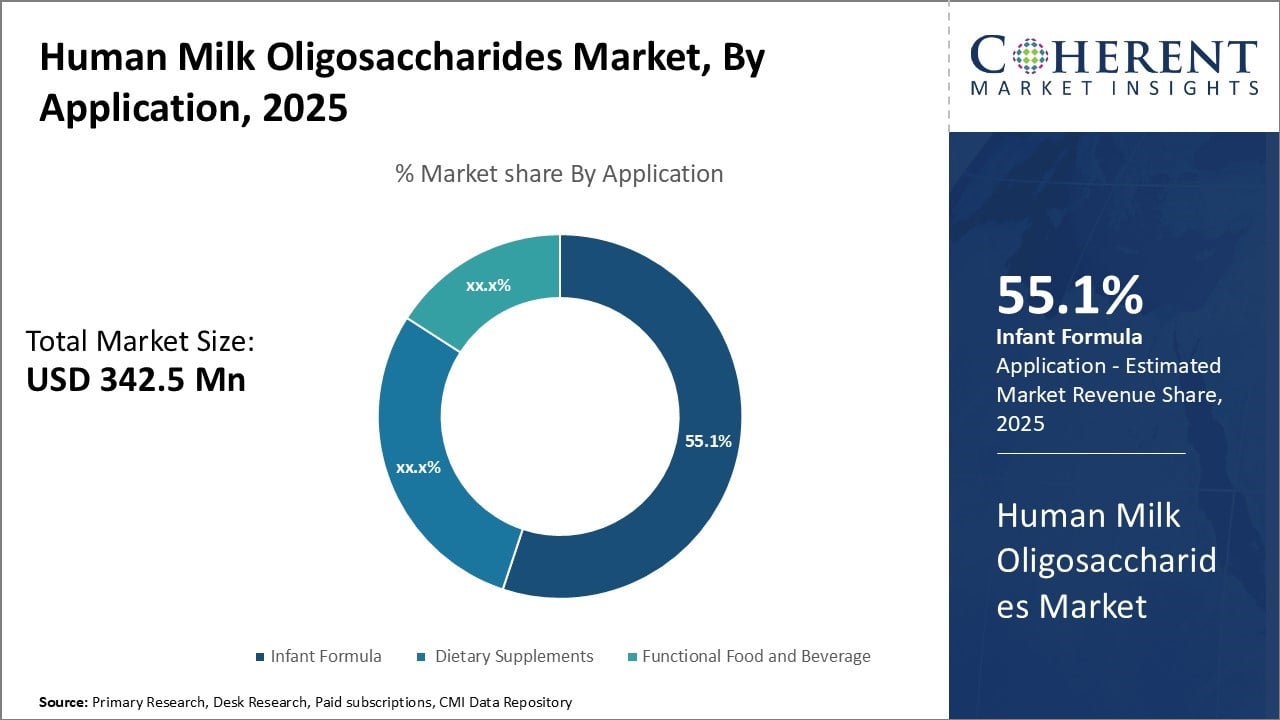
Human Milk Oligosaccharides Market Insights, By Application - Infant Formula Contributes the Highest Share of the Market Owing to Focused Efforts on Baby Nutrition
In terms of application, the Infant formula segment accounts for a 56.1% share of the human milk oligosaccharides market in 2026, owing to increasing focus on baby nutrition. Breastfeeding is considered the gold standard for infant nutrition; however, many mothers are unable to breastfeed due to various reasons. This has resulted in a rise in the demand for infant formula that can provide nutrition as close to breastmilk as possible. Major infant formula manufacturers are actively working to enhance the nutritional profile of their products. They are investing heavily in research and development activities to identify and add various important human milk oligosaccharides found in breastmilk into formula.
For instance, in June 2025, Nestlé has launched Gerber PRO rice cereal enriched with the human milk oligosaccharide 2'-fucosyllactose (2'-FL) in China. Approved by the National Health Commission for use in infant complementary foods, the product also includes protein and probiotic Bifidobacterium lactis BB-12 to support immunity, as Gerber expands its infant-formula-inspired nutrition range.
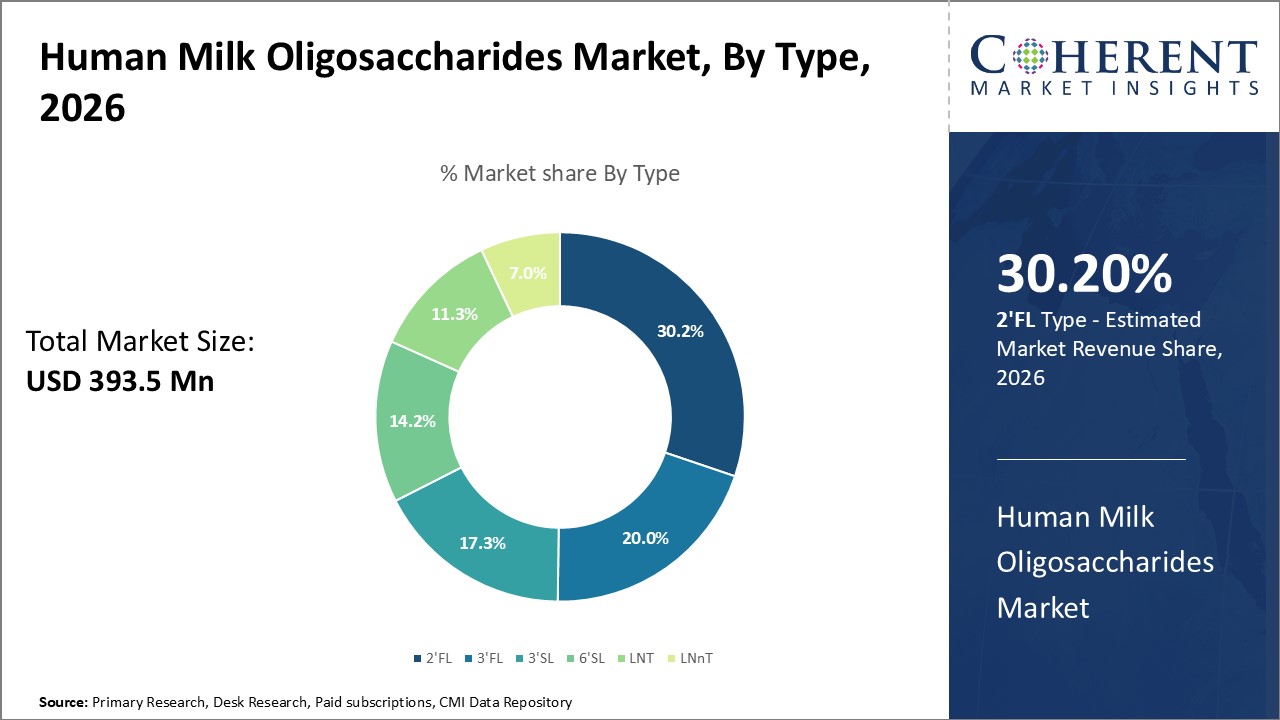
Human Milk Oligosaccharides Market Insights, By Type - In Terms of Type, 2’fl Contributes the Highest Share of the Market Owing to Its Widespread Applications
In terms of type, the 2’FL segment is expected to account for 30.2% share in 2026. It is one of the most abundant and widely studied oligosaccharides found in human breast milk. Extensive research has identified 2’FL as a prebiotic that supports the growth of beneficial gut bacteria in infants. Due to its versatile functional properties and supportive clinical research, 2’FL finds wide applications across various end-use segments. It is extensively used in infant formula to enhance the prebiotic profile. Several global formula brands have incorporated 2’FL into their “next generation” formulas marketed with added health benefits. 2’FL is also utilized in dietary supplements targeted for gut and immune health.
For instance, in May 2025, BENEO, a key supplier of functional food and pharma ingredients, and biotechnology specialist WACKER have teamed up to introduce the human milk oligosaccharide 2’-Fucosyllactose (2’-FL) globally. Produced via precision fermentation in Europe and commercialized by BENEO, this launch boosts HMO supply for infant nutrition manufacturers.
Regional Insights
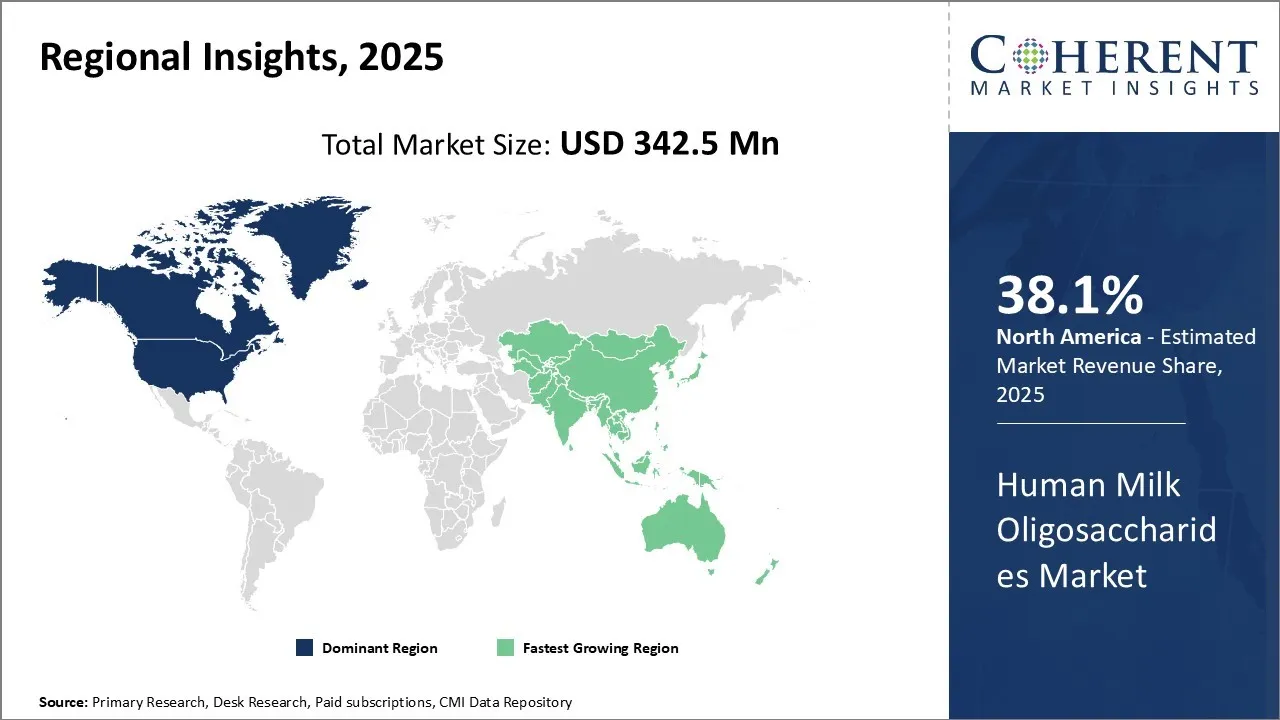
North America Human Milk Oligosaccharides Market Analysis & Trends
North America continues to dominate the global human milk oligosaccharides market, primarily led by the U.S. The region is expected to account for 38.1% of the market share in 2026. The region has a strong foothold of major players that are continuously investing in clinical research and product development activities. Numerous clinical studies validating the health benefits of HMOs have created widespread awareness among consumers in the region. This has boosted the incorporation of HMOs into infant formula, pediatric nutrition, and other pediatric healthcare products. Moreover, the growth of the nutritional and dietary supplement industry has widened the application scope of HMOs.
In August 2024, DSM‑Firmenich AG achieved a significant regulatory milestone: it obtained U.S. and Australian approval for its GlyCare 3‑Fucosyllactose (3‑FL) ingredient, eligible for incorporation into functional foods and dietary supplements. This approval substantially broadens HMO applications beyond traditional infant formula into the wider health and wellness sector.
Asia Pacific Human Milk Oligosaccharides Market Analysis & Trends
Asia Pacific is identified as the fastest growing regional market. China represents a highly lucrative market driven by improving living standards, rising health consciousness, and an expanding consumer base. There is a growing interest among Chinese manufacturers to develop advanced pediatric nutrition products. This has prompted them to form partnerships with global leaders for technology transfers. Additionally, several rural and underdeveloped parts of the country still face problems of malnutrition and infant mortality. This has fostered government support through rural healthcare projects involving HMOs. Japan is also a major domestic market characterized by an aging population and increasing preference for preventive healthcare solutions.
In March 2024, Wyeth Nutrition introduced China’s first infant formula featuring a dual-HMO formulation. This product incorporates 2’-Fucosyllactose (2’-FL) and Lacto‑N‑neotetraose (LNnT), a combination not previously commercialized within the Chinese market.
Human Milk Oligosaccharides Market Outlook Country-Wise
The United States Human Milk Oligosaccharides Market Trends
The U.S. leads the global HMO market due to its advanced biotechnology sector, strong regulatory framework, and widespread consumer awareness of infant health benefits. Major players like DSM–Firmenich, DuPont, and Infinant Health continue to invest heavily in clinical trials and fermentation-based HMO production. Robust demand for HMO-enriched infant formula and dietary supplements supports the country’s dominant market share.
For instance, Abbott continues to refine its infant formula by integrating human milk oligosaccharides (HMOs), including being the first U.S. company to introduce 2'-FL HMO. The latest Similac 360 Total Care formulas feature a five-HMO blend, boosting growth, gut health, immunity, and brain development and solidifying the company’s scientific leadership.
Germany Human Milk Oligosaccharides Market Trends
Germany is a key hub in Europe for HMO research and production, backed by its pharmaceutical and functional food industries. The country’s strict quality standards and demand for scientifically supported infant nutrition products drive adoption. Companies like Jennewein Biotechnologie (now part of Chr. Hansen) have positioned Germany as a center for HMO innovation and export.
For instance, in June 2026, A new preclinical study by Pudenz et al., conducted with ETH Zurich, reveals that blending chicory-derived inulin-type fructans with the human milk oligosaccharide 2’-fucosyllactose (2’-FL) produces synergistic effects on toddler gut microbiota. The combination enhanced butyrate production and beneficial bacteria growth, surpassing individual effects, supporting the case for prebiotic blend use in early-life nutrition.
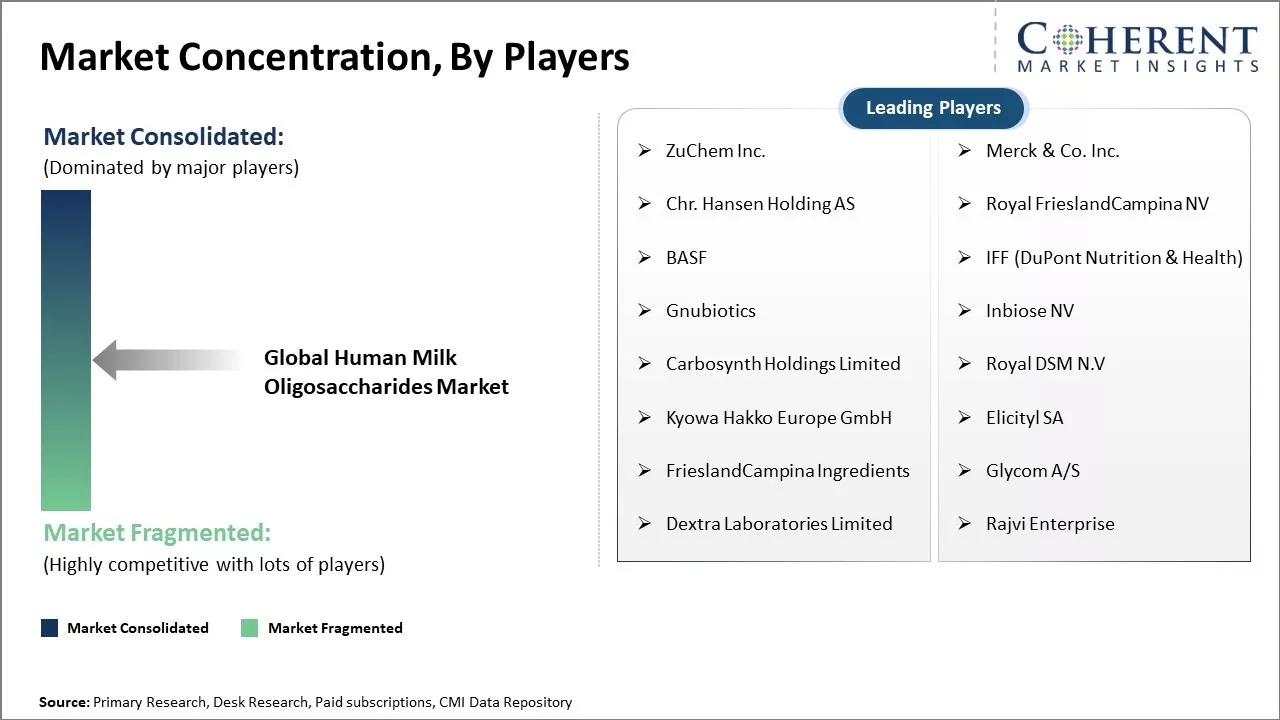
Market Concentration and Competitive Landscape
Human Milk Oligosaccharides Industry News
- In January 2025, DSM-Firmenich significantly broadened its HMO ingredient offerings by securing approval from Food Standards Australia New Zealand (FSANZ) for four additional HMOs intended for use in infant formula. This regulatory milestone enables their products to include a wider array of bioactive oligosaccharides, reinforcing DSM-Firmenich's positioning as an innovator in infant nutrition ingredients.
Market Report Scope
Human Milk Oligosaccharides Market Report Coverage
| Report Coverage | Details | ||
|---|---|---|---|
| Base Year: | 2025 | Market Size in 2026: | USD 393.5 Mn |
| Historical Data for: | 2020 To 2024 | Forecast Period: | 2026 To 2033 |
| Forecast Period 2026 to 2033 CAGR: | 14.9% | 2033 Value Projection: | USD 1040.4 Mn |
| Geographies covered: |
| ||
| Segments covered: |
| ||
| Companies covered: | ZuChem Inc., Merck & Co. Inc., Chr. Hansen Holding AS, Royal FrieslandCampina NV, BASF, IFF (DuPont Nutrition & Health), Gnubiotics, Inbiose NV, Carbosynth Holdings Limited, Royal DSM N.V, Kyowa Hakko Europe GmbH, Elicityl SA, FrieslandCampina Ingredients, Glycom A/S, Dextra Laboratories Limited, and Rajvi Enterprise | ||
| Growth Drivers: |
| ||
| Restraints & Challenges: |
| ||
Market Dynamics
Human Milk Oligosaccharides Market Drivers
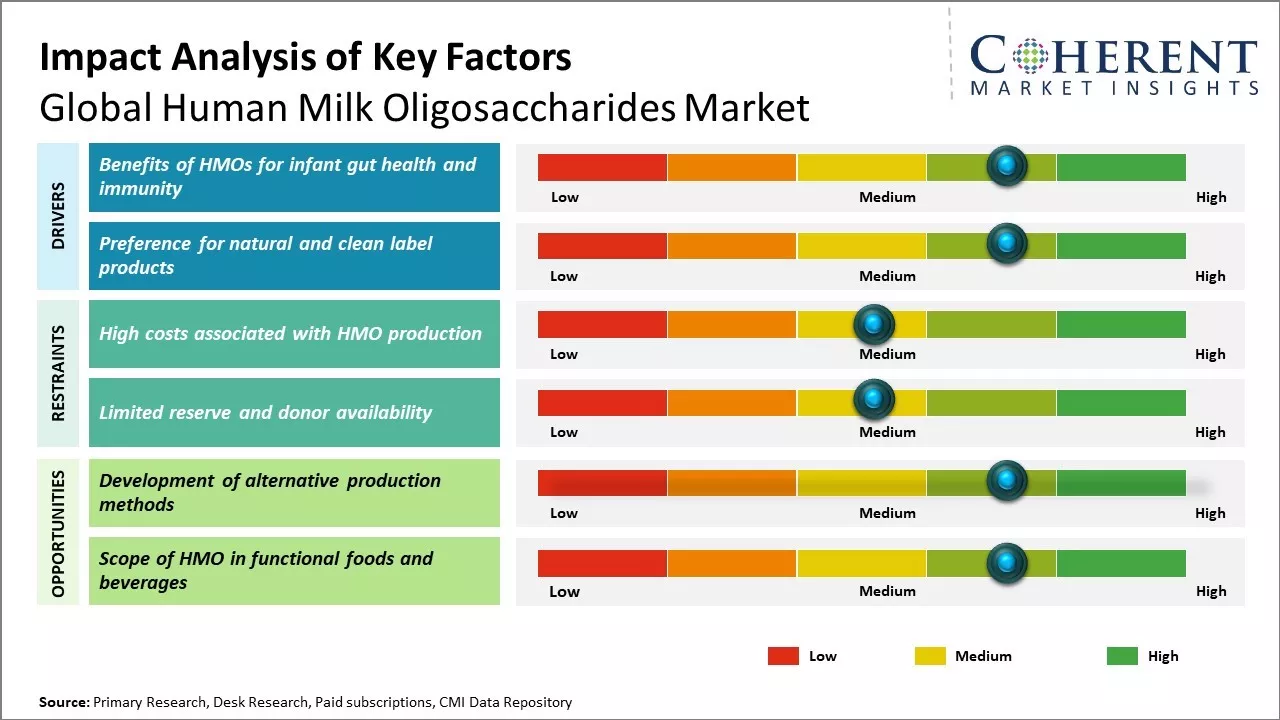
Benefits of HMOs for infant gut health and immunity
Scientific research increasingly highlights the benefits of human milk oligosaccharides (HMOs) for infant health. HMOs, the third largest solid component of breast milk after fat and lactose, act as prebiotics that feed beneficial gut bacteria like Bifidobacterium, supporting gut microbiota development and strengthening immune function. They reduce the risk of infections, diarrhea, and respiratory illnesses in infants. With declining global breastfeeding rates, HMO-fortified formulas are gaining attention to provide similar immune and nutritional benefits. This trend is driving human milk oligosaccharides market demand, with manufacturers focusing on cost-effective production methods to include specific HMOs in infant nutrition products.
Preference for natural and clean label products
Along with health considerations, changing consumer preferences are shaping industry trends in the human milk oligosaccharides market share. There is rising global demand for natural, organic, and clean-label products, as parents increasingly seek options free from artificial colors, flavors, and preservatives. In this context, HMOs offer clear advantages over synthetic additives in infant formulas and foods. Being naturally occurring components of breast milk, they resonate with health-conscious consumers who prefer formulations with simple, easy-to-understand labels, further driving the market’s growth and adoption worldwide.
Human Milk Oligosaccharides Market Opportunities
Development of alternative production methods
The development of alternative production methods could unlock significant opportunities in the human milk oligosaccharides market forecast. Traditionally, HMOs are harvested from human breast milk in limited quantities, restricting their availability and applications. Emerging biosynthetic and fermentation technologies now enable scalable, reliable production of HMOs outside the human body. This evolving production landscape is expected to accelerate innovation and expand adoption of HMOs across infant nutrition, pharmaceuticals, and functional food industries over the coming years.
Key Takeaways from Analyst
- The human milk oligosaccharides market shows promising growth potential driven by increasing awareness about benefits of HMOs for infant health and development. As research establishes correlation between consumption of HMOs and reduction in many childhood illnesses, their demand as infant formula ingredients is expected to rise substantially. North America currently dominates the market owing to large baby food companies headquartered in the U.S. and Canada aggressively exploring HMOs for R&D and product development. Asia Pacific is likely to be the fastest growing regional market with China and India presenting lucrative opportunities.
- High production costs of HMOs extracted from breast milk remains a key challenge for commercialization. Substituting expensive extraction process with cost-effective microbial fermentation would boost the market growth. Additionally, achieving pricing parity with traditional infant formula ingredients is crucial for wider market acceptance. Establishing stability of HMOs during processing and shelf life of infant products also requires more research. Stringent regulatory norms governing new ingredients for baby food category could slow approvals and market launch of HMO-based products.
- Collaborations between formula manufacturers, HMO producers and clinical research organizations would expand applications and drive usage beyond infant nutrition. Innovations to utilize HMOs in other consumer products indicate expansion into adjacently categories.
Speak to the analyst
Want personalized insights?
Take the findings above to one of our principal consultants, or have the report rebuilt around the segments, geographies and competitors you actually track.
Market Segmentation
- Application Insights (Revenue, USD Mn, 2026 - 2033)
- Infant Formula
- Dietary Supplements
- Functional Food and Beverage
- Type Insights (Revenue, USD Mn, 2026 - 2033)
- 2’FL
- 3’FL
- 3’SL
- 6’SL
- LNT
- LNnT
- Regional Insights (Revenue, USD Mn, 2026 - 2033)
- North America
- U.S.
- Canada
- Latin America
- Brazil
- Argentina
- Mexico
- Rest of Latin America
- Europe
- Germany
- U.K.
- Spain
- France
- Italy
- Russia
- Rest of Europe
- Asia Pacific
- China
- India
- Japan
- Australia
- South Korea
- ASEAN
- Rest of Asia Pacific
- Middle East & Africa
- GCC Countries
- Israel
- Rest of Middle East & Africa
- Key Players Insights (Revenue, USD Mn, 2021 - 2033)
- ZuChem Inc.
- Merck & Co. Inc.
- Chr. Hansen Holding AS
- Royal FrieslandCampina NV
- BASF
- IFF (DuPont Nutrition & Health)
- Gnubiotics
- Inbiose NV
- Carbosynth Holdings Limited
- Royal DSM N.V
- Kyowa Hakko Europe GmbH
- Elicityl SA
- FrieslandCampina Ingredients
- Glycom A/S
- Dextra Laboratories Limited
- Rajvi Enterprise
Sources
Primary Research Interviews
- Infant nutrition manufacturers and HMO producers
- Pediatricians and neonatologists specializing in infant nutrition
- Regulatory affairs specialists in infant food safety
- Supply chain managers in dairy and nutrition industry
- Others
Databases
- Global Trade Atlas (GTA)
- Euromonitor International
- Others
Magazines
- Nutraceuticals World
- Food Processing Magazine
- Dairy Industries International
- Infant & Toddler Nutrition Magazine
- Others
Journals
- Journal of Nutritional Biochemistry
- Pediatric Research Journal
- Food Chemistry Journal
- Others
Newspapers
- Financial Times
- The Wall Street Journal
- Reuters Health News
- Food Navigator
- Others
Associations
- International Dairy Foods Association (IDFA)
- Global Organization for EPA and DHA Omega3s (GOED)
- International Association of Infant Food Manufacturers (IFM)
- European Specialist Sports Nutrition Alliance (ESSNA)
- Others
Public Domain Sources
- FDA (Food and Drug Administration) databases
- European Food Safety Authority (EFSA) reports
- World Health Organization (WHO) publications
- USDA National Nutrient Database
- Others
Proprietary Elements
- CMI Data Analytics Tool
- Proprietary CMI Existing Repository of information for last 8 years
*Definition: The human milk oligosaccharides market consists of innovative nutritional supplements based on the complex sugar molecules found naturally in breast milk. These unique oligosaccharides serve important prebiotic functions that support immune and brain development in infants. As researchers advance understanding of their health benefits, companies are developing purified human milk oligosaccharide supplements to replicate these important benefits for formula-fed babies and other vulnerable groups. The growing human milk oligosaccharides market offers promising functional ingredients for pediatric nutrition and beyond.
Get access to 250+ pages report
Every segment, forecast, competitor profile and data table behind the analysis above — available for instant download.
- ESOMAR Member
- ISO 9001:2015 Certified
- D-U-N-S Registered
- GDPR & CCPA Compliant
Missing comfort of reading report in your local language? Find your preferred language:
Transform your Strategy with Exclusive Trending Reports
Frequently Asked Questions
The Human Milk Oligosaccharides Market is estimated to be valued at USD 393.5 Mn in 2026, and is expected to reach USD 1040.4 Mn by 2033.
The CAGR of the Human Milk Oligosaccharides Market is projected to be 14.9% from 2026 to 2033.
Benefits of HMOs for infant gut health and immunity and preference for natural and clean label products are the major factors driving the growth of the global human milk oligosaccharides market.
High costs associated with HMO production and limited reserve and donor availability are the major factors hampering the growth of the global human milk oligosaccharides market.
In terms of application, infant formula is estimated to dominate the market revenue share in 2026.
ZuChem Inc., Merck & Co. Inc., Chr. Hansen Holding AS , Royal FrieslandCampina NV, BASF, IFF (DuPont Nutrition & Health), Gnubiotics, Inbiose NV, Carbosynth Holdings Limited, Royal DSM N.V, Kyowa Hakko Europe GmbH, Elicityl SA, FrieslandCampina Ingredients, Glycom A/S, Dextra Laboratories Limited, and Rajvi Enterprise are the major players.
North America is expected to lead the global human milk oligosaccharides market.