

Global Balloon Valvuloplasty Device Market Size and Forecast – 2026 To 2033
The global balloon valvuloplasty device market is expected to grow from USD 1,050.4 Mn in 2026 to USD 2,203.2 Mn by 2033, registering a compound annual growth rate (CAGR) of 11.2% from 2026 to 2033. The market for balloon valvuloplasty devices is poised for significant expansion, fueled by rising incidence of cardiovascular diseases and surging demand for minimally invasive cardiac procedures.
According to the World Heart Federation, cardiovascular disease, including heart disease and stroke, is the most common non-communicable disease globally, responsible for nearly 20.5 million deaths, of which more than three quarters occur in low- and middle-income countries.
(Source: World Heart Federation)
Key Takeaways of the Global Balloon Valvuloplasty Device Market
- The 26 mm segment is projected to hold 31.1 % of the global balloon valvuloplasty device market share in 2026, making it the dominant type segment across North America due to high burden of valvular heart diseases and widespread adoption of minimally invasive cardiac interventions. For instance, according to the U.S. Centers for Disease Control and Prevention (CDC), 1 out of every 5 deaths in the U.S. is due to heart disease. In 2023, 919,032 people died from cardiovascular disease, underscoring the growing need for advanced cardiovascular treatment. (Source: Centers for Disease Control and Prevention) The expanding burden of structural heart disease continues to support the demand for balloon valvuloplasty procedures and related devices.
- Percutaneous balloon aortic valvuloplasty is projected to hold 56.3 % of the global balloon valvuloplasty device market share in 2026, making it the dominant type of valvuloplasty segment, across Europe due to rising utilization of catheter-based treatments for severe aortic stenosis. For instance, the European Society of Cardiology (ESC) reported that according to a meta-analysis of studies performed in European countries, the incidence of aortic stenosis in the elderly over the age of 75 was 12.4% and severe aortic stenosis was 3.4%. The aging European population is experiencing an increasing burden of severe valve disease, which, in turn, is creating more demand for interventions such as percutaneous balloon aortic valvuloplasty.
- Aortic valve stenosis is projected to hold 56.8 % of the global balloon valvuloplasty device market share in 2026, making it the dominant indication segment, across North America due to increasing incidence of degenerative valvular heart diseases in the elderly and growing use of minimally invasive cardiac surgical procedures. For instance, according to the American Heart Association (AHA), valvular heart disease (VHD) is one of the most common diseases in the U.S., with an estimated prevalence of 2.5% among adults. The rising prevalence of aortic valve disorders in aging population is increasing the demand for balloon valvuloplasty procedures and associated devices.
- North America maintains its dominance with an expected share of 37.7 % in 2026, bolstered by advanced healthcare infrastructure, strong reimbursement systems, and high adoption of minimally invasive cardiovascular procedures. For instance, according to U.S. Centers for Disease Control and Prevention (CDC), U.S. national health expenditure grew 7.2% to USD 5.3 trillion in 2024, accounting for 18.0% of GDP, while hospital expenditures increased 8.9% to USD 1.63 trillion. (Source: Centers for Disease Control and Prevention) The substantial healthcare spending supports broad access to advanced interventional cardiology procedures, including balloon valvuloplasty, reinforcing the region's market leadership.
- Asia Pacific is expected to exhibit the fastest growth with an estimated contribution of 27.9 % share in 2026, propelled by expanding healthcare infrastructure, increasing cardiovascular disease burden, and rising investments in advanced cardiac care. For instance, according to the National Bureau of Statistics of China, the country had 1.071 million medical and health institutions and approximately 39,000 hospitals by the end of 2023. In addition, China reported 10.20 million hospital beds and 12.47 million medical technicians, highlighting the continuous strengthening of healthcare capacity. (Source: China Association of In-vitro Diagnostics) The development of healthcare infrastructure will enhance the accessibility of interventional cardiology to support widespread usage of balloon valvuloplasty devices in the region.
- Expanding Use of Balloon Valvuloplasty as a Bridge-to-TAVR Procedures: As the prevalence of Transcatheter Aortic Valve Replacement is increasing, opportunities have arisen for balloon valvuloplasty devices, as they are often utilized as a bridge therapy for high-risk patients. Balloon valvuloplasty device usage has increased as the volume of elderly, high risk patients unable to undergo immediate valve replacement continues to grow, necessitating pre-TAVR intervention. Balloon valvuloplasty device usage is also likely to increase in proportion to the global TAVR program growth.
- Rising Incidence of Congenital Heart Valve Disorders in Pediatric Patients: Balloon valvuloplasty in pediatric cardiology is being propelled forward by the rise in diagnoses of congenital heart valve defects, especially pulmonary valve stenosis. Balloon valvuloplasty is considered a preferred initial therapy in most congenital valve stenoses given its minimal invasiveness and excellent clinical results. This trend, coupled with enhanced pediatric cardiac screening and access to dedicated cardiac centers, is expected to continue to drive procedure volumes and the market for these services.
Segmental Insights
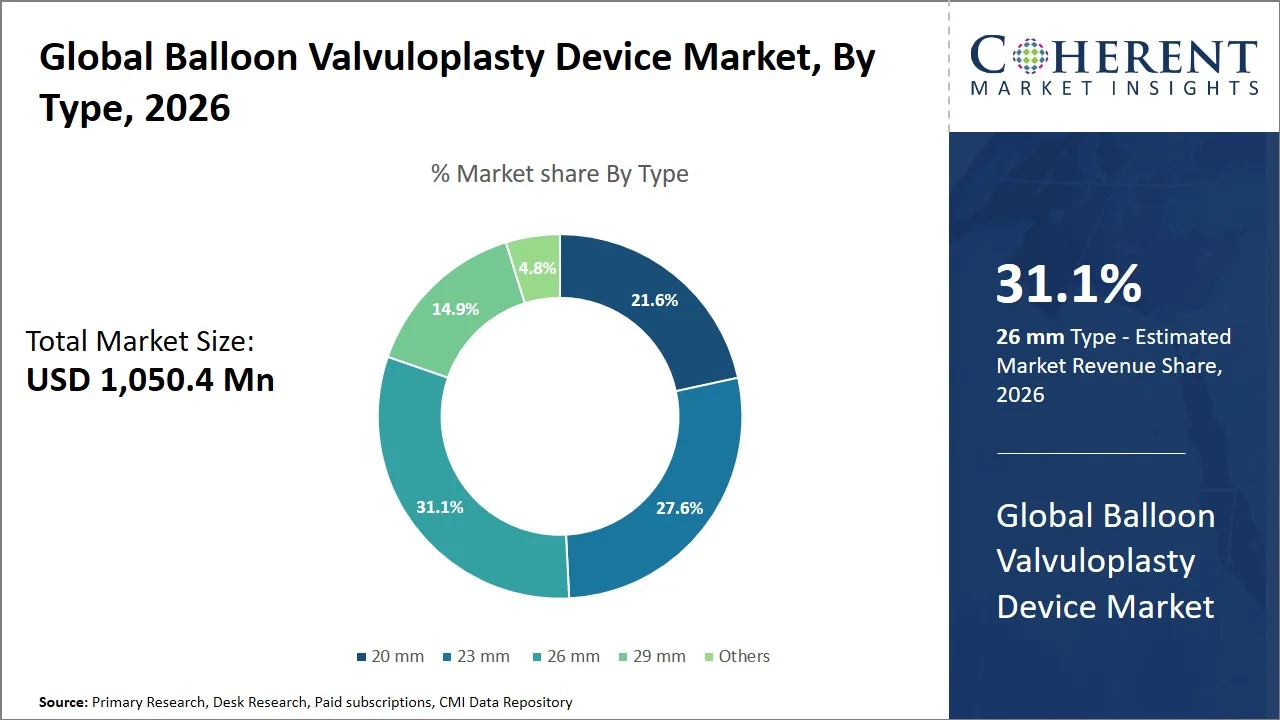
Why Does the 26 mm Segment Dominate the Global Balloon Valvuloplasty Device Market?
26 mm is projected to hold a market share of 31.1% in 2026, attributed to their use in both, elderly, which accounts for most degenerated aortic valve stenosis, and other adult patients for the treatment of aortic valve stenosis. The 26 mm balloons strike a balance of efficiency and safety, allowing optimal balloon dilation with minimized risk for complications. Standardized balloon sizes used in the pre- and post-dilation procedures further bolster the demand with the rise of transcatheter valve intervention. For instance, according to the American College of Cardiology (ACC), aortic stenosis is present in 1% to 2% of all patients >65 years of age and 3% to 8% of all patients >75 years of age. The rising prevalence of aortic stenosis in the growing elderly population is foreseen to boost use of 26 mm balloon valvuloplasty devices globally.
- Current Industry Events of 2026
- Market Size Estimation
- Regional Breakdown
- Competitive Landscape
- Customer Intelligence
- Segmental Analysis
- Pricing Analysis
- Key Market Drivers, Challenges & Future Trends
- Customized Insights Section
Why Does Percutaneous Balloon Aortic Valvuloplasty Represent the Largest Type of Valvuloplasty Segment in the Balloon Valvuloplasty Device Market?
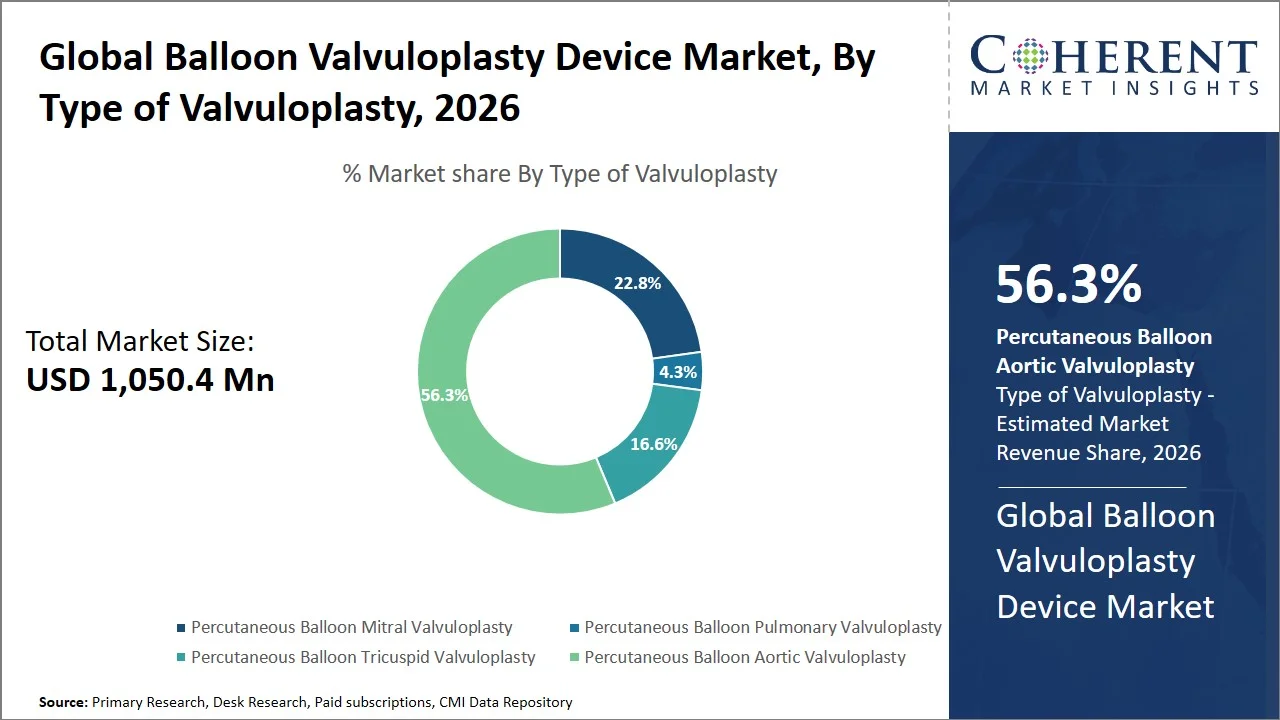
Percutaneous balloon aortic valvuloplasty is projected to hold a market share of 56.3% in 2026, as it is a well-established indication in managing severe aortic stenosis particularly among elderly and frail high-risk patients awaiting surgical valve replacement. The procedure provides rapid symptomatic relief. It is employed predominantly as a bridge for definitive treatment by way of transcatheter aortic valve replacement (TAVR) or surgical aortic valve replacement. Increasing shift towards catheter-based procedures and rising volume of structural heart interventions contribute to its segment growth. For instance, according to the Journal of Thoracic Disease, in the U.S., aortic stenosis accounts for an estimated 1.5 million patients—about 500,000 patients with severe stage disease and 250,000 patients with symptomatic disease. With the growing toll of aortic stenosis in an aging demographic, percutaneous balloon aortic valvuloplasty is poised to be a key therapeutic and bridge-to-therapy solution, driving segment growth on a global basis.
Aortic Valve Stenosis Segment Dominates the Global Balloon Valvuloplasty Device Market
The aortic valve stenosis segment is projected to hold a market share of 56.8% in 2026, driven by rising cases of age-related calcific valve disease and the growing need for minimally invasive procedures. Balloon valvuloplasty is critical for obstruction relief, and is primarily used in high-risk patients as a bridge to definitive treatments. The increasing availability of better imaging techniques as well as earlier detection of valve disease are further supporting procedure adoption. For instance, according to research published by the National Library of Medicine, the prevalence of calcific aortic valve disease approaches 25% of all adults over 65 years of age, while 2–5% of all older adults have significant aortic stenosis (AS) with obstruction to left ventricular (LV) outflow. Consequently, the increase in elderly population will inevitably result in a significant rise in the number of patients requiring aortic valve replacement.
Currents Events and their Impact
Current Events | Description and its Impact |
European Commission's Targeted Revision of EU MDR/IVDR Framework (December 2025) |
|
U.S. FDA Draft Guidance for AI-Enabled Medical Devices (March 2025) |
|
(Source: European Commission, Food and Drug Administration)
Balloon Valvuloplasty Device Market Dynamics
Market Drivers
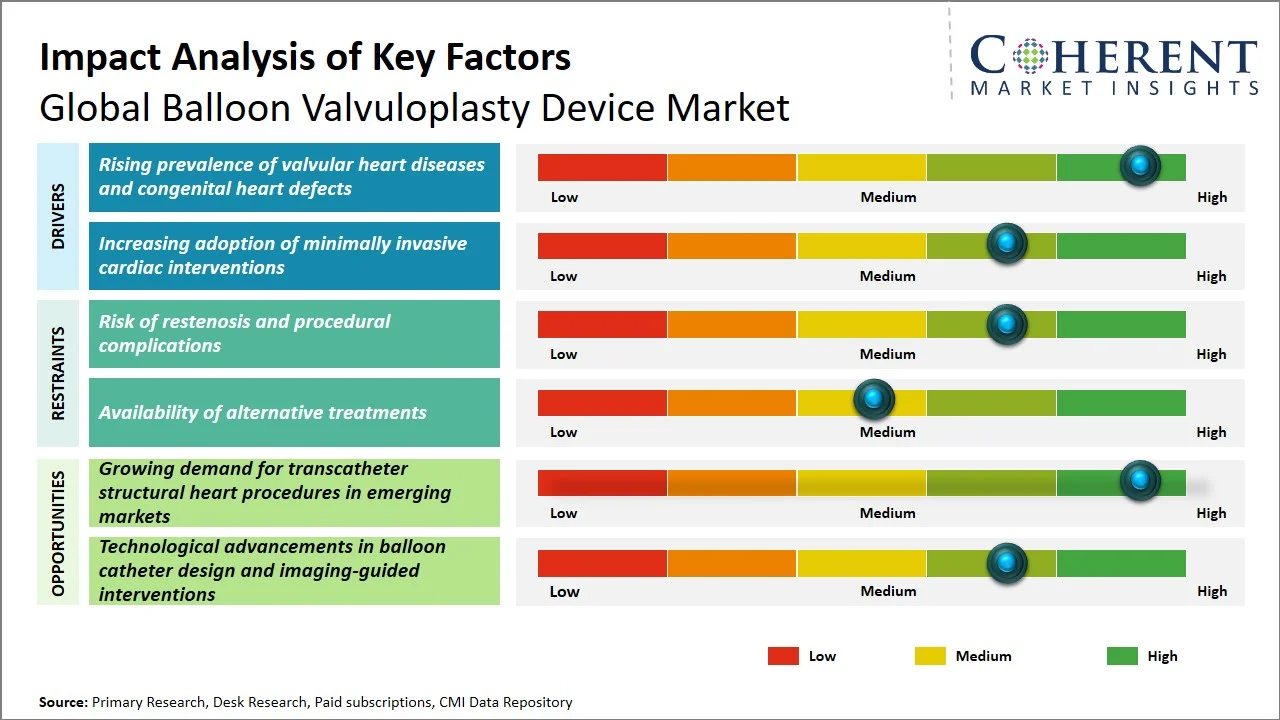
- Rising prevalence of valvular heart diseases and congenital heart defects: The increasing incidence of aortic, mitral and pulmonary valve stenosis, along with a rise in the diagnosis of congenital cardiac abnormalities has driven the global increase in utilization of balloon valvuloplasty procedures. Balloon valvuloplasty is generally favored due to the percutaneous approach and reduced recovery period, and its ability to improve valve function in appropriate patients. Improvements in cardiac imaging and increasing access to interventional cardiology services will continue to drive volume. For instance, according to the Centers for Disease Control and Prevention (CDC), about 1 in 4 babies born with a heart defect has a critical heart defect. Congenital heart defects affect nearly 1% of births, or about 40,000 babies, each year in the U.S. (Source: Centers for Disease Control and Prevention) The increased need for early cardiac intervention ensures sustained demand for balloon valvuloplasty devices.
- Increasing adoption of minimally invasive cardiac interventions: Minimal invasive cardiac procedures are being adapted at a tremendous pace and has led to the high demand in the balloon valvuloplasty device market. In comparison to traditional open-heart surgery, balloon valvuloplasty involves relatively low risk, less duration for recovery and lower health care expenditure, making it highly favorable for patients as well as for healthcare providers. The increase in the choice for catheter-based interventions is leading to an exponential rise in procedure volumes globally. For instance, according to the American College of Cardiology (ACC), an analysis of the STS/ACC TVT Registry evaluated 383,030 patients who underwent Transcatheter Aortic Valve Replacement (TAVR) for severe aortic stenosis between January 2020 to March 2024, emphasizing the large and increasing number of minimally invasive valve procedures.
Emerging Trends
- Growing Integration of Balloon Valvuloplasty with Structural Heart Treatment Pathways: In recent times, balloon valvuloplasty is gaining an increased use as an element in comprehensive treatment of cardiac structure disease, and more notably as an intermediate approach prior to Transcatheter Aortic Valve Replacement (TAVR) and other catheter-based therapies for valve diseases. The increase use of multidisciplinary heart team is playing a larger role in the preparation of procedures and its expansion into other fields.
- Development of Advanced High-Compliance and Precision Balloon Technologies: Manufacturers are actively working on developing a new generation balloon catheters with better flexibility, better controlled inflation dynamics and better deliverability across the tortuous vasculature. The procedural safety, valve dilation results and the increasing complexity of valvular pathology are expected to be better in these next generation balloon catheters.
Regional Insights
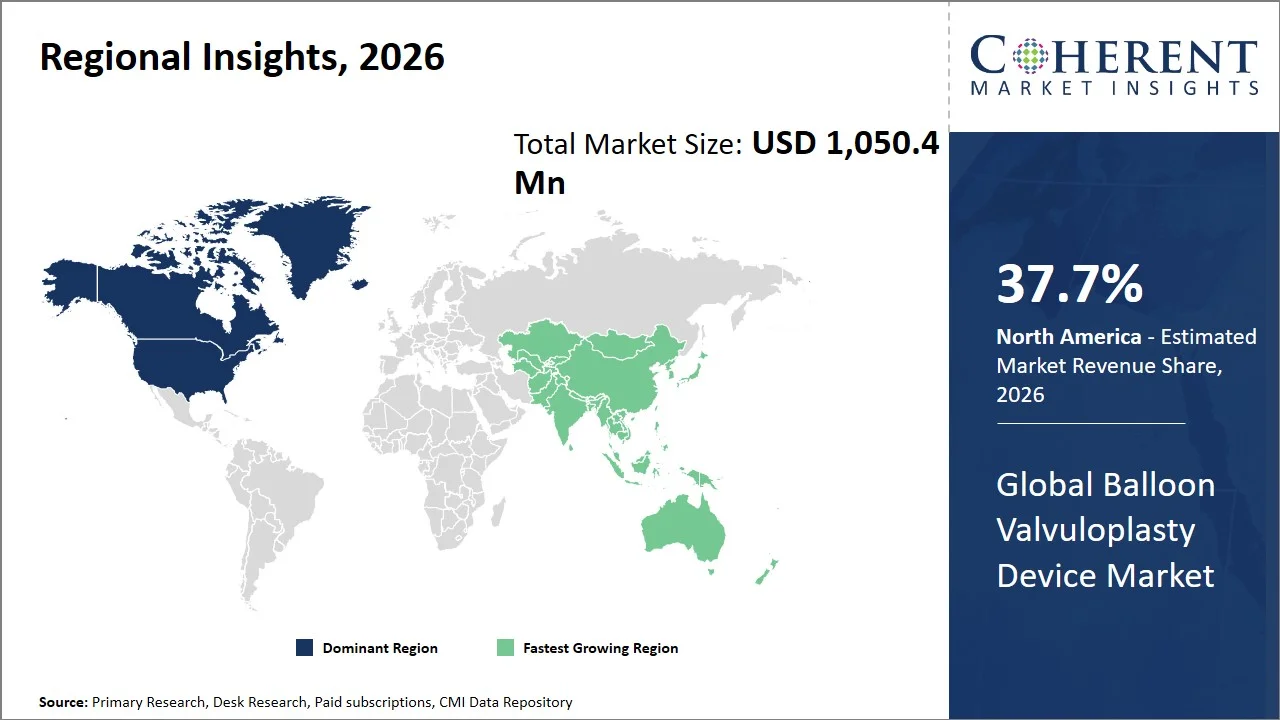
Why is North America a Strong Market for Balloon Valvuloplasty Devices?
North America leads the global balloon valvuloplasty device market, accounting for an estimated 37.7% share in 2026, owing to robust healthcare infrastructure, prevalence of valvular heart diseases and high investment on medical technology. The market is supported with wide access to medical devices among the various cardiac and specialized hospitals and government policies like U.S.FDA approval process and regulations that boost the innovation for the devices. For instance, the U.S. Food and Drug Administration (FDA) administer the Breakthrough Devices Program, aiming to speed the development, evaluation, and review of medical devices that offer more effective diagnosis, treatment, or prevention of life-threatening or irreversibly debilitating diseases including cardiovascular disease. This program facilitates quicker patient access to innovative structural heart and interventional cardiology devices and ensures continuing growth of the market. (Source: Food and Drug Administration)
Furthermore, the adequate insurance and reimbursement services for the balloon valvuloplasty device further enhance the access to patients and devices for better healthcare outcomes. For instance, The Centers for Medicare & Medicaid Services (CMS) in the U.S. Offers Medicare reimbursement for medically indicated valvuloplasty procedures with balloons for valvular heart diseases. The presence of reimbursement alleviates costs to patients and healthcare providers, ensuring access to appropriate and prompt cardiovascular services, and enhancing the market growth.
Why Does the Asia Pacific Balloon Valvuloplasty Device Market Exhibit High Growth?
The Asia Pacific balloon valvuloplasty device market is expected to exhibit the fastest growth with an estimated contribution of 27.9% share to the global market in 2026, driven by increasing health expenditure, growth in the healthcare infrastructure and increasing awareness on the cardiovascular diseases in the countries like China, India, Japan and South Korea, leading to the increasing demand for treatment for heart valve disease.
Furthermore, due to government initiatives focused on increasing accessibility to healthcare like insurance schemes and improving healthcare infrastructure there is increasing growth of the market penetration. For instance, India’s Ayushman Bharat-Pradhan Mantri Jan Arogya Yojana (AB-PMJAY) is the largest government funded scheme globally with coverage up to USD 5,900 (INR 5 lakh) for secondary and tertiary hospitalization per family per year. (Source: Press Information Bureau) The scheme has increased access for millions of beneficiaries to high-tech cardiac care and contributed to the spread of interventional cardiology and relevant devices.
Global Balloon Valvuloplasty Device Market Outlook for Key Countries
Why is the U.S. Leading Innovation and Adoption in the Balloon Valvuloplasty Device Market?
The U.S. holds the largest market share for innovation and adoption in the balloon valvuloplasty device market driven by well-established structural heart ecosystem and rapid adoption of transcatheter valve therapies into everyday practice. Device innovation finds a key market in the U.S. and act as a successful launch market for emerging balloon catheter technologies as experienced physicians with complex valvular disease intervene. Device manufacturers work closely with academic medical centers and structural heart programs for rapid clinical validation and refinement of device technology. For instance, in July 2024, Edwards Lifesciences Corporation acquired JenaValve and Endotronix in a move to enhance Edwards Lifesciences' structural heart offering and extend its transcatheter valve and advanced cardiovascular technology capabilities. (Source: Edwards Lifesciences Corporation)
Is Japan a Favorable Market for Balloon Valvuloplasty Devices?
Japan serves as an attractive market for balloon valvuloplasty devices owing to a highly integrated structural heart treatment system and rapid adoption of catheter-based valve interventional procedures within the country. The market boasts the largest depth of expertise on managing advanced valvar diseases, with balloon valvuloplasty often forming an integral part of high-risk elderly patients. Moreover, physicians in the region are among the fastest adopters of novel cardiovascular devices, paving the way for advanced balloon catheter technology systems to be quickly adopted in to routine practice. Finally, focus on minimum invasive procedures and science driven cardiac care continues to form a conducive market.
Is China Emerging as a Key Growth Hub for the Balloon Valvuloplasty Device Market?
China is becoming an important growth area in the balloon valvuloplasty device market due to the fast development in the structural heart intervention space, and gradually the adoption of catheter-based treatments into cardiovascular practice. Local players (such as MicroPort Scientific Corporation, Venus Medtech, and Peijia Medical) and international medical device manufacturers (such as Edwards Lifesciences, Medtronic plc, Abbott Laboratories, and Boston Scientific Corporation) are continuously building out the China market with product launches, local manufacturing, and interventional cardiology physicians training programs, as well as development of tertiary hospital network and specialists’ skill on the complex valve procedures in the country.
Why Does Germany Top the European Balloon Valvuloplasty Device Market?
Germany stands at the top of the European balloon valvuloplasty device market primarily due to the country's advanced structural heart care infrastructure and profound knowledge and expertise in the area of percutaneous cardiovascular interventions. A considerable number of transcatheter valve procedures performed in dedicated cardiac centers generate a continuous need for the usage of balloon valvuloplasty devices in either stand-alone and adjuvant settings. Germany also provides a considerable context for the cardiovascular clinical research and quick uptake of novel interventional technologies; it accelerates adoption of future generations of balloon catheter systems in clinical practice. The strong foothold of prominent medical device suppliers and advanced cardiac centers further sustains Germany's market dominance.
Is Balloon Valvuloplasty Device Market Developing in India?
India represents a growth opportunity for balloon valvuloplasty devices, as there is growing demand due to rapid expansion of interventional cardiology services, and increasing availability of structural heart disease interventions in tertiary hospitals. Elite cardiac facilities are rapidly adopting transcatheter valve procedures, thereby expanding access of less invasive interventions to patients suffering from valvular heart diseases. There is significant presence of both multinational and domestic medical device players; increasing product accessibility, and improving clinician training, and the investments being made to build specialized cardiac infrastructure are enabling access to modern structural procedures.
Technology Adoption Landscape in the Global Balloon Valvuloplasty Device Market
Technology | Key Application | Impact on Market |
High-Pressure Balloon Catheters | Aortic and pulmonary valvuloplasty | Improve dilation efficiency in heavily stenotic valves and increase procedural success rates. |
Inoue Balloon Technology | Mitral balloon valvuloplasty | Enables controlled stepwise inflation, improving precision and reducing complications. |
Advanced Cardiac Imaging (3D Echo, CT, Fluoroscopy Fusion) | Pre-procedural planning and guidance | Enhances patient selection, procedural accuracy, and clinical outcomes. |
Low-Profile & Steerable Catheter Systems | Complex structural heart interventions | Facilitate navigation through challenging anatomies and expand treatment eligibility. |
Integration with TAVR/TAVI Procedures | Bridge-to-valve replacement therapy | Increases utilization of balloon valvuloplasty as part of structural heart treatment pathways. |
How is the growing demand for transcatheter structural heart procedures in emerging markets creating new growth opportunities in the balloon valvuloplasty device market?
Balloon valvuloplasty device market is witnessing growing demand due to new opportunities in developing countries with increasing investments in cardiovascular care and easy availability of high-end interventional devices. The balloon valvuloplasty procedures adoption in Asia Pacific and other developing regions is witnessing tremendous growth driven by increased healthcare spending, growing catheterization lab infrastructure and increasing adoption of minimally invasive valve therapy. For instance, the Indian Ministry of Health & Family Welfare reports that between 2014 and 2025, the administration had approved the establishment of 157 new medical colleges, thereby significantly enhancing its specialized health infrastructure as well as its cardiac care facilities. The continuing growth of healthcare facilities is foreseen to increase access to structural heart interventions and maintain the demand for balloon valvuloplasty devices in emerging markets.
Market Players, Key Development, and Competitive Intelligence
Key Developments
- In May 2026, Corvention announced U.S. FDA 510(k) clearance for the KardiaPSI Balloon Catheter, marking a significant event in Corvention’s structural heart business. The balloon catheter is utilized for balloon aortic valvuloplasty (BAV) and facilitates catheter-based valvular heart disease treatments. This clearance promotes the accessibility of balloon catheter innovations and further highlights Corvention's commitment to minimally invasive cardiovascular intervention.
- In September 2025, Toray Industries launched its Inoue Balloon for Aortic Valves in the U.S., expanding its offering of structural heart intervention devices. The balloon catheter is designed for balloon aortic valvuloplasty, or BAV procedures, and aims to improve both procedural performance and balloon dilation capability. Its recent U.S. market introduction shows that minimally invasive treatment options for patients with aortic valve stenosis are still improving and that the market for balloon valvuloplasty devices is still growing.
Competitive Landscape
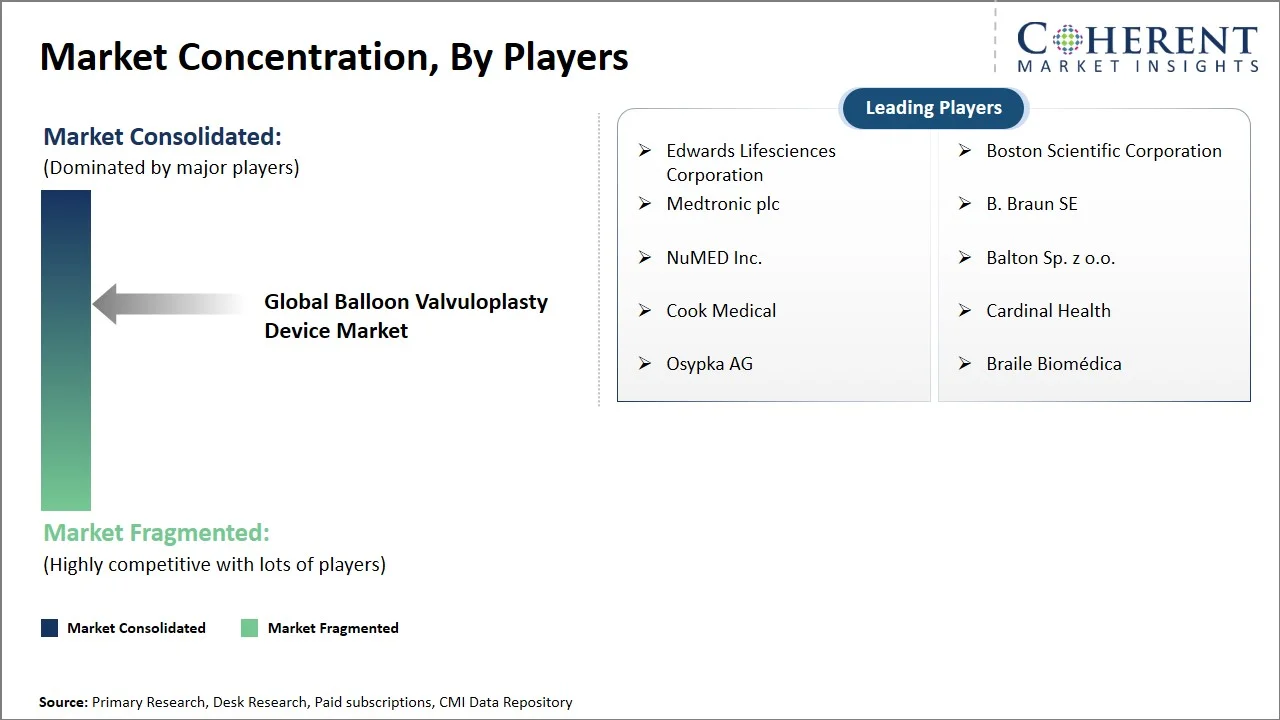
The global balloon valvuloplasty device market is moderately consolidated, as the key market players are concentrating on technological advancements, product portfolio enlargement and partnerships to enhance their position in the structural heart interventions market. Market players are investing in the development of superior performance balloon catheters with enhanced deliverability, inflation control and procedure safety to target complex valvular diseases. Market players are expanding their foothold in emerging markets through distribution agreements and regulatory approvals, and are using clinical evidence development to improve product acceptance. Key focus areas include:
- Development of next-generation high-pressure and compliant balloon technologies
- Expansion of structural heart and transcatheter cardiovascular intervention portfolios
- Strategic partnerships with hospitals and cardiac care centers to enhance market penetration
- Geographic expansion across Asia Pacific, Latin America, and the Middle East
- Investment in clinical studies and regulatory approvals to strengthen product differentiation and physician adoption
Market Report Scope
Balloon Valvuloplasty Device Market Report Coverage
| Report Coverage | Details | ||
|---|---|---|---|
| Base Year: | 2025 | Market Size in 2026: | USD 1,050.4 Mn |
| Historical Data for: | 2020 To 2024 | Forecast Period: | 2026 To 2033 |
| Forecast Period 2026 to 2033 CAGR: | 11.2% | 2033 Value Projection: | USD 2,203.2 Mn |
| Geographies covered: |
| ||
| Segments covered: |
| ||
| Companies covered: | Edwards Lifesciences Corporation, Boston Scientific Corporation, Medtronic plc, B. Braun SE, NuMED Inc., Balton Sp. z o.o., Cook Medical, Cardinal Health, Osypka AG, and Braile Biomédica | ||
| Growth Drivers: |
| ||
| Restraints & Challenges: |
| ||
Analyst Opinion (Expert Opinion)
- The future prospects of the balloon valvuloplasty device market depend on the ongoing transition towards minimal invasive structural heart intervention, wider usage of transcatheter valve therapies, prevalence of valvular heart diseases with increased age among the population. With health care system inclination towards procedures that lead to shorter hospital stays, and better patients' outcome, it is anticipated that balloon valvuloplasty will continue to play a significant role in the modern pathway of valve therapy, acting as a bridge procedure before valve replacement strategies.
- The maximum opportunities are foreseen in percutaneous balloon aortic valvuloplasty (PBAV) for aortic valve stenosis in high-growth developing countries like China and India. This combination of an aging population, escalating cardiovascular disease burden, growing cardiac care capacities and access to catheter-based interventions will fuel an exciting market for balloon valvuloplasty devices.
- In order to gain a competitive advantage market players should develop the next generation of balloon catheter technology with improved deliverability, accuracy and safety while also continuing to build the body of evidence for the benefits that they offer. Partnership with cardiac centers, expansion into high-growth emerging markets and the positioning themselves to address and benefit from structural heart pathway trends such as TAVR/TAVI programs will enable them to capture market share in the future.
Speak to the analyst
Want personalized insights?
Take the findings above to one of our principal consultants, or have the report rebuilt around the segments, geographies and competitors you actually track.
Market Segmentation
- Type Insights (Revenue, USD Mn, 2021 - 2033)
- 20 mm
- 23 mm
- 26 mm
- 29 mm
- Others
- Type of Valvuloplasty Insights (Revenue, USD Mn, 2021 - 2033)
- Percutaneous Balloon Mitral Valvuloplasty
- Percutaneous Balloon Pulmonary Valvuloplasty
- Percutaneous Balloon Tricuspid Valvuloplasty
- Percutaneous Balloon Aortic Valvuloplasty
- Indication Insights (Revenue, USD Mn, 2021 - 2033)
- Aortic Valve Stenosis
- Pulmonary Valve Stenosis
- Mitral Valve Stenosis
- Tricuspid Valve Stenosis
- End User Insights (Revenue, USD Mn, 2021 - 2033)
- Hospitals
- Ambulatory Surgery Centers
- Others
- Regional Insights (Revenue, USD Mn, 2021 - 2033)
- North America
- U.S.
- Canada
- Latin America
- Brazil
- Argentina
- Mexico
- Rest of Latin America
- Europe
- Germany
- U.K.
- Spain
- France
- Italy
- Russia
- Rest of Europe
- Asia Pacific
- China
- India
- Japan
- Australia
- South Korea
- ASEAN
- Rest of Asia Pacific
- Middle East
- GCC Countries
- Israel
- Rest of Middle East
- Africa
- South Africa
- North Africa
- Central Africa
- North America
- Key Players Insights
- Edwards Lifesciences Corporation
- Boston Scientific Corporation
- Medtronic plc
- Braun SE
- NuMED Inc.
- Balton Sp. z o.o.
- Cook Medical
- Cardinal Health
- Osypka AG
- Braile Biomédica
Sources
Primary Research Interviews
- Interventional cardiologists specializing in structural heart and valvular heart disease interventions
- Cardiothoracic surgeons performing valve repair and replacement procedures
- Catheterization laboratory directors and managers at tertiary cardiac care centers
- Balloon valvuloplasty device manufacturers and cardiovascular catheter technology providers
- Structural heart specialists and cardiovascular imaging experts
Stakeholders
- Balloon valvuloplasty device manufacturers and cardiovascular catheter suppliers
- End-use Sectors
- Hospitals with dedicated cardiology and cardiothoracic surgery departments
- Cardiac catheterization laboratories and structural heart centers
- Ambulatory surgical centers (ASCs) performing cardiovascular interventions
- Academic medical centers and cardiovascular research institutes
- Specialized heart and vascular care networks
- Regulatory & Health Bodies
- U.S. Food and Drug Administration (FDA)
- European Medicines Agency (EMA)
- European Commission Medical Device Regulation (EU MDR)
- Medicines and Healthcare products Regulatory Agency (MHRA)
- National Medical Products Administration (NMPA)
- Central Drugs Standard Control Organization (CDSCO)
Databases
- World Health Organization (WHO) Global Health Observatory – cardiovascular disease and mortality statistics
- Centers for Disease Control and Prevention (CDC)- Heart Disease Data & Statistics
- American Heart Association (AHA)- Heart Disease and Stroke Statistics
- OECD Health Statistics – Healthcare Expenditure and Cardiovascular Care Indicators
- Eurostat Healthcare Database – Cardiovascular Healthcare Infrastructure and Expenditure Data
Magazines
- Cardiac Interventions Today – structural heart and interventional cardiology developments
- Cardiovascular Business – cardiovascular technology and treatment trends
- Cath Lab Digest – catheter-based intervention and device advancements
- Diagnostic and Interventional Cardiology (DAIC) – cardiovascular device innovations
- Medical Device Network – cardiovascular medical device industry developments
Journals
- Journal of the American College of Cardiology (JACC)
- EuroIntervention
- Catheterization and Cardiovascular Interventions
- Journal of Thoracic Disease
Newspapers
- Financial Times – medical technology and healthcare industry developments
- The Wall Street Journal – cardiovascular device and healthcare trends
- The Guardian (Health & Science) – cardiovascular healthcare developments
Associations
- American College of Cardiology (ACC)
- American Heart Association (AHA)
- European Society of Cardiology (ESC)
- Society for Cardiovascular Angiography and Interventions (SCAI)
- World Heart Federation (WHF)
Public Domain Sources
- World Health Organization (WHO) – cardiovascular disease prevalence and mortality statistics
- Centers for Disease Control and Prevention (CDC) – heart disease surveillance and epidemiology data
- U.S. Food and Drug Administration (FDA) – cardiovascular device approvals and guidance documents
- European Commission – medical device regulations and cardiovascular healthcare policies
- National Institutes of Health (NIH) / National Heart, Lung, and Blood Institute (NHLBI) – valvular heart disease research and clinical data
Proprietary Elements
- CMI Data Analytics Tool, Proprietary CMI Existing Repository of information for last 10 years.
Get access to 250+ pages report
Every segment, forecast, competitor profile and data table behind the analysis above — available for instant download.
- ESOMAR Member
- ISO 9001:2015 Certified
- D-U-N-S Registered
- GDPR & CCPA Compliant
Missing comfort of reading report in your local language? Find your preferred language:
Transform your Strategy with Exclusive Trending Reports
Frequently Asked Questions
The global balloon valvuloplasty device market is estimated to be valued at USD 1,050.4 Mn in 2026 and is expected to reach USD 2,203.2 Mn by 2033.
26 mm dominate due to their widespread suitability for adult aortic valve interventions, optimal balance between procedural efficacy and safety, and frequent use in treating severe aortic stenosis among elderly patients.
A balloon valvuloplasty device is a catheter-based medical device used to widen narrowed heart valves by inflating a balloon within the stenotic valve to improve blood flow.
The CAGR of global balloon valvuloplasty device market is projected to be 11.2% from 2026 to 2033.
The primary indication is the treatment of aortic, mitral, and pulmonary valve stenosis, particularly in patients requiring minimally invasive intervention.
Balloon valvuloplasty restores valve opening through balloon dilation without replacing the native valve, whereas valve replacement procedures implant a new prosthetic valve.
In terms of end user, hospitals are estimated to dominate the market revenue share in 2026.