

Global Banana Ketchup Market Size and Forecast – (2026-2033)
The Global Banana Ketchup Market is estimated to be valued at USD 1.53 Bn in 2026 and is expected to reach USD 2.26 Bn by 2033, exhibiting a compound annual growth rate (CAGR) of 5.7% from 2026 to 2033.
Key Takeaways of the Banana Ketchup Market
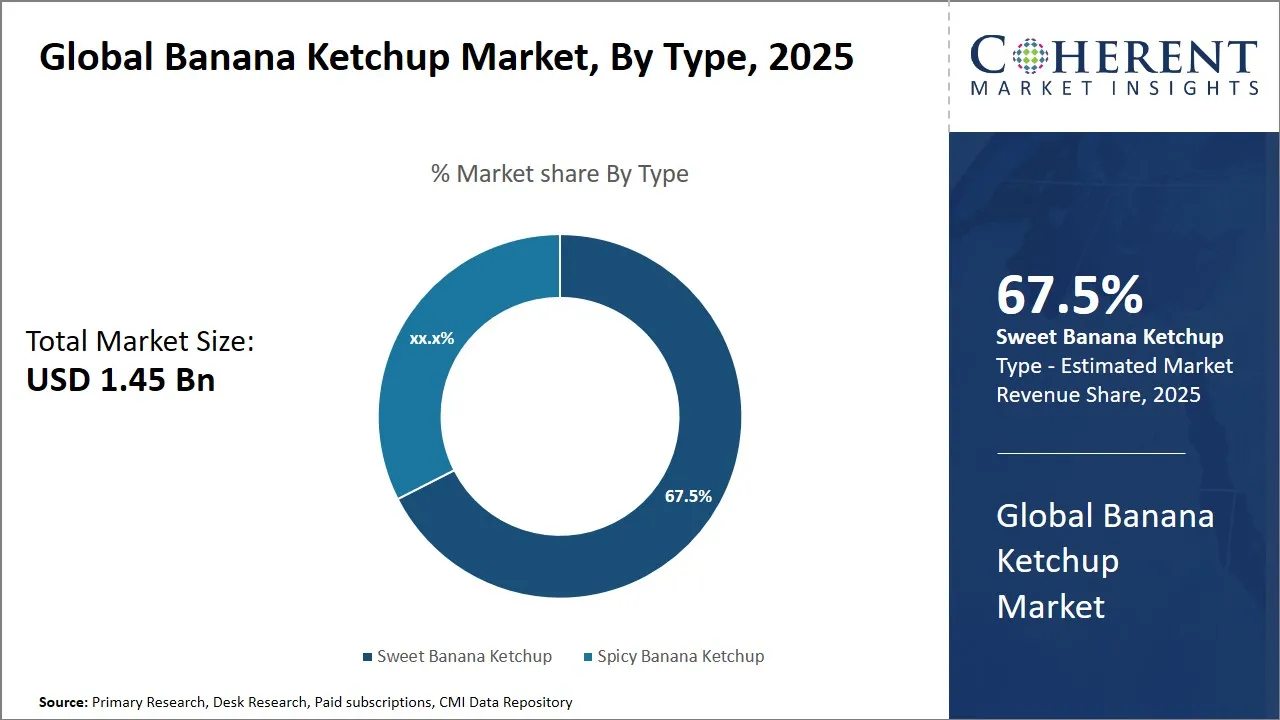
- Sweet banana ketchup is expected to account for approximately 68.5% of the market share in 2026.
- The glass bottle segment is projected to hold 44.7% share of the banana ketchup market in 2026.
- The offline segment is expected to account for 65.5% of the market share in 2026.
- Asia Pacific will lead the banana ketchup market in 2026 with around 43.2% share.
- North America will hold about 18.5% share in 2026 and show the fastest growth
Market Overview
- Current market trends indicate a rising demand for healthier, fruit-based condiment alternatives such as sweet sauces, which is boosting the popularity of banana ketchup.
- Manufacturers are innovating by incorporating organic and preservative-free ingredients to attract health-conscious consumers.
- Additionally, increasing awareness about plant-based and vegan products is driving adoption, while strategic collaborations and digital marketing campaigns are enhancing product visibility globally.
- These factors collectively shape the positive trajectory of the banana ketchup market.
Currents Events and Its Impact
Current Events | Description and its impact |
Weather-driven banana supply variability in March 2025 (La Niña/seasonal shifts) |
|
Smart packaging and QR-led engagement for traceability and brand storytelling gains traction in food packaging |
|
Segmental Insights
- Current Industry Events of 2026
- Market Size Estimation
- Regional Breakdown
- Competitive Landscape
- Customer Intelligence
- Segmental Analysis
- Pricing Analysis
- Key Market Drivers, Challenges & Future Trends
- Customized Insights Section
Why Does Sweet Banana Ketchup Dominate the Banana Ketchup Market in 2026?
Sweet banana ketchup is expected to contribute 68.5% share of the market in 2026, owing to its widespread consumer appeal and adaptability in various culinary applications. The use of sweet banana ketchup is popular mainly due to the fact that it goes well with various taste preferences in the various regions, especially the Southeast Asia where banana ketchup was invented. The sweet flavor profile is a universal accompaniment to a wide range of foods, including grilled meat, fried snacks, and is likely to be used in both homes and restaurants as a condiment.
One of the largest casual dining companies in Southeast Asia replaced 300 outlets of separate sweet and spicy ketchups with one sweet banana ketchup. They made a signature grilled chicken bowl with the sweet banana ketchup as a table condiment and marinade base standardized.
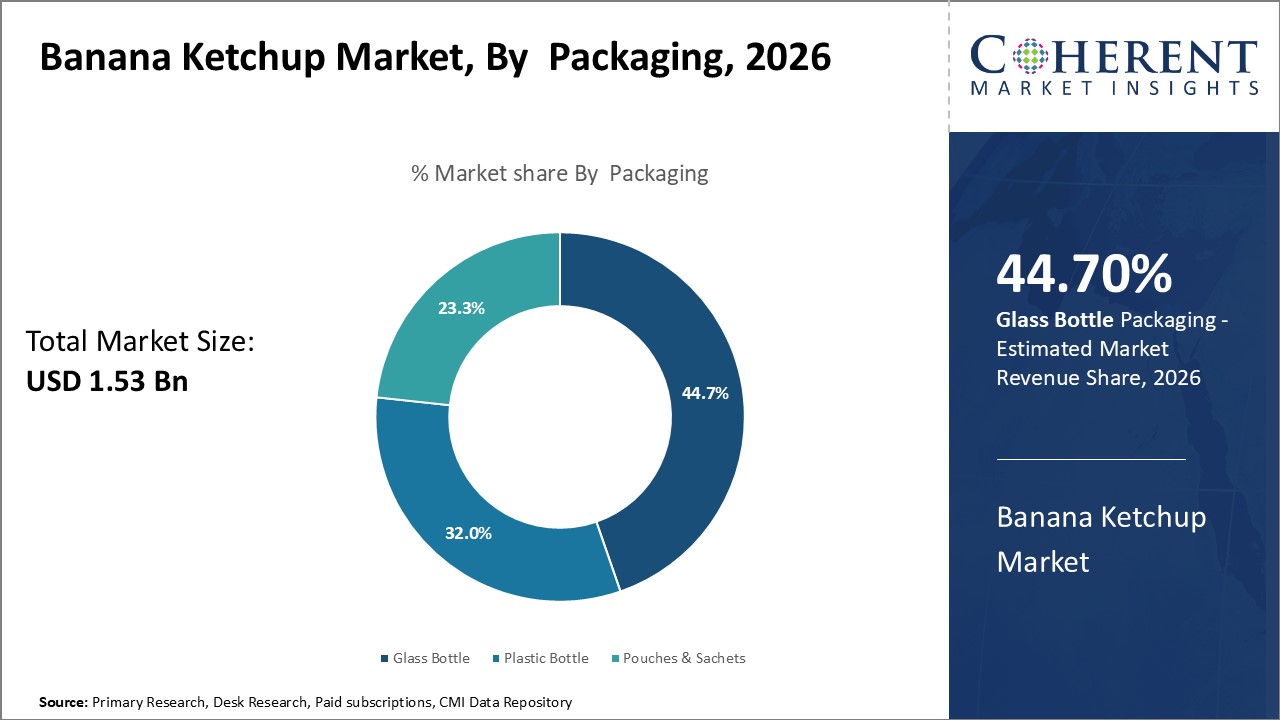
Why Do Glass Bottles Dominate Banana Ketchup Packaging?
Glass bottle segment is projected to contribute 44.7% share of the banana ketchup market in 2026, due to their superior preservation qualities and premium consumer perception. Glass packaging is favored for banana ketchup as it effectively maintains the product’s flavor integrity and freshness over time, addressing a critical consideration for consumers who seek consistent taste and quality with every use. The non-reactive nature of glass prevents any potential chemical interaction with the acidic ketchup, thus prolonging shelf life and ensuring safety.
Moreover, glass bottles resonate strongly in markets where sustainability and environmental consciousness are growing priorities. Unlike plastic, glass is fully recyclable without degradation of material quality, appealing to eco-aware consumers and retailers aiming to reduce plastic waste. This factor is significant in shaping purchasing decisions, especially among younger demographics who prioritize green packaging solutions. The tactile and visual appeal of glass also lends an upscale positioning to banana ketchup products, enhancing brand perception and enabling manufacturers to command a premium price point.
Offline Dominates the Banana Ketchup Market
Offline segment is projected to contribute 65.5% share of the market in 2026, due to the entrenched consumer buying habits and greater accessibility of banana ketchup in physical retail locations. The supermarkets, hypermarkets, convenience stores and grocery stores continue to be key points of access where consumers do regular shopping of groceries and consumers tend to prefer a physical inspection of the products before purchasing. The physical availability and display of banana ketchup in the bricks and mortar stores make banana ketchup impulse buyers and enable brand loyalty by providing in-store advertising and product outlay.
The advantage offline distribution has is that the networks and relationship between manufacturer and retailer are already established and therefore provide a better availability of products and customer service. The fact that it can sell more units in physical stores attracts customers to shop in large amounts or consumers who need to have the items immediately, without having to wait to have them delivered. Also, the multicultural environment of offline retail serves the interests of the local market with the provision of region-specific packaging volumes and flavor options, which increases the opportunity of introducing banana ketchup to multiple consumer groups.
Regional Insights
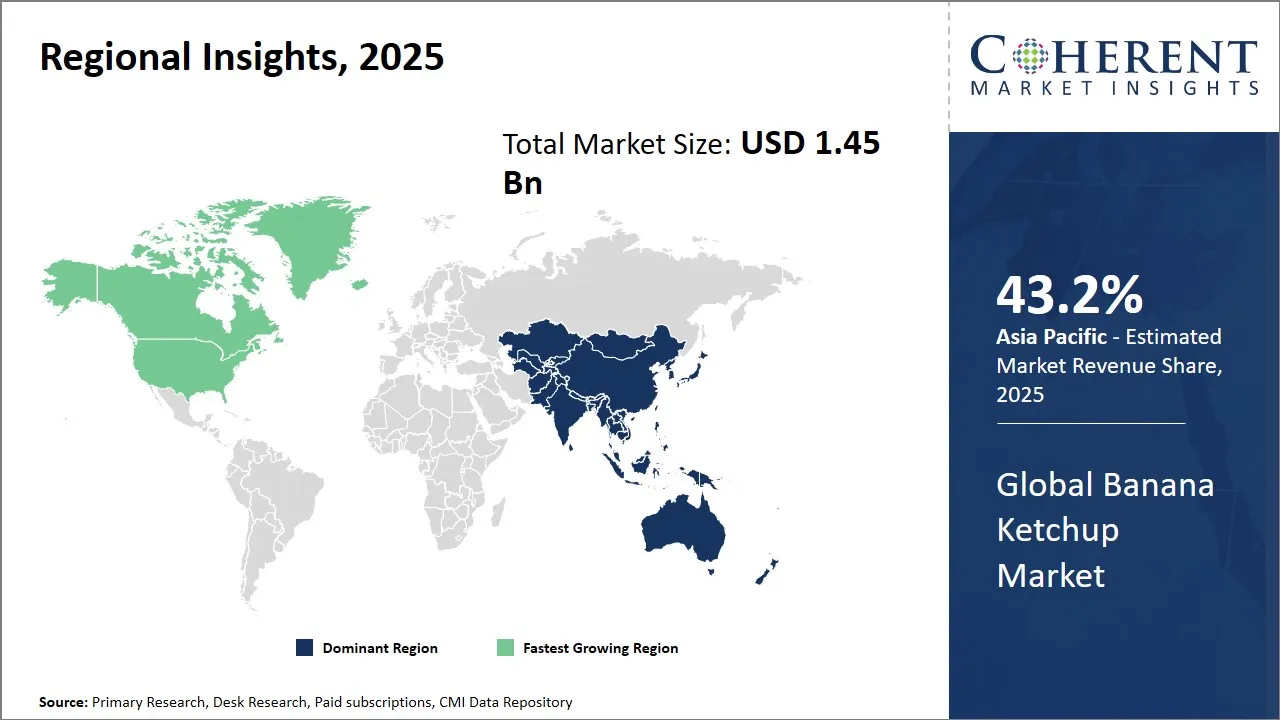
Asia Pacific Banana Ketchup Market Analysis and Trends
The Asia Pacific region is projected to lead the market with a 43.2% share in 2026. The area enjoys the advantage of already developed supply chain of tropical fruits and a vast banana planting ecosystem, which assists in availability of raw materials. The State efforts to boost agricultural innovations and local food processing sectors contribute to the increased momentum to production capacities.
Main players like UFC Group and banana Island play a big part in popularizing banana ketchup within the country and by exporting their product. Asia Pacific has an advantage in trade dynamics because it is closer to banana growing areas and growing acceptance of other condiments in the new markets which give strength to the leadership position of the regions.
North America Banana Ketchup Market Analysis and Trends
The North America region is expected to exhibit the fastest growth in the market contributing 18.5% share in 2026. Younger and experiment-based consumers, heightened exposure to Filipino food (where banana ketchup is culturally embedded), and fast product discovery through social commerce and recipes by creators are all forces that are pulling the industry toward growth. Premiumization is an obvious tool: brands that make banana ketchup a small-batch, clean-label, or no artificial colors substitute to regular ketchup is getting trial, particularly in natural and specialty stores.
Distribution is expanding out of the niche Asian stores to mainstream e-commerce and select-mass retail, with low friction shipping and shelf-stable product economics. Another driver is foodservice adaptation, in which ghost kitchens, burgers with fusion qualities, and frienic sandwiches with banana ketchup as a differentiating sauce.
Banana Ketchup Market Outlook for Key Countries
Philippines Banana Ketchup Market Trends
Banana ketchup has its largest consumer base and birthplace in the Philippines where the products are inseparably part of the local cuisine. The government encourages agricultural activities and food technology advancement to assist manufacturers to enhance quality and shelf life. Such large corporations as UFC Group and Mama Sitas have built a solid brand loyalty in the domestic market and have become known around the world. The large banana plantations available in the country guarantee that it will have a reliable source of raw materials, which supports production capacity and makes the industry strong. This location renders the Philippines paramount to global markets development of banana ketchup.
Why is the U.S. Emerging as a High-Potential Market for Banana Ketchup?
The U.S. banana ketchup market is showing an increase in multiculturalism influence and need to have peculiar flavors, which has triggered their increased consumption of banana ketchup. The channels of distribution have increased alongside the ethnic supermarkets and mainstream grocery stores. Banana ketchup is also being added to the portfolio of companies like Heinz and local manufacturers of specialty condiments to capitalize on this trend. Food safety and labeling regulatory frameworks promote innovation and consumer confidence. U.S. is also a big import market that gives the producers of Asia Pacific and Latin America opportunity to scale.
India Banana Ketchup Market Trends
The market for banana ketchup in India is an emerging one, as more people have become interested in different cuisines and more aware of the products made of bananas. The agricultural market is an area of significant potential having great banana plantations, and governmental initiatives directed at the modernization of food processing assist in the improvement of the supply chain. Baron Foods Ltd are also testing banana ketchup with different variations based on the taste preferences of the Indians which are making it gain popularity among younger consumers. Bigger access to products has also been enabled by the growing retail network and e-commerce. India is one of the potential market expansion markets in Asia Pacific.
Why is Brazil Emerging as a Promising Market for Banana Ketchup?
Brazil market is growing due to the development of consumer interest in foreign and exotic condiments and high production of bananas. The production has been influenced positively through the attention given by the government towards agriculture sustainability and food innovation. The international trade agreements that have been established by Brazils favor the potential of exporting banana ketchup. The culinary culture of the country has become quite open to new tastes to further improve market opportunities.
Mexico Banana Ketchup Market Trends
The Mexican market for banana ketchup is experiencing slow growth due to the changing food habits and the influence of international cuisines. Government marketing of agri-foods and facilitating export of goods will cause development of the industry. The local players are taking advantage of the banana growing areas of Mexico to prepare high quality banana ketchup, and imports in the Asian Pacific complement products. The growing retail and foodservice industries provide a good environment to the increased exposure of consumers.
The trade agreements help Mexico easily enter into the North and Latin American markets to enhance its presence in the banana ketchup ecosystem too. As an example, Urban gastropubs use banana ketchup as a loaded fries and tacos sauce.
Private Label & Regional Brand
- Private Label and Regional Brands are an indicator of the degree to which the market has been dominated by the retailer owned brands, the presence of strong local market players, and the unorganized producers instead of the national or global brands.
- This evaluation includes the proportion of the share of private-label products sold by modern retail, region-specific brands that have a high level of local loyalty, and small unorganized manufacturers selling their products to neighborhood stores and foodservice establishments.
- The presence of a large number of private-label players will indicate a high level of price competition and thinner margins, whereas a large regional or unorganized share will indicate a fragmented market in which localization, distribution reach and brand familiarity have more significance than scale.
Market Players, Key Development, and Competitive Intelligence
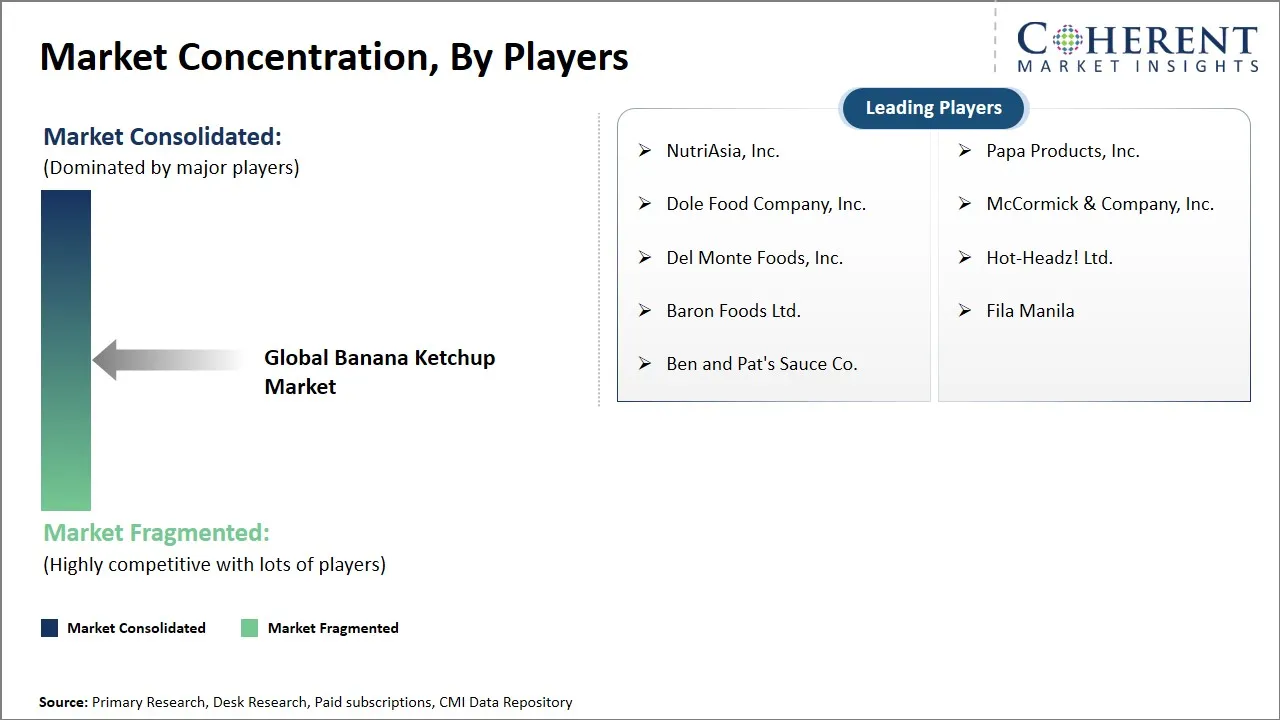
Key Developments
- In May 2024, Aldi expanded its international food offerings by introducing RoniB’s Kitchen Filipino-style banana ketchup, bringing a popular Philippine condiment to its retail shelves. This unique condiment, known for its sweet and tangy blend, emerged as the winner on Channel 4's 'Next Big Thing' series, specifically the competitive 'World' episode. RoniB's Kitchen secured a significant deal to supply 100,000 bottles to the supermarket giant, beating out five other culinary contenders, including West African dough balls, jerk seasoning, vegan dumplings, Turkish marinades, and vegan ready meals. The judges were impressed by the distinct flavor profile of the banana ketchup and recognized its versatility, envisioning its appeal in a variety of dishes ranging from burgers and hot dogs to chicken and fish.
- In September 2023, Fila Manila expanded its distribution network, making its products accessible to more consumers across the U.S. Fila Manila's award-winning product lines are made available in additional regions of Whole Foods Market, select Target and Stop & Shop stores, and all Meijer locations. The expansion includes their three NEXTY Award-winning products, including banana ketchup condiments.
Top Strategies Followed by Global Banana Ketchup Market Players
- The major concerns of the established market leaders are innovation and widespread expansion to strengthen and deepen the presence. Such mature players spend so much in research and development as they understand that product innovation is essential in addressing the changing consumer demands in taste, health benefits, and packaging convenience. They focus on the niche market segments by creating high-performance banana ketchup variants, such as organic, low-sugar, or fortified ketchup, and maintain competitive differentiation.
- For example, the companies like NutriAsia (UFC Banana Catsup) keep on releasing reformulated versions, such as low-sugar and overseas Filipino versions, to suit the needs of health-conscious consumers and the overseas Filipino communities.
- The middle players within the banana ketchup market have a very pragmatic strategy, whereby, they have been keen on providing the cost-effective solutions that create a balance between quality and price. Knowing that the price of a wide consumer base, especially within developing countries, is very sensitive, these manufacturers focus more on effective production practices and supply chain management to maintain the low costs without any threat to the necessary standards of the products.
- For example, Jufran (Philippines) and other brands that produce under their own label, as well as producers of Southeast Asian private-label products, specialize in standardized formulations, large volume production and local sourcing to lower the input cost. They focus on the price-sensitive households, school canteens and small foodservice operators with their strategy which is based on value packs and distributor-based retail networks.
- The banana ketchup manufacturers, who are small, develop their niche based on specialization and innovation depending on the specific consumer needs and the local tastes. They usually create their own niche attributes of products, including artisan recipes, organic sourcing, or exotic flavor additions, to distinguish themselves against mass-market products. The small players are particularly adaptable in implementing latest trends in production, packaging and digital marketing making them remain competitive despite their limited resources.
- For example, small-scale and organic food businesses in markets like the U.S. and Europe sell small-run banana ketchup with organic bananas, with or without natural sweeteners or regional spicy infusions, and may be sold online and in gourmet shops.
Market Report Scope
Banana Ketchup Market Report Coverage
| Report Coverage | Details | ||
|---|---|---|---|
| Base Year: | 2025 | Market Size in 2026: | USD 1.53 Bn |
| Historical Data for: | 2020 To 2024 | Forecast Period: | 2026 To 2033 |
| Forecast Period 2026 to 2033 CAGR: | 5.7% | 2033 Value Projection: | USD 2.26 Bn |
| Geographies covered: |
| ||
| Segments covered: |
| ||
| Companies covered: | NutriAsia, Inc., Papa Products, Inc., Dole Food Company, Inc., McCormick & Company, Inc., Del Monte Foods, Inc., Hot-Headz! Ltd., Baron Foods Ltd., Fila Manila, and Ben and Pat's Sauce Co. | ||
| Growth Drivers: |
| ||
| Restraints & Challenges: |
| ||
Banana Ketchup Market Dynamics
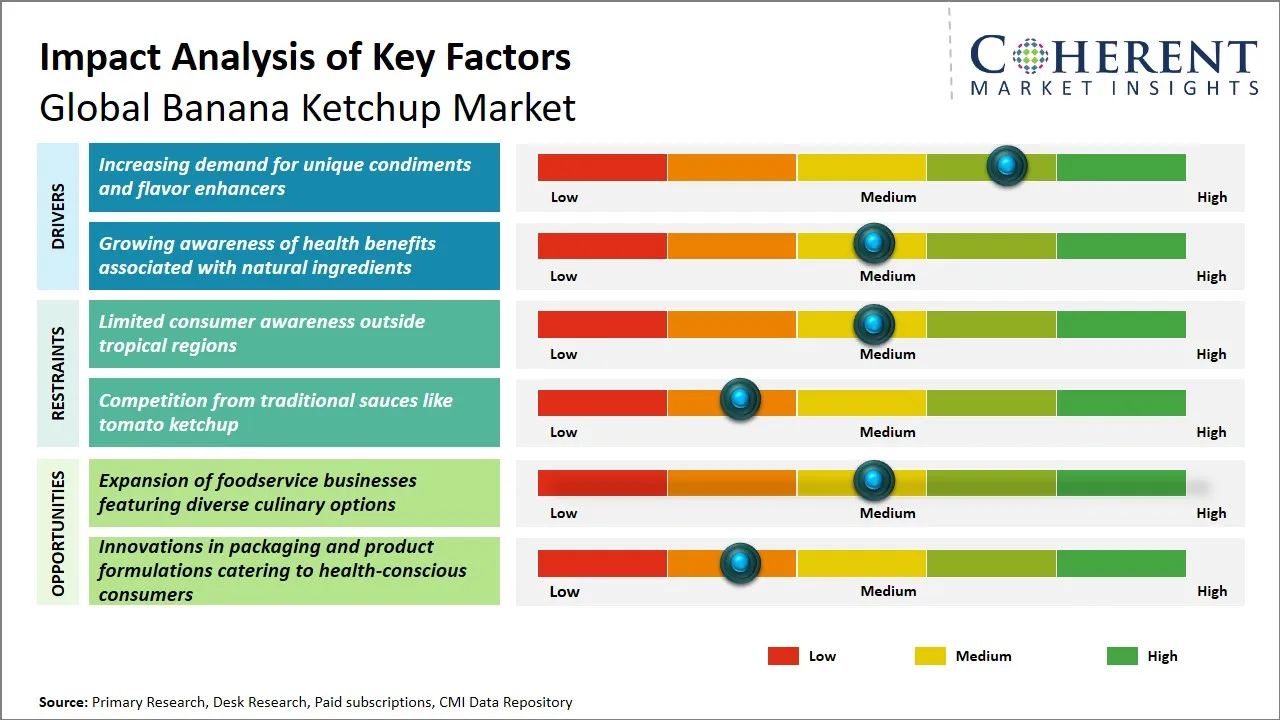
Banana Ketchup Market Driver - Increasing Demand for Unique Condiments and Flavor Enhancers
The world demand of unique and exotic condiments has contributed in a great measure towards the success of the banana ketchup as a universal food additives in food preparation. There is a growing demand of alternatives to traditional sauces among consumers, and they have the curiosity to explore new flavor and want to experiment with new cuisines at home and in the foodservice industry. Banana ketchup, its sweet, tangy taste that goes hand in hand with a wide variety of foods, is one of the intriguing options among the taste-sensitive. The changing consumer preference is further boosted by the increasing knowledge on ethnic foods and increasing exposure to Southeast Asian cuisine, where banana ketchup is a household ingredient.
Examples are Filipino brands like Jufran and UFC where banana ketchup is being adopted outside the ethnic aisles, which consumers use as an alternative to tomato ketchup in burgers, fries, grilled meats and fusion recipes. This indicates experimentation based buying as opposed to cultural loyalty in isolation.
Banana Ketchup Market Opportunity - Expansion of Foodservice Businesses Featuring Diverse Culinary Options
The global banana ketchup market stands to benefit significantly from the rapid expansion and diversification of foodservice businesses worldwide. As the tastes of consumers grow more innovative and multi-cultural with regard to food services, restaurants, cafes, and fast-food chains are actively introducing unique and region-specific condiments to their menu like banana ketchup. This trend is an excellent chance that manufacturers of banana ketchup can utilize to fill the gap with foodservice providers to develop unique flavor profiles that can attract a larger number of customers.
On a case in point, casual dining houses and theme restaurants in the United States, the United Kingdom and specifically the Asian-fusion and tropical-themed format of the menu are launching banana ketchup-based dips and sauces as part of a policy of differentiating their menus without altering the recipe significantly.
Analyst Opinion (Expert Opinion)
- Banana ketchup market is also experiencing significant revival, as consumer interest and desire of distinct flavoring of condiments is growing. The experience of the World Food Innovation Conference (2023) and the Annual Condiment Expo (2022) revealed how businesses like Jufran and Mang Tomas are making use of innovations to expand their reach in both the domestic and international markets.
- The new line that Jufrans introduced recently, with its gourmet flavors, including the flavor of garlic and spicy, is an example of how the industry is reacting to the trend of fusion cuisine and the adventurous palates. The conferences also noted the significance of storytelling in marketing because the brands seek to inform consumers on the cultural heritage and flexibility of the banana ketchup in different food recipes.
- The lack of awareness beyond the conventional markets and the presence of established brands of tomato ketchup were often cited as some of the possible obstacles. Firms that will use the power of social media as a competitive tool and partner with the chefs to incorporate the banana ketchup into their menus will have a high chance of success. The development of the banana ketchup market will ultimately be achieved through its ability to be innovative, and to match the new tastes of consumers and the international palette when it comes to various flavors.
Speak to the analyst
Want personalized insights?
Take the findings above to one of our principal consultants, or have the report rebuilt around the segments, geographies and competitors you actually track.
Market Segmentation
- Type Insights (Revenue, USD Bn, 2021 - 2033)
- Sweet Banana Ketchup
- Spicy Banana Ketchup
- Packaging Insights (Revenue, USD Bn, 2021 - 2033)
- Glass Bottle
- Plastic Bottle
- Pouches and Sachets
- Distribution Channel Insights (Revenue, USD Bn, 2021 - 2033)
- Offline
- Supermarkets & Hypermarkets
- Convenience Stores
- Grocery Stores
- Online
- Others
- Offline
- Regional Insights (Revenue, USD Bn, 2021 - 2033)
- North America
- U.S.
- Canada
- Latin America
- Brazil
- Argentina
- Mexico
- Rest of Latin America
- Europe
- Germany
- U.K.
- Spain
- France
- Italy
- Russia
- Rest of Europe
- Asia Pacific
- China
- India
- Japan
- Australia
- South Korea
- ASEAN
- Rest of Asia Pacific
- Middle East
- GCC Countries
- Israel
- Rest of Middle East
- Africa
- South Africa
- North Africa
- Central Africa
- North America
- Key Players Insights
- NutriAsia, Inc.
- Papa Products, Inc.
- Dole Food Company, Inc.
- McCormick & Company, Inc.
- Del Monte Foods, Inc.
- Hot-Headz! Ltd.
- Baron Foods Ltd.
- Fila Manila
- Ben and Pat's Sauce Co.
Sources
Primary Research Interviews
- CEO – Leading Banana Ketchup Producer (e.g., Papa or Del Monte equivalent)
- Supply Chain Director – Major Banana Ketchup Distributor
- Production Lead – Specialty Fruit Ketchup Manufacturer
- Sustainability Officer – Banana Processing Certification Authority
Stakeholders
- Manufacturers
- End-use Sectors
- Food Service Industry (Restaurants, Fast Food Chains)
- Retail Grocery Chains
- Home Cooking and Consumer Packaged Goods
- Regulatory & Certification Bodies (e.g., FDA for food additives, EU Food Safety Authority compliance)
- E-commerce Platforms and Retailers (Amazon, Walmart, Alibaba)
- Technology Integration Players: Advanced food processing and natural flavor innovators using banana ketchup
Databases
- UN Comtrade Database
- India Import Export (EXIM) Database
- USGS Agricultural Commodity Summaries (Bananas)
- Eurostat Trade Statistics for Food Preparations
- Global Trade Atlas for Condiments
Magazines
- Food Processing Magazine – Trends in fruit-based ketchups
- Sauce & Condiment Magazine – Banana ketchup market innovations
- Progressive Grocer – Consumer trends in specialty sauces
- Food Dive – Supply dynamics for banana products
- Restaurant Business – Usage in global cuisines
Journals
- Journal of Food Science – Banana ketchup formulation and stability
- Food Chemistry – Nutritional profile of banana-derived condiments
- Journal of Agricultural and Food Chemistry – Processing techniques for fruit ketchups
- International Journal of Food Science & Technology – Shelf-life extensions
- Trends in Food Science & Technology – Plant-based sauce innovations
Newspapers
- The Wall Street Journal – Global condiment demand shifts
- The Guardian – Sustainability in tropical fruit processing
- Business Standard (India) – Banana product exports and Asia growth
- Food Business News – Supply chain disruptions in fruit purees
- Reuters – Price volatility in banana commodities
Associations
- International Banana Association
- Food Processors Association
- National Restaurant Association
- European Food Manufacturers Federation (CIAA)
- Institute of Food Technologists
- Sustainable Food Trade Association
Public Domain Sources
- FDA – Guidelines for ketchup and fruit-based condiments
- European Commission – Food hygiene regulations on banana products
- World Health Organization – Safety standards for fruit processing
- FAO – Banana statistics and trade assessments
- OECD – Agricultural trade and sustainability reports for tropical fruits
Proprietary Elements
- CMI Data Analytics Tool
- Proprietary CMI Existing Repository of information for last 8 years.
Get access to 250+ pages report
Every segment, forecast, competitor profile and data table behind the analysis above — available for instant download.
- ESOMAR Member
- ISO 9001:2015 Certified
- D-U-N-S Registered
- GDPR & CCPA Compliant
Missing comfort of reading report in your local language? Find your preferred language:
Transform your Strategy with Exclusive Trending Reports
Frequently Asked Questions
The global banana ketchup market is estimated to be valued at USD 1.53 Bn in 2026 and is expected to reach USD 2.26 Bn by 2033.
The CAGR of global banana ketchup market is projected to be 5.7% from 2026 to 2033.
Increasing demand for unique condiments and flavor enhancers and growing awareness of health benefits associated with natural ingredients are the major factors driving the growth of the global banana ketchup market.
Limited consumer awareness outside tropical regions and competition from traditional sauces like tomato ketchup are the major factors hampering the growth of the global banana ketchup market.
In terms of type, sweet banana ketchup is estimated to dominate the market revenue share in 2026.
NutriAsia, Inc., Papa Products, Inc., Dole Food Company, Inc., McCormick & Company, Inc., Del Monte Foods, Inc., Hot-Headz! Ltd., Baron Foods Ltd., Fila Manila, and Ben and Pat's Sauce Co. are the major players.
Asia Pacific is expected to lead the global banana ketchup market in 2026.