

Natural Food Colors Market Analysis & Forecast
Global natural food colors market is estimated to be valued at USD 1.84 Bn in 2026 and is expected to reach USD 3.32 Bn by 2033, exhibiting a compound annual growth rate (CAGR) of 8.8% from 2026 to 2033.
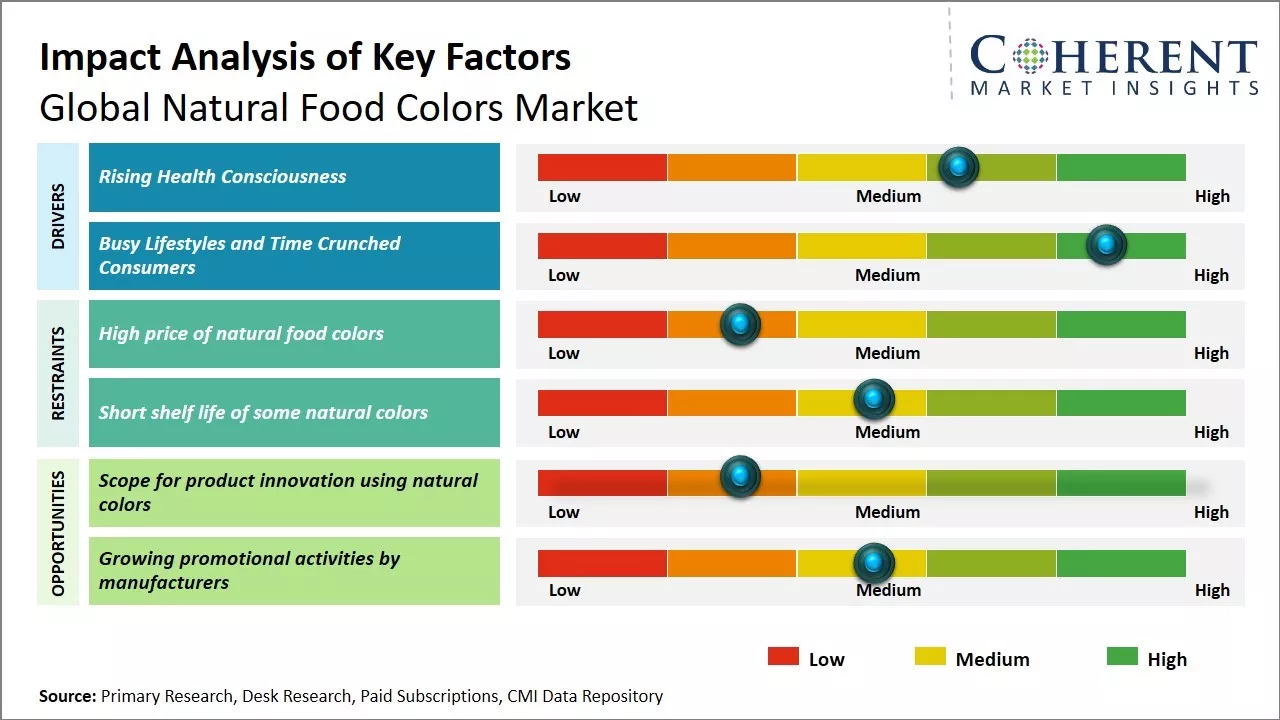
Key Takeaways
- By Ingredient, The Carotenoid Segment is projected to dominate the global natural food colours market with a 35.2% share in 2026.
- By Application, the beverages segment is expected to lead with a 35.2% market share in 2026, fuelled by the rising demand for clean-label and naturally formulated products.
- By Region, North America is set to maintain its leadership in the global natural food colours market, accounting for an estimated 35.1% share in 2026.
Market Overview
The global Natural Food Colours Market is experiencing steady growth, propelled by increasing consumer preference for clean-label products, health-conscious diets, and plant-based food formulations. Natural pigments such as carotenoids, anthocyanins, and chlorophylls are replacing synthetic additives across food and beverage applications. Carotenoids lead due to their vibrant hues and perceived health benefits.
Current Events and its Impact on the Natural Food Colours Market
Current Event | Description and its impact |
Shift Toward Clean Label and Organic Food Regulations |
|
Regulatory Push Towards Clean Label and Natural Ingredients |
|
Technological Advancements in Extraction and Color Stability |
|
Pricing Analysis: Natural Food Colours Market
The pricing structure in the natural food colours market is influenced by several factors, including raw material availability, extraction technology, regulatory compliance, and product purity. Natural colorants derived from fruits, vegetables, and botanicals—such as carotenoids, anthocyanins, and chlorophyll often command higher prices than synthetic counterparts due to complex sourcing and processing requirements.
Seasonal variability in crops like beetroot, turmeric, or spirulina can lead to fluctuations in input costs, impacting final pricing. Additionally, manufacturers investing in organic certifications, clean-label packaging, and sustainable sourcing practices often pass these costs onto end users, particularly in premium segments. In North America and Europe, stringent food safety standards and demand for traceability further add to production costs.
However, price competition is intensifying with the entry of new suppliers from Asia-Pacific and Latin America, where lower production costs and abundant raw materials support more competitive pricing. As demand grows, economies of scale and technological advances may gradually reduce prices.
- Current Industry Events of 2026
- Market Size Estimation
- Regional Breakdown
- Competitive Landscape
- Customer Intelligence
- Segmental Analysis
- Pricing Analysis
- Key Market Drivers, Challenges & Future Trends
- Customized Insights Section
Role of Artificial Intelligence (AI) and Advanced Technology: Natural Food Colours Market
Artificial intelligence (AI) and advanced technologies are playing a transformative role in the natural food colours market by enhancing production efficiency, quality control, and innovation. AI-powered predictive analytics help manufacturers forecast demand trends, optimize inventory, and streamline supply chain management, reducing waste and production costs.
Advanced extraction technologies, such as supercritical CO₂ extraction and ultrasound-assisted processing, improve pigment yield and stability while preserving nutritional properties. Machine learning algorithms are also being used to analyse plant-based pigment sources and formulate customized colour blends that meet clean-label and functional food demands.
Additionally, AI-assisted quality control systems ensure consistent colour intensity and purity during processing, meeting regulatory standards across global markets. Robotics and automation further contribute to scaling up manufacturing with precision and speed.
Overall, the integration of AI and modern processing tools is enabling manufacturers to offer more cost-effective, sustainable, and innovative natural colour solutions that align with evolving consumer preferences.
Natural food Colours Market Trends
- Rising Health Consciousness
With growing awareness and focus on health and wellness, consumers are becoming increasingly conscious about the ingredients and components of the products consumed. There is a sense of skepticism about artificial and synthetic ingredients used in foods and beverages, and this boosts demand for natural and organic products that are perceived to be free of unwanted chemicals and additives.
Food colorants derived from artificial sources are also facing consumer backlash over the years due to various health and safety concerns. People want transparency in knowing the origin of their food and are wary of colours derived through coal tar-based processes which may have potential long term health effects.
As a result, consumers are drawn towards natural food colours extracted from natural sources like vegetables and fruits, which are considered safer alternatives. Manufacturers of food and beverages are realigning their strategies and reformulating products with natural colours to align with changing consumer sentiment.
In May 2025, Reuters covered FDA regulators approving three new natural-source color additives for U.S. food products: Galdieria extract blue, butterfly pea flower extract, and calcium phosphate. This expands manufacturers' natural coloring options and supports the transition away from synthetic dyes.
- Busy Lifestyles and Time Crunched Consumers
The reliance on convenience and processed foods among increasingly time-pressured consumers has been a major factor driving the growth of natural food colours globally. With hectic routines and fast-paced lifestyles becoming the norm rather than exception in modern societies across both developing and developed world, people now have less time than ever to invest in cooking meals from scratch on a daily basis.
As such, the demand for prepared, packaged and ready-to-eat convenience products has witnessed a sizable surge over the past few years. However, health-conscious consumers are now actively seeking out products made using simpler, familiar ingredients over those containing long, chemical-sounding components that are difficult to recognize and pronounce.
This rising preference for familiar, easy-to-understand ingredients has pushed major F&B companies to respond by shifting towards using natural colours derived from common sources such as fruits and vegetables instead of synthetic food dyes. For instance, companies are employing colours extracted from beets, carrots and other natural plant pigments to impart vivid hues to snacks, cereals and desserts in order to appeal to increasingly health-focused buyers.
In June 2025, Reuters reported that Nestlé USA will eliminate all synthetic food colours from its U.S. food and beverage portfolio by mid-2026. This move reflects a growing industry shift toward natural pigments in response to consumer health concerns and regulatory pressure.
Opportunities in the Natural Food Colours Market
- Scope for product innovation using natural colours
Growing health consciousness among consumers leads to increasing demand for clean label and organic products free from artificial ingredients. Natural food colours extracted from natural sources like vegetables, fruits and other plant/animal sources offer a healthy and sustainable alternative to artificial synthetic colours.
For example, colours extracted from purple sweet potato, blueberries, carrots, tomatoes, and others not only provide vibrant hues but also contain antioxidants with added health benefits. Microencapsulation technology enables stable incorporation of delicate natural colours, increasing their utility across product categories.
Segmental Insights
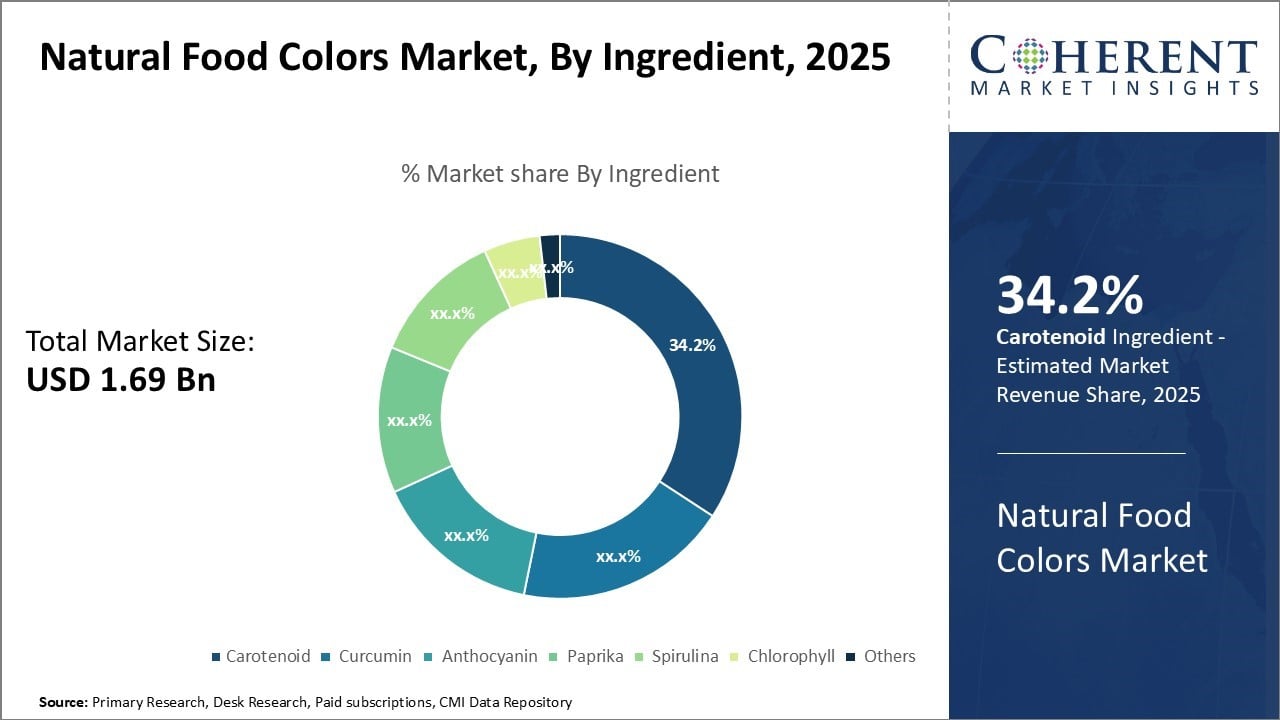
Natural Food Colors Market Insights, By Ingredient
The carotenoid segment is projected to dominate the global natural food colours market with a 35.2% share in 2026, driven by increasing health awareness and the multifunctional benefits of carotenoid-rich ingredients. Sourced from naturally vibrant fruits and vegetables such as carrots, pumpkins, and berries, carotenoids provide appealing red, orange, and yellow hues.
Beyond their colouring capability, carotenoids are also valued for their antioxidant properties and potential to support eye and immune health. These dual benefits have positioned carotenoids as a preferred ingredient for both conventional food manufacturers and health-focused brands. Their stability and compatibility across a variety of formulations further reinforce their leadership in the natural colorants landscape.
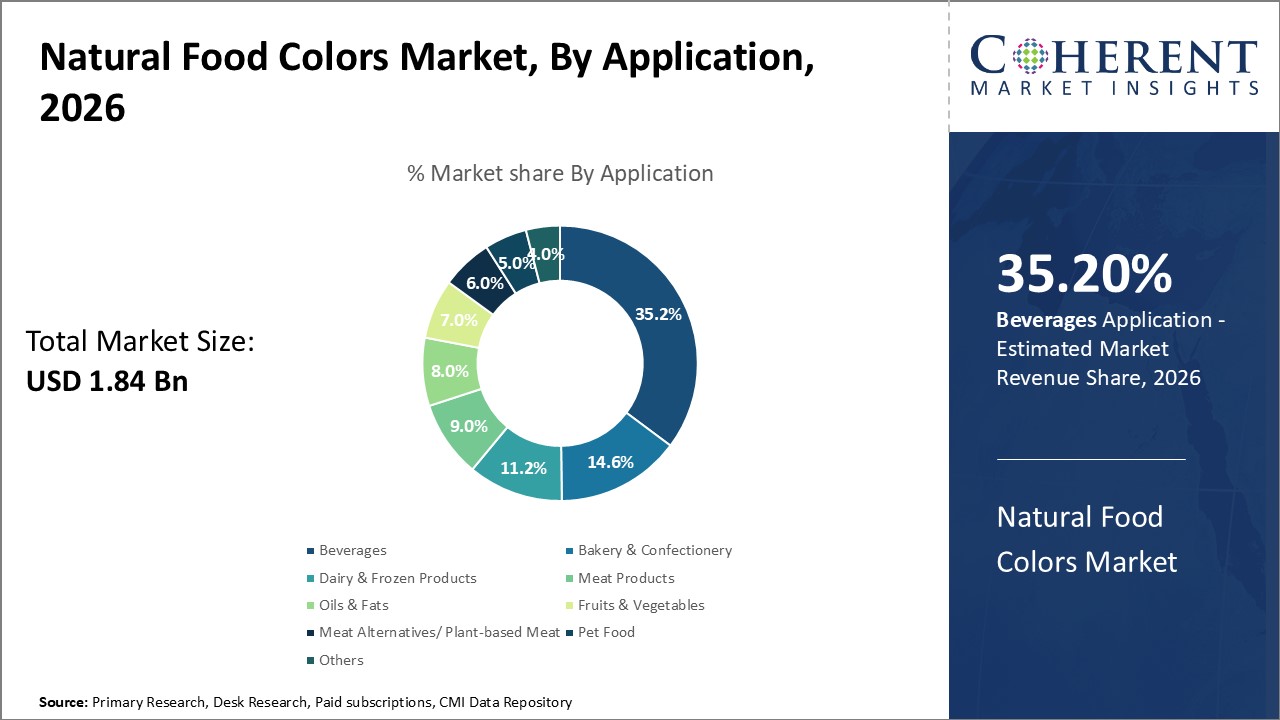
Natural Food Colors Market Insights, By Application
The beverages segment is expected to capture a leading 35.2% share of the natural food colours market in 2026, underpinned by rising consumer demand for clean-label, natural, and visually appealing drinks. This segment has seen significant transformation, as beverage manufacturer’s phase out artificial colorants in favour of fruit- and plant-based alternatives to align with evolving consumer expectations.
From functional drinks and juices to energy and sports beverages, natural colours are becoming essential for maintaining brand transparency and boosting consumer trust. The ongoing popularity of health and wellness beverages, combined with the need for vivid and stable coloration, makes the beverage sector a key driver of growth in the natural food colours industry.
Regional Insights
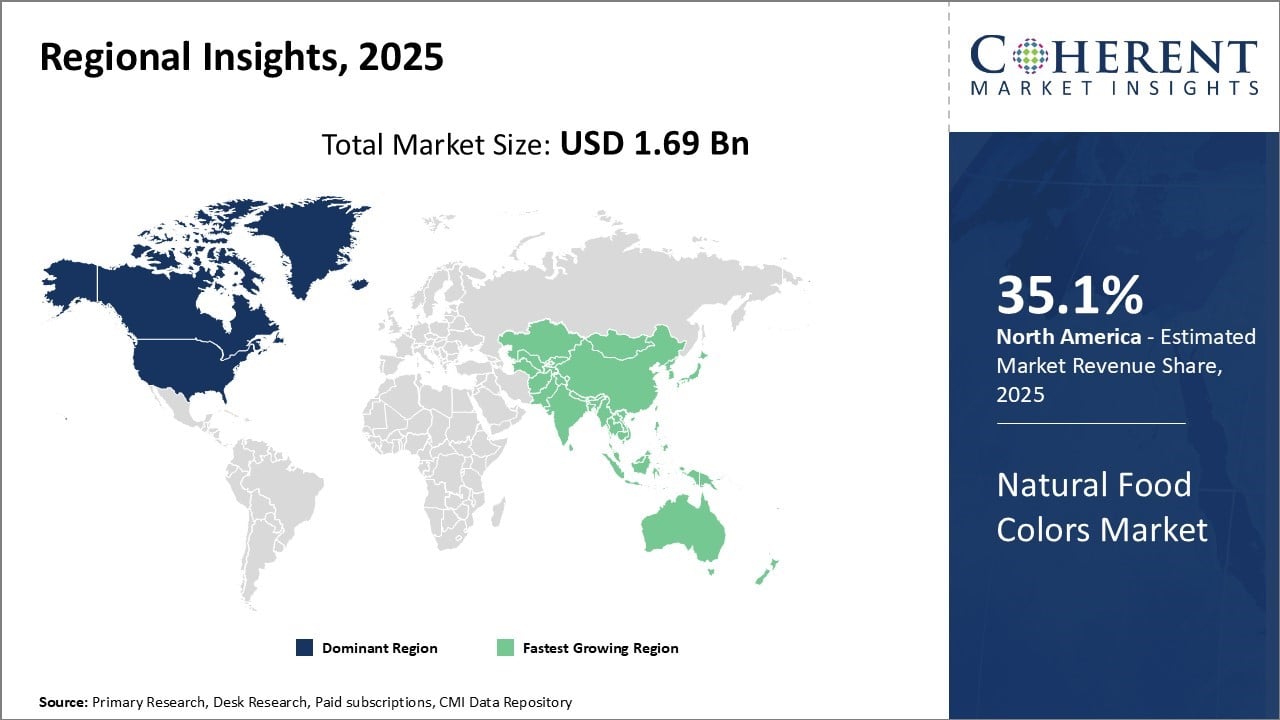
North America Natural Food Colours Market Trends and Analysis
North America is set to maintain its leadership in the global natural food colours market, accounting for an estimated 35.1% share in 2026. The region's dominance is driven by the expansive food and beverage industry, particularly in the United States and Canada, where consumer preferences are rapidly shifting toward clean-label and naturally derived ingredients.
Major food brands in the region are actively reformulating products to eliminate synthetic dyes, responding to growing public scrutiny of artificial additives. High consumer awareness regarding the potential health impacts of synthetic colorants further fuels the shift toward natural alternatives. Regulatory support and widespread availability of natural ingredients have strengthened the region's position as a global trendsetter in clean-label formulations.
Europe Natural Food Colours Market Trends and Analysis
Europe follows closely behind North America, propelled by strong regulatory frameworks and well-established organic food markets. Countries like Germany, France, and the UK have long emphasized food safety and ingredient transparency, prompting widespread adoption of natural colorants across food and beverage categories.
The European Food Safety Authority (EFSA)’s stringent stance on synthetic additives has driven food processors to prioritize natural options. Additionally, consumer preferences for vegan, sustainable, and organic products continue to shape demand, while the region’s innovative extraction technologies and research investments support long-term market expansion.
Natural food Colours market Dominating Countries
United States, Canada, and Mexico
The United States leads the global natural food colors market, driven by its expansive food and beverage sector and strong consumer preference for clean-label products. Major brands are reformulating products to exclude synthetic additives, aligning with growing awareness of potential health impacts associated with artificial colors. Regulatory support and robust innovation in natural formulations further solidify the U.S. as a market leader.
Canada complements regional growth through a mature packaged food industry and increasing demand for organic and plant-based ingredients. High consumer health consciousness and supportive labelling regulations encourage widespread use of natural colorants across beverages, snacks, and bakery products.
Mexico is emerging as a key player in Latin America, with its dynamic food processing industry and rising interest in healthier ingredients. As domestic manufacturers respond to shifting consumer trends, natural food colors are gaining momentum in mainstream and specialty food segments.
Market Report Scope
Natural Food Colors Market Report Coverage
| Report Coverage | Details | ||
|---|---|---|---|
| Base Year: | 2025 | Market Size in 2026: | USD 1.84 Bn |
| Historical Data for: | 2020 To 2024 | Forecast Period: | 2026 To 2033 |
| Forecast Period 2026 to 2033 CAGR: | 8.8% | 2033 Value Projection: | USD 3.32 Bn |
| Geographies covered: |
| ||
| Segments covered: |
| ||
| Companies covered: | Givaudan, BASF SE, NATUREX, Australian Food Ingredient Suppliers, Sensient Technologies Corporation, ADM, Spring TopCo DK ApS (Oterra), Allied Biotech Corporation, ROHA Group, Kalsec Inc., Döhler GmbH, San-Ei Gen F.F.I., Inc., AROMATAGROUP SRL, Ingredion, Vivify, Roquette Frères, INCOLTEC, IFC Solutions, Aarkay foods , Vinayak Ingredients (INDIA) Pvt. Ltd. | ||
| Growth Drivers: |
| ||
| Restraints & Challenges: |
| ||
Analyst Viewpoint – Natural Food Colours Market
- Analysts maintain a positive outlook on the global natural food colors market, driven by the accelerating shift toward clean-label, plant-based ingredients and rising consumer awareness about the health risks associated with synthetic additives. Carotenoids, anthocyanins, and other botanical pigments are increasingly favoured by food and beverage manufacturers seeking natural and functional alternatives to artificial dyes.
- Experts highlight growing demand from the beverage, dairy, and confectionery sectors, where visual appeal and health-oriented formulations are crucial. The increasing popularity of vegan and organic products further supports adoption of natural food colors, particularly in developed markets with mature consumer preferences.
- Regionally, North America leads due to a strong food processing industry and regulatory support, while Asia Pacific is expected to witness the fastest growth. Countries like China and India are expanding their natural ingredient supply chains, supported by rising incomes, urbanization, and health consciousness.
- Looking ahead, analysts believe innovation in extraction technologies, AI-assisted formulation, and sustainable sourcing will shape the market’s future trajectory.
Natural Food Colours Market: Key Development
- In May 2025, The U.S. FDA green-lit galdieria extract blue (from red algae), butterfly pea flower extract, and calcium phosphate as approved colour additives. These natural pigments are now authorized for use across a wide range of food and beverage categories, including cereals, beverages, dairy, snacks, and confectionery. Broadens manufacturers’ colour options, accelerates reformulation away from synthetic dyes, and supports regulatory clean-label initiatives ahead of the 2026 synthetic dye phase-out.
- In April 2025, The FDA and U.S. Department of Health and Human Services unveiled a plan to revoke authorization of common petroleum-based colorants and promote natural alternatives by 2026. Sets a clear regulatory timeline that incentivizes manufacturers toward natural pigments and triggers investments in natural color supply chains.
- In April 2025, Oterra opened a strategic innovation center in Hørsholm, Denmark, to support customers globally in developing and sourcing sustainable natural colours. Enhances product development capabilities, accelerates adoption of sustainable colour solutions, and reinforces Oterra’s global leadership in natural pigments.
- In December 2024, Oterra launched a 155,000 sq ft innovation, manufacturing, and logistics facility in Mount Pleasant, Wisconsin plus a 40,000 sq ft expansion area for natural colorant production. Strengthens North American manufacturing capacity, supports faster market responsiveness, and enables collaborative product development with food manufacturers.
- In November 2024, Oterra announced plans to increase production in APAC, including India via its Akay subsidiary, to improve traceability and shorten supply chains. Enhances regional supply resilience, reduces lead times, and supports growing demand for natural colours in Asia-Pacific and Middle Eastern markets.
Market Segmentation
- By Ingredient (Revenue, USD Bn, 2021 - 2033)
- Carotenoid
- Beta-carotene
- Annatto
- Lutein
- Lycopene
- Curcumin
- Anthocyanin
- Paprika
- Spirulina
- Chlorophyll
- Others
- Carotenoid
- By Application (Revenue, USD Bn, 2021 - 2033)
- Bakery & Confectionery
- Beverages
- Dairy & Frozen Products
- Meat Products
- Oils & Fats
- Fruits & Vegetables
- Meat Alternatives/ Plant-based Meat
- Pet Food
- Others
- By Region (Revenue, USD Bn, 2021 - 2033)
- North America
- U.S.
- Canada
- Latin America
- Brazil
- Argentina
- Mexico
- Rest of Latin America
- Europe
- Germany
- U.K.
- Spain
- France
- Italy
- Russia
- Rest of Europe
- Asia Pacific
- China
- India
- Japan
- Australia
- South Korea
- ASEAN
- Rest of Asia Pacific
- Middle East
- GCC Countries
- Israel
- Rest of Middle East
- Africa
- South Africa
- North Africa
- Central Africa
- North America
- Key Players Insights
- Givaudan
- BASF SE
- NATUREX
- Australian Food Ingredient Suppliers
- Sensient Technologies Corporation
- ADM
- Spring TopCo DK ApS (Oterra)
- Allied Biotech Corporation
- ROHA Group
- Kalsec Inc.
- Döhler GmbH
- San-Ei Gen F.F.I., Inc.
- AROMATAGROUP SRL
- Ingredion
Sources
The Stakeholders Consulted
- Food & beverage product managers and formulation specialists
- Manufacturers and suppliers of natural food colourants and plant extracts
- Nutritionists and food scientists focused on clean-label innovations
- Regulatory advisors and food safety compliance officers
- Research institutions studying food processing, natural ingredients, and nutraceuticals
- Government agencies supporting agricultural development and food innovation
- End-users across sectors such as bakery, dairy, beverages, confectionery, snacks, and processed foods
Databases Opened
- Food and Agriculture Organization (FAO) – Food Ingredient and Crop Databases
- U.S. Food and Drug Administration (FDA) – Color Additives Status List
- European Food Safety Authority (EFSA) – Food Additive Safety Reports
- Ministry of Food Processing Industries (India) – Industry Statistics & Schemes
- USDA – Agricultural Research Service & Specialty Crops Data
Magazines & Trade Publications
- Food Ingredients First
- Food Business News
- Nutrition Insight
- Natural Products Insider
- Food Navigator – Global and Regional Editions
Scientific and Industry Journals
- Journal of Food Science
- Trends in Food Science & Technology
- Journal of Functional Foods
- International Journal of Food Science and Technology
- LWT – Food Science and Technology
Newspapers & Media Outlets
- Bloomberg – Food & Agribusiness Section
- The Wall Street Journal – Consumer Goods & Retail
- Reuters – Food Industry Updates
- The Economic Times – Food Processing & Agriculture News
- Business Standard – Natural Product & Health Trends
Associations and Regulatory Bodies
- Codex Alimentarius Commission (FAO/WHO)
- U.S. Food and Drug Administration (FDA)
- European Food Safety Authority (EFSA)
- Food Safety and Standards Authority of India (FSSAI)
- International Association for Food Protection (IAFP)
Public Domain Sources
- European Commission – Food Additives and Clean-Label Reports
- U.S. Department of Agriculture (USDA) – Natural Ingredient Studies
- World Bank – Food Security and Processing Industry Insights
- International Trade Centre (ITC) – Natural Extracts & Trade Data
Proprietary Research Elements
- CMI Data Analytics Tool
- Proprietary CMI Repository of Market Data (covering past 8 years)
- CMI Expert Interviews and Transcripts (focused on natural colour innovation, regulatory trends, and ingredient sourcing strategies)
Get access to 250+ pages report
Every segment, forecast, competitor profile and data table behind the analysis above — available for instant download.
- ESOMAR Member
- ISO 9001:2015 Certified
- D-U-N-S Registered
- GDPR & CCPA Compliant
Missing comfort of reading report in your local language? Find your preferred language:
Transform your Strategy with Exclusive Trending Reports
Frequently Asked Questions
The Natural Food colours Market size is estimated to be valued at USD 1.84 Bn in 2026, and is expected to reach USD 3.32 Bn by 2033.
The CAGR of the global Market is projected to be 8.8% from 2026 to 2033.
Rising health consciousness and busy lifestyles and time crunched consumers are the major factors driving the growth of global market.
High price of natural food colours and short shelf life of some natural colours are the major factors hampering the growth of global natural food colours industry.
In terms of ingredient, carotenoid segment is estimated to dominate the market in 2026.
Givaudan, BASF SE, NATUREX, Australian Food Ingredient Suppliers, Sensient Technologies Corporation, ADM, Spring TopCo DK ApS (Oterra), Allied Biotech Corporation, ROHA Group, Kalsec Inc., Döhler GmbH, San-Ei Gen F.F.I., Inc., AROMATAGROUP SRL, Ingredion, Vivify, Roquette Frères, INCOLTEC, IFC Solutions, Aarkay foods, Vinayak Ingredients (INDIA) Pvt. Ltd. are the major players.
North America is expected to lead the global natural food colours industry.