

Distilled Spirits Market Size and Trends - 2026 to 2033
The Distilled Spirits Market is estimated to be valued at USD 36.91 Bn in 2026 and is expected to reach USD 51.55 Bn by 2033, growing at a compound annual growth rate (CAGR) of 4.89% from 2026 to 2033.
Key Takeaways
- Based on Product Type, the Whiskey segment is expected to lead the market with 34% share in 2026, due to its rich heritage and broad appeal.
- Based on Distribution Channel, the Supermarkets/Hypermarkets segment is expected to hold a major share of 45% in the market in 2026 as they provide wide product variety and a competitive pricing.
- Based on Region, Asia Pacific is set to lead the Distilled Spirits Market with the largest share of 40% in 2026. While, North America is anticipated to be the fastest growing region.
Market Overview
The distilled spirits industry encompasses whiskey, vodka, rum, tequila, gin, and other alcoholic beverages produced through fermentation and distillation processes. This global industry serves consumers through retail channels, bars, and restaurants, as well as online platforms.
The rising disposable incomes in developing nations are allowing more consumers to purchase premium and high-quality spirits. The younger generation increasingly prefers craft and artisanal products with unique flavors and authentic stories behind them. This cocktail cultural boom is increasing in demand as mixology is becoming popular in urban areas and social settings. The health-conscious consumers are choosing spirits over beer and wine due to lower calorie content per serving. The growth in e-commerce makes specialty spirits accessible to customers in remote areas.
Current Events and Its Impacts on the Distilled Spirits Market
Current Event | Description and the Impacts |
Technological Innovations and Sustainability Initiatives |
|
Cultural and Demographic Shifts |
|
Role Of Artificial Intelligence (AI) In Distilled Spirits Market
AI is shifting the distilled spirits market by making it possible to automate quality control assessments, use predictive market analytics, and provide personalized product recommendations. Virtual assistants can handle initial customer inquiries and brand questions. AI-driven tools are used in generating product descriptions and improving bottle photography for e-commerce. The machine learning algorithms help in identifying emerging flavor trends and assessing market risks. Chatbots are used by the major distilleries and retailers to provide 24/7 customer service. It can also be used to streamline compliance processes by analyzing regulatory documents, verifying age requirements, and detecting counterfeit products.
For instance, in November 2025, Amoon Spirits launched Amoon Vodka, the world's first smart vodka, making it possible for consumers to transform every pour into an immersive, personalized experience. The premium distilled spirit features an intelligent bottle system with integrated technology. Through Amoon's AI-enhanced app, users can customize lighting effects, control animation sequences, modify vortex motion, and select theme displays that match different occasions, whether serving vodka straight or in mixed drinks. The technology improves the drinking experience and adds a layer to premium spirits consumption. This allows consumers to engage with distilled spirits in ways that combine traditional craftsmanship with modern digital innovation.
- Current Industry Events of 2026
- Market Size Estimation
- Regional Breakdown
- Competitive Landscape
- Customer Intelligence
- Segmental Analysis
- Pricing Analysis
- Key Market Drivers, Challenges & Future Trends
- Customized Insights Section
Segmental Insights
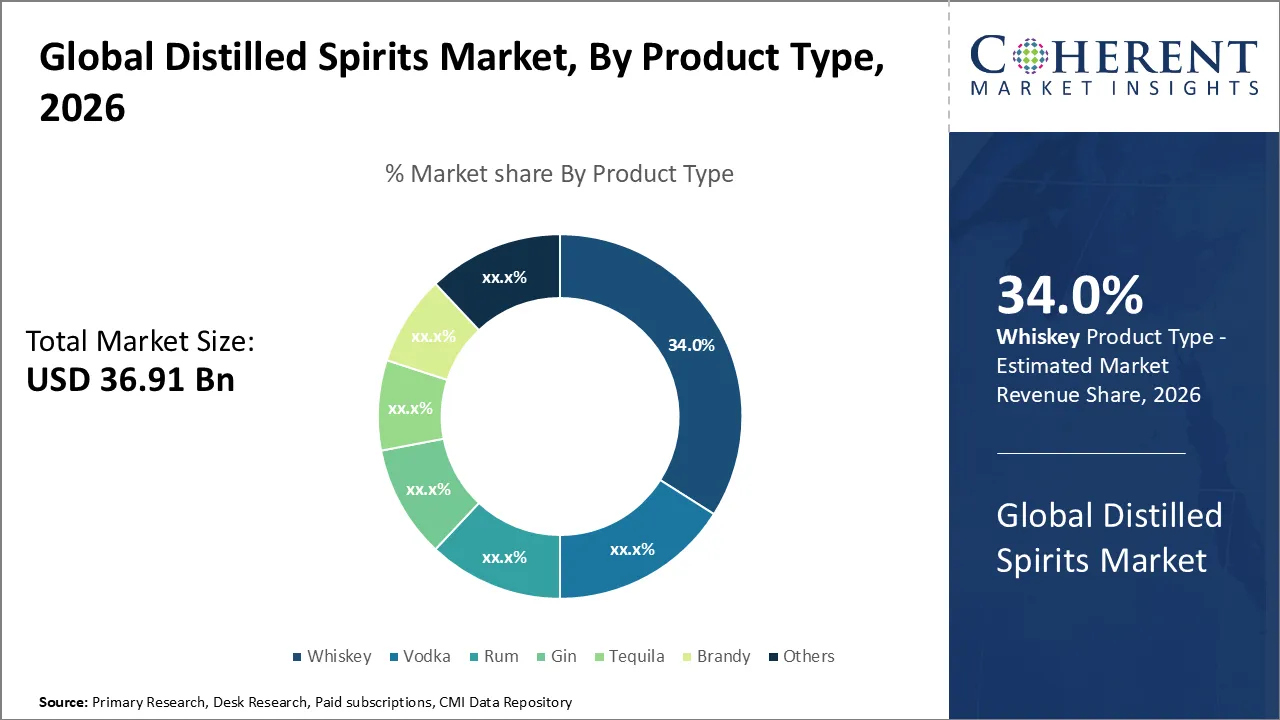
Distilled Spirits Market Insights By Product Type - Broad Appeal Drives Preference for Whiskey
In terms of product, the whiskey segment contributes the highest share of 34% in 2026 of the distilled spirits market owing to the strong heritage and premium appeal. The premiumization trend is encouraging consumers to purchase aged whiskeys with better quality and craftsmanship. The younger population are discovering whiskey through cocktails and modern drinking experiences. Celebrity endorsements and brand partnerships also help in improving market visibility and consumer appeal. The Asian market, particularly China and India, shows tremendous growth potential with the rise in Western drinking culture.
For instance, in December 2025, Allied Blenders & Distillers marked its entry into India’s premium whiskey sector via its subsidiary ABD Maestro Private Limited. This market is one of the fastest-growing segments in premium whiskey. The company has released the AODH Irish Whiskey, which is priced at ₹3,950. Indian actor Ranveer Singh is reported to be a co-founder and creative partner for this initiative.
Distilled Spirits Market Insights By, Distribution Channel - Supermarkets/Hypermarkets Leads as They Offer a Wide Product Variety
In terms of distribution channel, supermarkets/hypermarkets contribute the highest share of 45% in 2026 of the distilled spirits market owing to their convenience and wide product selection. These retail channels provide consumers the ability to browse through multiple brands and price points in a single location. This one stop shopping experience attracts busy consumers who want to purchase spirits along with other household items. The competitive pricing and promotional offers make these stores more affordable than other channels. This accessibility allows customers to compare products and make informed purchasing decisions easily. The large shelf space in these stores allows retailers to display their spirit varieties from budget to premium ranges. The strategic placement of spirit sections near checkout areas increases customers' impulse buying behavior.
Regional Insights
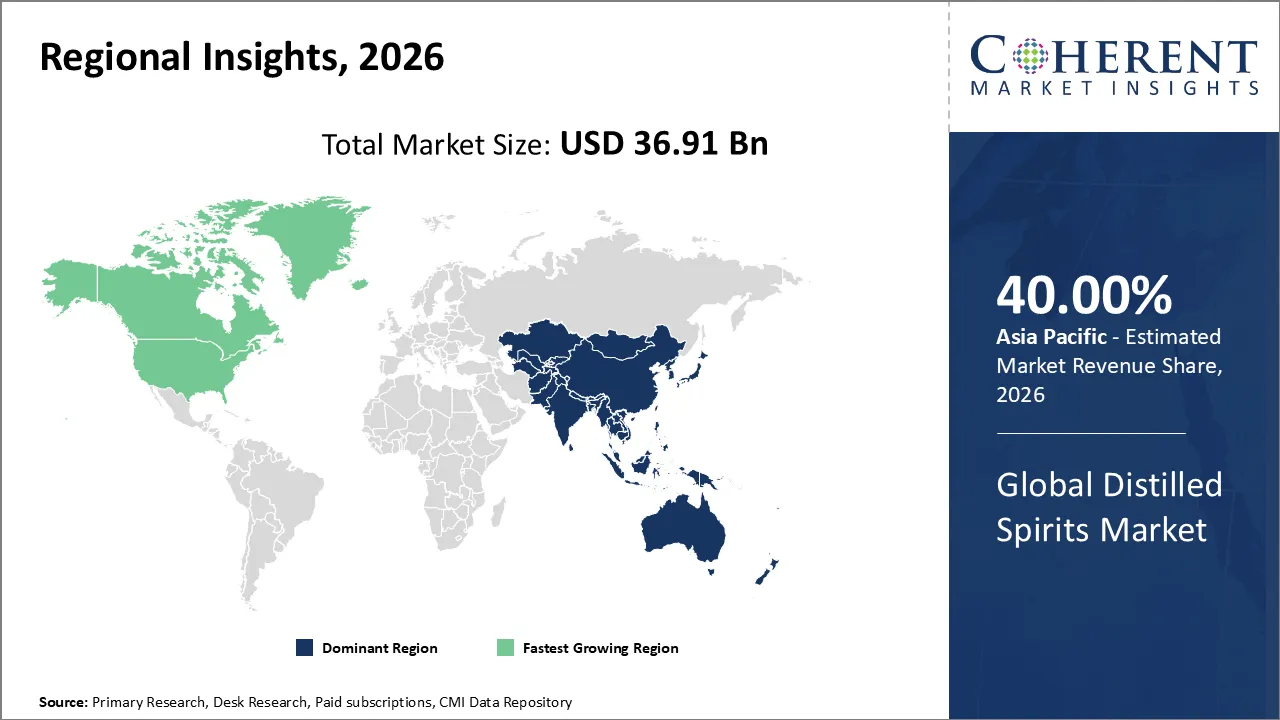
Asia Pacific Distilled Spirits Market Analysis & Trends
Asia Pacific has remained the dominant region, with 40% in 2026 of the global distilled spirits market over the past decade owing to its massive population and rapidly growing middle class. The region has a presence of countries like China, India, Japan, and Southeast Asian countries, where the consumption of spirits is increasing continuously. The rising disposable incomes in developing nations allow more consumers to afford premium spirits and luxury brands. The western drinking culture is growing quickly through urbanization and exposure to lifestyle trends among younger generations. The growing bar and nightclub scene in major cities is creating high demand for imported and domestic spirits.
For instance, in June 2025, Gaurav Joshi from Platinum Liquids and Harry Kartasis from Global Drinks Ltd joined forces to grow the premium spirits market in Asia and India. This partnership emphasizes heritage and craftsmanship and fits perfectly with India’s booming demand for premium spirits.
North America Distilled Spirits Market Analysis & Trends
The North America region has emerged as the fastest-growing market for distilled spirits globally in recent years owing to the drinking culture and high spending power among consumers. The region includes cities like the US and Canada, where spirits consumption remains continually strong across all age groups. The strong economy and high incomes allow consumers to buy premium and luxury spirits on a regular basis. American whiskey, in particular bourbon, has become highly popular worldwide and is driving substantial export revenues to international markets. The craft distillery boom in the region is creating innovative and unique products that attract younger drinkers. This thriving ready to drink cocktail culture in urban areas has led bars and restaurants to showcase creative spirit based drinks that enhance consumption. The relaxed regulations in many states make it easier for new brands and distilleries to enter the market.
For instance, in February 2025, The Muff Liquor Company, an Irish spirits maker and innovator from Muff village in Ireland’s Co. Donegal, entered the U.S. market with an official debut. The lineup provides three ultra-premium products. It include potato derived Irish vodka and Irish gin, each distilled 6 times, and a peated Irish whiskey featuring triple distillation and a five-component blend.
Distilled Spirits Market Outlook Country-Wise
China Distilled Spirits Market Trends
China is leading the distilled spirits market owing to its huge population and strong cultural connection to spirits consumption. The country leads the global sales volumes mainly through baijiu, which remains the most consumed spirit worldwide. The growing middle class seeks premium imported spirits like whiskey and cognac, considering them symbols of status and success. The Western drinking culture is becoming popular in younger consumers who visit bars and restaurants on a daily basis. The government support for local distilleries is strengthening the domestic production. These changing tastes among millennials are creating demand for different spirit types other than traditional baijiu consumption patterns.
For instance, in November 2025, Joybuy, JD.com, an online retail firm from Europe, announced a partnership with Kweichow Mouai, a top premium spirits brand from China. Joyboy now serves as Mouai's official UK online seller. Moutai is a sorghum-wheat baijiu that comes from Maotai town along Southwest China’s Chishui River, rooted in ancient traditions.
The U.S. Distilled Spirits Market Trends
The US leads the distilled spirits market through its diverse consumer base and strong whiskey heritage. This country produces globally recognized bourbon and rye whiskey that drive substantial domestic use and international markets. The market has strong distribution networks and a developed retail infrastructure across all states. The craft distillery movement has grown rapidly, with small producers creating innovative spirits that appeal to quality-focused consumers. Urban cocktail culture is boosting premium spirits sales as mixology becomes an art that drives better margins and demand growth. The high disposable incomes let Americans purchase expensive aged spirits and limited-edition releases. These relaxed state regulations in many regions also help in encouraging new businesses and brand development in the spirits industry.
For instance, in September 2025, North Carolina’s Southern Distilling Company launched Southern Star American Single Malt Whiskey a limited edition. It is produced and bottled in Statesville. This six year spirit at 114.8 proof shows their skill in in bold complex flavors.
Market Report Scope
Distilled Spirits Market Report Coverage
| Report Coverage | Details | ||
|---|---|---|---|
| Base Year: | 2025 | Market Size in 2026: | USD 36.91 Bn |
| Historical Data for: | 2020 To 2024 | Forecast Period: | 2025 To 2032 |
| Forecast Period 2026to 2033 CAGR: | 4.89% | 2033 Value Projection: | USD 51.55 Bn |
| Geographies covered: |
| ||
| Segments covered: |
| ||
| Companies covered: | Diageo plc, Pernod-Ricard SA, Constellation Brands Inc., Brown-Forman Corporation, Remy Cointreau SA, Marie Brizard Wine & Spirits, Lapostolle SA, and Berentzen-Gruppe AG. | ||
| Growth Drivers: |
| ||
| Restraints & Challenges: |
| ||
Distilled Spirits Market Drivers
Increasing preference for premium and artisanal spirits
The distilled spirits industry is experiencing growth due to rising disposable incomes and changing consumer preferences. Consumers are seeking higher-quality, unique, and artisanal products, a trend commonly referred to as premiumization. This shift is opening up new growth prospects for brands that provide better taste experiences and real stories. People are now using spirits to explore different variety of flavors and cultural experiences. The demand for small batch whiskeys, artisanal gins, and premium vodkas is continually growing. This trend helps in making the industry competitive and innovative. The strategy of better ingredients, unique production ideas, and unique packaging is helping the brands to maintain their presence. The platforms like social media and cocktail culture are also increasing the interest in premium spirits. This makes craft products more accessible and desirable to younger consumers who value quality over quantity.
Analyst Opinion (Expert Opinion)
The distilled spirits market remains a key segment of the global alcoholic beverage industry, driven by evolving consumer preferences, product innovation, and premiumization trends. Consumption patterns indicate a shift toward higher-value products and specialty categories, with increasing interest in agave-based spirits, flavored offerings, and ready-to-drink formats. Traditional categories such as whiskey, vodka, rum, and gin continue to maintain steady demand, while craft and artisanal products are gaining traction in both mature and emerging markets.
Trade and distribution dynamics highlight a robust global network, with established producing countries maintaining leadership in exports and large consuming regions showing strong import demand. The market features a wide spectrum of players, from large multinational distillers to small and medium-sized craft producers, reflecting diversified competitive dynamics.
Regional differences are significant. Asia-Pacific shows notable growth potential due to rising disposable incomes and expanding middle-class demographics, while North America and Europe exhibit stabilized consumption with selective growth in premium and specialty segments. Innovation in packaging, flavor profiles, and convenient formats, along with increasing digital and retail channel adoption, is shaping purchasing behavior and enhancing market penetration.
Overall, the distilled spirits market is characterized by steady demand, continuous product evolution, and regional diversification, with premiumization and consumer-driven innovation serving as key drivers of growth and competitive differentiation.
Speak to the analyst
Want personalized insights?
Take the findings above to one of our principal consultants, or have the report rebuilt around the segments, geographies and competitors you actually track.
Distilled Spirits Industry News
- In December 2025, CJ CheilJedang hosted a pairing event to make its announcement of having entered U.S. market. The event was held in New York to introduce the premium distilled spirits brand "jari”. The aim of this move was to embrace the culture of traditional liquor. It took place in collaboration between Korean restaurants Hojokban and Nari.
- In October 2025, Puranique Spirits announced its debut in India with the release of their premium spirits flagship lineup. The company’s market strategy provides two signature products named Puranique Vodka and Puranique VSOP Cognac. The products are crafted with an aim to exemplify the brand’s goals of superior quality and innovative craftsmanship.
- In November 2024, High Basin Brands made its debut with a USD 4 million seed funding round. The company is committed to revolutionizing the organic spirits sector by meeting the demand for luxury sustainable drinks. The company also negotiated a deal with of Treaty Oak Brewing and Distilling to extend its product line and establish a presence across the country in the premium organic spirits market.
- In March 2024, Barrell Craft Spirits expanded their distilled spirits lineup to the U.K. market. The independent blender known for its distinct aged cask, strength whiskey, chose Axiom Brands as the distribution partner for both on trade and off trade channels. The country is a significant market for spirits expansion overseas.
Market Segmentation
- Product Type Insights (Revenue, USD Bn, 2026 - 2033)
- Whiskey
- Vodka
- Rum
- Gin
- Tequila
- Brandy
- Others
- Distribution Channel Insights (Revenue, USD Bn, 2026 - 2033)
- Supermarkets/Hypermarkets
- Specialty Stores
- Drug Stores
- Online
- Others
- Regional Insights (Revenue, USD Bn, 2026 - 2033)
- North America
- U.S.
- Canada
- Latin America
- Brazil
- Argentina
- Mexico
- Rest of Latin America
- Europe
- Germany
- U.K.
- France
- Italy
- Russia
- Rest of Europe
- Asia Pacific
- China
- India
- Japan
- Australia
- South Korea
- ASEAN
- Rest of Asia Pacific
- Middle East
- GCC Countries
- Israel
- Rest of Middle East
- Africa
- South Africa
- North Africa
- Central Africa
- Key Players Insights
- Diageo plc
- Pernod-Ricard SA
- Constellation Brands Inc.
- Brown-Forman Corporation
- Remy Cointreau SA
- Marie Brizard Wine & Spirits
- Lapostolle SA
- Berentzen-Gruppe
Sources
Primary Research Interviews
- Distilled Spirits Manufacturers
- Breweries & Distilleries
- Alcoholic Beverage Distributors
- Retailers (Liquor Stores, Supermarkets)
- Bars, Restaurants & Hospitality Chains
- Industry Consultants & Market Analysts
- Supply Chain & Packaging Providers
- Others
Databases
- Bloomberg Terminal
- Thomson Reuters Eikon
- IHS Markit
- Euromonitor International
- S&P Global Market Intelligence
- Statista
- Others
Magazines
- The Spirits Business
- Drinks International
- Beverage Daily
- Whisky Advocate
- Modern Distillery Age
- Others
Journals
- Journal of Food Science
- Journal of Beverage & Food Analysis
- Food Chemistry
- International Journal of Gastronomy and Food Science
- Journal of Agricultural and Food Chemistry
- Others
Newspapers
- Financial Times
- The Wall Street Journal
- Reuters
- Bloomberg News
- The Economic Times
- Others
Associations
- Distilled Spirits Council of the United States (DISCUS)
- International Wine & Spirit Research (IWSR)
- Brewers Association
- European Spirits Organisation (spiritsEUROPE)
- American Distilling Institute (ADI)
- Others
Public Domain Sources
- U.S. Alcohol and Tobacco Tax and Trade Bureau (TTB)
- World Health Organization (WHO) – Alcohol Consumption Data
- Food and Agriculture Organization (FAO) – Beverage Statistics
- World Bank Open Data
- European Commission – Agriculture & Food Sector
- National Institute on Alcohol Abuse and Alcoholism (NIAAA)
- Others
Proprietary Elements
- CMI Data Analytics Tool
- Proprietary CMI Existing Repository of Information for the Last 8 Years
Definition: The distilled spirits market includes the production, distribution, and sale of alcoholic beverages created through distillation processes. This industry includes spirits like whiskey, vodka, rum, gin, tequila, and other liquor products. The product is available through various channels, including retail stores, bars, restaurants, and online platforms. The key participants include distilleries, distributors, importers, exporters, and retailers. They work together to bring products from production facilities to consumers.
Get access to 250+ pages report
Every segment, forecast, competitor profile and data table behind the analysis above — available for instant download.
- ESOMAR Member
- ISO 9001:2015 Certified
- D-U-N-S Registered
- GDPR & CCPA Compliant
Missing comfort of reading report in your local language? Find your preferred language:
Transform your Strategy with Exclusive Trending Reports
Frequently Asked Questions
The Distilled Spirits Market is estimated to be valued at USD 36.91 Bn in 2026, and is expected to reach USD 51.55 Bn by 2033.
Major players operating in the market include Diageo plc, Pernod-Ricard SA, Constellation Brands Inc., Brown-Forman Corporation, Remy Cointreau SA, Marie Brizard Wine & Spirits, Lapostolle SA and Berentzen-Gruppe AG.
Vodka segment dominated the market and accounted for the highest demand.
Increasing demand for alcoholic beverages and increasing buying power of consumers are the factors driving the growth of the market.
The CAGR of the Distilled Spirits Market is projected to be 4.89% from 2026 to 2033.
Asia Pacific is dominating the distilled spirit market growth.