

Global Battery Free Implants Market Size and Forecast – 2026 to 2033
According to Coherent Market Insights, the global battery free implants market is estimated to be valued at USD 9.50 Bn in 2026 and is expected to reach USD 31.92 Bn by 2033, exhibiting a compound annual growth rate (CAGR) of 18.9% from 2026 to 2033. This significant growth underscores the expanding adoption and innovation within the implantable medical device sector, driven by advancements in wireless power transfer and miniaturization technologies.
Key Takeaways of the Battery Free Implants Market
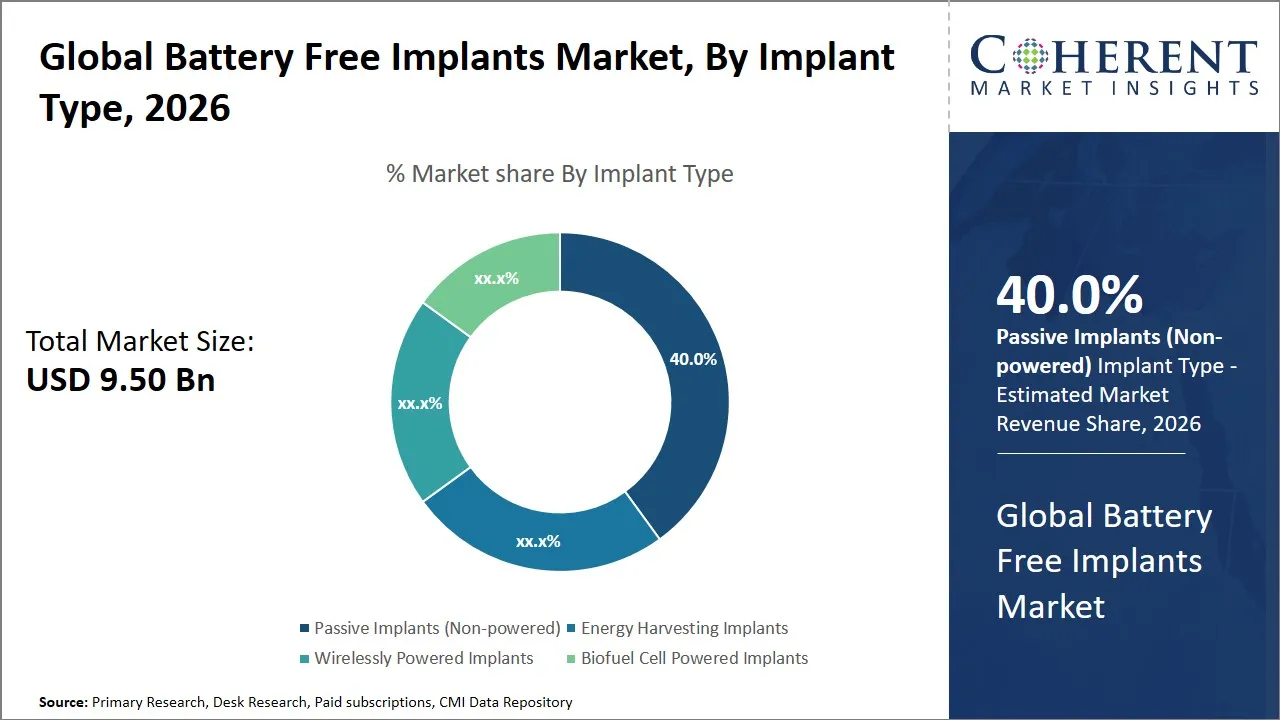
- Passive implants (non-powered) segment is expected to lead the global battery free implants market, capturing 40% of the market share in 2026.
- Inductive coupling (near-field wireless power) segment is estimated to represent 30% of the global battery free implants market share in 2026.
- Cardiovascular segment is projected to dominate with 27% of the market share in 2026.
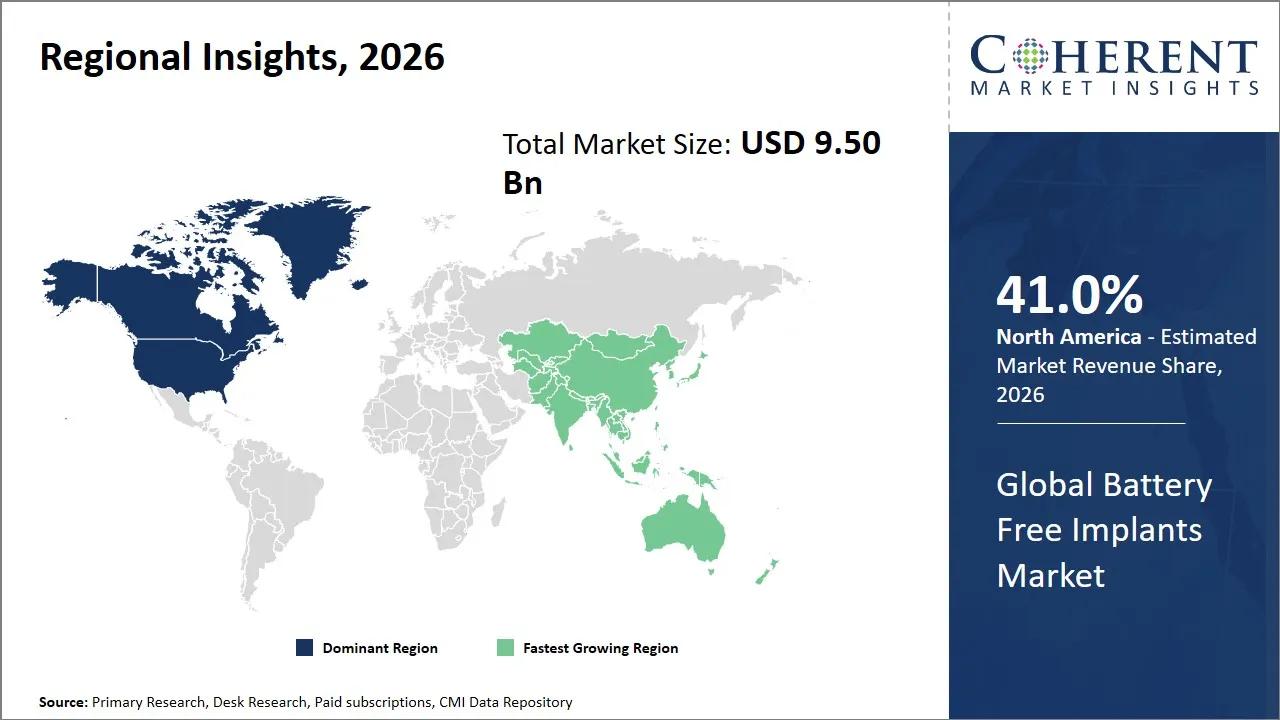
- North America is expected to lead the market, holding a share of 41% in 2026. Asia Pacific is anticipated to be the fastest-growing region, with 29% share in 2026.
Market Overview
- The battery free implants market is gaining momentum due to the growing demand for long-lasting, sustainable medical devices that do not require frequent battery replacements, which can be costly and inconvenient for both patients and healthcare providers.
- Energy harvesting technologies such as piezoelectric, inductive, and biofuel cell-powered implants are transforming the medical device industry, offering self-powered solutions that enhance the longevity and functionality of implants without the need for external power sources.
- The market is benefiting from the rising prevalence of chronic diseases and age-related conditions, where long-term treatment solutions, like implantable devices, are essential for improving patient outcomes and quality of life.
- Technological innovations in wireless power transfer and miniaturized energy sources are enabling the development of more compact, reliable, and effective implants that can be used in a wide range of medical specialties, including neurology, cardiology, and orthopedics.
Current Events and Its Impact
Current Events | Description and its Impact |
Launch of Energy Harvesting Implants by Medtronic |
|
Introduction of Piezoelectric Energy Harvesting Implants |
|
Segmental Insights
- Current Industry Events of 2026
- Market Size Estimation
- Regional Breakdown
- Competitive Landscape
- Customer Intelligence
- Segmental Analysis
- Pricing Analysis
- Key Market Drivers, Challenges & Future Trends
- Customized Insights Section
Why Does the Passive Implants (Non-powered) Segment Dominate the Global Battery Free Implants Market in 2026?
The passive implants (non-powered) segment is expected to hold the largest share of 40% in 2026, due to several compelling drivers rooted in their inherent simplicity and reliability. Passive implants do not have an internal source of power so they do not need any constant power source to perform functions like active implants. This makes passive implants much safer and long lasting. This design benefit eliminates much risk of complications such as battery failure, system malfunction, or heat generation, which is a major issue with implants that are to be used over a long period in the human body.
The increasing popularity of minimal invasive medical interventions goes hand in hand with passive implants because they are generally composed of fewer parts and come in smaller and slimmer sizes that result in less tissue damage due to implantation. They are also non-powered, which makes them easier to last longer as they do not need a battery charge, which is one of the primary factors of patients and medical practitioners seeking efficient and cost-effective treatment methods. In addition, developments in the field of materials science, such as biocompatible and bioinert materials, have further increased the safety profile of passive implants, decreasing inflammation, and promoting the integration of passive implants with surrounding tissues.
Why the Inductive Coupling (Near-field wireless power) Segment is Widely Used in the Global Battery Free Implants Market?
The inductive coupling (near-field wireless power) segment is projected to dominate the market, accounting for 30% of the market share in 2026, mainly driven by its efficacy, safety, and mature technological foundation. Inductive coupling works based on the principle of magnetic resonance between two coils, one of which is external and another one is implanted, to provide effective energy transfer without physical connectors or batteries. This wireless transmission of power will solve a number of serious challenges that implanted devices experience particularly by supporting continuous and constant functioning without the dangers of internal source of power.
Another important factor that has facilitated the rapid development of this technology is the fact that it transfers a lot of energy over a short distance making it best suited to energizing implants that are close to the body surface or are accessible in other parts of the body. Inductive coupling enables high-energy transfer with minimal heat generation, making it safer for vulnerable implant applications. This feature significantly reduces the risk of tissue damage, making it particularly attractive for cardiovascular and neurological devices. This further enhances the safety profile due to the absence of direct electrical contact which practically eliminates the potential risk of infection as a result of leads or wires.
Cardiovascular Implants Lead the Global Battery Free Implants Market
In terms of implant location, the cardiovascular segment is expected to capture the highest share of 27% in 2026, primarily driven by the critical medical necessity and continuous innovation within cardiovascular care. Cardiovascular diseases are still one of the major causes of death across the world and there is high demand for efficient implant technologies that can supplement or check the heart activity on an irregular basis. Battery free implants, particularly those used in the cardiovascular system, offer significant benefits by eliminating the risks associated with battery failures and the need for invasive surgeries to replace power sources. This innovation leads to improved patient outcomes and better compliance with treatment regimens.
The cardiovascular implants used, e.g., stents, pacemakers and cardioverter-defibrillators, are dynamic systems and need the use of powering solutions that ensure continuous monitoring and intervention opportunities. Implant technologies that are battery free (usually with a wireless power transfer or energy harvesting approach) offer continuous operation with a lower maintenance burden that is invaluable in supporting cardiac well-being. Also, with the sensors added to cardiovascular implants, real time information is collected about the rhythm of the heart and blood pressure among other physiologic parameters, and heart conditions can be managed proactively.
Long-Term Reliability and Failure Modes in the Battery Free Implants Market
- End users in global battery free implants market, especially in the medical context such as hospitals and clinics, usually emphasize on the long-term reliability as the deterministic factor of the success of implants. The first benefit that is often mentioned is the minimization of replacements because of the self-power of these devices, especially in cardiac and spinal implants. Nevertheless, one of the most frequent complaints among users is the failure modes of some types of power-harvesting technologies, e.g., wear and tear in piezoelectric materials or performance of wireless power systems in the long term.
- Still, despite the beneficial feedback, there are significant unmet requirements associated with customization and affordability. Others complain that the choice of devices offered is limited in the available medical conditions or patient profile, and some feel disappointed by the high prices of battery free implants. The existence of these gaps gives the manufacturers a chance to innovate especially by producing more customizable yet cost-effective solutions that may meet the needs of particular patients. By handling these problems, it would not only spur the growth in the underserved markets but also enhance the long-term customer retention through offering more flexible and affordable implant solutions.
Regional Insights
North America Battery Free Implants Market Analysis and Trends
The North America region is projected to lead the market with a share of 41.0% in 2026, driven by a well-established healthcare infrastructure, advanced medical technology ecosystem, and strong government support for innovation in medical devices. The region enjoys a lot of investments in the field of research and development especially in the field of biotechnology and implantable medical apparatuses, backed by organizations like the FDA, who have helped create easy channels of regulation of new technologies. There are also significant players in the industry such as Medtronic, Abbott laboratories, and Boston Scientific leading to a competitive environment which promotes innovation in battery free implant technologies.
Also, the academic-industry partnerships contribute to the development of energy gathering techniques and wireless power systems that cement the North American leadership. The trade policies encourage inter-country cooperation and importation of specialized parts that would be essential in the production of these advanced implants.
Asia Pacific Battery Free Implants Market Analysis and Trends
The Asia Pacific region is expected to exhibit the fastest growth in the market contributing 29.0% share in 2026, propelled by increasing healthcare expenditure, expanding infrastructure, and rising chronic disease prevalence requiring implantable devices. Countries such as China, Japan and South Korea are working on massive medical technology modernizations, and are also developing innovation hubs and start up ecosystems specializing in healthcare technologies.
The attempts of the government to make more people accessible to sophisticated healthcare solutions and granting the approvals of medical devices have provided a favorable ground to fasten the adoption of battery free implant technologies. The increasing medical device manufacturing hub in the area, coupled with low-cost production capacity, is significant to draw international players like the Siemens Healthineers, Nidek Medical and other smaller innovative companies, which deal with the wireless and energy harvesting implants, which makes the market more dynamic.
Battery Free Implants Market Outlook for Key Countries:
What are the Current Trends Shaping the U.S. Battery Free Implants Market?
The market of the U.S. is marked with the high use of the latest medical technologies and well-developed healthcare system with huge investments in the fields of research and development. Traditional players who include Medtronic and Abbott have opened up their research and development centers where they are working on next generation implantable devices, which are playing a major role in the development of battery free technologies. In addition, the government agencies take a direct interest in jointly working with private sectors by providing grants and challenges with breakthroughs through innovation to generate a fertile ground on energy-harvesting implants. Another advantage is that the U.S. has a robust regulatory system that guarantees safety and effectiveness that can facilitate faster commercialization and adoption of such advanced implants.
How is China Helping in the Growth of the Battery Free Implants Market?
The market in China is growing at a very high rate as a result of the government policies aimed at enhancing the healthcare services as well as the rise in the number of people and companies investing in medical technology. With the help of the policies facilitating innovation and transfer of technology, the country seeks to localize the production of high-medical equipment such as battery free implants. Companies such as MicroPort Scientific and Mindray have been key actors in the implementation of new technologies in implants within the local market. Moreover, the huge size of the patient base in China and the increasing popularity of the minimally invasive and maintenance free implantable devices form the foundation of high demand and the international collaborations with the U.S. and European companies speed up the process of exchanging technologies and developing new products.
Key Drivers for the Growth of the Germany Battery Free Implants Market
Germany still dominates the markets in Europe with battery free implants as it has a respectable engineering background and a focus on precision medical equipment. There are great companies in the country like Siemens Healthineers and Fresenius Medical Care that invest heavily in the development of the sophisticated implant solutions with the addition of wireless power capabilities. The favorable regulatory climate in Germany, as well as the strict quality of the European market, precondition a reliable market of the high-performance battery free implants. There is also a highly skilled workforce and well-established medical research institutions that add to unending innovation and clinical validation of new implant technologies.
Japan Battery Free Implants Market Trends
Japanese healthcare market is characterized by the high level of interest in elderly care and medical inventions, so it represents one of the primary consumers of battery free implants devices that can help increase the quality of life of older generations. Nidek Medical and Toshiba Medical Systems are among the leading corporations that are continuously working on creating energy-harvesting implants that support the needs of patients. The active involvement of the government in the innovation of the medical devices and relaxations of the processes of their approval has accelerated the penetration of the market. Moreover, the use of IoT and sophisticated sensors technologies by Japan on the medical devices helps to develop and implement solutions of the next generation of battery free implantable solutions.
Regulatory Pathway Complexity in the Global Battery Free Implants Market
- The regulatory process of battery free implants can be cumbersome and too time consuming because this new type of devices undergoes strict approval procedures because it is innovative and has new technologies. To approve such devices, regulatory agencies, such as the FDA in the U.S. and the European Medicines Agency (EMA) demand detailed clinical information that will prove the safety, effectiveness, and dependability of these devices. The requirement to meet biocompatibility criteria and battery free energy harvesting technology is one of the pitfalls mentioned by manufacturers in this respect, as it can only be regulated under the banners of traditional regulation of the products in the category of implantable medical devices.
- An example is that manufacturers of piezoelectric powered implants have challenges in achieving the device performance criteria as it is challenging to convert energy and ensure long term reliability. The delays may be even further in case there are doubts regarding failure modes of the devices and interaction with the human body. To overcome these issues, there must be clear and consistent regulation rules that consider the emerging technologies and maintain patient safety at the same time. Strategic alliances with regulatory agencies may also aid manufacturers to facilitate the process of approvals so that they can introduce innovative products in the market earlier.
Market Concentration and Competitive Landscape
Key Development
- In October 2025, Dr. Arathyram Ramachandra, a biomedical engineer, received a USD 3 million UKRI Future Leaders Fellowship to advance research on battery free medical implants powered by body movement. The focus is on piezoelectric materials that convert motion into electrical energy, eliminating the need for traditional batteries. This innovation aims to reduce the need for replacement surgeries. The project is based at the University of Bradford, collaborating with top institutions like University of Cambridge and UC San Diego.
- In June 2025, University of Arizona researchers introduced a battery free implant that monitors bone fracture recovery using near-field and far-field wireless power transfer. The device transmits real-time data via Bluetooth Low Energy, showing reduced strain as healing progresses. It eliminates manual charging and supports sustainable, electronic waste-free healthcare.
- In September 2024, UChicago Medicine became the first Illinois center to implant the Revi neuromodulation device for treating urinary urgency incontinence. This battery free system offers a minimally invasive option for nerve stimulation and long-term symptom relief, marking a key advancement in urologic care.
Top Strategies Followed by Battery Free Implants Market Players
Player Type | Strategic Focus | Examples |
Established Market Leaders | Established market leaders prioritize R&D investments to enhance the efficiency, longevity, and safety of their battery free implants. They also form strategic partnerships with OEMs, healthcare providers, and technology firms to expand their market presence and integrate expertise. These companies aggressively expand globally, targeting emerging markets with growing healthcare investments and favorable demographics. | Medtronic focuses on advanced energy-harvesting technologies and has partnered with OEMs to enhance its battery free implant offerings. Their global expansion strategy targets Asia-Pacific and Latin American markets, capitalizing on rising healthcare demand. |
Mid-Level Players | Small-scale players in the battery free implants market focus on specialized features and innovations for specific clinical needs or patient groups. By investing in cutting-edge technologies like wireless energy harvesting and miniaturization, these companies stay competitive and address unmet needs. They build local alliances with startups and academic institutions to navigate regulations, optimize supply chains, and increase market visibility. | LivaNova, a mid-level player, focuses on affordable, reliable battery free implants for emerging markets. By partnering with local manufacturers, they enhance production efficiency and increase access to their innovative solutions in cost-sensitive regions. |
Small-Scale Players | Small-scale players in the battery free implants market focus on specialized features and innovations for specific clinical needs or patient groups. By investing in cutting-edge technologies like wireless energy harvesting and miniaturization, these companies stay competitive and address unmet needs. They build local alliances with startups and academic institutions to navigate regulations, optimize supply chains, and increase market visibility. | Tendyne Technologies, a small-scale firm, focuses on miniaturized, wireless-powered implants for heart valve treatments. Through partnerships with regional manufacturers, they have successfully introduced innovative solutions in underserved markets, expanding their presence despite limited resources. |
Market Report Scope
Battery Free Implants Market Report Coverage
| Report Coverage | Details | ||
|---|---|---|---|
| Base Year: | 2025 | Market Size in 2026: | USD 9.50 Bn |
| Historical Data for: | 2020 To 2024 | Forecast Period: | 2026 To 2033 |
| Forecast Period 2026 to 2033 CAGR: | 18.9% | 2033 Value Projection: | USD 31.92 Bn |
| Geographies covered: |
| ||
| Segments covered: |
| ||
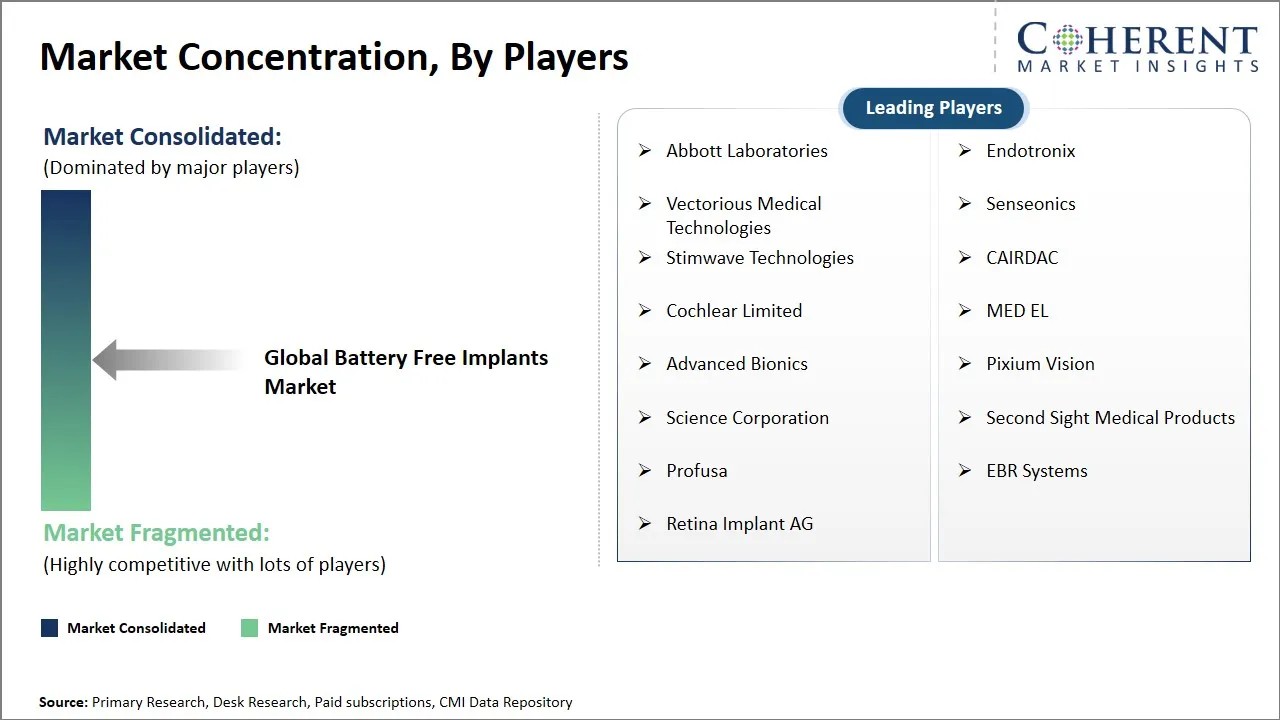
| Companies covered: | Abbott Laboratories, Endotronix, Vectorious Medical Technologies, Senseonics, Stimwave Technologies, CAIRDAC, Cochlear Limited, MED EL, Advanced Bionics, Pixium Vision, Science Corporation, Second Sight Medical Products, Profusa, EBR Systems, and Retina Implant AG | ||
| Growth Drivers: |
| ||
| Restraints & Challenges: |
| ||
Global Battery Free Implants Market Dynamics
Battery Free Implants Market Driver - Growing Adoption of Wireless Powered Neurostimulation Therapies
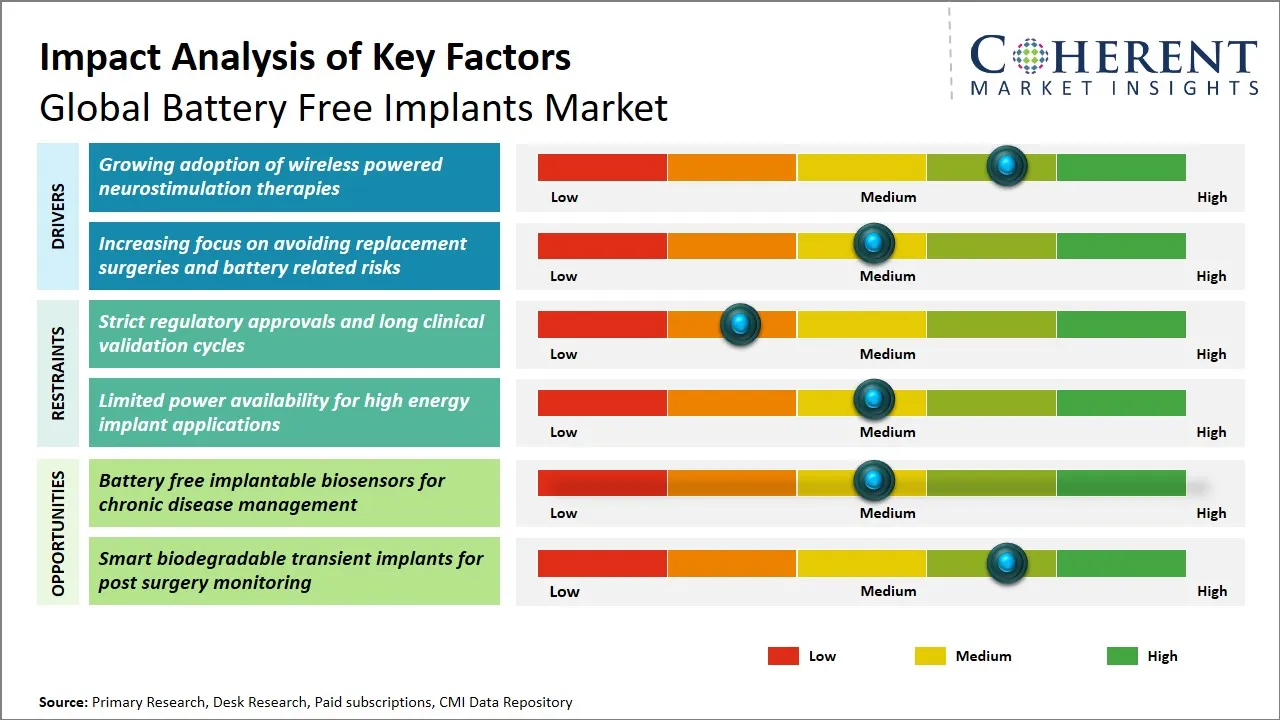
A growing usage of wireless powered neurostimulation therapies is one of the major factors that are driving the need of battery free implants in the world. These high-tech therapeutic solutions utilize the power transfer technology through wireless transmission, which does not require huge batteries and surgeries as in the case of conventional implantable devices. Wireless power delivery does not only make device smaller and lighter, but also prolongs the working life of implants without the need to replace them quite frequently.
In addition, neurostimulation therapies which employ these types of implants are becoming very popular in the treatment of neurological disorders including chronic pain, epilepsy, Parkinson disease and depression, where the ability to be stimulated accurately and reliably is of paramount importance. The transition to minimally invasive, energy-saving devices is in line with the overall trends in personalized medicine and remote patient monitoring, and it only contributes to their popularity among both healthcare providers and patients. Also, WiPower combined with the complex bioelectronics will allow more reliable and safer surgery of implants, thereby promoting increased acceptance and use of battery free implants in clinics.
For instance, in February 2025, Medtronic secured U.S. FDA approval for its BrainSense Adaptive DBS system, enabling closed-loop, real-time adjustment of stimulation based on brain signals, marking the world’s first adaptive DBS offering.
(Source- https://www.biospectrumasia.com)
Battery Free Implants Opportunity - Battery-Free Implantable Biosensors for Chronic Disease Management
The increasing rates of chronic diseases like diabetes, heart conditions, and neurodegenerative disorders will provide an excellent growth prospect to the battery free implantable biosensors market in the world. These biosensors provide a new technology that provides real time and continuous monitoring of vital biomarkers without the drawback that comes with other battery-powered available biosensors, including weight, short life, and the constant replacement or charging requirements.
Radiofrequency (RF) energy, inductive coupling, or biofuel cells are used in battery free implants, which allows increasing the life of the device and minimizes patient discomfort in case of battery replacement surgery. This technology does not only improve the patient compliance, but also improves the individualized treatment regimens since healthcare professionals have the correct and undistorted physiological information.
Furthermore, the changing regulatory systems in the direction of the least invasive and environmental friendly medical devices will likely enhance the product development and commercialization processes, making the battery free implantable biosensors an essential element of the future of chronic disease care management.
For instance, in June 2025, battery free LC sensors have been developed due to the need to have minimal health monitoring. These sensors are magnetically coupled to enable them to operate wirelessly, this is without the internal power source. The technology facilitates the creation of compact biocompatible designs in fields like intracranial pressure measurements and intraocular pressure measurement. Although they promise, such issues as material innovation and scalability are still present, and the process continues to incorporate them into digital systems of healthcare in order to improve patient care and provide more opportunities to monitor them.
(Source- https://advanced.onlinelibrary.wiley.com/doi/10.1002/aelm.202500184)
Analyst Opinion (Expert Opinion)
- The market of battery free implants is supported by the increase in the demand of the long-term, sustainable implementation in the healthcare industry. Some of the important developments that have contributed to growth are the development of wireless power technologies and energy harvesting techniques like piezoelectric, inductive coupling and biofuel cells among others which enable self-powered gadgets without necessarily using standard batteries. Moreover, the regulatory support of the market is also increasing, as more and more implantable devices are approved, and oriented on the enhancement of patient outcomes and the minimization of long-term expenses. The market is also increasing due to the increasing demand of minimally invasive treatments and the aging population. Nevertheless, the problems of high production costs, regulatory complexity, and the necessity of continuous innovation stand on the way to its further adoption.
- New opportunities include further applications, particularly in cardiovascular, neurological, and orthopedic procedures, where battery free implants can have a great impact on patient comfort and clinical outcomes. Recent events such as Transcatheter Cardiovascular Therapeutics (TCT) 2024 and Medical Device Innovation Summit have helped to present new developments in the field of implants and hold a discussion regarding the regulatory directions and industry standards. Such high-profile projects as the introduction of wireless neurostimulation by the company Medtronic and the investments by LivaNova in energy-saving implants indicate the upsurge in commercial capability and creativity in the field. These innovations are likely to open the way to even more affordable, efficient, and sustainable solutions in the market of healthcare devices as they advance.
Speak to the analyst
Want personalized insights?
Take the findings above to one of our principal consultants, or have the report rebuilt around the segments, geographies and competitors you actually track.
Market Segmentation
- Implant Type Insights (Revenue, USD Bn, 2021 - 2033)
- Passive Implants (Non-powered)
- Energy Harvesting Implants
- Wirelessly Powered Implants
- Biofuel Cell Powered Implants
- Powering Technology Insights (Revenue, USD Bn, 2021 - 2033)
- Inductive Coupling (Near-field wireless power)
- RF Wireless Power Transfer
- Ultrasound Power Transfer
- Optical / Light-based Power Transfer
- Piezoelectric Energy Harvesting
- Thermoelectric Energy Harvesting
- Triboelectric Energy Harvesting
- Enzymatic / Biofuel Cell Energy
- Implant Location Insights (Revenue, USD Bn, 2021 - 2033)
- Cardiovascular
- Neurological
- Cochlear
- Ophthalmic
- Gastrointestinal
- Orthopedic
- Dental
- Dermal
- End User Insights (Revenue, USD Bn, 2021 - 2033)
- Hospitals
- Specialty Clinics
- Ambulatory Surgical Centers
- Research Institutes / Universities
- Patient Group Insights (Revenue, USD Bn, 2021 - 2033)
- Pediatric
- Adult
- Geriatric
- Distribution Channel Insights (Revenue, USD Bn, 2021 - 2033)
- Online
- Offline
- Regional Insights (Revenue, USD Bn, 2021 - 2033)
- North America
- U.S.
- Canada
- Latin America
- Brazil
- Argentina
- Mexico
- Rest of Latin America
- Europe
- Germany
- U.K.
- Spain
- France
- Italy
- Russia
- Rest of Europe
- Asia Pacific
- China
- India
- Japan
- Australia
- South Korea
- ASEAN
- Rest of Asia Pacific
- Middle East
- GCC Countries
- Israel
- Rest of Middle East
- Africa
- South Africa
- North Africa
- Central Africa
- North America
- Key Players Insights
- Abbott Laboratories
- Endotronix
- Vectorious Medical Technologies
- Senseonics
- Stimwave Technologies
- CAIRDAC
- Cochlear Limited
- MED EL
- Advanced Bionics
- Pixium Vision
- Science Corporation
- Second Sight Medical Products
- Profusa
- EBR Systems
- Retina Implant AG
Source
Primary Research Interviews
- Industry Stakeholders
- Implantable medical device manufacturers
- Healthcare providers and hospitals
- Regulatory bodies and medical device authorities
- Original Equipment Manufacturers (OEMs)
- Contract manufacturers
- Healthcare technology consultants
- End Users
- Hospitals and healthcare institutions
- Cardiac and orthopedic specialists
- Patients with chronic conditions requiring implants
- Research institutions
- Medical device distributors
- Homecare patients
Government and International Databases
- U.S. Food and Drug Administration (FDA)
- European Medicines Agency (EMA)
- World Health Organization (WHO)
- Centers for Disease Control and Prevention (CDC)
- National Institutes of Health (NIH)
- Health Canada
Trade Publications
- Medical Device Network
- Medical Plastics News
- Healthcare Packaging
- Journal of Medical Devices
- Pain Medicine News
- Medical Product Outsourcing
Academic Journals
- Journal of Clinical Investigation
- Journal of Biomedical Materials Research
- The Lancet
- International Journal of Medical Sciences
- Journal of Cardiovascular Medicine
- Journal of Urology
Reputable Newspapers
- The New York Times
- BBC News
- Reuters
- The Guardian
- Financial Times
- The Wall Street Journal
Industry Associations
- American Heart Association (AHA)
- European Society of Cardiology (ESC)
- World Heart Federation (WHF)
- American College of Cardiology (ACC)
- Biomedical Engineering Society (BMES)
- The Society for Cardiovascular Angiography and Interventions (SCAI)
Public Domain Resources
- ClinicalTrials.gov
- Cochrane Library
- WIPO Patentscope
- Google Scholar
- OpenFDA
Proprietary Elements
- CMI Data Analytics Tool: Proprietary analytics tool to analyze real-time market trends, consumer behavior, and technology adoption in market
- Proprietary CMI Existing Repository of Information for Last 8 Year
Get access to 250+ pages report
Every segment, forecast, competitor profile and data table behind the analysis above — available for instant download.
- ESOMAR Member
- ISO 9001:2015 Certified
- D-U-N-S Registered
- GDPR & CCPA Compliant
Missing comfort of reading report in your local language? Find your preferred language:
Transform your Strategy with Exclusive Trending Reports
Frequently Asked Questions
Battery‑free implants reduce the need for battery replacement surgeries, lower long‑term maintenance costs, and improve patient comfort by using wireless power transfer or energy harvesting from body movements.
High interest is seen in cardiovascular monitoring, neurostimulation, and orthopedic implants, where long‑term reliability and reduced surgical interventions are critical for patient outcomes.
The global battery free implants market is estimated to be valued at USD 9.50 billion in 2026 and is expected to reach USD 31.92 billion by 2033.
The CAGR of global battery free implants market is projected to be 18.9%% from 2026 to 2033.
Growing adoption of wireless powered neurostimulation therapies and increasing focus on avoiding replacement surgeries and battery related risks are the major factors driving the growth of the global battery free implants market.
Strict regulatory approvals and long clinical validation cycles and limited power availability for high energy implant applications are the major factors hampering the growth of the global battery free implants market.
In terms of implant type, passive implants (non-powered) are estimated to dominate the market revenue share in 2026.