

Catheter Stabilization Devices Market Size and Forecast – 2026 to 2033
The Catheter Stabilization Devices Market is anticipated to grow at a CAGR of 5.3% with USD 2.1 Bn in 2026 and is expected to reach USD 2.9 Bn in 2033. The Catheter Stabilization Devices Market is driven by the growing prevalence of chronic diseases, increasing catheterization procedures, an expanding geriatric population, and greater healthcare efforts to prevent catheter-related complications. Approximately 60% of Americans live with at least one chronic disease, and many have multiple chronic conditions.
Key Takeaways
- Arterial Securement Devices hold the largest market share of 38.7% in 2026 owing to the growing use of arterial catheters in critical care. Arterial catheters (ACs) are commonly used for continuous monitoring and management of critically ill patients in intensive care units (ICUs).
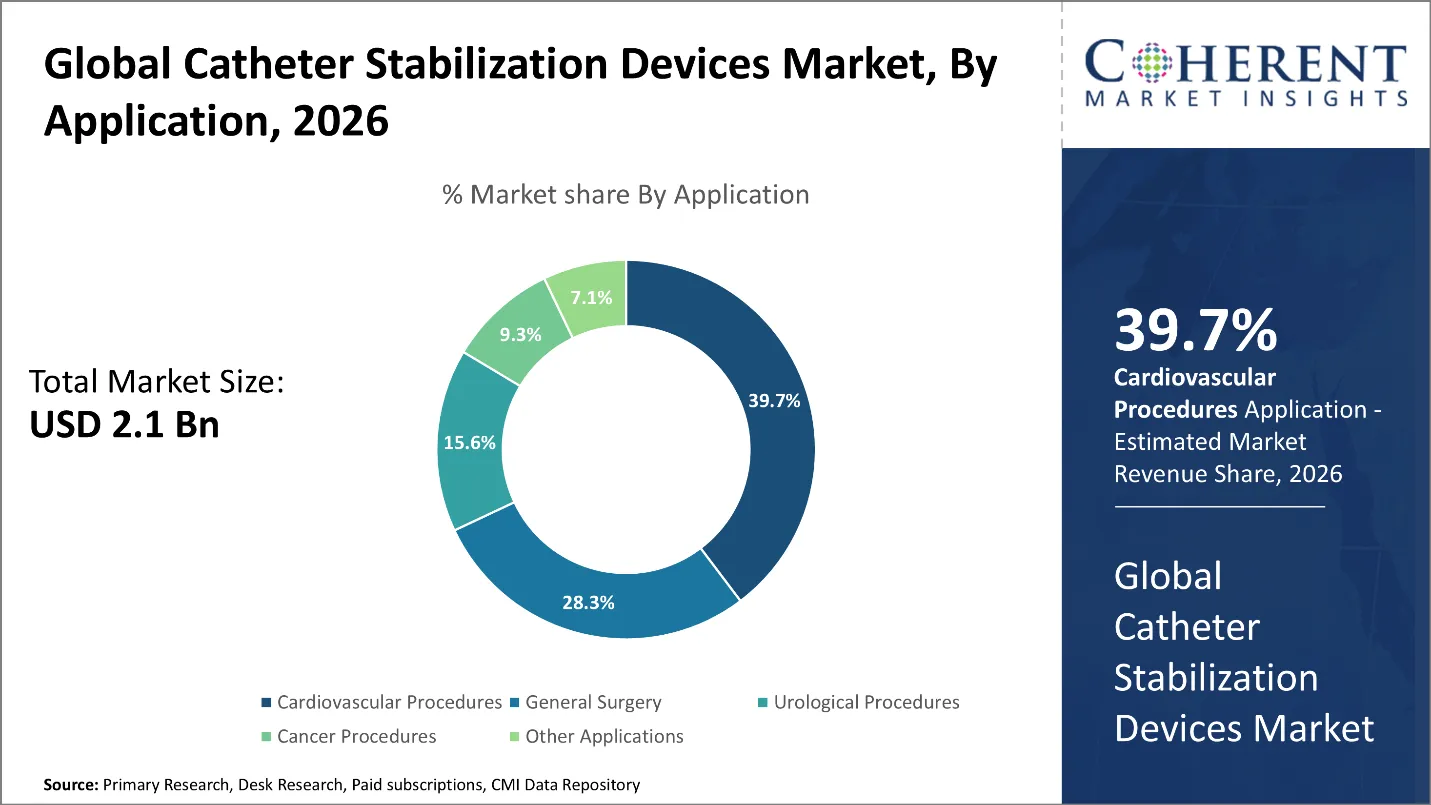
- Cardiovascular Procedures expected to hold largest market share of 39.7% in 2026 owing to its growth in minimally invasive cardiovascular procedures. Minimally invasive cardiac surgery (MICS) constitutes approximately 33%–50% of all cardiac surgeries performed worldwide.
- Hospital acquired the largest market share of 42.2% in 2026 owing to the increasing hospital admissions. During 2025–26, a total of 1,104,141 patient visits were recorded across 26 outpatient departments.
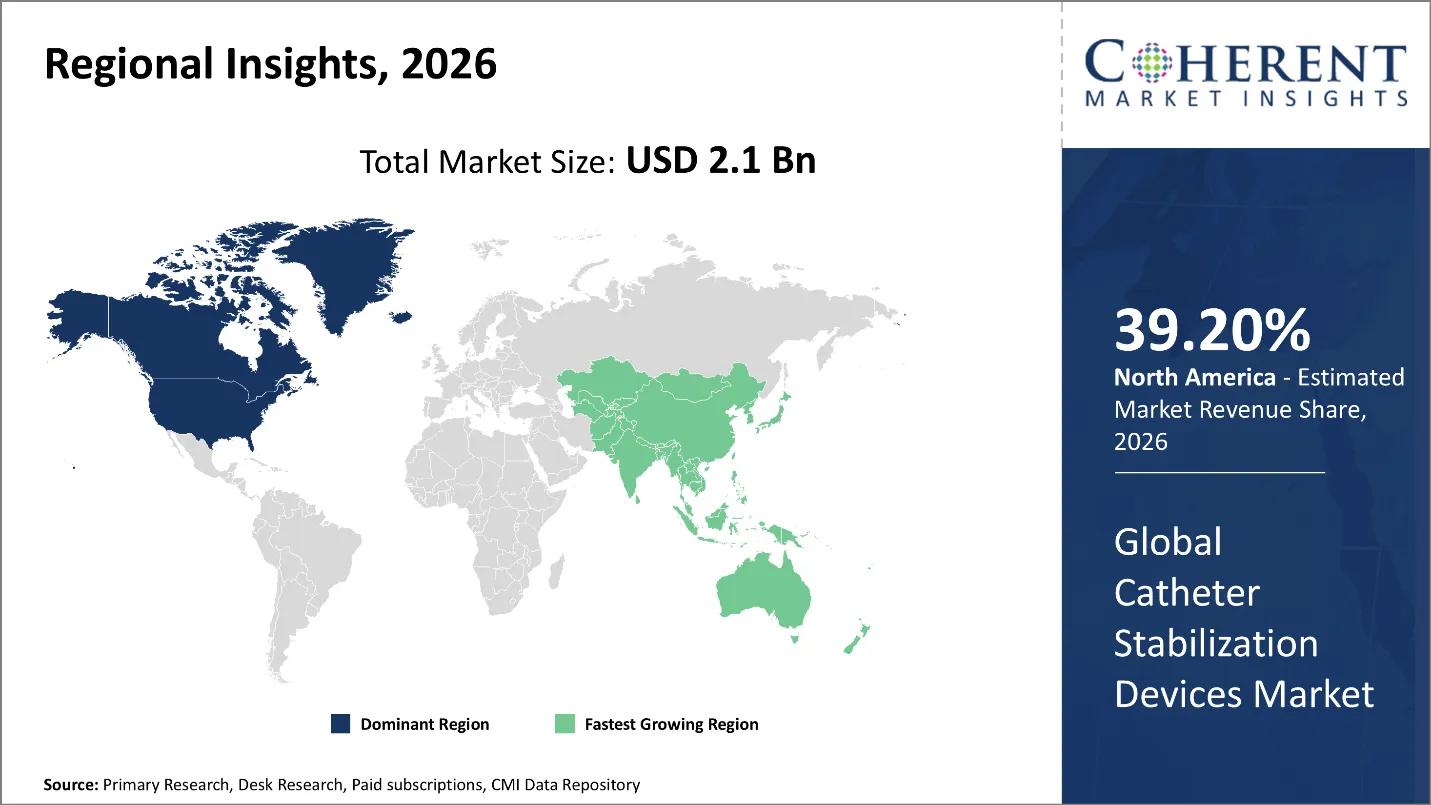
- North America is expected to acquire the dominant share of 39.2% in 2026 owing to its large and well-developed hospital infrastructure. According to the American Hospital Association (AHA) Fast Facts, the United States has approximately 6,100 hospitals with nearly 907,000 staffed beds.
Current Events and Their Impact on the Catheter Stabilization Devices Market
Current Event | Description and its Impact |
U.S. FDA Quality Management System Regulation (QMSR) — Effective February 2, 2026 |
|
FDA Classification of Intravascular Catheter Securement Devices |
|
Segmental Insights
- Current Industry Events of 2026
- Market Size Estimation
- Regional Breakdown
- Competitive Landscape
- Customer Intelligence
- Segmental Analysis
- Pricing Analysis
- Key Market Drivers, Challenges & Future Trends
- Customized Insights Section
Why is Arterial Securement Devices Acquiring the Largest Market Share?
Arterial Securement Devices hold the largest market share of 38.7% in 2026. Growing use of arterial catheters in intensive care, emergency medicine, surgery, and cardiovascular procedures drives demand for arterial securement devices. Healthcare providers increasingly use these devices to support continuous blood pressure monitoring and frequent arterial blood sampling. Hospitals also adopt securement solutions to prevent catheter dislodgement, migration, and accidental removal while reducing related complications. Expanding critical-care infrastructure, rising chronic and cardiovascular disease prevalence, an aging population, and advances in suture less and adhesive technologies further strengthen demand for arterial securement devices in the catheter stabilization devices market. Cardiovascular diseases (CVDs) remain the leading global cause of death, accounting for approximately 19.2–20.5 million deaths annually. Penumbra launched its Lightning Bolt 7 arterial thrombectomy system after FDA clearance. The device uses modulated aspiration, pressure sensors, and an algorithm to distinguish clot removal from blood flow.
Cardiovascular Procedures expected to hold largest market share
Cardiovascular Procedures expected to hold largest market share of 39.7% in 2026 owing to its increasing number of elderly patients. Hospitals increasingly perform cardiovascular procedures, driving demand for catheter stabilization devices used in cardiac catheterization, electrophysiology studies, ablation, and other catheter-based interventions. The growing prevalence of cardiovascular diseases and an aging population are increasing the number of patients requiring diagnostic and therapeutic cardiovascular care. The global population aged 60 years and older is projected to reach approximately 2.1 billion by 2050, nearly doubling from 2020 levels. Healthcare providers use stabilization devices to maintain secure catheter positioning and reduce dislodgement, migration, and procedural complications. Advances in minimally invasive technologies, expanding cardiac-care infrastructure, and greater emphasis on patient safety and procedural efficiency further strengthen market demand. Yashoda Medicity launched its “Rep Se Rescue Tak” campaign to train Delhi-NCR fitness professionals to recognize cardiac arrest, perform CPR, and seek emergency medical help quickly.
Which End User segment dominates the market?
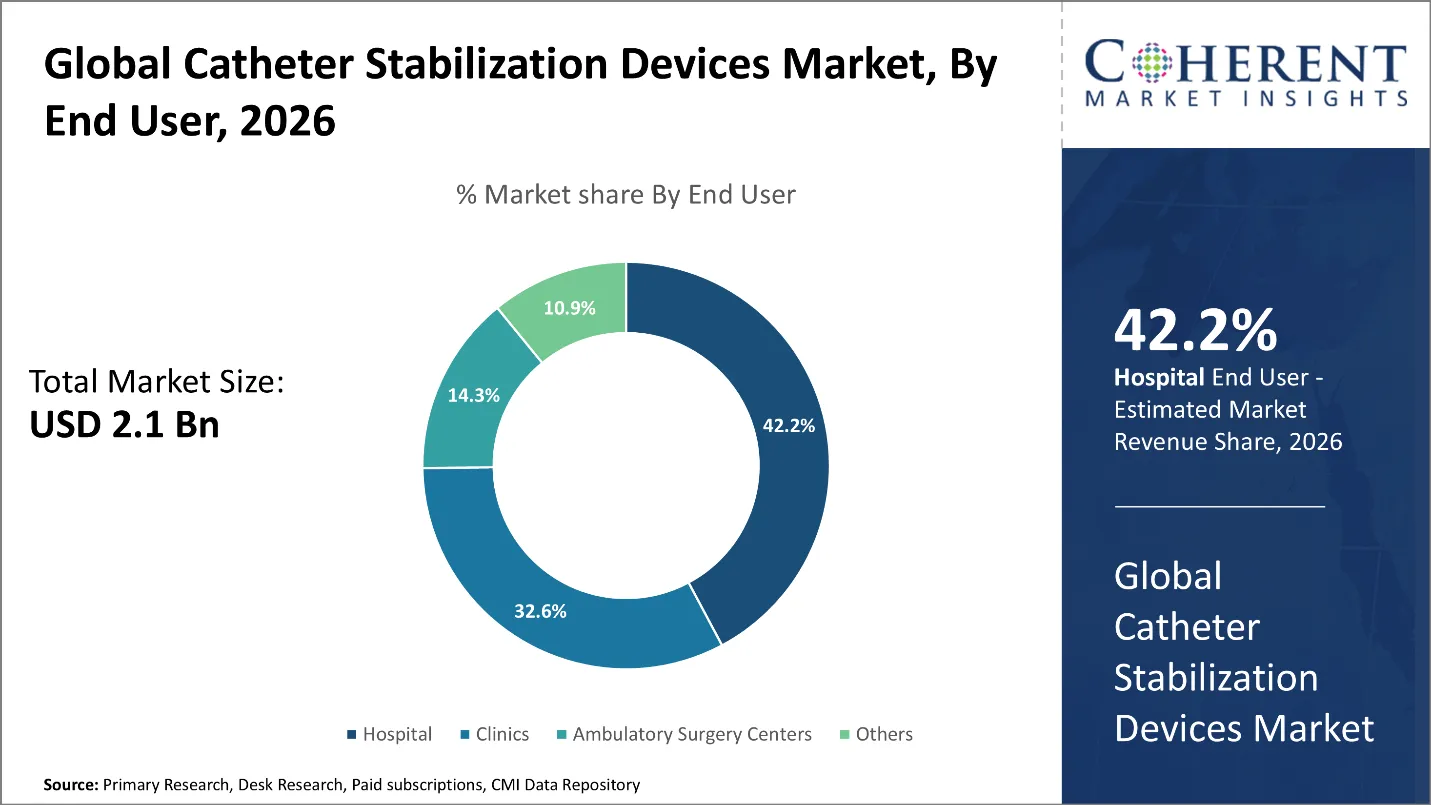
Hospital acquired the largest market share of 42.2% in 2026. Hospitals increasingly use vascular, arterial, central venous, and other indwelling catheters across critical care, surgery, oncology, and cardiovascular treatment, driving demand for catheter stabilization devices. Rising hospital admissions and expanding intensive care facilities further increase product adoption. Healthcare providers use securement solutions to prevent catheter dislodgement, migration, accidental removal, and related complications. Hospitals also implement standardized catheter-care protocols and adopt advanced sutureless stabilization technologies. Growing healthcare expenditure and stronger focus on patient safety and infection prevention further support market demand.
Catheter Stabilization Devices Market Trends
- Rising adoption of minimally invasive and catheter-based procedures increases the need for secure and reliable catheter placement. This is particularly relevant in cardiovascular care, where cardiovascular diseases caused an estimated 19.8 million deaths globally in 2022, according to the WHO, reinforcing the substantial global burden of cardiovascular disease and the continued need for cardiovascular interventions.
- Increasing focus on antimicrobial and advanced securement technologies is supported by the continuing clinical burden of catheter-related infections. The CDC reports approximately 15 million central vascular catheter days annually in U.S. intensive care units and cites an estimated 80,000 catheter-related bloodstream infections in ICUs each year based on the underlying guideline evidence.
- Population ageing is expanding the pool of patients requiring long-term and hospital-based care. WHO projects that the global population aged 60 years and older will increase from approximately 1 billion in 2020 to 2.1 billion by 2050. By 2050, approximately 80% of older people are expected to live in low- and middle-income countries, increasing the need for healthcare infrastructure and age-related medical services.
- Expansion of intensive-care and specialized hospital services creates continued utilization of central vascular access. In the U.S., approximately 15 million central vascular catheter days occur annually in ICUs, according to CDC guidance. This provides a measurable indication of the scale of catheter exposure in a major healthcare market and the associated need for securement solutions.
Regional Insights
North America dominates owing to increasing focus on reducing healthcare costs
North America is expected to acquire the dominant share of 39.20% in 2026. North America’s advanced healthcare infrastructure and high medical expenditure drive demand for catheter stabilization devices. In 2024, U.S. national health expenditures accounted for 18.0% of GDP, with per-capita health spending reaching USD 15,474. Hospitals increasingly use these products during critical care, surgery, oncology, dialysis, and cardiovascular procedures to maintain secure catheter placement and improve patient safety. The region’s aging population and rising chronic disease burden increase catheter utilization. Healthcare providers also strengthen infection-prevention practices and standardize catheter care, while manufacturers develop sutureless, adhesive, and antimicrobial solutions. These factors collectively support the continued adoption of catheter stabilization devices across North America. Medtronic launched the Stedi Extra Support guidewire to improve Evolut TAVR performance and support treatment of severe aortic stenosis across commercially available TAVR systems.
Asia Pacific Catheter Stabilization Devices Market Trends
The Asia Pacific catheter stabilization devices market benefits from expanding healthcare infrastructure, growing hospital and surgical volumes, and increasing use of minimally invasive procedures. An aging population and rising cases of cardiovascular diseases, cancer, diabetes, and renal disorders drive demand for catheter-based treatments. Cardiovascular diseases (CVDs) are the leading cause of death in India, accounting for approximately 25%–27% of total deaths. Hospitals increasingly adopt advanced securement solutions to reduce catheter-associated infections, prevent accidental dislodgement, and improve patient safety. Government healthcare investments, expanding home-care services, medical tourism, and innovations in antimicrobial and skin-friendly stabilization devices further strengthen market growth across China, India, Japan, South Korea, and Southeast Asia. Clariant developed and tested new polymer compounds for medical catheters with improved resistance to high humidity and temperature degradation.
United States Catheter Stabilization Devices Market Trends
The United States catheter stabilization devices market benefits from hospitals’ widespread use of vascular and urinary catheters, stronger efforts to prevent healthcare-associated infections, and growing demand to minimize catheter migration, dislodgement, and related complications. Healthcare providers increasingly use sutureless securement devices to support safer catheter management and reduce associated risks. Hospital quality initiatives, expanding critical-care services, and advances in stabilization technologies also encourage healthcare facilities to adopt effective catheter securement solutions. EBR Systems launched its WiSE Coupler accessory commercially in the U.S., expanding wireless cardiac pacing solutions for patients with cardiac rhythm disorders.
China Catheter Stabilization Devices Market Trends
China’s catheter stabilization devices market grows as hospitals expand infrastructure and clinicians increasingly use intravenous and central venous catheters. Healthcare providers place greater emphasis on preventing catheter-related complications, which increases demand for securement and stabilization solutions. The adoption of advanced medical devices and improved clinical practices further supports market growth. In addition, expanding intensive care, oncology, and surgical services increases catheter use and creates greater demand for effective stabilization devices.
Who are the Major Companies in Catheter Stabilization Devices Industry
Some of the major key players in Catheter Stabilization Devices are B. Braun Melsungen AG, Baxter International, Inc., 3M Company, C. R. Bard, Inc., ICU Medical, Inc., Smith’s Group Plc., Merit Medical Systems, Inc.
Key News
- In April 2026, Reflow Medical launched its next-generation Cora Flex and Cora Force Torqueable Microcatheters in the U.S. market to support treatment of complex cardiovascular disease.
Market Report Scope
Catheter Stabilization Devices Market Report Coverage
Report Coverage | Details | ||
Base Year: | 2025 | Market Size in 2026: | USD 2.1 Bn |
Historical Data for: | 2020 to 2024 | Forecast Period: | 2026 to 2033 |
Forecast Period 2026 to 2033 CAGR: | 5.3% | 2033 Value Projection: | USD 2.9 Bn |
Geographies covered: |
| ||
Segments covered: |
| ||
Companies covered: | B. Braun Melsungen AG, Baxter International, Inc., 3M Company, C. R. Bard, Inc., ICU Medical, Inc. Smith’s Group Plc., Merit Medical Systems, Inc. | ||
Analyst Opinion
- Catheter failure is making stabilization a clinical necessity, not an optional accessory. A 2024 analysis of 1,892 central venous access devices found that roughly one in ten catheters experienced failure, with dislodgement accounting for 1.7% of failures. In my view, this directly strengthens the case for better stabilization technologies because preventing catheter migration and accidental removal can protect treatment continuity and reduce avoidable device replacement.
- The shift toward sutureless securement is one of the clearest structural opportunities in this market. The CDC recommends sutureless securement devices for intravascular catheters, specifically recognizing their potential to reduce infection, catheter migration, and dislodgement. Clinical evidence reinforces this position: in a randomized study of 170 PICC patients, bloodstream infections fell from 10 cases with sutures to 2 cases with a StatLock securement device.
- The strongest products will be those that demonstrate measurable reductions in catheter failure rather than simply offering easier fixation. A randomized trial involving 1,807 patients found peripheral IV catheter failure in 38%–43% of evaluable patients across different dressing and securement approaches, showing that catheter failure remains substantial even with established technologies. Meanwhile, a pediatric randomized trial found failure of 34% with standard care versus 21% with an integrated securement dressing and 12% when tissue adhesive was added. I therefore expect clinical performance, skin safety, and securement reliability to become increasingly important differentiators among competing devices.
Speak to the analyst
Want personalized insights?
Take the findings above to one of our principal consultants, or have the report rebuilt around the segments, geographies and competitors you actually track.
Market Segmentation
- By Product Type (Revenue, USD Bn, 2021-2033)
- Arterial Securement Devices
- Peripheral Securement Devices
- Urinary Catheters Securement Devices
- Central Venous Catheter Securement Devices
- Chest Drainage Tube Securement Devices
- Other Securement Devices
- By Application (Revenue, USD Bn, 2021-2033)
- Cardiovascular Procedures
- General Surgery
- Urological Procedures
- Cancer Procedures
- Other Applications
- By End User (Revenue, USD Bn, 2021-2033)
- Hospital
- Clinics
- Ambulatory Surgery Centers
- Others
- By Region (Revenue, USD Bn, 2021-2033)
- North America
- U.S.
- Canada
- Latin America
- Brazil
- Mexico
- Argentina
- Rest of Latin America
- Europe
- Germany
- U.K.
- France
- Italy
- Spain
- Russia
- Rest of Europe
- Asia Pacific
- China
- India
- Japan
- Australia
- South Korea
- ASEAN
- Rest of Asia Pacific
- Middle East
- GCC
- Israel
- Rest of Middle East
- Africa
- South Africa
- Central Africa
- North Africa
- North America
Sources
Primary Research interviews
- Interventional radiologists
- Critical-care physicians
- Vascular-access specialists
- ICU and oncology nurses
- Infection-prevention specialists
- Hospital procurement and purchasing managers
- Medical-device distributors
- Catheterization laboratory managers
- Medical-device regulatory professionals
Databases
- U.S. Food and Drug Administration (FDA) Medical Device Databases
- Centers for Disease Control and Prevention (CDC) National Healthcare Safety Network (NHSN)
- National Center for Biotechnology Information (NCBI) / PubMed
- World Health Organization (WHO) Global Health Observatory
- U.S. National Library of Medicine databases
- European Medicines Agency (EMA) databases
- ClinicalTrials.gov
- U.S. Census Bureau healthcare and demographic datasets
- World Bank healthcare and population databases
Magazines
- Nursing Times
- American Nurse Journal
- Medical Design & Outsourcing
- MedTech Insight
- Healthcare Purchasing News
- Infection Control Today
Journals
- The Lancet
- The Lancet Infectious Diseases
- Journal of Hospital Infection
- Infection Control & Hospital Epidemiology
- American Journal of Infection Control
- Journal of Vascular Access
- Journal of Infusion Nursing
- Critical Care Medicine
- Intensive Care Medicine
- Clinical Infectious Diseases
- BMJ
- New England Journal of Medicine
- Journal of Clinical Nursing
Newspapers
- The New York Times
- The Wall Street Journal
- Reuters
- The Guardian
- Financial Times
- The Washington Post
Associations
- Association for Professionals in Infection Control and Epidemiology (APIC)
- Infusion Nurses Society (INS)
- Society of Critical Care Medicine (SCCM)
- Infectious Diseases Society of America (IDSA)
- Society for Healthcare Epidemiology of America (SHEA)
- American Society of Anesthesiologists (ASA)
- Society for Vascular Surgery (SVS)
- European Society of Intensive Care Medicine (ESICM)
- European Society of Vascular Surgery (ESVS)
Public Domain sources
- Centers for Disease Control and Prevention (CDC) Guidelines for the Prevention of Intravascular Catheter-Related Infections
- World Health Organization (WHO) Guidelines for the Prevention of Bloodstream Infections and Other Infections Associated with the Use of Intravascular Catheters
- U.S. Food and Drug Administration (FDA) medical-device classifications, recalls, safety communications, and regulatory guidance
- National Institutes of Health (NIH) and National Library of Medicine (NLM) publications
- ClinicalTrials.gov clinical-trial records
- European Medicines Agency (EMA) regulatory documents
- U.S. Department of Health and Human Services (HHS) healthcare datasets and publications
- World Bank healthcare expenditure and demographic datasets
- OECD healthcare statistics
- National health ministry and public-health agency publications
- Peer-reviewed clinical studies and systematic reviews available through PubMed and NCBI
Proprietary Elements
- CMI Data Analytics Tool
- Proprietary CMI Existing Repository of information for last 10 years
Get access to 250+ pages report
Every segment, forecast, competitor profile and data table behind the analysis above — available for instant download.
- ESOMAR Member
- ISO 9001:2015 Certified
- D-U-N-S Registered
- GDPR & CCPA Compliant
Missing comfort of reading report in your local language? Find your preferred language:
Transform your Strategy with Exclusive Trending Reports
Frequently Asked Questions
Cardiovascular Procedures are expected to represent the leading application segment in 2026.
The Catheter Stabilization Devices Market is anticipated to grow at a CAGR of 5.3% with USD 2.1 Bn in 2026 and is expected to reach USD 2.9 Bn in 2033.
The Catheter Stabilization Devices Market comprises products designed to secure catheters and prevent dislodgement, migration, accidental removal, and related complications.
Key drivers include increasing catheterization procedures, the growing burden of chronic and cardiovascular diseases, an aging population, and greater hospital emphasis on catheter-related infection prevention and patient safety.
Arterial Securement Devices are projected to hold the largest share in 2026, supported by their increasing use in intensive care, and cardiovascular procedures requiring continuous arterial monitoring and frequent blood sampling.
Sutureless devices simplify catheter fixation while reducing the need for suturing.