

Global Beach Hotels Market Size and Forecast – 2026 to 2033
The Global Beach Hotels Market is estimated to be valued at USD 155.96 Bn in 2026 and is expected to reach USD 250.44 Bn by 2033, reflecting a compound annual growth rate (CAGR) of 7.0% from 2026 to 2033.
Key Takeaways of the Beach Hotels Market
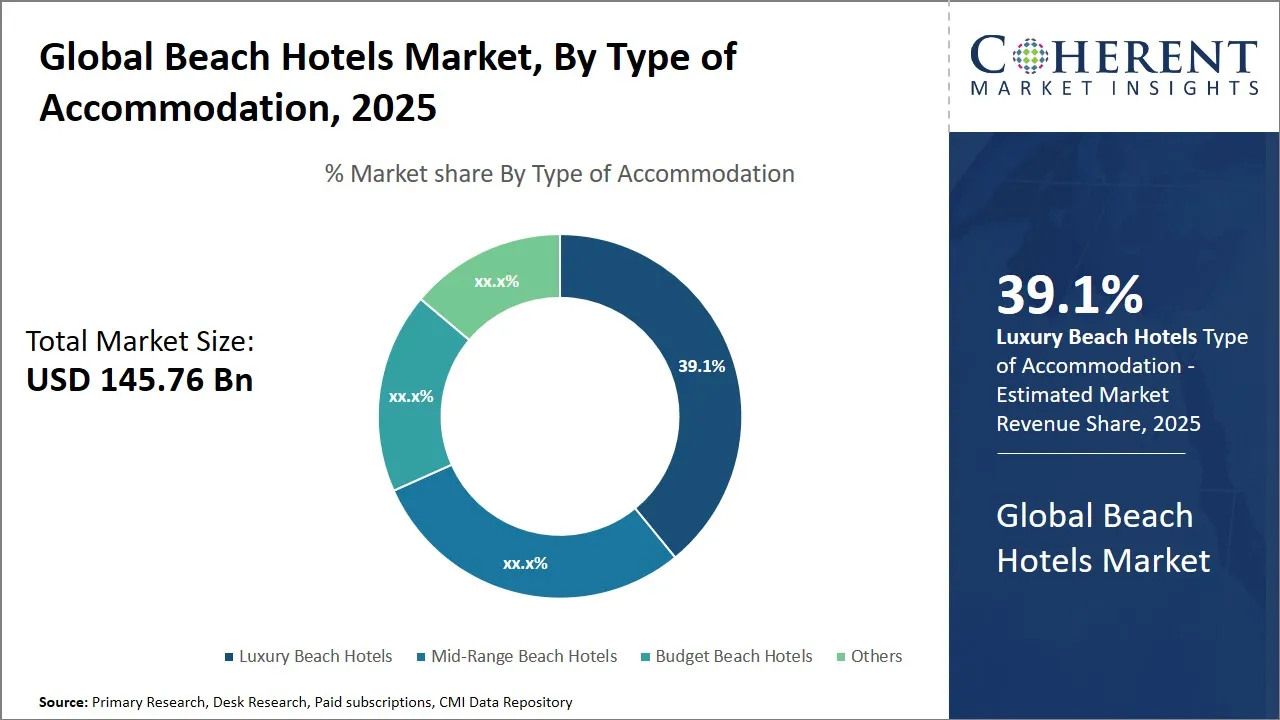
- Luxury beach hotels segment is expected to capture 40.1% of the market share in 2026.
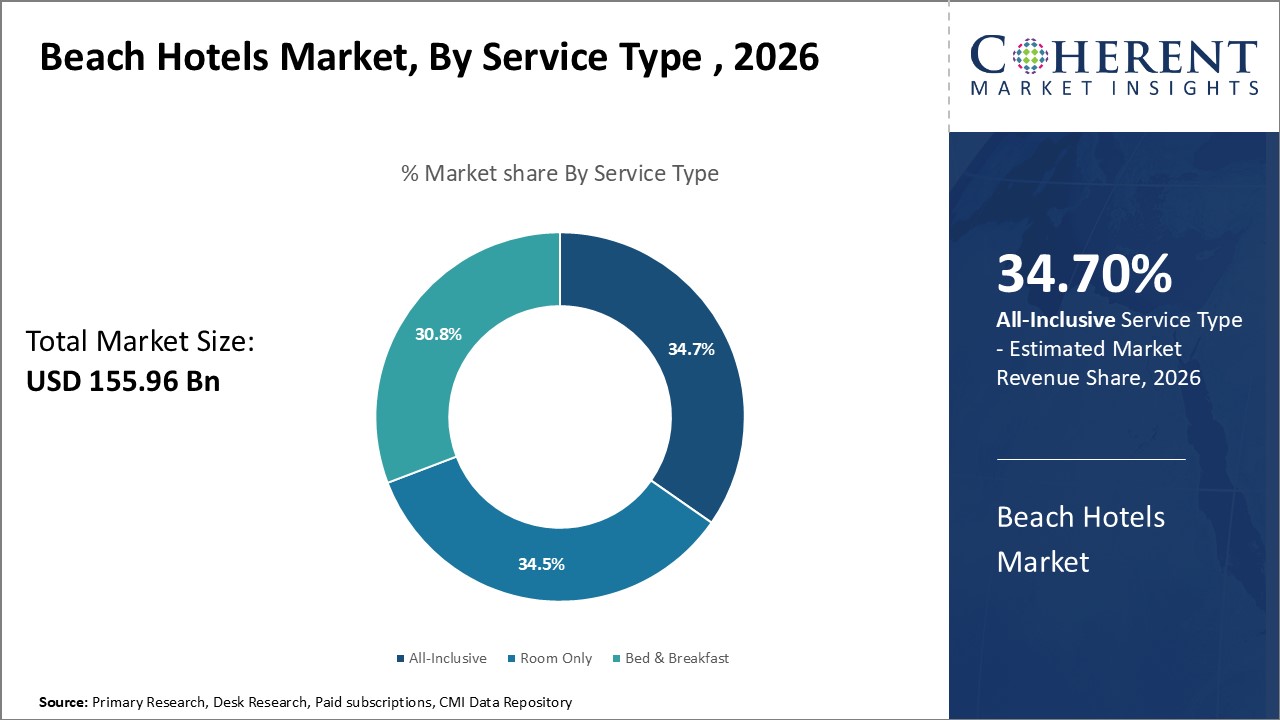
- The all-inclusive segment is estimated to holds 34.7% of the global beach hotels market share in 2026.
- The online segment is projected to captures 59.3% of the beach hotels market share in 2026.
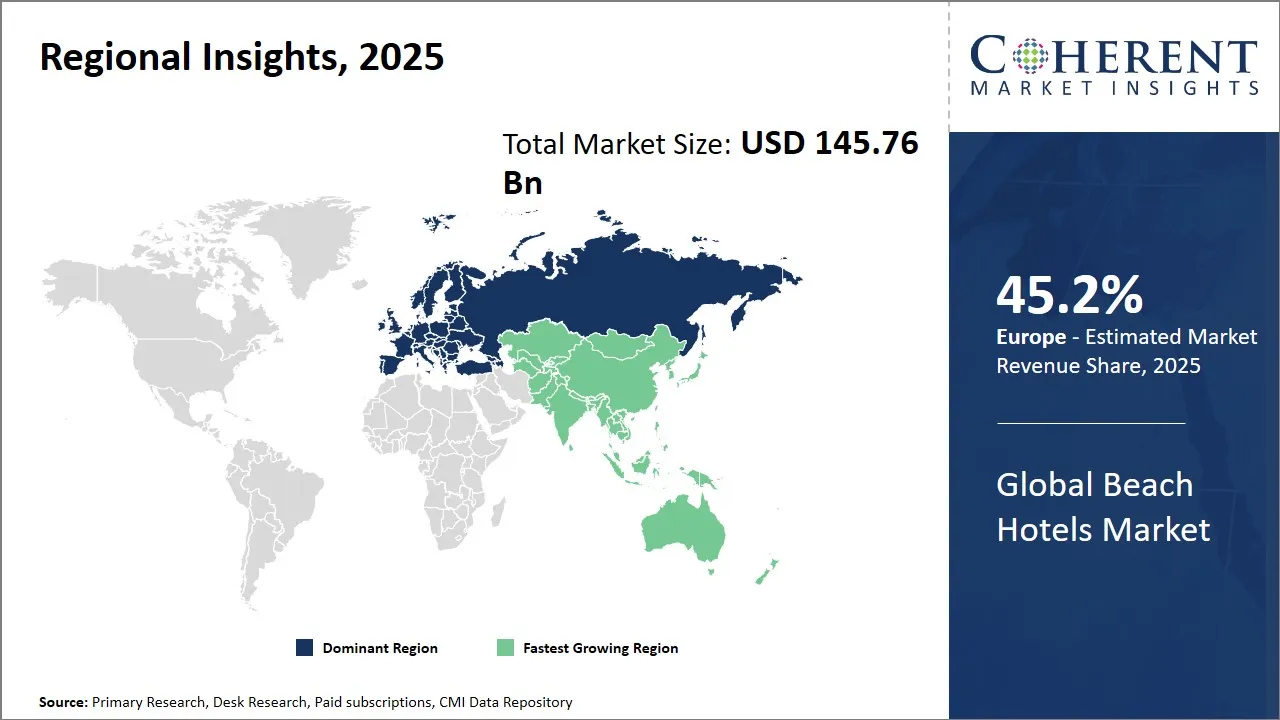
- Europe will dominate the beach hotels market in 2026 with an estimated 45.2% share.
- Asia Pacific will hold 19.3% share in 2026 and record the fastest growth.
Market Overview
- The beach hotels market is experiencing a number of significant trends at the present. The trend towards sustainability practices such as green construction and operation is becoming commonplace as travelers could be drawn into the greener side.
- Bespoke wellness programs and local cultural integrations, in turn, are drawing a wide variety of business tourism/tourists.
- Technological development of digital technology and mobile booking also contribute to increasing the involvement of guests and facilitating the services, which is a significant contribution to the market growth and competitiveness.
Currents Events and Its Impacts
Current Events | Description and its Impact |
Tourism Growth & Demand Shifts 2025 |
|
Regulatory & Infrastructure Developments |
|
Segmental Insights
- Current Industry Events of 2026
- Market Size Estimation
- Regional Breakdown
- Competitive Landscape
- Customer Intelligence
- Segmental Analysis
- Pricing Analysis
- Key Market Drivers, Challenges & Future Trends
- Customized Insights Section
Why Does Luxury Beach Hotels Dominate Beach Hotels Market in 2026?
Luxury beach hotels segment is expected to hold 40.1% of the global beach hotels market share in 2026, because they offer premium experience and exclusive products that appeal to the luxury tourist to indulge and enjoy their privacy. This segment is driven by the increasing need of the high-end travelling experiences where the finer guests would look towards perfection in service, fine decor and personal offerings that are more than just the basic accommodation. Many luxury beach resorts have private beaches, luxury dining, spa and wellness facilities and customized activities that make them strongly differentiated by mid-range and affordable hotels.
The other major growth factor in this segment is the emerging consumer consciousness of exclusive and culturally immersive experiences with luxurious comfort. The geographic opportunities adopted by many luxurious beach hotels are that they are located in exotic and very clean coastal areas that attract people who want to avoid the congestion of cities.
For example, Four Seasons Resort in Bora Bora, which offers overwater bungalows with private pools, personalized concierge services, and immersive cultural experiences, appealing to guests who seek both exclusivity and luxury.
Is All-Inclusive Service a Key Growth Driver for the Beach Hotels Market?
All-inclusive segment is expected to hold 34.7% of the beach hotels market share in 2026, due to their appeal in providing convenience, cost-effectiveness, and an immersive vacation experience. The given type of service enables the guests to spend their time on food, drinks, leisure, and amusement without being concerned about extra expenditures, making the budgeting process easier and the experience of the trip more fulfilling. The all-inclusive model has been widely used especially with families, honeymooners and international travelers who would like to have an all-inclusive package which reduces the logistical burden when spending their holiday.
The growing demand of hassle-free, curated experiences in which guests can relax and rely on the hotel to take care of all details also increases the popularity of the all-inclusive segment. The typology of this service encourages the lengthening of the stay and increasing the retention rates among the guests since they will see the value in the fact that the various amenities are included in just one price. Another advantage of the hotels that implement this model is that it leads to higher on-site purchases and customer retention as a result of the high-degree of immersion established by the availability of food, drinks, and activities at all times.
Online Booking Channel Dominates the Beach Hotels Market
Online segment is set to hold 58.3% share in 2025, due to the growing adoption of the internet connectivity, the popularity of smartphones, and the shift in consumer preference towards digital solutions in the travel planning process. Travelers can easily and confidently make informed decisions online with their travel bookings platforms as they know a lot about them, compare and contrast prices in real-time, are able to read customer reviews, and are also offered flexible payment options. Such transparency and ease of access are not even comparable to the old offline methods and the trend of booking online is biased.
The ability to make bookings anytime and anywhere facilitates impulse and planned bookings, and it is more so relevant to beach hotels situated in a foreign or isolated location. A lot of tourists are now relying on online travel agencies (OTAs), brand websites, and meta-search engines to narrow down their accommodation type and model of service with a very specific option based on their preference and budget. The combination of high-level algorithms and AI within online platforms also adds extra value to the user experience as packages are suggested, depending on previous behavior, information about the travel, and reviews.
Regional Insights
Europe Beach Hotels Market Analysis and Trends
The Europe region is projected to lead the market with a 45.2% share in 2026, and this has been largely influenced by its established tourism infrastructure, variety in coastlines offering and well-established hospitality industry. Beach resorts in other countries like Spain, France and Italy are historic and they receive large numbers of international and domestic tourists throughout the year. It has good government projects on sustainable tourism and preserving its heritage thereby improving the quality and attractiveness of beach hotels. Transportation networks and open-border travelling policies offered under the Schengen Agreement allow easy access by the travelers thereby contributing to the occupancy of hotels.
Moreover, some of the largest hotel chains, such as AccorHotels, Marriott International, and Melia Hotels International, have a large presence in the country and have been actively looking at making their presence in the target market regarding eco-friendly resorts and luxurious experiences that serve the changing customer preferences. Economic forces in Europe also facilitate the supply chain of the hotel facilities, construction supplies and materials which help in efficient operations and the capacity to expand the services in little time.
Asia Pacific Beach Hotels Market Analysis and Trends
The Asia Pacific region is expected to exhibit the fastest growth in the market contributing 19.3% share in 2026. The destinations have become more accessible due to more investment of government in the infrastructure facilities of tourism and open policies on visa. The ecosystem surrounding the regions market is enhanced by a healthy blend of global hotel chains and prevalence of local companies like Shangri-La Hotels, Banyan tree Holdings, and OYO Rooms who are actively growing in order to benefit out of the increasing consumer demand. In addition, the dynamics of the trade are in favor of the import of luxury goods and innovative solutions in the sphere of hospitality and digitalization supports direct booking and increased customer interaction. The sustainable tourism and cultural oriented sphere also represent an additional attraction to the sector of beach hotels in the regions, which contributes to diversification and novelty.
Global Beach Hotels Market Outlook for Key Countries
Is Spain the Key Growth Driver for the Global Beach Hotels Market?
Spain’s beach hotels market remains a global powerhouse, with iconic destinations like Costa del Sol and the Balearic Islands attracting travelers from Europe, North America, and beyond. The country’s strong hospitality sector benefits from proactive government campaigns promoting tourism diversification and season extension to reduce seasonal fluctuations. Major hotel operators such as Meliá Hotels International and Barceló Hotel Group have leveraged Spain’s strengths by developing upscale, sustainable resorts and integrating local culture into their offerings, enhancing guest satisfaction and loyalty. Spain also benefits from well-developed marine and coastal infrastructure, facilitating cruise tourism links with beach hotels.
Thailand Beach Hotels Market Trends
Thailand is still in the limelight as a destination in the world with its dynamic beach hotels market in Phuket, Krabi and Pattaya. Market growth has been occasioned by the high emphasis of the Thai governments on the tourism sector as one of the major economic drivers, which has resulted in investment in airport expansion, infrastructure such as transportation and visa facilitation. Thailand is a high-end beach destination with wellness and cultural authenticity, which has been developed by major players such as Dusit International and Minor Hotels, among others, and who have opened a number of beachfront resorts in Thailand.
In addition, sustainable development is promoted by the inclusion of eco-resorts and community-based tourism projects that allow generating long-term attractiveness and social-economic advantages to the local communities.
U.S. Beach Hotels Market Trends
The U.S. is still a market leader in the beach hotels sector including famous seaside resorts like Florida, California and Hawaii. The existence of large multinational and local hospitality companies such as the Hiltons Worldwide, Hyatt Hotels and the four seasons guarantee variety of products, luxury resorts, family friendly beach resorts.
Tourists have a wide range of infrastructure in the U.S. beach hotels market in terms of clean beaches, airports, highways, and entertainment facilities that add to the overall experience of the tourist. The policies that encourage tourism and investment in conservation projects along the coastal regions are by the government, which keep the quality of beaches intact, a factor that is key in ensuring the high hotel occupancy rates. The trade relations favor the introduction of the latest technologies in the hospitality industry, which makes the competition even more competitive.
Is Australia Beach Hotels Market Poised for Continued Growth?
The beach hotel industry of Australia boasts of clean coastal environments and marine biodiversity. Tourist attractions such as the Gold Coast and Byron Bay keep on receiving tourists, both international and domestic. The focus on tourism development by the Australian governments by offering grants and promotional programs has prompted the hotel operators like the Accor Hotel and the Mantra Group to be innovative in their services, by adapting the eco-friendly design and adventure tours.
Moreover, effective partnerships between the tourism board and the indigenous communities have also enhanced the market ecosystem combining the culture narrations with luxury beach experiences. Well controlled policies on the environment and facilitation of trade add to a sustainable strategy, which is attractive to ecologically sensitive tourists.
Brazil Beach Hotels Market Trends
The beach hotels industry of the Brazilian market is supported with the iconic beaches, especially the northeast coast and Rio de Janeiro. The market in the country is being defined by the increasing demand which is fueled by not only leisure tourist but also event tourist seeking international sporting events and festivals. The local hospitality organizations such as the Atlantica Hotels and the international hotels such as the Iberostar have also made investments in the growth of beachfront properties with a focus on luxury and inclusive accommodation.
This growth trend has been facilitated by government initiatives to enhance safety, transport infrastructures and marketing campaigns targeting the emerging economies. In spite of certain operational issues, the extensive natural landscape and rich culture of Brazil make it one of the major competitors in the beach hotel industry in Latin America.
Digital Experience & Contactless Tech Index
This index measures beach hotels' adoption of contactless solutions like mobile check-in, digital keys, and app-based services, often scoring from 0-100 based on penetration rates and guest satisfaction lifts. High scores (e.g., 70+) correlate with 25% higher NPS and repeat visits, driven by 70-80% traveler preference for frictionless tech amid post-pandemic norms. It benchmarks properties against peers, aiding operators in prioritizing ROI-focused upgrades like in-room tablets for personalized upsells.
Geo-Environmental Constraints
Protected areas (e.g., coastal reserves, mangroves) and zoning laws restrict beach hotel expansions, creating binary or scaled indices (low/medium/high constraint) via GIS overlays of regulations and environmental buffers. In regions like the Caribbean or India, 40-60% of prime oceanfront faces high barriers due to sustainability mandates and habitat preservation. These factors inform risk-adjusted feasibility studies for greenfield projects.
Market Players, Key Development, and Competitive Intelligence
Key Developments
- In February 2025, Hyatt Hotels, a U.S.-based hospitality company, announced plans to acquire Playa Hotels & Resorts in beachfront locations across Mexico and the Caribbean for USD 2.6 billion.
- In July 2024, The Fives Hotels & Residences, a Mexico-based hospitality company, launched its new property, the Beachfront by The Fives Hotels, on the beach of Xcalacoco, Mexico. The new hotel features 43 rooms, cocktail stations, a Jacuzzi, and private heated pools.
- In May 2024, IHG Hotels & Resorts, a U.K.-based hospitality company, introduced the Arabella Beach Hotel in Kuwait, featuring 195 rooms. The hotel is located on the Arabian Gulf shoreline.
Top Strategies Followed by Global Beach Hotels Market Players
Player Type | Strategic Focus | Example |
Established Market Leaders | Heavy investment in R&D and innovation | Four Seasons and the Aman Resorts invest heavily in research and development (R&D) to develop high performance and premium products to appeal to luxury and discriminating visitors. Many of these businesses tend to use new technologies and green building products to enhance the experiences of their guests, including the use of smart-room controls at Four Seasons and eco-friendly design of Amans. |
Mid-Level Players | Cost-effective solutions with balanced quality | Holiday Inn Resort and Best Western, are oriented to the delivery of the combination of the affordable price and the quality that should be appealing to the wider variety of the tourists. Such brands are likely to develop affordable solutions with the focus on value without compromising the necessary comfort and service levels. |
Small-Scale Players | Niche specialization & innovative variants | EcoBeach Resort and The Greenhouse Beach Hotel usually serve niche markets and aim at innovations and eco-friendly elements or personalized guest experiences. |
Market Report Scope
Beach Hotels Market Report Coverage
| Report Coverage | Details | ||
|---|---|---|---|
| Base Year: | 2025 | Market Size in 2026: | USD 155.96 Bn |
| Historical Data for: | 2020 To 2024 | Forecast Period: | 2026 To 2033 |
| Forecast Period 2026 to 2033 CAGR: | 7.0% | 2033 Value Projection: | USD 250.44 Bn |
| Geographies covered: |
| ||
| Segments covered: |
| ||
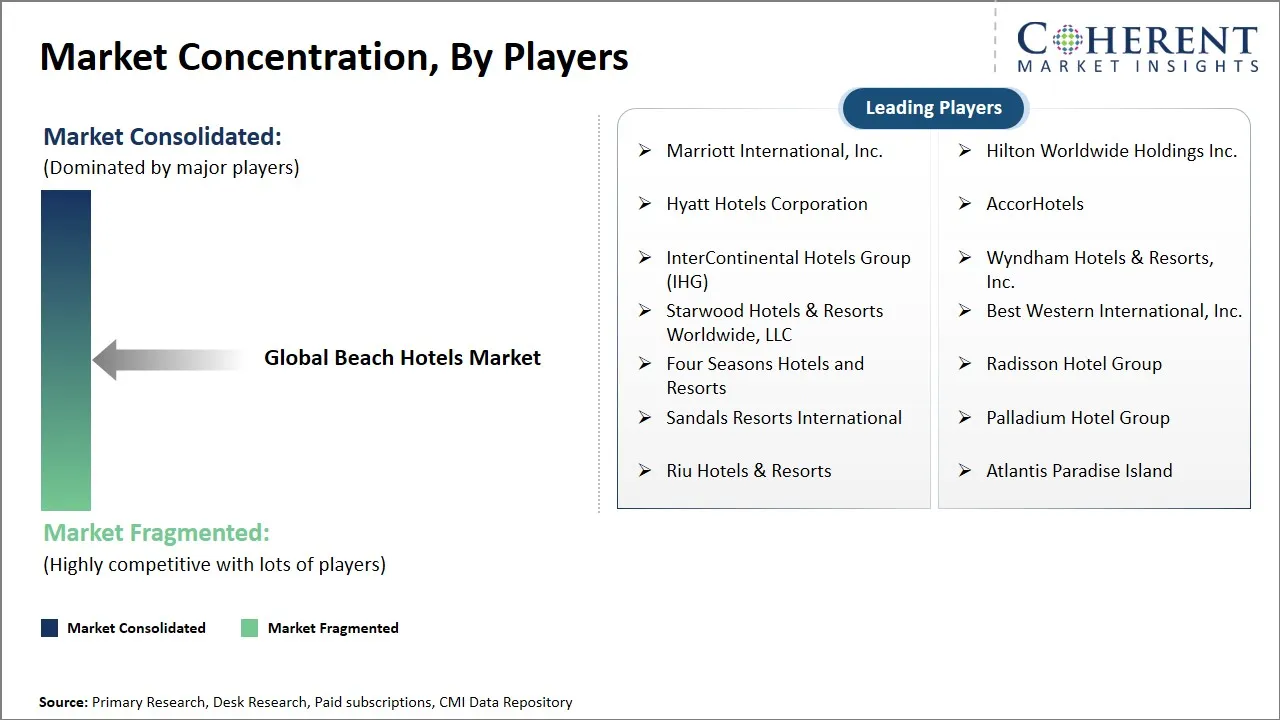
| Companies covered: | Marriott International, Inc., Hilton Worldwide Holdings Inc., Hyatt Hotels Corporation, AccorHotels, InterContinental Hotels Group (IHG), Wyndham Hotels & Resorts, Inc., Starwood Hotels & Resorts Worldwide, LLC, Best Western International, Inc., Four Seasons Hotels and Resorts, Radisson Hotel Group, Sandals Resorts International, Palladium Hotel Group, Riu Hotels & Resorts, and Atlantis Paradise Island | ||
| Growth Drivers: |
| ||
| Restraints & Challenges: |
| ||
Beach Hotels Market Dynamics
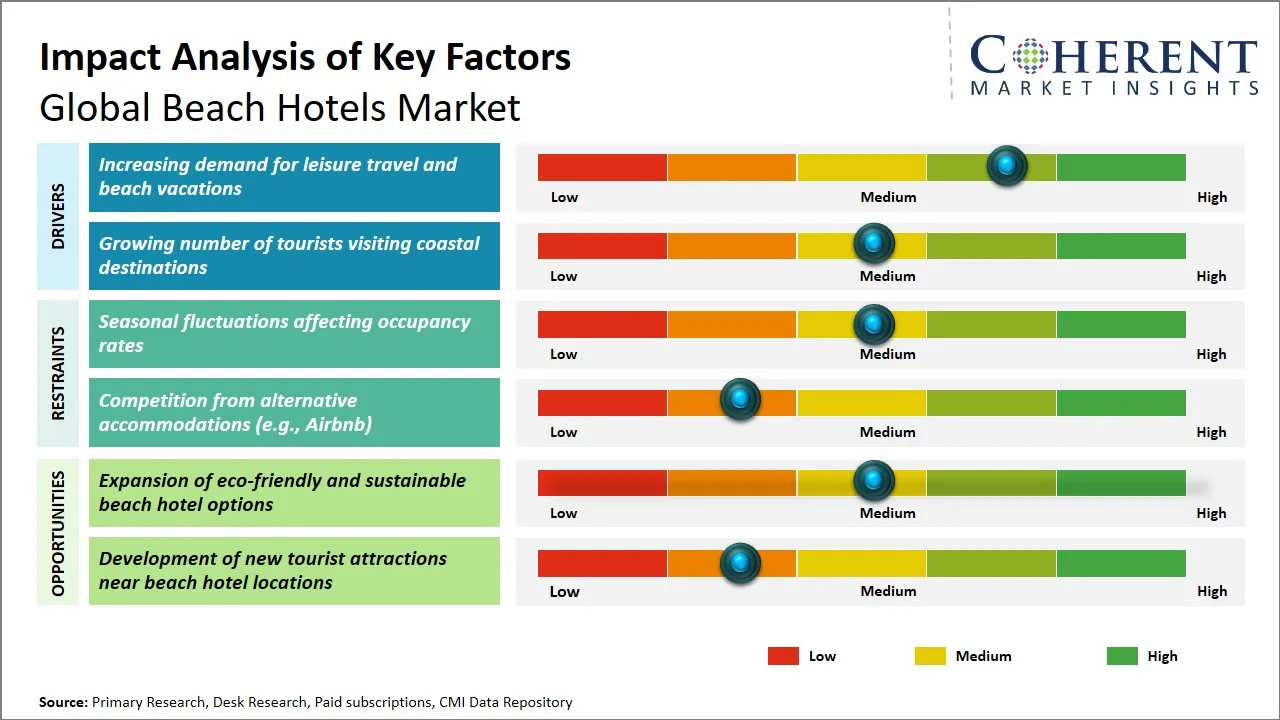
Beach Hotels Market Driver - Increasing Demand for Leisure Travel and Beach Vacations
This rising trend of leisure travelling has made much contribution to the demand of beach hotels all over the world as more travelers are in search of places that will provide relaxation and recreational facilities and also experience the beauty in ways that are only found in the coastline. The rising disposable income, better connectivity and increased knowledge on exotic beach destinations has all been a boost to the tourists in favoring beach vacations as a way of relaxing after the stresses of the urban life. Moreover, the increasing popularity of wellness tourism and outdoor experiences like snorkeling, surfing, and beach yoga have also made the coastal areas very appealing to the holidaymakers.
As an example, the Maldives a major beach vacation destination has experienced a huge influx of tourists with leisure travel being one of the largest segments of its tourism industry. The number of international arrivals had increased by 20 percent in the country in 2024, mostly as a result of tourists traveling there in search of beachside resorts and premium retreats.
Beach Hotels Market Opportunity - Expansion of Eco-Friendly and Sustainable Beach Hotel Options
The increased focus on environmental sustainability in the world is an important possibility to expand the range of eco-friendly and sustainable accommodation in the market with beach hotels. The growing interest in environmental issues connected with climate change and the ecological consequences of tourism among consumers resulted in the growth of the need to have the accommodations that do not produce any significant ecological footprint but remain luxurious and comfortable.
The hotels in the beaches, which are usually in the ecologically sensitive coastal zones, are in a better position to incur the benefits of including the green construction building practices, renewable energy sources and waste reduction programs in their operations. To make hotel brands appealing to environmentally conscious tourists, it is possible to implement sustainable water management, apply biodegradable amenities, and promote local biodiversity.
For example, the Six Senses Laamu resort in the Maldives that has adopted eco-friendly practices as well as sustainable practices. The resort maintains full use of solar power and uses numerous sustainability systems such as using desalination plants to extract water and protecting coral reefs.
Analyst Opinion (Expert Opinion)
- The world beach hotels sector is experiencing a very strong recovery, as the revival of travel and the increased demand of consumers in the perfect vacation experiences after the pandemic have influenced the development. The information provided about the International Hospitality Investment Forum (2023) and the Beach Tourism Conference (2022) revealed remarkable trends, as such brands as Marriott and Hilton continue to grow their beachfront portfolios to enter into the markets of premium segments.
- The recent introduction of a luxury beach resort brand Marriotts is another example in the industry of willingness to improve the experience of guests with customized services and amenities in the context of wellness and sustainability. The talks in these conferences focused on the growing popularity of environmentally friendly practices because tourists are demanding places to stay that match their principles in terms of environmental protection.
- However, challenges such as the impact of fluctuating oil prices on travel costs and the need for leveraging technology for personalized guest interactions were frequently noted as potential barriers to growth. Companies that prioritize innovation in guest services and investment in sustainable infrastructure will likely gain a competitive edge. Ultimately, the growth of the beach hotels market will hinge on its ability to adapt to evolving consumer preferences while providing memorable experiences that resonate with the modern traveler.
Speak to the analyst
Want personalized insights?
Take the findings above to one of our principal consultants, or have the report rebuilt around the segments, geographies and competitors you actually track.
Market Segmentation
- Type of Accommodation Insights (Revenue, USD Bn, 2021 - 2033)
- Luxury Beach Hotels
- Mid-Range Beach Hotels
- Budget Beach Hotels
- Others
- Service Type Insights (Revenue, USD Bn, 2021 - 2033)
- All-Inclusive
- Room Only
- Bed & Breakfast
- Booking Channel Insights (Revenue, USD Bn, 2021 - 2033)
- Online
- Offline
- Regional Insights (Revenue, USD Bn, 2021 - 2033)
- North America
- U.S.
- Canada
- Latin America
- Brazil
- Argentina
- Mexico
- Rest of Latin America
- Europe
- Germany
- U.K.
- Spain
- France
- Italy
- Russia
- Rest of Europe
- Asia Pacific
- China
- India
- Japan
- Australia
- South Korea
- ASEAN
- Rest of Asia Pacific
- Middle East
- GCC Countries
- Israel
- Rest of Middle East
- Africa
- South Africa
- North Africa
- Central Africa
- North America
- Key Players Insights
- Marriott International, Inc.
- Hilton Worldwide Holdings Inc.
- Hyatt Hotels Corporation
- AccorHotels
- InterContinental Hotels Group (IHG)
- Wyndham Hotels & Resorts, Inc.
- Starwood Hotels & Resorts Worldwide, LLC
- Best Western International, Inc.
- Four Seasons Hotels and Resorts
- Radisson Hotel Group
- Sandals Resorts International
- Palladium Hotel Group
- Riu Hotels & Resorts
- Atlantis Paradise Island
Sources
Primary Research Interviews
- CEO – Leading Global Beach Hotel Chain
- General Manager – Luxury Beach Resort
- Operations Director – All-Inclusive Beach Resorts
- Sustainability Officer – Eco-friendly Beach Hotels Certification Authority
Stakeholders
- Beach Hotel Operators (Luxury, All-Inclusive, Boutique, Budget Beach Hotels)
- End-use Sectors
- Leisure & Tourism (Family, Honeymoon, Solo Travelers)
- Corporate & MICE (Meetings, Incentives, Conferences, Exhibitions)
- Wellness & Eco-tourism (Spa Resorts, Wellness Retreats)
- Regulatory & Certification Bodies
- Environmental Protection Agencies
- Hospitality Standards
- E-commerce Platforms and Travel Agencies
- Technology Integration Players: (Hotel Management Software, Smart Room Solutions for Beach Resorts)
Databases
- STR Global – Hotel performance data and occupancy trends
- OECD Tourism Statistics – Global trends in leisure and tourism
- UNWTO – World Tourism Organization insights
- Hotel Investment Report (CBRE) – Investment dynamics in luxury beach hotels
- Euromonitor International – Hospitality and tourism industry data
Magazines
- Hotel Management Magazine – Trends in beach hotel management
- Luxury Travel Advisor – Beach hotels catering to high-end clientele
- Hospitality Design – Beach resort design and development innovations
- Travel + Leisure – Destination trends and beach hotel recommendations
- EcoTraveller – Sustainable practices in beach hotel operations
Journals
- Journal of Sustainable Tourism – Environmental impacts of beach hotels
- Tourism Management Journal – Hotel performance and market analysis in beach destinations
- International Journal of Hospitality Management – Innovations in beach resort service models
- Journal of Hospitality & Tourism Research – Analysis of all-inclusive beach hotels
- Annals of Tourism Research – Beach destination marketing and competitive strategies
Newspapers
- The New York Times – Luxury travel trends in beach destinations
- The Guardian – Sustainability practices in beach tourism
- Business Standard (India) – Insights into the beach hotel sector in emerging markets
- The Times of India – Growth and investment in India’s beach hotels
- The Wall Street Journal – Market analysis of global beach resorts
Associations
- International Hotel & Restaurant Association (IH&RA)
- World Travel & Tourism Council (WTTC)
- International Luxury Hotel Association (ILHA)
- Sustainable Travel International
- Tourism Sustainability Council
- Beach Resort Network
Public Domain Sources
- UNWTO – International tourism trends and beach hotel impacts
- OECD – Sustainable tourism and beach hotel operations
- European Commission – Policies for sustainable coastal tourism
- National Oceanic and Atmospheric Administration (NOAA) – Coastal regulations for hotel construction
- World Health Organization (WHO) – Health guidelines for beach hotels near marine environments
Proprietary Elements
- CMI Data Analytics Tool
- Proprietary CMI Existing Repository of information for last 8 years.
Get access to 250+ pages report
Every segment, forecast, competitor profile and data table behind the analysis above — available for instant download.
- ESOMAR Member
- ISO 9001:2015 Certified
- D-U-N-S Registered
- GDPR & CCPA Compliant
Missing comfort of reading report in your local language? Find your preferred language:
Transform your Strategy with Exclusive Trending Reports
Frequently Asked Questions
The global beach hotels market is estimated to be valued at USD 155.96 Bn in 2026 and is expected to reach USD 250.44 Bn by 2033
The CAGR of global beach hotels market is projected to be 7.0% from 2026 to 2033.
Increasing demand for leisure travel and beach vacations and growing number of tourists visiting coastal destinations are the major factors driving the growth of the global beach hotels market.
Premium pricing in high‑demand seasons; dynamic pricing driven by booking windows, events, and local demand.
Seasonal fluctuations affecting occupancy rates and competition from alternative accommodations (e.g., Airbnb) are the major factors hampering the growth of the global beach hotels market.
In terms of type of accommodation, the luxury beach hotels are estimated to dominate the market revenue share in 2026.
Marriott International, Inc., Hilton Worldwide Holdings Inc., Hyatt Hotels Corporation, AccorHotels, InterContinental Hotels Group (IHG), Wyndham Hotels & Resorts, Inc., Starwood Hotels & Resorts Worldwide, LLC, Best Western International, Inc., Four Seasons Hotels and Resorts, Radisson Hotel Group, Sandals Resorts International, Palladium Hotel Group, Riu Hotels & Resorts, and Atlantis Paradise Island are the major players.