

Global Bluetooth Smart Bracelets Market Size and Forecast to 2026-2033
The Global Bluetooth Smart Bracelets Market is estimated to be valued at USD 5.75 Bn in 2026 and is expected to reach USD 12.24 Bn by 2033, exhibiting a compound annual growth rate (CAGR) of 11.4% from 2026 to 2033.
Key Takeaways of the Global Bluetooth Smart Bracelets Market
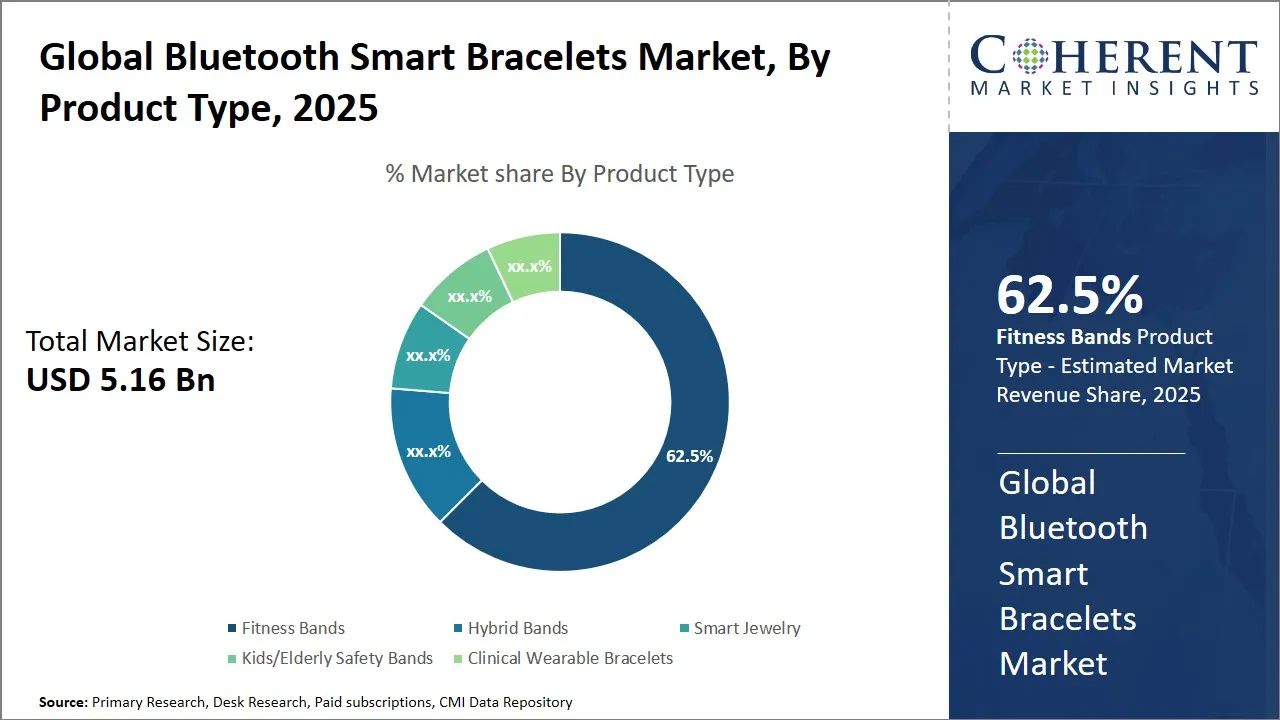
- The Fitness Bands segment leads the market holding a share of 63.5 % in 2026.
- The Health & Fitness Monitoring segment dominates with a share of 68.5 % in 2026.
- Asia Pacific, holding a share of 40.25 % in 2026, dominates the market.
- Middle East, holding a share of 4.8% in 2026, shows the fastest growth in the market.
Market Overview
The market is seeing the use of advanced health monitoring features, like heart rate tracking, sleep analysis, and stress monitoring, which fulfil the growing demand for personal wellness management. Also, collaborations between tech companies and healthcare providers are increasing the use of smart bracelets in medical applications. The trend towards slimmer, more stylish designs added with improved battery life and seamless smartphone compatibility is further adding to the market growth, making Bluetooth smart bracelets an essential lifestyle accessory.
Current Events and Its Impact
Current Events | Description and its impact |
Geopolitical and Trade Developments |
|
Economic and Consumer Trends |
|
Segmental Insights
- Current Industry Events of 2026
- Market Size Estimation
- Regional Breakdown
- Competitive Landscape
- Customer Intelligence
- Segmental Analysis
- Pricing Analysis
- Key Market Drivers, Challenges & Future Trends
- Customized Insights Section
Global Bluetooth Smart Bracelets Market Insights, By Product Type – Fitness Bands Leads Owing to Rising Health Awareness and Technological Advancements
Fitness bands, holding a projected share of 63.5% in 2026, dominates the Bluetooth smart bracelets category because of increasing health awareness and the desire for continuous fitness tracking. As lifestyle diseases like obesity and diabetes rise, consumers are using fitness bands to monitor steps, heart rate, sleep, and calorie burn.
Technological improvements in Bluetooth connectivity and advanced sensors have greatly improved device accuracy and user engagement. For example, Xiaomi’s Smart Band 9 (2024) launched upgraded heart-rate and SpO₂ sensors, offering medical-grade precision at a low price. Addition with smartphone apps and social fitness platforms also increases the usage by making possible real-time progress sharing and motivation through virtual communities.
Affordability and diverse styles make fitness bands more accessible than hybrid or medical-grade wearables, appealing to a big demographic of first-time users and fitness enthusiasts. Overall, the segment’s leadership comes from a mix of rising health consciousness, sensor innovation, cultural fitness trends, and cost-effective accessibility.
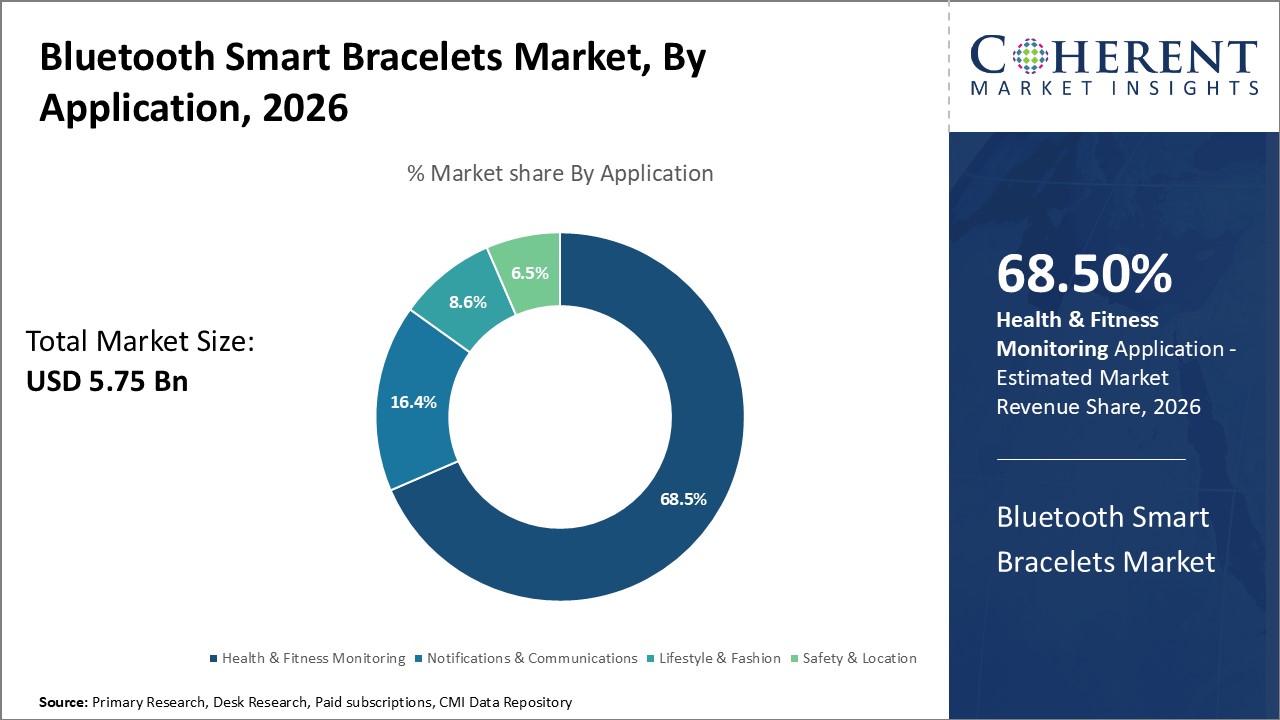
Global Bluetooth Smart Bracelets Market Insights, By Application – Health & Fitness Monitoring Leads Because of Growing Demand for Preventive Healthcare and Personalized Wellness
The Health & Fitness Monitoring segment leads the Bluetooth smart bracelets market, with an estimated 68.5% share in 2026, because of growing demand for preventive healthcare and personalized wellness management. As conditions like cardiovascular disease and diabetes become more common, consumers use wearables to track signs and detect early health anomalies.
Advances in wearable sensors make possible real-time tracking of heart rate, oxygen saturation, and sleep quality, adding to user engagement and personalized insights. For instance, Fitbit Charge 6 (launched in 2023) added improved ECG and stress monitoring.
The rise of telemedicine also adds to this trend, as Bluetooth smart bracelets facilitate remote health monitoring and data sharing between users and healthcare providers. With the mix of health tech innovation and consumer wellness priorities, the health and fitness monitoring application remains the cornerstone of the market growth.
Pricing Analysis of the Bluetooth Smart Bracelets Market
Product | Model & Key Specs | Price (USD) |
Xiaomi Mi Smart Band 5 | Entry-level fitness band (AMOLED color display) | USD 24.00 |
HUAWEI Band 10 | Mid-budget band (health sensors) | USD 51.00 |
Fitbit Inspire 3 | Global mid-tier band (USD 99.95 list) | USD 99.95 |
Garmin vívosmart 5 | Premium fitness tracker (no built-in GPS) | USD 149.99 |
Amazfit Helio Strap/Band | Affordable brand alternative band | USD 150.00 |
WHOOP 5.0 Tracker | Premium dedication health/wearable band | USD 205.00 |
Regional Insights
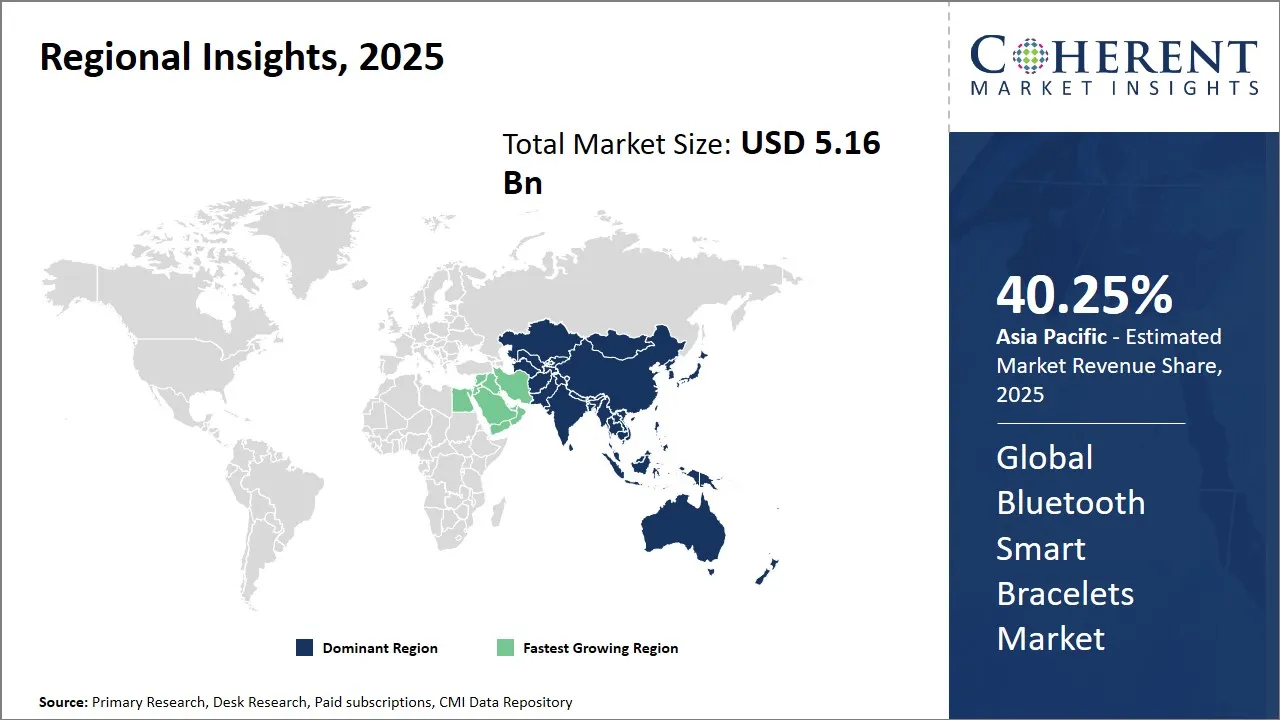
Asia Pacific Bluetooth Smart Bracelets Market Analysis and Trends
The Asia Pacific, holding an estimated share of 40.25% in 2026, dominates the Bluetooth smart bracelets market due to rapidly increasing smartphone penetration, a burgeoning middle class with rising disposable income, and growing health awareness particularly in urban centers. The region’s expanding manufacturing base also contributes to growing product availability at competitive prices. Big industry players from the region, such as Xiaomi, Huawei, and Samsung, have launched affordable, feature-rich smart bracelets, creating adoption in price-sensitive consumers. The expansion of e-commerce platforms and omnichannel sales strategies also facilitate easier market access. Geographic diversity and huge population base ensure immense potential for scale.
Middle East Bluetooth Smart Bracelets Market Analysis and Trends
The Middle East, holding a share of 4.8% in 2026, is seeing the fastest growth in the Bluetooth smart bracelets market because of rising health awareness, a young digital-savvy population, and supportive government wellness initiatives such as Saudi Vision 2030 and the UAE Wellbeing Strategy 2031. Increasing smartphone penetration and disposable incomes are boosting demand for connected fitness wearables.
Regional expansion by brands like Huawei, Xiaomi, and Samsung, offering affordable and localized models, has further added to adoption. In addition, growing e-commerce platforms like Noon and Amazon.ae are improving accessibility. Also, the region’s mix of wellness-focused policies, tech adoption, and expanding retail networks positions it as a fast-growing market for Bluetooth smart bracelets.
Bluetooth Smart Bracelets Market Outlook for Key Countries
U.S. Bluetooth Smart Bracelets Market Analysis and Trends
The U.S. sees a lot of competition among global technology giants like Apple and Fitbit, alongside numerous emerging startups focusing on niche health applications. Government emphasis on healthcare digitization and strong consumer interest in fitness and wellness solutions make it a hotspot for innovation. Product lines often use cutting-edge sensors and integration with broader Internet of Things (IoT) ecosystems. U.S.-based companies also benefit from high R&D investments and partnerships with healthcare providers, adding to wearable adoption in fitness enthusiasts and medical patients alike.
China Bluetooth Smart Bracelets Market Analysis and Trends
China continues to lead the Asia Pacific region with a lot of contributions from companies such as Xiaomi and Huawei, known for delivering high-value smart bracelets with localized features catering to fitness, health monitoring, and lifestyle preferences. The country’s high manufacturing capabilities enable fast scaling and cost-effective production, reinforcing its competitiveness in both domestic and export markets. Also, the Chinese government promotes smart health initiatives and digitization, while fast growing urban centers create an expanding consumer base eager to adopt wearable technology. Strategic collaborations between hardware firms and internet service providers also enhance ecosystem development.
Germany Bluetooth Smart Bracelets Market Analysis and Trends
Germany represents the forefront of the European Bluetooth smart bracelets market because of strong industry presence rooted in precision engineering and quality standards. Established manufacturers like Garmin have high operational footprints here, adding to product reliability and innovation in fields such as advanced health tracking and sports performance monitoring. Germany’s advanced healthcare infrastructure and focus on preventive care make consumer demand. Also, regulatory frameworks in the European Union emphasize product safety and user privacy, encouraging responsible innovation. Retail partnerships and a rising digital health culture also add to market growth.
India Bluetooth Smart Bracelets Market Analysis and Trends
India Bluetooth smart bracelets market is expanding rapidly due to increased smartphone access, growing health consciousness, and substantial price sensitivity among consumers. Local and regional players like boAt and Noise have made important market segments by offering cost-effective and stylish wearable options. Government programs pushing digital health and wellness, combined with a tech-savvy younger population, shows the market’s dynamic nature. Infrastructure improvements and rising penetration of e-commerce platforms facilitate widespread availability and adoption, especially in urban regions. Collaborative efforts between telecom service providers and device manufacturers improve user engagement through integrated platforms.
U.K. Bluetooth Smart Bracelets Market Analysis and Trends
The U.K. sees growth because of high consumer awareness of fitness and wellness, coupled with progressive healthcare policies that promote digital health tools. Big players like Fitbit and Withings have a high presence, supported by partnerships with healthcare providers and fitness organizations. The UK government’s support for innovation hubs and startup ecosystems creates the development and commercialization of next-generation Bluetooth smart bracelets. Focus on data security and privacy regulations result in transparent product usage policies, creating consumer trust. The country’s advanced retail and online channels make possible high product reach to a health-conscious demographic.
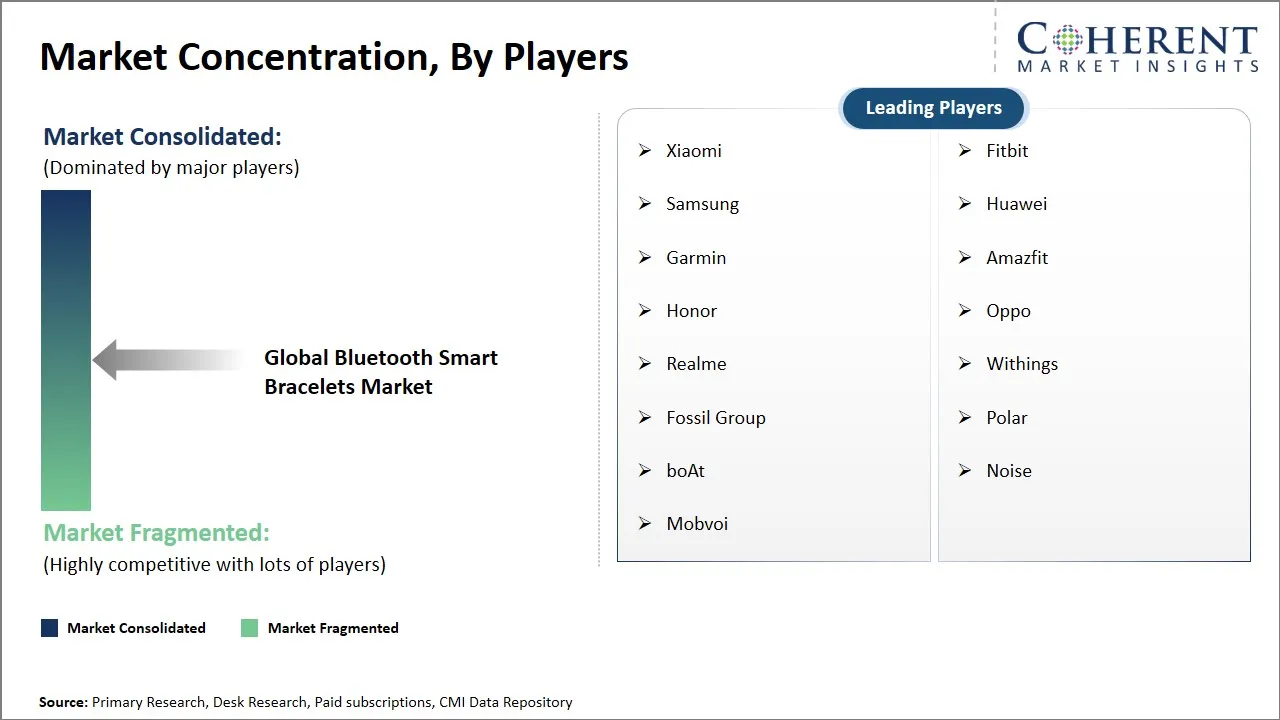
Market Players, Key Development, and Competitive Intelligence
Key Developments
- In January 2025, Noise, India's leading smartwatch and connected lifestyle brand, made its debut at the Consumer Electronics Show (CES) 2025. Noise exhibited its flagship offerings, including the Red Dot Award-winning Luna Ring Gen 2.0 and the innovative ColorFit Pro 6 series.
- In January 2025, Huawei has expanded its product portfolio in India with the launch of its new smart band. The Huawei Band is priced at USD 51.03 (INR 4,499).
- In June 2024, Xiaomi launched Watch S4 Sport, Mi Band 9, and Buds 5 in China. The Chinese smartphone maker has also unveiled Xiaomi Mix Fold 4, Xiaomi Mix Flip, and the Redmi K70 Ultra in the country.
- In February 2024, Samsung launched Galaxy Fit3 fitness tracker in India featuring an aluminum body design and a claimed battery life of 13 days.
Top Strategies Followed by Bluetooth Smart Bracelets Market Players
- Established players dominate the market through huge investments in research and development, to innovate and introduce high-performance, feature-rich products that cater to changing consumer demands.
- In 2023, Google launched the Fitbit Charge 6, integrating Google Maps, YouTube Music controls, and advanced heart rate algorithms. This shows continuous R&D investment to add health tracking with smart features and AI-driven wellness insights.
- Mid-level players in the Bluetooth smart bracelets market focus on balancing quality and cost-effectiveness to attract price-sensitive consumers wanting reliable yet affordable wearable devices.
- With its Mi Smart Band 9, Xiaomi continued to offer SpO₂ tracking, sleep monitoring, and long battery life at a sub-USD 50 price point.
- Small-scale players and startups differentiate themselves by making specialized niches within the broad Bluetooth smart bracelets market.
- Noise has expanded into women-focused and health-specific smart wearables, including the Noise Luna Ring and ColorFit Pro series, emphasizing stress and menstrual health tracking.
Market Report Scope
Bluetooth Smart Bracelets Market Report Coverage
| Report Coverage | Details | ||
|---|---|---|---|
| Base Year: | 2025 | Market Size in 2026: | USD 5.75 Bn |
| Historical Data for: | 2020 To 2024 | Forecast Period: | 2026 To 2033 |
| Forecast Period 2026 to 2033 CAGR: | 11.4% | 2033 Value Projection: | USD 12.24 Bn |
| Geographies covered: |
| ||
| Segments covered: |
| ||
| Companies covered: | Xiaomi, Fitbit, Samsung, Huawei, Garmin, Amazfit, Honor, Oppo, Realme, Withings, Fossil Group, Polar, boAt, Noise, and Mobvoi | ||
| Growth Drivers: |
| ||
| Restraints & Challenges: |
| ||
Market Dynamics
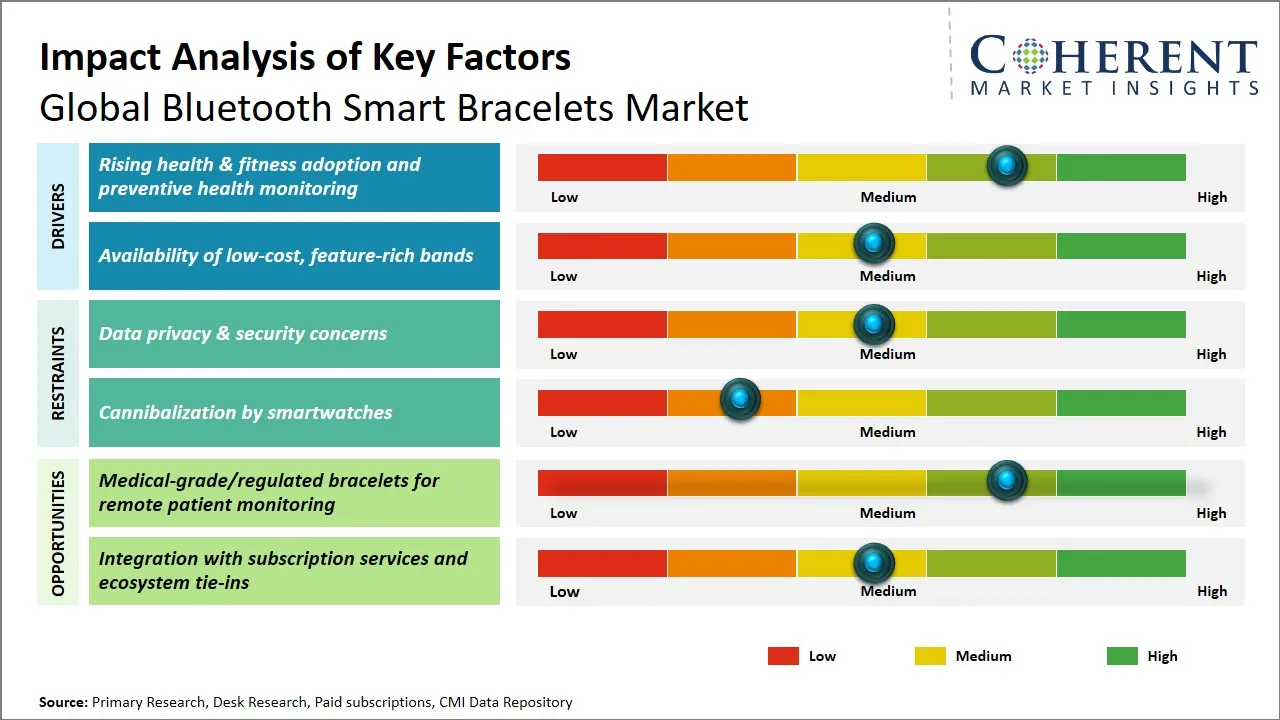
Global Bluetooth Smart Bracelets Market Driver – Rising Health & Fitness Adoption and Preventive Health Monitoring
Growing health awareness and the global shift toward preventive healthcare are driving the adoption of Bluetooth smart bracelets. Consumers use these wearables to track activity, sleep, heart rate, and other vitals, pushing healthier lifestyles and data-driven wellness decisions. The integration of accurate sensors and Bluetooth connectivity allows real-time tracking and personalized insights.
Fitbit and Apple Watch users actively monitor health metrics, with Apple’s Fitness+ platform integrating bracelet data for tailored workout and wellness recommendations.
Global Bluetooth Smart Bracelets Market Opportunity – Expansion of Medical-Grade Bluetooth Smart Bracelets for Remote Patient Monitoring
A big growth opportunity lies in making medical-grade Bluetooth smart bracelets for remote patient monitoring amid the rise of chronic diseases. These regulated wearables make possible real-time tracking of vital signs like heart rate, SpO₂, and glucose, supporting telehealth and reducing hospital visits. Huawei’s Watch D, which offers medical-grade blood pressure monitoring approved in multiple markets, shows the growing integration of clinical-grade wearables in healthcare for continuous remote monitoring.
Analyst Opinion (Expert Opinion)
- Despite technological progress, many Bluetooth smart bracelets still cannot give clinically accurate health data. Inconsistent readings, especially for metrics like blood pressure and oxygen saturation, affect consumer trust and limit the devices’ medical credibility.
- The rise of low-cost brands, especially from Asia, has made a very competitive environment. This race to the bottom on pricing is affecting margins for even established players and forcing continuous cost optimization, which can stifle product differentiation and R&D investment.
- As these devices collect sensitive health data, rising cybersecurity threats and unclear data ownership policies present a lot of risks. Many users are skeptical about how their personal health information is stored and shared. Manufacturers need to make data protection frameworks stronger and more transparent.
Speak to the analyst
Want personalized insights?
Take the findings above to one of our principal consultants, or have the report rebuilt around the segments, geographies and competitors you actually track.
Market Segmentation
- Product Type Insights (Revenue, USD Bn, 2021 - 2033)
- Fitness Bands
- Hybrid Bands
- Smart Jewelry
- Kids/Elderly Safety Bands
- Clinical Wearable Bracelets
- Application Insights (Revenue, USD Bn, 2021 - 2033)
- Health & Fitness Monitoring
- Notifications & Communications
- Lifestyle & Fashion
- Safety & Location
- Regional Insights (Revenue, USD Bn, 2021 - 2033)
- North America
- U.S.
- Canada
- Latin America
- Brazil
- Argentina
- Mexico
- Rest of Latin America
- Europe
- Germany
- U.K.
- Spain
- France
- Italy
- Russia
- Rest of Europe
- Asia Pacific
- China
- India
- Japan
- Australia
- South Korea
- ASEAN
- Rest of Asia Pacific
- Middle East
- GCC Countries
- Israel
- Rest of Middle East
- Africa
- South Africa
- North Africa
- Central Africa
- North America
- Key Players Insights
- Xiaomi
- Fitbit
- Samsung
- Huawei
- Garmin
- Amazfit
- Honor
- Oppo
- Realme
- Withings
- Fossil Group
- Polar
- boAt
- Noise
- Mobvoi
Sources
Primary Research Interviews
Stakeholders
- Wearable Technology Manufacturers and Suppliers
- Component Suppliers (e.g., sensor and microchip producers)
- Retail Distributors and E-commerce Platform Managers
- Healthcare Professionals and Remote Monitoring Solution Providers
- Fitness Trainers and Wellness Consultants
- Consumers Using Bluetooth Smart Bracelets for Health & Fitness Tracking
Databases
- International Telecommunication Union (ITU)
- World Health Organization (WHO) Digital Health Statistics
- Global Wearable Technology Database (GWTD)
- OECD Digital Economy Data
- Bluetooth Special Interest Group (SIG) Repository
Magazines
- Wearable Tech Insights
- Digital Health Weekly
- TechRadar Wearables Edition
- Connected Devices Review
- Fitness Technology Today
Journals
- Journal of Mobile Health and Telemedicine
- Sensors and Wearable Systems Journal
- IEEE Internet of Things Journal
- Journal of Digital Health and Wellness
- Biomedical Engineering Advances
Newspapers
- The Economic Times (India)
- The Guardian (UK)
- TechCrunch
- Asia Business Daily
- The Wall Street Journal Tech Section
Associations
- Bluetooth Special Interest Group (SIG)
- Consumer Technology Association (CTA)
- Global Digital Health Partnership (GDHP)
- International Society for Telemedicine & eHealth (ISfTeH)
- World Federation of the Sporting Goods Industry (WFSGI)
Public Domain Sources
- World Bank – Digital Economy and Health Data
- EUROSTAT – ICT and Health Metrics
- United Nations Conference on Trade and Development (UNCTAD)
- ResearchGate
- World Health Organization (WHO) eHealth Reports
Proprietary Elements
- CMI Data Analytics Tool, Proprietary CMI Existing Repository of information for last 8 years
Get access to 250+ pages report
Every segment, forecast, competitor profile and data table behind the analysis above — available for instant download.
- ESOMAR Member
- ISO 9001:2015 Certified
- D-U-N-S Registered
- GDPR & CCPA Compliant
Missing comfort of reading report in your local language? Find your preferred language:
Transform your Strategy with Exclusive Trending Reports
Frequently Asked Questions
The global Bluetooth smart bracelets market is estimated to be valued at USD 5.75 billion in 2026 and is expected to reach USD 12.24 billion by 2033.
The CAGR of the global Bluetooth smart bracelets market is projected to be 11.4% from 2026 to 2033.
Rising health & fitness adoption and preventive health monitoring and availability of low-cost, feature-rich bands are the major factors driving the growth of the global Bluetooth smart bracelets market.
Data privacy & security concerns and cannibalization by smartwatches are the major factors hampering the growth of the global Bluetooth smart bracelets market.
In terms of product type, the fitness bands segment is estimated to dominate the market revenue share in 2026.
They support remote patient monitoring, chronic disease management, and telehealth integration.
Integration of AI-driven analytics, medical-grade wearables, and improved sensor accuracy.