

Global Boron Neutron Capture Therapy Market Size and Forecast – 2026 to 2033
The global boron neutron capture therapy market is estimated to be valued at USD 231.8 Mn in 2026 and is expected to reach USD 801.8 Mn by 2033, exhibiting a compound annual growth rate (CAGR) of 19.4% from 2026 to 2033. This impressive growth is driven by the increasing adoption of targeted cancer therapies and advancements in neutron capture technology, which enhance treatment efficacy while minimizing side effects compared to conventional therapies.
Key Takeaways of the Global Boron Neutron Capture Therapy Market
- In 2026, the hardware/equipment segment is projected to hold 46.3% of the market share.
- The primary cancer treatment segment is expected to lead the market in 2026 with a 35.3% share.
- The Boronophenylalanine (BPA) segment is expected to capture 59.5% of the market share in 2026.
- North America is expected to lead the market, holding a share of 39.3% in 2026. Asia Pacific is anticipated to be the fastest-growing region, with a market share of 25.3% in 2026.
Market Overview
A significant market trend is the rising investment in research and development to improve Boron Neutron Capture Therapy (BNCT) delivery systems and boron carriers, fostering personalized treatment approaches. Additionally, expanding awareness among oncologists and patients about this innovative therapy is accelerating its integration into clinical practice, particularly for treating difficult tumors such as glioblastomas and head and neck cancers, thus propelling overall the market growth.
Currents Events and their Impact
Current Events | Description and its Impact |
Accelerated Clinical Trial Results for Recurrent Head and Neck Cancers |
|
Advancements in Boron Delivery Agents |
|
Segmental Insights
- Current Industry Events of 2026
- Market Size Estimation
- Regional Breakdown
- Competitive Landscape
- Customer Intelligence
- Segmental Analysis
- Pricing Analysis
- Key Market Drivers, Challenges & Future Trends
- Customized Insights Section
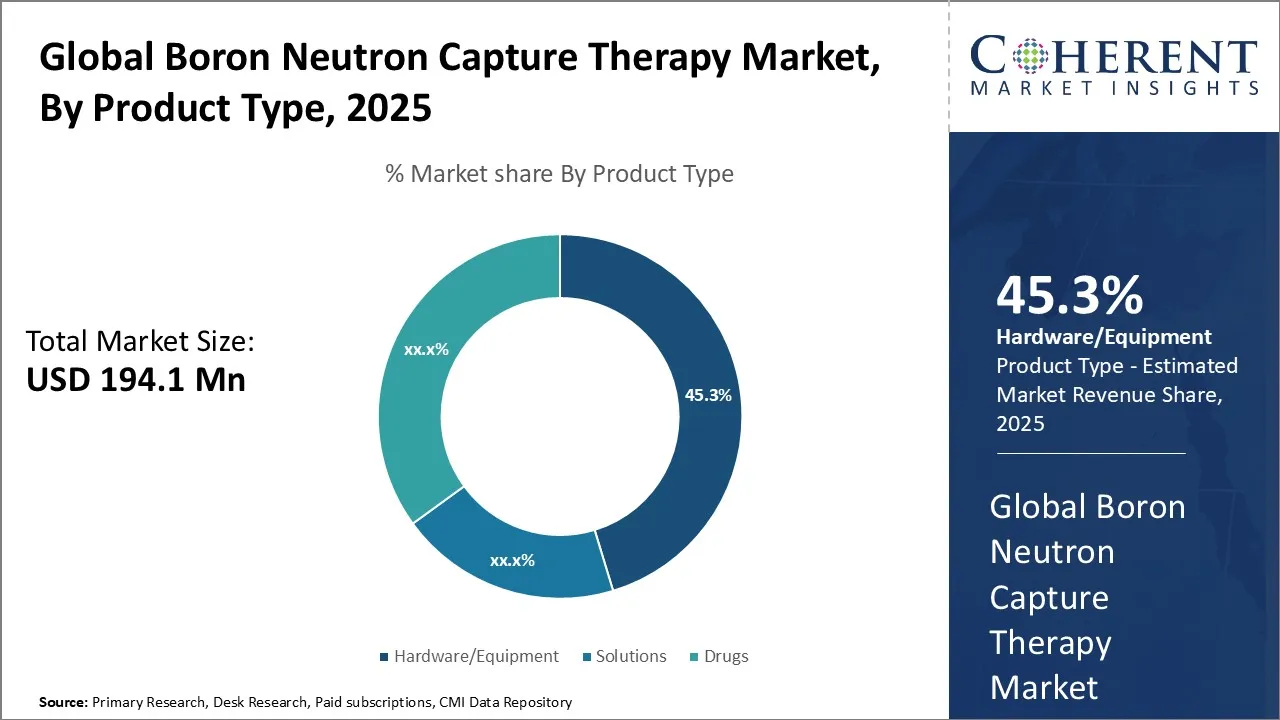
Boron Neutron Capture Therapy Market Insights, by Product Type - Dominance of Hardware/Equipment in Boron Neutron Capture Therapy Market is Driven by Technological Advancements and Clinical Integration
The hardware/equipment segment will be the highest share in the global boron neutron capture therapy market with 46.3% of the market share in 2026. Such supremacy is mainly aided by the ever-changing technological advances and the growing clinical use of the state-of-the-art boron neutron capture therapy systems. Hardware and equipment cover an extensive list of essential elements which include neutron sources, beam-shaping devices, dosimetry systems and patient positioning systems, which are all significant parts in the successful provision of boron neutron capture therapy.
The jump in this segment has also been boosted by the increase in investments in research on how to enhance efficiency and portability of hardware. An increased control of the neutron beam quality with the aim of producing a higher control of the cancer cells and low levels of damage to spare healthy tissue are giving preference to new devices that are being used by clinicians and research centers. Beam-shaping equipment e.g. fine-tunes the delivery of neutron, allowing custom-made therapy to specific anatomy and tumor position of a patient thereby enhancing treatment results.
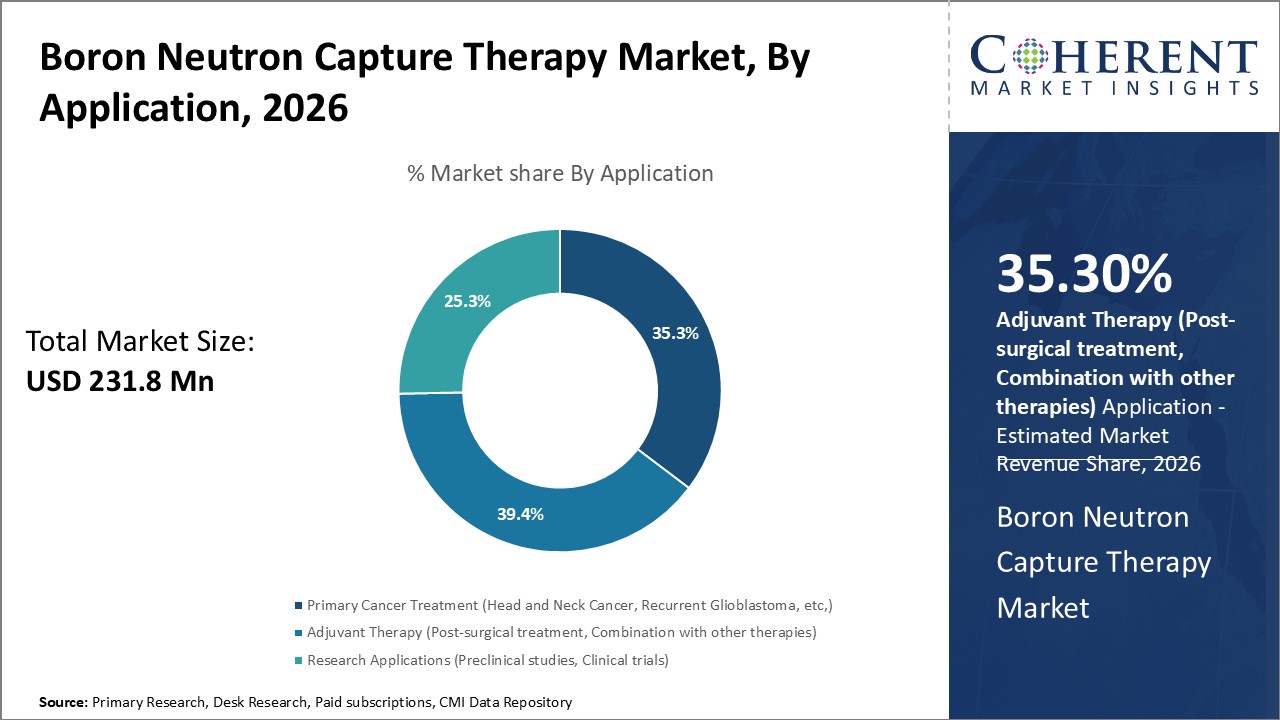
Boron Neutron Capture Therapy Market Insights, by Application - Primary Cancer Treatment Growth is Fueled by Rising Cancer Burden and Therapeutic Efficacy
The primary cancer treatment segment is expected to capture 35.3% share in 2026, due to its effectiveness in treating the difficult cancers like the head and neck cancer and the recurrent glioblastoma. Clinical succinency of boron neutron capture therapy in treating malignancies resistant to other conventional therapeutic modalities is a strong indicator of demand to this application sector since boron compounds are selectively accumulated in tumor cells and subsequently irradiated with neutrons, which offers a therapeutic benefit relative to conventional radiotherapeutic and chemotherapeutic modality, resulting in better patient outcomes in primary cancer treatment.
In May 2025, HUS Comprehensive Cancer Center launched its first boron neutron capture therapy (accelerator in Western countries, in collaboration with North American company Neutron Therapeutics. boron neutron capture therapy is a targeted radiation therapy that destroys cancer cells while preserving healthy tissue. The therapy involves injecting a boron delivery agent into the patient, which accumulates in the tumor.
Boron Neutron Capture Therapy Market Insights, by Boron Compound - Dominance of Boronophenylalanine (BPA) is Driven by Superior Pharmacological Profile and Targeting Capabilities
The Boronophenylalanine (BPA) segment is projected to account for 59.5% share in 2026, because of its superior pharmacokinetic activity and its ability to target the intended locations. BPA is an amino acid analog of boron-10 which is preferentially accumulated in the tumor cells through active transport systems, which is a much-needed specificity in boron delivery step, which is essential in the success of boron neutron capture therapy.
Biochemical similarity of BPA with the natural amino acids enables its preferential uptake by the cancer cells which have high metabolic rates, especially those expressing high amino acid transporter. This selective absorption is critical to the process of boron neutron capture therapy since the therapeutic activity depends on the adequate concentration of boron into the tumor to selectively capture neutrons and cause cell death.
Regional Insights
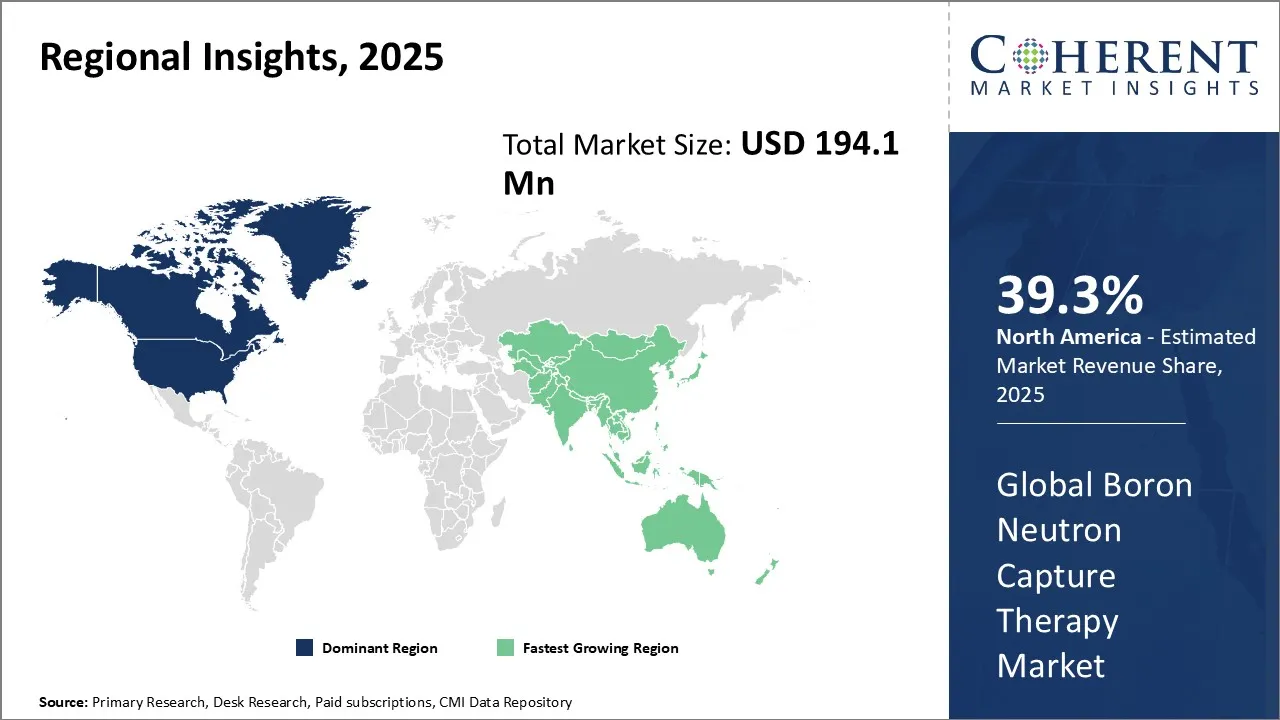
North America Boron Neutron Capture Therapy Market Analysis and Trends
The boron neutron capture therapy market is a leading player in North America with an estimated share of 39.3% in 2026, because of a high level of health care systems, heavy investment in cancer treatment systems, and government policies that promote innovative oncology therapies. North America has an advantage of market leadership due to the presence of top research centers and facilities that deal with boron neutron capture therapy. A healthy ecosystem of innovation and commercialization is offered by the strong pharmaceutical and medical device industries.
In November 2022, Neutron Therapeutics, a company focused on developing targeted radiation therapies, and Cosylab, a leading provider of control systems for complex machines, achieved a significant milestone at Helsinki University Hospital. They successfully completed the full treatment workflow using the nuBeam BNCT System, which is part of a pioneering hospital-based Boron Neutron Capture Therapy (BNCT) facility.
Asia Pacific Boron Neutron Capture Therapy Market Analysis and Trends
The boron neutron capture therapy market in Asia Pacific is expected to hold the most promising growth share of 25.3% in 2026, due to escalating government funding on sophisticated cancer treatment, rise in healthcare spending, and the incumbent cancer rates. Such countries as Japan, China and South Korea are making heavy investment in the research of boron neutron capture therapy with the encouragement of the favorable regulatory framework and targeted health programs geared towards overcoming the oncology problem.
The growing population of middle classes and the growing awareness on innovative treatments is driving the market. Moreover, the cooperation of local companies with the providers of international boron neutron capture therapy technologies is broadening the regional ecosystem.
Boron Neutron Capture Therapy Market Outlook for Key Countries
U.S. Boron Neutron Capture Therapy Market Analysis and Trends
The boron neutron capture therapy market in the U.S. relies on unrivaled research capabilities and excellent pipeline of both government and commercial clinical trials. Major hospitals and cancer institutions are actively considering the application of boron neutron capture therapy as part of the treatment regimen, with the help of domestic state-of-the-art neutron source technologies.
Sumitomo Heavy Industries is a prominent company that has developed the NeuCure BNCT system, which uses an accelerator-based neutron generator for the treatment of head and neck cancers.
Japan Boron Neutron Capture Therapy Market Analysis and Trends
The boron neutron capture therapy market in Japan can be characterized by massive government-funded research opportunities, as well as commercialization of neutron sources developed with a specific purpose of using them in clinical practice as boron neutron capture therapy. Japan is well developed in terms of healthcare technology producers and specialized cancer treatment facilities. Large institutions, such as multinational conglomerates and domestic firms such as Sumitomo Heavy Industries, are leading the innovation of boron neutron capture therapy equipment and clinical testing. The strategic interest in the government in oncological innovation is an added strength in terms of market growth and penetration in the country.
In June 2020, the International Atomic Energy Agency (IAEA) and Japan’s Okayama University signed a three-year agreement to advance research and development (R&D) in Boron Neutron Capture Therapy. This targeted cancer treatment involves the use of neutrons to generate alpha particles that selectively destroy tumor cells, sparing healthy tissue.
China Boron Neutron Capture Therapy Market Analysis and Trends
The Chinese market of boron neutron capture therapy is booming due to the strategic healthcare reforms, increasing cancer rates, and the growing investments in the latest medical technologies. Knowledge exchange and capacity building in the state are enabled by state-supported research institutions and collaboration with the world developers of the boron neutron capture therapy technology. The major players are the Chinese pharmaceutical and technology manufacturers that are increasing the neutron source manufacturing capacities and promoting the use of neutron sources in clinics. The high-scale growth in the number of boron neutron capture therapy facilities and services is propelled by the government policies that promote innovation and healthcare access.
In May 2024, Neuboron Medtech Ltd., a leading company specializing in Boron Neutron Capture Therapy, announced a significant milestone with the enrollment of the first patient in its Phase I clinical trial for its innovative BNCT drug-device product. The trial patient, previously treated with heavy ion therapy, showed tumor progression and is now undergoing BNCT treatment after receiving an intravenous infusion of the boron drug, Borofalan (10B).
South Korea Boron Neutron Capture Therapy Market Analysis and Trends
South Korea has remained a forefront in its ability to incorporate boron neutron capture therapy in clinical cancer therapy due to strong government funding programs and a vibrant health care innovation system. The Korean research centers are also working hand in hand with industry players in coming up with boron neutron capture therapy technologies which are increasingly being embraced in the major cancer treatment hospitals. Such companies as Hyundai Heavy Industries can be distinguished by their contribution to the development of neutron accelerators, and biotech companies deal with boron carriers development. The emphasis that the country has placed on precision medicine makes boron neutron capture therapy one of the strategic therapeutic modality.
In October 2022, DawonMedax (DM) in South Korea made significant strides in the development of accelerator-based Boron Neutron Capture Therapy (A-BNCT) for cancer treatment. The A-BNCT facility, using a 10-MeV proton linear accelerator (LINAC) and beryllium target, is designed to generate epithermal neutrons essential for cancer therapy. This compact system aims to provide a clinical solution for hospitals, ensuring high neutron flux while minimizing radiation exposure.
End User Feedback and Unmet Needs in the Boron Neutron Capture Therapy Market
- Feedback from end users in the boron neutron capture therapy market highlights a mix of satisfaction and concern, reflecting both the promise and challenges of this innovative treatment modality. A notable positive user experience comes from cancer centers that have successfully integrated Boron Neutron Capture Therapy (BNCT) systems into their treatment protocols. For instance, hospitals using compact accelerator-based systems, such as those developed by DawonMedax, have praised the high efficiency of the proton beam generation and the precision of the neutron flux delivered to tumors. These features have been particularly beneficial in treating brain tumors, where traditional radiation methods often struggle with collateral damage to healthy tissues. The precision of BNCT, paired with its non-invasive nature, has led to positive patient outcomes, with many facilities reporting shorter recovery times and reduced side effects compared to conventional therapies. Such advancements in product performance have resulted in increased adoption among medical professionals, contributing to overall the market growth.
- However, concerns regarding BNCT’s accessibility and cost-effectiveness remain a significant barrier. Many smaller hospitals and oncology centers, particularly in emerging markets, find it challenging to afford the high initial investment required for BNCT equipment. Additionally, the operational complexity of integrating these systems into existing oncology departments is frequently cited as a pain point. While large institutions with ample resources can manage the integration of BNCT, smaller users often report struggles with training staff, maintaining system uptime, and ensuring long-term system reliability. Furthermore, the lack of customization options for specific tumor types or patient needs is often mentioned as an unmet need in the market. To address these challenges, manufacturers could focus on reducing costs through more scalable and modular systems, enhancing user support, and offering training programs tailored to diverse hospital settings. Filling these gaps could not only drive broader market adoption but also improve patient access to advanced cancer therapies, fostering innovation and boosting customer retention across the healthcare sector.
Market Players, Key Developments, and Competitive Intelligence
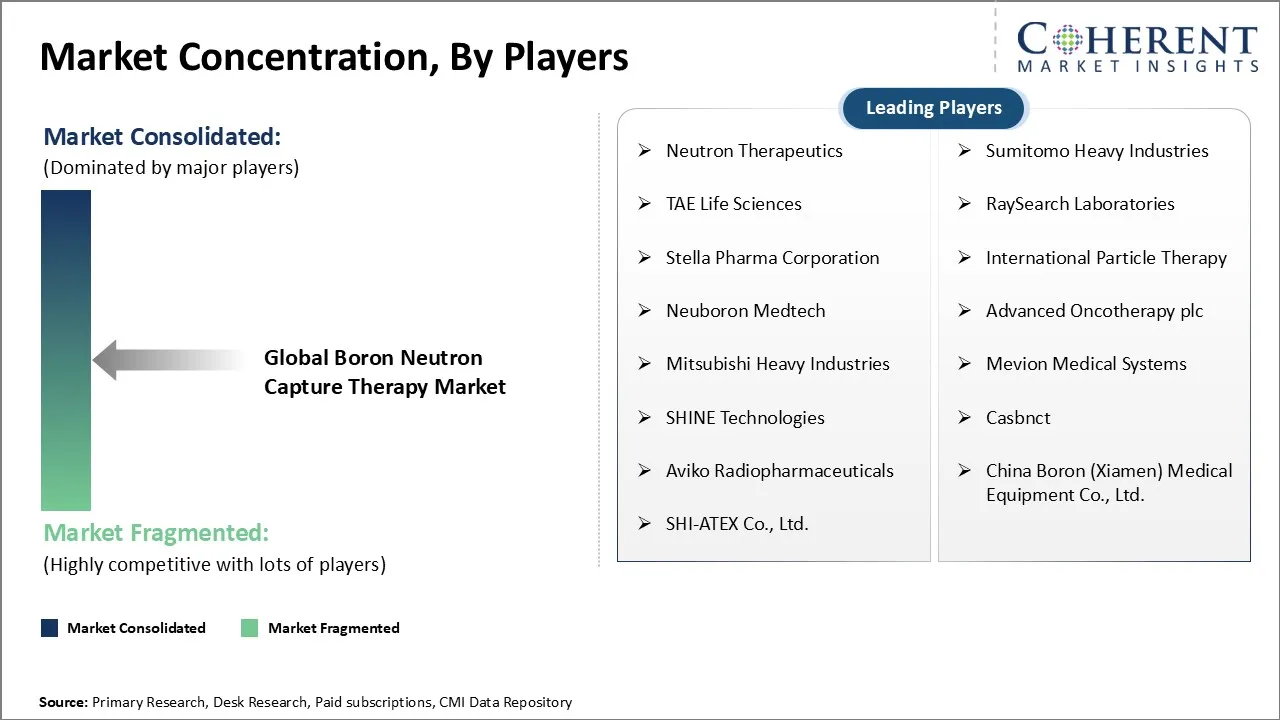
Key Developments
- In September 2025, TAE Life Sciences, a global leader in next-generation Boron Neutron Capture Therapy (BNCT), and the University of Wisconsin–Madison (UW) announced a partnership to bring the Alphabeam BNCT system to the U.S. UW will be the first site in the U.S. to install the compact accelerator-based system and conduct clinical trials focused on head, neck, and brain cancers. This collaboration aims to advance BNCT in the U.S., following the system's successful deployment in Japan, China, and Italy.
- In December 2024, researchers from the University of Tokyo, including special research student Kakeru Konarita and Associate Professor Takahiro Nomoto, announced a breakthrough in improving Boron Neutron Capture Therapy (BNCT) for difficult-to-treat cancers. They discovered that adding polyvinyl alcohol (PVA), commonly used in children's glue, to D-BPA, a boron-containing compound, significantly enhanced its effectiveness.
- In June 2023, Aviko Radiopharmaceuticals, a biotechnology company focused on developing medicines for Boron Neutron Capture Therapy (BNCT), and Neutron Therapeutics, a leading provider of accelerator-based neutron systems for cancer treatment, announced a strategic partnership to advance BNCT. The collaboration aims to establish the first BNCT treatment center in the U.S. and expand its reach through partnerships with top academic medical centers.
- In July 2022, a collaboration between CNAO (National Center of Oncological Hadrontherapy), INFN (National Institute for Nuclear Physics), Politecnico di Milano, and the University of Pavia was launched to develop a new neutron cancer therapy in Italy. The initiative will introduce a neutron beam accelerator at CNAO for the first time, aimed at advancing Boron Neutron Capture Therapy (BNCT).
Top Strategies Followed by Global Boron Neutron Capture Therapy Market Players
- Established companies dominate the market by heavily investing in research and development (R&D) to drive innovation and develop high-performance boron neutron capture therapy products. Their significant R&D budgets enable them to improve treatment efficacy, safety profiles, and delivery mechanisms, which are critical factors in this advanced therapeutic domain. Additionally, these industry leaders actively seek strategic partnerships with major healthcare organizations, original equipment manufacturers (OEMs), and research institutions.
- Stella Pharma, invested heavily in the clinical development of Steboronine (sodium borocaptate-10B), a proprietary boron-10 carrier drug. Their extensive R&D has focused on optimizing the drug's uptake in cancer cells versus healthy tissue, a critical factor for treatment efficacy and safety.
- Mid-level players in the boron neutron capture therapy market primarily adopt cost-effective strategies tailored to price-sensitive consumers, such as hospitals and research centers seeking balance between affordability and quality. By offering competitive yet reliable alternatives, these players attract smaller healthcare institutions or markets with budget constraints, thereby expanding their customer base.
- For instance, Accuray, while not as large as the major players, focuses on offering more affordable radiation therapy systems, which include components compatible with BNCT treatment.
- Small-scale players in the global boron neutron capture therapy market differentiate themselves by focusing on specialized features, unique applications, or innovative technologies that serve niche segments within the broader therapy landscape. These companies often emphasize cutting-edge advancements, such as novel boron compounds, targeted drug delivery systems, or portable boron neutron capture therapy devices that cater to specific patient populations or clinical environments.
- For example, XStrahl, a smaller player, has developed portable BNCT devices that allow treatment in non-hospital settings or for remote patients, a unique offering compared to traditional, larger-scale BNCT accelerators. Additionally, Kyoto University has partnered with small biotech firms to develop novel boron compounds and targeted drug delivery systems tailored to specific tumor types.
Market Report Scope
Boron Neutron Capture Therapy Market Report Coverage
| Report Coverage | Details | ||
|---|---|---|---|
| Base Year: | 2025 | Market Size in 2026: | USD 231.8 Mn |
| Historical Data for: | 2020 To 2024 | Forecast Period: | 2026 To 2033 |
| Forecast Period 2026 to 2033 CAGR: | 19.4% | 2033 Value Projection: | USD 801.8 Mn |
| Geographies covered: |
| ||
| Segments covered: |
| ||
| Companies covered: | Neutron Therapeutics, Sumitomo Heavy Industries, TAE Life Sciences, RaySearch Laboratories, Stella Pharma Corporation, International Particle Therapy, Neuboron Medtech, Advanced Oncotherapy plc, Mitsubishi Heavy Industries, Mevion Medical Systems, SHINE Technologies, Casbnct, Aviko Radiopharmaceuticals, China Boron (Xiamen) Medical Equipment Co., Ltd., and SHI-ATEX Co., Ltd. | ||
| Growth Drivers: |
| ||
| Restraints & Challenges: |
| ||
Boron Neutron Capture Therapy Market Dynamics
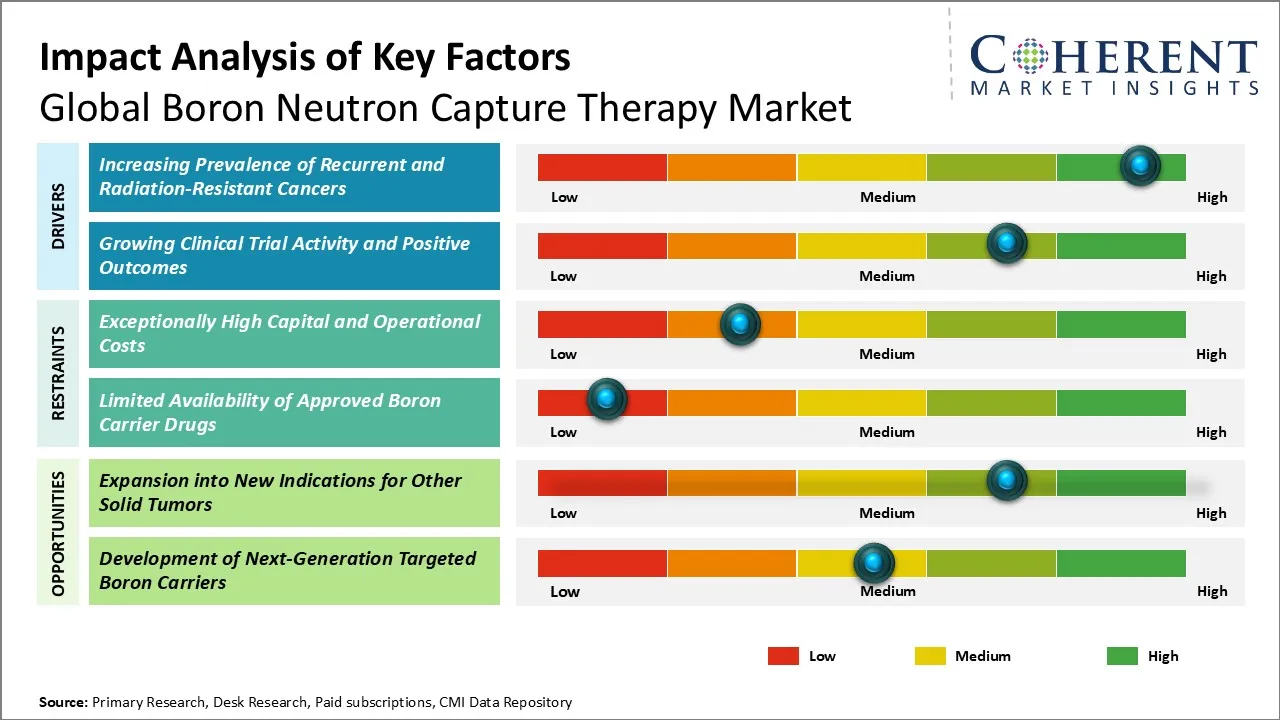
Boron Neutron Capture Therapy Market Driver - Increasing Prevalence of Recurrent and Radiation-Resistant Cancers
The increased cases of recurrent and radiation-resistant cancers pose a serious need among different therapeutic modalities like the boron neutron capture therapy. The traditional methods of treating cancer such as chemotherapy and radiotherapy can prove to be ineffective against tumors that reoccur after initial therapies or those that are resistant to radiations and thus they cannot cause lethal damages to the cancerous cells and leave the healthy cells intact, boron neutron capture therapy is a focused method, which takes advantage of the selective uptake of boron compounds in the tumor cells; and then boron neutron capture therapy irradiates the tumor cells, causing fatal damage to the cancer cells and sparing the normal cells.
In September 2025, UCLA Health investigators presented groundbreaking research at the American Society for Radiation Oncology (ASTRO) Annual Meeting. Dr. Amar Kishan, executive vice chair of radiation oncology at UCLA, shared findings from the LUNAR clinical trial, evaluating targeted radioactive therapy for recurrent prostate cancer. Moreover, In May 2025, Merck announced that its Phase 3 KEYNOTE-B96 trial, also known as ENGOT-ov65, met its primary endpoint of progression-free survival (PFS) in patients with platinum-resistant recurrent ovarian cancer.
Boron Neutron Capture Therapy Market Opportunity - Expansion into New Indications for Other Solid Tumors
The global boron neutron capture therapy market offers a great opportunity in the form of the spread of the use of the procedure to new indications of various solid tumors other than those that have already been approved or are common. Historically, boron neutron capture therapy has been mostly applied in the treatment of recurrent head and neck cancers and glioblastomas due to the benefits of the targeted radiotherapy that reduce the harm of other healthy tissues. Recent developments in clinical research and neutron source technology have however led to possibilities of exploring the efficacy of boron neutron capture therapy in other solid tumors that are aggressive and hard-to-treat like pancreatic cancer, lung cancer and some types of sarcomas. All these forms of tumors are generally associated with poor prognosis using the traditional modes of treatment thus the development of new modes of treatment is necessitated.
In September 2024, researchers from DawonMedax, a South Korean company specializing in the development and commercialization of accelerator-based Boron Neutron Capture Therapy (A-BNCT) systems developed a promising dual-function agent, IR780-MPBA, which combines Boron Neutron Capture Therapy (BNCT) and Photothermal Therapy (PTT) for enhanced cancer treatment. This innovative agent, synthesizing 4-mercaptophenylboronic acid (MPBA) for BNCT and IR-780 dye for PTT, showed substantial potential in both in vitro and in vivo studies.
Analyst Opinion (Expert Opinion)
- The boron neutron capture therapy market has also experienced tremendous growth and this is because of the sustained technological development of medical radiation therapeutics and in particular precision oncology. The combination of advanced neutron beam techniques, in tandem with developments of improvement in delivery systems of boron has enhanced the ability of BNCT to treat complex tumors that otherwise are unresponsive to other types of treatment. The regulatory service of groups, especially in Europe and U.S. has been central to the accelerated development and clinical tests of BNCT therapies. Moreover, the growing need in alternative cancer therapies, as well as the growing interest in the sphere of personalized medicine, is also likely to drive the market even further. Nevertheless, issues like the high cost of treatment, lack of awareness and the complicated nature of treatment delivery remain the barrier to its general use.
- The next opportunities can be seen in the prospects of collaboration between research facilities, hospitals, and pharmaceutical organizations to increase the amount of BNCT implementation in medical facilities. The recent events such as International Conference on Neutron Capture Therapy (ICNCT) and the European Society of Radiotherapy and Oncology (ESTRO) annual meeting have played a major role in research facilitation and global affiliations besides introducing new technologies. The emerging clinical trials in Japan and the U.S. where BNCT has demonstrated positive outcomes in the treatment of glioblastoma and head and neck cancers are examples of case studies that reflect the increased clinical interest. Pilot or government-funded research programs aimed at the optimization of BNCT delivery systems and enhancement of patient targeting are supposed to define the direction of the market in the next few years
Speak to the analyst
Want personalized insights?
Take the findings above to one of our principal consultants, or have the report rebuilt around the segments, geographies and competitors you actually track.
Market Segmentation
- Product Type Insights (Revenue, USD Mn, 2021 - 2033)
- Hardware/Equipment
- Neutron sources
- Beam-shaping devices
- Dosimetry systems
- Patient Positioning System (Couch)
- Solutions
- Radiation protection agents
- Companion diagnostics
- Drugs
- Boron-10 enriched compounds
- Radiosensitizers
- Hardware/Equipment
- Application Insights (Revenue, USD Mn, 2021 - 2033)
- Primary Cancer Treatment (Head and Neck Cancer, Recurrent Glioblastoma, etc,)
- Adjuvant Therapy (Post-surgical treatment, Combination with other therapies)
- Research Applications (Preclinical studies, Clinical trials)
- Boron Compound Insights (Revenue, USD Mn, 2021 - 2033)
- Boronophenylalanine (BPA)
- Sodium Borocaptate (BSH)
- Other Boron Compounds
- End User Insights (Revenue, USD Mn, 2021 - 2033)
- Hospitals
- Research Institutes
- Specialty Clinics
- Pharmaceutical Companies
- Academic Institutions
- Regional Insights (Revenue, USD Mn, 2021 - 2033)
- North America
- U.S.
- Canada
- Latin America
- Brazil
- Argentina
- Mexico
- Rest of Latin America
- Europe
- Germany
- U.K.
- Spain
- France
- Italy
- Russia
- Rest of Europe
- Asia Pacific
- China
- India
- Japan
- Australia
- South Korea
- ASEAN
- Rest of Asia Pacific
- Middle East
- GCC Countries
- Israel
- Rest of Middle East
- Africa
- South Africa
- North Africa
- Central Africa
- North America
- Key Players Insights
- Neutron Therapeutics
- Sumitomo Heavy Industries
- TAE Life Sciences
- RaySearch Laboratories
- Stella Pharma Corporation
- International Particle Therapy
- Neuboron Medtech
- Advanced Oncotherapy plc
- Mitsubishi Heavy Industries
- Mevion Medical Systems
- SHINE Technologies
- Casbnct
- Aviko Radiopharmaceuticals
- China Boron (Xiamen) Medical Equipment Co., Ltd.
- SHI-ATEX Co., Ltd.
Sources
Primary Research Interviews
Industry Stakeholders
- Kyoto University
- National Cancer Center Hospital, Japan
- University of California, Los Angeles (UCLA)
End Users
- University of Tsukuba
- National Cancer Center Hospital East
Government and International Databases
- ClinicalTrials.gov
- EU Clinical Trials Register
- National Institutes of Health (NIH)
- World Health Organization (WHO)
- U.S. Food and Drug Administration (FDA)
- European Medicines Agency (EMA)
Trade Publications
- Journal of Clinical Oncology
- Radiotherapy and Oncology
- Journal of Nuclear Medicine
- Cancer Research
- European Journal of Nuclear Medicine and Molecular Imaging
- Physics in Medicine and Biology
Academic Journals
- Cancers (MDPI)
- Frontiers in Oncology
- Journal of Clinical Radiation Oncology
- Radiation Research
- Journal of Neutron Research
- International Journal of Radiation Biology
Reputable Newspapers
- The New York Times
- The Guardian
- The Washington Post
- BBC News
- Reuters
- Associated Press
Industry Associations
- American Association of Physicists in Medicine (AAPM)
- European Society for Radiotherapy and Oncology (ESTRO)
- Radiation Research Society (RRS)
- World Federation of Nuclear Medicine and Biology (WFNMB)
- International Atomic Energy Agency (IAEA)
- American Society for Radiation Oncology (ASTRO)
Public Domain Resources
- arXiv.org
- BioRxiv
- National Cancer Institute (NCI)
- U.S. Department of Energy (DOE)
- International Atomic Energy Agency (IAEA)
Proprietary Elements
- CMI Data Analytics Tool: Proprietary analytics tool to analyze real-time market trends, consumer behavior, and technology adoption in market
- Proprietary CMI Existing Repository of Information for Last 8 Years
Get access to 250+ pages report
Every segment, forecast, competitor profile and data table behind the analysis above — available for instant download.
- ESOMAR Member
- ISO 9001:2015 Certified
- D-U-N-S Registered
- GDPR & CCPA Compliant
Missing comfort of reading report in your local language? Find your preferred language:
Transform your Strategy with Exclusive Trending Reports
Frequently Asked Questions
The global boron neutron capture therapy market is estimated to be valued at USD 231.8 Mn in 2026 and is expected to reach USD 801.8 Mn by 2033.
The CAGR of the global boron neutron capture therapy market is projected to be 19.4% from 2026 to 2033.
Increasing prevalence of recurrent and radiation-resistant cancers and growing clinical trial activity and positive outcomes are the major factors driving the growth of the global boron neutron capture therapy market.
Exceptionally high capital and operational costs and limited availability of approved boron carrier drugs are the major factors hampering the growth of the global boron neutron capture therapy market.
In terms of product type, the hardware/equipment segment is estimated to dominate the market revenue share in 2026.
Neutron Therapeutics, Sumitomo Heavy Industries, TAE Life Sciences, RaySearch Laboratories, Stella Pharma Corporation, International Particle Therapy, Neuboron Medtech, Advanced Oncotherapy plc, Mitsubishi Heavy Industries, Mevion Medical Systems, SHINE Technologies, Casbnct, Aviko Radiopharmaceuticals, China Boron (Xiamen) Medical Equipment Co., Ltd., and SHI-ATEX Co., Ltd. are the major players.
North America is expected to lead the global boron neutron capture therapy market in 2026.