

Opioid Induced Side Effects Treatment Market Size and Share Analysis- Growth Trends and Forecasts (2026-2033)
The Opioid Induced Side Effects Treatment Market size is anticipated to grow at a CAGR of approximately 4.7%, with USD 7.12 Bn in 2026 and is expected to reach approximately USD 9.80 Bn in 2033. The primary drivers are largely defined by the increasing prevalence of opioid-induced constipation and other gastrointestinal complications, continued use of opioid therapy for chronic and cancer-related pain, growing adoption of targeted treatments such as peripherally acting mu-opioid receptor antagonists, and expanding awareness regarding effective management of opioid-related adverse effects. According to a 2026 study published in Scientific Reports, 23.8% of patients initiating weak opioids for chronic musculoskeletal pain met the Rome IV diagnostic criteria for opioid-induced constipation within just three days of treatment.
Key Takeaways
- The solid dosage form segment is likely to dominate the market with approximately 64.5% in 2026. The segment’s growth is owing to the widespread use of convenient oral therapies, established use of tablet-based targeted treatments for opioid-induced constipation, ease of outpatient administration, and suitability for chronic treatment. A 2025 study published in Scientific Reports found that the cumulative incidence of opioid-induced constipation among patients newly prescribed weak opioids reached 30.2% within the first week and 49.2% by the end of the second week, highlighting the early treatment requirement for opioid-related gastrointestinal complications.
- North America is expected to acquire the prominent share of approximately 44.0% in 2026. The region’s growth is owing to the substantial prescription-opioid-treated population, established diagnosis and treatment pathways for opioid-related adverse effects, broad availability of targeted therapies, and strong pharmaceutical commercialization infrastructure. According to the U.S. Centers for Disease Control and Prevention, the U.S. recorded an opioid dispensing rate of 35.4 prescriptions per 100 persons in 2024, indicating a substantial continuing population exposed to prescription opioids despite declining dispensing rates over recent years.
Market Drivers
High Burden of Opioid Induced Gastrointestinal Complications is Expanding Treatment Demand
The Opioid Induced Side Effects Treatment Market is gaining momentum owing to the persistent gastrointestinal complications associated with opioid-based pain management. Constipation is particularly important because tolerance generally does not develop to the gastrointestinal effects of opioids, creating a continued need for symptom management throughout opioid therapy. Patients receiving opioids for cancer pain, chronic musculoskeletal pain, and palliative care therefore represent an important treatment population.
In a 2026 real-world study of 316 hospitalized cancer patients, 62% of patients receiving opioids experienced constipation compared to only 24% of patients not receiving opioids. The study also revealed that opioid induced constipation was underrecognized and undertreated in routine clinical practice, which highlights the need for standardized diagnosis and active therapeutic intervention.
Growing Adoption of Targeted PAMORA Therapies is Improving Management of Opioid Induced Constipation
The Opioid-Induced Side Effects Treatment Market is being supported by the rising adoption of peripherally acting μ-opioid receptor antagonists (PAMORAs). PAMORAs are designed to treat opioid-induced constipation with little effect on centrally mediated analgesia, acting directly on peripheral opioid receptors in the gastrointestinal tract, unlike traditional laxatives. This mechanism of action is supporting their use in patients with inadequate response to traditional bowel regimens.
In a multicenter, randomized clinical trial of 99 cancer patients starting regularly dosed strong opioids, 64.6% of patients who received naldemedine met the predefined favorable Bowel Function Index outcome by day 14 versus only 17.0% of the placebo group. The treatment also led to better spontaneous bowel movements and improved quality of life related to constipation. These findings support the clinical rationale for earlier initiation of targeted OIC therapies in combination with opioid therapy.
Current Events and Their Impact
Current Event | Description and its Impact |
FDA Approves First Generic Methylnaltrexone Bromide Injection for Opioid-Induced Constipation (2025) |
|
FDA Tightens Opioid Safety Labeling and Updates the Opioid Analgesic REMS Framework (2025–2026) |
|
- Current Industry Events of 2026
- Market Size Estimation
- Regional Breakdown
- Competitive Landscape
- Customer Intelligence
- Segmental Analysis
- Pricing Analysis
- Key Market Drivers, Challenges & Future Trends
- Customized Insights Section
Segmental Insights
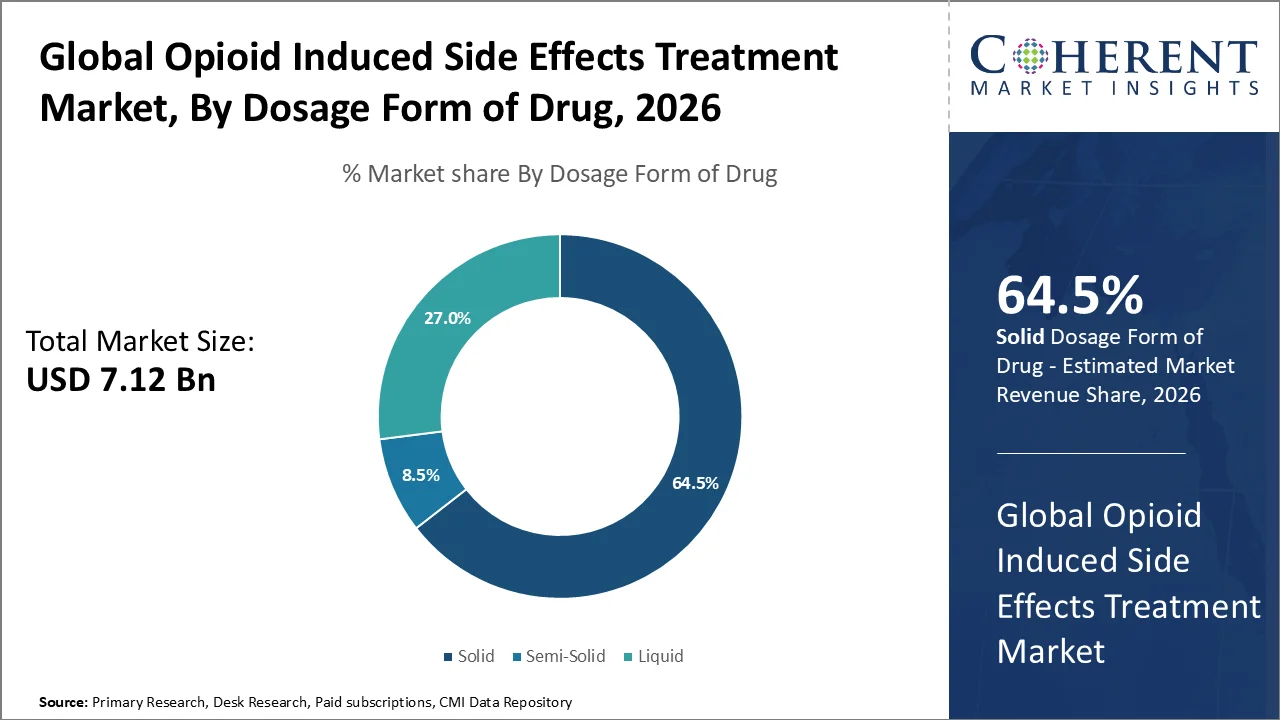
Why is the Solid Dosage Form Segment Acquiring the Largest Share?
On the basis of dosage form, the solid dosage form segment is projected to account for the largest Opioid Induced Side Effects Treatment Market share of approximately 64.5% in 2026. The segment’s growth is owing to the widespread availability of oral tablets and capsules, convenient once-daily administration, suitability for outpatient and long-term therapy, and increasing use of targeted oral peripherally acting μ-opioid receptor antagonists (PAMORAs) for opioid-induced constipation.
The U.S. FDA’s updated 2025 prescribing information for Symproic (naldemedine) indicates that the drug is a 0.2 mg oral tablet that is administered once daily, with or without food, to adults with opioid-induced constipation associated with chronic non-cancer pain. The simple oral dosing regimen facilitates treatment adherence and integration into routine chronic-pain management without the need to modify the patient’s existing opioid analgesic regimen.
In April 2026, Chia Tai Tianqing Pharmaceutical Group, a core subsidiary of Sino Biopharmaceutical Limited, launched Shionogi-developed naldemedine for opioid-induced constipation in the Guangdong-Hong Kong-Macao Greater Bay Area following approval under the region’s medicine-access policy.
Opioid Induced Side Effects Treatment Market Trends
- The increasing shift from conventional laxatives toward targeted PAMORA therapy is changing the treatment pathway for patients with laxative-refractory opioid-induced constipation. In a 2025 study of 204 patients eligible for a PAMORA, only 28% were treated with a PAMORA, suggesting significant headroom for guideline-based increased adoption.
- Increasing availability of real-world evidence for targeted oral OIC therapies is boosting physician confidence beyond controlled clinical-trial settings. A pooled 2025 analysis of three real-world studies in cancer patients receiving naloxegol showed a 71% spontaneous bowel movement response rate.
- The market is gradually moving from reactive constipation management toward preventive treatment initiated alongside opioid therapy. This trend is reflected in the ongoing MOVING Study, a multicenter, randomized, double-blind trial that began patient enrollment in May 2026 and targets 136 cancer patients. The study is directly comparing once-daily naldemedine with magnesium oxide for preventing opioid-induced constipation as well as opioid-induced nausea and vomiting after opioid initiation.
Regional Insights
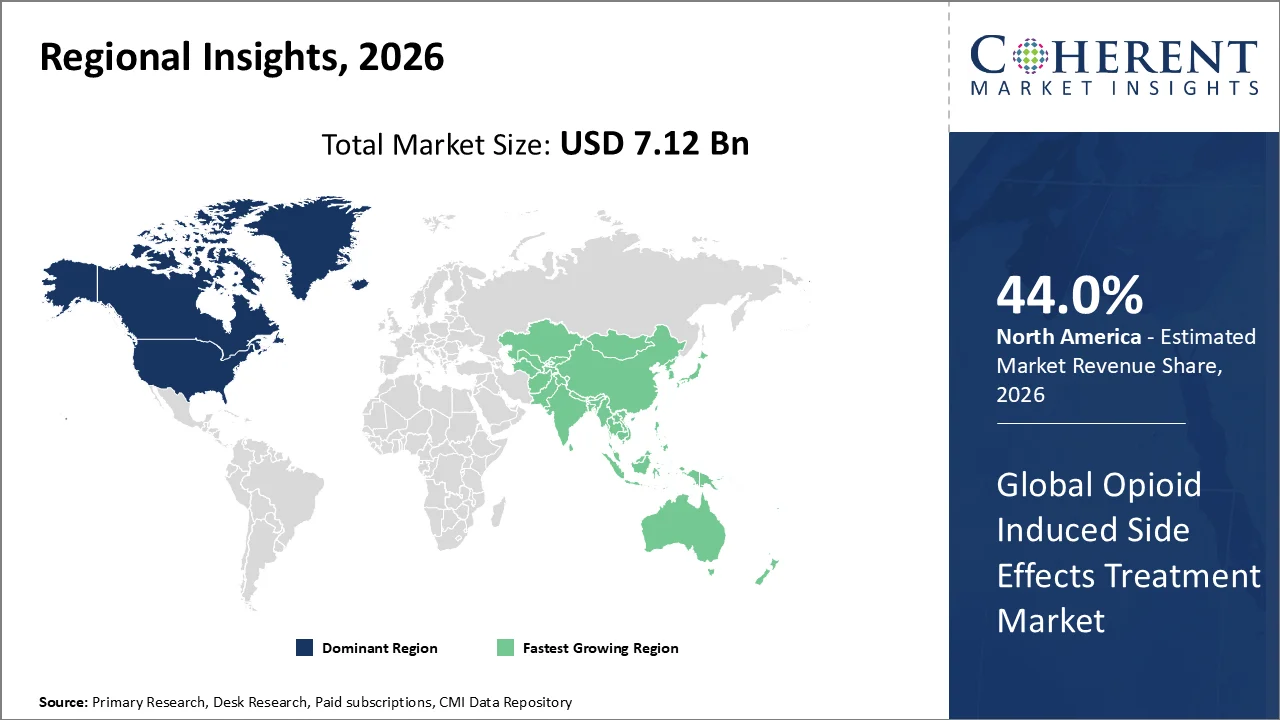
North America Dominates Owing to the Large Chronic-Pain Population and Established Adoption of Targeted OIC Therapies
North America is estimated to account for the prominent 44.0% share of the Opioid Induced Side Effects Treatment Market in 2026. The region’s dominance is owing to the large population requiring long-term pain management, established recognition of opioid-induced gastrointestinal complications, availability of multiple targeted OIC therapies, and strong access to gastroenterology, oncology, pain-management, and palliative-care services.
According to the U.S. Centers for Disease Control and Prevention, U.S. real-world evidence also demonstrates established utilization of targeted OIC medications. A 2025 study using U.S. commercial and Medicare claims databases identified 2,110 naldemedine users aged 30 years and older who were receiving chronic opioid therapy for non-cancer pain.
In March 2026, Grünenthal announced strong U.S. commercial growth for Movantik (naloxegol), its oral PAMORA therapy for opioid-induced constipation. The company stated that Movantik’s growth contributed to its strong 2025 financial performance following the integration of U.S.-based Valinor Pharma and further expansion of Grünenthal’s presence in the U.S. market.
Asia Pacific Opioid Induced Side Effects Treatment Market Trends
Asia Pacific is expected to emerge as the fastest-growing region over the forecast period. The regional expansion is owing to the large cancer burden, increasing use of opioids in oncology and palliative care, improving recognition of opioid-induced constipation, and considerable scope to shift patients from conventional laxatives toward mechanism-specific treatments such as PAMORAs.
A 2025 Japanese claims-database study evaluated 425,556 patients who had been prescribed weak opioids and found that among continuously treated patients, only 6.7% received a laxative on the first day of opioid therapy and 13.6% had received one within 12 weeks.
In October 2025, Maple Healthcare Pty Ltd received Australian Therapeutic Goods Administration (TGA) registration for OXYCODONE NALOXONE MAPLE, a modified-release fixed-dose combination of oxycodone hydrochloride and naloxone hydrochloride.
Established Targeted OIC Treatment Infrastructure is Supporting the Opioid Induced Side Effects Treatment Market in the United States
The U.S. Opioid Induced Side Effects Treatment Market is witnessing sustained demand owing to the continued use of opioid analgesics among selected chronic and recurrent pain patients, established recognition of opioid-induced constipation, and broad availability of mechanism-specific treatments such as PAMORAs. The mature gastroenterology, pain-management, and supportive-care infrastructure is also enabling more structured identification and treatment of opioid-related gastrointestinal complications.
A 2026 NHANES-based analysis evaluated 978 U.S. adults with chronic or recurrent pain who were using prescription opioids. The study found that unemployed and lower-income patients reported significantly longer durations of opioid use, highlighting the persistence of opioid exposure among specific chronic-pain populations and the corresponding requirement for management of treatment-related adverse effects.
China Opioid Induced Side Effects Treatment Market Trends
China is expected to witness strong growth in the Opioid Induced Side Effects Treatment Market over the forecast period. Growth is owing to the country's substantial oncology population, increasing emphasis on cancer supportive care, improving recognition of opioid-induced gastrointestinal complications, and expanding clinical evidence for therapies that simultaneously maintain analgesia and improve bowel function.
In March 2026, China's National Cancer Center estimated approximately 5.15 million new cancer cases in the country for 2024, based on data from 919 population-based cancer registries. The substantial oncology population creates an important underlying base for cancer-pain management and associated supportive treatments, including therapies for opioid-induced constipation.
Who are the Major Companies in Opioid Induced Side Effects Treatment Industry
Some of the major key players in Opioid Induced Side Effects Treatment Market are Shionogi & Co., Ltd., Cubist Pharmaceuticals, Inc., AIKO Biotechnology, Inc., SLA Pharma AG, Progenics Pharmaceuticals Inc., AstraZeneca plc.
Key News
- In April 2026, Bausch Health reported that RELISTOR (methylnaltrexone bromide), originally developed by Progenics Pharmaceuticals, generated approximately USD 40 million in first-quarter 2026 revenue within its Salix gastrointestinal business.
- In May 2025, Shionogi announced that China's regulatory authority had accepted the New Drug Application for naldemedine for opioid-induced constipation on May 30, 2025. Shionogi noted that constipation occurs in approximately 40–80% of patients using opioid analgesics, supporting the clinical need for mechanism-specific OIC therapies.
Market Report Scope
Opioid Induced Side Effects Treatment Market Report Coverage
| Report Coverage | Details | ||
|---|---|---|---|
| Base Year: | 2025 | Market Size in 2026: | USD 7.12 Bn |
| Historical Data for: | 2020 To 2024 | Forecast Period: | 2026 To 2033 |
| Forecast Period 2026 to 2033 CAGR: | 4.7% | 2033 Value Projection: | USD 9.80 Bn |
| Geographies covered: |
| ||
| Segments covered: |
| ||
| Companies covered: | Shionogi & Co., Ltd., Cubist Pharmaceuticals, Inc., AIKO Biotechnology, Inc., SLA Pharma AG, Progenics Pharmaceuticals Inc., AstraZeneca plc. | ||
| Growth Drivers: |
| ||
| Restraints & Challenges: |
| ||
Analyst Opinion
- The Opioid-Induced Side Effects Treatment Market is increasingly shifting toward structured and mechanism-based OIC management rather than prolonged reliance on conventional laxatives. A March 2026 German expert consensus reported that approximately 2.3 million people in Germany received potentially OIC-inducing opioids in 2023. The panel developed 12 recommendations with at least 90% expert agreement, supporting early laxative therapy followed by timely escalation to PAMORAs when response is inadequate.
- Clinical practice is evolving toward earlier and more proactive use of targeted PAMORAs. In 2026, a review of international and Japanese treatment guidelines observed that the Japanese approach is to proactively consider naldemedine rather than waiting for severe laxative-refractory constipation.
- A substantial unmet treatment burden remains despite the availability of established therapies. A 2026 emergency-department study involving 2,017 adults receiving long-acting opioids identified 129 patients with OIC, representing 6.4% of the study population. Among diagnosed patients, 47% required enemas, 37% required escalation of existing laxatives, while only 16% received a PAMORA.
Speak to the analyst
Want personalized insights?
Take the findings above to one of our principal consultants, or have the report rebuilt around the segments, geographies and competitors you actually track.
Market Segmentation
- By Dosage Form of Drug (Revenue, USD Bn, 2021-2033)
- Solid
- Semi-Solid
- Liquid
- Global Opioid Induced Side Effects Treatment Market , By Region (Revenue, USD Bn, 2021-2033)
- North America
- U.S.
- Canada
- Latin America
- Brazil
- Mexico
- Argentina
- Rest of Latin America
- Europe
- Germany
- U.K.
- France
- Italy
- Spain
- Russia
- Rest of Europe
- Asia Pacific
- China
- India
- Japan
- Australia
- South Korea
- ASEAN
- Rest of Asia Pacific
- Middle East
- GCC
- Israel
- Rest of Middle East
- Africa
- South Africa
- Central Africa
- North Africa
- North America
- Key Players
- Shionogi & Co., Ltd.
- Cubist Pharmaceuticals Inc.
- AIKO Biotechnology, Inc.
- SLA Pharma AG
- Progenics Pharmaceuticals Inc.
- AstraZeneca plc
Sources
Primary Research Interviews
- Gastroenterologists treating opioid-induced constipation
- Pain management physicians and anesthesiologists
- Medical oncologists and palliative care specialists
- Hospital and retail pharmacists
- Primary care physicians managing chronic opioid therapy
- Pharmaceutical product and medical affairs professionals
- Hospital formulary and pharmacy & therapeutics committee members
- Payers and reimbursement decision-makers
Databases
- U.S. Food and Drug Administration (FDA) – Drugs@FDA
- European Medicines Agency (EMA)
- ClinicalTrials.gov
- World Health Organization (WHO)
- Centers for Disease Control and Prevention (CDC)
- National Institutes of Health (NIH)
- PubMed / MEDLINE
- International Agency for Research on Cancer (IARC) – Global Cancer Observatory
Magazines
- Pharmaceutical Executive
- Pharmacy Times
- Drug Topics
- Fierce Pharma
- BioSpace
- Pharmaceutical Technology
Journals
- Journal of Clinical Gastroenterology
- Journal of Pain and Symptom Management
- Pain
- Supportive Care in Cancer
- Neurogastroenterology & Motility
- Journal of Clinical Oncology
- Clinical Gastroenterology and Hepatology
- Pain and Therapy
Newspapers
- Reuters
- The Wall Street Journal
- Financial Times
- The New York Times
- The Guardian
- The Economic Times
Associations
- American Gastroenterological Association (AGA)
- American College of Gastroenterology (ACG)
- American Society of Clinical Oncology (ASCO)
- International Association for the Study of Pain (IASP)
- European Association for Palliative Care (EAPC)
- American Academy of Pain Medicine (AAPM)
- National Comprehensive Cancer Network (NCCN)
Public Domain Sources
- Company Annual Reports and Investor Presentations
- FDA Drug Labels, Approval Letters, and REMS Publications
- EMA Product Information and Regulatory Assessments
- Clinical Trial Registries and Published Trial Results
- Government Opioid Prescribing and Utilization Statistics
- National Cancer and Chronic Pain Epidemiology Databases
- Professional Society Treatment Guidelines for Opioid-Induced Constipation
- Peer-Reviewed Publications on PAMORAs, Laxatives, and Supportive Care
- Company Press Releases Related to Naldemedine, Naloxegol, Methylnaltrexone, and Other OIC Therapies
Proprietary Elements
- CMI Data Analytics Tool
- Proprietary CMI Existing Repository of Information for the Last 10 Years
Get access to 250+ pages report
Every segment, forecast, competitor profile and data table behind the analysis above — available for instant download.
- ESOMAR Member
- ISO 9001:2015 Certified
- D-U-N-S Registered
- GDPR & CCPA Compliant
Missing comfort of reading report in your local language? Find your preferred language:
Transform your Strategy with Exclusive Trending Reports
Frequently Asked Questions
The Opioid Induced Side Effects Treatment Market is expected to reach approximately USD 9.80 Billion in 2033.
Opioid induced side effects treatment refers to therapies used to manage adverse effects associated with opioid use, particularly opioid-induced constipation and gastrointestinal complications. Targeted treatments such as peripherally acting μ-opioid receptor antagonists (PAMORAs) act on peripheral opioid receptors in the gastrointestinal tract to relieve constipation without substantially interfering with centrally mediated analgesia.
The market is segmented into solid, semi-solid, and liquid dosage forms.
The solid dosage form segment is expected to dominate with approximately 64.5% market share in 2026, supported by the widespread availability of oral tablets and capsules, convenient once-daily administration, and suitability for outpatient and long-term treatment.
Treatment generally includes conventional laxatives and targeted therapies such as PAMORAs. Market trends indicate a gradual shift toward mechanism-specific PAMORA therapy, particularly among patients with inadequate response to conventional laxatives.
The market is expected to witness steady growth as clinical practice moves toward earlier diagnosis, structured OIC management, proactive treatment, and greater adoption of targeted PAMORA therapies. The increasing shift from rescue-based constipation treatment toward mechanism-specific therapies is expected to strengthen long-term market development.
The Opioid Induced Side Effects Treatment Market is anticipated to grow at a CAGR of approximately 4.7% between 2026 and 2033.