

Brand Licensing Market Size and Forecast – 2026 to 2033
Global Brand Licensing Market is estimated to be valued at USD 30.40 Bn in 2026 and is expected to reach USD 42.45 Bn by 2033, growing at a compound annual growth rate (CAGR) of 4.9% from 2026 to 2033.
Key Takeaways
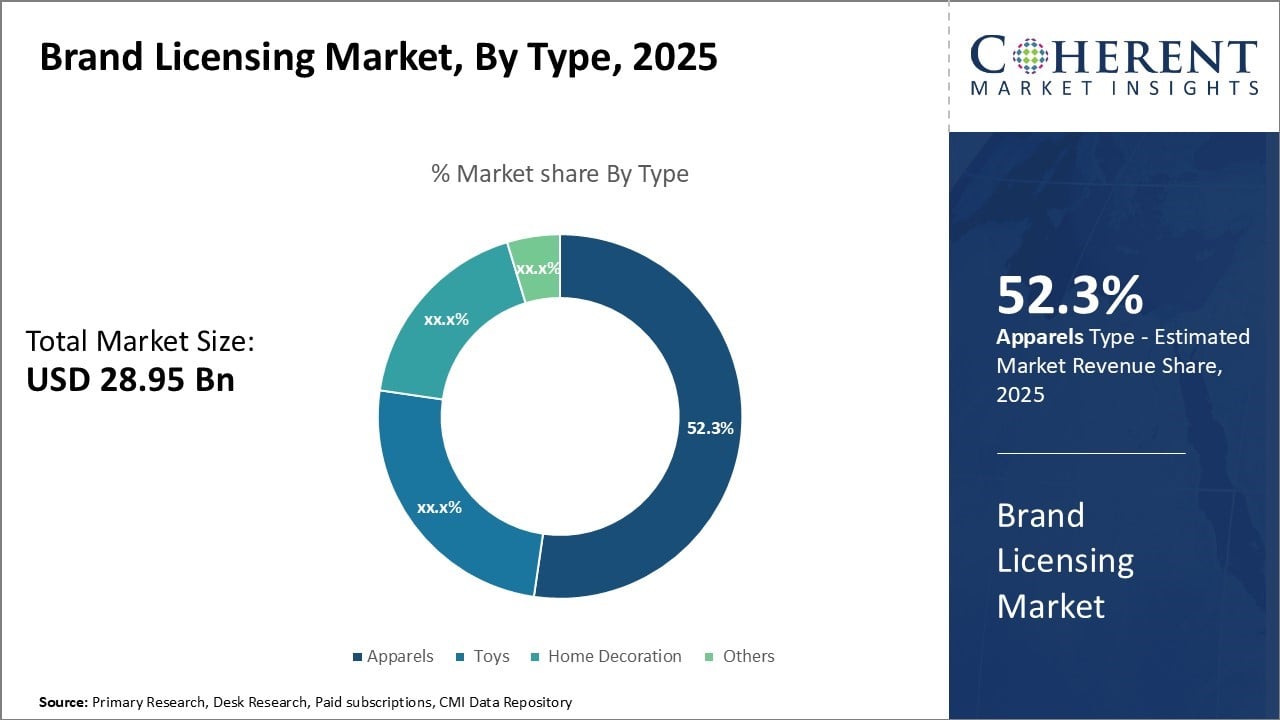
- By Type, Apparels acquired the prominent share of 53.3% in 2026 owing to the rising demand for branded and premium apparel.
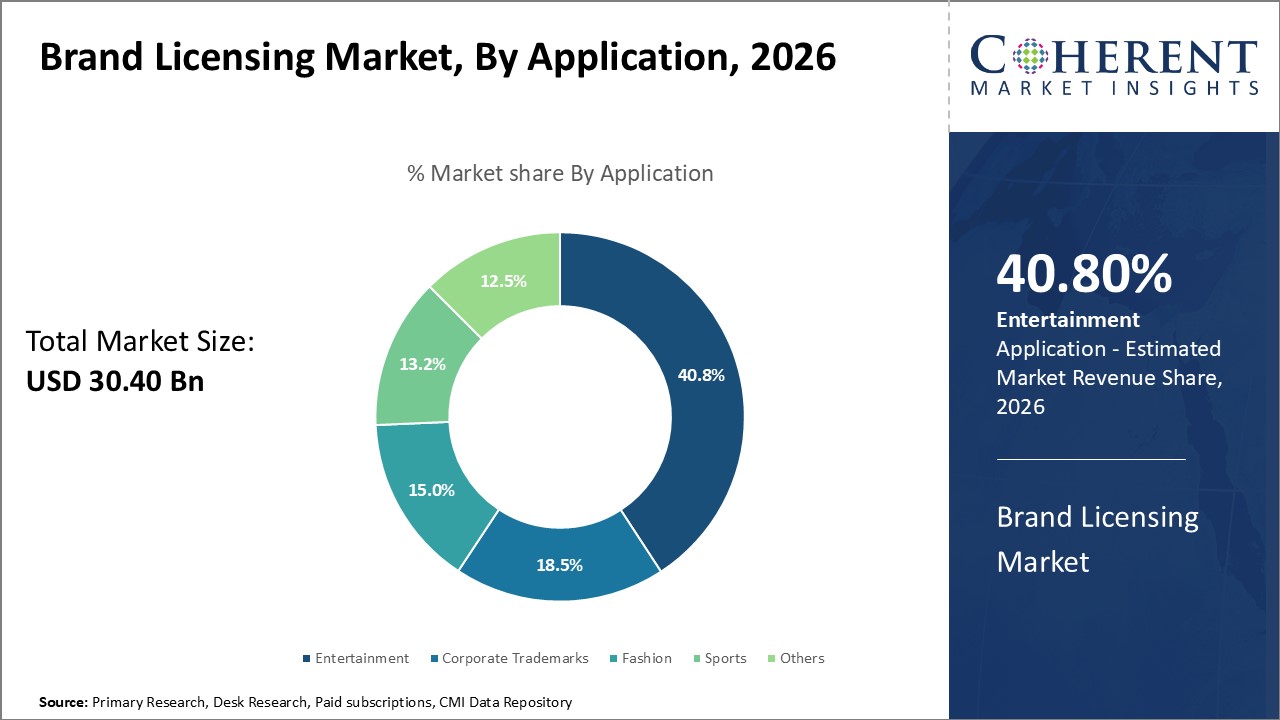
- By Application, Entertainment dominates the overall market with an estimated share of 40.8% in 2026 owing to the growing popularity of anime & Asian content.
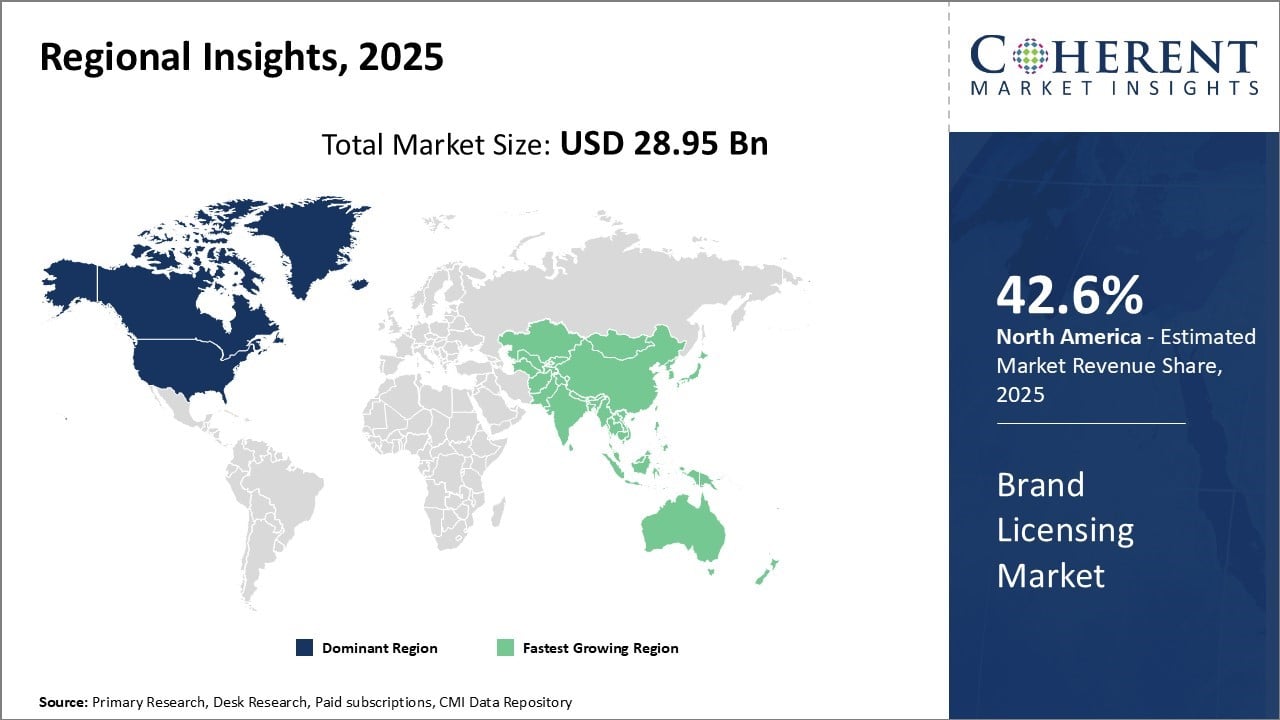
- By Region, North America hold the largest market share of 42.6% in 2026 on account of robust entertainment & sports ecosystem.
Market Overview
Brand licensing has become a prominent means for brands to generate additional revenue and establish partnerships as the market has witnessed a steady growth in the recent past. Trends in the market indicate a rising demand for brand licensing deals across diverse industries such as toys, food and beverages, apparel, and personal care. Consumer preference for established brands coupled with the willingness of companies to pay premium prices for strong brand associations are driving greater collaborations. Popular culture figures and characters also experience increase in monetization channels through licensing agreements.
Current Events and their Impact on the Brand Licensing Market
Current Events | Description and its impact |
U.S.-China Trade War & IP Enforcement |
|
Web3 & Metaverse Expansion |
|
Mega-Event Licensing Cycles |
|
End-user Feedback and Unmet Needs in the Brand Licensing Market
- Limited Availability Across Region: Many consumers outside major markets report frustration over the unavailability of licensed merchandise. Popular franchises often release products in select geographies, leaving international fans underserved. This unmet demand presents a growth opportunity for licensors to expand distribution networks and ensure a more inclusive global reach.
- Lack of Personalization and Immersive Experiences: Today’s consumers expect more than just generic merchandise; they seek personalized and immersive experiences that reflect their unique fan identity. The market lacks offerings that integrate augmented reality (AR), customization features, or experiential branding, indicating a clear need for innovation in user engagement strategies.
- Sustainability and Ethical Production Gaps: Eco-conscious consumers increasingly voice concern over the environmental impact of licensed merchandise. From fast fashion tie-ins to plastic-heavy collectibles, end-users are calling for more sustainable and ethically sourced products. Addressing this need requires licensors to adopt greener manufacturing processes and prioritize transparent supply chains.
- Current Industry Events of 2026
- Market Size Estimation
- Regional Breakdown
- Competitive Landscape
- Customer Intelligence
- Segmental Analysis
- Pricing Analysis
- Key Market Drivers, Challenges & Future Trends
- Customized Insights Section
Segmental Insights
Brand Licensing Market Insights, By Type
Apparels contribute the highest share of the market owing to its sustainability and ethical fashion licensing
The apparel segment has long dominated the brand licensing market share due to the ubiquitous nature of clothing. Wearing branded apparel is a subtle yet powerful way for consumers to express their interests and affiliations. Whether it's a classic logo t-shirt from a favorite sports team or a stylish top printed with a famous character, branded apparel allows people to showcase what they love through their wardrobe. For instance, in June 2026, Apparel Group introduced the British menswear brand Ben Sherman to the Indian market under its multi-brand licensing agreement with Marquee Brands LLC. This move aligns with the group's broader strategy to expand the presence of premium international brands across India and the GCC region. This is further accelerating the brand licensing market share.
Brand Licensing Market Insights, B y Application
Entertainment contributes the highest share of the market owing to its increased licensing of digital content & characters
Engaged fan communities and innovative monetization strategies are driving growth in the entertainment licensing sector. Whether in film, television, music, or gaming, entertainment brands actively cultivate passionate followings that eagerly purchase branded merchandise. Licensing transforms popular franchises and characters into profitable physical goods. These loyal fanbases create a ready-made customer base that actively seeks out officially licensed products representing their favorite shows, movies, artists, and games. For instance, in December 2023, DC Entertainment introduced a new direction for the DC Universe (DCU) as it continues to evolve comic storytelling for the next generation of fans. The publisher will debut 24 brand-new series in the DC Comics lineup, each beginning with issue one.
Regional Insights
North America Brand Licensing Market Trends
North America is a leading market with a projected share of 42.6% share in 2026. The dominance in the brand licensing market can be attributed to the robust presence of major companies and brands. Strategic partnerships and licensing of popular intellectual properties have boosted new product development. A supportive regulatory environment and sophisticated consumer base have also facilitated the brand licensing market growth. For instance, in January 2026, Cataclean Global Limited and Holley Performance Brands a leader in automotive aftermarket performance solutions, have announced a permanent exclusive licensing agreement for the North American market.
Asia Pacific Brand Licensing Market Trends
Asia Pacific is expected to exhibit the fastest growth with 33% market share in 2026. The growth is driven by rising incomes, urbanization, and a growing middle class with purchasing power in countries such as China, India, and Southeast Asia. Local brands are increasingly leveraging the licensing model to expand their reach in both domestic and global markets.
In June 2024, Ionis Pharmaceuticals, Inc. and Otsuka Pharmaceutical Co., Ltd. (Otsuka) signed a licensing agreement granting Otsuka exclusive rights to donidalorsen—an investigational RNA-targeted prophylactic treatment for hereditary angioedema (HAE)—across the Asia-Pacific region.
United States Brand Licensing Market
The brand licensing market in the U.S. has seen significant changes in recent trends that have influenced growth opportunities. With the rise of conscious consumerism, there is an increased focus on brands that support good causes, sustainability and social responsibility. Licensees are seeing commercial success by aligning their products with licensors who have strong missions and values that resonate with today's customers.
For instance, Brandgenuity has been appointed as the exclusive U.S. licensing agency for KFC. This collaboration aims to grow KFC's licensing efforts by transforming the brand’s iconic heritage and popular elements into new product offerings. This is further propelling the brand licensing market revenue.
China Brand Licensing Market
In recent years, there has been a significant rise in the number of Chinese brands that are seeking to grow their domestic and global presence through brand licensing deals. An increasing number of Chinese companies recognize the commercial potential of leveraging their intellectual property by partnering with licensees that have expertise in product development and diverse distribution networks. This trend has been driven by growing national pride in Chinese brands as the country's economy and global clout expands. More Chinese consumers are seeking out products from domestic brands that they feel represent their culture and values. This domestic demand has encouraged Chinese brands to protect and promote their identities internationally through strategic licensing programs. For instance, in February 2026, the Iconic Brand has partnered with Emoji: Fortune, a Shanghai-based home product development company, to launch a new line of branded water bottles in China. Medialink, the licensing representative for the emoji brand in mainland China, facilitated the collaboration.
Market Players, Key Development, and Competitive Intelligence
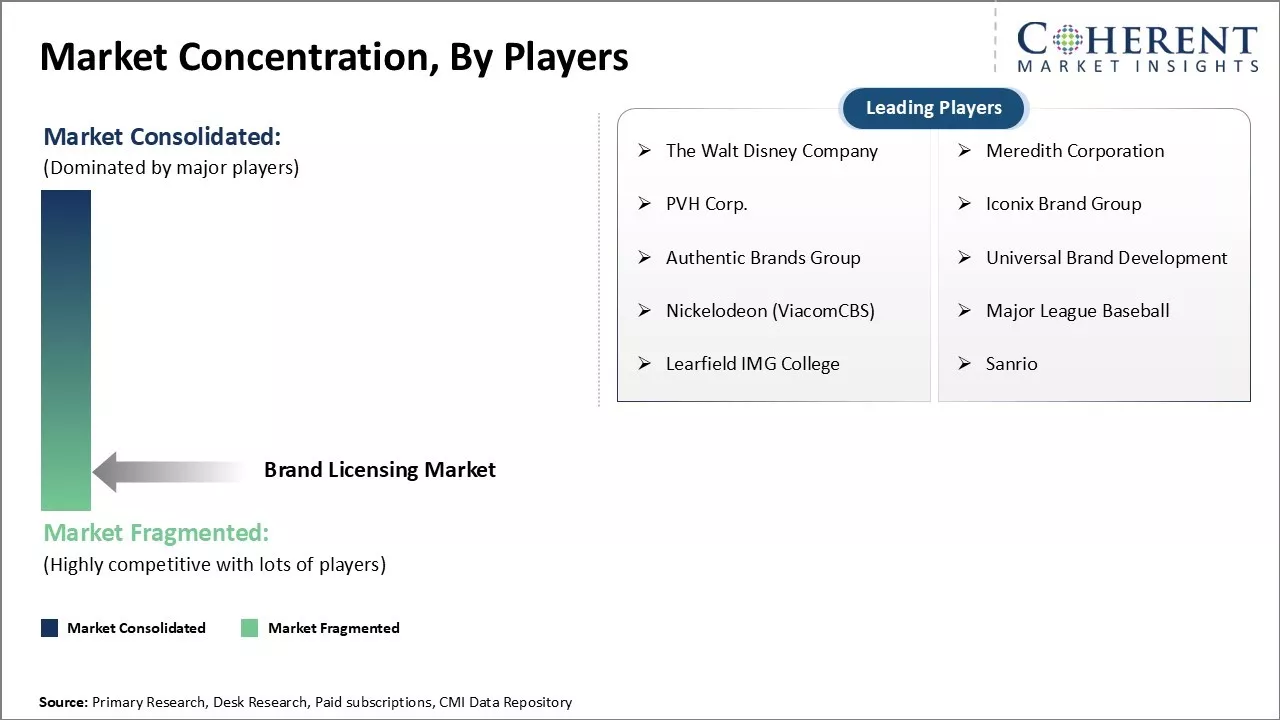
Brand Licensing Market News
- In May 2025, Licensing Expo, the world’s premier event for licensing, IP extension, and brand collaborations, launched The Networking Hub—a dynamic new space created to enhance meaningful connections and boost industry engagement.
- In February 2025, CITGO expanded its brand into five new geographic markets by launching a brand licensing program for eligible marketers and retailers. This initiative aims to support licensees in growing their businesses beyond CITGO’s existing territories.
- In March 2025, The Global Licensing Group at Informa Markets, the top platform for advancing licensing, brand extension, and partnerships, launched Licensing Unlocked, a new educational initiative. Developed in collaboration with Licensing International, Licensing Unlocked offers the first-ever live and on-demand online training courses, designed to bridge the knowledge gap for newcomers and provide continuing education and certifications for industry veterans.
- In July 2024, Actor Kajal Aggarwal partnered with brand licensing company Swag to enter the home and lifestyle market. Through this brand licensing initiative, she aims to blend modern design concepts with traditional craftsmanship.
Market Report Scope
Brand Licensing Market Report Coverage
| Report Coverage | Details | ||
|---|---|---|---|
| Base Year: | 2025 | Market Size in 2026: | USD 30.40 Bn |
| Historical Data for: | 2020 To 2024 | Forecast Period: | 2026 To 2033 |
| Forecast Period 2026 to 2033 CAGR: | 4.9% | 2033 Value Projection: | USD 42.45 Bn |
| Geographies covered: |
| ||
| Segments covered: |
| ||
| Companies covered: | The Walt Disney Company, Meredith Corporation, PVH Corp., Iconix Brand Group, Authentic Brands Group, Universal Brand Development, Nickelodeon (ViacomCBS), Major League Baseball, Learfield IMG College, Sanrio | ||
| Growth Drivers: |
| ||
| Restraints & Challenges: |
| ||
Brand Licensing Market Trend
Rise of Digital-First Licensing Deals
The brand licensing market is increasingly shifting toward digital-first partnerships, especially with gaming, streaming, and influencer-led properties. Brands are prioritizing collaborations that resonate with online communities and digital-native audiences, using platforms like Roblox, Fortnite, or social media influencers to launch virtual goods, digital collectibles, and immersive brand experiences.
Expansion of Lifestyle and Fashion Collaborations
There is a growing trend of entertainment, sports, and corporate brands extending into lifestyle and fashion segments. High-profile collaborations between licensors and fashion houses or streetwear labels are redefining licensed products as premium or cultural symbols. This trend elevates brand perception while appealing to style-conscious consumers seeking exclusivity.
Brand Licensing Market Opportunity
Untapped Regional Markets
Expanding brand licensing into emerging regions such as Southeast Asia, Africa, and Latin America presents significant growth opportunities. Rising middle-class populations, increased internet penetration, and growing fandoms create a fertile ground for licensors to introduce popular global brands and capture new consumer segments through tailored localization strategies and regional collaborations.
Analyst Opinion (Expert Opinion)
- Digital disruption, fandom-driven economics, and the rising premiumization of intellectual property are actively reshaping the brand licensing market. The future of licensing depends less on traditional product tie-ins and more on how effectively brands integrate themselves into culture, commerce, and community-driven experiences.
- Mattel demonstrated this shift with the massive success of Barbie (2023), securing over 100 licensing deals spanning fashion, beauty, and lifestyle. Viral collaborations like Barbie x Zara and Barbie x Crocs turned licensing into a tool for cultural amplification rather than just revenue generation. Brands that adopt this creative licensing approach are the ones maintaining cultural relevance.
- Digital-first brands are changing the rules. Minecraft and Roblox have evolved into licensing giants without relying on traditional media. Roblox, which now boasts over 70 million daily active users, enables brands such as Nike and Hello Kitty to launch virtual wearables and immersive experiences. This trend marks a clear move away from outdated licensing models toward engagement-centric ecosystems. Overlooking digital and metaverse-based licensing now constitutes a major strategic misstep.
- Sustainability also presents a largely untapped licensing opportunity. According to McKinsey (2023), Gen Z is 1.4 times more likely to support environmentally conscious brands. Yet, fast fashion and low-quality merchandise still dominate the licensed product landscape. Brands embracing sustainability—like LEGO with its bioplastics or Adidas with recycled materials—are not only earning consumer trust but also setting new industry benchmarks.
Speak to the analyst
Want personalized insights?
Take the findings above to one of our principal consultants, or have the report rebuilt around the segments, geographies and competitors you actually track.
Market Segmentation
- Type Insights (Revenue, USD Bn, 2021 - 2033)
- Apparels
- Toys
- Home Decoration
- Others
- Application Insights (Revenue, USD Bn, 2021 - 2033)
- Entertainment
- Corporate Trademarks
- Fashion
- Sports
- Others
- Regional Insights (Revenue, USD Bn, 2021 - 2033)
- North America
- U.S.
- Canada
- Latin America
- Brazil
- Argentina
- Mexico
- Rest of Latin America
- Europe
- Germany
- U.K.
- Spain
- France
- Italy
- Russia
- Rest of Europe
- Asia Pacific
- China
- India
- Japan
- Australia
- South Korea
- ASEAN
- Rest of Asia Pacific
- Middle East
- GCC Countries
- Israel
- Rest of Middle East
- Africa
- South Africa
- North Africa
- Central Africa
- Key Players Insights
- The Walt Disney Company
- Meredith Corporation
- PVH Corp.
- Iconix Brand Group
- Authentic Brands Group
- Universal Brand Development
- Nickelodeon (ViacomCBS)
- Major League Baseball
- Learfield IMG College
- Sanrio
Sources
Primary Research Interviews
- Interviews with licensing managers at leading entertainment and fashion brands
- Discussions with retail buyers and merchandise planners
- Conversations with intellectual property (IP) attorneys specializing in licensing agreements
Databases
- Statista
- UN Comtrade
- World Intellectual Property Organization (WIPO) database
- Trademark Electronic Search System (TESS)
Magazines
- License Global
- The Licensing Source Book
- Brand Licensing Europe Magazine
- Adweek (Brand Marketing section)
Journals’
- Journal of Brand Management
- International Journal of Retail & Distribution Management
- Journal of Product & Brand Management
- Entertainment and Sports Law Journal
Newspapers
- The New York Times (Business and Culture sections)
- The Guardian
- Financial Times
- The Wall Street Journal (Marketing and Retail coverage)
Associations
- International Licensing Industry Merchandisers’ Association (LIMA)
- Licensing International
- Toy Association
- Entertainment Software Association (ESA)
Public Domain sources
- U.S. Patent and Trademark Office (USPTO)
- European Union Intellectual Property Office (EUIPO)
- Brand-owned press releases and investor presentations
- SEC filings and annual reports of IP-owning companies
- YouTube interviews and panel discussions from Licensing Expo and Comic-Con
Proprietary Elements
- CMI Data Analytics Tool, and Proprietary CMI Existing Repository of information for last 8 years
Get access to 250+ pages report
Every segment, forecast, competitor profile and data table behind the analysis above — available for instant download.
- ESOMAR Member
- ISO 9001:2015 Certified
- D-U-N-S Registered
- GDPR & CCPA Compliant
Missing comfort of reading report in your local language? Find your preferred language:
Transform your Strategy with Exclusive Trending Reports
Frequently Asked Questions
The Brand Licensing Market is estimated to be valued at USD 30.40 Bn in 2026, and is expected to reach USD 42.45 Bn by 2033.
The CAGR of the Brand Licensing Market is projected to be 4.9% from 2026 to 2033.
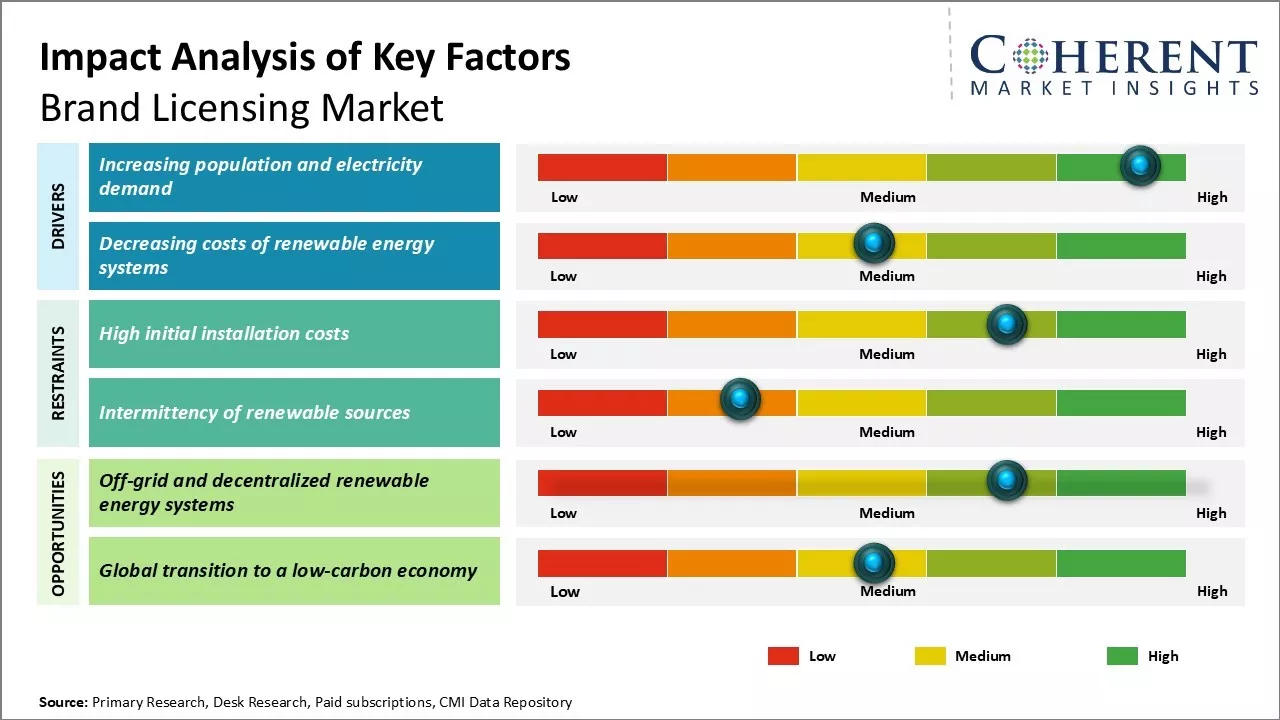
Increasing population and electricity demand and decreasing costs of renewable energy systems are the major factor driving the growth of Brand Licensing Market.
High initial installation costs and Intermittency of renewable sources are the major factor hampering the growth of Brand Licensing Market.
In terms of Type, Apparels are estimated to dominate the market revenue share in 2026.
The Walt Disney Company, Meredith Corporation, PVH Corp., Iconix Brand Group, Authentic Brands Group, Universal Brand Development, Nickelodeon (ViacomCBS), Major League Baseball, Learfield IMG College, Sanrio are the major players.
North America is expected to lead the Brand Licensing Market in 2026.