

Global Carcinoembryonic Antigen (CEA) Market Size and Forecast – 2026 To 2033
The global carcinoembryonic antigen (CEA) market is expected to grow from USD 1,286.4 Mn in 2026 to USD 2,071.8 Mn by 2033, registering a compound annual growth rate (CAGR) of 7.1% from 2026 to 2033. The market for global carcinoembryonic antigen (CEA) is poised for significant expansion, fueled by the soaring burden of cancer, leading to increased demand for tumor biomarker testing for disease diagnosis and monitoring.
According to the World Health Organization, in 2022, there were an estimated 20 million new cancer cases and 9.7 million deaths. The estimated number of people who were alive within 5 years following a cancer diagnosis was 53.5 million. About 1 in 5 people develop cancer in their lifetime, approximately 1 in 9 men and 1 in 12 women die from the disease. Further, over 35 million new cancer cases are predicted in 2050, a 77% increase from the estimated 20 million cases in 2022.
(Source: World Health Organization)
Key Takeaways of the Global Carcinoembryonic Antigen (CEA) Market
- Reagents and kits are projected to hold 63.5 % of the global carcinoembryonic antigen (CEA) market share in 2026, making it the dominant product segment across North America due to the high volume of routine oncology testing and favorable reimbursement for tumor marker assays. For instance, the National Comprehensive Cancer Network (NCCN) continues to recommend serial CEA testing for surveillance following treatment of stage II–IV colorectal cancer, driving recurring demand for CEA reagents and assay kits in U.S. clinical laboratories.
- Chemiluminescence Immunoassay (CLIA) is projected to hold 42.0 % of the global carcinoembryonic antigen (CEA) market share in 2026, making it the dominant technology segment across Europe due to the extensive use of automated immunoassay systems in centralized diagnostic laboratories. For instance, the European Union's In Vitro Diagnostic Regulation (IVDR), applicable since May 2022, has strengthened clinical performance and quality requirements for IVDs, accelerating the adoption of validated automated immunoassay platforms for oncology biomarker testing.
- Cancer diagnosis is projected to hold 38.0 % of the global carcinoembryonic antigen (CEA) market share in 2026, making it the dominant application segment across Asia Pacific due to the growing burden of colorectal cancer and expanding national screening initiatives. For instance, Japan's colorectal cancer treatment guidelines recommend CEA measurement before treatment and during postoperative follow-up for recurrence monitoring, supporting its widespread clinical use in oncology practice.
- North America maintains its dominance with an expected share of 39.0 % in 2026, bolstered by high adoption of CEA testing in colorectal cancer surveillance, advanced diagnostic infrastructure, and favorable clinical guidelines. For instance, the American Society of Colon and Rectal Surgeons (ASCRS) recommends routine carcinoembryonic antigen (CEA) testing as part of post-treatment surveillance for colorectal cancer to facilitate early detection of recurrence, supporting sustained demand across the region.
- Asia Pacific is expected to exhibit the fastest growth with an estimated contribution of 24.0 % share in 2026, driven by the rising burden of colorectal cancer, expanding oncology diagnostic infrastructure, and increasing adoption of tumor marker testing across emerging economies such as India. For instance, the Indian Council of Medical Research (ICMR), in its Consensus Document for the Management of Colorectal Cancer, recommends serum carcinoembryonic antigen (CEA) estimation as part of the baseline evaluation and follow-up of colorectal cancer patients, supporting the routine clinical use of CEA testing across the country.
- Expanding Adoption of CEA in Minimal Residual Disease (MRD) and Post-Treatment Surveillance: The growing emphasis on long-term surveillance of colorectal and gastrointestinal cancer patients is increasing the clinical use of CEA for monitoring minimal residual disease (MRD) and detecting recurrence following curative treatment. Although molecular assays are gaining traction, CEA remains a cost-effective and widely accessible biomarker that complements imaging and clinical assessments. Its routine inclusion in post-operative surveillance protocols is driving recurring demand for CEA assays and reagents across hospitals and diagnostic laboratories.
- Growing Development of CEACAM5 (CEA)-Targeted Companion Diagnostics: The expanding pipeline of CEACAM5 (CEA)-targeted therapies, including antibody-drug conjugates (ADCs) and radioligand therapies, is creating demand for companion diagnostic assays that accurately identify eligible patients. As pharmaceutical companies advance CEA-targeted therapeutics through clinical development, the need for standardized and high-sensitivity CEA testing is expected to increase. This trend presents significant opportunities for diagnostic manufacturers to develop companion diagnostics and strengthen their oncology testing portfolios.
Segmental Insights
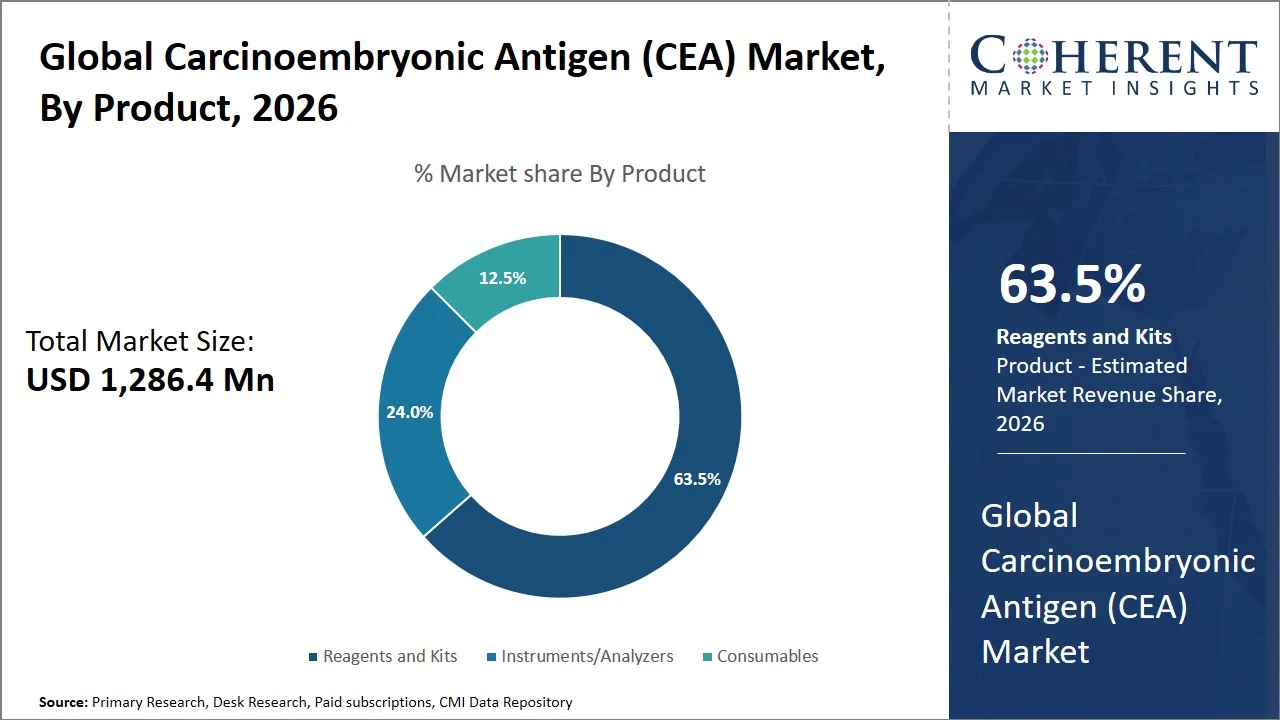
Why Do Reagents and Kits Dominate the Global Carcinoembryonic Antigen (CEA) Market?
Reagents and kits are projected to hold a market share of 63.5% in 2026, owing to their recurring use in diagnosis, monitoring treatment response, and persistent demand in hospital and clinical settings. Innovation in the composition of reagents & kits, along with the development of novel reagents & kits that can offer better analytical sensitivity, stability, and complete compatibility with fully automated immunoassay platforms have increased and are expected to drive the need for testing accuracy. Furthermore, demand for reagents & kits will further increase by the rising implementation of the standards of oncology diagnostic and laboratory work streams across diverse markets. Furthermore, routine use of Carcinoembryonic Antigen (CEA) testing is reinforced by established oncology surveillance guidelines. For instance, the National Comprehensive Cancer Network (NCCN) endorses routine CEA tests for stage II and stage III colorectal cancer patients during treatment and surveillance, thus continuing demand in the diagnostic industry for Carcinoembryonic Antigen (CEA) reagents and kits. (Source: National Cancer Institute)
- Current Industry Events of 2026
- Market Size Estimation
- Regional Breakdown
- Competitive Landscape
- Customer Intelligence
- Segmental Analysis
- Pricing Analysis
- Key Market Drivers, Challenges & Future Trends
- Customized Insights Section
Why Does Chemiluminescence Immunoassay (CLIA) Represent the Largest Technology Segment in the Carcinoembryonic Antigen (CEA) Market?
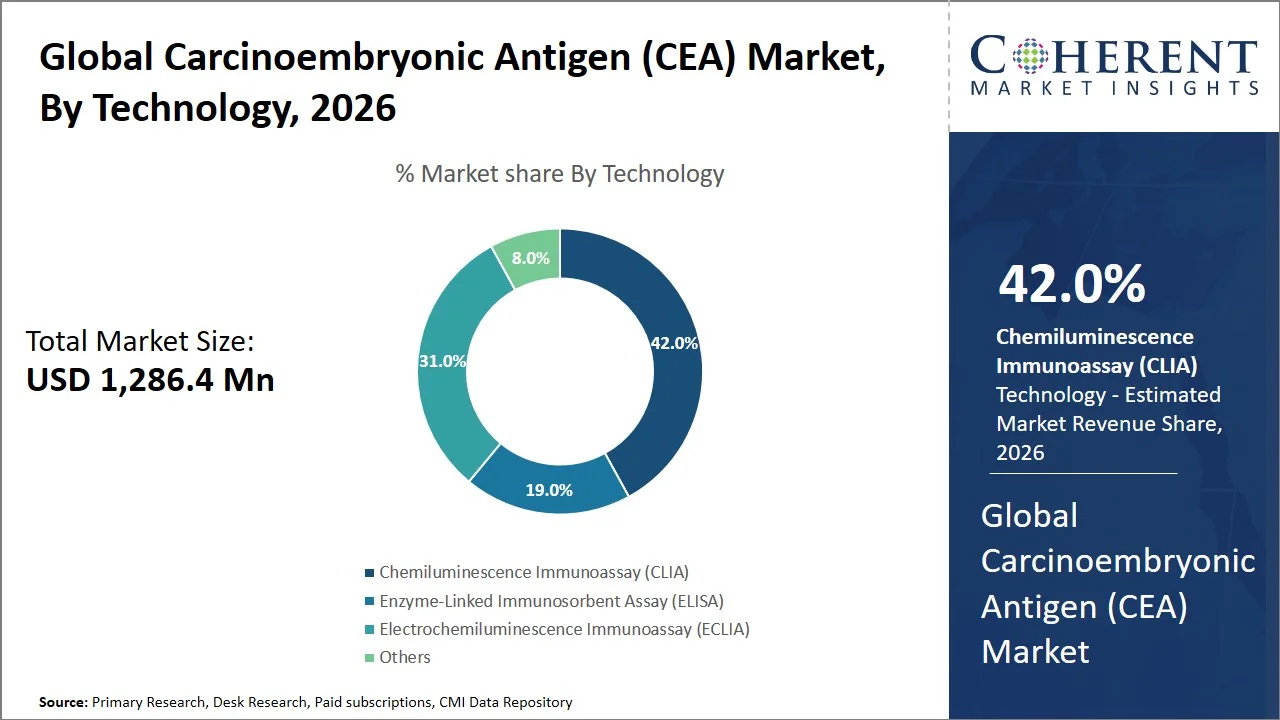
Chemiluminescence Immunoassay (CLIA) is projected to hold a market share of 42.0% in 2026, due to the high degree of analytical sensitivity and faster turnaround time as well as easy compatibility with automated laboratory processes. Additionally, Chemiluminescence Immunoassay (CLIA) offer high throughput performance which are the key features desired by researchers in the routine carcinoembryonic antigen (CEA) measurements. For instance, in April 2024, Mindray unveiled its “Simple yet Efficient” laboratory solutions including the CL-2600i Chemiluminescence Immunoassay Analyzer for improving the testing throughput and laboratory workflow for medium-volume laboratories, driving up the further utilization of automatic CLIA tumor marker testing. (Source: Shenzhen Mindray Bio-Medical Electronics Co., Ltd)
Cancer Diagnosis Segment Dominates the Global Carcinoembryonic Antigen (CEA) Market
The cancer diagnosis segment is projected to hold a market share of 38.0% in 2026, attributed to a high reliance on carcinoembryonic antigen (CEA) as a tumor companion biomarker for initial diagnosis and confirmation of colorectal cancer, along with additional gastrointestinal malignancies. An increase in blood biomarker screening tests and the increasing availability of cancer screening protocols drives the demand for carcinoembryonic antigen (CEA) assays across hospitals and diagnostic laboratories. For instance, in March 2026, the Ministry of Health & Family Welfare, Government of India, stated that the National Programme for Prevention and Control of Non-Communicable Diseases (NP-NCD) had expanded to 770 District NCD Clinics, 364 Day Care Cancer Centres, and 6,410 CHC-level clinics, with an additional 297 District Day Care Cancer Centres approved for FY 2025–26 to strengthen early cancer diagnosis and care access. (Source: Ministry of Health and Family Welfare)
Currents Events and their Impact
Current Events | Description and its Impact |
U.S. FDA Expands 2025–2026 Oncology Guidance Agenda for Biomarker-Driven Drug Development (May 2026) |
|
European Commission Advances IVDR Implementation for In Vitro Diagnostics (December 2025) |
|
(Source: Food and Drug Administration, European Commission)
Carcinoembryonic Antigen (CEA) Market Dynamics
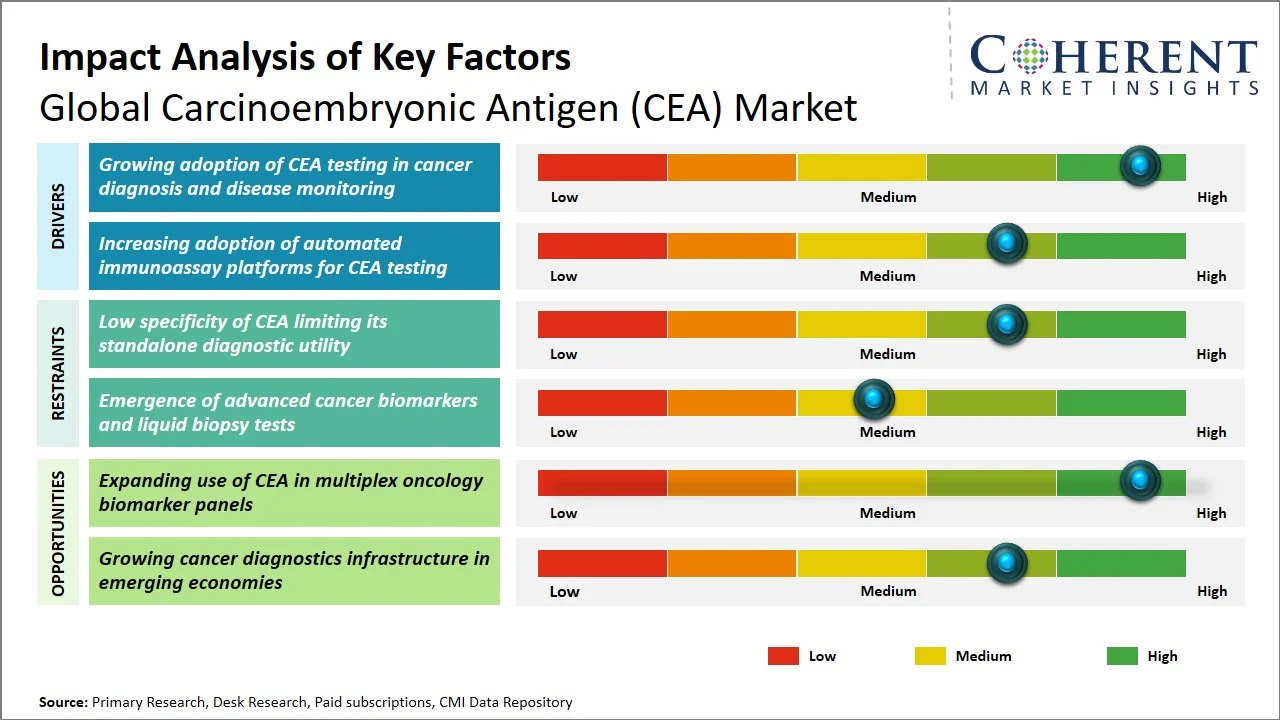
Market Drivers
- Growing adoption of CEA testing in cancer diagnosis and disease monitoring: The increasing utilization of Carcinoembryonic Antigen (CEA) testing for cancer diagnosis, treatment monitoring, and recurrence surveillance is driving sustained demand for CEA assays across oncology diagnostics. Continued advancements in automated immunoassay platforms are improving analytical performance and laboratory efficiency, supporting broader clinical adoption. For instance, in January 2026, Akari Therapeutics announced the development of its second antibody-drug conjugate (ADC), AKTX-102, targeting CEACAM5-expressing solid tumors, highlighting the expanding clinical importance of CEA-related biomarkers in precision oncology and reinforcing demand for accurate CEA testing.
- Increasing adoption of automated immunoassay platforms for CEA testing: The increasing adoption of automated immunoassay platforms is driving the demand for CEA testing by enabling high-throughput analysis, improved analytical precision, and faster turnaround times in oncology diagnostics. These platforms support standardized tumor marker testing and enhance laboratory efficiency, making CEA assays more accessible across hospitals and reference laboratories. For instance, in May 2023, Beckman Coulter Diagnostics unveiled the DxI 9000 Access Immunoassay Analyzer, a next-generation high-throughput platform designed to expand automated immunoassay testing capabilities and streamline clinical laboratory workflows, supporting broader adoption of tumor marker assays, including CEA.
Emerging Trends
- Expansion of Decentralized Oncology Testing through Integrated Laboratory Networks: Many healthcare facilities are moving towards consolidating the laboratory operations of diagnostics as centralized laboratory systems. These systems can offer automated high-through-put immunoassay analyzers to provide greater access, better turnaround times and standardize cancer carcinoembryonic antigen analysis across regional hospitals and satellite diagnostic centers.
- Standardization and Harmonization of Tumor Marker Testing: To improve reproducible results from carcinoembryonic antigen (CEA) tests, clinical laboratories are increasingly focusing on assay standardization, automating their controls process, and implementing synchronized testing procedures. These efforts build physician’s trust and support the broader adoption of this method as routine in oncology testing.
Regional Insights
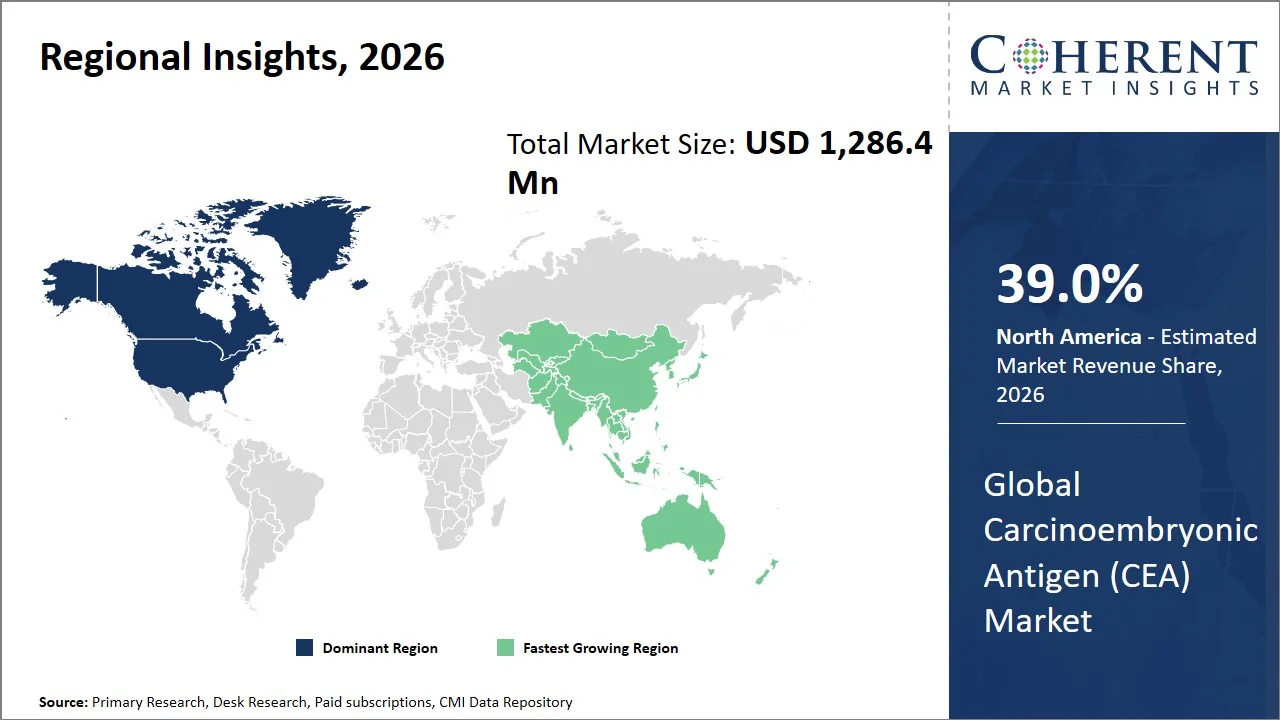
Why is North America a Strong Market for Carcinoembryonic Antigen (CEA)?
North America leads the global carcinoembryonic antigen (CEA) market, accounting for an estimated 39.0% share in 2026, due to its strong foundation in oncology diagnostics and its widespread adoption of automated immunoassay technology for standard tumor marker testing. A solid clinical integration of cancer monitoring and post-treatment recurrence tests in routine clinical settings has sustained its momentum. Furthermore, continuous investment by leading players for diagnostic innovation, together with an advanced clinical laboratory system, will propel market adoption. For instance, in April 2025, F. Hoffmann-La Roche Ltd announced an investment of USD 50 billion in the U.S. for five years to expand its existing capabilities in pharmaceuticals manufacturing and development, diagnostics manufacturing, R&D, and distribution, strengthening its position as part of the country's leading diagnostic manufacturing region. (Source: F. Hoffmann-La Roche Ltd)
Why Does the Asia Pacific Carcinoembryonic Antigen (CEA) Market Exhibit High Growth?
The Asia Pacific carcinoembryonic antigen (CEA) market is expected to exhibit the fastest growth with an estimated contribution of 24.0% share to the global market in 2026, due to improved healthcare infrastructure, rising adoption for automated immunoassay technologies, and the availability of oncology diagnostics in various emerging economies. Expanding incidence for cancer, and the focus on early diagnosis is leading to an increase in application of carcinoembryonic antigen (CEA) test in hospitals and diagnostic centers. Furthermore, investment for local IVD manufacturing infrastructure and improved network for clinical diagnostics will bolster the market growth. For instance, in April 2025, Sysmex Corporation announced that its new manufacturing facility in India has begun full-scale production of diagnostic reagents and instruments to improve the supply of in-vitro diagnostic devices locally and meet the increased demand throughout the region. (Source: Sysmex Corporation)
Global Carcinoembryonic Antigen (CEA) Market Outlook for Key Countries
Why is the U.S. Leading Innovation and Adoption in the Carcinoembryonic Antigen (CEA) Market?
The U.S. dominates the carcinoembryonic antigen (CEA) market owing to the widespread usage of high throughput Chemiluminescence Immunoassay (CLIA) and Electrochemiluminescence Immunoassay (ECLIA) immunoassay instruments for standard oncology diagnostic procedures in clinical settings including hospitals and reference laboratories. Continued focus of the U.S market to standardize their respective oncology monitoring practices and the prompt assimilation of immunodiagnostics innovation has bolstered the clinical usage of carcinoembryonic antigen (CEA) in routine oncology testing. Further development of the bundled and integrated oncology testing menus on automated analyzers is predicted to fuel continued market leadership.
Is Japan a Favorable Market for Carcinoembryonic Antigen (CEA) Market?
Japan is one of the most promising markets for the carcinoembryonic antigen (CEA) market as it possesses well-developed oncology diagnostics ecosystem and high prevalence of automated immunoassay in various hospitals and reference laboratories across country. Colorectal and gastric cancer are frequently handled by Japan clinicians and they extensively conduct carcinoembryonic antigen (CEA) assays in clinical diagnostics testing across treatment and recurrences of cancer, along with progressive adoption of newer immunoassay technologies. According to the latest National Cancer Center Japan statistics, colorectal cancer accounted for approximately 155,700 new cases and stomach cancer for approximately 109,700 new cases annually, making them among the most commonly diagnosed cancers in Japan.
Is China Emerging as a Key Growth Hub for the Carcinoembryonic Antigen (CEA) Market?
China is positioned as a key growth hub in the global carcinoembryonic antigen (CEA) market due to growing hospital automation, expanding adoption of chemiluminescence immunoassay (CLIA) platforms and growing domestic production of in-vitro diagnostic (IVD) solutions. Furthermore, the increasing integration of carcinoembryonic antigen (CEA) testing into comprehensive oncology diagnostic workflows, coupled with rising investments in advanced clinical laboratory infrastructure, is driving market growth. The expanding precision oncology ecosystem is further accelerating the adoption of CEA testing for cancer diagnosis and disease monitoring.
Why Does Germany Top the European Carcinoembryonic Antigen (CEA) Market?
Germany is the leader in the European market for global carcinoembryonic antigen (CEA) market attributed to a large number of certified laboratories (such as SYNLAB Germany, Limbach Group, and Labor Berlin) and significant adoption of fully automated immuno-analysis system for common use of tumor testing for cancer. Moreover, well established in organized lab medicine as well as general use of cancer carcinoembryonic antigen (CEA) testing within hospital in scope of colorectal and gastro-intestinal cancers leads to well usage. Further on, constant improvement of diagnostic laboratory facilities, rapid adaptation of novel immunoassay tools and instrumentation make it in top of European region market.
Is Carcinoembryonic Antigen (CEA) Market Developing in the U.K.?
The U.K. carcinoembryonic antigen (CEA) market is steadily expanding due to the implementation of centralized pathology networks and wider use of automated immunoassay devices in the National Health Services labs. Standardized approaches in the cancer diagnostic procedures and laboratory consolidation can strengthen routine utilization of carcinoembryonic antigen (CEA) testing in monitoring the cancer therapy and detecting relapses. Also, modernization efforts focused on diagnostic framework development, expansion in the scope of personalized oncology solutions will increase the demand for advanced carcinoembryonic antigen (CEA) tests.
Product Innovation Landscape in the Global Carcinoembryonic Antigen (CEA) Market
Innovation Area | Technology/Innovation | Recent Innovation Trend | Expected Market Impact |
High-Sensitivity CEA Assays | Advanced CLIA/ECLIA-based immunoassays | Development of next-generation assays with improved analytical sensitivity and specificity | Enhances diagnostic accuracy and supports earlier detection and disease monitoring |
Multiplex Tumor Marker Panels | Multi-analyte immunoassay platforms | Integration of CEA with biomarkers such as CA 19-9, AFP, and CA-125 in single-panel testing | Improves clinical decision-making while increasing laboratory efficiency |
Laboratory Automation | Fully automated immunoassay analyzers | Expansion of high-throughput analyzers with integrated oncology testing menus | Reduces turnaround time and increases testing capacity across diagnostic laboratories |
CEACAM5-Targeted Companion Diagnostics | Companion diagnostic assays | Development of diagnostics supporting CEACAM5-targeted antibody-drug conjugates (ADCs) and other precision oncology therapies | Creates new growth opportunities by linking CEA diagnostics with targeted cancer therapeutics |
AI-Enabled Diagnostic Workflows | AI-assisted laboratory software and digital analytics | Integration of AI for assay interpretation, quality control, and laboratory workflow optimization | Improves operational efficiency, minimizes analytical errors, and enhances diagnostic consistency |
How is the expanding use of CEA in multiplex oncology biomarker panels creating new growth opportunities in the carcinoembryonic antigen (CEA) market?
The growing use of multiplex oncology biomarker panels will present an opportunity for the carcinoembryonic antigen (CEA) market by identifying the co-existence of carcinoembryonic antigen (CEA) with other complementary biomarkers for comprehensive cancer profiling. This will result in better accuracy of tests and will guide personalize patient therapy selection, monitor disease recurrence, and will lessen the overall laboratory Turn-around time (TAT). For instance, Roche Elecsys CEA test is used on cobas immunoassay instruments, and adds to an existing portfolio of oncology biomarkers for the integrated testing of tumor markers in clinical diagnostic laboratories. Roche believes that increased consolidation of high-throughput oncology assays in clinical laboratories will result in higher volumes of CEA-based multiplex tests. (Source: F. Hoffmann-La Roche Ltd)
Market Players, Key Development, and Competitive Intelligence
Key Developments
- In May 2026, EMD Serono announced that the first patient had been dosed in the Phase 3 PROCEADE-CRC-03 trial evaluating precemtabart tocentecan (Precem-TcT), an investigational anti-CEACAM5 (CEA) antibody-drug conjugate (ADC) for metastatic colorectal cancer. The trial underscores the growing clinical focus on CEACAM5 (CEA) as a therapeutic target, reflecting the expanding role of CEA in precision oncology beyond its established use as a diagnostic biomarker.
- In May 2025, Merck KGaA announced the presentation of new clinical data for its investigational anti-CEACAM5 antibody-drug conjugate (ADC), precemtabart tocentecan (M9140), at the ASCO 2025 Annual Meeting. The data demonstrated encouraging antitumor activity in advanced colorectal cancer and reinforced the company's commitment to advancing CEACAM5-targeted precision oncology therapies. This development highlights the growing therapeutic significance of CEACAM5 (CEA) beyond its established role as a tumor biomarker.
Competitive Landscape
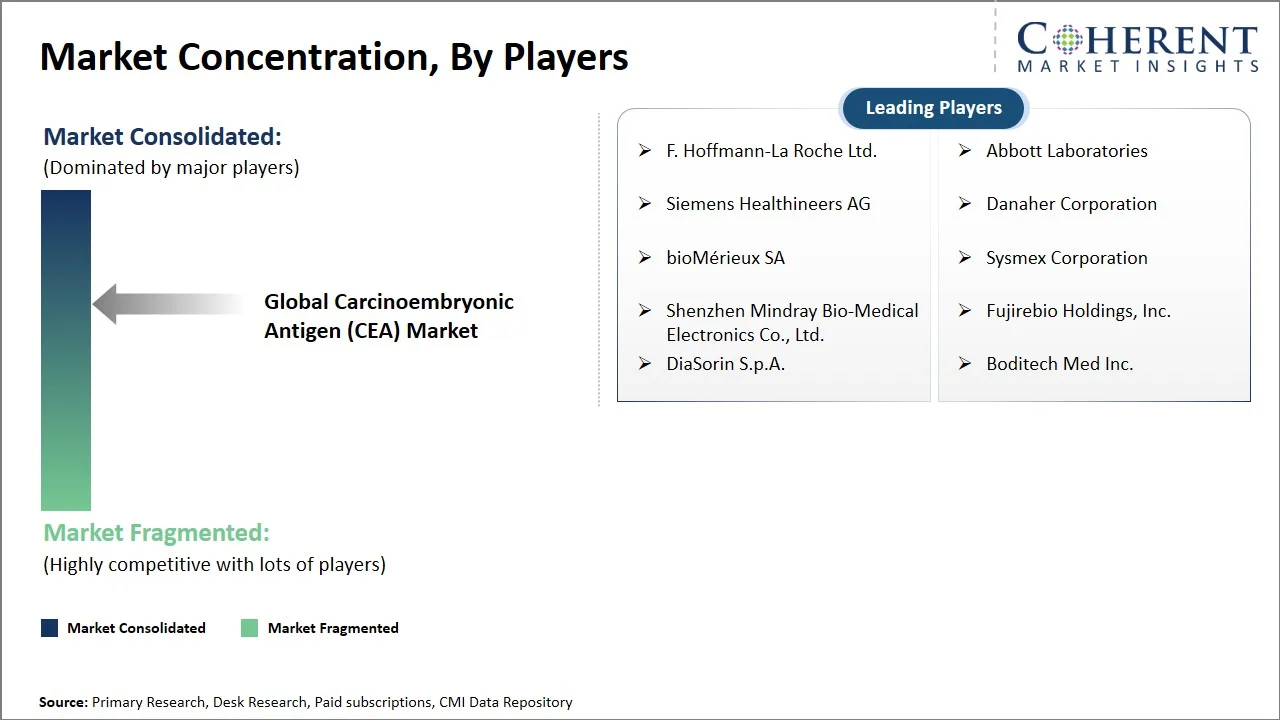
The global carcinoembryonic antigen (CEA) market is moderately consolidated yet highly competitive based on improvements in assay sensitivity and specificity, growing automated immunoassay portfolio, gaining approvals from global regulatory bodies, and increasing clinical adoption via targeted application development in evidence-based oncology. Stakeholders are actively pursuing R&D in cutting-edge biomarkers and increasing application of lab automation for diagnosis of various cancers. Key focus areas include:
- Development of high-sensitivity CLIA/ECLIA-based CEA assays with improved analytical performance
- Expansion of automated immunoassay platforms for high-throughput oncology testing
- Integration of CEA into multi-marker oncology panels for comprehensive cancer diagnosis and monitoring
- Strategic collaborations to advance CEACAM5 (CEA)-targeted companion diagnostics alongside emerging precision oncology therapies
- Expansion of regulatory approvals and commercialization of CEA testing solutions across high-growth emerging markets
Market Report Scope
Carcinoembryonic Antigen (CEA) Market Report Coverage
| Report Coverage | Details | ||
|---|---|---|---|
| Base Year: | 2025 | Market Size in 2026: | USD 1,286.4 Mn |
| Historical Data for: | 2020 To 2024 | Forecast Period: | 2026 To 2033 |
| Forecast Period 2026 to 2033 CAGR: | 7.1% | 2033 Value Projection: | USD 2,071.8 Mn |
| Geographies covered: |
| ||
| Segments covered: |
| ||
| Companies covered: | F. Hoffmann-La Roche Ltd., Abbott Laboratories, Siemens Healthineers AG, Danaher Corporation, bioMérieux SA, Sysmex Corporation, Shenzhen Mindray Bio-Medical Electronics Co., Ltd., Fujirebio Holdings, Inc., DiaSorin S.p.A., and Boditech Med Inc. | ||
| Growth Drivers: |
| ||
| Restraints & Challenges: |
| ||
Analyst Opinion (Expert Opinion)
- In the coming years, carcinoembryonic antigen (CEA) market will likely see expansion due to changing landscape of precision oncology and personalized medicine along with increased relevance of multi-marker diagnostics (the increased utilization of CEA, along with other biomarkers for a more holistic diagnostics approach), and automated immunoassays/ laboratory analytics.
- The maximum opportunities will probably exist within cancer diagnostics and recurrence surveillance applications within the markets of India and China. The growth in these markets will be driven by rising incidence rates of colorectal and gastrointestinal cancer, increased government-sponsored national cancer screening programs and substantial investment in diagnostic lab infrastructure will continue to increase the demand for CEA testing.
- In order to obtain a competitive advantage, market participants should invest in higher sensitivity CLIA/ECLIA assays, use CEA as a component for multi-biomarker oncology panels and companion diagnostics. The market players should also focus on increasing market access in developing and emerging markets by collaborating with hospital facilities, reference laboratories and cancer research institutions. Enhancement in clinical validation and regulatory compliance also need more consideration to increase physicians’ confidence and their willingness to adopt the product for commercial use.
Speak to the analyst
Want personalized insights?
Take the findings above to one of our principal consultants, or have the report rebuilt around the segments, geographies and competitors you actually track.
Market Segmentation
- Product Insights (Revenue, USD Mn, 2021 - 2033)
- Reagents and Kits
- Instruments/Analyzers
- Consumables
- Technology Insights (Revenue, USD Mn, 2021 - 2033)
- Chemiluminescence Immunoassay (CLIA)
- Enzyme-Linked Immunosorbent Assay (ELISA)
- Electrochemiluminescence Immunoassay (ECLIA)
- Others
- Application Insights (Revenue, USD Mn, 2021 - 2033)
- Cancer Diagnosis
- Treatment Monitoring
- Recurrence Monitoring
- Research Applications
- End User Insights (Revenue, USD Mn, 2021 - 2033)
- Hospitals
- Diagnostic Laboratories
- Academic and Research Institutes
- Others
- Regional Insights (Revenue, USD Mn, 2021 - 2033)
- North America
- U.S.
- Canada
- Latin America
- Brazil
- Argentina
- Mexico
- Rest of Latin America
- Europe
- Germany
- U.K.
- Spain
- France
- Italy
- Russia
- Rest of Europe
- Asia Pacific
- China
- India
- Japan
- Australia
- South Korea
- ASEAN
- Rest of Asia Pacific
- Middle East
- GCC Countries
- Israel
- Rest of Middle East
- Africa
- South Africa
- North Africa
- Central Africa
- North America
- Key Players Insights
- F.Hoffmann-La Roche Ltd.
- Abbott Laboratories
- Siemens Healthineers AG
- Danaher Corporation
- bioMérieux SA
- Sysmex Corporation
- Shenzhen Mindray Bio-Medical Electronics Co., Ltd.
- Fujirebio Holdings, Inc.
- DiaSorin S.p.A.
- Boditech Med Inc.
Sources
Primary Research Interviews
- Medical Oncologists specializing in colorectal, gastrointestinal, and lung cancers
- Clinical Pathologists and Laboratory Directors managing tumor marker testing
- Molecular Diagnostics and Immunoassay Specialists from hospitals and reference laboratories
- Oncology Diagnostic Product Managers responsible for biomarker assay portfolios
- Healthcare Reimbursement and Market Access Experts specializing in in-vitro diagnostics (IVDs)
Stakeholders
- Carcinoembryonic Antigen (CEA) Assay and Reagent Manufacturers
- Immunoassay Analyzer Manufacturers and IVD Solution Providers
- Clinical Diagnostic Laboratories and Reference Laboratory Networks
- Hospital Systems and Comprehensive Cancer Centers
- End-use Sectors
- Hospitals and Multispecialty Healthcare Systems
- Independent Diagnostic Laboratories
- Academic and Research Institutes
- Cancer Specialty Centers
- Point-of-Care Diagnostic Providers
- Regulatory & Health Bodies
- U.S. Food and Drug Administration (FDA)
- European Medicines Agency (EMA)
- European Commission – IVDR
- Pharmaceuticals and Medical Devices Agency (PMDA), Japan
- National Medical Products Administration (NMPA), China
Databases
- FDA Medical Devices Database (510(k) & PMA)
- ClinicalTrials.gov
- WHO Global Cancer Observatory (GCO)
- SEER Program (National Cancer Institute)
- OECD Health Statistics
- World Bank Health Nutrition and Population Statistics
Magazines
- Medical Laboratory Observer
- CAP Today
- Clinical Lab Products
- GenomeWeb
- 360Dx
Journals
- Clinical Chemistry
- Clinical Biochemistry
- Journal of Clinical Oncology
- Cancer Biomarkers
- Annals of Oncology
Newspapers
- The Wall Street Journal – Global diagnostics industry, mergers & acquisitions, and healthcare market developments
- Financial Times – Life sciences investments, precision medicine, and in-vitro diagnostics (IVD) market trends
- The New York Times – Cancer screening initiatives, public health policies, and oncology research
- The Guardian – Global healthcare policy, cancer care, and diagnostic technology developments
- The Economic Times – Indian diagnostics industry, healthcare investments, and medical technology developments
Associations
- American Society of Clinical Oncology (ASCO)
- European Society for Medical Oncology (ESMO)
- American Association for Clinical Chemistry (AACC/ADLM)
- College of American Pathologists (CAP)
- European Society of Pathology (ESP)
Public Domain Sources
- National Cancer Institute (NCI) – Tumor Markers and CEA Resources
- World Health Organization (WHO) – Global Cancer Statistics
- International Agency for Research on Cancer (IARC) – Global Cancer Observatory
- U.S. Centers for Disease Control and Prevention (CDC) – Cancer Statistics
- National Comprehensive Cancer Network (NCCN) – Clinical Practice Guidelines for Colon and Rectal Cancer
- Indian Council of Medical Research (ICMR) – Consensus Guidelines for Colorectal Cancer
- Japan Society for Cancer of the Colon and Rectum (JSCCR) – Colorectal Cancer Treatment Guidelines
Proprietary Elements
- CMI Data Analytics Tool, Proprietary CMI Existing Repository of information for last 10 years.
Get access to 250+ pages report
Every segment, forecast, competitor profile and data table behind the analysis above — available for instant download.
- ESOMAR Member
- ISO 9001:2015 Certified
- D-U-N-S Registered
- GDPR & CCPA Compliant
Missing comfort of reading report in your local language? Find your preferred language:
Transform your Strategy with Exclusive Trending Reports
Frequently Asked Questions
The global carcinoembryonic antigen (CEA) market is estimated to be valued at USD 1,286.4 Mn in 2026 and is expected to reach USD 2,071.8 Mn by 2033.
Reagents and kits dominate due to their recurring consumption in routine cancer diagnosis, treatment monitoring, and recurrence surveillance across hospitals and diagnostic laboratories.
Carcinoembryonic antigen (CEA) is a tumor-associated glycoprotein biomarker widely used for monitoring disease progression, treatment response, and recurrence in several cancers, particularly colorectal cancer.
Chemiluminescence Immunoassay (CLIA) is the most widely adopted technology owing to its high sensitivity, automation capability, and rapid turnaround time.
CEA lacks sufficient specificity as a standalone diagnostic biomarker because elevated levels may also occur in benign conditions and smokers, making it more valuable for monitoring treatment response and detecting cancer recurrence.
The CAGR of the global carcinoembryonic antigen (CEA) market is projected to be 7.1% from 2026 to 2033.
Growing adoption of CEA testing in cancer diagnosis and disease monitoring, and increasing adoption of automated immunoassay platforms for CEA testing are the major factors driving the growth of the global carcinoembryonic antigen (CEA) market.