

Global Climate Risk Market Size and Forecast – 2026-2033
The Global Climate Risk Market is estimated to be valued at USD 45,825.5 Mn in 2026 and is expected to reach USD 72,248.3 Mn by 2033, exhibiting a compound annual growth rate (CAGR) of 6.7% from 2026 to 2033.
Key Takeaways of the Climate Risk Market
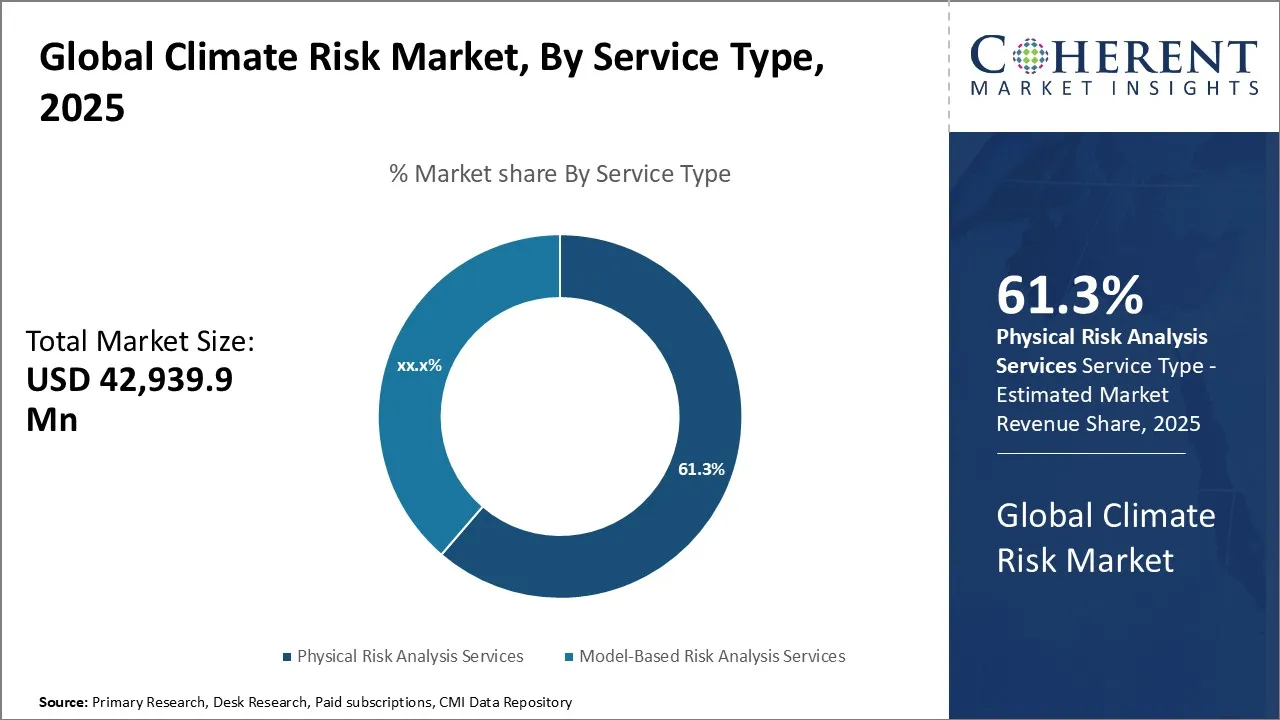
- The physical risk analysis services segment is expected to capture 62.3 % of the global climate risk market share in 2026, driven primarily by the increasing need for detailed, location-specific assessments of climate-related risks.
- The real estate and property development segment is projected to account for 23.8 % of the global climate risk market in 2026, largely fueled by the rising need to incorporate climate risk factors into property investment and urban development strategies.
- North America is expected to lead the global climate risk market in 2026 with a 40.7 % share, driven by increasing regulatory requirements and heightened awareness about climate-related risks. Latin America, with a 24.38% share in 2026, will be the fastest-growing region, fueled by rapid urbanization, industrial growth, and growing government initiatives to mitigate climate risks.
Market Overview
Current market trends indicate a rising adoption of innovative technologies such as AI, big data analytics, and climate change consulting to enhance climate risk prediction accuracy. Additionally, stringent regulatory frameworks, growing awareness among businesses about sustainability, and the rising importance of carbon credit are driving market expansion. The integration of climate risk strategies into corporate governance further underscores the evolving landscape, making climate risk management a critical component for long-term resilience and compliance in global industries.
Current Events and Its Impact
Current Events | Description and its impact |
Rapid Advancement of Climate Risk Tech (AI, Data Analytics) |
|
Record-breaking Global Heatwaves (2024–2025) |
|
Segmental Insights
- Current Industry Events of 2026
- Market Size Estimation
- Regional Breakdown
- Competitive Landscape
- Customer Intelligence
- Segmental Analysis
- Pricing Analysis
- Key Market Drivers, Challenges & Future Trends
- Customized Insights Section
Climate Risk Market Insights, By Service Type - Physical Risk Analysis Services Segment Dominates the Market due to Increasing Demand for Robust Climate Impact Assessment
Physical risk analysis services segment is expected to hold 62.3% share of the global climate risk market in 2026, which can largely be attributed to the escalating demand for tangible, location-specific evaluations of climate-related threats. The global climate risk market is projected to grow at a CAGR of 6.51%. Physical risk analysis involves assessing the direct impacts of climatic changes and extreme weather events such as floods, hurricanes, heatwaves, and droughts on assets, infrastructure, and communities. Organizations across sectors recognize that understanding precise physical vulnerabilities is critical for developing effective mitigation and adaptation strategies.
One of the primary drivers behind the growth of Insights, By Service Type physical risk analysis services is heightened awareness regarding extreme weather events and their devastating consequences globally. Increasing frequency and severity of such events have stimulated governments, corporations, and financial institutions to prioritize detailed physical risk assessments aimed at safeguarding infrastructure and investments. For example, coastal regions are particularly vulnerable to rising sea levels and storm surges, prompting real estate developers and municipal planners to seek comprehensive risk data to support resilient development.
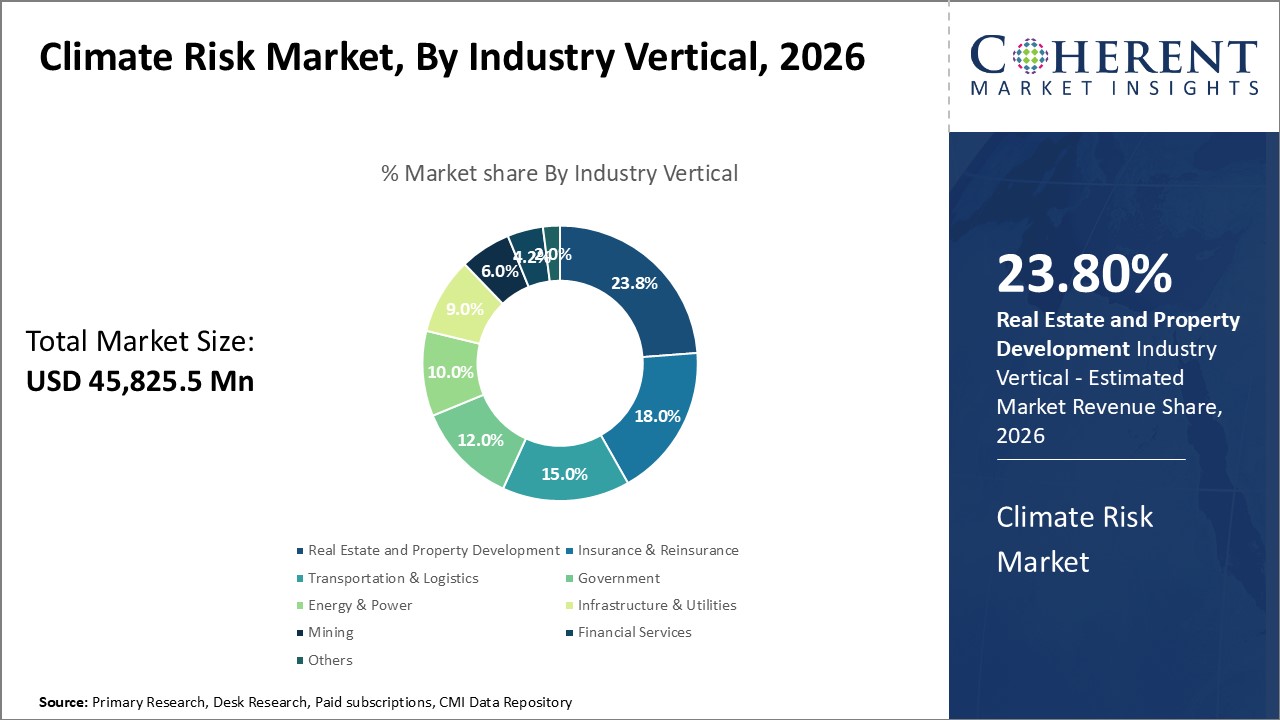
Climate Risk Market Insights, By Industry Vertical - Real Estate and Property Development Segment leads the Market due to Increasing Climate-Resilient Infrastructure Demands and Climate-Aware Urban Planning
The real estate and property development segment is projected to emerge as the dominant segment, accounting for 23.8% of the market share in 2026, driven predominantly by the growing necessity to integrate climate risk considerations into property investment and urban development decisions. With cities and communities facing unprecedented climate challenges, stakeholders in this vertical increasingly prioritize resilience to mitigate potential losses and ensure sustainable growth. This segment is expected to grow at a 7.07% CAGR.
The real estate sector's exposure to physical climate risks such as flooding, hurricanes, and temperature extremes underscores the importance of proactive risk management. Properties located in vulnerable zones require comprehensive risk assessments to inform construction, retrofitting, and land-use planning. Developers and investors seek reliable climate risk data to evaluate site suitability, optimize design parameters, and comply with emerging building codes that emphasize climate adaptation.
Regional Insights
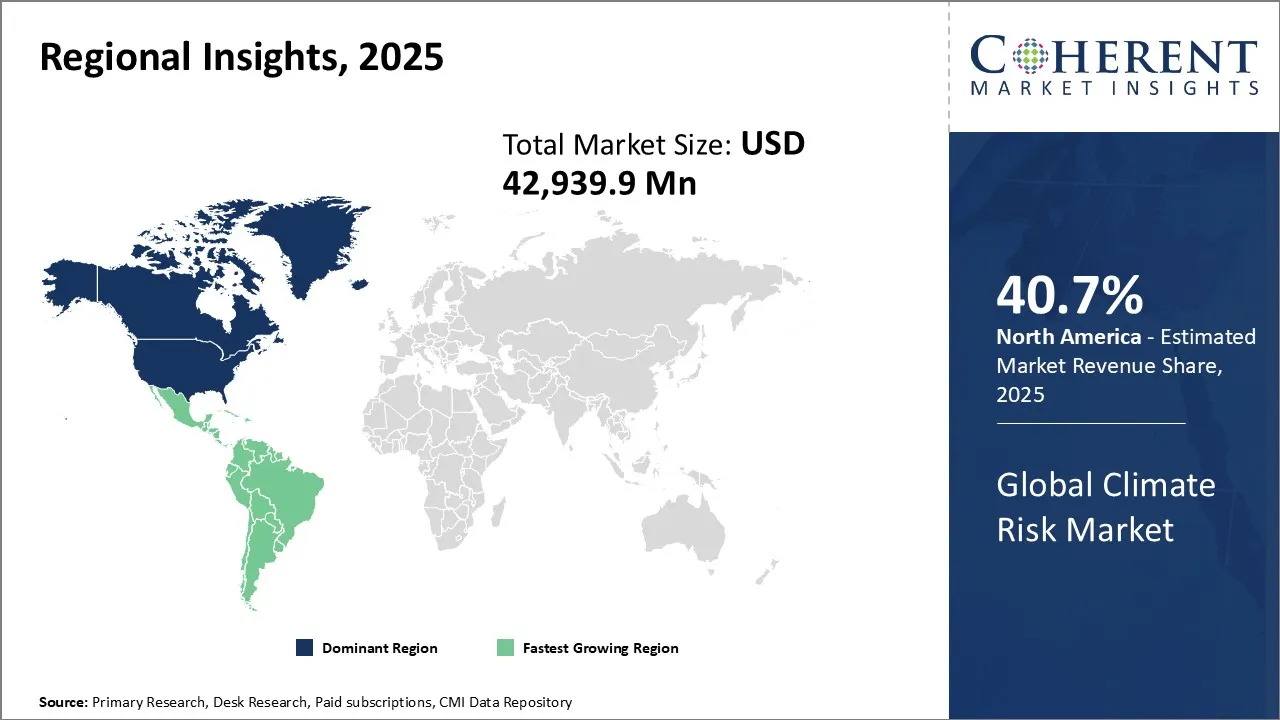
North America Climate Risk Market Analysis and Trends
The North America region is projected to lead the market with a 40.7% share in 2026, driven by a mature market ecosystem characterized by advanced technological infrastructure, high investment in climate risk management solutions, and active participation from both public and private sectors. The U.S., with its significant concentration of climate-focused consultancies, insurance companies, and financial institutions, plays a pivotal role. The region is expected to witness a 6.57% CAGR during this period. Stringent government policies, such as federal and state-level climate regulations and sustainability initiatives, encourage the adoption of sophisticated climate risk assessment tools.
Additionally, the robust presence of industry leaders like Moody’s Corporation, Verisk Analytics, and IBM provides comprehensive climate analytics, scenario modeling, and risk advisory services. The strong integration of academic research and innovation hubs further supports product development tailored for climate risk mitigation and adaptation. Cross-border trade collaboration with Canada and Mexico strengthens technology transfer and creates a synergistic approach within the region, emphasizing resilience against climate-induced financial risks.
Latin America Climate Risk Market Analysis and Trends
The Latin America region is expected to exhibit the fastest growth in the market contributing 24.38% share in 2026, driven by increasing climate vulnerability, heightened awareness, and rising investments in sustainability and resilience efforts. Governments across countries such as Brazil, Mexico, Argentina, and Chile are enacting progressive environmental policies, striving to meet international climate targets, and addressing the effects of deforestation, droughts, and extreme weather patterns. This region is expected to witness a 6.21% CAGR during this period. The agricultural sector, vital to the region, faces growing risks from climate change, which fuels demand for advanced climate risk analytics, risk management solutions, and insurance products tailored to the local context.
The rapid expansion of urban areas, along with infrastructural development in emerging markets, further intensifies the need for climate risk mitigation strategies. As a result, there is a surge in the adoption of AI-based climate modeling, big data analytics, and sustainable finance solutions. Key industry players in Latin America include companies such as S&P Global, which extends its services in the region, and local entities like DNV, along with regional technology startups that focus on environmental solutions. The rise of green bonds and financing for sustainable development continues to support market growth, promoting an evolving ecosystem driven by cross-border collaboration and regional innovations in climate resilience.
Global Climate Risk Market Outlook for Key Countries
U.K. Climate Risk Market Trends
The U.K. climate risk market is highly advanced, with a robust concentration of established players providing integrated risk management solutions. Companies like Moody’s and Verisk Analytics are prominent, offering proprietary climate risk assessment platforms that are widely used by insurers, financial institutions, and asset managers. Government programs, such as the UK Climate Change Act and initiatives by the Environment Agency, actively promote transparency in climate risk disclosures and set stringent guidelines for carbon emissions reduction. The U.K.'s commitment to achieving net-zero emissions by 2050 fosters a regulatory environment that enhances climate risk resilience and drives market growth.
Additionally, the U.K. is becoming a hub for climate finance, with an increasing emphasis on sustainable investments. The market is projected to grow at a 7.29% CAGR, bolstered by the country’s leadership in climate risk mitigation and finance innovation, which further solidifies its position as a global leader in climate risk management solutions.
China Climate Risk Market Trends
China’s rapidly expanding climate risk market is primarily influenced by robust government directives aimed at reducing carbon emissions and enhancing sustainable development practices. Major state-owned enterprises and private technology firms participate heavily in climate risk analytics and reporting, supported by growing regulatory demands. Companies, such as Alibaba Group and Baidu, are leveraging AI and cloud computing to offer advanced climate data solutions. The market is projected to grow at a 7.35% CAGR, China’s commitment to the Belt and Road Initiative integrates climate risk considerations into international infrastructure investments, serving as a critical mechanism for market expansion.
Germany Climate Risk Market Trends
Germany continues to lead in climate risk governance and technological innovation, with a strong focus on energy transition and sustainable infrastructure development. The government’s comprehensive policies, including the German Climate Action Plan 2050, and active engagement of public-private partnerships drive market demand. Industry leaders like Siemens and Bosch contribute sustainable technology and climate risk analytics tailored for industrial and urban applications. The market is projected to grow at a 7.5% CAGR. Germany’s advanced financial sector, particularly its focus on green bonds and sustainable finance, also plays a crucial role in underwriting and managing climate-related financial risks, reinforcing the market’s depth.
South Korea Climate Risk Market Trends
South Korea’s climate risk market is characterized by a strong emphasis on climate resilience, particularly in its highly urbanized regions, with a focus on climate-proofing infrastructure and smart city technologies. Government initiatives such as the Green New Deal and the Renewable Energy 3020 Implementation Plan are key drivers for climate risk assessment and mitigation services.
The market is projected to grow at a 7.71% CAGR. South Korea’s thriving tech industry, with leaders like Samsung and LG, is contributing innovative solutions in climate risk analytics, including AI-driven weather forecasting and climate modeling. The country’s proactive approach toward sustainable development and collaboration between the public and private sectors positions South Korea as a leader in integrating climate risk into its development strategies.
Macro Factors Impacting Climate Risk Market Growth
- Physical Climate Changes: Increasing frequency and intensity of physical risks like extreme weather, rising temperatures, and sea-level rise directly affect economies, labor productivity, GDP growth, and financial stability. These physical risks cause economic costs that propagate through the banking and financial systems, leading to increased demand for climate risk management products.
- Transition Risks: Changes in policies, technology, investor and consumer sentiment related to the shift to a low-carbon economy create transition risks. These risks impact industries dependent on fossil fuels and influence costs, investments, and financial stability. The policy landscape and the speed of transition to sustainability significantly affect market growth in climate risk products.
- Economic Exposure and Vulnerability: The uneven geographic impact of climate risks means developing and low-income countries are often more vulnerable to physical risks (e.g., droughts, floods), which translates into differential market demand and regulatory focus that shape growth patterns.
- Macroeconomic Effects: Broader economic factors such as inflation, productivity shifts, investment flows, and financial stability all integrate climate risk into the overall economic environment. This slow but systemic integration drives the need for climate risk analytics, insurance, and financial instruments.
- Governance and Policy Frameworks: The evolution of climate policies, international agreements (e.g., Paris Agreement), and financial regulations influence market growth by creating incentives and frameworks for climate risk disclosure and management.
Market Players, Key Development, and Competitive Intelligence
Key Developments
- On July 23, 2025, Jupiter Intelligence, a leading climate data solutions provider, introduced a suite of innovative tools designed to help banks and asset managers assess and quantify physical climate risks within their investment portfolios. These new solutions also enable users to calculate the return on investment (ROI) for resilience initiatives, offering valuable insights into the financial implications of climate-related risks and resilience measures. This launch marks a significant step in empowering financial institutions to integrate climate risk assessment into their decision-making processes and investment strategies.
- On July 22, 2025, the Science Based Targets initiative (SBTi) unveiled its Financial Institutions Net-Zero Standard, a groundbreaking step in sustainable finance. This new standard allows banks, asset managers, private equity firms, and insurers to set science-based targets that align with global net-zero goals by 2050. For the first time, financial institutions can now measure and manage their portfolios' contributions to achieving climate targets, driving the transition to a low-carbon economy. This initiative is a pivotal development in ensuring that financial sectors play a crucial role in addressing the global climate crisis.
- On July 22, 2025, South African actuaries introduced a pioneering actuarial framework designed to help life and health insurers quantify the mortality risks associated with rising temperatures and extreme weather events. This new tool enables insurers to assess the long-term impacts of climate change on insured lives, providing a critical resource as weather patterns become more volatile. The framework is a significant development in the insurance sector, offering a structured approach to understanding and mitigating the climate-related risks affecting policyholders.
Top Strategies Followed by Global Climate Risk Market Players
- Established market leaders, often multinational corporations with significant resources, invest heavily in research and development to innovate high-performance, advanced climate risk management products and solutions. In addition, these firms pursue aggressive global expansion strategies by broadening their distribution networks and establishing regional hubs, particularly targeting emerging markets where climate risk awareness is on the rise and demand for sophisticated management tools is growing rapidly.
- For instance, Aon, a global leader in risk management and insurance, has developed sophisticated climate risk models and analytics platforms that assist clients in assessing and mitigating the impacts of climate change on their operations.
- Mid-level competitors in the global climate risk market strategically position themselves by providing affordable yet reliable climate risk solutions, tailored to smaller enterprises and emerging markets. These players focus on offering scalable products that provide essential, location-specific climate risk analysis while maintaining cost-effectiveness. They prioritize streamlining their services, such as using cloud-based platforms or simplified risk modeling techniques, making these services accessible to businesses with limited budgets.
- For example, The Climate Service, a company that offers climate risk analytics to businesses, focuses on making its climate data services accessible to a broader audience. It provides a balance between affordability and performance by offering cloud-based solutions that are scalable for businesses of various sizes.
- Small-scale players operating within the global climate risk market carve out their niches through specialization and innovation, often focusing on unique product features or emerging technological trends that differentiate them from larger competitors. These agile companies are quick to adopt and develop cutting-edge technologies such as artificial intelligence, remote sensing, and IoT-enabled climate risk analytics tools, allowing them to deliver highly customized and localized solutions.
- For example, Tomorrow.io, a startup that provides climate risk management solutions, specializes in weather forecasting and climate risk analytics using AI. By focusing on real-time data, the company helps organizations anticipate climate events such as storms, wildfires, and extreme temperatures, providing early warnings to mitigate damage.
Market Report Scope
Report Coverage
| Report Coverage | Details | ||
|---|---|---|---|
| Base Year: | 2025 | Market Size in 2026: | USD 45,825.5 Mn |
| Historical Data for: | 2020 To 2024 | Forecast Period: | 2026 To 2033 |
| Forecast Period 2026 to 2033 CAGR: | 6.7% | 2033 Value Projection: | USD 72,248.3 Mn |
| Geographies covered: |
| ||
| Segments covered: |
| ||
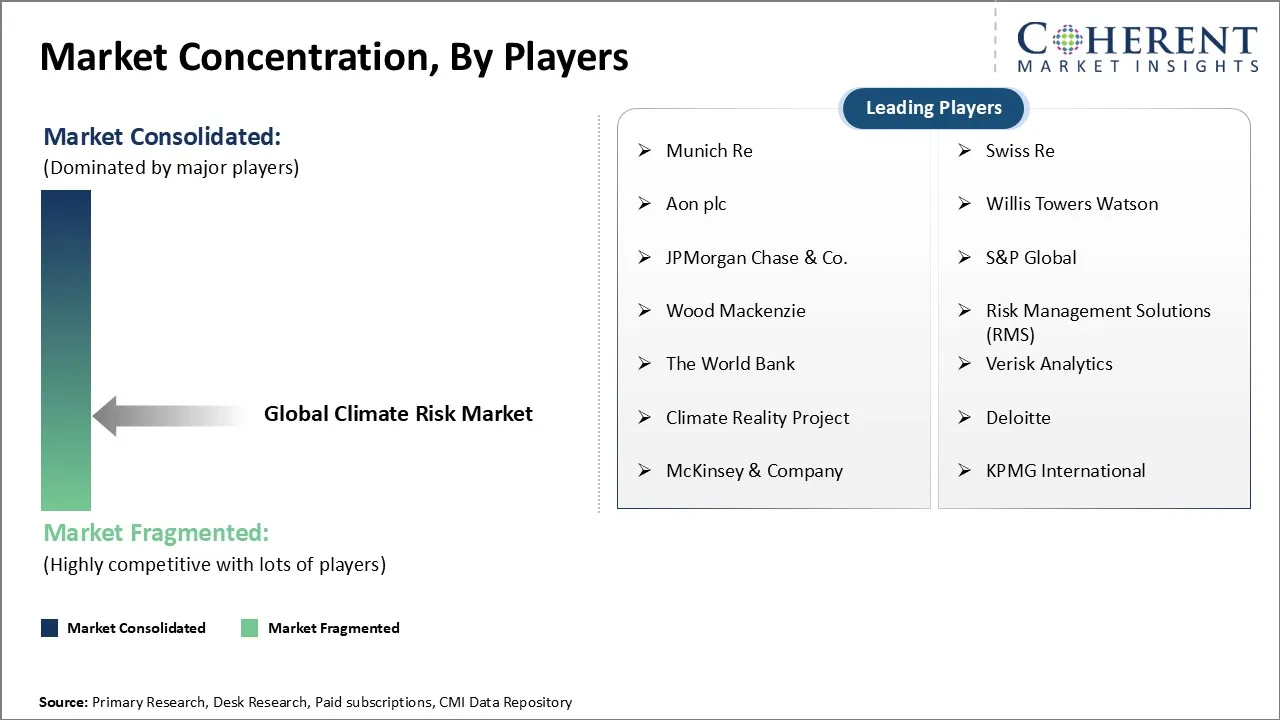
| Companies covered: | Munich Re, Swiss Re, Aon plc, Willis Towers Watson, JPMorgan Chase & Co., S&P Global, Wood Mackenzie, Risk Management Solutions (RMS), The World Bank, Verisk Analytics, Climate Reality Project, Deloitte, McKinsey & Company, and KPMG International | ||
| Growth Drivers: |
| ||
| Restraints & Challenges: |
| ||
Climate Risk Market Dynamics
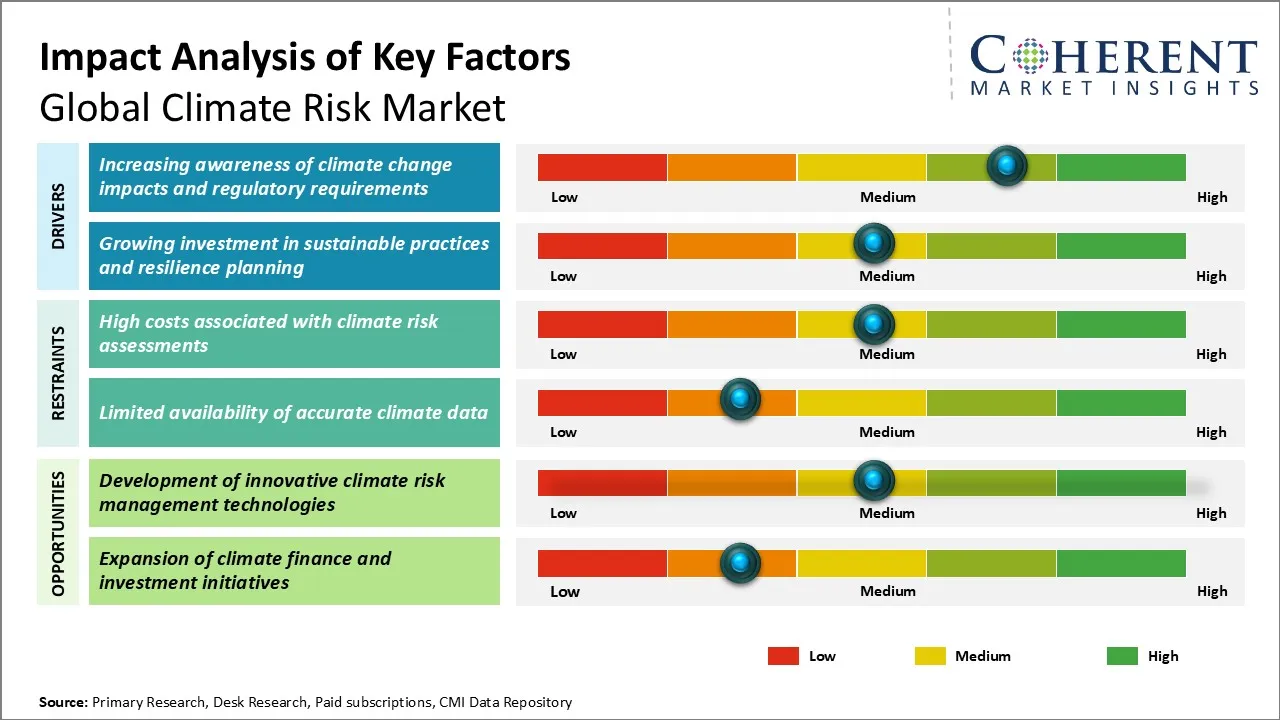
Climate Risk Market Driver - Increasing Awareness of Climate Change Impacts and Regulatory Requirements
Growing global awareness regarding the profound impacts of climate change is significantly propelling the demand for climate risk management solutions. Corporations and governments are increasingly recognizing the urgent need to assess and mitigate risks associated with extreme weather events, rising sea levels, and other climate-related disruptions that can affect supply chains, asset valuations, and operational continuity. This heightened consciousness is further amplified by stringent regulatory frameworks being introduced worldwide, requiring organizations to disclose their climate risks and adopt sustainable, resilient business practices.
For example, the Task Force on Climate-related Financial Disclosures (TCFD), established by the Financial Stability Board, has played a pivotal role in raising awareness and pushing for greater transparency in climate-related financial disclosures. The TCFD's recommendations encourage companies to disclose climate-related risks in their financial filings, focusing on governance, strategy, risk management, and metrics.
Climate Risk Market Opportunity - Development of Innovative Climate Risk Management Technologies
The global climate risk market presents a significant opportunity through the development and deployment of innovative climate risk management technologies. As climate change intensifies, businesses, governments, and financial institutions are increasingly recognizing the urgent need for sophisticated tools to accurately assess, predict, and mitigate climate-related risks. Advances in artificial intelligence, machine learning, and big data analytics enable the creation of highly granular climate models and real-time risk monitoring systems that improve decision-making processes. Additionally, blockchain technology offers promising applications in enhancing transparency and traceability within climate-related financial transactions and carbon credit trading.
For instance, Jupiter Intelligence, a climate data solutions provider, has launched a suite of tools that use AI and machine learning to quantify physical climate risk within portfolios, aiding banks and asset managers in assessing climate-related risks across industries and geographical regions.
Analyst Opinion (Expert Opinion)
- The global climate risk market is experiencing pivotal growth as organizations increasingly recognize the necessity of integrating climate resilience into their strategic frameworks. Companies like Munich Re and Aon are leading the way by developing innovative risk assessment tools that quantify potential climate impacts, as highlighted at the Global Climate Risk Summit (2023) and the Climate Risk Adaptation Conference (2022).
- Presentations showcased successful case studies where businesses effectively utilized climate risk analytics to inform decision-making and enhance sustainability initiatives. For instance, Aon’s Climate Risk Index was discussed as a game-changer for insurers and investors, allowing them to better understand exposure and liability. Additionally, the focus on regulatory compliance is intensifying, with discussions emphasizing how emerging policies globally are pushing organizations to adopt proactive climate strategies.
- The intersection of technology, such as AI and big data, with climate risk assessment is also gaining momentum, providing more nuanced insights for stakeholders. As awareness of climate-related financial risks continues to grow, the climate risk market is well-positioned for expansion, offering opportunities for firms that can innovate and provide robust solutions to mitigate these pressing challenges.
Market Segmentation
- Service Type Insights (Revenue, USD Mn, 2021 - 2033)
- Physical Risk Analysis Services
- Model-Based Risk Analysis Services
- Industry Vertical Insights (Revenue, USD Mn, 2021 - 2033)
- Real Estate and Property Development
- Insurance and Reinsurance
- Transportation and Logistics
- Government
- Energy and Power
- Infrastructure and Utilities
- Mining
- Financial Services
- Others (Food & Beverages, Agriculture, Healthcare, etc.)
- Regional Insights (Revenue, USD Mn, 2021 - 2033)
- North America
- U.S.
- Canada
- Latin America
- Brazil
- Argentina
- Mexico
- Rest of Latin America
- Europe
- Germany
- U.K.
- Spain
- France
- Italy
- Russia
- Rest of Europe
- Asia Pacific
- China
- India
- Japan
- Australia
- South Korea
- ASEAN
- Rest of Asia Pacific
- Middle East
- GCC Countries
- Israel
- Rest of Middle East
- Africa
- South Africa
- North Africa
- Central Africa
- North America
- Key Players Insights
- Munich Re
- Swiss Re
- Aon plc
- Willis Towers Watson
- JPMorgan Chase & Co.
- S&P Global
- Wood Mackenzie
- Risk Management Solutions (RMS)
- The World Bank
- Verisk Analytics
- Climate Reality Project
- Deloitte
- McKinsey & Company
- KPMG International
Sources
Primary Research Interviews
- Climate Risk Analyst – Leading Environmental Consultancy Firm
- Risk Manager – Global Financial Institution focusing on climate risk assessments
- Sustainability Director – Major Corporation addressing climate risk through adaptation strategies
- Environmental Policy Expert – Government Agency on Climate and Environmental Affairs
Stakeholders
- Governments and Regulatory Bodies:
- National and international regulators focused on climate policy
- Insurance and Reinsurance Companies: Managing climate risk in the insurance sector
- Investment Firms and Asset Managers: Integrating climate risk into financial decision-making
- Corporations: Adapting business strategies to climate risk mitigation
- Technology Providers: AI-driven climate risk modeling and predictive analytics
- Non-Governmental Organizations (NGOs): Addressing climate change through adaptation and mitigation initiatives
Databases
- World Bank Climate Data Portal: Data on climate risks, impacts, and adaptation in different regions
- Global Carbon Atlas: Detailed datasets on carbon emissions and climate change projections
- UNFCCC Data: United Nations Framework Convention on Climate Change climate risk assessments
- OECD Environmental Data: Risk and resilience data for climate change and its impact on economies
Magazines
- Climate Risk & Adaptation: Articles on managing climate risk in corporate and government sectors
- Global Environmental Sustainability: Trends in climate risk mitigation strategies
- Environmental Finance: Market developments and climate risk financial tools
- Climate Change Policy Review: Updates on climate risk regulations and policies
Journals
- Journal of Climate Change and Sustainability: Studies on long-term climate risks and business adaptation
- Environmental Science & Technology: Insights on climate change modeling and risk evaluation
- Nature Climate Change: Research on climate risk, global policy, and mitigation strategies
- Journal of Environmental Economics and Management: Understanding the economic impacts of climate risks
- Climate Risk and Adaptation: Technical articles on resilience strategies for climate-related disruptions
Newspapers
- The Financial Times: Coverage of financial implications of climate risk and insurance markets
- The Guardian: Reports on climate change policy, regulatory changes, and risk management strategies
- The New York Times: Climate risk impacts on industries and governmental actions
- The Asia Times: Coverage of climate risk challenges and opportunities in the Asia-Pacific region
Associations
- Task Force on Climate-related Financial Disclosures (TCFD): International framework for reporting climate-related financial risks
- Climate Disclosure Standards Board (CDSB): Providing frameworks for climate risk reporting in businesses
- International Institute for Environment and Development (IIED): Addressing climate risk and development challenges
- International Institute for Applied Systems Analysis (IIASA): Scientific insights on climate change models and global risk assessments
- Climate Action Network (CAN): Global network focusing on climate risk policy advocacy
Public Domain Sources
- Intergovernmental Panel on Climate Change (IPCC): Climate risk reports, policy guidance, and future projections
- World Bank: Climate risk assessments for sustainable development
- UNFCCC: Climate risk management frameworks and strategies for countries
- European Environment Agency (EEA): Data and policy reports on the EU's climate risk and adaptation measures
- National Oceanic and Atmospheric Administration (NOAA): Climate data and risk models for regional and national planning
Proprietary Elements
- CMI Data Analytics Tool, Proprietary CMI Existing Repository of information for last 8 years.
Get access to 250+ pages report
Every segment, forecast, competitor profile and data table behind the analysis above — available for instant download.
- ESOMAR Member
- ISO 9001:2015 Certified
- D-U-N-S Registered
- GDPR & CCPA Compliant
Missing comfort of reading report in your local language? Find your preferred language:
Transform your Strategy with Exclusive Trending Reports
Frequently Asked Questions
The global climate risk market is estimated to be valued at USD 45,825.5 Mn in 2026 and is expected to reach USD 72,248.3 Mn by 2033.
The CAGR of the global climate risk market is projected to be 6.7% from 2026 to 2033.
Increasing awareness of climate change impacts and regulatory requirements and growing investment in sustainable practices and resilience planning are the major factors driving the growth of the global climate risk market.
High costs associated with climate risk assessments and limited availability of accurate climate data are the major factors hampering the growth of the global climate risk market.
In terms of service type, the physical risk analysis services segment is estimated to dominate the market revenue share in 2026.
Munich Re, Swiss Re, Aon plc, Willis Towers Watson, JPMorgan Chase & Co., S&P Global, Wood Mackenzie, Risk Management Solutions (RMS), The World Bank, Verisk Analytics, Climate Reality Project, Deloitte, McKinsey & Company, and KPMG International are the major players.
North America is expected to lead the global climate risk market in 2026.