

Global Biochips Market Size and Forecast – 2026-2033
The global biochips market is expected to grow from USD 21,996.6 Mn in 2026 to USD 48,138.1 Mn by 2033, registering a compound annual growth rate (CAGR) of 11.8% from 2026 to 2033. The market for biochips is poised for significant expansion, fueled by rising government spending on cutting-edge molecular diagnostic and genomic surveillance systems.
The Centers for Disease Control and Prevention stated that its Advanced Molecular Detection (AMD) program is currently funded at approximately USD 43 million, while industry organizations and healthcare stakeholders have urged U.S. congressional appropriators to increase FY2027 funding to nearly USD 175 million to strengthen genomic sequencing and infectious disease surveillance capabilities nationwide.
(Source: Association for Diagnostics & Laboratory Medicine)
Key Takeaways of the Global Biochips Market
- DNA microarray segment is projected to hold 36.9 % of the global biochips market share in 2026, making it the dominant type segment, particularly within North America, where genomic studies and cancer biomarkers profiling projects are increasingly making use of high-density DNA testing systems. For instance, the Cancer Genome Atlas Program in the U.S. has been instrumental in promoting the use of genomic profiling tools for the molecular analysis of various cancers, thus creating high demands for DNA microarrays in translational medicine and clinical genomics. (Source: National Cancer Institute)
- Microarrays are projected to hold 67.6 % of the global biochips market share in 2026, making it the dominant technology segment, particularly in Asia Pacific, which benefits from the development of genomics and precision medicine infrastructures within their respective nations. For instance, the Beijing Genomics Institute in China is making great strides in implementing large-scale sequencing and transcriptomics projects utilizing high-throughput microarray technology in areas of disease, agricultural genomics, and population health. Their emphasis on commercialization in genomics along with a plethora of data points are driving the adoption of multiplex microarrays. (Source: BGI)
- Diagnosis is projected to hold 40.1 % of the global biochips market share in 2026, making it the dominant application segment, especially in Europe, where an increased use of molecular screening and infection surveillance programs has facilitated greater use of biochip-based diagnostics. For instance, in Germany, the Robert Koch Institute has enhanced integration between molecular and genomics-based diagnostics technology in pathogen detection and public health surveillance, resulting in increased use of multi-diagnostic biochips and lab-on-chip diagnostic methods in clinical labs. (Source: Robert Koch Institute)
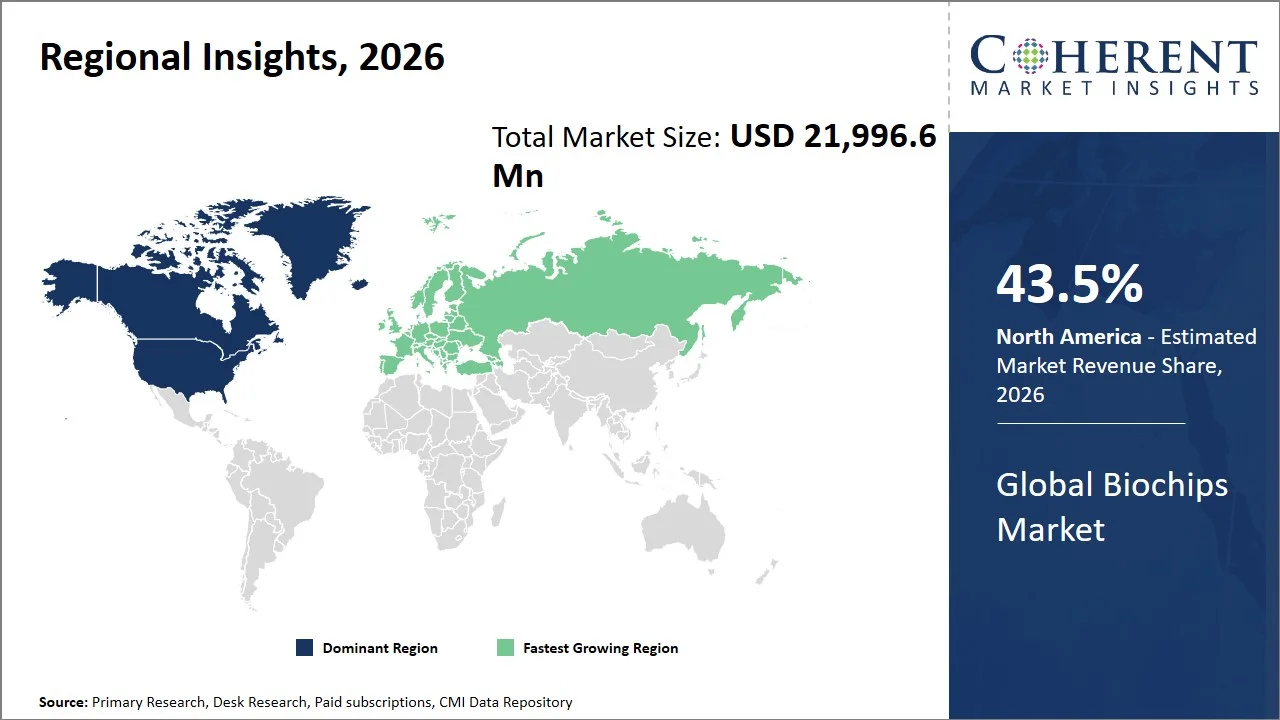
- North America maintains its dominance with an expected share of 43.5 % in 2026, due to the increasing use of spatial genomics, multiplex molecular diagnostics, and precision oncology platforms in medical research institutes and organizations. Medical research facilities and bio-technology companies in the region are increasingly employing biochips technologies for analyzing tissue samples and performing genomic analyses. For Instance, 10X Genomics has extended the use of its Xenium Spatial technology platform, which provides the capability for precise tissue mapping and biomarker analysis in translational medicine and oncology studies. The advancement promotes the widespread implementation of innovative biochips in research institutions in the region. Moreover, biotechnology companies and cancer research institutions in the region collaborate strongly to incorporate spatial genomics into precision diagnostic procedures. (Source: 10x Genomics)
- Europe is expected to exhibit the fastest growth with an estimated contribution of 26.6 % share in 2026, driven expanding semiconductor-biotechnology convergence initiatives and regional investment in organ-on-chip and microfluidic research programs. For instance, Interuniversity Microelectronics Center (IMEC), in its efforts to promote biochip research, has introduced innovations in nanoelectronics-based biosensors and lab-on-a-chip technologies that cater to healthcare applications. The European Union is seeing an increase in convergence between microelectronics processing capabilities and life science research towards next-generation biochip development. (Source: Interuniversity Microelectronics Center)
- Expansion of Point-of-Care and Decentralized Diagnostic Testing: The growing need for quick and distributed delivery of health care services creates significant prospects for the production of biochips for the point-of-care testing field. The use of miniaturized laboratory-on-a-chip devices becomes increasingly popular for carrying out rapid tests for diseases, which allows prompt decision-making in emergencies, the detection of infections, and at-home diagnostics.
- Increasing Integration of Biochips with Artificial Intelligence and Digital Health Platforms: The merging of biochips with artificial intelligence, machine learning, and digital health environments opens up many possibilities for improved diagnostics and predictions in healthcare based on the use of data. AI-powered biochips are able to process complicated genomic and biomarker data sets with greater precision and automation effectiveness. Such a combination has been making its way into advanced diagnostic technology for precision medicine, drug discovery, and other clinical purposes in sophisticated healthcare systems.
Segmental Insights
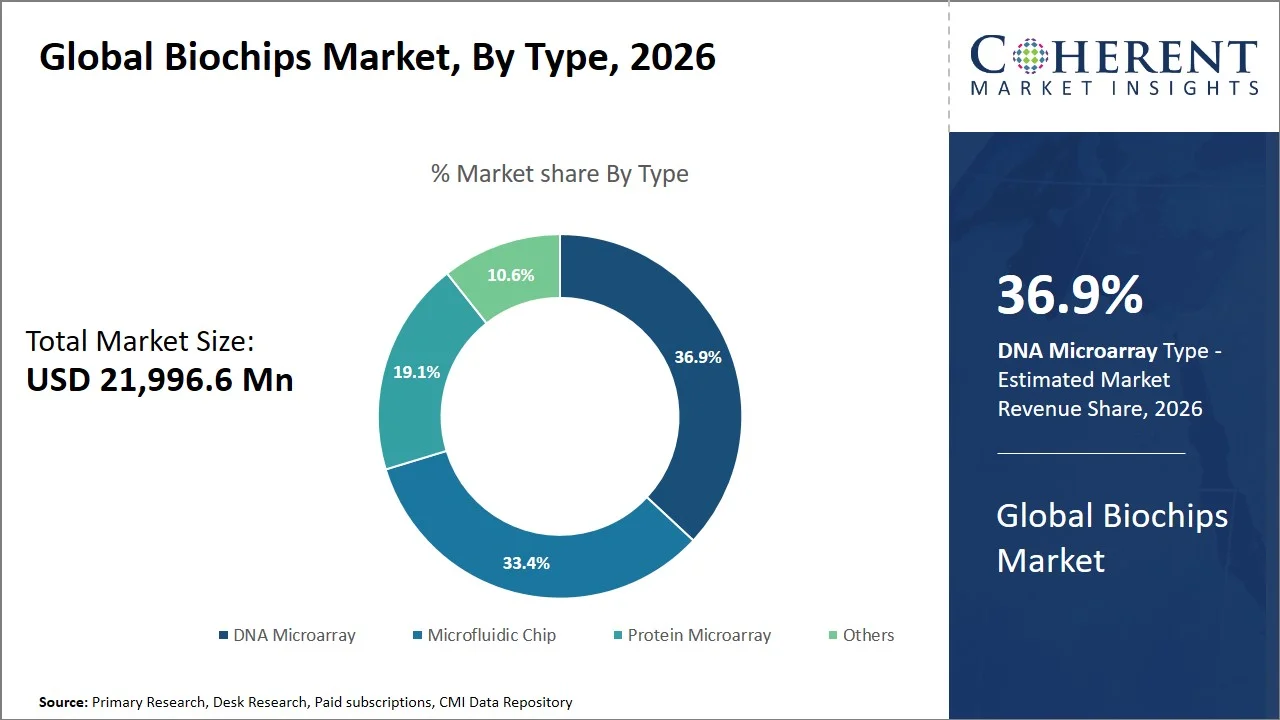
Why Does DNA Microarray Dominate the Global Biochips Market?
DNA microarray is projected to hold a market share of 36.9% in 2026, attributed to their wide range of applications in genomics, gene expression profiling, detection of mutations, pharmacogenomics, and large-scale disease diagnosis. Biochips provide an opportunity to profile thousands of genes simultaneously within one platform, thus offering many benefits in precision medicine, cancer research, infectious diseases, and biomarkers identification. The high-throughput nature, speed, and low cost associated with microarrays compared to standard sequencing processes have facilitated increased use of such biochips in research laboratories, biotech companies, and clinics.
The increasing application of DNA microarrays for the purposes of cancer diagnosis and personalized treatment adds even more strength to the biochips market. For instance, the scientists of the National Human Genome Research Institute continue working on the development of applications for genomic profiling based on microarrays in order to enhance personalized medicine and large-scale genomic studies. (Source: National Human Genome Research Institute) Additionally, Thermo Fisher Scientific DNA Microarray Solutions and Agilent Microarray Platforms demonstrate the commercialization and further development of high-density microarrays technology on global level. (Source: Thermo Fisher Scientific, Agilent Microarray)
- Current Industry Events of 2026
- Market Size Estimation
- Regional Breakdown
- Competitive Landscape
- Customer Intelligence
- Segmental Analysis
- Pricing Analysis
- Key Market Drivers, Challenges & Future Trends
- Customized Insights Section
Why Does the Microarrays Segment Represent the Largest Technology Segment in the Global Biochips Market?
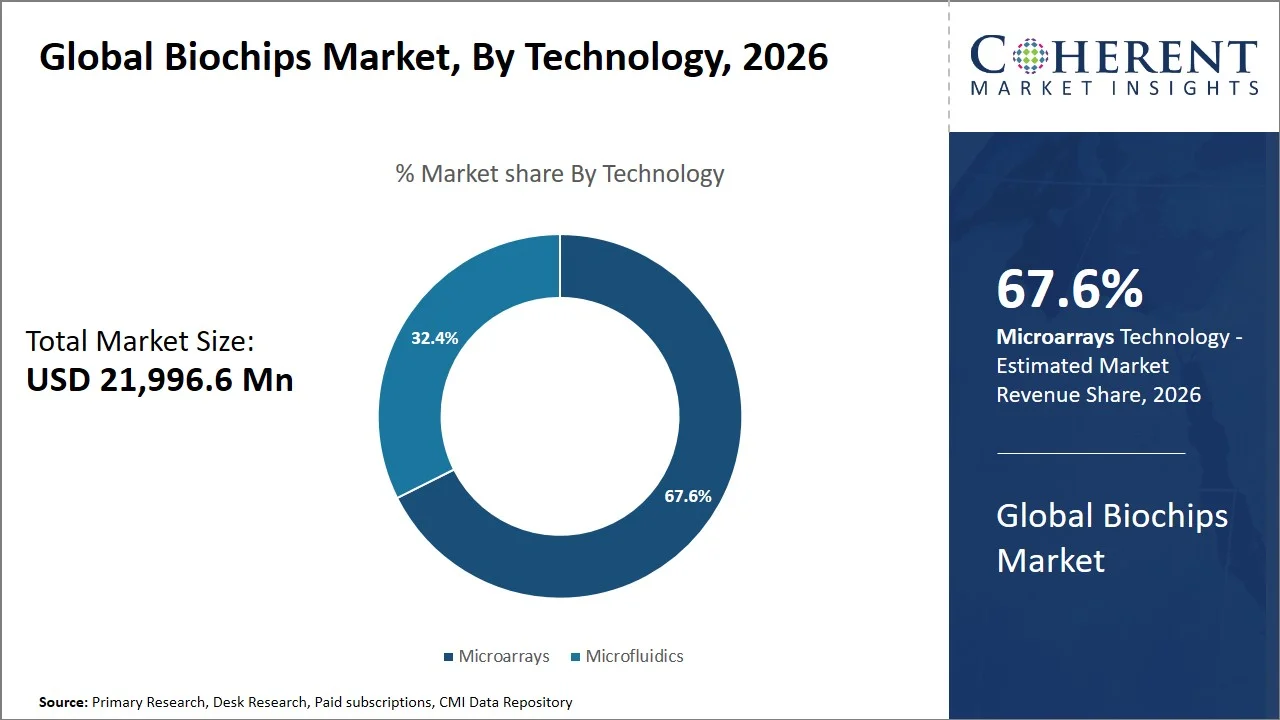
Microarrays are projected to hold a market share of 67.6% in 2026, attributed to the capability of multiplex analysis that can detect and measure thousands of genes, proteins or biomarkers at once in a single assay. The use of microarrays in genomics, transcriptomics, cancer diagnosis, pharmaceuticals and personalized medicine research has firmly placed microarray as one of the fundamental technologies in both clinical settings and academic studies. The advantage of microarray technology over traditional testing lies in higher throughput, shorter turnaround time, scalability and reduction in reagent usage, making it an efficient choice for large-scale screening studies. Some major uses of microarray technology include gene expression profiling, SNP genotyping, detection of pathogens, biomarker discovery and more.
For instance, Illumina develops several solutions based on microarray technology for expanding high-density microarray technology in population genomics and translational research (Source: Illumina) Moreover, the role played by National Institute of Health in the development of microarray technology for genomic profiling in disease studies and precision medicine has been highly significant.
Diagnosis Segment Dominates the Global Biochips Market
The diagnosis segment is projected to hold a market share of 40.1% in 2026, attributed to the growing preference for rapid, high-throughput, and multiplex diagnostic approaches in detecting cancer, infectious diseases, genetic disorders, and chronic diseases. Biochips help perform the analysis of several markers from minimal sample amounts, hence providing higher precision and faster results than traditional techniques used in the laboratories. With increasing utilization of biochips in precision medicine and companion diagnostics, there has been rising demand for the technology in hospitals, diagnostic laboratories, and other research facilities. DNA microarrays, lab-on-a-chip technologies, and protein microarrays have become common tools for molecular diagnostics, pathogen identification, and real-time disease monitoring, mainly in oncology and infectious diseases.
For instance, Roche Molecular Diagnostics Solutions is gradually expanding its molecular testing solutions in infectious diseases and cancer diagnostics (Source: F. Hoffmann-La Roche Ltd), whereas the Bio-Rad Clinical Diagnostic Biochip Technologies highlights the rise of commercialized multiplex diagnostic systems. (Source: Bio-Rad Laboratories, Inc.) Besides, projects backed by Centers for Disease Control and Prevention are contributing to the increased use of molecular diagnostic technologies globally (such as the Advanced Molecular Detection (AMD) Program, which integrates next-generation sequencing and bioinformatics into infectious disease surveillance, the National Syndromic Surveillance Program (NSSP) for rapid pathogen monitoring, and the Antibiotic Resistance Laboratory Network (AR Lab Network) that utilizes molecular diagnostic platforms for detecting antimicrobial resistance markers). (Source: Centers for Disease Control and Prevention)
Currents Events and their Impact
Current Events | Description and its Impact |
FDA Final Rule on Laboratory Developed Tests (LDTs) Reshaping Advanced Molecular Diagnostics Market (September 2025) |
|
Growing Semiconductor & Microfluidics Investments Strengthening Biochip Manufacturing Ecosystem (September 2025) |
|
(Source: Food and Drug Administration, Press Information Bureau)
Global Biochips Market Dynamics
Market Drivers
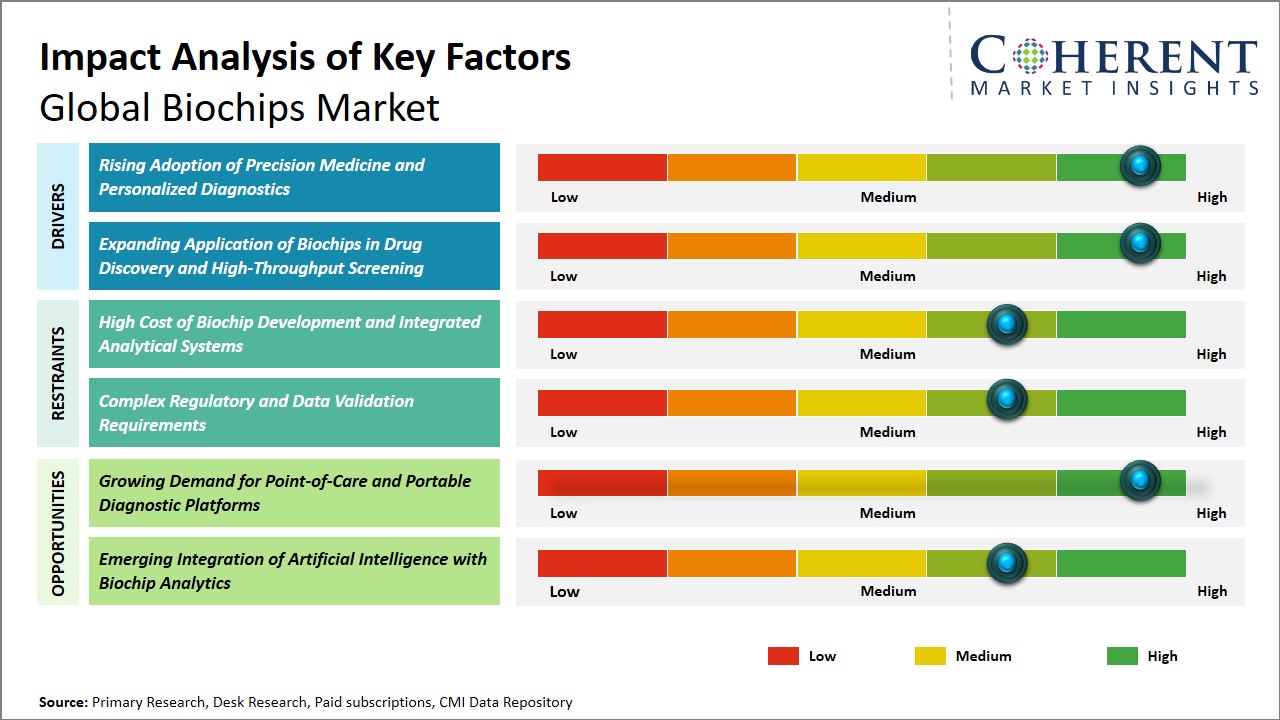
- Rising Adoption of Precision Medicine and Personalized Diagnostics: The growing adoption of precision medicine and personalized diagnostics are leading to an increased need for sophisticated molecular tests, genomic sequencing, and biomarkers for disease profiling. Healthcare professionals are using multi-omics, artificial intelligence, and companion diagnostics to help tailor their treatment plans to each patient to ensure better clinical results and minimize the number of side effects experienced by patients. Studies recently published by Nature Communications have shown that cost-efficient genomic and multi-omics analysis platforms help to enhance patient-tailored treatments, while the use of AI-supported diagnostic tools helps predict the disease progression and optimize treatment. (Source: Nature Communications) Additionally, discussions held at the Precision Medicine World Conference (PMWC) 2025 have emphasized the importance of enhancing the adoption of liquid biopsy and pharmacogenomics along with biomarker-based diagnosis into clinical processes, especially in the field of oncology. (Source: ZS Associates)
- Expanding Application of Biochips in Drug Discovery and High-Throughput Screening: The widespread use of biochips in the field of drug discovery and high throughput screening has greatly accelerated up progress in drug research owing to the ability of biochips to quickly assess several biological interactions, compounds, and biomarkers. Biochips, which include DNA chips, protein chips, and lab-on-a-chip platforms, are increasingly used in target identification, toxicity testing, pharmacogenomics, and compound screening, which reduces time taken, increasing accuracy in the assays conducted, and minimizing reagents required. For instance, an article published by the American Chemical Society in October 2025, highlight remarkable progress in the technology of high throughput screening to discover new chemicals, focusing especially on automation and the efficacy of screening on a large scale. (Source: ACS Publications) Furthermore, in September 2025, a study published by ScienceDirect highlights the impact of AI-integrated pharmacotranscriptomics and transcriptomic screening with biochips on the development of precision drugs. (Source: ScienceDirect)
Emerging Trends
- Growing Adoption of Multiplex Biochips in Clinical Diagnostics: Multiplex biochips that can identify several biomarkers or pathogens in one sample have been gaining popularity among healthcare providers and laboratories responsible for conducting diagnostic tests. This development has led to improved efficiency in the detection of cancer, infectious diseases, and autoimmune disorders, among other health conditions.
- Rising Development of Portable and Point-of-Care Biochip Systems: Biochips are increasingly becoming smaller and portable to meet the demands of decentralized and point-of-care testing. The recent developments in microfluidics technology, portable sensors, and semiconductor engineering are allowing quick diagnosis in emergency medicine, home-based care, and remote locations using small samples.
Regional Insights
Why is North America a Strong Market for Biochips?
North America leads the global biochips market, accounting for an estimated 43.5% share in 2026, attributed to the advanced level of molecular diagnostics, semiconductor-driven healthcare technology innovations, and precision medicine research facilities (such as the Broad Institute, Mayo Clinic Center for Individualized Medicine, and Stanford Center for Genomics and Personalized Medicine) that the region currently boasts. Biochips have seen widespread implementation in North America in numerous areas including oncology diagnostics, genomic sequencing, infectious disease testing, and companion diagnostics within the hospitals, research centers, and specialized laboratories.
Additionally, the region is also experiencing the growing uptake of artificial intelligence-based lab-on-a-chip devices and multiplex diagnostic technologies that facilitate high-throughput biological analyses. For instance, National Institutes of Health is continually developing genomic and precision medicine projects by utilizing advanced molecular analysis and biochip-based research technology projects. (Source: National Institutes of Health)
Why Does Europe Biochips Market Exhibit High Growth?
The Europe biochips market is expected to exhibit the fastest growth with an estimated contribution of 26.6% share to the market in 2026, attributed to the strong emphasis on standardization of molecular diagnostic tests, translational genomics research, and microfluidics design in the healthcare and life science industry segments in Europe. There is a rising trend among clinical laboratories and biomedical research organizations in Europe for using biochips in multiplex testing, oncology, and biomarker detection.
Additionally, semiconductor-enabled lab-on-a-chip solutions are witnessing an increasing adoption trend in Europe. For instance, European Molecular Biology Laboratory is continuing to develop genomics, bioinformatics, and molecular analysis technology through biomedical research programs aimed at developing next-generation biochips in Europe. (Source: European Molecular Biology Laboratory)
Global Biochips Market Outlook for Key Countries
Why is the U.S. Leading Innovation and Adoption in the Biochips Market?
The U.S. is at the forefront of innovation and adoption in the field of biochips due to country’s advanced molecular diagnostics network coupled with an advanced convergence of biotech, semiconductor engineering, and precision medicine research. Biochip devices such as DNA microarrays, Lab-on-a-Chip technology, and diagnostic devices with biosensors find extensive application for oncology diagnostics, genome sequencing, and clinical research. Research and healthcare facilities in the U.S. are also innovating new miniaturization technology that enables multiplexing and high-throughput biological analysis. There is also a growing prevalence of genomics research labs, translational medicine facilities, and semiconductor-based healthcare technology development that is driving the growth of biochips in next-gen applications.
Is the U.K. a Favorable Market for Biochips?
U.K. represents an ideal environment for the biochips market attributed to its emphasis on genomic medicine, molecular pathology, and translational medicine research. This country boasts a robust system of using biochip-based technologies in precision diagnostics, biomarker identification, and personal treatment regimens among others. In addition, increasing adoption of lab-on-a-chip systems and multiplexing technology for diagnostics applications in areas such as infections and cancer screenings are being witnessed in the country. Further, the existence of life sciences clusters and biotechnology engineering expertise has helped the development of biochips technologies in the country.
Is China Emerging as a Key Growth Hub for the Biochips Market?
China stands out as one of the most prominent countries with respect to the future growth of the biochips market attributed to several reasons including the rapid development of the country’s biochip-enabled healthcare manufacturing industry and the increased application of biochip technologies in molecular diagnostics and genome-based screening systems. There has been substantial progress in the development of lab-on-a-chip systems, biosensors, and microfluidic diagnostic technologies for testing infectious diseases and other precision medicine-related uses.
Moreover, there is also growing commercialization by Chinese research organizations and manufacturers of miniaturized biochips for use in hospital and decentralized settings. Additionally, the development of genomics research facilities in China, along with healthcare technology innovation centers, further contributes to the country’s role in biochip development.
Why Does Germany Top the Europe Biochips Market?
Germany is the leader in the market for biochips in Europe attributed to its significant experience in high-tech engineering, production of diagnostic equipment, and microelectronics. There is an intensive use of biochips technologies in molecular diagnostics labs, biomedical research institutions, and drug development processes, especially in genomic analysis and multiplex test systems. Besides, Germany enjoys sophisticated skills in developing microfluidics systems, biosensors, and semiconductor-based medicine products that allow designing lab-on-chip devices with high sensitivity. Furthermore, cooperation between medical equipment producers, research organizations, and clinical labs leads to the rapid emergence of new biochips-based diagnostic tools in the country.
Is the Biochips Market Developing in Japan?
The market for biochips is rapidly growing in Japan associated with the country’s unique expertise in microelectronic technology, biosensors, and miniaturized health care devices. Currently, the country is incorporating biochips within its automated laboratory diagnostic tests, wearables, and miniature molecular tests that are used in efficient clinical operations. There has also been great emphasis by healthcare technology innovators in Japan on the creation of microfluidic chips and semiconductor diagnostic products for the purpose of precise and fast biomarker diagnosis and analysis. Besides, the country's experience in advanced manufacturing technologies makes it a promising destination for the continued innovation of biochips.
Regulatory Landscape Governing the Global Biochips Market
Region
| Authority & Classification | Approval Pathway | Key Regulatory Insight |
North America | U.S. Food and Drug Administration (FDA) – In Vitro Diagnostic Devices (IVDs), Health Canada – Medical Devices | 510(k), De Novo, PMA approval pathways for molecular diagnostics and biochip-based IVD systems | Regulatory focus is increasing on clinical validation, analytical sensitivity, cybersecurity, and AI-enabled diagnostic transparency for biochip-integrated healthcare platforms |
Europe | European Medicines Agency (EMA), European Commission MDR/IVDR Framework | CE marking under In Vitro Diagnostic Regulation (IVDR) and Medical Device Regulation (MDR) | Europe has strengthened post-market surveillance, performance evaluation, and traceability requirements for molecular diagnostic and biochip technologies |
Asia Pacific | National Medical Products Administration (NMPA), Pharmaceuticals and Medical Devices Agency (PMDA), CDSCO | Country-specific medical device and molecular diagnostic approval pathways | Regulatory agencies across Asia Pacific are expanding genomic diagnostics oversight and accelerating approvals for locally manufactured precision diagnostic technologies |
Latin America | ANVISA, COFEPRIS | Medical device registration and local clinical evaluation requirements | Latin American countries are increasingly modernizing molecular diagnostic regulations to improve access to advanced laboratory technologies and infectious disease testing platforms |
Middle East & Africa | Saudi Food and Drug Authority (SFDA), South African Health Products Regulatory Authority (SAHPRA) | Medical technology registration and healthcare device compliance pathways | Regulatory frameworks are increasingly emphasizing localization of healthcare technologies, laboratory infrastructure modernization, and import quality compliance for diagnostic devices |
How is the growing demand for point-of-care and portable diagnostic platforms creating new growth opportunities in the global biochips market?
The surging demand for point-of-care diagnosis and portability will lead to major growth potential in the biochips market globally due to the accelerated deployment of rapid testing technologies. Hospitals, emergency rooms, rural facilities, and home healthcare facilities are leveraging lab-on-chip technology and biosensors to diagnose diseases at a quicker pace while requiring minimal samples, thus reducing the reliance on central laboratories. The increasing demand for real-time diagnosis, portable molecular diagnostics, and cost-effective screening methods will fuel innovations in compact biochip systems. For instance, in September 2025, researchers from the CEA-Joliot created a new generation of GMR sensor biochip platform that allows the detection of cancerous cells at a higher level of sensitivity with simpler handling, showcasing how the industry is increasingly concentrating on biochip-based portable diagnostics. (Source: CEA-Joliot)
Market Players, Key Development, and Competitive Intelligence
Key Developments
- In May 2025, Archer Materials Limited partnered with Paragraf to fast-track the development of high-tech biochip systems. This partnership focuses on adding graphene electronics to biochips, which improve biosensor efficiency and allow for new diagnostics. It will promote technological advancements in microelectronic biochips with semiconductors for medical applications.
- In January 2025, Coherent Corp. released biochips using pin-hole arrays for application in high-end medical diagnostics. The biochips just released by Coherent Corp. are fabricated using technology that is intended to facilitate better optical detection and better signal processing in the diagnostic devices. The advancement promises improvement in sensitivity and miniaturization in diagnostic tools based on biochips.
Competitive Landscape
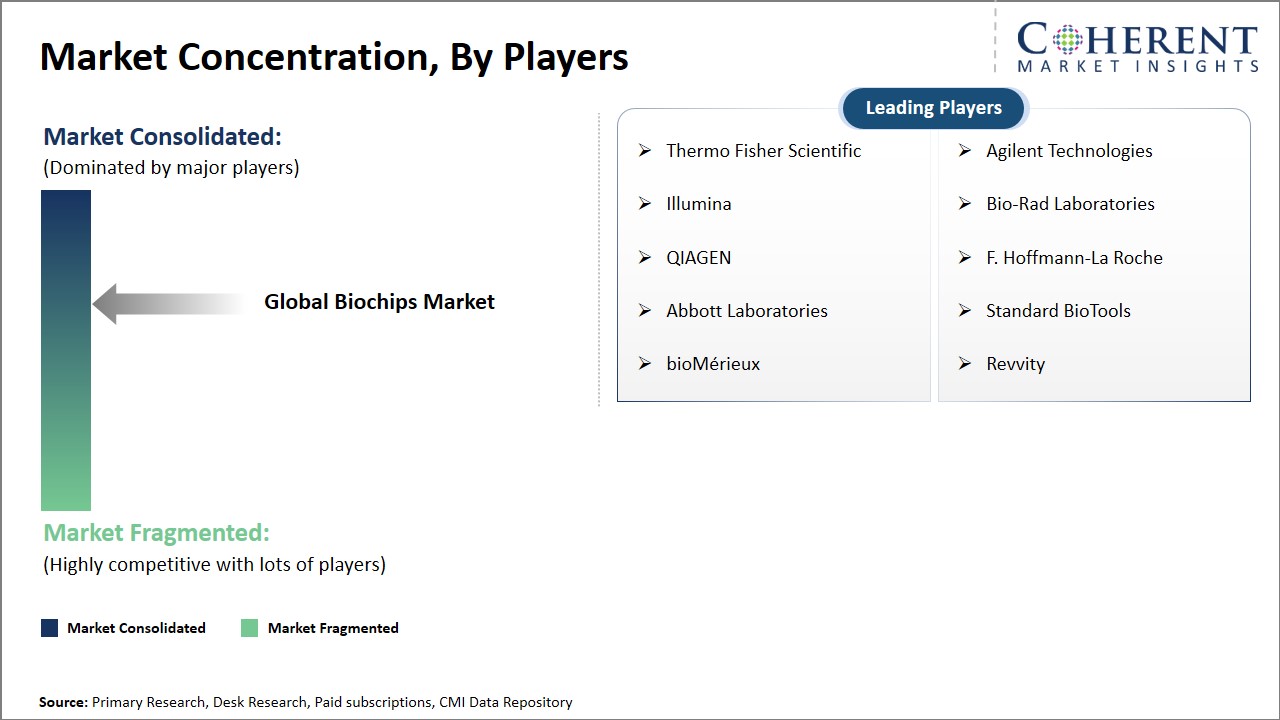
The global biochips market is moderately competitive and moderately fragmented, owing to the existence of already-established players in the diagnostics industry, semiconductor companies, biotech organizations, and startups in microfluidics. The competition in the market primarily stems from innovation in genomic analysis, multiplex diagnostics, lab-on-chip platforms, and biosensors technology. Technology advancements aimed at improving sensitivity, decreasing processing times, and boosting miniaturization are key factors influencing technological competitiveness among various market vendors. Collaboration initiatives by healthcare technology providers, research facilities, and semiconductor organizations have been promoting commercialization in the development of innovative biochip solutions. Besides, the integration of artificial intelligence bioinformatics technologies in decentralized diagnostics solutions has also attracted significant market interest. Key focus areas include:
- Development of high-throughput and miniaturized biochip platforms
- Expansion of lab-on-chip and point-of-care diagnostic technologies
- Integration of AI and bioinformatics tools with biochip data analysis
- Strengthening partnerships across genomics, biotechnology, and semiconductor industries
- Investments in multiplex testing, biomarker discovery, and precision medicine applications
Market Report Scope
Biochips Market Report Coverage
| Report Coverage | Details | ||
|---|---|---|---|
| Base Year: | 2025 | Market Size in 2026: | USD 21,996.6 Mn |
| Historical Data for: | 2020 To 2024 | Forecast Period: | 2026 To 2033 |
| Forecast Period 2026 to 2033 CAGR: | 11.8% | 2033 Value Projection: | USD 48,138.1 Mn |
| Geographies covered: |
| ||
| Segments covered: |
| ||
| Companies covered: | Thermo Fisher Scientific, Agilent Technologies, Illumina, Bio-Rad Laboratories, QIAGEN, F. Hoffmann-La Roche, Abbott Laboratories, Standard BioTools, bioMérieux, and Revvity | ||
| Growth Drivers: |
| ||
| Restraints & Challenges: |
| ||
Analyst Opinion (Expert Opinion)
- In the coming years, the prospects of the biochips market will be characterized by rapid growth due to the integration of advanced technologies such as precision medicine, genomics, microfluidics, and artificial intelligence in diagnostics. In the years to come, the development of the market will largely depend on increased use of decentralized diagnostic solutions, real-time biomarker testing, and small-sized lab-on-a-chip solutions that provide accurate multi-analyte testing capabilities. Semiconductor integration and biosensor technologies will play an important role in the further evolution of biochips for a variety of diagnostic and therapeutic applications.
- The maximum opportunities will probably exist in the sectors of DNA microarrays and lab on a chip technology in oncology diagnostics and infectious disease testing. This is especially true in the U.S and China. In the U.S., continuous investment in precision medicine and genomics programs will lead to a significant demand for molecular diagnostic biochips in the field of clinical diagnosis and research laboratories. At the same time, China will become a prominent source for various kinds of biochips because of its growing interest in genomic studies and digital health care. Apart from that, considerable growth prospects lie in point-of-care biochips for rapid and accurate identification of infectious diseases.
- In order to have an edge over competitors, companies should consider concentrating on increasing their abilities in multiplex analysis, minimizing their turnaround times, and integrating biochip devices with AI-based data analysis systems. Partnerships with genomics laboratories, healthcare institutions, and semiconductor companies should be considered by firms in their efforts to develop innovative products and introduce them into the market. The use of advanced microfabrication techniques, diagnostic testing that is regulatory-compliant, and cloud-based bioinformatics platforms will be key in ensuring effective market positioning. In addition, companies can consider developing application-specific biochips for various applications including oncology, neurology, and infectious diseases.
Speak to the analyst
Want personalized insights?
Take the findings above to one of our principal consultants, or have the report rebuilt around the segments, geographies and competitors you actually track.
Market Segmentation
- Type Insights (Revenue, USD Mn, 2021 - 2033)
- DNA Microarray
- Microfluidic Chip
- Protein Microarray
- Others
- Technology Insights (Revenue, USD Mn, 2021 - 2033)
- Microarrays
- Microfluidics
- Application Insights (Revenue, USD Mn, 2021 - 2033)
- Diagnosis
- Drug Discovery and Development
- Drug delivery
- Others
- End User Insights (Revenue, USD Mn, 2021 - 2033)
- Biotechnological and Pharmaceutical companies
- Hospitals
- Diagnostic centers
- Others
- Regional Insights (Revenue, USD Mn, 2021 - 2033)
- North America
- U.S.
- Canada
- Latin America
- Brazil
- Argentina
- Mexico
- Rest of Latin America
- Europe
- Germany
- U.K.
- Spain
- France
- Italy
- Russia
- Rest of Europe
- Asia Pacific
- China
- India
- Japan
- Australia
- South Korea
- ASEAN
- Rest of Asia Pacific
- Middle East
- GCC Countries
- Israel
- Rest of Middle East
- Africa
- South Africa
- North Africa
- Central Africa
- North America
- Key Players Insights
- Thermo Fisher Scientific
- Agilent Technologies
- Illumina
- Bio-Rad Laboratories
- QIAGEN
- Hoffmann-La Roche
- Abbott Laboratories
- Standard BioTools
- bioMérieux
- Revvity
Sources
Primary Research Interviews
- Molecular diagnostics researchers and genomics specialists involved in biochip and microarray development
- Clinical laboratory directors and pathologists utilizing biochip-based diagnostic platforms
- Biotechnology and pharmaceutical professionals involved in high-throughput screening and biomarker analysis
- Semiconductor and microfluidics engineers developing lab-on-chip and biosensor technologies
- Hospital diagnostic laboratory professionals and point-of-care testing specialists
- Academic researchers involved in genomics, proteomics, and personalized medicine studies
Stakeholders
- Biochip and Microarray Technology Providers (e.g., genomics platform developers, lab-on-chip manufacturers, biosensor solution providers)
- End-use Sectors:
- Hospitals and Diagnostic Laboratories
- Biotechnology and Pharmaceutical Companies
- Academic and Research Institutes
- Point-of-Care Testing Centers
- Regulatory & Health Bodies: U.S. Food and Drug Administration (FDA) – molecular diagnostic and biochip device approvals, European Medicines Agency (EMA) – medical device and companion diagnostics regulations, National Institutes of Health (NIH) – genomics and precision medicine research initiatives, World Health Organization (WHO) – infectious disease diagnostics and healthcare technology frameworks
Databases
- NIH Genetic Testing Registry – genomic diagnostics and molecular testing data
- ClinicalTrials.gov – biochip-related diagnostic and biomarker research studies
- FDA Medical Device Databases – biochip and molecular diagnostic product approvals
- OECD Health Statistics – healthcare technology adoption and diagnostics infrastructure data
- WHO Global Health Observatory – infectious disease and healthcare diagnostics statistics
Magazines
- GenomeWeb – genomics and molecular diagnostics industry developments
- Genetic Engineering & Biotechnology News (GEN) – biotechnology and biochip innovation trends
- Medical Device Network – biochip technology and diagnostic device advancements
- Lab Manager – laboratory automation and analytical platform developments
Journals
- Nature Biotechnology
- Biosensors and Bioelectronics
- Lab on a Chip
- Analytical Chemistry
- Journal of Molecular Diagnostics
Newspapers
- Financial Times – biotechnology and healthcare technology investments
- The Wall Street Journal – diagnostics and semiconductor innovation coverage
- The New York Times (Health Section) – precision medicine and genomic healthcare trends
- The Guardian (Science & Health) – global healthcare technology developments
Associations
- American Association for Clinical Chemistry (AACC)
- Biotechnology Innovation Organization (BIO)
- International Society for Biosensors (ISB)
- Association for Molecular Pathology (AMP)
- International Society for Computational Biology (ISCB)
Public Domain Sources
- National Institutes of Health (NIH) – genomics, precision medicine, and molecular diagnostics research
- Centers for Disease Control and Prevention (CDC) – infectious disease testing and laboratory diagnostics data
- U.S. Food and Drug Administration (FDA) – biochip and molecular diagnostic regulatory framework
- European Commission – medical technology and healthcare innovation initiatives
- World Health Organization (WHO) – global diagnostics and disease surveillance statistics
Proprietary Elements
- CMI Data Analytics Tool
- Proprietary CMI Existing Repository of information for last 10 years.
Get access to 250+ pages report
Every segment, forecast, competitor profile and data table behind the analysis above — available for instant download.
- ESOMAR Member
- ISO 9001:2015 Certified
- D-U-N-S Registered
- GDPR & CCPA Compliant
Missing comfort of reading report in your local language? Find your preferred language:
Transform your Strategy with Exclusive Trending Reports
Frequently Asked Questions
The global biochips market is estimated to be valued at USD 21,996.6 Mn in 2026 and is expected to reach USD 48,138.1 Mn by 2033.
The CAGR of global biochips market is projected to be 11.8% from 2026 to 2033.
Rising adoption of precision medicine and personalized diagnostics and expanding application of biochips in drug discovery and high-throughput screening are the major factors driving the growth of the global biochips market.
High cost of biochip development and integrated analytical systems and complex regulatory and data validation requirements are the major factors hampering the growth of the global biochips market.
In terms of application, diagnosis is estimated to dominate the market revenue share in 2026.
Thermo Fisher Scientific, Agilent Technologies, Illumina, Bio-Rad Laboratories, QIAGEN, F. Hoffmann-La Roche, Abbott Laboratories, Standard BioTools, bioMérieux, and Revvity are the major players.
North America is expected to lead the global biochips market in 2026.