

Pharmacogenomics Market Analysis & Forecast: 2026-2033
The global pharmacogenomics market size is estimated to be valued at USD 21.57 Bn in 2026 and is expected to reach USD 47.98 Bn by 2033, exhibiting a compound annual growth rate (CAGR) of 12.1% from 2026 to 2033.
Key Takeaways
- Based on Technology, the DNA Sequencing segment is accounted for 40.9% shares in 2026, owing to its ability to rapidly decipher genetic data.
- By Application, oncology segment is poised to hold around 57.7% shares in 2026, remain the largest segments, driven by increasing rate of cancer.
- In Terms of End Use, Hospital and Clinic segment is projected to hold 33.4% shares during the forecast period, owing to their expanding clinical pharmacogenomics services.
- By Region, North America is anticipated to lead the market with 41.8% shares during the forecast period, owing to advanced healthcare infrastructure and strong R&D support.
Market Overview
The pharmacogenomics market demand is driven by factors such as rising prevalence of chronic diseases, growth in genomics application, and increased R&D investments in precision medicine. The pharmacogenomics market trends in the pharmacogenomics space has seen swift adoption of pharmacogenomic testing. There is a growing shift from trial and error to a more proactive approach that leverages genetic insights to determine the drug, dose, and duration of treatment tailored to individual patients. Vendors are focused on developing comprehensive genetic testing panels that can efficiently guide medication selection. The genomic approach is showing promise in improving outcomes and quality of life for patients with conditions like cancer, cardiovascular diseases, diabetes, and neurological disorders.
Current Events and Its Impact on the Global Pharmacogenomics Market
Event | Description and Impact |
AI-Driven Drug Discovery Revolution |
|
Regulatory Framework Evolution for Personalized Medicine |
|
Healthcare System Integration and Reimbursement Shifts |
|
Role of Artificial Intelligence (AI) and Automation in the Pharmacogenomics Market
AI and automation are transforming pharmacogenomics by enabling faster, data-driven personalization in drug development. Advanced AI models now analyze genomic datasets to predict drug responses, optimize clinical trial design, and identify new gene-drug associations. Automation tools streamline genotyping workflows with robotic pipetting and real-time PCR systems—reducing error rates and turnaround times. In clinical labs, machine learning enhances diagnostic accuracy by flagging rare genetic variants linked to drug metabolism, allowing for scalable, cost-efficient delivery of PGx testing across healthcare systems.
- Current Industry Events of 2026
- Market Size Estimation
- Regional Breakdown
- Competitive Landscape
- Customer Intelligence
- Segmental Analysis
- Pricing Analysis
- Key Market Drivers, Challenges & Future Trends
- Customized Insights Section
Pricing Analysis
Pharmacogenomics market prices are influenced by factors such as test complexity, technology platforms, and regional reimbursement policies, reflecting a value-based pricing model. As of early 2025, single-gene PGx tests ranged between USD 250–450, while comprehensive multi-gene panels cost USD 800–1,500 depending on technology and provider.
For instance, in Q1 2025, U.S. hospital labs averaged USD 1,200/test, while clinics in India offered targeted panels from USD 300. Price drops were observed in South Korea (~USD 550) due to government subsidies. Automation and AI adoption are expected to further lower prices by 10–15% by 2027.
End User Feedback
- IVF Clinics
Clinics offering pre‑implantation genetic testing report a growing interest in integrating pharmacogenomic data to support personalized fertility treatments. However, many cite a lack of standardized PGx guidelines in reproductive medicine, making it difficult to confidently interpret results and integrate them into care protocols—hampering broader adoption.
- Biotechnology & Pharmaceutical Companies
Bio/pharma firms are actively leveraging PGx insights to streamline drug discovery and reduce adverse drug reactions. They value collaborations with biobanks and research institutes for access to genetic databases. However, reimbursement uncertainty and high testing costs remain primary concerns that limit investments in PGx-enabled trials.
- Research & Academic Institutions
Academic labs appreciate the ability to access comprehensive gene panels and next-generation sequencing platforms, enabling impactful research into gene–drug interactions. Yet, many researchers face shortages of skilled professionals and limited infrastructure, hindering scalability and translation into clinical practice.
- Biobanks
Large-scale biobanks and research repositories report that PGx collaborations with pharmaceutical companies and academic partners are yielding new biomarkers and genotype–phenotype correlations. These initiatives support novel drug target discovery but are sometimes constrained by regulatory complexity around genetic data governance.
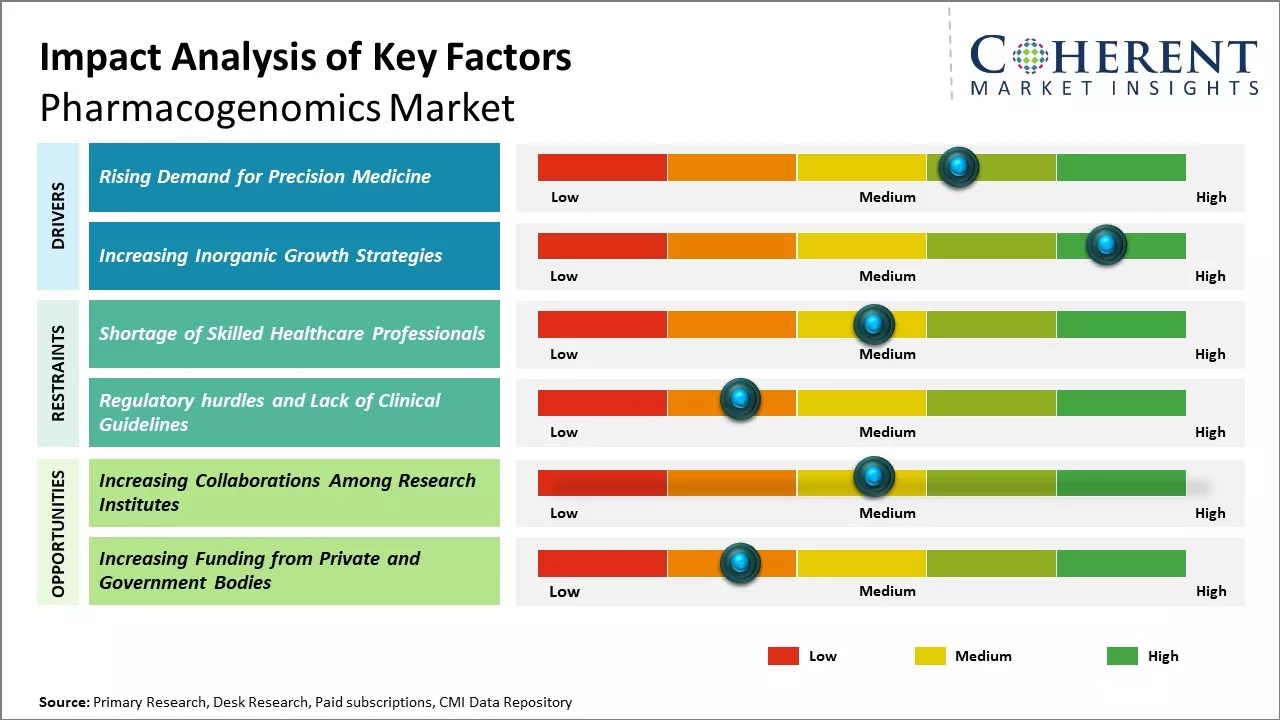
Rising Demand for Precision Medicine
Surge in global incidence of cancer and increasing aging population susceptible to disease are expected to boost the demand of precision medicines, which is expected to drive the market growth over the forecast period. For instance, according to the data published by the American Cancer Society, in 2022, it was stated that over 1.9 million new cancer cases are expected to be diagnosed in the U.S. in 2023. Approximately, 609,820 deaths from cancer are expected in the U.S. in 2023, which is about 1,670 deaths per day.
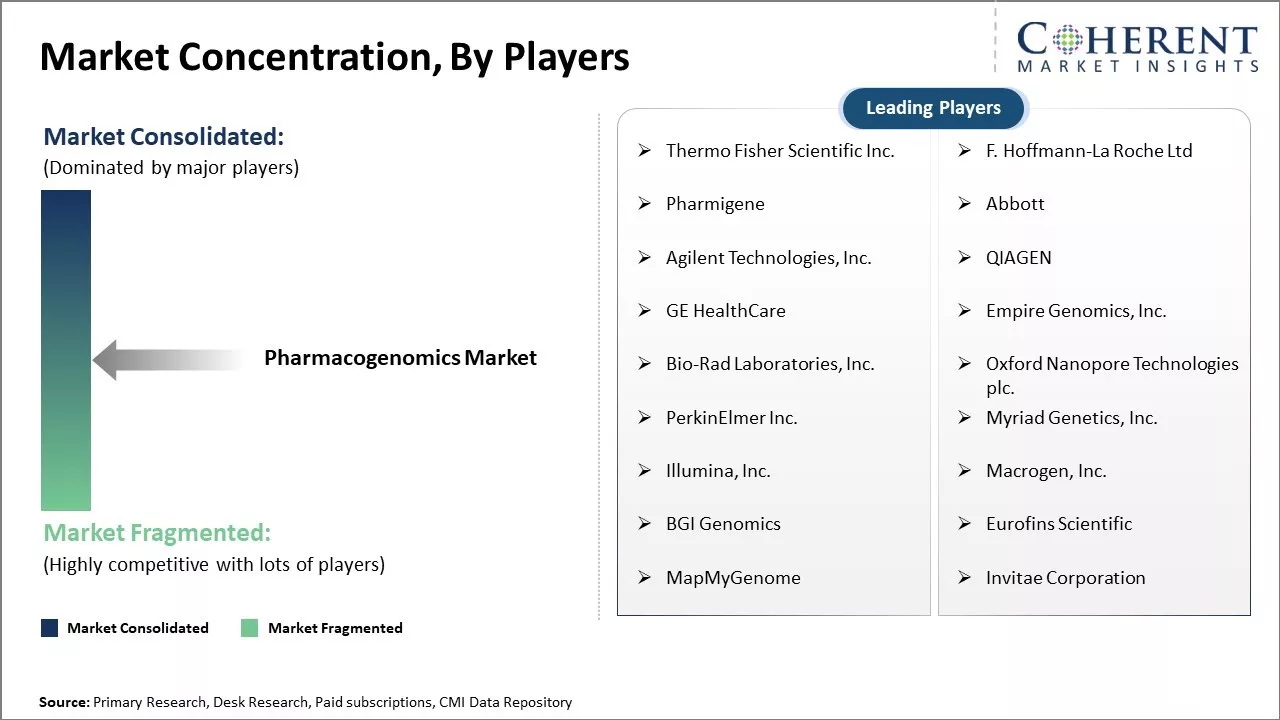
Market Concentration and Competitive Landscape
Increasing Inorganic Growth Strategies
Increasing inorganic growth strategies by key market players is expected to drive the market growth over the forecast period. For instance, in November 2021, Agena Bioscience, a provider of genetic testing solution, announced a partnership with Manchester University, to expand awareness and access to pharmacogenomics educational resources. The partnership enabled Agena Bioscience to promote and offer its customers, the established MU PGx programs including the Graduate Certification in PGx or Master of Science PGx degree.
Market Challenges – Shortage of Skilled Healthcare Professionals
Shortage of skilled healthcare professionals in performing pharmacogenomics diagnostic tests and lack of pharmacogenomics information in the electronic systems used by healthcare professionals are expected to hamper the market growth. For instance, an article published in Frontiers, a publisher of peer-reviewed open access scientific journal, in September 2021, healthcare professionals lack adequate training and education in pharmacogenomics and they are concerned about the absence of evidence-based clinical guidelines.
Lack of available resources, such as laboratory equipment, infrastructure requirements for pharmacogenomics, and skilled and highly trained healthcare professionals, also constitutes an important factor for the low integration level of pharmacogenomics.
Market Opportunities – Increasing Collaborations Among Research Institutes
Increasing adoption of inorganic growth strategies, such as collaborations, are expected to offer lucrative growth opportunities in the market. For instance, in August 2020, the University of California, San Francisco (UCSF), a health science university, expanded its pharmacogenomics efforts by launching a new collaboration with Tampa General Hospital and its pharmacy team that will allow clinicians to tailor medications based on a patient’s genetic makeup.
Plans include developing clinical decision support tools in the electronic health record (EHR) to support clinicians in interpreting results and guide treatment options in the presence of pharmacogenetic data.
Segmental Insights
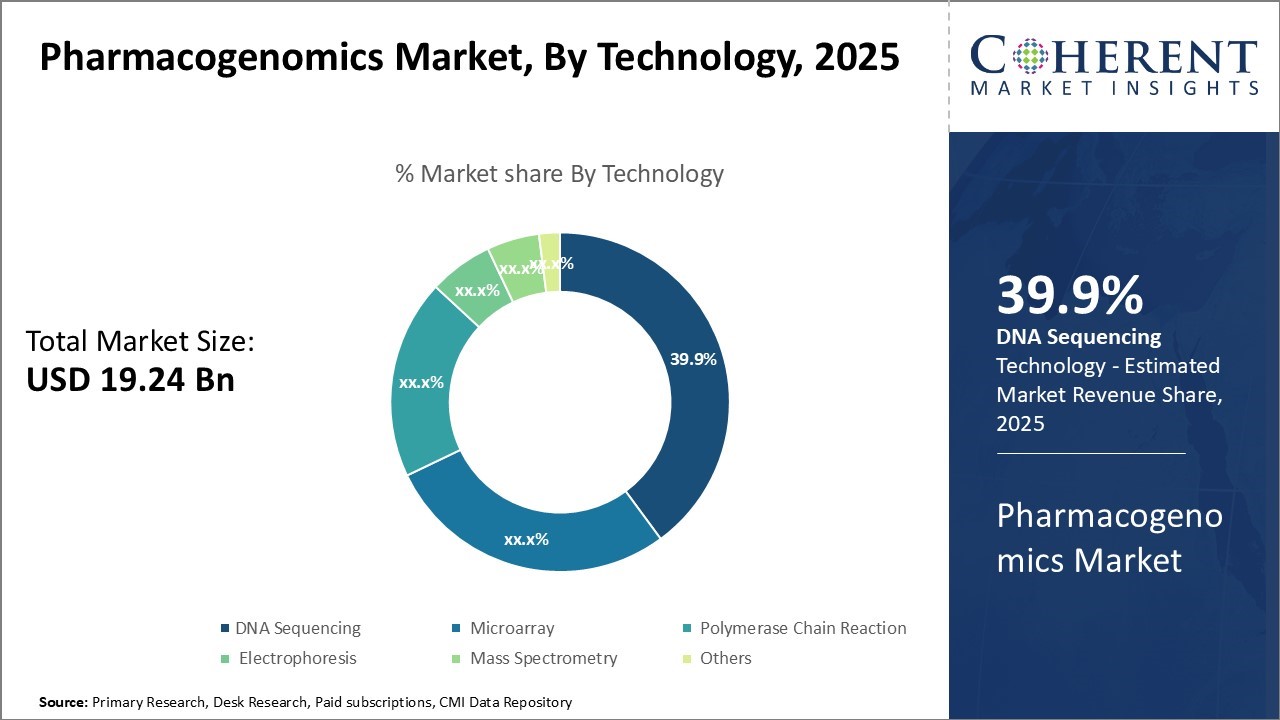
Global Pharmacogenomics Market Insights, By Technology
The technology segment includes DNA sequencing, microarray, polymerase chain reaction, electrophoresis, mass spectrometry, and others. The DNA sequencing sub-segment is estimated to hold 40.9% of the market share in 2026 owing to its ability to rapidly decipher genetic information.
Next-generation sequencing technologies have accelerated scientific discovery by enabling researchers to sequence entire human genomes more quickly and cost-effectively than previous methods. This has supported the integration of genomic information into healthcare to guide treatment decisions.
DNA sequencing allows clinicians to match patients with therapies most suited to their genetic profile, improving outcomes while reducing trial-and-error prescribing. It also enables monitoring of disease progression and detection of mutations that may develop resistance to therapies.
Rapid DNA analyzers have automated sequencing workflows for clinical laboratories, streamlining pharmacogenomic testing to inform precision prescribing across diverse therapeutic areas. Continued technological advancements promise to make sequencing even faster, cheaper and easier to interpret, supporting wider pharmacogenomic applications.
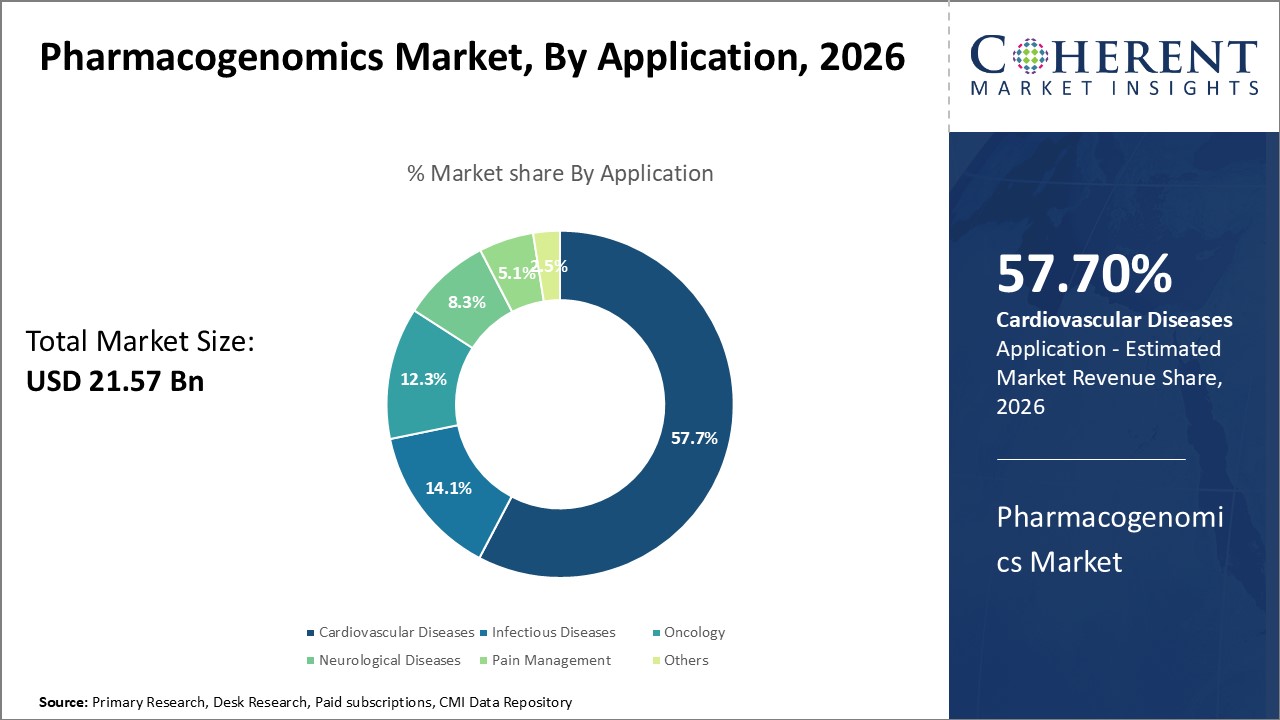
Global Pharmacogenomics Market Insights, By Application
The application segment includes cardiovascular diseases, infectious diseases, oncology, neurological diseases, pain management, and others. The oncology sub-segment is estimated to hold 57.7% of the market share in 2026 due to the growing burden of cancer. Pharmacogenomics helps optimize drug efficacy and minimize toxicity in oncology by accounting for patients' genetic variations.
Predictive analytics in pharmacogenomics leverages genetic testing to select therapies targeting cancer’s molecular drivers and identify biomarkers that predict treatment response or resistance. It allows pairing of patients with regimens most suited to their tumor profiles, rather than unguided trials. This precision approach improves outcomes for subgroups as therapies can be switched early in non-responders.
Genomics analysis also aids in identifying patients at high risk of drug-induced toxicity who may require dose reductions. Pharmacogenomics helps overcome challenges from tumor heterogeneity and evolution by tracking genetic changes through disease progression and treatment. It facilitates longitudinal monitoring to detect resistance mutations emerging with targeted therapies. These capabilities are central to realizing the promise of personalized cancer care.
Global Pharmacogenomics Market Insights, By End User
The end user segment includes hospitals & clinics, research institutions and academic institutes, diagnostic laboratories, and others. The hospitals & clinics sub-segment is estimated to hold 33.4% of the market share in 2026 owing to their expanding clinical pharmacogenomics services.
Hospitals are adopting genomic technologies like next-generation sequencing and microarrays to establish precision medicine platforms. This allows embedding pharmacogenomic testing and consulting directly within clinical workflows to guide medication management for patients.
It helps optimize drug regimens from the outset of care. By automating genomic profiling, hospitals also provide seamless access to board-certified pharmacogenomic experts for busy clinicians. This consolidated model of testing and consultation enhances pharmacogenomics uptake by addressing barriers like interdisciplinary collaboration and complex genomic data interpretation challenges.
Expanding clinical decision support tools further aid healthcare professionals in applying test results. With pharmacological implications across therapeutic areas, hospital-based precision medicine services boost pharmacogenomics applications and associated economic outcomes across the care continuum.
Global Pharmacogenomics Market - Regional Insights
North America Pharmacogenomics Market Analysis and Trends
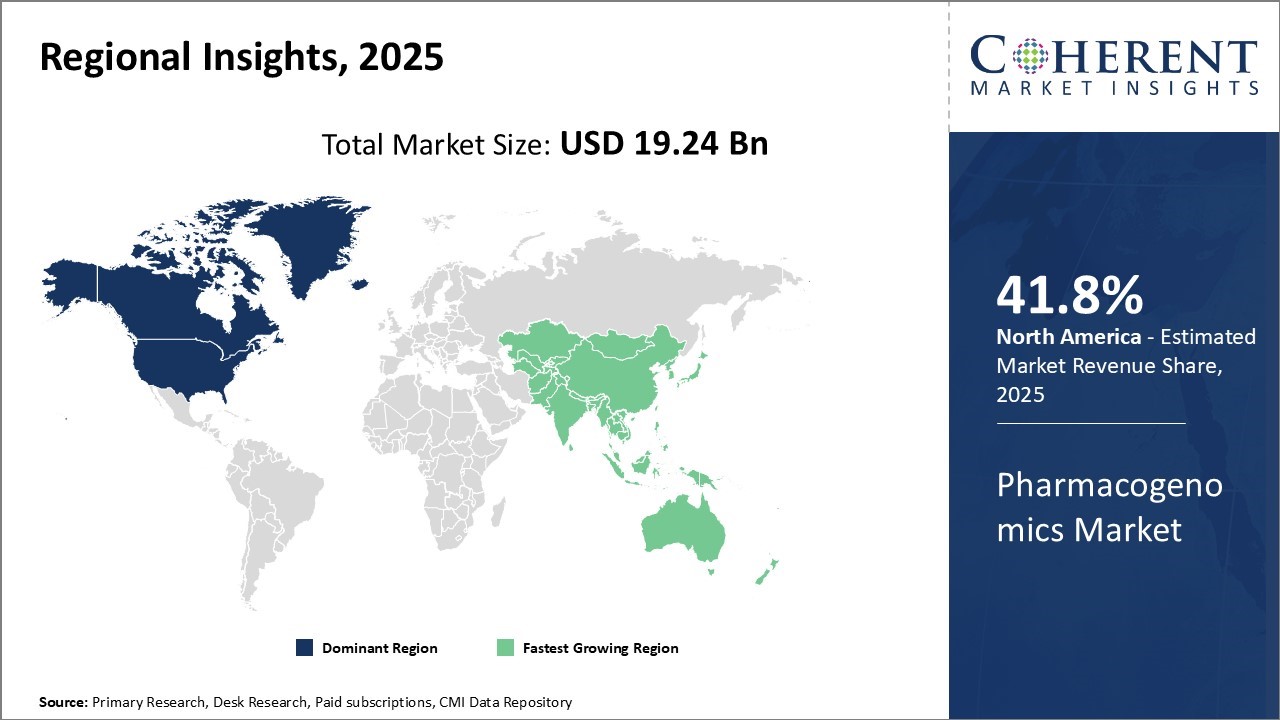
North America remains the dominant region in the global pharmacogenomics market and is estimated to hold 41.8% of the market share in 2026 due to the presence of major pharmaceutical companies and established biotechnology industry in the region. The U.S. is a hub for drug innovation and discovery activities. The presence of leading pharmaceutical companies with strong R&D capabilities allows them to invest heavily in pharmacogenomic research.
Additionally, supportive regulatory environment and increasing adoption of personalized medicine approach have further boosted the market growth in the region.
Asia Pacific Pharmacogenomics Market Analysis and Trends
The Asia Pacific region has emerged as the fastest growing market for pharmacogenomics in recent years. Rapid economic development and growing healthcare investments in countries like China and India have created conducive environment for market growth. Rising patient population and increasing burden of chronic diseases have bolstered the demand.
Furthermore, improving access to healthcare along with increasing disposable incomes have augmented the demand for advanced diagnostic technologies in the region India and China’s low-cost operations are boosting the pharmacogenomics market in clinical trials, attracting global pharmaceutical players to invest in local research and manufacturing. This has provided major impetus to the regional market.
Dominating Countries
- The United States is expected to capture the largest pharmacogenomics market share in 2026, contributing significantly to North America’s overall dominance with around 41.8% of the regional market. This leadership is driven by strong pharmaceutical R&D infrastructure, widespread precision medicine initiatives, and favorable regulatory and reimbursement frameworks.
- Canada also contributes significantly within the North American region, supported by federal genomics programs and growing provincial adoption of PGx testing in academic hospitals and healthcare networks.
Market Report Scope
Pharmacogenomics Market Report Coverage
| Report Coverage | Details | ||
|---|---|---|---|
| Base Year: | 2025 | Market Size in 2026: | USD 21.57 Bn |
| Historical Data for: | 2020 To 2024 | Forecast Period: | 2026 To 2033 |
| Forecast Period 2026 to 2033 CAGR: | 12.1% | 2033 Value Projection: | USD 47.98 Bn |
| Geographies covered: |
| ||
| Segments covered: |
| ||
| Companies covered: | Thermo Fisher Scientific Inc., F. Hoffmann-La Roche Ltd, Pharmigene, Abbott, Agilent Technologies, Inc., QIAGEN, GE HealthCare, Empire Genomics, Inc., Bio-Rad Laboratories, Inc., Oxford Nanopore Technologies plc., PerkinElmer Inc., Myriad Genetics, Inc., Illumina, Inc., Macrogen, Inc., BGI Genomics, Eurofins Scientific, MapMyGenome, and Invitae Corporation | ||
| Growth Drivers: |
| ||
| Restraints & Challenges: |
| ||
Pharmacogenomics Industry News
- On February 26, 2024, Golden Helix, Inc., a bioinformatics company, launched of VSPGx, a pharmacogenomics solution for hospitals and testing labs.
- In May 2023, University of California, San Francisco (UCSF), a health science university, announced that they had launched first pharmacogenomics testing service in California, the health care delivered to patients at UCSF Health will be systematically informed by patient genomic data, ensuring that prescribed therapies are tailored to individuals’ unique biology.
- In December 2022, MapMyGenome, a preventive genomics company, announced that it had launched MedicaMap, pharmacogenomics solution that analyses an individual's response to medicines, based on genetic makeup.
- In May 2022, Invitae Corporation, a medical genetics company, announced the commercial availability of the expanded Invitae Pharmacogenomics (PGx) Panel which includes the specialized Invitae Pharmacogenomics Mental Health Panel and access to a clinical decision support tool (CDST).
Analyst Viewpoint
- The pharmacogenomics market outlook is increasingly positive, fueled by growing demand for personalized medicine and heightened awareness of how gene–drug interactions affect treatment effectiveness. Advancements in next-generation sequencing and AI-enabled data analytics are enhancing the accuracy and scalability of pharmacogenomic testing, especially in oncology and mental health applications.
- Opportunities are expanding through integration with electronic health records (EHRs), decision support tools, and wider adoption by healthcare providers and biopharma companies seeking precision drug development.
- However, high testing costs, inconsistent reimbursement, and regulatory variability remain major hurdles, especially in developing markets. Privacy concerns around genetic data and limited clinician training further hinder clinical adoption.
- North America leads the market due to strong R&D infrastructure and favorable policy support, while Asia Pacific is emerging as the fastest-growing region, backed by government-led genomics initiatives and growing demand for affordable personalized healthcare.
Market Segmentation
- Technology Insights (Revenue, USD Bn, 2021 - 2033)
- DNA Sequencing
- Microarray
- Polymerase Chain Reaction
- Electrophoresis
- Mass Spectrometry
- Others
- Application Insights (Revenue, USD Bn, 2021 - 2033)
- Cardiovascular Diseases
- Infectious Diseases
- Oncology
- Neurological Diseases
- Pain Management
- Others
- End User Insights (Revenue, USD Bn, 2021 - 2033)
- Hospitals & Clinics
- Research Institutions and Academic Institutes
- Diagnostic Laboratories
- Others
- Regional Insights (Revenue, USD Bn, 2021 - 2033)
- North America
- U.S.
- Canada
- Latin America
- Brazil
- Argentina
- Mexico
- Rest of Latin America
- Europe
- Germany
- U.K.
- Spain
- France
- Italy
- Russia
- Rest of Europe
- Asia Pacific
- China
- India
- Japan
- Australia
- South Korea
- ASEAN
- Rest of Asia Pacific
- Middle East
- GCC Countries
- Israel
- Rest of Middle East
- Africa
- South Africa
- North Africa
- Central Africa
- Key Players Insights
- Thermo Fisher Scientific Inc.
- F. Hoffmann-La Roche Ltd.
- Pharmigene
- Abbott
- Agilent Technologies, Inc.
- QIAGEN
- GE HealthCare
- Empire Genomics, Inc.
- Bio-Rad Laboratories, Inc.
- Oxford Nanopore Technologies plc.
- PerkinElmer Inc.
- Myriad Genetics, Inc.
- Illumina, Inc.
- Macrogen, Inc.
- BGI Genomics
- Eurofins Scientific
- MapMyGenome
- Invitae Corporation
Source
Primary Research Interviews
- Chief Scientific Officers and R&D Directors at pharmacogenomics companies
- Clinical pharmacologists and geneticists at leading hospitals and research institutions
- Regulatory affairs specialists at pharmaceutical companies
- Healthcare IT professionals specializing in genomic data management
- Others
Databases
- ClinicalTrials.gov
- FDA Orange Book Database
- PharmGKB (Pharmacogenomics Knowledgebase)
- NCBI dbSNP Database
- Others
Magazines
- Pharmacogenomics & Personalized Medicine
- Precision Medicine Magazine
- BioPharma Dive
- Genetic Engineering & Biotechnology News
- Others
Journals
- The Pharmacogenomics Journal
- Pharmacogenomics
- Clinical Pharmacology & Therapeutics
- Others
Newspapers
- The Wall Street Journal
- Financial Times
- Reuters Health News
- Bloomberg Healthcare
- Others
Associations
- International Society of Pharmacogenomics (ISPG)
- Clinical Pharmacogenetics Implementation Consortium (CPIC)
- Personalized Medicine Coalition (PMC)
- Association for Molecular Pathology (AMP)
- Others
Public Domain Sources
- FDA.gov Pharmacogenomic Biomarkers
- NIH National Human Genome Research Institute
- WHO Essential Medicines and Health Products
- CDC Office of Public Health Genomics
- Others
Proprietary Elements
- CMI Data Analytics Tool, Proprietary CMI Existing Repository of information for last 8 years
*Definition: Pharmacogenomics is a branch of pharmacology that focuses on using DNA and amino acid sequence data to inform drug development and testing. It involves the study of how an individual's genetic inheritance affects the body's response to drugs, combining traditional pharmaceutical sciences with genetics and genomics to tailor pharmaceutical treatment to an individual. Pharmacogenomics aims to identify the most effective drug for a person, minimize side effects, and find the ideal dosage by using information about a person’s genomic make-up.
Get access to 250+ pages report
Every segment, forecast, competitor profile and data table behind the analysis above — available for instant download.
- ESOMAR Member
- ISO 9001:2015 Certified
- D-U-N-S Registered
- GDPR & CCPA Compliant
Missing comfort of reading report in your local language? Find your preferred language:
Transform your Strategy with Exclusive Trending Reports
Frequently Asked Questions
The Pharmacogenomics Market size is estimated to be valued at USD 21.57 Bn in 2026, and is expected to reach USD 47.98 Bn by 2033.
The rising prevalence of chronic diseases drives demand for pharmacogenomics by emphasizing personalized treatments that improve drug efficacy and reduce adverse effects.
Rising demand for precision medicine and increasing inorganic growth strategies are the major factors driving the growth of the pharmacogenomics market.
Pharmacogenomics focuses specifically on how an individual's genetic makeup affects their response to drugs, while traditional genetics and genomics study genes and their functions more broadly.
In terms of technology, DNA sequencing is estimated to dominate the market revenue share in 2026.
Thermo Fisher Scientific Inc., F. Hoffmann-La Roche Ltd, Pharmigene, Abbott, Agilent Technologies, Inc., QIAGEN, GE HealthCare, Empire Genomics, Inc., Bio-Rad Laboratories, Inc., Oxford Nanopore Technologies plc., PerkinElmer Inc., Myriad Genetics, Inc., Illumina, Inc., Macrogen, Inc., BGI Genomics, Eurofins Scientific, MapMyGenome, and Invitae Corporation are the major players.
North America is expected to lead the pharmacogenomics industry.