

Global Clinical Genomics Market Size and Forecast – 2026 - 2033
The Global Clinical Genomics Market is estimated to be valued at USD 13.93 Bn in 2026 and is expected to reach USD 29.65 Bn by 2033, exhibiting a compound annual growth rate (CAGR) of 11.4% from 2026 to 2033. This significant growth highlights the increasing adoption of genomic technologies in clinical settings, driven by advancements in sequencing techniques and growing awareness about personalized medicine benefits.
Key Takeaways of the Global Clinical Genomics Market
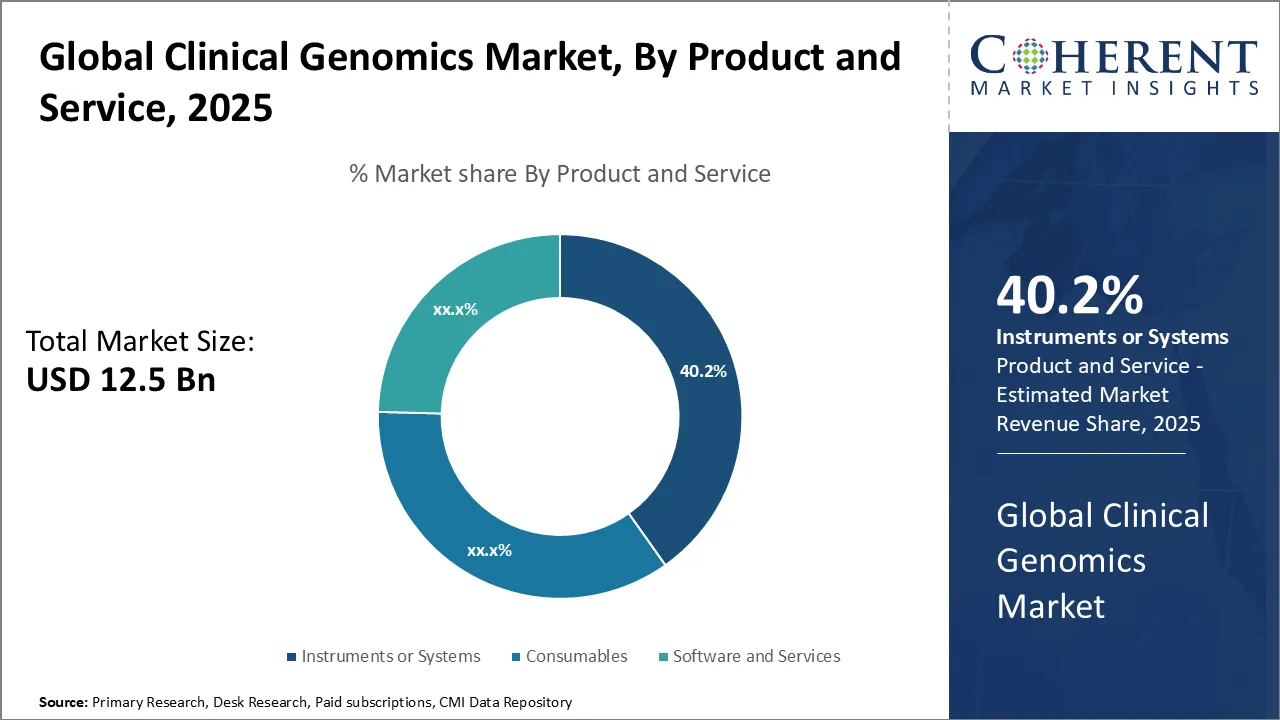
- The instruments or systems segment is estimated to dominate the clinical genomics market in 2026, accounting for 41.2 % of the market share, due to continuous technological advancements enabling precise genomic analysis.
- Next-Generation Sequencing (NGS) technology is a key contributor to the clinical genomics market, accounting for an estimated 26.5 % of the market share in 2026, due to its ability to provide comprehensive genomic insights.
- Oncology will remain the largest application segment in clinical genomics, with an estimated 39.2 % share in 2026, driven by the increasing demand for personalized and precision medicine in cancer diagnosis and treatment.
- North America is expected to lead the market, holding a share of 37.3 % in 2026. Asia Pacific is anticipated to be the fastest-growing region, with a market share of 24.2% in 2026.
Market Overview
Key market trends include the integration of AI and machine learning to enhance data interpretation and diagnostic accuracy in clinical genomics. Additionally, rising investment in genomics research and expanding applications in oncology and rare disease diagnosis are propelling market expansion. Increasing collaborations between biotechnology firms and healthcare providers support the development of innovative genomic solutions, further accelerating market growth during the forecast period.
Current Events and Its Impact
Current Events | Description and its impact |
Illumina TruSight Oncology Comprehensive (TSO Comp) Approval in Japan |
|
Orchid Health's Embryo Genetic Screening Expansion |
|
Segmental Insights
- Current Industry Events of 2026
- Market Size Estimation
- Regional Breakdown
- Competitive Landscape
- Customer Intelligence
- Segmental Analysis
- Pricing Analysis
- Key Market Drivers, Challenges & Future Trends
- Customized Insights Section
Clinical Genomics Market Insights, By Product and Service - Instruments or Systems Contributes the Highest Share of the Market, Owing to Technological Advancements and Increasing Adoption in Clinical Settings
The dominance of the Instruments or Systems segment in the clinical genomics market with an estimated share of 41.2% in 2026 can largely be attributed to continuous technological innovations and their pivotal role in enabling precise genomic analysis. Instruments such as sequencers, PCR systems, and microarray scanners form the backbone of clinical genomics as they facilitate the core processes of DNA and RNA analysis, which are critical for accurate diagnosis and personalized treatment planning. The adoption of these sophisticated systems has soared with enhancements in throughput, sensitivity, and accuracy, empowering laboratories to process larger sample volumes and generate high-resolution genomic data more efficiently.
Moreover, automated liquid handlers and other genomic analyzers further boost laboratory productivity by minimizing manual interventions, reducing operational errors, and expediting sample preparation workflows. These instruments also help maintain stringent quality control standards which are vital for clinical compliance and regulatory approvals. The broad applicability of these instruments across various clinical settings, from academic research centers to hospital laboratories, reinforces their indispensability.
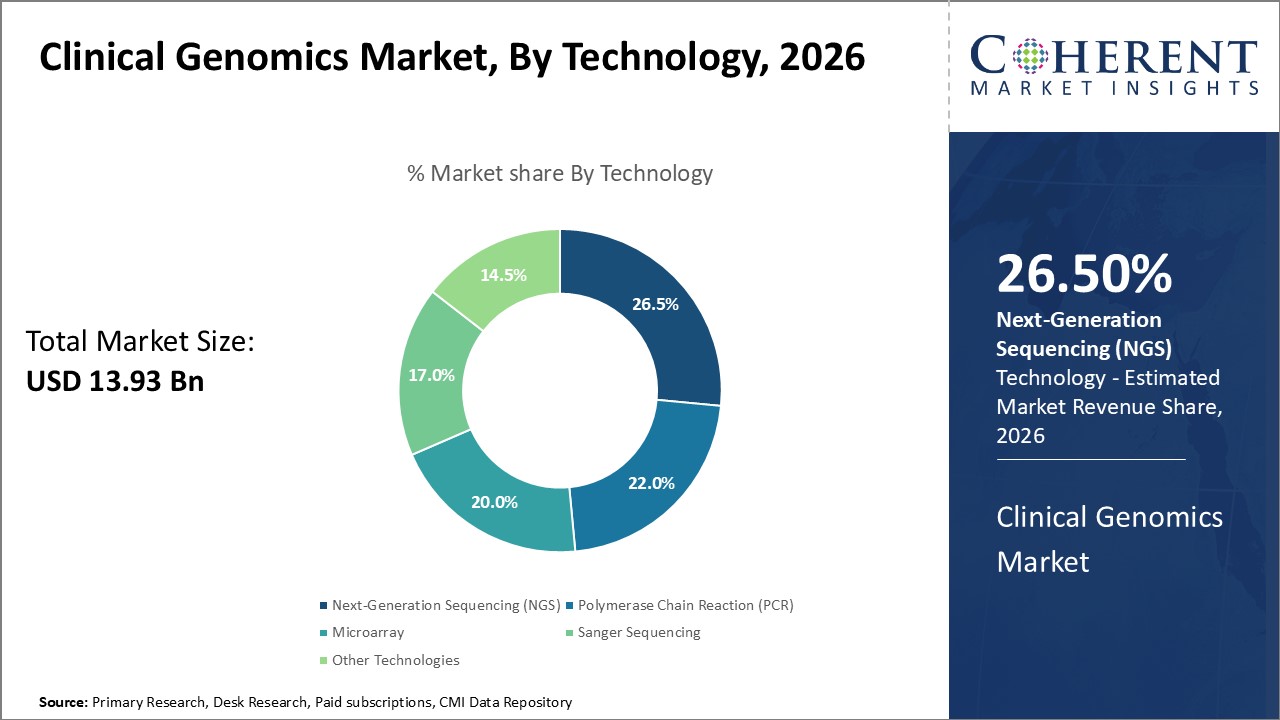
Clinical Genomics Market Insights, By Technology - Next-Generation Sequencing (NGS) Leads, Due to Its Comprehensive and Cost-Effective Genomic Profiling Capabilities
Next-Generation Sequencing (NGS) technology stands out as the principal driver within the clinical genomics market with an estimated share of 26.5% in 2026, due to its unparalleled ability to deliver comprehensive genomic insights at a relatively lower cost and higher speed compared to traditional methods. NGS allows simultaneous sequencing of millions of DNA fragments, enabling detailed profiling of entire genomes, exomes, or targeted gene panels with exceptional depth and accuracy. This technological leap has revolutionized not only oncology but numerous clinical applications by facilitating highly personalized treatment strategies.
In May 2025, Roche, a global leader in healthcare innovation, announced a strategic partnership with Broad Clinical Labs to develop applications utilizing its advanced Sequencing by Expansion (SBX) next-generation sequencing technology. The collaboration’s primary focus will be on leveraging SBX for whole genome sequencing in critically ill newborns, enabling quicker and more accurate diagnoses of genetic disorders such as cystic fibrosis and sickle cell disease.
The versatility of NGS is a decisive factor in its widespread adoption. It supports a broad spectrum of clinical workflows, including somatic mutation detection, identification of hereditary genetic variants, transcriptome analysis, and epigenetic profiling. This multifaceted application range makes NGS an indispensable tool for unraveling complex disease mechanisms and tailoring therapeutic interventions accordingly.
Clinical Genomics Market Insights, By Application - Oncology Commands the Largest Share, Due to the Rising Demand for Personalized and Precision Medicine
Oncology remains the most significant application area within the clinical genomics market with an estimated share of 39.2% in 2026, driven by the growing imperative for personalized and precision medicine approaches in cancer diagnosis, prognosis, and treatment. Clinical genomics technologies empower oncologists to tailor therapies based on each patient’s unique tumor biology, improving treatment efficacy and minimizing adverse effects.
In February 2026, Dovetail Genomics, a leader in genomic analysis technology, launched early access services for FFPE sample analysis. This new service enhances cancer diagnostics by detecting structural variants and profiling RNA, helping to identify genetic changes and gene fusion events in oncology research. By offering these advanced capabilities, Dovetail Genomics aims to improve the precision of cancer diagnostics and further support the development of targeted therapies.
Key applications such as cancer diagnosis and prognosis, therapy selection, companion diagnostics, and hereditary cancer risk assessment heavily rely on genomic data to refine clinical decision-making. Minimal residual disease (MRD) monitoring and liquid biopsy analysis have gained traction as non-invasive methods for early detection of recurrence and real-time tracking of treatment response, enhancing patient management while reducing procedural risks. This expanded clinical utility is facilitating earlier interventions and more dynamic care regimens.
Regional Insights
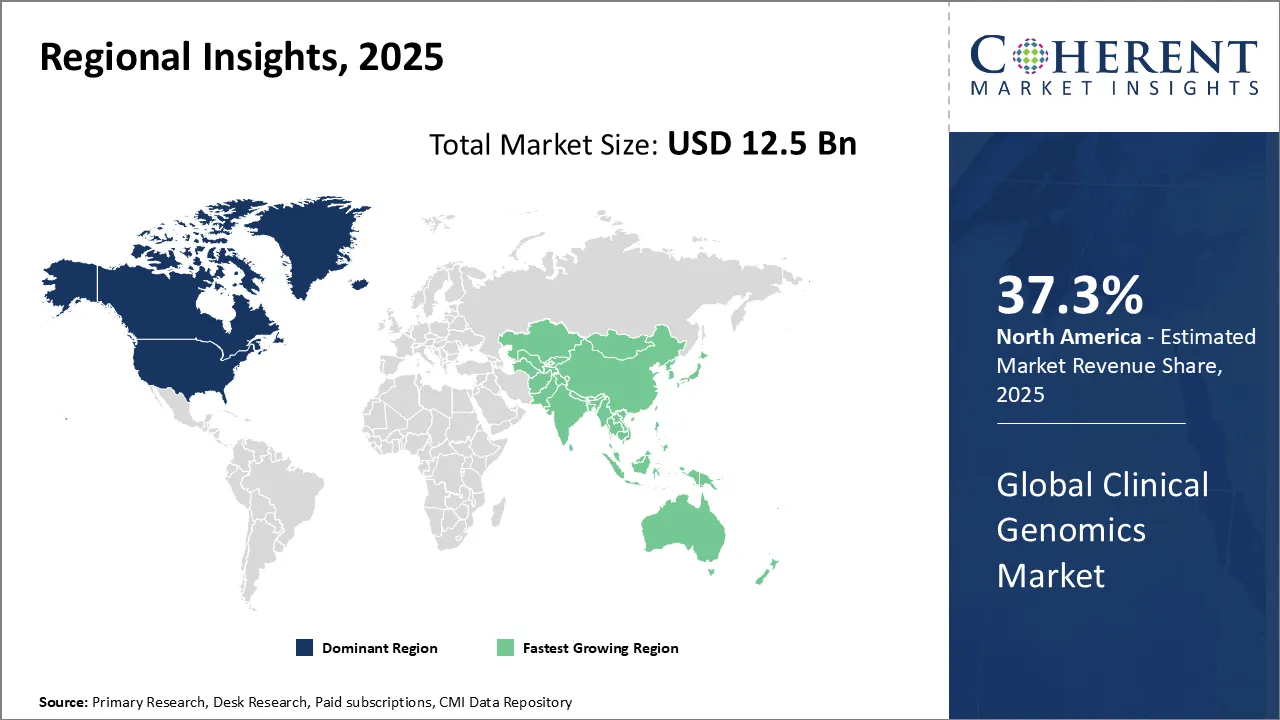
North America Clinical Genomics Market Analysis and Trends
In North America, the dominance in the Global Clinical Genomics Market with an estimated share of 37.3% in 2026 is driven by a well-established healthcare infrastructure, robust research and development ecosystem, and substantial government funding focused on genomics and personalized medicine. The U.S. features a sophisticated market environment supported by regulatory frameworks such as the FDA’s guidance on genomic diagnostics, facilitating faster product approvals. The presence of key industry players like Illumina, Thermo Fisher Scientific, and Invitae, coupled with numerous academic collaborations and clinical research institutions, strengthens innovation and adoption of genomics technologies.
In May 2026, Roche, a global leader in healthcare innovation, has announced a strategic collaboration with Broad Clinical Labs to develop applications using its cutting-edge Sequencing By Expansion (SBX) technology. The initial focus will be on using SBX for whole genome sequencing in critically ill newborns, enabling faster, more accurate diagnoses of genetic disorders like cystic fibrosis and sickle cell disease.
Asia Pacific Clinical Genomics Market Analysis and Trends
Meanwhile, the Asia Pacific region is expected to exhibit the fastest growth potential in the Clinical Genomics Market with a share of 24.2% in 2026, owing to increasing healthcare expenditure, rapidly expanding healthcare infrastructure, and growing awareness of personalized medicine. Countries like China, India, Japan, and South Korea are investing heavily in genomics research driven by government initiatives such as China’s Precision Medicine Initiative and Japan’s genomic platform projects.
The region benefits from a large patient pool, rising incidences of genetic disorders, and increasing adoption of advanced sequencing technologies, fueled by collaborations between local firms and global market leaders. Cost advantages and developing regulatory frameworks encourage market entry and expansion. Key regional players like BGI Group (China), Macrogen (South Korea), and MedGenome (India) contribute significantly by offering innovative genomic services tailored for local populations, further propelling market growth in Asia Pacific.
Global Clinical Genomics Market Outlook for Key Countries
U.S. Clinical Genomics Market Trends
The clinical genomics market in the U.S. is highly advanced, supported by prominent genomic research institutions like the National Institutes of Health (NIH) and large-scale federally funded initiatives. Industry leaders such as Illumina and Thermo Fisher Scientific continue to drive innovation with cutting-edge sequencing platforms and diagnostic assays. The U.S. also benefits from a robust clinical trial network and extensive insurance coverage, which facilitates the integration of genomics into routine diagnostics. Additionally, the country’s advanced regulatory environment and growing activity in mergers and acquisitions foster further innovation and market consolidation
In March 2026, Illumina Inc., a global leader in genomic sequencing technology, and Nashville Biosciences (NashBio), a subsidiary of Vanderbilt University Medical Center, have announced the successful sequencing of 250,000 whole genomes as part of the Alliance for Genomic Discovery (AGD). This milestone has created one of the largest and most comprehensive clinical genomic datasets, which is being used to uncover novel drug targets and accelerate therapeutic research.
China Clinical Genomics Market Trends
The market in China is rapidly expanding supported by strong government commitments under the Precision Medicine Initiative and the National Health Commission’s policies promoting genomics for disease management. The country’s vast population creates significant demand for genomic solutions suited to its unique genetic variations. Furthermore, multinational companies are increasingly forming partnerships with Chinese firms to tap into this lucrative market, collaborating on technology integration, distribution, and expanding research applications in clinical genomics.
In May 2026, PacBio, a leader in highly accurate sequencing solutions, partnered with Haorui Gene, a prominent expert in blood typing genomics, to distribute its HiFi long-read sequencing technology in China. This collaboration aims to enhance access to PacBio's advanced sequencing technology for clinical genomics and research applications, particularly in transfusion medicine and hematology.
India Clinical Genomics Market Trends
India’s clinical genomics market is growing notably due to rising healthcare awareness, increasing government initiatives for genomics research, and improving healthcare infrastructure. Companies like MedGenome and Strand Life Sciences are at the forefront, providing genomic testing and bioinformatics services at accessible costs. Expanding private healthcare and growing demand for precision medicine drive market advancement. Moreover, growing collaborations with global players and supportive regulatory efforts enhance market maturity and accessibility in both urban and rural areas.
On July 7, 2026, Suraksha Diagnostics inaugurated a state-of-the-art genomics laboratory in Kolkata, marking one of the largest such facilities in Eastern India. This investment aims to provide advanced genetic testing services, including prenatal screening, oncology diagnostics, and rare disease testing. The facility utilizes technologies such as cytogenetics, microarray, Sanger sequencing, and next-generation sequencing (NGS) to offer precise diagnostics for predictive and personalized care. This expansion aligns with the growing demand for accessible genomic diagnostics and supports the development of preventive healthcare in West Bengal, India.
U.K. Clinical Genomics Market Trends
The U.K. clinical genomics market is rapidly growing, fueled by technological advancements and strong public and private investments. Key initiatives like the UK government's Genome UK strategy and the 100,000 Genomes Project are integrating genomic medicine into routine healthcare. The establishment of specialized genome testing facilities, such as the robotic genome testing center at The Royal Marsden NHS Foundation Trust, is enhancing diagnostic capabilities.
In June 2024, the Royal Marsden NHS Foundation Trust unveiled the U.K.'s first-ever genome testing facility at its Sharjah Clinical Genomics Laboratory, aimed at enhancing genomic testing capacity for cancer patients. This initiative, in partnership with Automata Technologies, utilizes robotic automation to double testing capacity and broaden the range of tests offered. The new system, featuring six robotic arms, will streamline somatic and cancer germline testing, including genetic mutations like BRCA, which are linked to various cancers.
Role of Artificial Intelligence (AI) on the Global Clinical Genomics Market
- Artificial Intelligence (AI) is significantly transforming the Global Clinical Genomics Market by enabling enhanced efficiency, cost reduction, and automation in genomic analysis. AI technologies, including machine learning and predictive analytics, facilitate the processing of vast amounts of genomic data, improving decision-making accuracy and the speed of diagnoses. For instance, AI-driven tools can analyze complex genetic data patterns, offering insights into disease predisposition and helping clinicians to personalize treatments for patients more effectively. These technologies not only reduce the time spent on manual tasks but also lower the risk of human error, ensuring more reliable results. The automation of data analysis and patient categorization further enhances operational efficiency, allowing healthcare providers to focus on higher-value activities such as patient care and research.
- AI also opens up new opportunities for innovation and growth within the industry, particularly by enabling the development of advanced personalized medicine. AI can guide the creation of more tailored genomic treatments, offering new business models in precision healthcare and biotechnology. Companies can use AI to optimize product offerings, improve customer experiences, and create more scalable processes, thus gaining a competitive edge. However, despite these promising benefits, challenges such as data privacy concerns, algorithmic bias, and the need for continuous updates to AI systems remain significant hurdles. To leverage AI effectively, companies in the Global Clinical Genomics Market must balance technological advancements with ethical considerations, ensuring that AI tools are not only efficient but also reliable and equitable in their applications.
Market Players, Key Developments, and Competitive Intelligence
Key Developments
- On July 16, 2025, Source Genomics, a leader in genomic diagnostics, celebrated the acquisition of Cambridge Clinical Laboratories with a launch event at its Cambridge headquarters on July 10, 2025. The event brought together industry experts, partners, and collaborators to explore the expanded capabilities resulting from the merger. Attendees participated in discussions and tours of the enhanced laboratory facilities, highlighting the growing role of clinical genomics in diagnostics and how this acquisition strengthens Source Genomics’ leadership in clinical genomics research and applications.
- In June 2025, Genomics, a leading healthcare company focused on leveraging large-scale genetic data for precision healthcare and drug discovery, announced the nationwide roll-out of its Health Insights UK test. This clinical genomics tool combines genetic and clinical risk factors, providing healthcare professionals with personalized risk scores for diseases such as cardiovascular disease, type 2 diabetes, breast cancer, and prostate cancer. The test, available through providers such as Bupa, Spire Healthcare, and Well Life Clinics, enables informed decisions and tailored patient care, advancing clinical genomics and personalized medicine.
- In May 2025, QIAGEN, a global leader in providing innovative tools for molecular diagnostics and life sciences research, announced the acquisition of Genoox, a provider of AI-powered software designed to accelerate the processing of complex genetic tests. The acquisition adds Franklin, Genoox’s AI-driven cloud platform, to QIAGEN’s Digital Insights portfolio, enhancing its offerings in clinical genomics. Franklin supports clinical labs in analyzing next-generation sequencing (NGS) data, delivering real-time insights for genetic disorder diagnosis, cancer treatment, and family planning decisions, further advancing the field of clinical genomics.
- In May 2025, Kyndryl, a global leader in enterprise technology services, was selected by the Balearic Islands Health Service to design a custom clinical-genomic analysis platform. Built on open-source technology, the platform will integrate an AI engine to efficiently manage clinical data and support clinical genomics research initiatives. Kyndryl Consult will collaborate closely with the health service, ensuring the platform meets both research goals and local data protection standards, thereby enhancing the role of clinical genomics in healthcare.
Top Strategies Followed by Global Clinical Genomics Market Players
- Established leaders in the clinical genomics market focus on substantial investments in research and development (R&D) to maintain their competitive edge and drive innovation. By leveraging advanced technologies such as next-generation sequencing (NGS), artificial intelligence, and cloud-based data analytics, these companies enhance the speed, accuracy, and usability of their genomic solutions. Strategic partnerships also play a key role in their growth, enabling them to expand their technological capabilities and product offerings.
- In April 2025, Fortis Healthcare, a leading healthcare provider in India, has launched the ‘Fortis Institute of Genomic Medicine,’ a state-of-the-art center dedicated to harnessing genomic science for personalized patient care. The institute will integrate advanced clinical expertise with cutting-edge technologies, focusing on oncology, cardiology, and neurology. It will offer targeted therapies through Onco-genomics, Cardio-genomics, and Neuro-genomics, revolutionizing treatment for conditions like cancer, heart disease, and neurological disorders.
- Mid-level players in the clinical genomics market adopt strategies focused on providing cost-effective solutions that maintain quality while catering to price-sensitive consumers, especially in developing countries. These companies offer affordable products and services, making clinical genomics accessible to a broader audience, including smaller diagnostic labs and regional healthcare providers. They also engage in new product launching, collaborations and joint ventures to enhance production capabilities and technological advancements.
- In June 2024, Helix, a leader in population genomics, has launched new clinico-genomic datasets to accelerate precision medicine drug discovery and development. These datasets, built through extensive partnerships with U.S. health systems, provide rich clinical and genomic data across multiple therapeutic areas, including cardiovascular, metabolic, immunology, and inflammation disorders.
- Small-scale players in the clinical genomics market often adopt niche strategies by focusing on specialized product offerings that cater to unmet clinical needs or particular research domains. These companies differentiate themselves through the use of innovative technologies such as portable sequencing devices, bioinformatics tools, or novel sample processing methods. They also focus on building local partnerships with startups, academic institutions, and regional manufacturers to enhance market entry and visibility in specific areas.
- In March 2023, LGC Clinical Diagnostics has launched its Seraseq BRCA1/2 Large Genomic Rearrangements Reference Materials, the first of their kind in the industry. These reference materials are designed to help clinical laboratories detect large genomic rearrangements (LGRs) in the BRCA1 and BRCA2 genes, which are often missed by conventional PCR and targeted NGS assays. The materials include 20 pathogenic BRCA variants, covering a range of genetic alterations such as deletions, insertions, and exon-level rearrangements.
Market Report Scope
Clinical Genomics Market Report Coverage
| Report Coverage | Details | ||
|---|---|---|---|
| Base Year: | 2025 | Market Size in 2026: | USD 13.93 Bn |
| Historical Data for: | 2020 To 2024 | Forecast Period: | 2026 To 2033 |
| Forecast Period 2026 to 2033 CAGR: | 11.4% | 2033 Value Projection: | USD 29.65 Bn |
| Geographies covered: |
| ||
| Segments covered: |
| ||
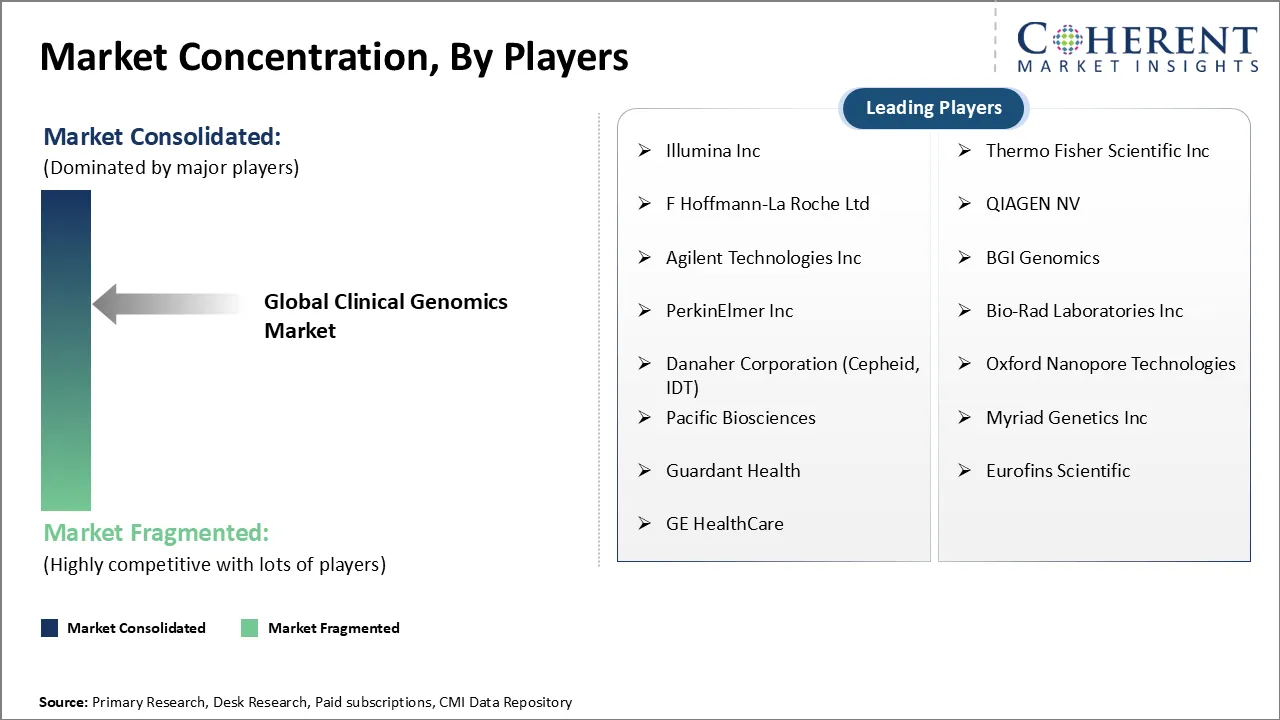
| Companies covered: | Illumina Inc, Thermo Fisher Scientific Inc, F Hoffmann-La Roche Ltd, QIAGEN NV, Agilent Technologies Inc, BGI Genomics, PerkinElmer Inc, Bio-Rad Laboratories Inc, Danaher Corporation (Cepheid, IDT), Oxford Nanopore Technologies, Pacific Biosciences, Myriad Genetics Inc, Guardant Health, Eurofins Scientific, and GE HealthCare | ||
| Growth Drivers: |
| ||
| Restraints & Challenges: |
| ||
Clinical Genomics Market Dynamics
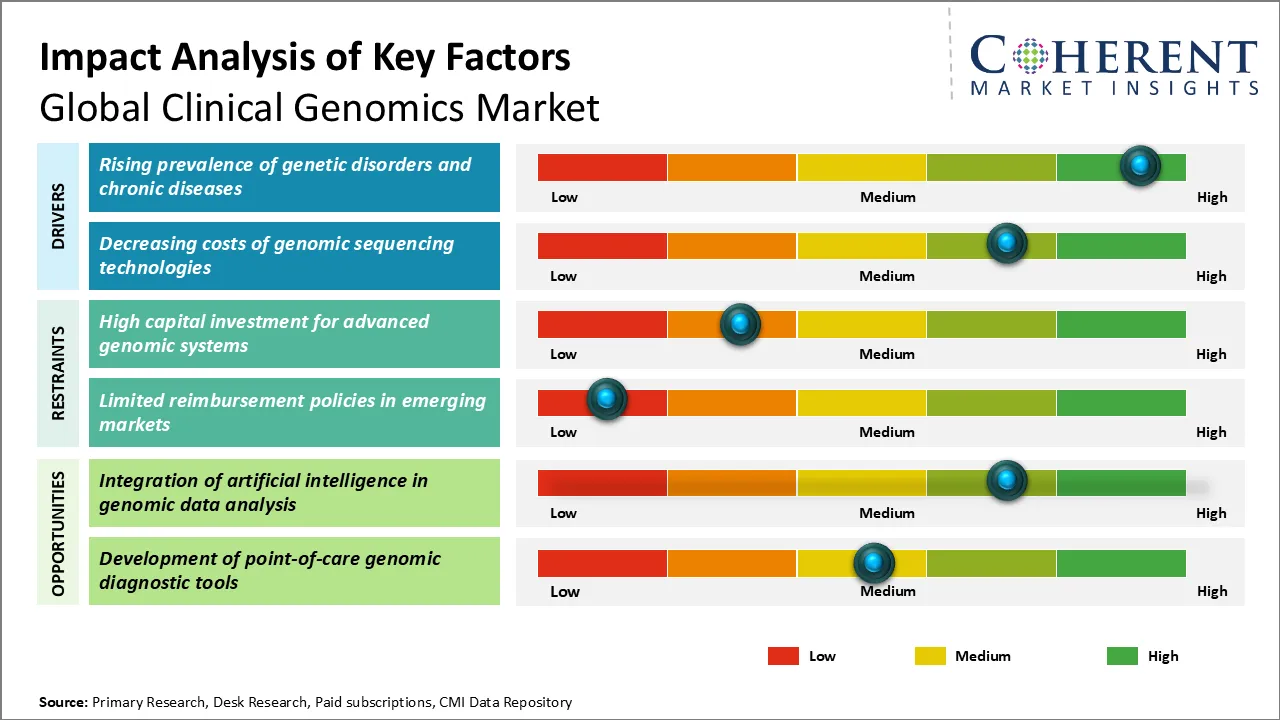
Clinical Genomics Market Driver - Rising Prevalence of Genetic Disorders and Chronic Diseases
The increasing incidence of genetic disorders and chronic diseases worldwide is significantly propelling the adoption of clinical genomics in healthcare systems. As more individuals are diagnosed with complex conditions such as cancer, cardiovascular diseases, and rare inherited disorders, there is a growing need for precise diagnostic tools that can unravel the underlying genetic factors contributing to these diseases. Clinical genomics enables personalized treatment approaches by decoding patients’ genetic information, thereby improving therapeutic efficacy and minimizing adverse effects. This demand is further supported by advancements in sequencing technologies, which have reduced turnaround times and increased the accessibility of genetic testing. Consequently, the rising burden of genetic and chronic ailments continues to encourage the integration of genomics into clinical practice, promoting early diagnosis, risk assessment, and tailored treatment regimens that ultimately enhance patient outcomes.
For instance, a study published in the Orphanet Journal of Rare Diseases in August 2024 examined 22 years of data from a tertiary genetic testing center in India. The research identified 3,294 patients with 305 rare diseases, underscoring the significant prevalence of neuromuscular and neurodevelopmental disorders. The study stresses the need for improved diagnostic infrastructure and affordable therapies in India, particularly due to the prevalence of indigenous genetic variants linked to consanguinity. A review in the Journal of Biosciences also underscores the challenges of diagnosing over 9,000 rare diseases in India and proposes a nationwide mission program focused on pediatric rare diseases. This initiative aims to enhance diagnosis, research, and treatment through advanced technologies and multi-omics approaches.
Clinical Genomics Market Opportunity - Integration of Artificial Intelligence in Genomic Data Analysis
The integration of artificial intelligence (AI) in genomic data analysis represents a transformative opportunity within the global clinical genomics market. As the volume and complexity of genomic data continue to expand exponentially, traditional analytical methods face challenges in efficiency and accuracy, creating a significant demand for AI-driven solutions. AI algorithms, including machine learning and deep learning models, enable rapid processing and interpretation of massive genomic datasets, facilitating the identification of genetic variations linked to diseases with unprecedented precision. This capability accelerates the discovery of novel biomarkers and enhances personalized medicine by tailoring treatments to an individual’s genetic profile. Moreover, AI-powered tools improve data integration from multiple sources such as genomics, proteomics, and clinical records, fostering a holistic understanding of patient health.
For instance, in June 2025, AlphaGenome, a new AI tool, was introduced to predict the impact of genetic mutations on biological processes. Capable of processing long DNA sequences, the tool provides high-resolution predictions on gene regulation across different tissues. By analyzing non-coding regions of the genome, AlphaGenome offers new insights into gene activity and disease biology. Available via API for non-commercial research, it aims to support scientific advancements and the development of personalized treatments.
Market Segmentation
- Product and Service Insights (Revenue, USD Bn, 2021 - 2033)
- Instruments or Systems
- Sequencers
- PCR Systems
- Microarray Scanners
- Automated Liquid Handlers
- Other Genomic Analyzers
- Consumables
- Reagents and Kits
- Sequencing Chips and Flow Cells
- Sample Collection Kits
- Others (Probes and Primers)
- Software and Services
- Data Analysis and Interpretation
- Sequencing Services
- Others (Clinical Laboratory Services, etc)
- Technology Insights (Revenue, USD Bn, 2021 - 2033)
- Next-Generation Sequencing (NGS)
- Polymerase Chain Reaction (PCR)
- Microarray
- Sanger Sequencing
- Other Technologies (e.g., FISH, Karyotyping)
- Application Insights (Revenue, USD Bn, 2021 - 2033)
- Oncology
- Cancer Diagnosis and Prognosis
- Therapy Selection and Companion Diagnostics
- Hereditary Cancer Risk Assessment
- Minimal Residual Disease (MRD) Monitoring
- Liquid Biopsy Analysis
- Infectious Diseases
- Pathogen Identification and Characterization (Bacterial, Viral, Fungal, Parasitic)
- Outbreak Surveillance and Strain Typing
- Antimicrobial Resistance Testing
- Genetic Disorders
- Newborn Screening
- Carrier Screening
- Prenatal Diagnosis
- Preimplantation Genetic Testing
- Diagnosis of Rare and Inherited Diseases
- Cardiovascular Diseases
- Inherited Cardiomyopathies Testing
- Arrhythmia Genetic Testing (e.g., Long QT Syndrome)
- Aortopathies Genetic Testing (e.g., Marfan Syndrome)
- Genetic Hypercholesterolemias Testing
- Neurological Disorders
- Neurodegenerative Disease Testing (e.g., Alzheimer's, Huntington's)
- Neuromuscular Disorder Testing (e.g., Duchenne Muscular Dystrophy)
- Epilepsy Genetic Testing
- Neurodevelopmental Disorder Testing
- Other Applications (Pharmacogenomics, etc.)
- End User Insights (Revenue, USD Bn, 2021 - 2033)
- Hospitals and Clinics
- Diagnostic Laboratories
- Pharmaceutical and Biotechnology Companies
- Others (Academic and Research Institutes, etc.)
- Regional Insights (Revenue, USD Bn, 2021 - 2033)
- North America
- U.S.
- Canada
- Latin America
- Brazil
- Argentina
- Mexico
- Rest of Latin America
- Europe
- Germany
- U.K.
- Spain
- France
- Italy
- Russia
- Rest of Europe
- Asia Pacific
- China
- India
- Japan
- Australia
- South Korea
- ASEAN
- Rest of Asia Pacific
- Middle East
- GCC Countries
- Israel
- Rest of Middle East
- Africa
- South Africa
- North Africa
- Central Africa
- North America
- Key Player Insights
- Illumina Inc
- Thermo Fisher Scientific Inc
- F Hoffmann-La Roche Ltd
- QIAGEN NV
- Agilent Technologies Inc
- BGI Genomics
- PerkinElmer Inc
- Bio-Rad Laboratories Inc
- Danaher Corporation (Cepheid, IDT)
- Oxford Nanopore Technologies
- Pacific Biosciences
- Myriad Genetics Inc
- Guardant Health
- Eurofins Scientific
- GE HealthCare
Sources
Primary Research Interviews
- Stakeholders:
- Healthcare Professionals (Geneticists, Oncologists)
- Clinical Research Organizations (CROs)
- Laboratory Technicians
- Genomic Data Providers
- End Users:
- Hospitals and Clinics
- Research Institutions
- Biotechnology and Pharmaceutical Companies
- Diagnostic Laboratories
Government and International Databases
- World Health Organization (WHO)
- U.S. Food and Drug Administration (FDA)
- European Medicines Agency (EMA)
- National Institutes of Health (NIH)
- National Human Genome Research Institute (NHGRI)
- Centers for Disease Control and Prevention (CDC)
- Global Genomic Data Network (GGDN)
- International Genomic Data Sharing Initiative (IGDSI)
Trade Publications
- GenomeWeb
- The Scientist
- BioTechniques
- Genomics Research Journal
- Clinical Genomics Journal
Academic Journals
- Nature Genetics
- The American Journal of Human Genetics
- Cell Reports
- Genomics, Proteomics & Bioinformatics
- Journal of Clinical Oncology
Reputable Newspapers
- The New York Times
- The Guardian
- The Washington Post
- The Wall Street Journal
Industry Associations
- American Society of Human Genetics (ASHG)
- The European Society of Human Genetics (ESHG)
- International Society for Computational Biology (ISCB)
- Personalized Medicine Coalition
- Genetic Alliance
- The Genome British Columbia
Public Domain Resources
- National Center for Biotechnology Information (NCBI)
- U.S. National Library of Medicine (NLM)
- United Nations Educational, Scientific and Cultural Organization (UNESCO)
Proprietary Elements
- CMI Data Analytics Tool: Proprietary analytics tool to analyze real-time market trends, consumer behavior, and technology adoption in market
- Proprietary CMI Existing Repository of Information for Last 8 Years
Get access to 250+ pages report
Every segment, forecast, competitor profile and data table behind the analysis above — available for instant download.
- ESOMAR Member
- ISO 9001:2015 Certified
- D-U-N-S Registered
- GDPR & CCPA Compliant
Missing comfort of reading report in your local language? Find your preferred language:
Transform your Strategy with Exclusive Trending Reports
Frequently Asked Questions
The global clinical genomics market is estimated to be valued at USD 5.12 Bn in 2026 and is expected to reach USD 15.46 Bn by 2033.
The CAGR of global clinical genomics market is projected to be 17.3% from 2026 to 2033.
Rising prevalence of genetic disorders and chronic diseases and decreasing costs of genomic sequencing technologies are the major factors driving the growth of the global clinical genomics market.
High capital investment for advanced genomic systems and limited reimbursement policies in emerging markets are the major factors hampering the growth of the global clinical genomics market.
In terms of product and service, instruments or systems are estimated to dominate the market revenue share in 2026.
Clinical genomics focuses on applying genomic data to diagnose, treat, and prevent diseases in patients, while research genomics involves studying genomic information to understand biological processes, diseases, and potential therapies.
In oncology, clinical genomics is used to identify genetic mutations and alterations in cancer cells, enabling personalized treatment plans. It helps in diagnosing cancer types, predicting prognosis, selecting targeted therapies, and monitoring treatment response through genetic profiling of tumors.