

Global Cochineal Extract Market Size and Forecast – 2026-2033
According to Coherent Market Insights, the global cochineal extract market is estimated to be valued at USD 52.45 Bn in 2026 and is expected to reach USD 80.97 Bn by 2033, expanding at a compound annual growth rate (CAGR) of 6.4% from 2026 to 2033.
Key Takeaways of the Cochineal Extract Market
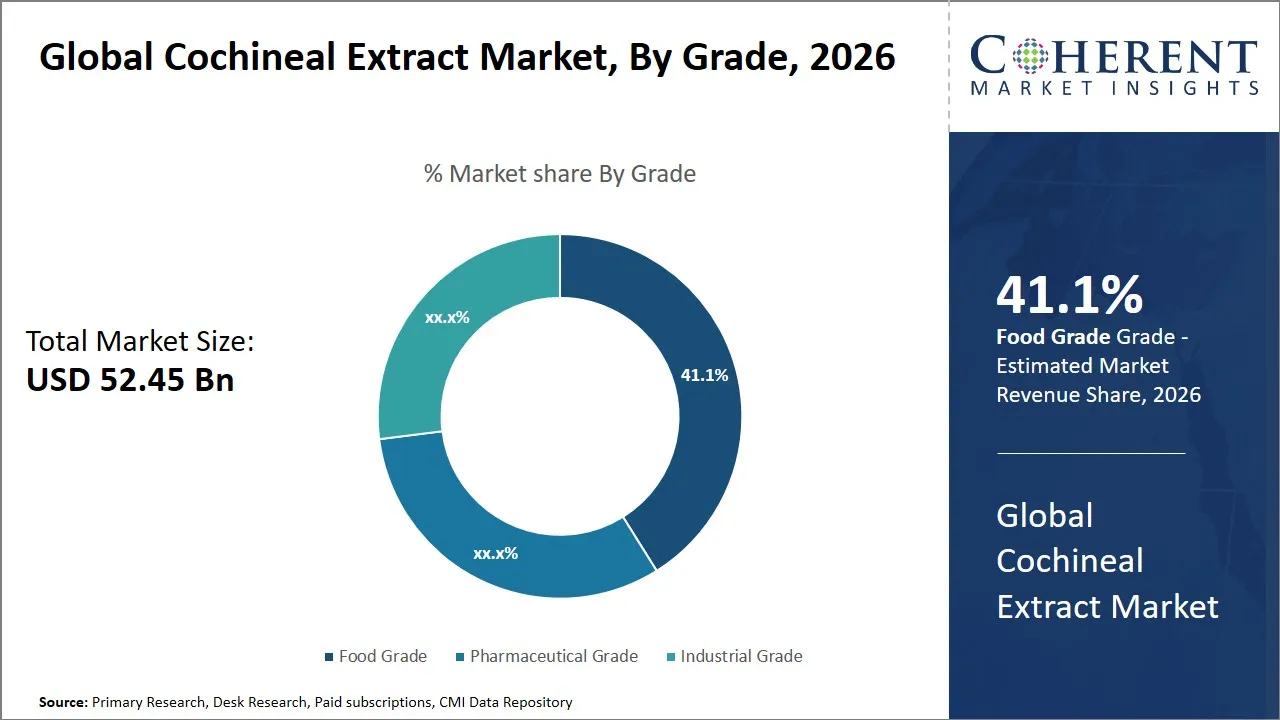
- The food grade segment is projected to account for 41.1 % of the global cochineal extract market in 2026.
- The cochineal powder segment is projected to account for 46.7 % of the cochineal extract market in 2026.
- The food & beverages segment is expected to hold 28.9 % of the cochineal extract market share in 2026.
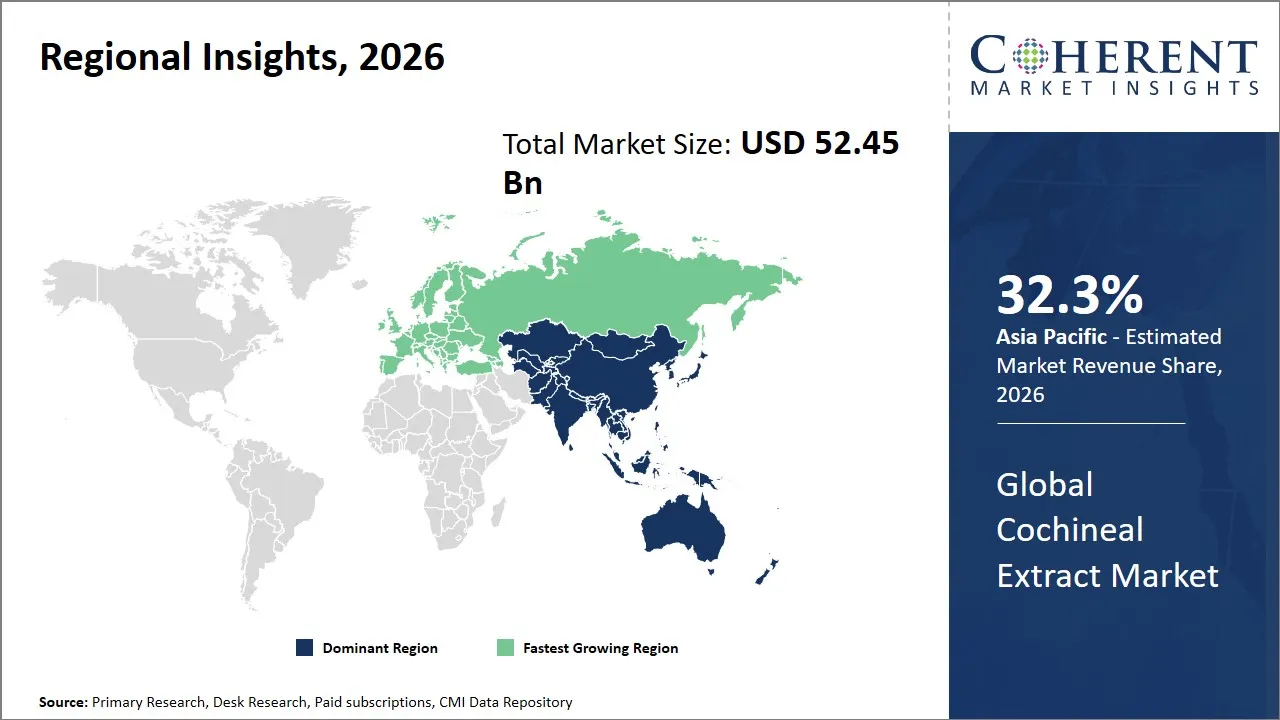
- The Asia Pacific region is set to lead the market with a 32.3 % share in 2026.
- The Europe region is projected to show the fastest market growth, contributing 18.3 % share in 2026.
Market Overview
- A notable trend in the cochineal extract market is the growing emphasis on sustainability and natural sourcing. Consumers are increasingly favoring organic and eco-friendly ingredients, prompting manufacturers to invest in ethical harvesting and production methods.
- Additionally, advancements in extraction technology are improving yield and purity, enhancing product appeal.
- The rising incorporation of cochineal extract in clean-label food products, natural cosmetics, and nutraceuticals further accelerates market demand, making sustainability and innovation the central themes shaping the industry’s trajectory.
Current Events and Its Impact
Current Events | Description and its Impact |
Regulatory Pressure & Safety Labeling |
|
Supply Chain Vulnerability & Production Concentration |
|
Segmental Insights
- Current Industry Events of 2026
- Market Size Estimation
- Regional Breakdown
- Competitive Landscape
- Customer Intelligence
- Segmental Analysis
- Pricing Analysis
- Key Market Drivers, Challenges & Future Trends
- Customized Insights Section
Why Does the Food Grade Segment Dominate the Global Cochineal Extract Market in 2026?
The food grade segment is expected to hold 41.1% of the global cochineal extract market share in 2026, driven by its widespread application in the food and beverage industry. The food-grade cochineal extract, which is a natural colorant produced by using the cochineal insects, is a desirable substitute of synthetic dyes, and it is in line with the growing consumer interest in the clean label and natural ingredients. The increasing health awareness of consumers and the increased trend towards organic and natural food products has helped in driving the demand towards colorants which are said to be safe, non-toxic, and environmental friendly.
In addition, food-grade cochineal extract enjoys international foods regulatory approvals such as that of the U.S Food and Drug Administration (FDA) and European Food safety Authority (EFSA). Its high food safety standards allow manufacturers to use it in diverse in applications, including confectionery, dairy products, beverages, bakery and processed foods without legal or safety obstacles. The color of the dye is very bright red in color; this improves the visual appearance of products very essential in consumer acceptance and purchase.
One example of the food-grade cochineal extract application is Starbucks using it in their Strawberry Frappuccino to provide a natural red coloring, instead of using synthetic dyes. The company shifted towards cochineal extract to cater to consumers demanding clean, natural ingredients. The trend is further boosted by brands like Ben & Jerry's, which have incorporated cochineal extract in their ice cream products to appeal to health-conscious consumers and to avoid artificial additives.
Why is Cochineal Powder the Preferred Product Type in the Cochineal Extract Market?
Cochineal powder segment is expected to capture 46.7% of the cochineal extract market share in 2026. Its market leadership is attributed to the natural merits, which powder form has in both manufacturing and end-use processes. Cochineal powder can be stored, transported and dosed easily making it simple to handle inventory and simplifying the production logistics compared to liquid extracts which might need refrigeration and have a shorter shelf life.
Cochineal powder is versatile as it can be used in various industries including food and beverage, cosmetic, and pharmaceutical industries. It can easily be applied as a dry mix or flavor combination and in other formulations without causing any adverse effect on the product texture or stability. It is also in powder form, which gives manufacturers more freedom to control the intensity and consistency of colors because it is simple to measure and mix in the exact quantities. Such control is desirable to processors who desire customization of product colors, and want to ensure consistency between batches.
Food & Beverages Dominate the Global Cochineal Extract Market
The food & beverages segment is projected to hold 28.9% of the cochineal extract market share in 2026, reflecting the enduring trend of utilizing natural colorants in edible products. The growing number of natural colorants in processed and packaged food products and the consequent diversification of food products play central roles in the growth of this segment. Cochineal extract is very popular in drinks, confectionaries, milk, sauces, and snack food, where color is a key factor in the attractiveness and taste to consumers.
The main reason behind the demand is the growing consumer preference to healthier and cleaner food. As the concern regarding the possible danger of the synthetic dyes grows, consumers tend to prefer items with natural and familiar ingredients. The natural origin of cochineals is in conformity to these tastes with Cochineals being a favorite to manufacturers who want to take advantage of the natural label. The pigment provides a stable, strong red color which in most cases cannot be matched by plant pigments and is therefore irreplaceable in certain formulations.
Regional Insights
Asia Pacific Cochineal Extract Market Analysis and Trends
The Asia Pacific region is projected to lead the market with a 32.3% share in 2026, because of the growing consumer consciousness in the natural and clean-label products as well as the fast growth in industrialization and urbanization. Emerging markets like India, China, and Japan are experiencing the increase in the demand of natural food colorants in processed food, drinks, cosmetics, and pharmaceuticals. Efforts by the government in promoting organic production and sustainable agriculture developments have led to increased production of cochineal insects especially in India, and China.
The area also enjoys the availability of the emerging local manufacturers like Vinayak Ingredients (INDIA) Pvt. Ltd., and CJ CheilJedang in South Korea that specializes in affordable products of high quality available to the various domestic markets. Enhancement of trade relationships and better logistical networks ensures increased market penetration in Asia Pacific.
Europe Cochineal Extract Market Analysis and Trends
The Europe region is expected to exhibit the fastest growth in the market contributing 18.3% share in 2026, attributable to a fully established natural dyes and food additive industries owing to the strict regulatory measures that concern natural and sustainable ingredients. The policies of the European Unions that promote the use of eco-friendly and organic products in food production, cosmetics and pharmaceuticals provide cochineal extract with the upper hand over the synthetic substitutes.
Moreover, Europe has a number of top companies that are in the natural colorants and extract business, such as Sensient Technologies and Chr. Hansen, which have a heavy investment in sustainable sourcing and R&D. The developed supply chain and the trade networks also help in the effective importation and exportation of cochineal extract which provides the market with a stable market.
Global Cochineal Extract Market Outlook for Key Countries
Why is India Emerging as a Competitive Producer of Cochineal Extracts?
The booming food processing industry and increasing preference to natural and organic personal care products are two factors which influence India cochineal extract market. The domestic production has a big basis because of government assistance in the production of organic agriculture and cochineal. Such companies as Vashudeva Extracts and Research Pvt Ltd are of great importance in utilizing traditional knowledge and improvement of the methods of extraction to the international standards. The markets further grow with the vibrant consumer base and with the rising exports.
Brazil Cochineal Extract Market Trends
The presence of extensive biodiversity and the established agricultural industry in the Brazil country gives the cochineal extract market a great opportunity, as it is a major producer of natural cochineal insects. The government policies on sustainable agriculture and export friendly trade agreements provide a very conducive environment to the local producers and exporters. Other key players like Beraca, a Brazilian firm that deals in natural ingredients, have helped to incorporate cochineal extract in the local and global supply chains, thereby increasing market presence.
Why Is the U.S. Leading the Cochineal Extract Market with Innovation and Regulation?
The U.S. is characterized by a highly regulated but innovation-driven market for cochineal extracts, especially in the food and cosmetics sectors. The popularity of clean-label products among consumers and the strict FDA regulations can make sure that the market is dominated by the high-quality and safe extracts only. Major sources of innovation and import market The U.S. has a high level of innovation and is a key import market through companies such as Sensient Technologies and Archer Daniels Midland, who utilize high-quality extraction and formulation capabilities to create diversified applications of cochineal extract.
Germany Cochineal Extract Market Trends
Germany is still ahead of the European market, with its powerful industrial foundation and focus on the use of natural ingredients in food and pharmaceutical products. Strict environmental laws and the need by the consumers to consume organic products in the country contributes to the use of cochineal-based colorants. The world players like Chr. Hansen are very active in manufacturing and research here, developing sustainable levels of extraction and new applications, therefore, increasing the role of Germany as a major market and innovator.
China Cochineal Extract Market Trends
The market of China cochineal extracts is driven by high consumers that are getting more decisive towards natural products by health consciousness. The governments are concerned with green manufacturing processes and subsidies on traditional agriculture favor the cochineal extract manufacturers. Local companies such as Zhejiang Xinhecheng Biology Technology Co., Ltd are increasing their production capacities and improving on the quality to satisfy both the domestic and international markets. The role of Chinas in the global supply chain is also enhanced by increased access to new markets due to the increased trade connectivity through efforts like the Belt and Road Initiative.
Market Players, Company Insights, and Competitive Intelligence
Company Insights
- Biocon Colors offers high-purity cochineal extracts that are manufactured, marketed, and sold to food and cosmetic industries.
Top Strategies Followed by Global Cochineal Extract Market Players
Player Type | Strategic Focus | Example |
Established Market Leaders | Heavy investment in R&D and innovation | An example is Givaudan and Symrise which are both market leaders in the flavors and fragrance sector and have diversified their portfolio to include high performance cochineal extract products to use in food, cosmetics and personal care industry. Other initiatives by these companies are identifying sustainable sourcing opportunities and improved technologies of extracting products to add value and minimize the environmental footprint. |
Mid-Level Players | Balance cost and sustainability | For example, Greening, a company focused on natural ingredients, has optimized its extraction techniques to increase yield and quality while keeping costs manageable. This approach helps ensure that the production process is both economically viable and environmentally sustainable, minimizing waste and maximizing efficiency. |
Small-Scale Players | Niche specialization & innovative variants | For example, Carmine Extracts Ltd. has led a way in developing cochineal extracts that contain superior color intensity and increased stability to be used in luxury cosmetics. |
Market Report Scope
Cochineal Extract Market Report Coverage
| Report Coverage | Details | ||
|---|---|---|---|
| Base Year: | 2025 | Market Size in 2026: | USD 52.45 Bn |
| Historical Data for: | 2020 To 2024 | Forecast Period: | 2026 To 2033 |
| Forecast Period 2026 to 2033 CAGR: | 6.4% | 2033 Value Projection: | USD 80.97 Bn |
| Geographies covered: |
| ||
| Segments covered: |
| ||
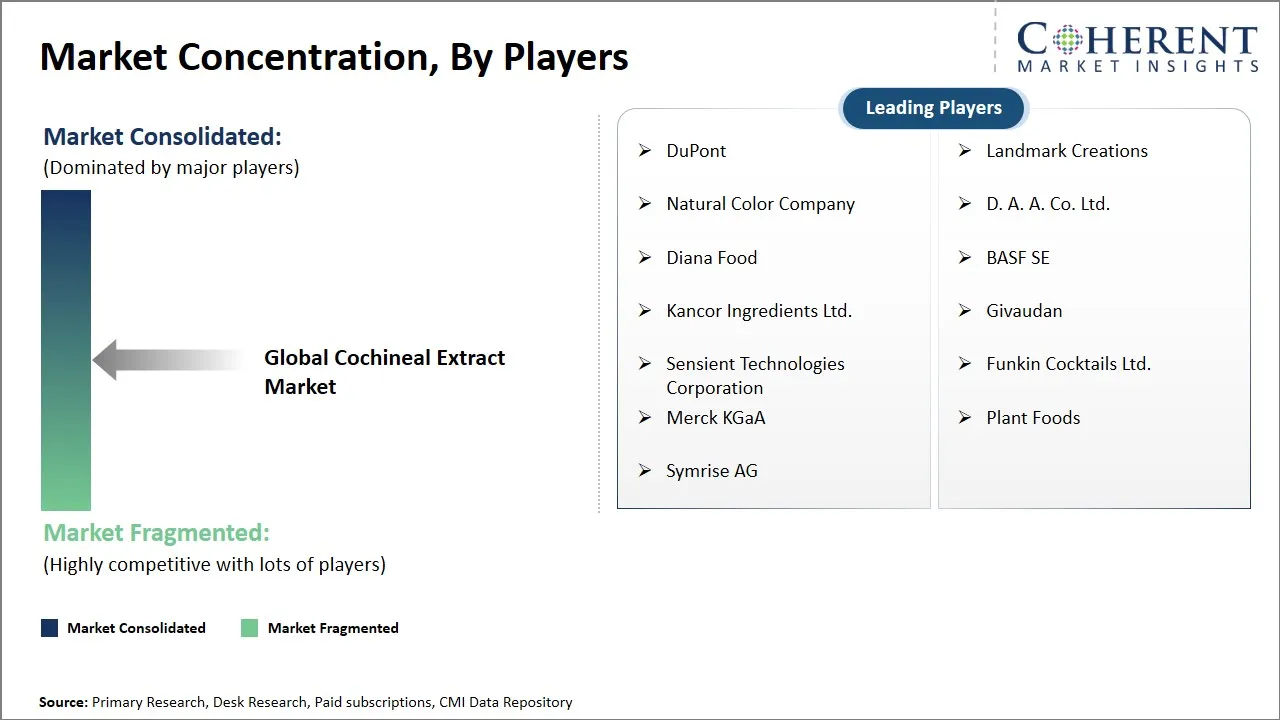
| Companies covered: | DuPont, Landmark Creations, Natural Color Company, D. A. A. Co. Ltd., Diana Food, BASF SE, Kancor Ingredients Ltd., Givaudan, Sensient Technologies Corporation, Funkin Cocktails Ltd., Merck KGaA, Plant Foods, and Symrise AG | ||
| Growth Drivers: |
| ||
| Restraints & Challenges: |
| ||
Cochineal Extract Market Dynamics
Cochineal Extract Market Driver - Rising Demand for Natural Food Colorants due to Health Awareness
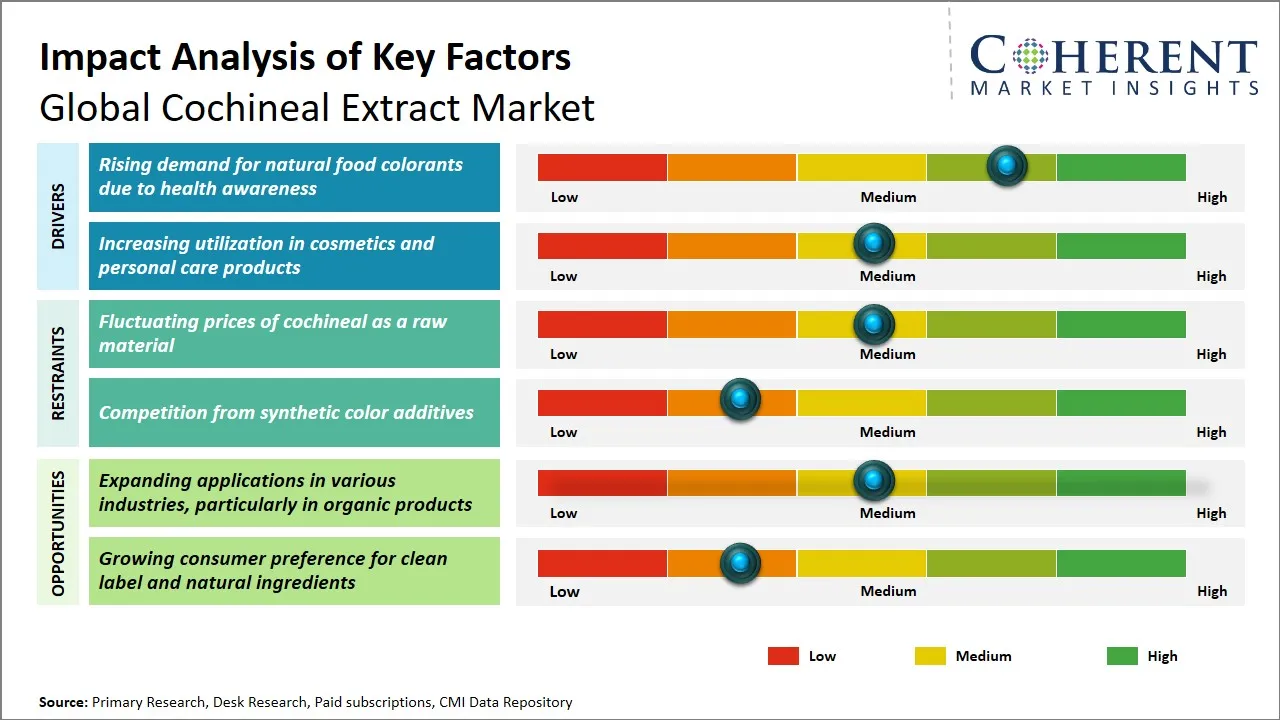
This has largely driven the consumption of natural food colorants such as cochineal extract in the recent years due to the growing popularity of clean-label and naturally derived ingredient among consumers. The increased awareness of health, along with an increasing focus on synthetic additives and their possible side effects is compelling manufacturers to consider safer options, which are based on plants and insects. Cochineal extract, with its natural color of bright red and natural origin is rapidly gaining popularity among food and beverage manufacturers in their pursuit of consumer demands of transparency and naturalness. This is especially noticeable in the items that include confectionery, dairy, beverages, and processed food where the visual appeal is highly significant during the purchase decisions.
For example, Coca-Cola has substituted unnatural colorants with natural colorants, such as cochineal extract, in certain of its best-selling products to match its strategy of providing more transparent and healthier products. This action indicates the trend towards the popularity of natural ingredients where health-conscious customers are in need of greater transparency in product labeling.
Cochineal Extract Market Opportunity - Expanding Applications in Organic and Natural Product Industries
The global cochineal extract market has been enjoying a high growth due to the rising usage in various industries especially the growing organic and natural products industries. Cochineal extract is a natural resource and is used as a red dye, which is highly sought after as a clean-label food coloring with a high biodegradation rate, thus a good substitute to synthetic colorants. The main driving force behind this demand wave is the increasing popularity of organic, non-toxic and environmentally safe ingredients in food, cosmetics as well as pharmaceuticals among consumers. Cochineal extract is also growing in popularity in the food and beverage industry in the coloring of organic and health-conscious products including beverage, confectionary, dairy and bakery products, where regulatory authorities are increasingly focusing on using natural additives.
For example, in 2021, the company Hain Celestial Group, which has established its name in the field of producing organic food products, began to add cochineal extract to its organic juices and snacks to target an increasing number of people who are concerned with natural ingredients.
Analyst Opinion (Expert Opinion)
- There is an imminent revival in the market of cochineal extracts, as the rising demand of natural colorants in food and cosmetics is accompanied by the rising consumer concern about the use of artificial additives. The findings of the Global Natural Colorants Conference (2023) and the International Beauty and Personal Care Expo (2022) highlighted some of the key trends, with such companies as D.D. Williamson and Sensient being among the first to promote cochineal extract as the alternative to synthetic dyes.
- The recent marketing campaign by D.D. Williamsons which focuses on the sustainable sourcing and the bright colors of cochineal extract can be considered as an indication of the shift in the industry toward transparency and ethical standards. Conferences held in these areas focused on the issue of education regarding the safety and efficacy of cochineal, which is essential due to the changes in perceptions of insect-derived products.
- The firms that will invest in educating consumers and using social media references will probably pick up. Finally, further development of the cochineal extract business will rely on the ongoing innovation, the successful communication of value and the alignment with the emerging demand of the consumers towards authenticity in sourcing colors.
Speak to the analyst
Want personalized insights?
Take the findings above to one of our principal consultants, or have the report rebuilt around the segments, geographies and competitors you actually track.
Market Segmentation
- Grade Insights (Revenue, USD Bn, 2021 - 2033)
- Food Grade
- Pharmaceutical Grade
- Industrial Grade
- Product Type Insights (Revenue, USD Bn, 2021 - 2033)
- Cochineal Powder
- Cochineal Liquid Extract
- Cochineal Colorants
- Others (e.g., cochineal granules)
- Application Insights (Revenue, USD Bn, 2021 - 2033)
- Food & Beverages
- Cosmetics & Personal Care
- Pharmaceuticals
- Textiles
- Others (e.g., animal feed, paint)
- Regional Insights (Revenue, USD, 2021 - 2033)
- North America
- U.S.
- Canada
- Latin America
- Brazil
- Argentina
- Mexico
- Rest of Latin America
- Europe
- Germany
- U.K.
- Spain
- France
- Italy
- Russia
- Rest of Europe
- Asia Pacific
- China
- India
- Japan
- Australia
- South Korea
- ASEAN
- Rest of Asia Pacific
- Middle East
- GCC Countries
- Israel
- Rest of Middle East
- Africa
- South Africa
- North Africa
- Central Africa
- North America
- Key Players Insights
- DuPont
- Landmark Creations
- Natural Color Company
- A. A. Co. Ltd.
- Diana Food
- BASF SE
- Kancor Ingredients Ltd.
- Givaudan
- Sensient Technologies Corporation
- Funkin Cocktails Ltd.
- Merck KGaA
- Plant Foods
- Symrise AG
Sources
Primary Research Interviews
- CEO – Leading Cochineal Extract Producer (e.g., Biocon Del Peru or Agroincorp Peru)
- Supply Chain Director – Major Natural Colorants Distributor (e.g., DDW The Color House)
- Production Lead – Carmine Manufacturer in Peru (e.g., Proagrosur Perú)
- Sustainability Officer – Natural Food Colors Certification Authority (e.g., NATCOL sustainability leads)
Stakeholders
- Manufacturers
- End-use Sectors
- Food & Beverage Industry (Natural red colorants in beverages, confectionery, dairy)
- Cosmetics & Personal Care Producers (Lipsticks, blushes, skincare)
- Pharmaceuticals (Anti-inflammatory, antiviral applications)
- Regulatory & Certification Bodies (e.g., FDA for cochineal extract, EFSA for E 120 carmines)
- E-commerce Platforms and Retailers (Alibaba, IndiaMart, Sigma-Aldrich equivalents for natural dyes)
- Technology Integration Players: Advanced extraction tech firms (e.g., ultrasound-assisted pigment producers)
Databases
- UN Comtrade Database (HS codes for natural colors and extracts)
- India Import Export (EXIM) Database (Cochineal imports for food colors)
- USGS Mineral Commodity Summaries (Related natural pigments if applicable; primary trade stats via Comtrade)
- Eurostat Trade Statistics for Chemicals (E 120 carmines and extracts)
Magazines
- Food Processing Magazine – Trends in natural food colorants supply
- Cosmetics Design – Cochineal in beauty product innovations
- Personal Care Magazine – Natural pigments in cosmetics
- Industrial Minerals – Market dynamics for cochineal carmine
- Nutraceuticals World – Applications in pharma and supplements
Journals
- Journal of Food Science – Cochineal extract in food stability
- Food Chemistry – Extraction techniques for carminic acid
- Journal of Hazardous Materials – Allergenicity and safety of cochineal
- Dyes and Pigments – Purification and synthesis methods
- Resources Policy – Global supply chain for insect-derived dyes
Newspapers
- The Wall Street Journal – Global demand for natural colorants
- The Guardian – Ethical sourcing in cochineal production
- Business Standard (India) – Natural dye imports and Asia market growth
- Chemical Week – Supply issues in natural pigments
- Reuters – Price volatility in carmine extracts
Associations
- NATCOL (Natural Food Colors Association)
- International Food Additives Council
- Natural Products Association
- Society of Cosmetic Chemists
- European Food Safety Authority (EFSA) Liaison Groups
- Green Chemistry Institute (Sustainable natural colorants)
Public Domain Sources
- FDA – Guidelines for cochineal extract and carmine handling
- European Commission – REACH and E 120 regulations on carminic acid
- World Health Organization (JECFA) – Safety standards for cochineal exposure
- USGS – Trade assessments for natural dyes (via Comtrade links)
- OECD – Chemical trade and sustainability reports for natural extracts
Proprietary Elements
- CMI Data Analytics Tool, Proprietary CMI Existing Repository of information for last 8 years.
Get access to 250+ pages report
Every segment, forecast, competitor profile and data table behind the analysis above — available for instant download.
- ESOMAR Member
- ISO 9001:2015 Certified
- D-U-N-S Registered
- GDPR & CCPA Compliant
Missing comfort of reading report in your local language? Find your preferred language:
Transform your Strategy with Exclusive Trending Reports
Frequently Asked Questions
The global cochineal extract market is estimated to be valued at USD 52.45 Bn in 2026 and is expected to reach USD 80.97 Bn by 2033.
It is a natural red dye from the Dactylopius coccus insect used in food, beverages, cosmetics, and pharmaceuticals.
Dry ground extract, carmine pigment, and liquid concentrate are the main forms of cochineal extract.
The CAGR of global cochineal extract market is projected to be 6.4% from 2026 to 2033.
Rising demand for natural food colorants due to health awareness and increasing utilization in cosmetics and personal care products are the major factors driving the growth of the global cochineal extract market.
Fluctuating prices of cochineal as a raw material and competition from synthetic color additives are the major factors hampering the growth of the global cochineal extract market.
In terms of grade, food grade is estimated to dominate the market revenue share in 2026.