

Global Colony Counters Market Size and Forecast – 2026 To 2033
The global colony counters market is expected to grow from USD 486.7 Mn in 2026 to USD 812.9 Mn by 2033, registering a compound annual growth rate (CAGR) of 7.6% from 2026 to 2033. The market for colony counters is poised for significant expansion, fueled by growing global burden of antimicrobial resistance (AMR) and surging demands for rapid microbiological testing by clinical, pharmaceutical, and food safety laboratories.
A study in the Lancet reports that antimicrobial resistance (AMR) was linked to an estimated 4.71 million deaths around the world in 2021, out of which 1.14 million have been caused by antimicrobial resistance (AMR) directly. Estimates suggest that deaths from antimicrobial resistance (AMR) will increase to nearly 1.91 million per year by 2050, with total deaths being around 8.22 million.
(Source: The Lancet)
Additionally, the World Bank estimates that antimicrobial resistance (AMR) could result in USD 1 trillion in additional healthcare costs by 2050 and annual global GDP losses ranging from USD 1 trillion to USD 3.4 trillion by 2030, highlighting its severe economic impact.
(Source: World Bank)
Key Takeaways of the Global Colony Counters Market
- Automatic colony counters are projected to hold 42.0 % of the global colony counters market share in 2026, making it the dominant product type segment, especially in North America, where automated microbiology workflows have been widely implemented in pharmaceutical manufacturing, hospital microbiology labs and food testing laboratories. North America labs are increasingly adopting AI-powered colony identification, digital imaging and automated microbial counting tools to enhance test reproducibility and contamination monitoring. For instance, the U.S. FDA's guidance on the acceptability of computerized systems and electronic records is enabling increased deployment of digitally integrated microbiology testing platforms in regulated laboratory settings. (Source: Code of Federal Regulations)
- Benchtop colony counters are projected to hold 73.0 % of the global colony counters market share in 2026, making it the dominant modality segment, across Asia Pacific where rapidly expanding pharmaceutical quality control laboratories, industrial microbiology units and biotechnology manufacturing operations demand high volume microbial analysis solutions with sophisticated imaging accuracy and automated report generation features. Smaller benchtop systems are in greater demand for quality control applications for the high-volume processing of multiple culture plates, with an emphasis on 'high-throughput' methodology for delivering standardized laboratory procedures and microbiological quality assurance. For instance, Singapore Health Sciences Authority (HSA) define GMP compliance and pharmaceutical quality system requirements to support a sophisticated microbiological testing infrastructure in all regulated pharmaceutical laboratories in the region. (Source: Government of Singapore)
- Pharmaceutical and biotechnology testing is projected to hold 34.0 % of the global colony counters market share in 2026, making it the dominant application segment, particularly in Europe attributed to the existence of a well-established biologics manufacturing environment, mature pharma microbiology network infrastructure and high standards for contamination monitoring in sterile drug manufacturing operations. European pharma and biotech labs are adopting automated colony counting systems for microbial limit testing, environmental monitoring, and aseptic manufacturing quality control processes. For instance, the European Commission's EudraLex Volume 4 GMP guidelines specify requirements for microbiological quality and control of contamination for production of medicinal products in the EU. (Source: European Commission)
- North America maintains its dominance with an expected share of 38.0 % in 2026, bolstered by the rising utilization of automated microbiology and contamination detection and monitoring systems in pharmaceutical manufacturing, biotech production, and clinical laboratory settings in the U.S. and Canada. Laboratories throughout North America are continuously adopting AI-enabled microbial imaging and automated colony counting systems to enhance microbiological QA programs and laboratory productivity. For instance, U.S. Centers for Disease Control and Prevention (CDC) provides common protocols of microbiological lab tests and implements the antimicrobial resistance test methods for promoting more extensive application of automated microbial analysis and colony counter in laboratory. (Source: Centers for Disease Control and Prevention)
- Asia Pacific is expected to exhibit the fastest growth with an estimated contribution of 28.0 % share in 2026, fueled by the accelerating proliferation of microbiological quality testing facilities throughout the pharmaceutical manufacturing, biotech research and food safety laboratory markets in China, India, Japan and Southeast Asia. The laboratories in the region are adopting greater levels of automation in microbial analysis procedures and digital colony counting systems to improve contamination monitoring, lab automation and industrial microbiological testing methods. For instance, Australian Therapeutic Goods Administration (TGA) regulates pharmaceutical manufacturing quality requirements, which are implemented to PIC/S GMP standards, providing assistance for growing usage of automated microbiology and microbial enumeration systems in pharmaceutical laboratories of the region. (Source: Therapeutic Goods Administration)
- Growing demand for rapid microbial testing in cell and gene therapy manufacturing: As the cell therapy, biologics and regenerative medicine production fields grow, there are emerging niche growth opportunities for advanced colony counters with the capability to support rapid microbial contamination testing and sterility testing workflows. Biotechnology laboratories are more frequently utilizing automated microbial enumeration systems to support more accurate testing and consistent aseptic manufacturing conditions.
- Increasing adoption of automated microbiology systems in environmental and water testing laboratories: Automated colony counters are being applied in the environmental monitoring and industrial water testing sectors for microbial contamination testing, wastewater monitoring and hygiene validation applications. The increasing need for the standardization of microbial testing procedures and digital laboratory traceability is driving the demand for high throughput colony analysis systems within environmental microbiology laboratories.
Segmental Insights
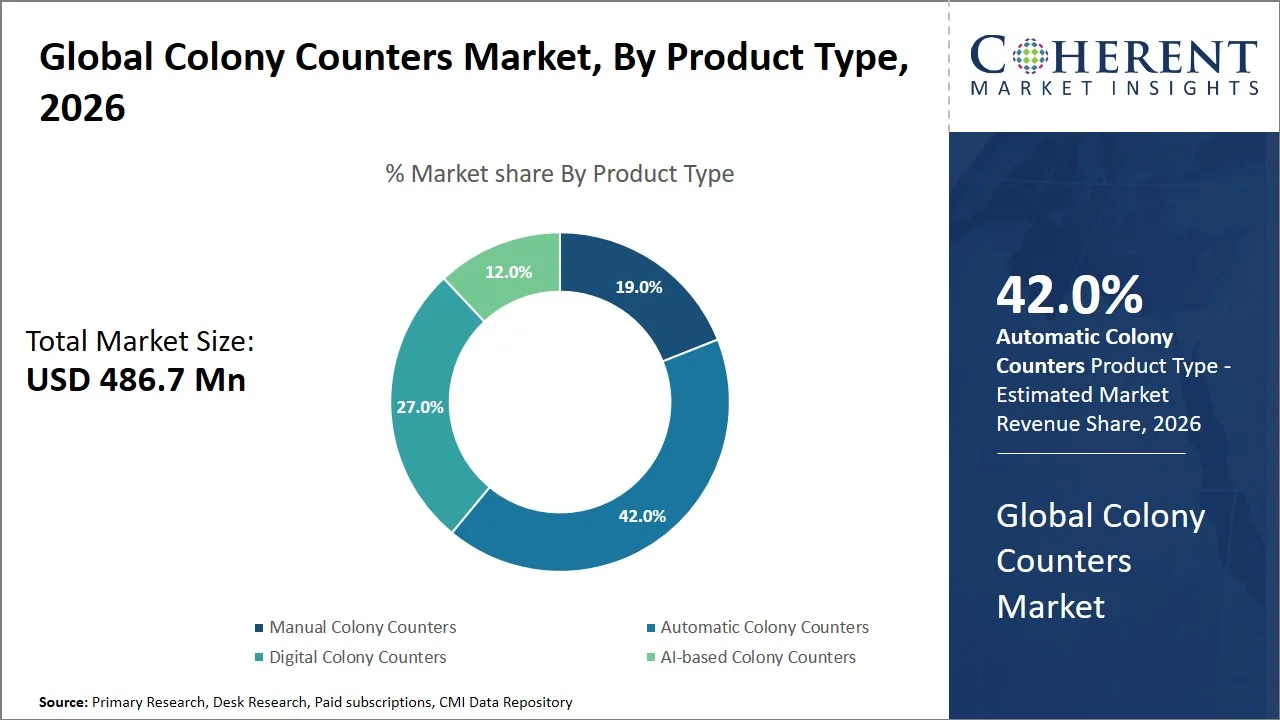
Why Does the Automatic Colony Counters Segment Dominate the Global Colony Counters Market?
Automatic colony counters are projected to hold a market share of 42.0% in 2026, owing to their role in ensuring fast microbial enumeration, enhanced counting accuracy and uniform microbiology methods employed in pharmaceutical, clinical and food safety labs. The digital imaging, AI-enabled colony recognition and automated data reporting features offered by these systems help eliminating errors arising from manual reading and enable large number of microbial samples to be tested. The integration with LIMS platforms and real-time image processing applications boost their efficacy in microbiological quality assurance programs. For instance, Interscience offers Scan Ai, a line of AI-enabled automated colony counters using artificial intelligence enabled colony identification and automated inhibition zone reading technologies for pharmaceutical and food microbiology laboratories. It exemplifies the industry trend towards intelligent automated colony counting systems with its capability to enable rapid microbial analysis, automated image analysis and standardized colony counting workflow. (Source: Interscience)
- Current Industry Events of 2026
- Market Size Estimation
- Regional Breakdown
- Competitive Landscape
- Customer Intelligence
- Segmental Analysis
- Pricing Analysis
- Key Market Drivers, Challenges & Future Trends
- Customized Insights Section
Why Do Benchtop Colony Counters Represent the Largest Modality Segment in the Global Colony Counters Market?
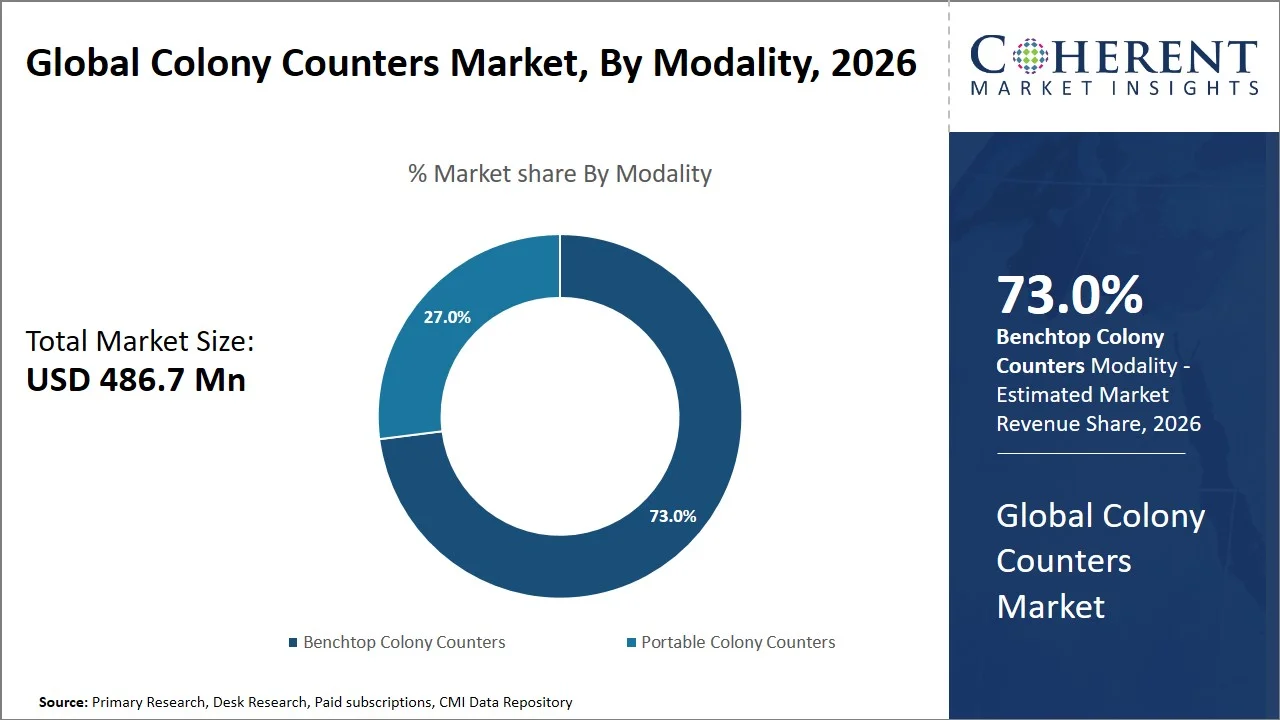
Benchtop colony counters are projected to hold a market share of 73.0% in 2026, as they cater to high throughput microbiology laboratories in need of processing large number of culture plates in short time with better accuracy. The digital imaging, colony identification by auto recognition and integration with laboratory information management systems are also enhancing the functionality and application of these colony counters. The stable platform design which can handle colonies with diverse morphology has increased the use of these colony counters in applications of pharmaceutical QC, clinical diagnosis and food microbiology. For instance, Oxford Optronix provides GelCount, a benchtop colony counter system for automated imaging, enumeration and characterization of mammalian cell colonies, spheroids, and organoids within high-throughput laboratory workflows. This system enables automated colony identification, digital image analysis, and is compatible with multi-well plates making it ideal for leading microbiology and cell analysis laboratories. (Source: Oxford Optronix)
Pharmaceutical and Biotechnology Testing Segment Dominates the Global Colony Counters Market
The pharmaceutical and biotechnology testing segment is projected to hold a market share of 34.0% in 2026, driven by a rising demand for accurate microbial enumeration, contamination detection and sterility verification in pharmaceutical manufacturing and biologics production facilities. Colony counters find widespread usage in drug microbiology laboratories for monitoring the manufacturing environment, microbial limits testing and quality control processes in need of uniform and repeatable microbial detection. Adoption of integrated automated microbiology platforms and digital laboratory systems in biologics and cell therapy research is also boosting market prospects for contemporary colony counting systems. For instance, the World Health Organization (WHO) Laboratory Biosafety Manual recommends uniform microbiological procedures, microbial culture care and contamination checks for diagnostic, pharmaceutical and research laboratories. Worldwide laboratory standards such as the WHO manual are facilitating increased use of automation colony counters and digital microbial counting systems for precise microbiology testing procedures. (Source: World Health Organization)
Currents Events and their Impact
Current Events | Description and its Impact |
U.S. FDA Expands Focus on Rapid Microbiological Methods and Digital Quality Testing in Pharmaceutical Manufacturing (November 2025) |
|
U.S. FDA Expands Implementation of Digital Laboratory Data Integrity and Electronic Records Compliance in Microbiology Testing (May 2026) |
|
(Source: Food and Drug Administration, Code of Federal Regulations)
Global Colony Counters Market Dynamics
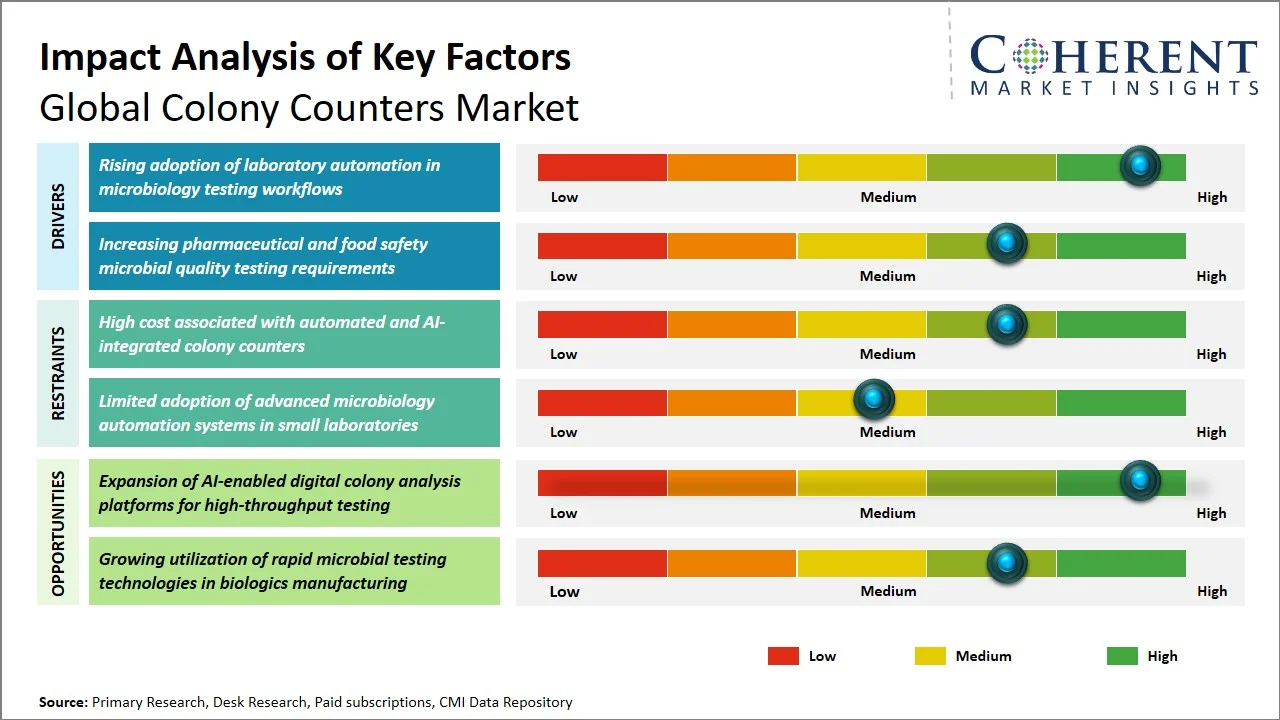
Market Drivers
Rising adoption of laboratory automation in microbiology testing workflows
The adoption of automation techniques in microbiology laboratories are playing a key role in significantly fueling the demand for colony counters across the globe. Automation of the colony counting process helps in reducing the time consumed during the extremely time-consuming task of colony counting and reduces the number of errors generated during the manual counting process, thus resulting in an enhanced level of accuracy and reproducibility in the microbial enumeration process. Advanced systems present in the modern colony counters allow real time image analysis and enumeration of colonies and their subsequent capturing. The system generates reports allowing archiving of data along with capturing of images. Modern day colony counters are capable of providing rapid reports by using the powerful integrated software, without any manual intervention.
Moreover, the colony counter integrated with the automation platform helps providing accurate and rapid enumeration reports by working seamlessly with other laboratory automation instruments and information systems. This helps to ensure standardized testing protocols and improving workflow in the laboratories and thus anticipated to support the widespread adoption of colony counters. For instance, BioMrieux provides integrated microbiology automation solutions that enhance microbial detection, accelerate laboratory workflow, and support antimicrobial stewardship programs through modern digital microbiology systems. The bioMrieux's dedication to automation in microbiology and quick microbial analysis demonstrates the ongoing shift in the industry to intelligent, high-speed colony analysis platforms in pharmaceutical and clinical laboratories. (Source: BioMrieux)
Increasing pharmaceutical and food safety microbial quality testing requirements
Rising emphasis on control of microbial contamination and standardization of microbiological quality assurance procedures in pharmaceutical and food manufacturing industries are projected to be a key factor responsible for growth of colony counter demand worldwide. Pharmaceutical and food testing laboratories are increasingly implementing automated colony counter systems to adhere to the stringent microbiological testing standards, avoid human errors and to derive accurate microbial counts. Automated colony counters deliver rapid microbial enumeration, digital traceability of data and can be integrated with standardized laboratory procedures which make their implementation an inevitable component of microbiology quality control in research laboratories. For instance, the European Commission has revised the EU GMP Annex 1 regulations relating to sterile medicinal product manufacturing, focusing on contamination control strategies, environmental monitoring and microbiological quality assurance of pharmaceutical manufacturing sites. These regulations are leading to the widespread implementation of automated colony counting and digital microbial enumeration systems for reproducible microbiological testing and contamination monitoring within pharmaceutical laboratories throughout Europe. (Source: European Commission)
Emerging Trends
- Integration of AI and Digital Imaging Technologies in Automated Colony Counters: Artificial intelligence, computer algorithms and advanced digital imaging technology are being used more in colony counter design to enhance the precision of colony detection and minimize user interpretation errors. Such developments are providing real time microbial monitoring, automated results generation and linking to laboratory information management systems (LIMS) in pharmaceutical, food safety and clinical microbiology labs.
- Growing Adoption of High-Throughput Automated Microbiology Platforms: Laboratories are gradually moving to high throughput automated colony counters to process large number of samples with a shorter workflow. This also provides uniform microbial testing protocol. This move towards automation is significant in pharmaceutical quality control and food microbiology laboratories, as contamination monitoring and reproducibility in microbial counting are very important.
Regional Insights
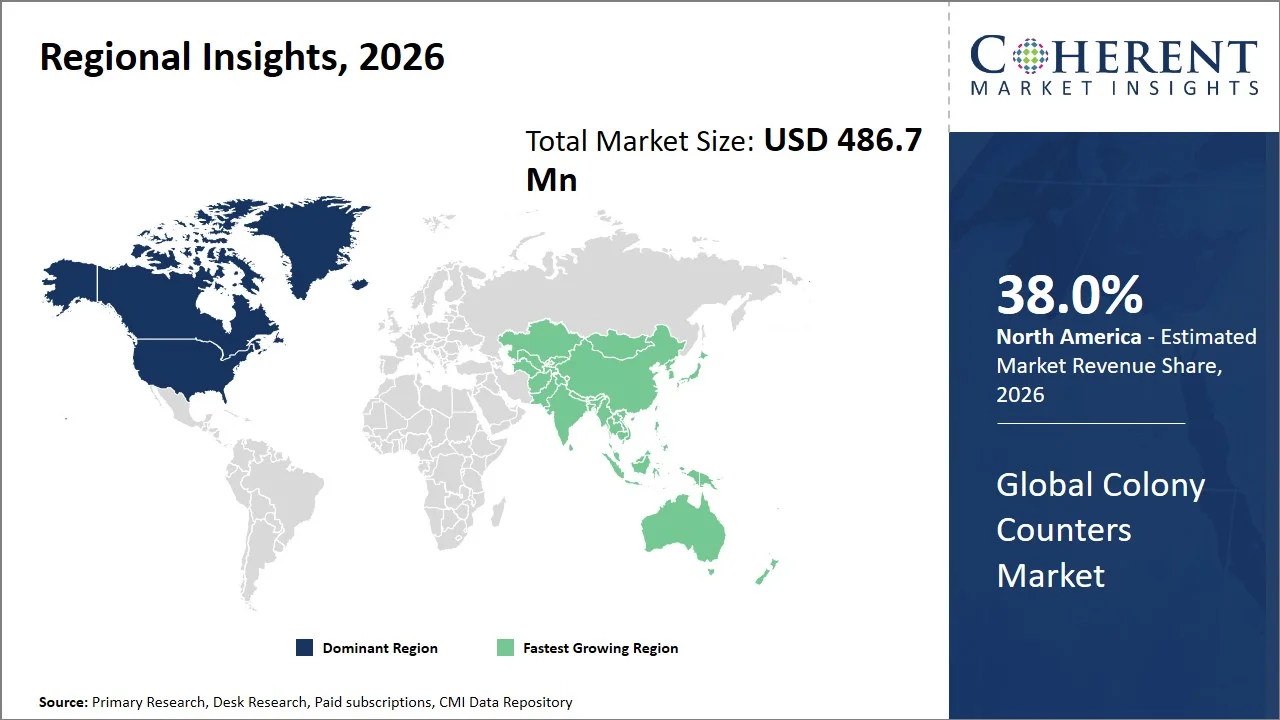
Why is North America a Strong Market for Colony Counters?
North America leads the global colony counters market, accounting for an estimated 38.0% share in 2026, attributed to robust healthcare industry infrastructure and developed market conditions that widely support the microbiology and pharmaceutical research industry. The global market leaders operating in biotechnology and pharmaceutical industries like Thermo Fisher Scientific Inc., Merck KGaA and Bio-Rad Laboratories ensure the advanced product offerings and technological innovation in the North America colony counters market. For instance, Thermo Fisher Scientific offers laboratory automation, colony counting, and microbe analysis systems with digital imaging and laboratory workflow integrations for pharmaceutical, clinical, and food microbiology. (Source: Thermo Fisher Scientific)
Additionally, the policies in the region ensure greater quality control in food safety, clinical diagnostics and environmental monitoring promote immense use of digital and automated colony counters. For instance, U.S. Food and Drug Administration (FDA) defines the microbiological examination and microbial limits testing standards for non-sterile pharmaceutical products in the USP (United States Pharmacopeia) <61> and <62>, standards which are used within the pharmaceutical quality assurance compliance guidelines. These pharmaceuticals standards are encouraging the increased use of automated colony counters for microbial enumeration, contamination control and microbiology testing in pharmaceutical and clinical laboratories in North America. (Source: Food and Drug Administration)
Why Does the Asia Pacific Colony Counters Market Exhibit High Growth?
The Asia Pacific colony counters market is expected to exhibit the fastest growth with an estimated contribution of 28.0% share to the market in 2026, owing to rapid industrialization, rising healthcare spending, increasing biotechnology sectors in developing economies like China, India, and South Korea. The market also benefits from supportive government initiatives towards strengthening of the medical research infrastructure and safety regulations in food.
For instance, the Food Safety and Standards Authority of India (FSSAI) has issued regulation for microbiological testing guidelines including food products under Appendix B of the Food Safety and Standards regulations including requirements for aerobic plate count and yeast & mold enumeration requirements. (Source: Food Safety and Standards Authority of India) These regulations are contributing to the increased use of automated colony counters and digital microbial analysis systems for microbiological quality testing to be implemented across food safety laboratories in Asia Pacific.
Global Colony Counters Market Outlook for Key Countries
Why is the U.S. Leading Innovation and Adoption in the Colony Counters Market?
The U.S. has been at the forefront of innovation and implementation of colony counters as a result of its robust adoption of fully integrated automated microbiology workflows in pharmaceutical manufacturing, clinical laboratories and food safety testing laboratories. The country boasts a mature laboratory automation ecosystem with extensive adoption of AI-enabled microbiological analysis platforms, digital imaging and laboratory information management system (LIMS) -integrated microbiology apparatus in testing facilities. U.S. microbiology laboratories also prioritize rapid microbial detection techniques, large sample throughput and standardized quality assurance measures, propelling the development of automation and intelligent colony analysis systems away from manual colony counting to greater adoption of colony counter technologies. The proliferation of biotechnology research and pharmaceutical quality assurance operations across the country further continues to drive demand for high-end automated colony counters.
Is the U.K. a Favorable Market for Colony Counters?
The U.K. is a promising market for colony counters driven by high penetration of automated microbiology platforms among pharmaceutical quality control testing, hospital laboratory testing and food microbiology application segments. The country is characterized by mature laboratory diagnostics ecosystem and expanding implementation of digital imaging systems and AI-assisted microbial identification platforms for colony enumeration in batch processing. The U.K. laboratories focus on contamination control, rapid microbiological testing and automation integration to enhance testing reproducibility and lab productivity. Additionally, the rising concern for quality assurance in pharmaceutical manufacturing and antimicrobial resistance monitoring contribute to maintain the growth of advanced automated colony counter systems in the country.
Is China Emerging as a Key Growth Hub for the Colony Counters Market?
The colony counters market is witnessing robust expansion within China owing to modernization of microbiological laboratories across industries such as pharmaceutical manufacturing, food safety testing and biotechnology research. The rapidly transforming Chinese microbiology laboratories are focused on adopting modern automated microbial analysis systems based on digital imaging and smart laboratory workflow platforms to maximize microbiological test throughput and consistency. Chinese laboratories are focusing on deploying high-throughput colony counting platforms for microbial contamination detection, quality control and industrial microbiology. Furthermore, increasing internal growth of the biotechnology industry and rising installation of laboratory automation equipment are driving demand for automated colony counter systems in China.
Why Does Germany Top the Europe Colony Counters Market?
Germany dominates the Europe colony counters market as a result of the progressive implementation of integrated automated microbiology systems in pharmaceutical manufacturing, industrial microbiology and food quality testing laboratories. Germany supports a more complex setup of laboratory instrumentation, with an increasing use of digital colony analysis systems and fully automated microbial enumeration platforms to simplify day to-day microbiology QC practices. European industrial microbiology laboratories are embracing a quantitative paradigm to microbiological testing, contamination control and high throughput laboratory automation to improve reproducibility and cut costs. In addition, the European investment in pharmaceutical process validation (EU pharmaceutical R&D investment recorded a 5.4% CAGR between 2015–2024, while the European API market was valued at nearly USD 45.4 billion in 2024) and industrial microbiology R&D sustains the growth in demand for automated colony counters systems.
Is Colony Counters Market Developing in Japan?
Japan is an emerging market for colony counters as automated microbiology systems are becoming more widely adopted for pharmaceutical quality assurance, biotechnological research and food hygiene laboratories. Japanese laboratories are adopting more precision-microbial analysis systems and portable automated colony counting systems aimed at standard laboratory practices and contamination monitoring. Japan is also investigating high performance microbiological testing and digital laboratory streamlining to improve operational reproducibility for clinical and industrial microbiology. Moreover, increasing penetration of smart laboratory automation systems has driving the demand for sophisticated colony analysis and microbial enumeration systems in Japan.
Regulatory Landscape Governing the Global Colony Counters Market
Region | Authority & Classification | Approval Pathway | Key Regulatory Insight |
North America | U.S. Food and Drug Administration (FDA) – Laboratory instruments and microbiology diagnostic devices | FDA 510(k) clearance pathway for microbiology laboratory equipment and diagnostic systems | Colony counters used within clinical and diagnostic microbiology workflows must comply with FDA Quality System Regulation (QSR), software validation and laboratory device performance standards for microbial testing applications. |
Europe | European Medicines Agency (EMA) and European Commission – Laboratory and in-vitro diagnostic device regulatory framework | CE marking under EU IVDR (In Vitro Diagnostic Regulation) and MDR compliance requirements | Automated colony counters integrated into diagnostic microbiology workflows must comply with EU IVDR requirements related to analytical performance, software traceability, laboratory safety and device documentation standards. |
Asia Pacific | National Medical Products Administration (NMPA), China and Pharmaceuticals and Medical Devices Agency (PMDA), Japan | Medical device registration and laboratory equipment compliance approval pathways | Regulatory agencies across Asia Pacific increasingly emphasize microbiology laboratory standardization, software-integrated laboratory systems and validation of automated microbial testing equipment for pharmaceutical and healthcare applications. |
Latin America | ANVISA, Brazil – Medical laboratory equipment and microbiology testing device regulations | Product registration and local regulatory conformity assessment procedures | Growing regulatory focus on pharmaceutical microbiology testing, hospital infection control and laboratory accreditation is increasing compliance requirements for automated colony counting systems across Latin America. |
Middle East & Africa | Saudi Food and Drug Authority (SFDA) and Gulf Health Regulatory Authorities | Medical device import approval and laboratory equipment regulatory registration | Expanding healthcare laboratory infrastructure and increasing investment in microbiological quality testing are supporting adoption of internationally compliant automated colony counter technologies across the region. |
How is the expansion of AI-enabled digital colony analysis platforms for high-throughput testing creating new growth opportunities in the global colony counters market?
The growing use of AI advancements in digital colony counters for high-throughput microbiological testing is creating lucrative opportunities in the market owing to the improvement in lab productivity, microbial detection accuracy and real time data processing. More recently, many advanced AI algorithms are being incorporated with computerized colony counters to recognize overlapping colonies, minimize human interpretation error, and expedite microbial enumeration in the pharmaceutical, clinical, and food safety laboratories. These systems further enable cloud-based reporting, digital traceability, and direct integration with laboratory information management systems (LIMS), thus enabling rapid, reproducible microbiological workflows.
For instance, in December 2024, the new version 9 Launch of Interscience ScanStation Series included an upgraded realtime incubation & colony counting program with digital observation & automated analysis designed to enhance microbiological safety & laboratory automation. (Source: Interscience) The increasing shift to AI-supported high-throughput screening platforms is predicted to encourage early uptake of next-generation automated colony counters in pharmaceutical manufacturing, clinical diagnostics and food microbiology.
Market Players, Key Development, and Competitive Intelligence
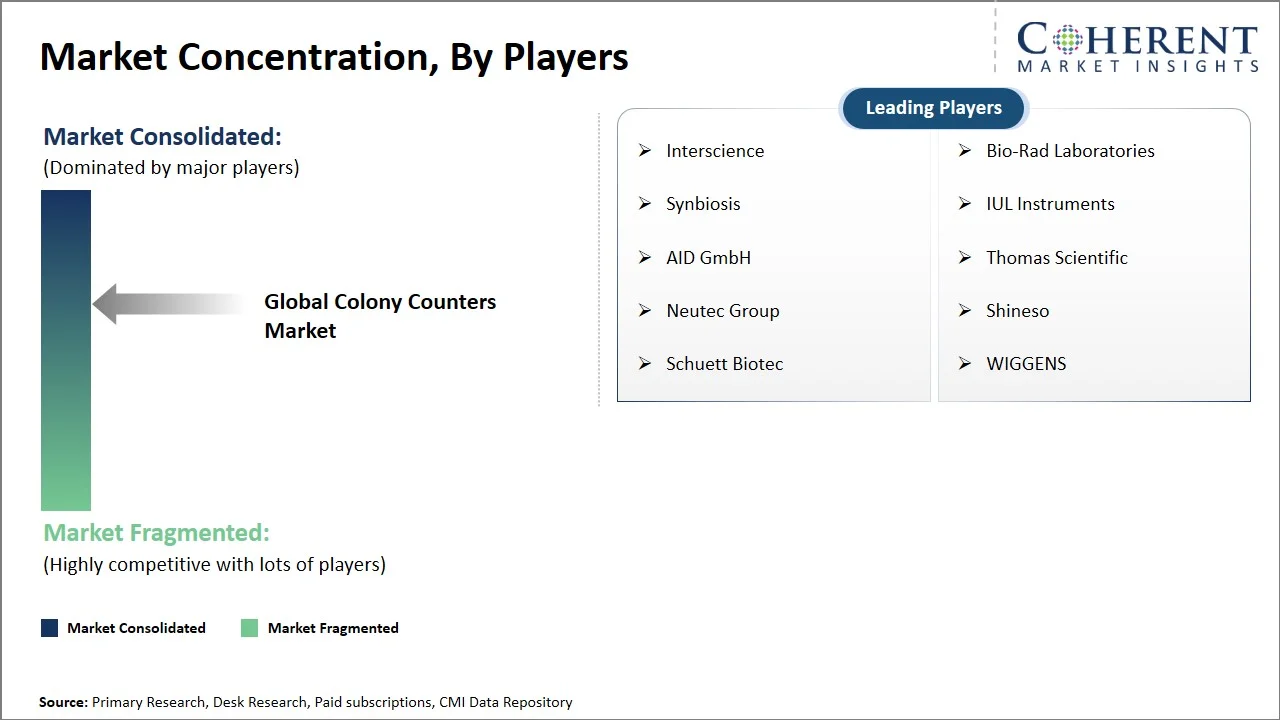
Key Developments
- In April 2026, FSTest introduced the MC1000 Automatic Colony Counter to help increase efficiency in lab procedures by speeding up the analysis process. This is in light of an increasing trend within the industry for the use of automated systems that assist with microbiological testing in order to avoid human error and increase speed.
- In October 2023, Shimadzu Diagnostics Corporation announced a new and improved colony counter powered by AI, named BactLAB. The new solution aims to streamline microbial quality control processes, such as bacterial colony counts. The tool combines cloud computing with AI and is capable of quickly and precisely analyzing colonies for use in food hygiene and microbial testing. This solution demonstrates a trend in the industry toward utilizing colony counters powered by AI.
Competitive Landscape
The global colony counters market is moderately competitive, dominated by established laboratories equipment manufacturers that are leveraging automation, AI-enabled microbial analysis and digital imaging technology to optimize microbiology workflow. Global microbiology industry competition has gradually shifted to high throughput colony detection and identification accuracy, cloud based microbial data management, automated result reporting, LIMS integration. Compact benchtop systems, real time microbial monitoring and advanced traceability solutions for pharmaceutical, food safety and clinical microbiology have also emerged as key competitive factors. Key focus areas include:
- Development of AI-enabled and automated colony counting platforms
- Integration of cloud connectivity and laboratory data management systems
- Enhancement of real-time microbial monitoring and traceability capabilities
- Expansion of high-throughput microbiology testing and digital imaging solutions
- Investment in compact, rapid and user-friendly automated laboratory systems
Market Report Scope
Colony Counters Market Report Coverage
| Report Coverage | Details | ||
|---|---|---|---|
| Base Year: | 2025 | Market Size in 2026: | USD 486.7 Mn |
| Historical Data for: | 2020 To 2024 | Forecast Period: | 2026 To 2033 |
| Forecast Period 2026 to 2033 CAGR: | 7.6% | 2033 Value Projection: | USD 812.9 Mn |
| Geographies covered: |
| ||
| Segments covered: |
| ||
| Companies covered: | Interscience, Bio-Rad Laboratories, Synbiosis, IUL Instruments, AID GmbH, Thomas Scientific, Neutec Group, Shineso, Schuett Biotec, and WIGGENS | ||
| Growth Drivers: |
| ||
| Restraints & Challenges: |
| ||
Analyst Opinion (Expert Opinion)
- In the coming years, the future outlook for the colony counters market will be largely fueled by laboratory automation, computer-enhanced microbial analysis, and rising deployment of digital microbiology processes throughout pharmaceutical, clinical and food safety testing applications. The sector is steadily moving away from traditional manual colony counting toward high-speed, automated methodologies that enhance analytical precision, minimize technician error and facilitate microbial detection in real time. Mounting governmental regulation regarding microbiological standards and antimicrobial resistance monitoring is also poised to drive additional global uptake of sophisticated automated colony counters.
- The maximum opportunities will probably exist in AI-enabled automated colony counters for pharmaceutical quality control and food microbiology applications in the U.S., Germany, China and Japan. In particular, pharmaceutical manufacturing and food safety laboratories in North America and Asia Pacific are adopting rapid microbial testing tools and systems at an accelerated pace in order to enhance regulatory compliance, quality assurance, operational efficiency and process traceability. Automated colony counters coupled with cloud connectivity, digital imaging and LIMS capabilities are poised to experience a surge in demand in these geographies.
- In order to gain a competitive advantage, the market players should concentrate on developing AI-based image analysis systems, real-time colony counting systems and miniaturized high-throughput automated microbiological testing systems for pharmaceutical and food testing laboratories. In addition, automation developers should improve the ability of software integration, seek better compatibility with laboratory information systems, and develop more user-friendly automation systems that enable shorter turnaround time and improved reproducibility of testing. Close collaboration with pharmaceutical manufacturers, clinical laboratories and food testing laboratories will also enhance companies' growth in the market share and customer retention.
Speak to the analyst
Want personalized insights?
Take the findings above to one of our principal consultants, or have the report rebuilt around the segments, geographies and competitors you actually track.
Market Segmentation
- Product Type Insights (Revenue, USD Mn, 2021 - 2033)
- Manual Colony Counters
- Automatic Colony Counters
- Digital Colony Counters
- AI-based Colony Counters
- Modality Insights (Revenue, USD Mn, 2021 - 2033)
- Benchtop Colony Counters
- Portable Colony Counters
- Application Insights (Revenue, USD Mn, 2021 - 2033)
- Clinical Diagnostics
- Pharmaceutical and Biotechnology Testing
- Food and Beverage Testing
- Environmental Monitoring
- Academic and Research Applications
- Others
- End User Insights (Revenue, USD Mn, 2021 - 2033)
- Pharmaceutical and Biotechnology Companies
- Diagnostic Laboratories
- Food Testing Laboratories
- Academic and Research Institutes
- Hospitals
- Contract Research Organizations (CROs)
- Others
- Regional Insights (Revenue, USD Mn, 2021 - 2033)
- North America
- U.S.
- Canada
- Latin America
- Brazil
- Argentina
- Mexico
- Rest of Latin America
- Europe
- Germany
- U.K.
- Spain
- France
- Italy
- Russia
- Rest of Europe
- Asia Pacific
- China
- India
- Japan
- Australia
- South Korea
- ASEAN
- Rest of Asia Pacific
- Middle East
- GCC Countries
- Israel
- Rest of Middle East
- Africa
- South Africa
- North Africa
- Central Africa
- North America
- Key Players Insights
- Interscience
- Bio-Rad Laboratories
- Synbiosis
- IUL Instruments
- AID GmbH
- Thomas Scientific
- Neutec Group
- Shineso
- Schuett Biotec
- WIGGENS
Sources
Primary Research Interviews
- Clinical microbiologists and laboratory directors utilizing automated microbial testing systems
- Pharmaceutical quality control managers conducting microbial contamination analysis
- Food safety laboratory professionals performing bacterial enumeration and hygiene monitoring
- Biotechnology researchers and microbiology scientists utilizing colony analysis platforms
- Diagnostic laboratory administrators managing automated microbiology workflows
- Laboratory automation and LIMS integration specialists supporting digital microbiology systems
Stakeholders
- Colony counter manufacturers and laboratory automation solution providers
- End-use Sectors
- Pharmaceutical and biopharmaceutical manufacturing laboratories
- Clinical diagnostics and hospital microbiology laboratories
- Food safety and beverage testing laboratories
- Environmental and water testing facilities
- Academic research institutes and biotechnology laboratories
- Contract research organizations (CROs) and quality control laboratories
- Regulatory & Health Bodies: U.S. Food and Drug Administration (FDA) – pharmaceutical microbiology and contamination testing regulations, European Medicines Agency (EMA) – microbiological quality guidelines for medicinal products, Centers for Disease Control and Prevention (CDC) – antimicrobial resistance and infection surveillance standards, World Health Organization (WHO) – laboratory biosafety and microbial testing guidelines, Food Safety and Standards Authority of India (FSSAI) – food microbiology testing regulations, National Medical Products Administration (NMPA), China – pharmaceutical and laboratory testing compliance framework
Databases
- CDC National Healthcare Safety Network (NHSN) – healthcare-associated infection and microbial surveillance data
- WHO Global Antimicrobial Resistance and Use Surveillance System (GLASS) – antimicrobial resistance and microbiology data
- FDA Bacteriological Analytical Manual (BAM) – microbial testing and food microbiology standards
- OECD Health Statistics – laboratory infrastructure and healthcare diagnostic utilization data
- European Centre for Disease Prevention and Control (ECDC) – infectious disease and AMR surveillance statistics
Magazines
- Laboratory Equipment Magazine – laboratory automation and microbiology instrumentation trends
- SelectScience – microbiology workflow and laboratory product developments
- Medical Laboratory Observer (MLO) – clinical diagnostics and microbiology laboratory updates
- Lab Manager Magazine – laboratory automation and digital testing workflow trends
- European Pharmaceutical Review – pharmaceutical microbiology and contamination control developments
Journals
- Journal of Clinical Microbiology
- Applied and Environmental Microbiology
- Journal of Microbiological Methods
- Frontiers in Microbiology
- International Journal of Food Microbiology
Newspapers
- Financial Times – pharmaceutical manufacturing and laboratory automation developments
- The Wall Street Journal – healthcare diagnostics and biotechnology industry trends
- The New York Times (Health Section) – antimicrobial resistance and public health developments
- The Guardian (Science & Health) – microbiology research and infection control trends
Associations
- American Society for Microbiology (ASM)
- Association of Public Health Laboratories (APHL)
- Clinical and Laboratory Standards Institute (CLSI)
- International Association for Food Protection (IAFP)
- Parenteral Drug Association (PDA)
Public Domain Sources
- World Health Organization (WHO) – antimicrobial resistance and laboratory biosafety statistics
- Centers for Disease Control and Prevention (CDC) – microbiology surveillance and infection monitoring data
- U.S. Food and Drug Administration (FDA) – pharmaceutical microbiology and laboratory testing guidelines
- European Medicines Agency (EMA) – microbiological quality standards for medicinal products
- European Centre for Disease Prevention and Control (ECDC) – infectious disease and AMR surveillance data
Proprietary Elements
- CMI Data Analytics Tool, Proprietary CMI Existing Repository of information for last 10 years.
Get access to 250+ pages report
Every segment, forecast, competitor profile and data table behind the analysis above — available for instant download.
- ESOMAR Member
- ISO 9001:2015 Certified
- D-U-N-S Registered
- GDPR & CCPA Compliant
Missing comfort of reading report in your local language? Find your preferred language:
Transform your Strategy with Exclusive Trending Reports
Frequently Asked Questions
The global colony counters market is estimated to be valued at USD 486.7 Mn in 2026 and is expected to reach USD 812.9 Mn by 2033.
Automatic colony counters dominate due to their high counting accuracy, reduced manual workload, rapid microbial enumeration capability and integration with digital imaging and AI-based laboratory workflows.
Colony counters are laboratory instruments used to detect, count and analyze microbial colonies grown on agar plates for microbiological testing and quality control applications.
The CAGR of global colony counters market is projected to be 7.6% from 2026 to 2033.
Rising adoption of laboratory automation in microbiology testing workflows and increasing pharmaceutical and food safety microbial quality testing requirements are the major factors driving the growth of the global colony counters market.
High cost associated with automated and AI-integrated colony counters and limited adoption of advanced microbiology automation systems in small laboratories are the major factors hampering the growth of the global colony counters market.
In terms of modality, benchtop colony counters are estimated to dominate the market revenue share in 2026.