

Global Desalting and Buffer Exchange Market Size and Forecast – 2026-2033
The global desalting and buffer exchange market is estimated to be valued at USD 1.38 Bn in 2026 and is expected to reach USD 2.64 Bn by 2033, exhibiting a compound annual growth rate (CAGR) of 9.71% from 2026 to 2033. This steady expansion can be attributed to the growing demand for high-purity biopharmaceutical products and increased process efficiency, which are being driven by the adoption of advanced desalting and buffer exchange technologies across different industries.
Key Takeaways of the Global Desalting and Buffer Exchange Market
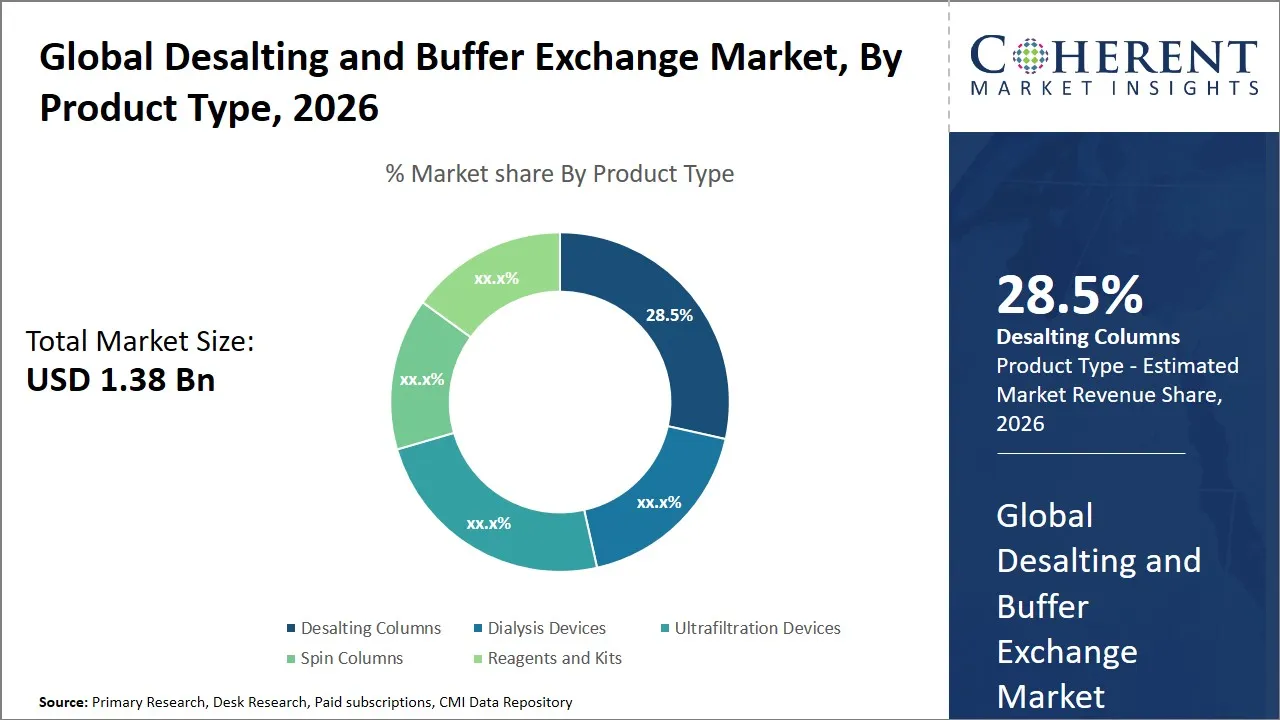
- The desalting columns segment is expected to dominate the global desalting and buffer exchange market by product type, accounting for approximately 28.5% of the total market share in 2026.
- The dialysis segment is expected to dominate the global desalting and buffer exchange market by technique, accounting for approximately 34.0% of the total market share in 2026.
- The protein purification segment is expected to dominate the global desalting and buffer exchange market by application, accounting for approximately 46.5% of the total market share in 2026.
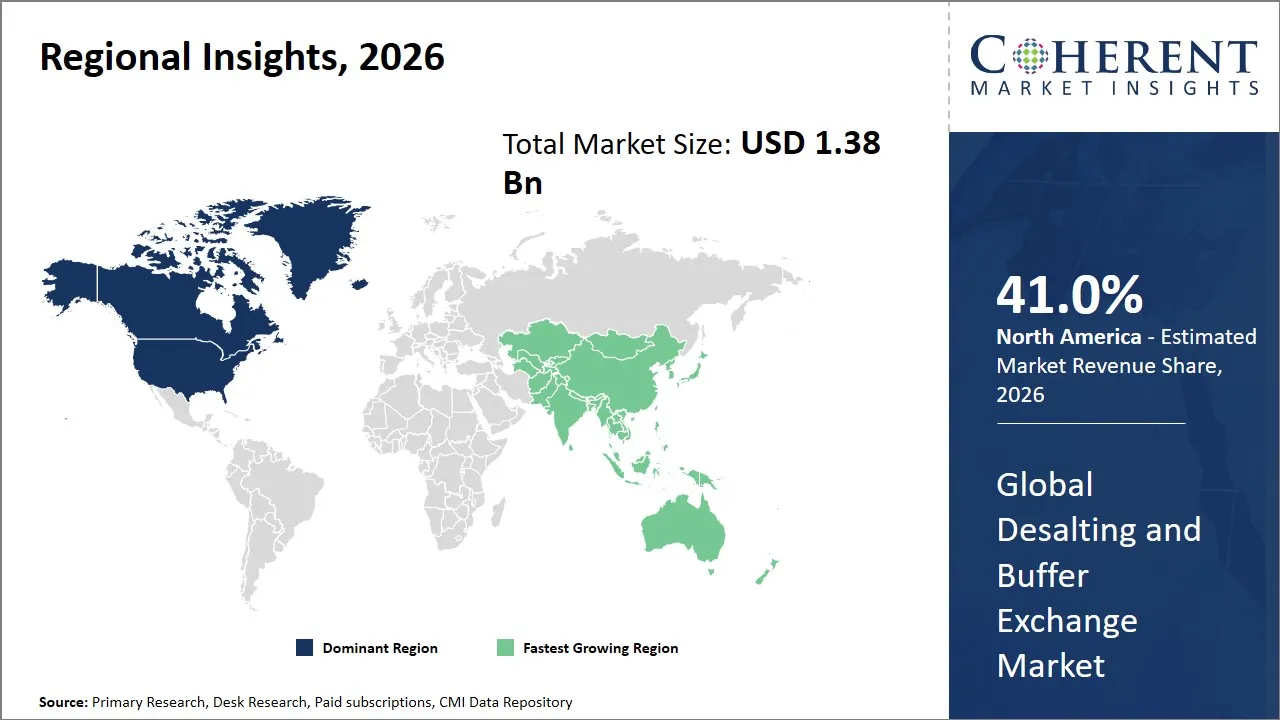
- North America is expected to dominate the global desalting and buffer exchange market in 2026, accounting for approximately 41.0% of the total market share.
- Asia Pacific is anticipated to witness the fastest growth holding a market share of 24.0% in 2026.
Market Overview
- Desalting and buffer exchange are the essential techniques of bioprocessing that are used for the removal of salts and other small molecules and buffer exchange for the optimization of the stability and activity of biomolecules. These techniques are commonly employed in the process of protein purification and are considered critical in the context of biopharmaceutical development, drug development, and life sciences.
- The desalting and buffer exchange market is observed to be growing continuously due to the increasing demand for biologics, including monoclonal antibodies, vaccines, and recombinant proteins. In addition, the increasing investments in drug development and the growth of the biopharmaceutical industry are also contributing to the growth of the desalting and buffer exchange market.
- Moreover, the development of advanced technologies in the field of filtration, chromatography, and automation in the process of biomolecule purification is also contributing to the growth of the desalting and buffer exchange market. In addition, the increasing focus on the development of high-throughput technologies and process optimization, especially in the field of biomanufacturing and CROs, is also contributing to the growth of the desalting and buffer exchange market.
Currents Events and their Impact
Current Events | Description and its Impact |
Advancements in Biopharmaceutical Processing Technologies |
|
Rising Investments in Biologics and Vaccine Production |
|
Segmental Insights
- Current Industry Events of 2026
- Market Size Estimation
- Regional Breakdown
- Competitive Landscape
- Customer Intelligence
- Segmental Analysis
- Pricing Analysis
- Key Market Drivers, Challenges & Future Trends
- Customized Insights Section
Why Does the Desalting Columns Segment Dominate the Global Desalting and Buffer Exchange Market in 2026?
The desalting columns segment is anticipated to hold a market share of 28.5% in 2026, primarily because desalting columns are efficient and can be used for buffer exchange without compromising the integrity of sensitive biomolecules such as proteins and nucleic acids. Desalting columns use size exclusion chromatography or gel filtration chromatography for buffer exchange. Desalting columns can be used for quick buffer exchange without compromising the integrity of sensitive biomolecules.
Desalting columns hold the largest share in the global desalting and buffer exchange market owing to their ease of use and faster processing times compared to other techniques such as dialysis and ultrafiltration. Moreover, desalting columns have become very efficient due to improvements in technology. This has made desalting columns the preferred choice for buffer exchange and desalting applications. For example, desalting columns can be used for protein purification and other bioprocessing applications. Desalting columns hold the largest share in the global desalting and buffer exchange market because of their ability to process samples quickly and efficiently compared to other techniques.
For instance, in April 2024, Agilent Technologies introduced new AdvanceBio Spin Columns for desalting and buffer exchange. The product improves efficiency in sample preparation and protein purification workflows, supporting faster and more reliable buffer exchange processes.
(Source: Agilent)
Why Does the Dialysis Segment Dominate the Global Desalting and Buffer Exchange Market in 2026?
The dialysis segment is anticipated to hold a market share of 34.0% in 2026, due to its accuracy and mild treatment, which maintains the integrity of sensitive biomolecules. It separates diffusely using a semipermeable membrane to eliminate salts and other impurities while preserving other biomolecules like proteins and nucleic acids. This has made it highly applicable in bioprocessing and biopharmaceutical manufacturing.
This dominance is further backed by its versatility and cost-effectiveness in meeting regulatory guidelines for bioprocessing and biopharmaceutical manufacturing. It can be tailored to suit different bioprocessing needs due to its ability to vary its cut-offs. Its applicability in protein purification and antibody and nucleic acid manufacturing has also been further enhanced by recent developments in its implementation. Recent developments in fast and continuous flow dialysis have also made it more efficient in terms of time.
The Protein Purification Segment Dominates the Global Desalting and Buffer Exchange Market
The protein purification segment is projected to hold a market share of 46.5% in 2026, because of the increased need for high-quality protein in different industries. This process is very important for removing impurities such as salts and reagents from protein solutions to obtain biologically active protein for different applications. The development of biopharmaceuticals such as monoclonal antibodies, recombinant proteins, and enzyme-based therapeutics is another major driver for this application segment of the global desalting and buffer exchange market. This is because high-quality protein is very important for developing, formulating, and analyzing biopharmaceuticals.
The development of technology in desalting buffer exchange has enabled companies to obtain high-quality protein through efficient protein purification processes. The development of high-end protein purification processes is very important for different applications in personalized medicine development, proteomics research, and vaccine development. The development of integrated protein purification systems that use chromatography and filtration is another major driver for this application segment of the global desalting and buffer exchange market. This is because integrated systems are very important for improving protein purification processes because they reduce the risk of contamination.
Key Regulatory Frameworks Impacting Desalting & Buffer Exchange Technologies
Regulation | Focus Area | Impact on Desalting and Buffer Exchange Market |
ICH Q6B | Biologics specifications (purity, impurities, buffers) | Drives need for precise buffer exchange and high-purity desalting systems |
FDA Process Validation Guidance | Process consistency and validation | Ensures reproducibility of desalting and filtration steps in manufacturing |
EMA Biological Product Guidelines | Formulation and excipient control | Enforces strict buffer composition and stability requirements |
USP <85> & <788> | Endotoxin and particulate control | Increases demand for high-efficiency filtration and contamination-free processes |
ISO 14644 | Cleanroom and contamination control | Supports sterile environments for buffer preparation and exchange |
FDA Single-Use Systems Guidance | Extractables & leachables (E&L) testing | Boosts adoption of validated single-use desalting technologies |
EDQM Standards | Quality of excipients and buffers | Ensures consistency and safety of buffer materials used in biologics |
Regional Insights
North America Desalting and Buffer Exchange Market Analysis and Trends
The North America region is projected to lead the market with a 41.0% share in 2026, attributed to the well-developed market environment in the region, with advanced research facilities, the existence of the pharmaceutical and biotechnology industry, and government support for innovative technologies. The well-developed industry in the region has led to the existence of major biopharmaceutical companies and CROs in the region, which are using desalting and buffer exchange technologies extensively for the purification of proteins and the development of pharmaceuticals and diagnostics.
The government regulations in the U.S. and Canada have also contributed to the growth of the desalting and buffer exchange market in the region, with the FDA and grants to enhance biotechnology R&D. In addition, the well-developed industry in the region has also provided the industry with easy access to quality raw materials and advanced technology due to the strong trade relations in the region. Major companies like Thermo Fisher Scientific, GE Healthcare (now Cytiva), and Merck KGaA (now MilliporeSigma) are contributing to the growth of the desalting and buffer exchange market in the region with innovative technologies in desalting and buffer exchange systems and consumables.
For instance, in June 2025, Cytiva declared strategic investments of US$ 1.6 billion to boost its global supply chain and bioprocessing capabilities. This expansion helped to further enhance downstream processing and purification capabilities to address the growing need for desalting and buffer exchange in biopharmaceutical manufacturing.
(Source: Cytiva)
Asia Pacific Desalting and Buffer Exchange Market Analysis and Trends
Asia Pacific is anticipated to witness the fastest growth holding a market share of 24.0% in 2026, attributed to the high growth rate of biotechnology in regions such as China, India, Japan, and South Korea. Government initiatives in biopharmaceutical manufacturing, increased healthcare spending, and high investment in life sciences research activities are major contributors to the biotechnology industry in these regions.
The Asia Pacific region is experiencing an increase in biotech start-ups, increased collaborations between academia and industry players, as well as CRO activities. This is providing an ideal scenario for biotechnology companies to adopt efficient desalting and buffer exchange technology.
In addition to this, trade infrastructure in these regions is also providing an ideal scenario for the entry of efficient desalting technology by international companies. Companies such as Shimadzu Corporation and Bio-Rad Laboratories have increased their footprint in these regions by collaborating and manufacturing in these regions due to the increased need for biologics, vaccine development, and personalized medicine.
Desalting and Buffer Exchange Market Outlook for Key Countries
How is the U.S. Helping in the Growth of the Desalting and Buffer Exchange Market?
The U.S. is a leader in desalting and buffer exchange market on a global scale, attributed to the its highly advanced biotechnology and pharmaceutical sectors. Large industry players such as Thermo Fisher Scientific and Cytiva have their R&D centers in the U.S., making it an important hub in the development of desalting membranes and exchange devices. The fact that there are many biotech clusters in the U.S. and that there is legislation in place to support clinical trials and biologics manufacturing indicates the well-developed desalting and buffer exchange market in U.S.
For instance, in April 2025, Thermo Fisher Scientific unveiled plans to boost innovation within the U.S. and bolster its customers' manufacturing capabilities. This move led to improvements in the infrastructure used for biopharmaceutical production. Consequently, this indirectly fueled the need for downstream process equipment, such as desalting and buffer exchange systems.
(Source: Thermo Fisher Scientific)
How is Germany Helping in the Growth of the Desalting and Buffer Exchange Market?
Germany is ahead of other European nations in desalting and buffer exchange market based on its biotech and pharmaceutical industry base, engineering skills, and legislation within the European Union. Some of the major companies in this area include Sartorius and Merck KGaA, located in Germany. These companies have greatly contributed to this area by providing different types of desalting columns, membrane systems, and automation solutions. This collaborative innovation environment is useful for improving buffer exchange technology development, particularly for monoclonal antibodies and biotherapeutic purifications.
Key Drivers for the Growth of the China Desalting and Buffer Exchange Market
The desalting and buffer exchange market in China is expanding at a tremendous rate due to the initiatives taken by the government, like the "Made in China 2025" policy, which is focused on the self-sufficiency of the country in the field of biotechnology. The expansion of the pharmaceutical industry in the country is also generating tremendous demand for buffer exchange solutions. The companies in the country are expanding their manufacturing capacity, and global companies like Merck and BioRad are also strengthening their footprint in the country by virtue of technology transfer and collaboration. The improved regulations and the growth of biopharmaceutical exports are also adding to the strategic importance of the desalting and buffer exchange market in China.
Japan Desalting and Buffer Exchange Market Trends
Japan is an important market in desalting and buffer exchange services due to its reputation in developing high-precision bioprocessing technology and an advanced pharmaceutical industry. Companies such as Shimadzu Corporation and Tosoh Bioscience have been playing significant roles in developing innovative products in chromatographic desalting devices and buffer exchange services. The aging population in Japan requires effective buffer exchange services due to their interest in developing unique biologics. Governmental funding in R&D is also an important factor in this context. The integrated biotech manufacturing industry of Japan is still an important factor.
Key Regulatory Standards Governing the Desalting and Buffer Exchange Market
Regulation | Focus Area | Impact on Desalting and Buffer Exchange Market |
International Council for Harmonisation (Pharmaceutical Development) | Quality by Design (QbD) approach | Encourages optimization of buffer systems and process parameters |
International Council for Harmonisation (Quality Risk Management) | Risk assessment in manufacturing | Drives controlled and risk-mitigated buffer exchange processes |
International Council for Harmonisation (Pharmaceutical Quality System) | Lifecycle quality management | Promotes continuous improvement in desalting operations |
U.S. Food and Drug Administration (Process Analytical Technology) | Real-time process monitoring | Supports adoption of automated and monitored buffer exchange systems |
European Medicines Agency | Advanced therapy medicinal products | Increases need for precise buffer control in gene and cell therapies |
International Organization for Standardization | Biological evaluation of medical materials | Ensures safety of materials used in filtration and buffer systems |
U.S. Pharmacopeia | Plastic components and single-use systems | Drives testing for extractables & leachables in buffer exchange setups |
Market Players, Key Developments, and Competitive Intelligence
Key Developments
- In October 2025, Merck KGaA entered into a definitive agreement to acquire the chromatography business of JSR Life Sciences. This has improved the downstream bioprocessing capabilities of the Merck KGaA, especially in the purification of proteins and buffer exchange chromatography techniques in monoclonal antibody development.
- In July 2024, Repligen Corporation announced its agreement to purchase Tantti, a chromatography innovator. The move was designed to bolster the company's existing advanced purification technology offerings. The acquisition specifically strengthens Repligen's chromatography-based solutions for desalting and buffer exchange, with a particular focus on the growing field of biologics.
- In April 2024, DPX Technologies unveiled its new INTip size exclusion chromatography product line. The offering is aimed at streamlining biomolecule purification workflows. The launch was intended to bolster gel filtration-based desalting and buffer exchange procedures, thereby boosting efficiency in sample preparation.
Top Strategies Followed by Global Desalting and Buffer Exchange Market Players
Player Type | Strategic Focus | Examples |
Established Market Leaders | Established market leaders focus on developing high-performance purification solutions. They also focus on strategic partnerships and capacity expansion to achieve growth in biopharma and industrial segments. | In February 2024, Sartorius AG expanded its single-use and filtration solutions portfolio, strengthening downstream processing capabilities relevant to desalting and buffer exchange. |
Mid-Level Players | Mid-level players strategies are based on cost-effective and application-specific solutions. Their emphasis is on serving research institutions and SMEs. They also lay emphasis on strategic partnerships to achieve growth in terms of access to technology, production efficiency, and expansion of markets. | In April 2024, Bio-Works Technologies expanded its chromatography resin offerings to support efficient protein purification and buffer exchange workflows. |
Small-Scale Players | Small-scale players focus on niche innovation and customization. They also focus on advanced technologies such as microfluidics and membrane technologies. Their approach is to form partnerships and offer flexible solutions. | In March 2024, Repligen Corporation introduced enhanced filtration and purification solutions supporting small-scale and specialized bioprocessing applications. |
Market Report Scope
Desalting and Buffer Exchange Market Report Coverage
| Report Coverage | Details | ||
|---|---|---|---|
| Base Year: | 2025 | Market Size in 2026: | USD 1.38 Bn |
| Historical Data for: | 2020 To 2024 | Forecast Period: | 2026 To 2033 |
| Forecast Period 2026 to 2033 CAGR: | 9.71% | 2033 Value Projection: | USD 2.64 Bn |
| Geographies covered: |
| ||
| Segments covered: |
| ||
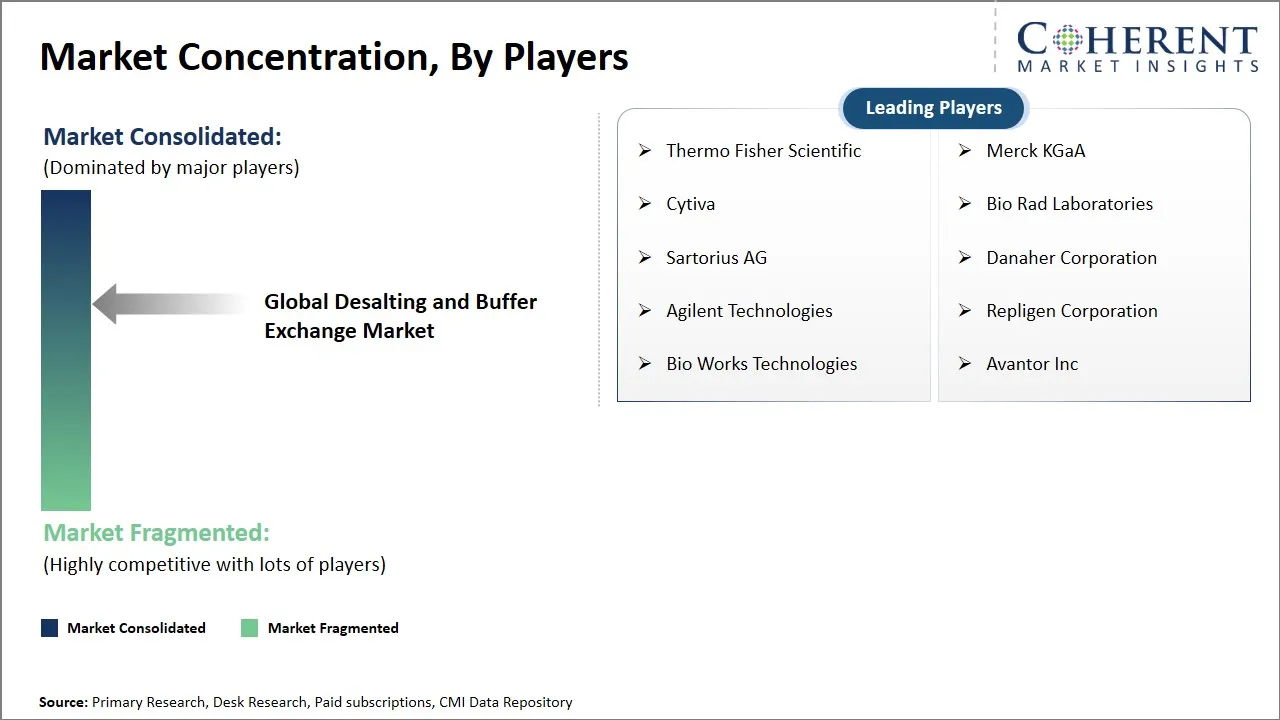
| Companies covered: | Thermo Fisher Scientific, Merck KGaA, Cytiva, Bio-Rad Laboratories, Sartorius AG, Danaher Corporation, Agilent Technologies, Repligen Corporation, Bio Works Technologies, and Avantor Inc | ||
| Growth Drivers: |
| ||
| Restraints & Challenges: |
| ||
Global Desalting and Buffer Exchange Market Dynamics
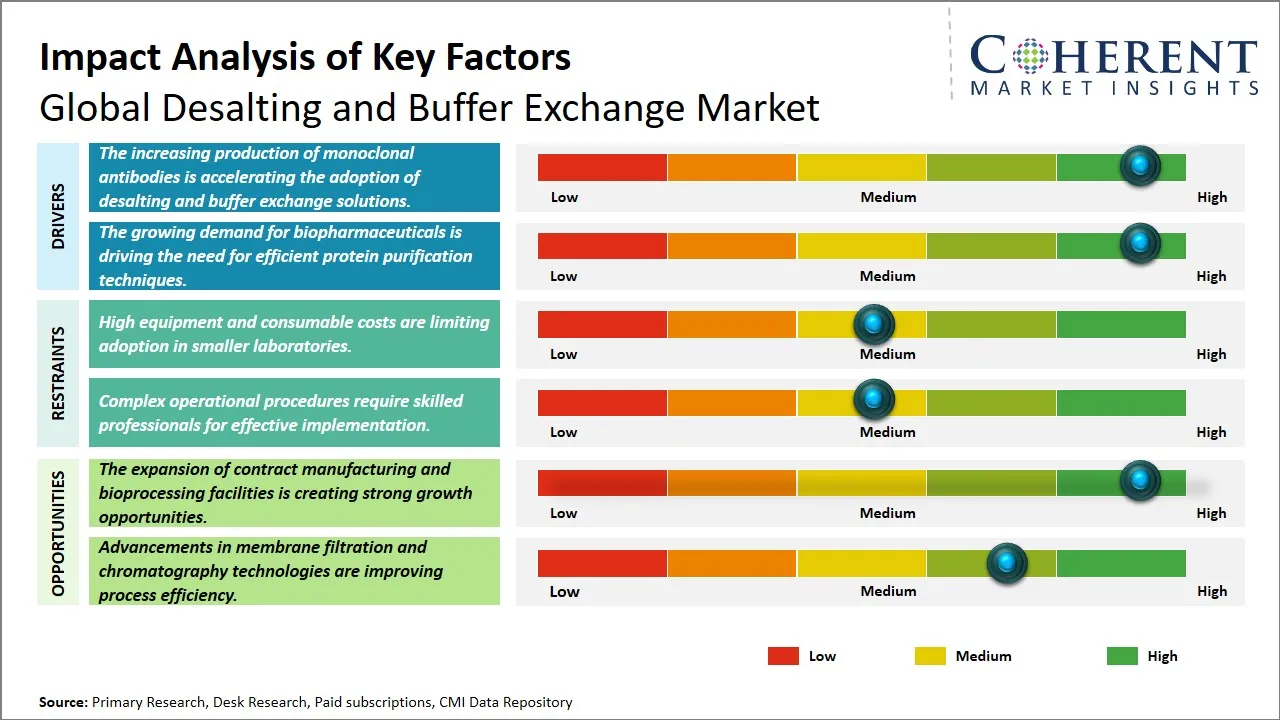
Global Desalting and Buffer Exchange Market Driver – The Increasing Production of Monoclonal Antibodies is Accelerating the Adoption of Desalting and Buffer Exchange Solutions
The increased production of monoclonal antibodies is greatly contributing to the growing interest in desalting and buffer exchange methods, especially because this process is essential in ensuring that biopharmaceuticals are pure and stable. The process of monoclonal antibody formulation is important in ensuring that these antibodies remain stable and functional, and desalting and buffer exchange methods help in removing unwanted substances that may interfere with the antibodies' functions.
The increased production of mAbs is also contributing to the growing interest in desalting and buffer exchange methods because this process is essential in ensuring that mAbs remain pure and stable. The process of mAb formulation is important in ensuring that mAbs remain pure and stable, and desalting and buffer exchange methods help in removing unwanted substances that may interfere with mAb functions. Moreover, desalting and buffer exchange methods have been improving, especially in terms of resin and spin column methods, and this is contributing to the growing interest in these methods for mAb production.
For instance, in September 2023, KBI Biopharma announced the expansion of its global portfolio with the launch of its SUREmAb to speed up the process of monoclonal antibody development and manufacturing. The platform improved the speed, efficiency, and scalability of biologics manufacturing.
(Source: KBI Biopharma, Inc.)
Global Desalting and Buffer Exchange Market Opportunity - Expansion of Contract Manufacturing and Bioprocessing Facilities
The emergence of a number of contract manufacturing organizations (CMOs), which specialize in bioprocessing, is creating a promising new opportunity for the global desalting and buffer exchange market to grow. The increased level of efficiency and cost savings, which biopharma companies are gaining from outsourcing their manufacturing activities, has led to a substantial rise in the overall demand for state-of-the-art bioprocessing technologies, including desalting and buffer exchange. The overall quality and consistency of biologics, vaccines, and other complex bioproducts can only be ensured by the use of desalting and buffer exchange technologies. The emergence of a number of monoclonal antibodies, gene therapies, and other personalized biologics is also adding to the overall demand for efficient bioprocessing technologies, which can be utilized within CMOs.
In addition, growing investments in biomanufacturing infrastructure, especially in emerging markets, are driving the desalting and buffer exchange market. Bioprocessing facilities use these systems to provide the optimum pH and ionic environment during downstream processing. In addition, the growing trend towards single-use biomanufacturing is driving the need for efficient bioprocessing.
For instance, in February 2023, Lonza Group announced that it expanded its bioconjugation facility located in Visp to improve biologics manufacturing capacity. This expansion helped improve large-scale production capacity for biologics manufacturing, especially for bioprocessing and purification solutions within CMOs.
(Source: Lonza Group)
Analyst Opinion (Expert Opinion)
- The desalting and buffer exchange market is expected to grow steadily. This can be largely due to the tremendous growth in the biologics and monoclonal antibody markets, as desalting and buffer exchange are critical steps in the manufacture of high-purity biopharmaceuticals.
- Considering the bioprocessing aspect, desalting and buffer exchange are critical in downstream bioprocessing in the purification of biopharmaceuticals. This is critical in the stability of biopharmaceuticals to deliver the efficacy of the drug.
- In the context of technology, there are tremendous improvements in the field of membrane filtration, chromatography, and single-use technology, thereby improving the efficiency of the process in the manufacture of biopharmaceuticals. This will help the biopharmaceutical industry to meet the growing demands of the biologics and monoclonal antibody markets.
- Apart from this, the current trend of personalized medicine and vaccine development will also require precise and accurate bioprocessing techniques. This will further enhance the role of desalting and buffer exchange in the biopharmaceutical industry.
Speak to the analyst
Want personalized insights?
Take the findings above to one of our principal consultants, or have the report rebuilt around the segments, geographies and competitors you actually track.
Market Segmentation
- Product Type Insights (Revenue, USD Bn, 2021 - 2033)
- Desalting Columns
- Dialysis Devices
- Ultrafiltration Devices
- Spin Columns
- Reagents and Kits
- Technique Insights (Revenue, USD Bn, 2021 - 2033)
- Dialysis
- Ultrafiltration
- Gel Filtration (Size Exclusion Chromatography)
- Precipitation
- Application Insights (Revenue, USD Bn, 2021 - 2033)
- Protein Purification
- Antibody Production
- Drug Development
- Biomolecule Analysis
- Enzyme Purification
- Nucleic Acid (DNA/RNA) Purification
- Vaccine Development and Bioprocessing
- Cell Culture Sample Preparation
- Proteomics and Genomics Research
- Others
- End User Insights (Revenue, USD Bn, 2021 - 2033)
- Pharmaceutical and Biotechnology Companies
- Academic and Research Institutes
- Contract Research Organizations (CROs)
- Diagnostic Laboratories
- Others
- Regional Insights (Revenue, USD Bn, 2021 - 2033)
- North America
- U.S.
- Canada
- Latin America
- Brazil
- Argentina
- Mexico
- Rest of Latin America
- Europe
- Germany
- U.K.
- Spain
- France
- Italy
- Russia
- Rest of Europe
- Asia Pacific
- China
- India
- Japan
- Australia
- South Korea
- ASEAN
- Rest of Asia Pacific
- Middle East
- GCC Countries
- Israel
- Rest of Middle East
- Africa
- South Africa
- North Africa
- Central Africa
- North America
- Key Players Insights
- Thermo Fisher Scientific
- Merck KGaA
- Cytiva
- Bio-Rad Laboratories
- Sartorius AG
- Danaher Corporation
- Agilent Technologies
- Repligen Corporation
- Bio Works Technologies
- Avantor Inc
Sources
Primary Research Interviews
Industry Stakeholders
- Bioprocessing and Chromatography Solution Providers
- Desalting and Buffer Exchange System Manufacturers
- Biopharmaceutical and Biotechnology Companies
- Contract Development and Manufacturing Organizations (CDMOs)
- Academic and Research Institutions (Life Sciences)
- Regulatory and Quality Assurance Experts
End Users
- Pharmaceutical and Biopharmaceutical Manufacturers
- Biotechnology Companies
- Contract Research Organizations (CROs)
- Academic Research Laboratories
- Clinical and Diagnostic Laboratories
Government and International Databases
- U.S. Food and Drug Administration (FDA) – Biopharmaceutical manufacturing and quality guidelines
- European Medicines Agency (EMA) – Biologics and drug development regulations
- World Health Organization (WHO) – Biopharmaceutical and vaccine production standards
- International Council for Harmonisation (ICH) – Quality and regulatory frameworks for pharmaceuticals
Trade Publications
- BioProcess International
- Genetic Engineering & Biotechnology News (GEN)
- Pharmaceutical Technology
- Biopharma Dive
- Lab Manager
Academic Journals
- Journal of Chromatography A
- Biotechnology and Bioengineering
- Journal of Pharmaceutical Sciences
- Protein Expression and Purification
- Analytical Biochemistry
Reputable Newspapers
- Bloomberg – Healthcare and medtech industry insights
- Financial Times – Global healthcare technology trends
- The Wall Street Journal – Medical technology investments and innovations
Industry Associations
- Financial Times – Global pharmaceutical and biotech trends
- The Wall Street Journal – Healthcare and biotech investments
Public Domain Resources
- Biotechnology Innovation Organization (BIO)
- International Society for Pharmaceutical Engineering (ISPE)
- Parenteral Drug Association (PDA)
- American Association of Pharmaceutical Scientists (AAPS)
Proprietary Elements
- CMI Data Analytics Tool: Proprietary analytics tool to analyze real-time market trends, consumer behavior, and technology adoption in market
- Proprietary CMI Existing Repository of Information for Last 10 Years
Get access to 250+ pages report
Every segment, forecast, competitor profile and data table behind the analysis above — available for instant download.
- ESOMAR Member
- ISO 9001:2015 Certified
- D-U-N-S Registered
- GDPR & CCPA Compliant
Missing comfort of reading report in your local language? Find your preferred language:
Transform your Strategy with Exclusive Trending Reports
Frequently Asked Questions
The global desalting and buffer exchange market is estimated to be valued at USD 1.38 billion in 2026 and is expected to reach USD 2.64 billion by 2033.
The CAGR of the global desalting and buffer exchange market is projected to be 9.71% from 2026 to 2033.
The increasing production of monoclonal antibodies is accelerating the adoption of desalting and buffer exchange solutions and the growing demand for biopharmaceuticals is driving the need for efficient protein purification techniques are the major factors driving the growth of the global desalting and buffer exchange market.
Desalting and buffer exchange are critical in maintaining the optimum pH and ionic strength, which are critical factors in the stability and activity of the protein, and also in the purification process. In this process, any undesired salts and compounds are also removed.
Common technologies used for this purpose include ultrafiltration/diafiltration (UF/DF), size exclusion chromatography (SEC), and membrane-based filtration systems. Of all the technologies used for bioprocessing, ultrafiltration/diafiltration is the most popular for its scale-up ability and efficiency.
High equipment and consumable costs are limiting adoption in smaller laboratories and complex operational procedures require skilled professionals for effective implementation are the major factors hampering the growth of the global desalting and buffer exchange market.
In terms of product type, desalting columns segment is estimated to dominate the market revenue share in 2026.