

Global Diagnostic Reagent Market Size and Forecast – 2026 To 2033
The global diagnostic reagent market is expected to grow from USD 56.8 Bn in 2026 to USD 89.5 Bn by 2033, registering a compound annual growth rate (CAGR) of 6.7% from 2026 to 2033. The market for diagnostic reagents is poised for significant expansion, fueled by soaring burden of chronic, and infectious diseases, accelerating demand for accurate and early disease detection solutions.
According to the World Health Organization, non-communicable diseases have been responsible for over 43 million deaths worldwide, representing 75% of all deaths unrelated to pandemics. The mortality rate due to NCDs was about 18 million deaths per year before the age of 70 years, with about 82% of such early deaths occurring in developing countries.
(Source: World Health Organization)
Additionally, according to Centers for Disease Control and Prevention, three in four American adults have at least one chronic condition, and over half have two or more chronic conditions. Additionally, over 90% of adults aged 65 and above are affected by at least one chronic disease, reinforcing the need for long-term wearable healthcare devices in the U.S.
(Source: Centers for Disease Control and Prevention)
Key Takeaways of the Global Diagnostic Reagent Market
- Clinical chemistry reagents are projected to hold 31.8% of the global diagnostic reagent market share in 2026, making it the dominant product type segment, across North America due to high testing volumes for routine disease screening, as well as growing use of automated diagnostic platforms in healthcare environments. For instance, the Clinical Laboratory Improvement Amendments (CLIA) standards established by the U.S. Food and Drug Administration (FDA) enable standardized quality and performance standards for laboratory testing and expand the availability of clinical chemistry testing facilities. (Source: Centers for Disease Control and Prevention)
- Infectious disease testing is projected to hold 33.6% of the global diagnostic reagent market share in 2026, making it the dominant application segment, particularly in Asia Pacific due to a rise in activities related to disease surveillance and an increase in public health diagnostic testing programs. For instance, China’s National Disease Prevention and Control Administration (NDPCS) seeks to enhance laboratory diagnostic and infectious disease surveillance systems, thereby enabling the early detection of infection to meet the expanding demand for diagnostic reagents used in infectious disease applications. (Source: China Center for Disease Control and Prevention)
- Hospitals and diagnostic laboratories are projected to hold 57.4% of the global diagnostic reagent market share in 2026, making it the dominant end user segment, throughout Europe consequent to the growing reliance on centralized diagnostic procedures and high use of laboratory-centric testing workflows for disease diagnosis and management. For instance, the European Union's European Commission implementation of the In Vitro Diagnostic Regulation (IVDR) helps ensure quality and efficacy standards for diagnostic products used in hospitals and laboratories, which promotes broader acceptance of sophisticated diagnostic technologies. (Source: European Commission)
- North America maintains dominance with an expected share of 39.2% in 2026, bolstered by availability of high-level diagnostic infrastructure, high penetration of automated laboratory systems, and proliferation of large throughput testing opportunities across healthcare facilities. For instance, the U.S. Food and Drug Administration established the Digital Health Center of Excellence to boost innovation and the utilization of emerging healthcare technologies, supporting the expansion of next-generation diagnostic ecosystems and laboratory capabilities. (Source: Food and Drug Administration)
- Asia Pacific is expected to exhibit the fastest growth with an estimated contribution of 23.1% share in 2026, fueled by growing healthcare infrastructure, increasing investment in diagnostics, and bolstering disease monitoring systems in emerging markets such as China, India, and Japan. For instance, in India, the Ayushman Bharat Health Infrastructure Mission (PM-ABHIM) was introduced to enhance public health laboratories and diagnostic infrastructure, facilitating wider acceptance of diagnostics and reagent consumption. (Source: Department of Health Research)
- Increasing Adoption of Multiplex Diagnostic Testing Platforms: Multiplex diagnostic platforms are gaining popularity as they allow multiple parameters or pathogens to be identified from a single sample, thus allowing laboratories to run fewer assays while increasing speed and information content. These highly efficient and cost-effective systems using diagnostics allow laboratories to make rapid clinical decisions and are increasingly being used in infectious disease, oncology and molecular diagnostic applications-an area which is creating demand for new reagents.
- Expansion of Diagnostic Reagents in Liquid Biopsy and Precision Medicine Applications: The use of diagnostic reagents in liquid biopsies and diagnostic tests for personalized medicine is increasing, with a strong emphasis on enabling highly sensitive biomarker and genetic testing Reagents targeting circulating tumor DNA (ctDNA), cancer mutation testing, and disease monitoring are expected to be in demand for minimally invasive diagnostic testing. This will generate a huge demand for this next generation of diagnostic reagents.
Segmental Insights
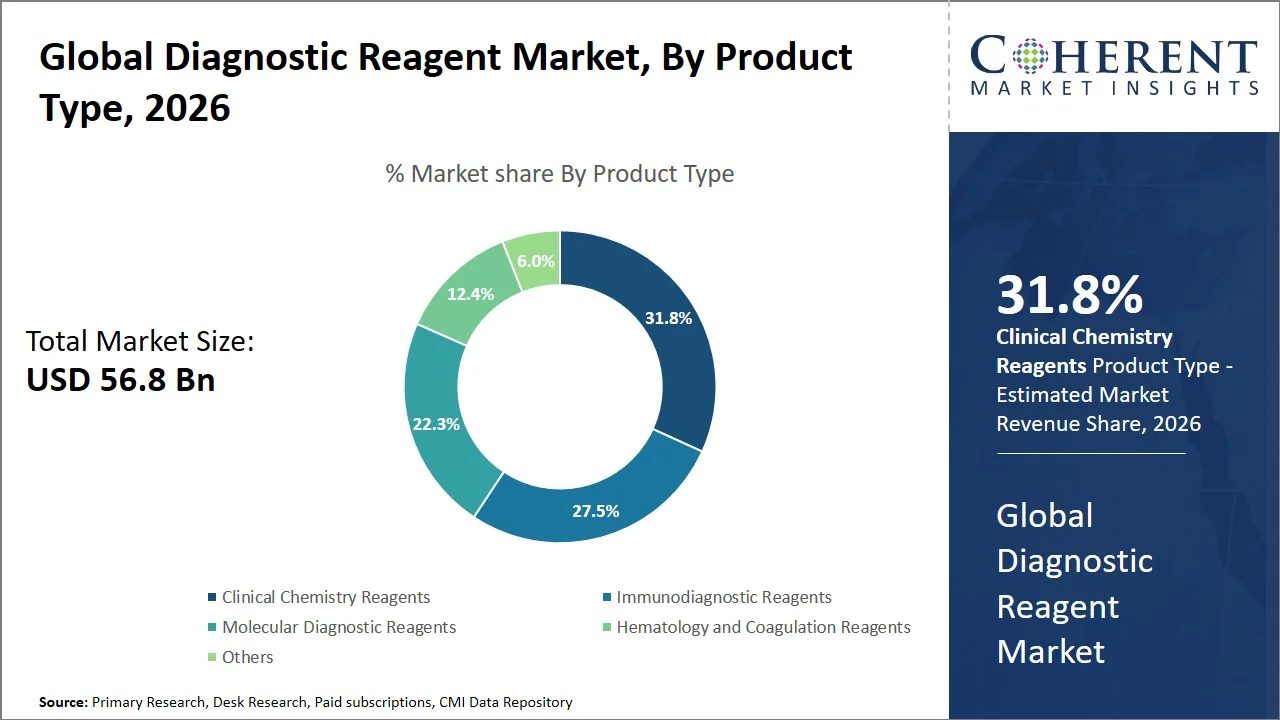
Why Do Clinical Chemistry Reagents Dominate the Global Diagnostic Reagent Market?
Clinical chemistry reagents are projected to hold a market share of 31.8% in 2026, attributed to the widespread usage of these reagents across various clinical divisions. Clinical chemistry reagents are widely used in the determination of various parameters related to blood and urine that are indicative of many health conditions including diabetes, liver diseases, renal diseases, imbalance of electrolytes, etc. The increasing prevalence of chronic disorders in global population has led to a rise in demand for diagnostic tests, thus boosting clinical chemistry reagent consumption.
Furthermore, enhancements in the reliability and availability of automated clinical chemistry analyzers, automated systems, and integration of rapid testing devices enhance testing speed, accuracy, and throughput, which will contribute to segment adoption. For instance, in June 2024, Roche introduced the Cobas c 703 and Cobas ISE neo analytical units in CE-mark permissible markets to further automate, streamline the workflow, and increase throughput in the clinical chemistry tests, underscoring the rising funding on innovative diagnostic systems and their related reagent kits. (Source: F. Hoffmann-La Roche Ltd)
- Current Industry Events of 2026
- Market Size Estimation
- Regional Breakdown
- Competitive Landscape
- Customer Intelligence
- Segmental Analysis
- Pricing Analysis
- Key Market Drivers, Challenges & Future Trends
- Customized Insights Section
Why Does Infectious Disease Testing Represent the Largest Application Segment in the Diagnostic Reagent Market?
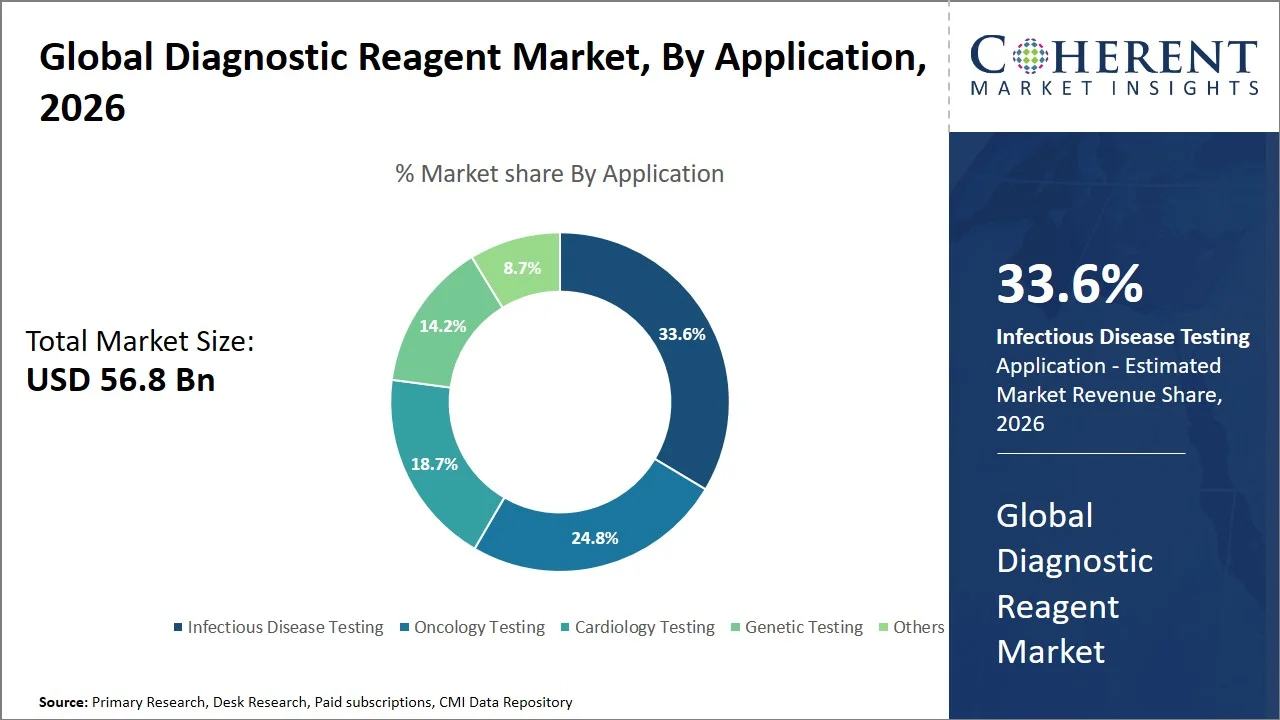
Infectious disease testing is projected to hold a market share of 33.6% in 2026, driven by the persistent prevalence of diseases such as tuberculosis, hepatitis, HIV, influenza and other new viral infections. For instance, according to Centers for Disease Control and Prevention, the U.S. reported 8,916 new tuberculosis cases, 58,371 new salmonella cases and 34,945 new Lyme disease cases, highlighting persistent burden of infectious diseases and the continuing need for efficient diagnostic testing solutions. (Source: Centers for Disease Control and Prevention)
Moreover, greater focus on early detection of illness, surveillance of outbreaks and timely clinical intervention is likely to further broaden molecular and immunodiagnostic reagent use. Developments in PCR-based testing protocols, rapid multiplex testing systems, and point-of-care diagnostics have greatly enhanced accuracy of pathogen detection and reduced testing time. Additionally, growing infectious disease screening programs and capacity building of laboratory infrastructure across emerging nations are also likely to support segment expansion.
Hospitals and Diagnostic Laboratories Segment Dominates the Global Diagnostic Reagent Market
The hospitals and diagnostic laboratories segment is projected to hold a market share of 57.4% in 2026, driven by their central role in healthcare delivery and diagnostic services. Growing patient inflow to hospitals/ diagnostic laboratories due to chronic diseases, infectious diseases, and preventive healthcare screening programs, are driving the demand for diagnostic testing in these facilities. For instance, according to Centers for Disease Control and Prevention, physician offices reported 10.2 million visits for infectious and parasitic diseases. While, emergency department reported 4.7 million visits with infectious and parasitic diseases, highlighting enormous dependence on diagnostic testing infrastructure and the corresponding use of reagents. (Source: Centers for Disease Control and Prevention)
Increasing trend towards automation of laboratory systems, molecular diagnostic technologies, and high-throughput analyzers is further benefitting this segment. Furthermore, expanding healthcare infrastructure and rising trend for outsourcing of complex diagnostic testing to specialized reference laboratories, is further supporting segment growth.
Currents Events and their Impact
Current Events | Description and its Impact |
U.S. FDA Regulatory Shift Around Laboratory Developed Tests (LDTs) – (March 2025) |
|
European IVDR Implementation and Regulatory Evaluation Expansion – (March 2025) |
|
(Source: Arnold & Porter Kaye Scholer LLP, MedTech Europe)
Diagnostic Reagent Market Dynamics
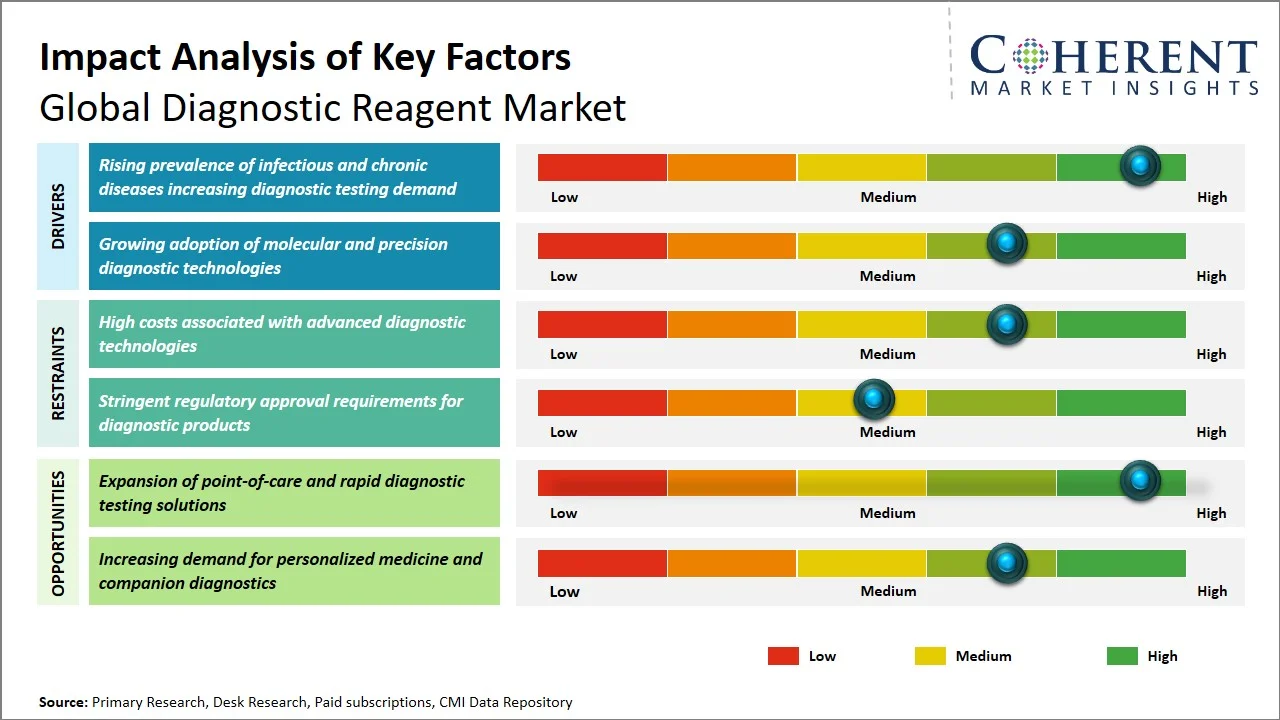
Market Drivers
- Rising prevalence of infectious and chronic diseases increasing diagnostic testing demand: The rising burden of chronic and infectious diseases globally is creating a surging demand for diagnostic reagents resulting from the ascending necessity of speedy, precise, and early disease diagnoses. A proliferation in the incidence of diabetes, cancer, cardiovascular diseases, tuberculosis and viral infections is, in turn, facilitating a more extensive penetration of diagnostic testing tools in hospitals, laboratories and point-of-care environments. Growing disease screening initiative and increasing emphasis on outbreak detection and monitoring are stimulating further consumption of sophisticated molecular and immunodiagnostic reagents. For instance, India's National Tuberculosis Elimination Programme (NTEP) persists in extending molecular diagnostic testing and approaches to active TB case surveillance and detection to healthcare facilities, great aid is provided for the application of new diagnostic reagents and faster diagnostic methods. (Source: Ministry of Health and Family Welfare)
- Growing adoption of molecular and precision diagnostic technologies: The widespread implementation of molecular diagnostic and precision diagnostic platforms is a key factor contributing to growth in demand for advanced diagnostic reagents, as health authorities gradually prioritize the use of highly sensitive, biomarker-based and personalized methods for disease diagnosis. Technologies including polymerase chain reaction (PCR), next-generation sequencing (NGS) and companion diagnostics all demand sensitive, compatible reagent kits that are capable of supporting fast, genetic and molecular analysis. Elevated levels of precision medicine usage in cancer, infectious and genetic disorder therapies are also stimulating the market. Furthermore, clinicians are increasingly adopting cutting edge molecular testing systems in order to optimize treatment. For instance, Illumina, Inc.’s TruSight Oncology 500 ctDNA v2 Assay, designed to support comprehensive genomic profiling and liquid biopsy applications in precision oncology, reflects the growing demand for advanced molecular diagnostic reagent technologies. (Source: Illumina, Inc.)
Emerging Trends
- Growing Shift Toward Decentralized and Point-of-Care Diagnostic Ecosystems: In order to provide patients with higher access to diagnostic services now and in the future, healthcare systems are rapidly bringing the tests to the patient by portable, fast testing platforms in outpatient clinics, remote healthcare facilities and also in emergency room situations leading to an upsurge of request for even more sophisticated reagent formulations optimized for small diagnostic platforms.
- Rising Development of Companion Diagnostics for Targeted Therapies: The demand for targeted reagents is on the rise as healthcare shifts more towards utilizing biomarkers to personalize treatment pathways, introducing requirements for highly selective companion diagnostics to ascertain patient suitability for various targeted therapies. The increasing adoption of precision medicine approaches in the treatment of cancer and genetic disorders is also hastening the development of next-generation reagent offerings, providing greater target specificity and labeling accuracy.
Regional Insights
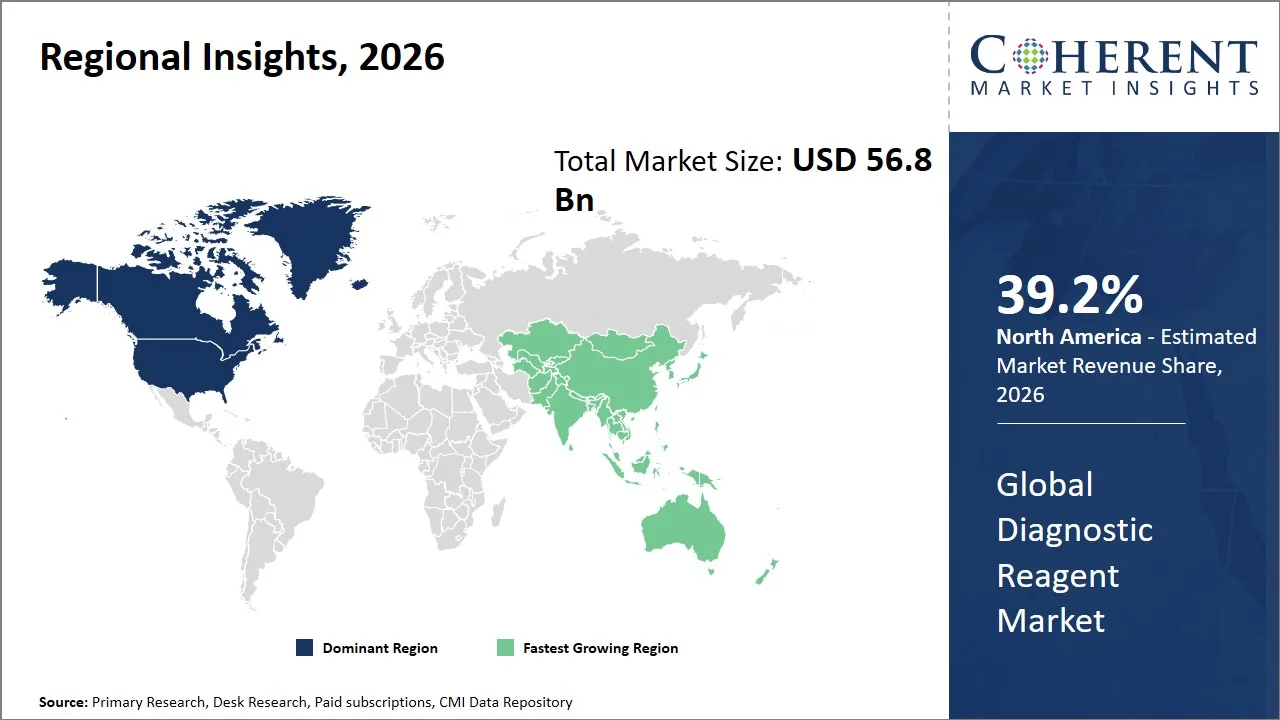
Why is North America a Strong Market for Diagnostic Reagents?
North America leads the global diagnostic reagent market, accounting for an estimated 39.2% share in 2026, due to advanced healthcare infrastructure, large R&D investments, and strong presence of key players. The region has substantial support from government for innovation in healthcare, a strict regulatory landscape that assures quality and regulatory procedures leading to innovation, development and uptake of advanced diagnostics technology. For instance, the U.S. Food and Drug Administration initiated the Breakthrough Devices Program to speed up the development and review of novel medical technologies, such as improved diagnostic tools that aim to enhance patient outcomes (Source: Food and Drug Administration). Additionally, the presence of leading companies in the region such as Thermo Fisher Scientific, Abbott Laboratories, Danaher Corporation, etc. support high competition and innovation providing varied reagent products in the market.
Why Does the Asia Pacific Diagnostic Reagent Market Exhibit High Growth?
The Asia Pacific diagnostic reagent market is expected to exhibit the fastest growth with an estimated contribution of 23.1% share to the global market in 2026, driven by increasing healthcare budgeting, growing incidences of lifestyle disorders in developed nations and rise in communicable and infectious disease rates, along with the expansion of diagnostic infrastructure. Governments in the Asia Pacific region are actively promoting healthcare reforms, strengthening regulatory policies, and encouraging foreign direct investment in healthcare sectors. For instance, the China government launched the 'Healthy China 2030 Initiative' to establish a prevention-oriented health care system, improve health services accessibility and standardize diagnostic resources in healthcare institutions, which helped to promote the wider use of diagnostic devices and its kit reagents system (Source: ScienceDirect). Furthermore, the presence of companies such as Bio-Rad Laboratories and QIAGEN along with local participants like Wondfo Biotech are engaged in expanding the product portfolio by innovation and localization.
Global Diagnostic Reagent Market Outlook for Key Countries
Why is the U.S. Leading Innovation and Adoption in the Diagnostic Reagent Market?
The U.S. is at the forefront of innovation and adoption in the diagnostic reagent market by virtue of its more comprehensive adoption of molecular diagnostics, companion diagnostics, and high throughput testing technologies in routine clinical practice, as well as its broader commercial market access for the more advanced assay platforms and specialized reagents used in oncology, infectious disease, and disease-specific personalized medicine. The presence of major diagnostic and life science players (such as Thermo Fisher Scientific, Danaher Corporation, Abbott Laboratories, Becton Dickinson (BD), and Bio-Rad Laboratories) in the region continues to foster the development of next-generation diagnostic reagent technologies and integrated testing solutions in the country.
Is Japan a Favorable Market for Diagnostic Reagents?
Japan is one of the most promising markets for diagnostic reagents driven by its robust healthcare structure targeting early detection and precision diagnosis among various diseases. The country exhibits higher rate of adoption of sophisticated testing techniques like molecular diagnostics and automated systems whose surging expansion sustains strong demand for specialized reagents. Growing utilization of biomarker-based testing and personalized medicine offering supplements the demand for advanced diagnostic solutions in Japan.
Is China Emerging as a Key Growth Hub for the Diagnostic Reagent Market?
China is positioned as a key growth hub in the global diagnostic reagent market driven by increasing molecular diagnostics capabilities, and rapidly developing healthcare infrastructure. The surging demand for advanced molecular diagnostics such as targeted precision medicine, biomarker-based diagnostics and laboratory automation in the country is further fueling growth of the region's diagnostic reagent market. The growth is further supported by growing manufacturing infrastructure in the country along with the rising adoption of high throughput diagnostics methodologies.
Why Does Germany Top the Europe Diagnostic Reagent Market?
Germany is the leader in the Europe market for diagnostic reagents, as a result of its strong specialization in the field of clinical laboratory technologies combined with a high level of implementation of sophisticated diagnostic workflows across the whole healthcare system. Germany exhibits high usage of applications of molecular testing, biomarker diagnosis in clinical chemistry, and applications of diagnostic testing in hospital and research units. The existence of numerous leading diagnostic and life science players (such as QIAGEN, Siemens Healthineers, Merck Life Science, Roche Diagnostics, and Sartorius AG) and the widespread use of automated laboratory platforms are further buoying Germany's position in the Europe diagnostic reagent market.
Is the Diagnostic Reagent Market Developing in India?
India is emerging as a lucrative market for diagnostic reagent driven by expanding healthcare and laboratory infrastructure coupled with the proliferation of diagnostic technologies. The presence of disease screening programs (such as, tuberculosis elimination initiatives, cervical cancer screening programs, and nationwide non-communicable disease (NCD) screening campaigns under public healthcare programs), increased use of molecular diagnostics, clinical chemistry testing in hospitals and diagnostic laboratories is also boosting the market growth. Moreover, strengthening its internal manufacturing capabilities and more integrative digital diagnostics and automated platform is further driving market prospects in the country.
Regulatory Landscape Governing the Global Diagnostic Reagent Market
Region | Authority & Classification | Approval Pathway | Key Regulatory Insight |
North America | U.S. FDA – Center for Devices and Radiological Health (CDRH); Health Canada – Medical Devices Directorate | Reagents categorized as In Vitro Diagnostic (IVD) products requiring 510(k), De Novo, PMA, or Health Canada licensing pathways depending on risk class | Strong emphasis on analytical validity, clinical performance, labeling requirements, and post-market surveillance for diagnostic reagents and IVD systems |
Europe | European Commission / Notified Bodies under IVDR (EU 2017/746) | CE marking under IVDR risk classes (A, B, C, D) with conformity assessment and technical documentation requirements | IVDR imposes stricter clinical evidence and performance evaluation requirements, increasing quality and traceability standards for diagnostic reagents |
Asia Pacific | NMPA (China), PMDA (Japan), CDSCO (India), TGA (Australia) | Country-specific registration pathways involving technical review, local testing validation, and product registration approvals | Growing regulatory harmonization and modernization efforts are accelerating approvals while strengthening quality control requirements for IVD products |
Latin America | ANVISA (Brazil), COFEPRIS (Mexico) | Risk-based registration and market authorization processes with supporting clinical and technical documentation | Increasing regulatory modernization and alignment with international standards are improving access to advanced diagnostic technologies |
Middle East & Africa | SFDA (Saudi Arabia), SAHPRA (South Africa), GCC regulatory authorities | Import registration, conformity assessment, and local regulatory review depending on product classification | Import registration, conformity assessment, and local regulatory review depending on product classification |
How is the expansion of point-of-care and rapid diagnostic testing solutions creating new growth opportunities in the diagnostic reagent market?
The growing adoption of point-of-care (POC) and rapid diagnostic testing technologies is increasingly opening up new growth avenues in the diagnostic reagent market by ensuring rapid diagnosis of conditions and minimizing reliance on centralized laboratory infrastructure. Owing to their quick turnaround times, these technologies allow for decentralized and timely clinical diagnosis of various infections, acute and chronic health conditions, including emergency care settings. Significant rise in market penetration of portable and multi-analyte testing systems is resulting in demand for lab-on-a-chip level reagent systems that are highly sensitive and can support rapid testing techniques. For instance, in January 2024, QIAGEN introduced new QIAstat-Dx syndromic testing panels for fast and reliable diagnosis of infectious diseases in India. The QIAstat-Dx multiplex real-time PCR based platform is capable of concurrently identifying various pathogens signifying the growing need for sophisticated rapid diagnostic systems and production of reagent kits. (Source: QIAGEN)
Market Players, Key Development, and Competitive Intelligence
Key Developments
- In December 2025, Sysmex signed a government MoU for setting up the first Japanese diagnostic reagent manufacturing plant in Saudi Arabia. The new MoU would enable Saudi Arabia to expand and upgrade its diagnostic infrastructure. This manufacturing expansion is expected to enhance the availability of diagnostic reagents and help in strengthening the supply chain.
- In January 2025, Synthego announced that it had formally entered the emerging molecular and clinical diagnostic reagent sectors with an aim to augment its expanding product portfolio to support the emerging diagnostic technologies. The expansion aims to develop the reagents of the highest possible quality for use by researchers, clinicians, and diagnostic laboratories and would help to enhance molecular testing reach. This strategy of market expansion is expected to help in the development of innovations and cater to the prevailing demand for mol-diagnostic reagents.
Competitive Landscape
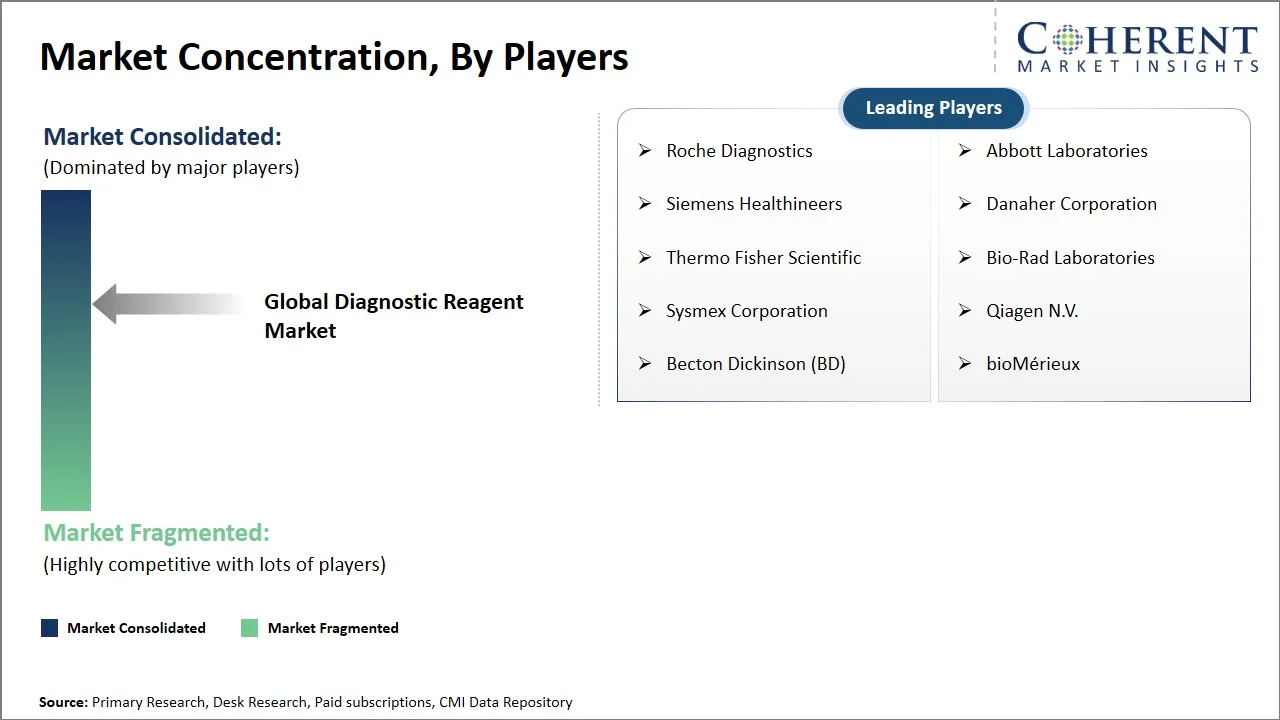
The global diagnostic reagent market is moderately competitive. The market players are emphasizing on expanding technologically advanced, and highly specific test reagents for various clinical and molecular diagnostic applications. Market players are favoring investment in automation, high-throughput assay technologies, according to specialized chemistries. Requisite also sees strategic alliances with healthcare providers, diagnostic laboratories and biotechnology companies as growth strategies to expand the high volumes and geographical outreach. Key focus areas include:
- Development of automated and high-sensitivity diagnostic reagent solutions
- Expansion of molecular diagnostics, companion diagnostics, and biomarker-based testing portfolios
- Integration of AI-supported analytics, high-throughput platforms, and digital laboratory technologies
- Strengthening global distribution capabilities and regulatory compliance frameworks
Market Report Scope
Diagnostic Reagent Market Report Coverage
| Report Coverage | Details | ||
|---|---|---|---|
| Base Year: | 2025 | Market Size in 2026: | USD 56.8 Bn |
| Historical Data for: | 2020 To 2024 | Forecast Period: | 2026 To 2033 |
| Forecast Period 2026 to 2033 CAGR: | 6.7% | 2033 Value Projection: | USD 89.5 Bn |
| Geographies covered: |
| ||
| Segments covered: |
| ||
| Companies covered: | Roche Diagnostics, Abbott Laboratories, Siemens Healthineers, Danaher Corporation, Thermo Fisher Scientific, Bio-Rad Laboratories, Sysmex Corporation, Qiagen N.V., Becton Dickinson (BD), and BioMérieux | ||
| Growth Drivers: |
| ||
| Restraints & Challenges: |
| ||
Analyst Opinion (Expert Opinion)
- In the coming years, the diagnostic reagent market is expected to evolve into an ultra-automated, highly accurate, data-intensive diagnostic environment, where information-intensive rapid testing and accurate testing becomes increasingly important for clinical decision-making. The widespread penetration of molecular diagnostic methods, companion diagnostic approaches and biomarker-based testing in clinical practices may see traditional laboratory processes getting replaced by the use of AI-enabled diagnostic platforms and multiplex diagnostic technologies will continue to hasten testing processes. The emphasis on early detection and prevention as well as personalized care regimens in new and existing diseases will expand the contribution of niche reagent systems toward diverse clinical applications.
- The maximum opportunities will probably exist within the infectious disease and oncology testing applications in China driven by ongoing growth in healthcare, laboratory infrastructure development, growing investment into genomics and precision medicine, and continuing adoption of enhanced diagnostic technologies in hospitals and testing laboratories. The growing emphasis on domestic manufacturing infrastructure and the implementation of broad public health screening programs further offer robust opportunities for highly sensitive, application-specific reagent solutions.
- In order to obtain a competitive advantage, market participants should emphasize on the advancement of high-sensitive reagent formulations enabling next-generation sequencing, multiplex testing and precision diagnostics applications. Further, organizations should focus on strategic partnerships with hospitals, reference and diagnostic laboratories, and biotech firms to facilitate access for rapid acceptance. Significant amounts of capital will need to be invested toward automation-enabled reagent platforms, AI-based analytical techniques, and regulatory aligned product development to enable differentiation.
Speak to the analyst
Want personalized insights?
Take the findings above to one of our principal consultants, or have the report rebuilt around the segments, geographies and competitors you actually track.
Market Segmentation
- Product Type Insights (Revenue, USD Bn, 2021 - 2033)
- Clinical Chemistry Reagents
- Immunodiagnostic Reagents
- Molecular Diagnostic Reagents
- Hematology and Coagulation Reagents
- Others
- Application Insights (Revenue, USD Bn, 2021 - 2033)
- Infectious Disease Testing
- Oncology Testing
- Cardiology Testing
- Genetic Testing
- Others
- End User Insights (Revenue, USD Bn, 2021 - 2033)
- Hospitals and Diagnostic Laboratories
- Research and Academic Institutes
- Pharmaceutical and Biotechnology Companies
- Others
- Regional Insights (Revenue, USD Bn, 2021 - 2033)
- North America
- U.S.
- Canada
- Latin America
- Brazil
- Argentina
- Mexico
- Rest of Latin America
- Europe
- Germany
- U.K.
- Spain
- France
- Italy
- Russia
- Rest of Europe
- Asia Pacific
- China
- India
- Japan
- Australia
- South Korea
- ASEAN
- Rest of Asia Pacific
- Middle East
- GCC Countries
- Israel
- Rest of Middle East
- Africa
- South Africa
- North Africa
- Central Africa
- North America
- Key Players Insights
- Roche Diagnostics
- Abbott Laboratories
- Siemens Healthineers
- Danaher Corporation
- Thermo Fisher Scientific
- Bio-Rad Laboratories
- Sysmex Corporation
- Qiagen N.V.
- Becton Dickinson (BD)
- BioMérieux
Sources
Primary Research Interviews
- Diagnostic reagent manufacturers and assay development specialists involved in clinical and molecular diagnostic applications
- Clinical laboratory directors and pathology professionals overseeing diagnostic workflows and reagent utilization
- Hospital laboratory managers and laboratory medicine specialists involved in routine and specialty testing procedures
- Regulatory affairs professionals and quality assurance managers responsible for IVD compliance and validation processes
- Research scientists and molecular diagnostic experts engaged in biomarker discovery and assay development
Stakeholders
- Diagnostic reagent manufacturers and diagnostic technology solution providers
- End-use Sectors
- Hospitals and clinical laboratories
- Independent diagnostic laboratories
- Academic and research institutions
- Pharmaceutical and biotechnology companies
- Point-of-care diagnostic centers
- Public health laboratories and disease surveillance centers
- Regulatory & Health Bodies: U.S. Food and Drug Administration – in vitro diagnostic (IVD) and reagent regulation, European Medicines Agency – clinical and diagnostic regulatory guidance, World Health Organization – global disease surveillance and healthcare data, Centers for Disease Control and Prevention – infectious disease surveillance and laboratory standards, Clinical and Laboratory Standards Institute – laboratory testing protocols and quality standards
Databases
- WHO Global Health Observatory – disease burden and healthcare statistics
- CDC National Center for Health Statistics – clinical and disease prevalence data
- FDA Medical Device and IVD Databases – diagnostic product and regulatory information
- Global Burden of Disease (GBD) Database – disease prevalence and epidemiology trends
- OECD Health Statistics – healthcare expenditure and laboratory infrastructure data
Magazines
- Clinical Lab Products Magazine – diagnostic technologies and laboratory developments
- Laboratory Medicine Magazine – clinical testing and laboratory advancements
- Medical Laboratory Observer – laboratory management and diagnostics trends
- Diagnostics World News – diagnostic technology and market developments
Journals
- Journal of Clinical Microbiology
- Clinical Chemistry
- Journal of Molecular Diagnostics
- Diagnostic Microbiology and Infectious Disease
- Clinical Biochemistry
Newspapers
- Financial Times – healthcare diagnostics and life sciences developments
- The Wall Street Journal – biotechnology and diagnostic industry updates
- The New York Times (Health Section) – healthcare innovation and diagnostic trends
- The Guardian (Health & Science) – global healthcare and diagnostics developments
Associations
- Association for Diagnostics & Laboratory Medicine
- Clinical and Laboratory Standards Institute
- American Clinical Laboratory Association
- European Diagnostic Manufacturers Association
- American Society for Clinical Pathology
Public Domain Sources
- World Health Organization – disease burden and healthcare statistics
- Centers for Disease Control and Prevention – infectious disease and healthcare data
- U.S. Food and Drug Administration – diagnostic reagent and IVD guidance documents
- National Institutes of Health – biomedical and molecular diagnostic research publications
- European Commission – IVDR and diagnostic regulatory information
Proprietary Elements
- CMI Data Analytics Tool, Proprietary CMI Existing Repository of information for last 10 years.
Get access to 250+ pages report
Every segment, forecast, competitor profile and data table behind the analysis above — available for instant download.
- ESOMAR Member
- ISO 9001:2015 Certified
- D-U-N-S Registered
- GDPR & CCPA Compliant
Missing comfort of reading report in your local language? Find your preferred language:
Transform your Strategy with Exclusive Trending Reports
Frequently Asked Questions
The global diagnostic reagent market is estimated to be valued at USD 56.8 Bn in 2026 and is expected to reach USD 89.5 Bn by 2033.
Clinical chemistry reagents dominate due to their extensive use in routine diagnostic testing for liver function, kidney function, blood glucose, lipid profiles, and metabolic disorders across hospitals and diagnostic laboratories.
A diagnostic reagent is a chemical, biological, or immunological substance used to detect, measure, or identify specific biomarkers, pathogens, or analytes in clinical samples for disease diagnosis and monitoring.
The CAGR of the global diagnostic reagent market is projected to be 6.7% from 2026 to 2033.
Rising prevalence of infectious and chronic diseases increasing diagnostic testing demand and growing adoption of molecular and precision diagnostic technologies are the major factors driving the growth of the global diagnostic reagent market.
High costs associated with advanced diagnostic technologies and stringent regulatory approval requirements for diagnostic products are the major factors hampering the growth of the global diagnostic reagent market.
In terms of application, infectious disease testing is estimated to dominate the market revenue share in 2026.