

Global Dialysis Catheter Market Size and Forecast – 2026 to 2033
The Global Dialysis Catheter Market is estimated to be valued at USD 1.79 Bn in 2026 and is expected to reach USD 3.34 Bn by 2033, exhibiting a compound annual growth rate (CAGR) of 9.3% from 2026 to 2033. This robust growth reflects the increasing prevalence of chronic kidney diseases and rising demand for dialysis treatments worldwide. Advancements in catheter technology and expanding healthcare infrastructure in emerging markets further drive the market expansion during the forecast period.
Key Takeaways of the Global Dialysis Catheter Market
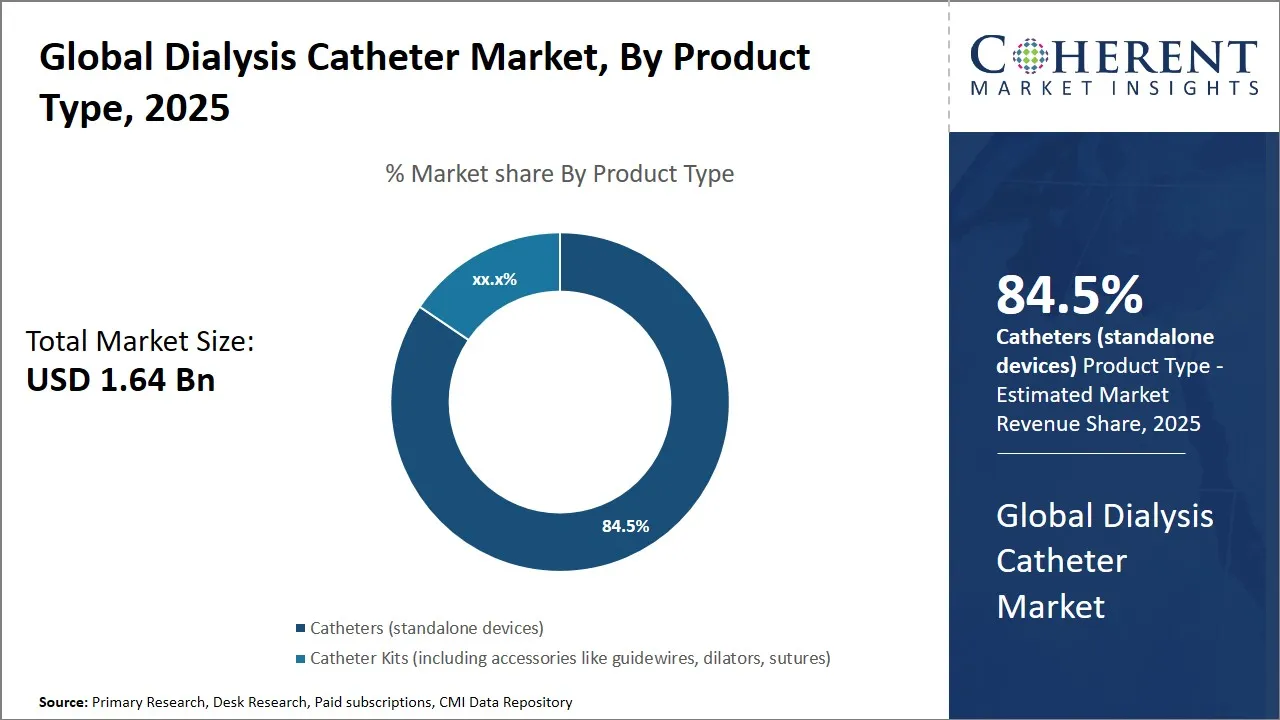
- Catheters as standalone devices are estimated to dominate the global dialysis catheter market in 2026, capturing an 85.5 % share.
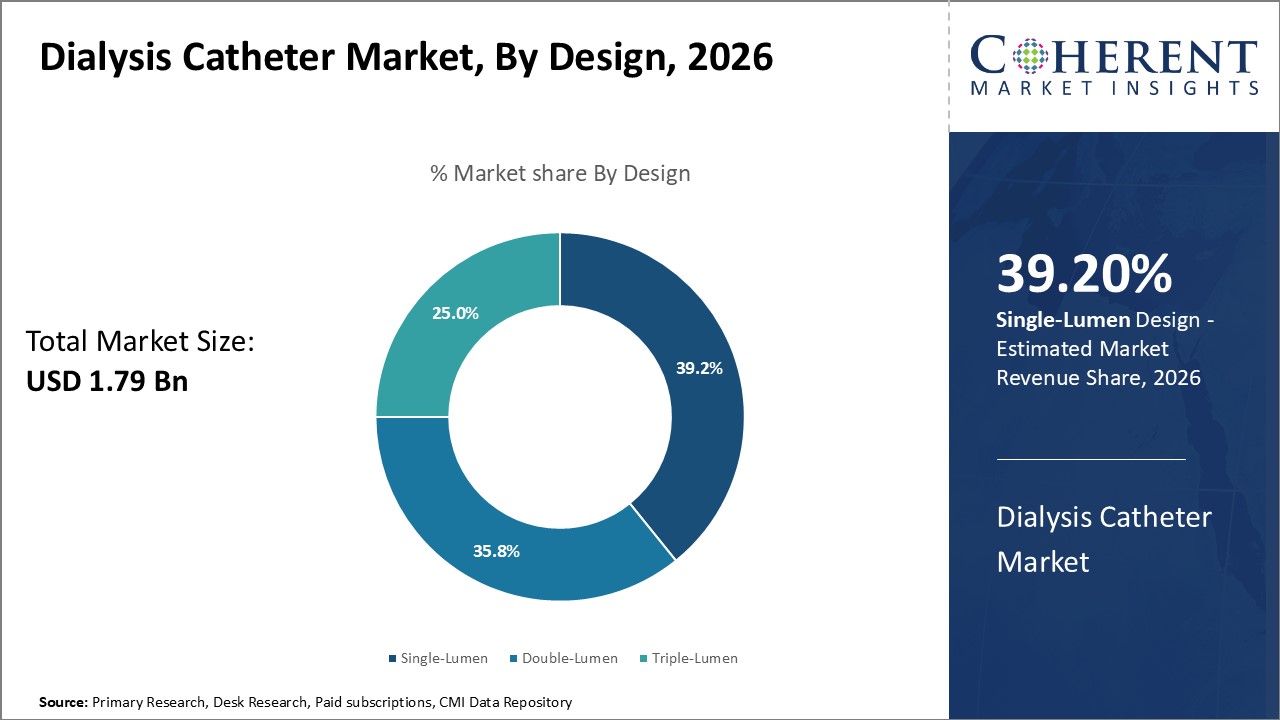
- Within design-based segmentation, single-lumen catheters lead with an estimated 39.2 % share in 2026.
- The adult segment is projected to dominate the global dialysis catheter market in 2026, accounting for 66.9 % of the share.
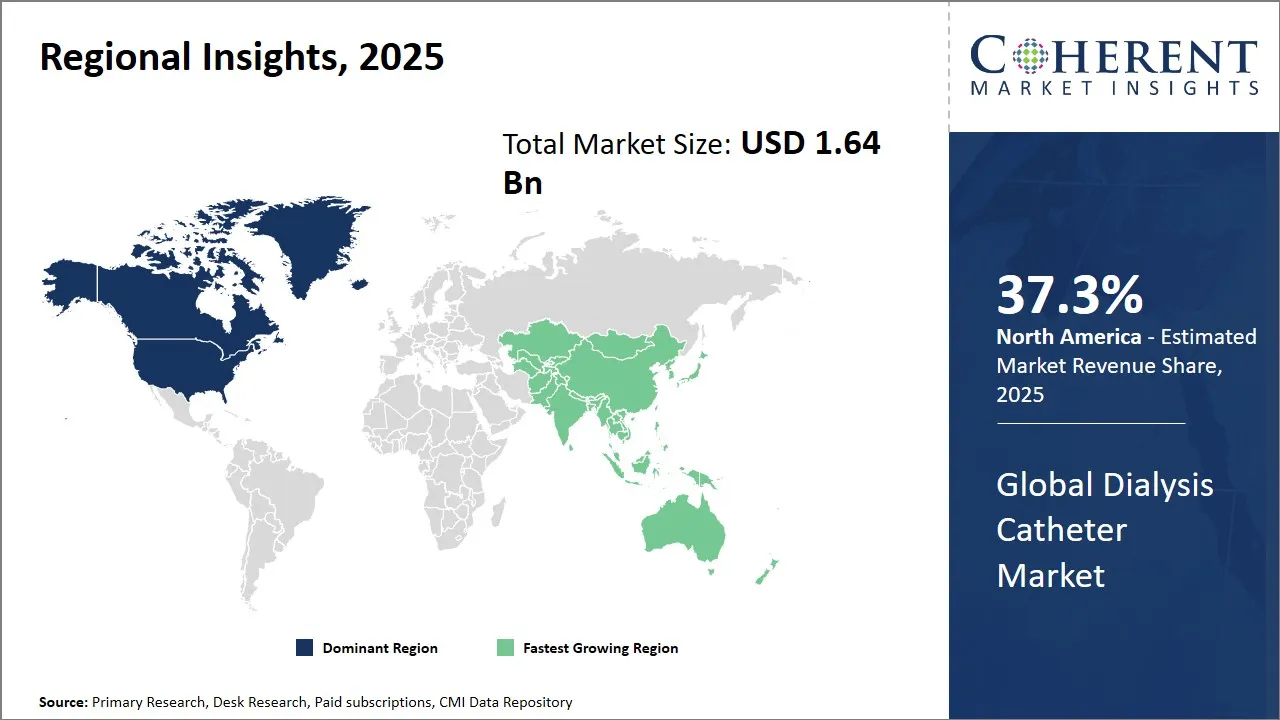
- North America is expected to lead the market, holding a share of 37.3 % in 2026. Asia Pacific is anticipated to be the fastest-growing region, with a market share of 24.4% in 2026.
Market Overview
A notable trend in the dialysis catheter market is the shift towards innovative, biocompatible materials that reduce infection rates and improve patient outcomes. Additionally, minimally invasive catheter insertion techniques are gaining traction, enhancing procedural efficiency and patient comfort. The integration of smart technologies for real-time monitoring and management is also emerging, aligning with the broader trend of digital health. Growing awareness of renal health and increased government initiatives to improve dialysis care accessibility continue to shape market dynamics.
Current Events and Its Impact
Current Events | Description and its impact |
Shift Toward Home Hemodialysis |
|
Advances in catheter technology |
|
Segmental Insights
- Current Industry Events of 2026
- Market Size Estimation
- Regional Breakdown
- Competitive Landscape
- Customer Intelligence
- Segmental Analysis
- Pricing Analysis
- Key Market Drivers, Challenges & Future Trends
- Customized Insights Section
Dialysis Catheter Market Insights, By Product Type - Catheters (Standalone Devices) Lead Owing to Their Versatility and Essential Role in Dialysis Procedures
The dominance of catheters as standalone devices within the global dialysis catheter market, holding a projected share of 85.5% in 2026, is driven primarily by their fundamental necessity in facilitating effective dialysis access. Dialysis catheters serve as critical conduits, enabling blood removal and return during hemodialysis or fluid exchange in peritoneal dialysis, thus their standalone use remains pivotal in clinical settings. Their design flexibility allows adaptation across a wide range of dialysis methods and patient needs, making them indispensable. Moreover, these catheters are manufactured with advanced biocompatible materials, reducing risks of infection and thrombosis, which are significant considerations in clinical decision-making. Healthcare providers often prefer standalone catheter devices due to their ease of insertion and replacement, especially in emergency or short-term scenarios where immediate dialysis access is crucial.
The broad application spectrum of standalone catheters across hemodialysis and peritoneal dialysis enhances their market share. These catheters are compatible with various catheter kits and accessories, improving their functionality and safety. Furthermore, innovations focusing on surface coatings and antimicrobial properties have heightened their clinical appeal by mitigating complications associated with long-term catheter use.
Dialysis Catheter Market Insights, By Design - Single-Lumen Dialysis Catheters Lead Due to Simplicity and Broad Clinical Application
Single-lumen catheters are expected to hold the top design-based share of 39.2% in the dialysis catheter market in 2026, owing to their straightforward construction and wide applicability. These catheters feature a single internal passageway, which simplifies blood flow management during dialysis and reduces the mechanical complexity associated with multi-lumen devices. Clinicians often favor single-lumen catheters for short-term dialysis needs or in situations where minimal invasiveness and ease of insertion are prioritized.
In February 2021, Access Vascular (a U.S. medtech specializing in thrombus-resistant vascular access devices) received the USFDA clearance for HydroMID, a 4 Fr single-lumen midline catheter made from its proprietary material that’s shown up to 97% less thrombus than polyurethane. The clearance broadens its lineup alongside HydroPICC, offering a midline option typically used up to 30 days and favored by MAGIC guidelines without needing a confirmatory chest X-ray.
The preference for single-lumen catheters is reinforced by their compatibility with a range of dialysis procedures and patient types, including acute dialysis cases in emergency departments and intensive care units. Single-lumen catheters are frequently employed in scenarios requiring temporary vascular access, where patient conditions may change rapidly, and catheter replacement or removal might be necessary without significant delay or procedural risk.
Dialysis Catheter Market Insights, By Age Group - the Adult Segment Dominates Due to Higher Prevalence of Kidney Disease and Greater Healthcare Investments
The adult segment is projected to command the largest share within the global dialysis catheter market with 66.9% in 2026 due to the disproportionately higher incidence of chronic kidney disease (CKD) and end-stage renal disease (ESRD) among the adult population compared to pediatric or neonatal groups. Adults face a broader array of risk factors that precipitate renal failure, including metabolic disorders like diabetes, hypertension, and cardiovascular diseases, which are less common in younger populations. This higher disease burden directly correlates with increased demand for hemodialysis and peritoneal dialysis treatments, thereby driving the consumption of dialysis catheters tailored for adult anatomy and clinical requirements.
Healthcare infrastructure investments and accessibility further amplify the adult segment’s lead. Adults typically receive more frequent and advanced renal replacement therapies, supported by insurance coverage and specialized dialysis centers, which contributes to a higher utilization of dialysis catheters designed for their specific physiological needs. Moreover, adult catheters are engineered to accommodate larger blood volumes and higher flow rates, which are essential for maintaining effective dialysis in this demographic.
Regional Insights
North America Dialysis Catheter Market Analysis and Trends
North America’s dominance in the global dialysis catheter market, with share of 37.3% in 2026, is driven by a well-established healthcare infrastructure, high prevalence of chronic kidney diseases, and significant government support for advanced medical care. The region boasts a mature ecosystem with prominent hospitals, dialysis centers, and specialized clinics adopting state-of-the-art catheter technologies. Regulatory frameworks such as the U.S. FDA's stringent approval processes ensure the availability of safe and innovative products. Additionally, substantial investment in healthcare R&D and advances in catheter materials and coatings have further solidified North America's leading position.
In March 2024, researchers at Weill Cornell Medicine, a leading academic medical center in New York, U.S reported that retinoic acid receptors (RARa) in the kidney’s proximal tubules play a critical role in limiting kidney injury that often progresses to renal failure. Their preclinical model showed that malfunctioning RARa can drive chronic kidney disease. Around the same time, the government launched a statewide peritoneal dialysis program, offering free home-based treatment for renal patients.
Asia Pacific Dialysis Catheter Market Analysis and Trends
The Asia Pacific exhibits the fastest growth with share of 24.4% in 2026 due to the increasing incidences of kidney-related ailments, growing healthcare spending, and expanding healthcare infrastructure, particularly in urban centers. Government initiatives aimed at improving healthcare accessibility and insurance coverage enable a larger patient base to afford dialysis treatment. Additionally, rising awareness about kidney health and early diagnosis are contributing factors.
The trade dynamics favor imports of high-quality medical devices, while local manufacturers in countries such as India and China are beginning to scale production with improved cost-efficiency. Companies like Terumo Corporation, Nipro Corporation, and B. Braun Melsungen have a strong presence, with strategic collaborations aimed at expanding market reach.
Global Dialysis Catheter Market Outlook for Key Countries
U.S. Dialysis Catheter Market Trends
The U.S. remains a key market with advanced healthcare infrastructure and a supportive regulatory environment. The focus on innovation is evident through ongoing clinical trials and the integration of antimicrobial and bio-compatible coatings on catheters to reduce infections. Major players such as Becton Dickinson & Co. and AngioDynamics maintain market leadership with extensive product lines and strong relationships with healthcare providers, facilitating widespread adoption.
In June 2021, Baxter International Inc., a U.S.-based global leader in renal care and medical technologies, announced the launch of Sharesource Analytics 1.0, a next-generation digital health module designed to improve the clinical management of home peritoneal dialysis patients. Built on Baxter’s Sharesource remote patient management platform, the tool provides healthcare professionals with clear dashboards and trend data to monitor patient adherence, catheter performance, and therapy fatigue, helping reduce complications and keep patients safer at home.
Germany Dialysis Catheter Market Trends
Germany’s dialysis catheter market benefits from a robust healthcare system, comprehensive health insurance schemes, and a high standard of patient care. The country’s emphasis on quality and patient safety drives the preference for technologically advanced catheters with features that reduce complications. Companies like B. Braun Melsungen and Fresenius Medical Care have significant operations in the country, focusing on both manufacturing and innovative product development. Germany’s focus on export also makes it a strategic hub for European distribution.
In June 2023, Merit Medical Systems, a medical device company specializing in interventional and dialysis care, announced that it had acquired two dialysis catheter product lines for a combined USD 132.5 million. The deals include dialysis catheters and a biopsy sealant system from AngioDynamics, a U.S. based medical technology firm, for USD 100 million, and the Surfacer catheter system from Bluegrass Vascular Technologies, a Texas-based vascular access company, for USD 32.5 million.
China Dialysis Catheter Market Trends
China's dialysis catheter market is rapidly evolving with increased government focus on healthcare modernization and rural healthcare expansion. Rising prevalence of chronic kidney disease and enhanced diagnostic infrastructure support the market growth. The government’s push for domestic medical device manufacturing encourages local firms while still permitting the import of premium devices. Terumo Corporation and Nipro Corporation influence the market through partnerships with local distributors, while homegrown companies are ramping up capabilities to compete on quality and affordability.
In August 2021, Lepu Medical, a China-based global medical device company, received NMPA and CE MDR approvals for its Aide Series Hemodialysis Equipment, ensuring international safety and reliability. Along with dialysis machines, the company also develops advanced catheter technologies, reinforcing its role in global healthcare.
India Dialysis Catheter Market Trends
India displays a dynamic and cost-sensitive market, where increased awareness and investment in dialysis centers in tier 1 and tier 2 cities drive demand. Government schemes aimed at improving healthcare access, such as the Ayushman Bharat program, bolster affordability and accessibility of dialysis treatments. The market is characterized by a mix of multinational companies like Medtronic and Becton Dickinson alongside strong domestic manufacturers focused on lower-cost solutions, supporting the broad adoption of dialysis catheters.
In November 2024, the Indian Journal of Nephrology published a review by Dr. K. Sampathkumar and Dr. Balasubramaniam Jeyaraj highlighting ultrasound-guided peritoneal dialysis catheter placement. The review cites a Mexican study showing the method is safe, effective, and keeps 93% of catheters functional at six months, offering a practical alternative to surgical or fluoroscopic techniques.
End User Feedback and Unmet Needs
- Feedback from dialysis catheter users primarily patients, clinicians, and healthcare administrators offer valuable insights into both the strengths and shortcomings of current products. A recurring theme from clinical staff is appreciation for designs that simplify insertion and reduce the risk of infection. For example, vascular access nurses have highlighted how catheters with antimicrobial coatings or smoother tip designs reduce complications and improve patient outcomes, particularly for those with long-term central venous access needs. Patients, too, report greater satisfaction when catheters minimize discomfort and allow them to maintain some independence in daily routines. Such positive experiences reinforce the importance of safety-oriented innovation, demonstrating how design choices can directly improve the quality of care and trust in the device.
- At the same time, end users frequently point to ongoing concerns that manufacturers have yet to fully address. Hospital administrators emphasize the cost burden of catheter replacements due to malfunction or infection, while patients often cite frustration with limited customization to meet individual anatomical or lifestyle needs. In many developing regions, affordability and reliable supply remain major barriers, restricting access to advanced devices.
- There is also a strong call for catheters that integrate better with home dialysis programs, where ease of use and patient-friendly handling are critical. These unmet needs highlight opportunities for manufacturers to innovate around cost efficiency, modular design, and training support. Addressing these issues not only has the potential to expand market reach but also to strengthen long-term relationships with both providers and patients, fostering retention and building trust in emerging care models such as home-based dialysis.
Market Players, Key Developments, and Competitive Intelligence
Key Developments
- In September 2023, Laminate Medical Technologies, an Israel-based company focused on vascular access solutions, received approval from the United States Food and Drug Administration (USFDA) for its VasQ External Vascular Support, designed to improve outcomes of arteriovenous fistulas used in dialysis access. Although arteriovenous fistulas help lower long-term risks, dialysis catheters remain crucial for acute and emergency treatments, making this approval an important step in advancing both access options.
- In August 2023, Teleflex Incorporated, a U.S.-based global provider of medical technologies, announced the launch of its Arrow ErgoPack Complete Kits featuring hemodialysis and large bore catheters in the U.S., aimed at improving procedural efficiency and patient care.
- In January 2023, Medtronic Plc., a global leader in medical technology, recalled more than 22,000 hemodialysis catheters due to a potential hub defect that could cause leaks and mixing of venous and arterial blood, raising risks of clot formation and circulation issues.
- In April 2021, BD (Becton, Dickinson and Company), a leading global medical technology firm, announced the U.S. FDA 510(k) clearance for its Pristine Long-Term Hemodialysis Catheter, developed by Israeli firm Pristine Access Technologies, which BD acquired in 2020. Designed with a side-hole free symmetric Y-Tip, the catheter aims to reduce complications such as clot formation and high recirculation rates, improving long-term patency and patient outcomes.
Top Strategies Followed by Global Dialysis Catheter Market Players
- Established market leaders primarily distinguish themselves through significant investments in research and development (R&D). By channeling substantial resources into innovation, these companies continuously develop high-performance and technologically advanced catheter solutions that meet evolving clinical needs. In addition to internal innovation, these players frequently engage in strategic partnerships and alliances with key industry stakeholders, including original equipment manufacturers (OEMs) and major healthcare providers.
- In April 2023, Medtronic plc, a global leader in medical technology, and DaVita Inc., a U.S.-based provider of kidney care services, announced the launch of Mozarc Medical, a new independent company focused on advancing kidney health technologies. Built from Medtronic’s former Renal Care Solutions business and backed by equal investment from both companies, Mozarc aims to deliver innovative, patient-centered solutions with a strong focus on home dialysis, improving access, ease of use, and overall patient experience worldwide.
- Mid-level companies in the dialysis catheter market typically pursue a distinct but complementary approach centered on delivering cost-effective solutions that strike a balance between quality and affordability. Recognizing the sensitivity of various emerging market segments and government-funded healthcare programs to price, these players emphasize manufacturing and marketing catheters that meet essential performance standards while remaining accessible to price-conscious consumers.
- In November 2024, Togo’s Ministry of Health and Public Hygiene, supported by Ecobank Group, a leading pan-African banking institution, and the United Nations Development Programme (UNDP), a global development agency, launched a project to establish a Nephrology and Hemodialysis Center at Kara University Hospital.
- Small-scale companies operating in the global dialysis catheter market adopt highly specialized and innovative strategies to carve out sustainable niches amid competition from well-established incumbents. These firms often focus on developing catheter products with unique features or employing cutting-edge materials and manufacturing techniques that differentiate them from mass-market options. By prioritizing innovation tailored to specific medical conditions or patient demographics, small players can address unmet clinical needs and appeal to particular healthcare providers or patient groups.
- In November 2023, CorMedix Inc., a U.S.-based biopharmaceutical company focused on preventing and treating life-threatening conditions, announced that the USFDA had approved DefenCath, the first and only antimicrobial catheter lock solution in the U.S. designed to reduce catheter-related bloodstream infections in adult hemodialysis patients.
Market Report Scope
Dialysis Catheter Market Report Coverage
| Report Coverage | Details | ||
|---|---|---|---|
| Base Year: | 2025 | Market Size in 2026: | USD 1.79 Bn |
| Historical Data for: | 2020 To 2024 | Forecast Period: | 2026 To 2033 |
| Forecast Period 2026 to 2033 CAGR: | 9.3% | 2033 Value Projection: | USD 3.34 Bn |
| Geographies covered: |
| ||
| Segments covered: |
| ||
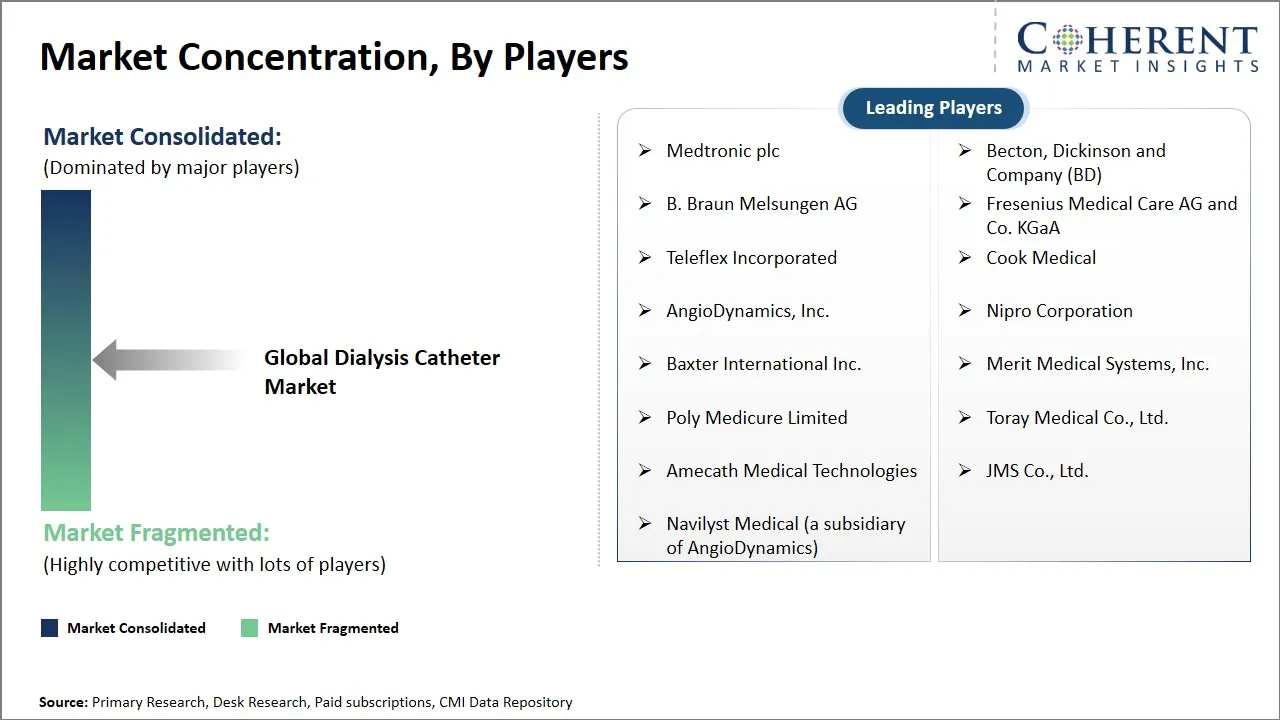
| Companies covered: | Medtronic plc, Becton, Dickinson and Company (BD), B. Braun Melsungen AG, Fresenius Medical Care AG and Co. KGaA, Teleflex Incorporated, Cook Medical, AngioDynamics, Inc., Nipro Corporation, Baxter International Inc., Merit Medical Systems, Inc., Poly Medicure Limited, Toray Medical Co., Ltd., Amecath Medical Technologies, JMS Co., Ltd., and Navilyst Medical (a subsidiary of AngioDynamics) | ||
| Growth Drivers: |
| ||
| Restraints & Challenges: |
| ||
Dialysis Catheter Market Dynamics
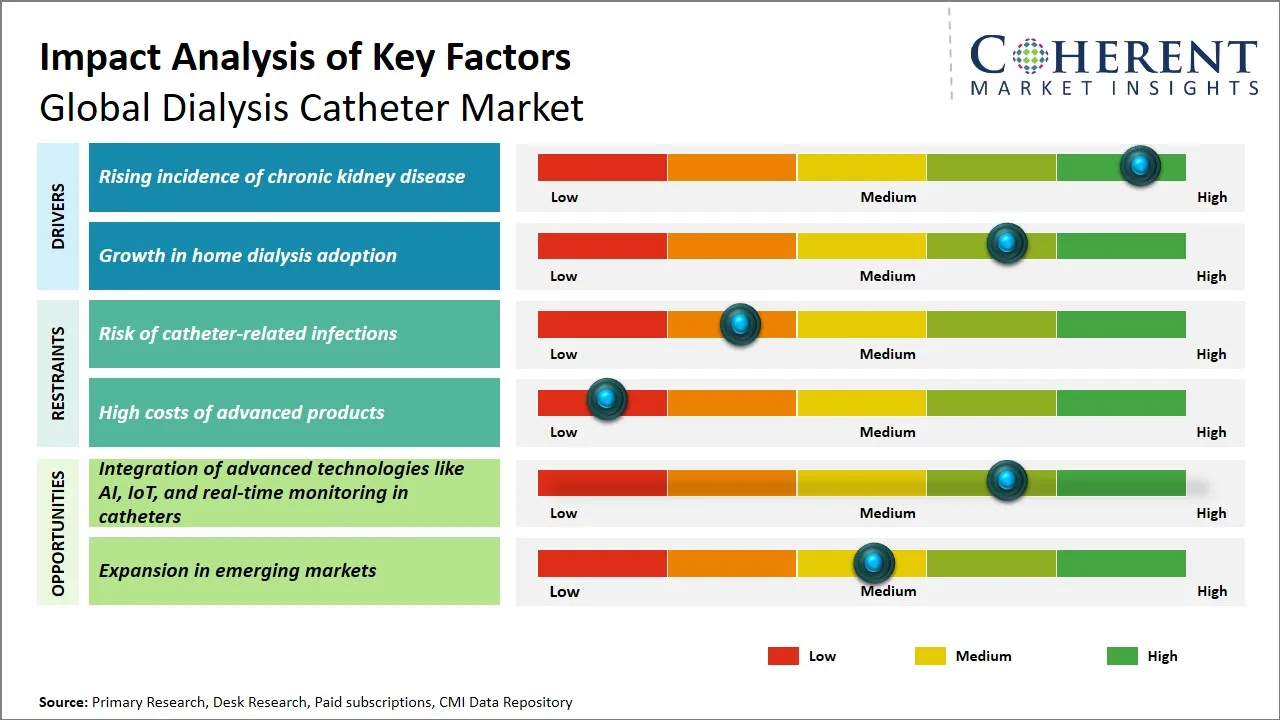
Dialysis Catheter Market Driver - Rising Incidence of Chronic Kidney Disease
The increasing prevalence of chronic kidney disease (CKD) worldwide has become a significant factor driving the demand for dialysis catheters. As CKD progresses to end-stage renal disease (ESRD), patients require renal replacement therapies, predominantly hemodialysis, to sustain life. This dependence on dialysis treatments has led to the sustained usage of vascular access devices, particularly dialysis catheters, which serve as critical lifelines for patients requiring frequent and efficient blood filtration. Factors contributing to the rise in CKD cases include aging populations, a surge in diabetes and hypertension incidences, and lifestyle-related health issues, all of which exacerbate kidney function deterioration. Consequently, healthcare providers are witnessing a growing need to implant reliable, infection-resistant, and easy-to-maintain dialysis catheters to manage this patient population effectively.
According to National Kidney Foundation, Inc., in March 2025, kidney disease claimed 57,937 U.S. lives in 2022, surpassing deaths from breast and prostate cancer. An estimated 35.5 million adults about 1 in 7 live with the condition, yet 90% remain undiagnosed, including 40% of those with severe stages. The American Heart Association reports CKD deaths have risen 24% since 1990 and emphasize its strong connection to heart disease. To address this, Novo Nordisk, Boehringer Ingelheim, and DaVita are supporting the AHA’s CKM Health Initiative, which promotes early detection, evidence-based treatment, and integrated patient care.
Dialysis Catheter Market Opportunity: Integration of Advanced Technologies like AI, IoT, and Real-Time Monitoring in Dialysis Catheters
The integration of advanced technologies such as Artificial Intelligence (AI), the Internet of Things (IoT), and real-time monitoring systems in dialysis catheters presents a significant growth opportunity for the global dialysis catheter market. These innovations have the potential to revolutionize patient care by enabling continuous health monitoring, early detection of complications, and personalized treatment adjustments. AI algorithms can analyze vast amounts of patient data to predict catheter-related infections or thrombosis before symptoms appear, facilitating proactive interventions. IoT-enabled catheters can transmit real-time data to healthcare providers, allowing remote monitoring and reducing the need for frequent hospital visits, which enhances patient convenience and lowers healthcare costs. Additionally, real-time monitoring systems can track critical parameters such as blood flow, pressure, and catheter positioning, improving the efficacy and safety of dialysis treatments. The adoption of smart catheters leveraging these technologies aligns with the rising demand for minimally invasive and precision medicine, driving market adoption.
In June 2025, Renalyx Health Systems Pvt. Ltd., an India-based renal care technology company, introduced RENALYX RxT 21, the country’s first fully indigenous AI and cloud-enabled smart hemodialysis machine with integrated catheter compatibility. Priced far lower than imported options the system offers real-time remote monitoring and clinical connectivity to make dialysis more affordable and accessible, particularly in semi-urban and rural regions. By supporting catheter-based dialysis along with advanced monitoring features, the RxT 21 aims to reduce overall treatment costs and bridge critical gaps in India’s renal care infrastructure.
Analyst Opinion (Expert Opinion)
- The dialysis catheter market is being shaped by steady growth in global dialysis demand, particularly as the prevalence of chronic kidney disease rises across aging populations. End users and providers continue to look for catheters that improve infection control and patient comfort, driving technological advances such as antimicrobial coatings and ultrasound-guided placement techniques. Regulatory support, particularly USFDA approvals for catheter lock solutions like DefenCath, signals stronger confidence in safety-driven innovation, while reimbursement frameworks such as CMS’s TDAPA add momentum for adoption. Opportunities are also opening up in home hemodialysis, where user-friendly catheter systems could reduce reliance on hospital-based care. At the same time, the market still grapples with challenges—chief among them cost barriers in emerging economies, recurring device-related complications, and the pressing need for training and integration in non-hospital settings.
- Knowledge-sharing platforms have played a role in accelerating this momentum. International nephrology gatherings such as the American Society of Nephrology’s Kidney Week, the European Renal Association’s Congress, and the World Congress of Nephrology have in recent years spotlighted vascular access innovations and safety protocols, bringing regulators, clinicians, and device makers together. On the practical side, initiatives such as Fresenius Medical Care’s launch of the NxStage VersiHD with GuideMe software, or Max Healthcare and NephroPlus’s collaboration to expand home dialysis in India, show how industry and providers are reshaping patient care. These examples underline that growth in the dialysis catheter space will come not only from product innovation, but also from partnerships, supportive policies, and a more patient-centered approach that blends clinical safety with accessibility.
Speak to the analyst
Want personalized insights?
Take the findings above to one of our principal consultants, or have the report rebuilt around the segments, geographies and competitors you actually track.
Market Segmentation
- Product Type Insights (Revenue, USD Bn, 2021 - 2033)
- Catheters (standalone devices)
- Hemodialysis (HD) catheters
- Long-Term Catheters (e.g., cuffed tunneled catheters)
- Short-Term Catheters (e.g., non-tunneled catheters)
- Peritoneal dialysis (PD) catheters
- Hemodialysis (HD) catheters
- Catheter Kits (including accessories like guidewires, dilators, sutures)
- Catheters (standalone devices)
- Design Insights (Revenue, USD Bn, 2021 - 2033)
- Single-Lumen
- Double-Lumen
- Triple-Lumen
- Age Group Insights (Revenue, USD Bn, 2021 - 2033)
- Adult
- Pediatric/Neonatal
- Tip Configuration (HD) Insights (Revenue, USD Bn, 2021 - 2033)
- Split-tip
- Step-tip
- Symmetric-tip (e.g., palindrome)
- Curved/Pre-curved
- Material Insights (Revenue, USD Bn, 2021 - 2033)
- Silicone
- Polyurethane
- Carbothane
- End User Insights (Revenue, USD Bn, 2021 - 2033)
- Hospitals/Acute care
- Dialysis centers
- Ambulatory surgical centers
- Home care settings
- Others
- Regional Insights (Revenue, USD Bn, 2021 - 2033)
- North America
- U.S.
- Canada
- Latin America
- Brazil
- Argentina
- Mexico
- Rest of Latin America
- Europe
- Germany
- U.K.
- Spain
- France
- Italy
- Russia
- Rest of Europe
- Asia Pacific
- China
- India
- Japan
- Australia
- South Korea
- ASEAN
- Rest of Asia Pacific
- Middle East
- GCC Countries
- Israel
- Rest of Middle East
- Africa
- South Africa
- North Africa
- Central Africa
- North America
- Key Players Insights
- Medtronic plc
- Becton, Dickinson and Company (BD)
- Braun Melsungen AG
- Fresenius Medical Care AG and Co. KGaA
- Teleflex Incorporated
- Cook Medical
- AngioDynamics, Inc.
- Nipro Corporation
- Baxter International Inc.
- Merit Medical Systems, Inc.
- Poly Medicure Limited
- Toray Medical Co., Ltd.
- Amecath Medical Technologies
- JMS Co., Ltd.
- Navilyst Medical (a subsidiary of AngioDynamics)
Sources
Primary Research Interviews
Industry Stakeholders list
- Nephrology department heads at tertiary hospitals
- Vascular access surgeons/interventional radiologists
- Dialysis clinic procurement managers
- Infection control specialists in dialysis units
- Clinical educators and vascular access nurses
- Supply chain managers in large hospital networks
End Users list
- Adult hemodialysis patients using CVCs
- Pediatric nephrology patients requiring temporary access
- Dialysis registered nurses
- Home hemodialysis program nurses
- Interventional radiology catheter lab staff
- Vascular access coordinators
Government and International Databases
- United States Renal Data System (USRDS)
- U.S. Food and Drug Administration (FDA) 510(k) / PMA device database
- FDA MAUDE (Manufacturer and User Facility Device Experience) database
- Centers for Medicare & Medicaid Services (CMS) ESRD program data
- European Union EUDAMED database
- World Health Organization (WHO) Global Health Observatory
Trade Publications
- Nephrology News & Issues
- Renal & Urology News
- Medical Device and Diagnostic Industry (MD+DI)
- MassDevice
- MedTech Dive
- Becker’s Hospital Review – Nephrology section
Academic Journals
- Kidney International
- Clinical Journal of the American Society of Nephrology (CJASN)
- American Journal of Kidney Diseases (AJKD)
- Nephrology Dialysis Transplantation (NDT)
- Journal of Vascular Access (JVA)
- Seminars in Dialysis
Reputable Newspapers
- The New York Times – Health section
- The Wall Street Journal – Healthcare & Life Sciences
- Financial Times – Healthcare coverage
- The Washington Post – Health & Science
- The Guardian – Global health reporting
- Reuters Health
Industry Associations
- American Society of Nephrology (ASN)
- International Society of Nephrology (ISN)
- European Renal Association (ERA)
- National Kidney Foundation (NKF)
- Vascular Access Society (VAS)
- UK Kidney Association
Public Domain Resources
- Global Health Data Exchange (GHDx)
- OECD Health Statistics Database
- UN Data / UN Comtrade
- Eurostat Health Database
- World Bank Open Data (Health Sector)
- Embase (open abstracts)
Proprietary Elements
- CMI Data Analytics Tool: Proprietary analytics tool to analyze real-time market trends, consumer behavior, and technology adoption in market
- Proprietary CMI Existing Repository of Information for Last 8 Years
Get access to 250+ pages report
Every segment, forecast, competitor profile and data table behind the analysis above — available for instant download.
- ESOMAR Member
- ISO 9001:2015 Certified
- D-U-N-S Registered
- GDPR & CCPA Compliant
Missing comfort of reading report in your local language? Find your preferred language:
Transform your Strategy with Exclusive Trending Reports
Frequently Asked Questions
The global dialysis catheter market is estimated to be valued at USD 1.79 Bn in 2026 and is expected to reach USD 3.34 Bn by 2033.
The CAGR of global dialysis catheter market is projected to be 9.3% from 2026 to 2033.
Rising incidence of chronic kidney disease and growth in home dialysis adoption are the major factors driving the growth of global dialysis catheter market.
Risk of catheter-related infections and high costs of advanced products are the major factors hampering the growth of global dialysis catheter market.
In terms of Product Type, Catheters (standalone devices) segment is estimated to dominate the market revenue share in 2026.
The market is expected to expand steadily, driven by technological advancements and increasing patient awareness.
Ultrasound-guided insertions, antimicrobial lock solutions, and improved materials are setting new standards.