

Global Dialyzer Market Size and Forecast – 2026 to 2033
The global dialyzer market is estimated to be valued at USD 4.61 Bn in 2026 and is expected to reach USD 7.35 Bn by 2033, exhibiting a compound annual growth rate (CAGR) of 6.9% from 2026 to 2033. The steady growth reflects increasing incidences of kidney diseases, rising demand for advanced dialysis devices, and expanding healthcare infrastructure across emerging economies. Innovations in dialyzer technology and integration of biocompatible materials also contribute significantly to market expansion.
Key Takeaways of the Global Dialyzer Market
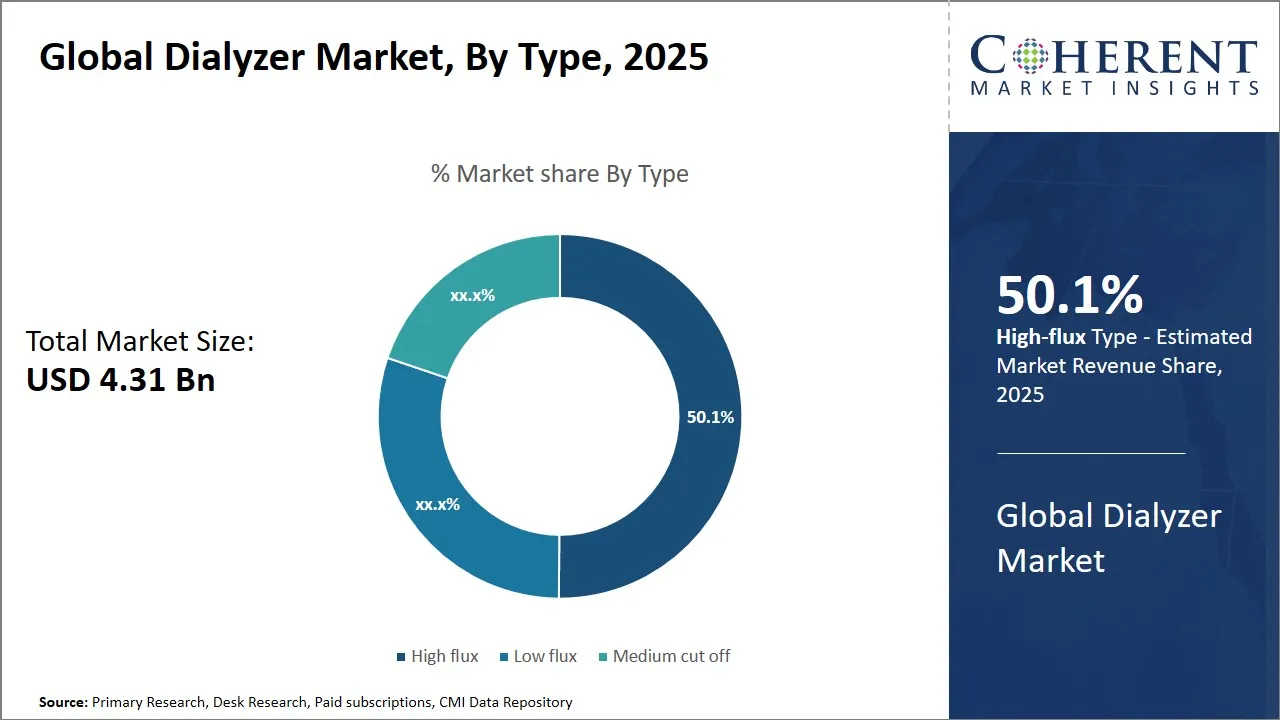
- The high-flux segment is expected to dominate the global dialyzer market, accounting for 51.1 % of the market share in 2026.
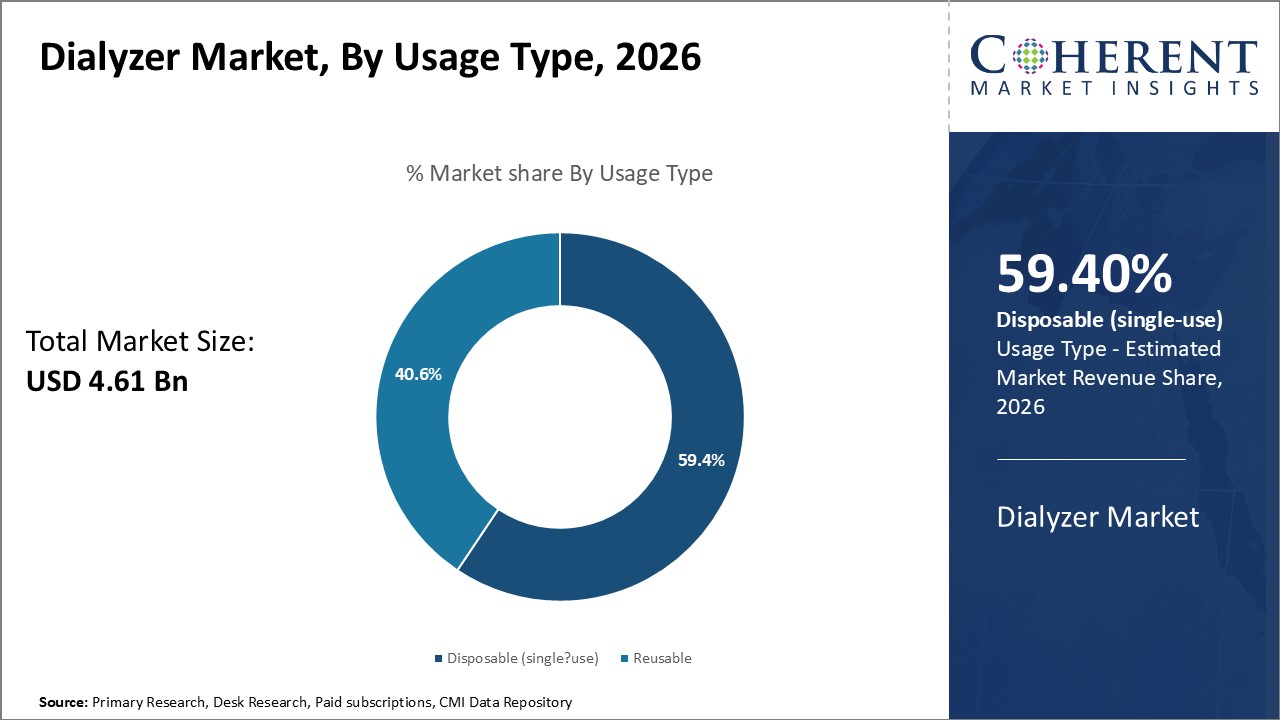
- Disposable (single-use) segment is projected to lead the market, capturing a 59.4% share in 2026.
- Cellulose-based segment continue to hold the largest share within the dialyzer market's membrane material segment, with a projected share of 34.8% in 2026.
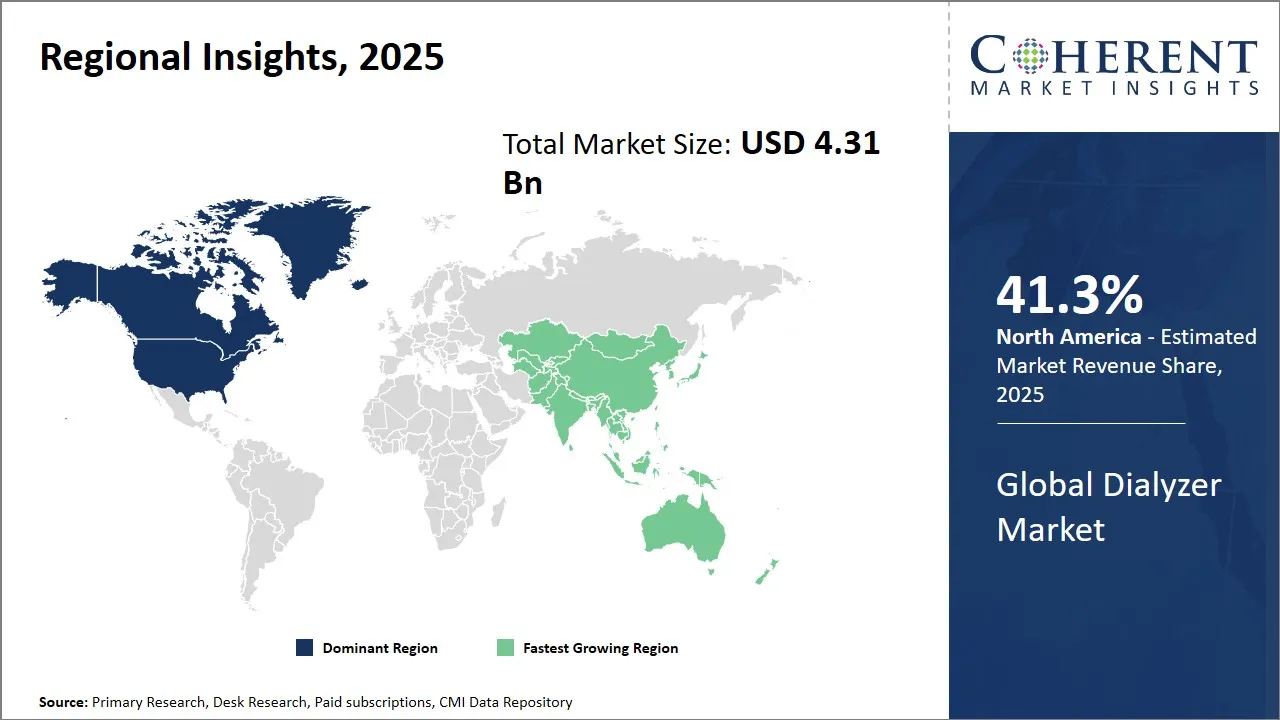
- North America is expected to lead the market, holding a share of 41.3% in 2026. Asia Pacific is anticipated to be the fastest-growing region, with a market share of 24.5% in 2026.
Market Overview
Current market trends indicate a shift towards personalized and more efficient dialysis treatments, with an emphasis on improving patient outcomes and comfort. The growing adoption of home-based dialysis systems and wearable dialyzers is transforming treatment paradigms, driven by advancements in digital healthcare and telemedicine. Moreover, regulatory support and increasing awareness about chronic kidney disease management are propelling market innovation, encouraging manufacturers to develop cost-effective and user-friendly dialyzers to meet the rising the demand globally.
Current Events and Its Impact
Current Events | Description and its Impact |
Advancements in Dialyzer Membrane Technology |
|
Accelerated Adoption of Home Dialysis Post-Pandemic |
|
Segmental Insights
- Current Industry Events of 2026
- Market Size Estimation
- Regional Breakdown
- Competitive Landscape
- Customer Intelligence
- Segmental Analysis
- Pricing Analysis
- Key Market Drivers, Challenges & Future Trends
- Customized Insights Section
Dialyzer Market Insights, By Type - High-flux Contributes the Highest Share of the Market Owning to its Superior Performance and Patient Outcomes
The high-flux segment is expected to capture 51.1% of the global dialyzer market share in 2026, primarily due to its abolishing toxin removal capacity during hemodialysis. The other types of dialyzers, that is, low-flux and medium cut-off, still use membranes with lower permeability compared to the High-flux ones thus the only high-flux can clear the middle and larger-sized molecules such as beta-2 microglobulin.
For instance, in November 2021, Fresenius Medical Care, with its FX CorAL dialyzer launched became the leading company in the global market for renal care products and services. As the FX CorAL aims at diminishing chronic dialysis patients' inflammation it is designed to maximize clinical performance and hemocompatibility. Featuring the Helixone hydro membrane, the dialyzer innovation reduces protein adsorption during blood filtration, thus lowering immune response induction while maintaining efficient removal of toxin and excess water.
Dialyzer Market Insights, By Usage Type - Disposable (Single-Use) Dialyzers Lead the Market due to Hygiene Benefits and Operational Efficiency
The global dialyzer market has been ruled by disposable (single-use), with an estimated market share of 59.4% in 2026, largely attributed to the concerns raised by infection control and procedural safety issues. Blood exposure and the presence of immunocompromised patients are the main factors leading to infection and cross-contamination which are the primary problems in hemodialysis.
Infection control by using disposable dialyzers entails that no cleaning or sterilization procedures are carried out between the sessions, thus the chances of transferring pathogens are reduced to the bare minimum. The single-use dialyzers' inherent advantage makes it become the main choice for the very patient-safety focused hospitals and dialysis centers.
Dialyzer Market Insights, By Membrane Material - Cellulose-Based Dialyzers Dominate Owing to their Cost-Effectiveness and Established Clinical Track Record
In 2026, membranes made from the cellulose-based segment will take the biggest slice of the pie in the dialyzer market with an estimated share of 34.8% and this trend will continue due to the lower price, which will allow their use also in developing countries where the budget is limited. On top of that, the long-standing clinical use of cellulose-based membranes has gained the trust of doctors and the dialysis units, which is a big plus for its economic aspect.
These membranes are often referred to as the ones one can rely on the most, and also the most effective when it comes to small solute and fluid removal via dialysis. Their specific structure facilitates ultrafiltration at high efficiency, thus making them compatible with regular dialysis procedures.
Technological Advancements in Dialyzer Membranes: Key Insights and Market Implications
Technology | Key Insights | Implications |
High‑flux vs Low‑flux Membranes | High‑flux: Larger pores, effective at removing middle‑molecule toxins, higher clearance rates. Low‑flux: Smaller pores, primarily removes small solutes. | High‑flux is gaining traction in developed markets; low‑flux remains relevant for price-sensitive segments. |
Synthetic vs Cellulose‑based Membranes | Synthetic (polysulfone, polyethersulfone) offer better biocompatibility and higher performance. Cellulose-based membranes are cheaper but have limitations in biocompatibility. | Synthetic membranes are premium products; cellulose membranes hold market share in cost-sensitive areas. |
Nanocomposite Membranes | Nanomaterials (graphene, carbon nanotubes) enhance biocompatibility and toxin clearance, reducing protein adsorption. | Nanocomposite membranes are a premium market segment, offering higher biocompatibility and better toxin removal. |
Regional Insights
North America Dialyzer Market Analysis and Trends
The North America is expected to lead the global dialyzer market with a share of 41.3% in 2026. The main driver being a very well-developed healthcare infrastructure, and it will mainly be due to the large number of top medical device manufacturers present in the region, along with government policies that are very supportive of advanced renal care treatments. The U.S. is at the forefront with a plethora of dialysis centers, as well as research institutes that are dedicated to improving dialysis technology.
The North America region has global leaders such as Becton Dickinson (NxStage Medical), Fresenius Medical Care, and Baxter International, whose innovative R&D efforts and widespread distribution networks reinforce the region’s market dominance.
Asia Pacific Dialyzer Market Analysis and Trends
Asia Pacific will experience the fastest growth in the global dialyzer market with a share of 24.5% in 2026, as a result of the increasing incidence of chronic kidney diseases, healthcare infrastructure extension, and government spending on healthcare reforms. Rapid urbanization and growing people’s awareness of kidney health have led to increased demand for dialysis devices in countries like China and India.
Additionally, the region benefits from a growing base of cost-sensitive consumers, prompting key players to introduce affordable dialyzer solutions. Local manufacturers along with global companies such as Nipro Corporation, Toray Industries, and Asahi Kasei Medical are intensifying their presence through product launches and collaborations.
Global Dialyzer Market Outlook for Key Countries
U.S. Dialyzer Market Analysis and Trends
The dialyzer market of the U.S. is on the top spot of the global dialyzer market thanks to the great technologies that have been adopted and the massive number of patients that need to go through dialysis. The major companies like Fresenius Medical Care and Baxter International take part in the invention of new products by investing in the so-called e-coochemicals and regenerative therapies. Moreover, the government of the United States through quality care programs and reimbursement schemes keeps the demand for advanced dialysis machines at a steady pace, thus, indirectly supporting the industry.
In December 2024, Fresenius announced the U.S. launch of Hemodiafiltration (HDF) in 2026, aiming to transform kidney care. HDF, showcased at Kidney Week 2024 with the 5008X dialysis machine, offers clinical benefits like fewer hospitalizations and improved mortality outcomes.
Germany Dialyzer Market Analysis and Trends
The dialyzer market in Germany is a benefactor of the robust healthcare system that the government policies are patient care-centric, and there are health insurance schemes that help the patients reach the dialysis treatment. The global headquarters of Baxter has an impact on local innovation and the supply chain by the presence of the company in Germany. Germany assures the distribution of dialyzers that meet the safety and effectiveness levels by the commitment to strict regulations.
In August 2024, Baxter completed the USD 3.8 billion sale of its Vantive kidney-care business to Carlyle Group, forming an independent company dedicated exclusively to renal therapies. This move aims to streamline operations and enhance focus on the growing renal treatment sector.
China Dialyzer Market Analysis and Trends
The growth of China dialyzer market is the result of the rising number of kidney disease cases and the central government’s efforts to improve the management of chronic diseases’ infrastructure, which are the main causes of the present situation. The healthcare spending is increasing, and more dialysis centers are being established in cities and rural areas which, in their turn, are creating a very strong market scenario for the future.
In August 2024, BenQ Dialysis Technology launched its Qflux dialyzer, E-Strong Dialysate, and E-Strong Dialysis Powder. Established in 2014, the company focuses on providing high-quality dialysis solutions. With over 40 years of manufacturing experience, BenQ collaborates with global partners, including BenQ Biotech, K2 International, E-Strong Technology, in China, to enhance patient care worldwide.
India Dialyzer Market Analysis and Trends
The India dialyzer market is still leading mainly due to its numerous patients suffering from chronic kidney diseases and the increased accessibility of healthcare in tier 2 and tier 3 cities to the hospitals. Companies especially those that manufacture locally and the globally renowned like Becton Dickinson and Fresenius are all set to offer dialyzer products at lower prices and especially the ones that are up to the standard for the price-sensitive market segment.
In October 2024, Nephro Care India Limited (NCIL) announced the development of an AI-enabled Smart Haemodialysis Machine aimed at making renal care more affordable and accessible.
Sustainability & Circular Economy in Dialysis Devices
The market for dialysis devices is increasingly focusing on sustainability and circular economy principles, aiming to reduce environmental impact.
- Recyclable Dialyzers: Manufacturers are looking for ways to make dialysis devices, like dialyzers, recyclable. This reduces the environmental footprint by minimizing waste.
- Reduced Plastic Use: Efforts are being made to cut down on plastic use in dialysis devices and their packaging. This is to avoid plastic waste that usually ends up in landfills or incinerators.
- Energy-Efficient Dialysis Centers: Dialysis centers are focusing on using energy-efficient equipment to lower energy consumption and reduce carbon emissions. These measures include improving the use of water, electricity, and heating/air-conditioning systems in dialysis clinics.
Market Players, Key Developments, and Competitive Intelligence
Key Developments
- In June 2025 the company Renalyx Health Systems Pvt. Ltd. launched the “RENALYX – RxT 21”, India’s first fully indigenous, AI‑and cloud‑enabled smart hemodialysis machine designed for the dialyzer market; offers real‑time remote monitoring and clinical connectivity to make dialysis more accessible in semi‑urban and rural regions.
- In January 2025, Four Square Medical Center in Tamil Nadu launched the Dimi Home Dialysis Machine, a state-of-the-art solution designed to improve dialysis treatment at home. This advanced machine stands out by operating without the need for Reverse Osmosis (RO), making it more accessible, efficient, and environmentally friendly.
- In December 2024, the Andoorkonam Grama Panchayat in Kerala launched a project to provide dialyzers and related equipment to impoverished kidney‑patients; the launch event saw distribution to 14 patients and the initiative was described as the first such effort by a grama panchayat in the state.
- In August 2023, Kenyatta University Teaching, Referral & Research Hospital (KUTRRH) in Kenya launched 20 new dialysis machines, boosting its renal care capacity. The machines, purchased by the Government of Kenya, enhance the hospital’s existing equipment and are crucial for treating kidney diseases affecting millions.
Top Strategies Followed by Global Dialyzer Market Players
- The established corporations which are generally the leading ones in their respective industries have a very strong focus on the research and development (R&D) sector as their primary means to innovate through high-performance dialyzers. These companies have made R&D their main priority and consequently, they are able to launch products with better biocompatibility, faster ultrafiltration rates, and superior patient outcomes to keep their technology ahead of others.
- Davita Inc. which is the leading company in the global dialyzer market for dialysis care is very much involved in R&D to improve the performance of the dialysis machine and the patient outcomes. The company’s innovation such as biocompatibility and membrane technology guarantees that they will be ruling the market even with so much competition.
- The mid-market players in the dialyzer business take a different route, directing their resources towards offering economical products that are of good quality and affordable at the same time. This category of the industry realizes the increasing demand of the market for cheap dialysis treatment in the economically sensitive areas thus, they modify their product lines to fulfill this demand without letting go of the standard of performance that is most essential.
- Sorin Group, a former medical device company and now a part of LivaNova, unburdens hospitals by providing them with low-cost class of products that though offering performance reliability are still cheaper. Their dialyzers for LivaNova product line are made for the price conscious but still quality care market.
- The small players in the global dialyzer market segmentation are likely to set themselves apart by either targeting a small segment or providing an innovative product feature that meets specific needs of patients or challenges in clinical practice. They might also be using the latest technologies such as advanced membrane materials or miniaturization to remain competitive even against larger firms.
- Smaller companies like Medica and Toray Industries often focus on the niche by offering specific dialyzers with their novel solutions. Taking Medica as a case, it is concentrating its efforts on the creation of small-sized dialysis machines that are fit for home usage, thereby attracting the patients who like personalized treatment.
Market Report Scope
Dialyzer Market Report Coverage
| Report Coverage | Details | ||
|---|---|---|---|
| Base Year: | 2025 | Market Size in 2026: | USD 4.61 Bn |
| Historical Data for: | 2020 To 2024 | Forecast Period: | 2026 To 2033 |
| Forecast Period 2026 to 2033 CAGR: | 6.9% | 2033 Value Projection: | USD 7.35 Bn |
| Geographies covered: |
| ||
| Segments covered: |
| ||
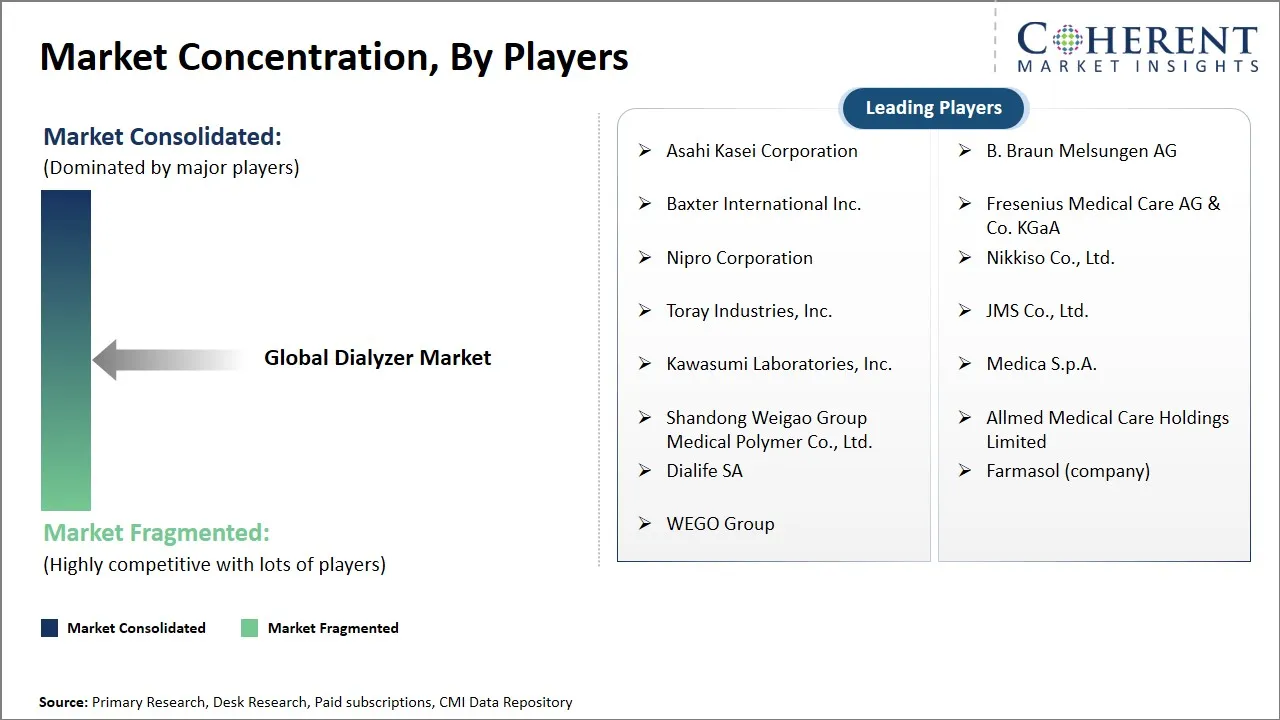
| Companies covered: | Asahi Kasei Corporation, B. Braun Melsungen AG, Baxter International Inc., Fresenius Medical Care AG & Co. KGaA, Nipro Corporation, Nikkiso Co., Ltd., Toray Industries, Inc., JMS Co., Ltd., Kawasumi Laboratories, Inc., Medica S.p.A., Shandong Weigao Group Medical Polymer Co., Ltd., Allmed Medical Care Holdings Limited, Dialife SA, Farmasol (company), and WEGO Group | ||
| Growth Drivers: |
| ||
| Restraints & Challenges: |
| ||
Dialyzer Market Dynamics
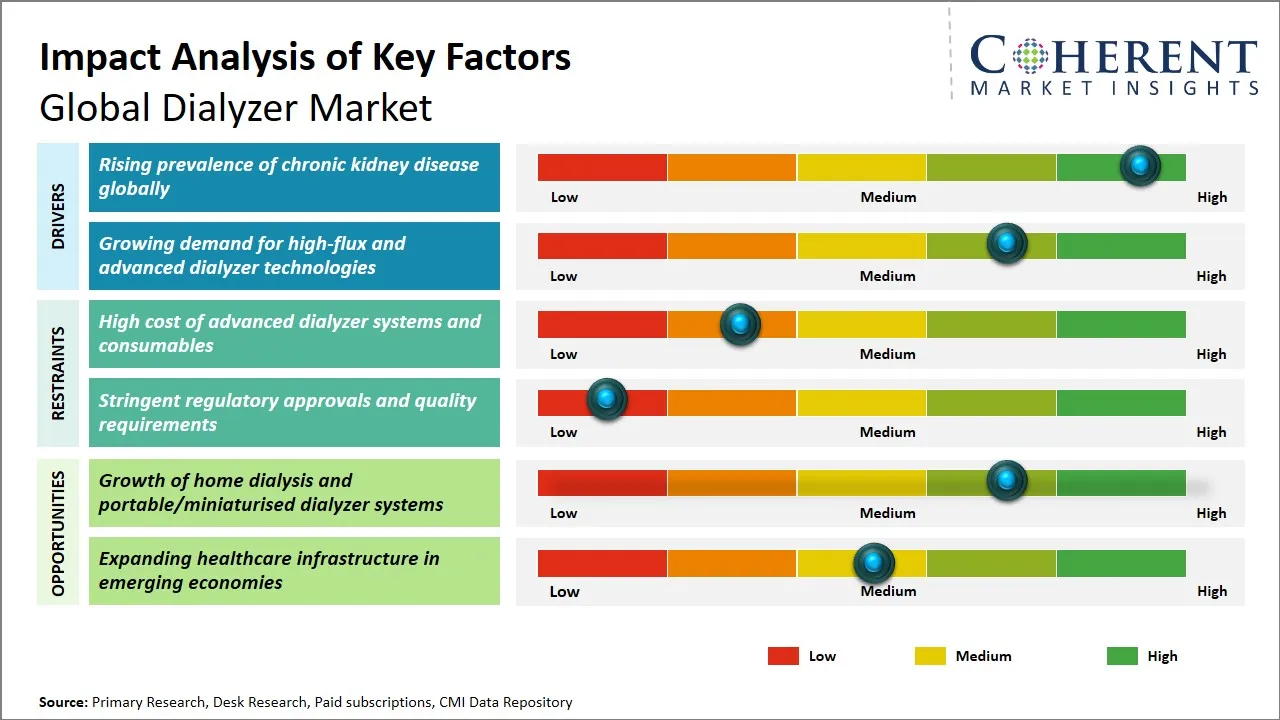
Dialyzer Market Driver - Rising Prevalence of Chronic Kidney Disease Globally
The global increase in the occurrence of chronic kidney disease (CKD) is one of the main reasons for the increasing demand for dialyzers. Changes in lifestyles, old age, and the increasing numbers of diabetes and hypertension patients have all played a part in the growing numbers of people who end up developing kidney function impairment and even reaching the stage of needing a transplant (ESRD) in most cases. If more and more people suffer from kidney failure, then there will be a bigger population of patients who need renal replacement therapies like hemodialysis, which in turn, will lead to more usage of dialyzers. Moreover, hemodialysis has become more accessible due to better healthcare infrastructures especially in developing countries that have made it easier to detect and treat CKD.
In November 2025, according to Institute for Health Metrics and Evaluation, chronic kidney disease (CKD) affected nearly USD 800 million people globally, with a rising prevalence since 1990. CKD was the ninth-leading cause of death in 2023, responsible for USD 1.5 million deaths. Diabetes, hypertension, and obesity remain key risk factors, with countries like China and India having the highest rates of CKD. Early detection is crucial, as many individuals remain undiagnosed until the disease is advanced.
Dialyzer Market Opportunity - Expansion of Home Dialysis and Portable/Miniaturized Dialyzer Systems
The increasing use of home dialysis and the creation of portable and miniaturized dialyzer systems is a major opportunity for the global dialyzer market. Medical technology has been so advanced that lately, home dialysis has been very much accepted and patients with chronic kidney disease are performing treatment outside of the traditional hospital setting which improves their life standard in terms of comfort, convenience, and quality. In addition to this, the factors that are mainly driving the change include the patients’ preference for being independent, the increasing number of old people, and the pressure on the healthcare system in many areas.
In November 2022, Baxter International presented data at Kidney Week, showcasing its Sharesource remote patient management system, which reduced adverse events in home dialysis patients. The company also highlighted its Theranova dialyzer, which effectively removes large middle molecules while preserving albumin, offering improved dialysis outcomes.
Analyst Opinion (Expert Opinion)
- Technological progress in the field of membrane materials and smart sensors is the main driver of the growth of the dialyzer market, which is also improving treatment efficacy and patient experience. The quality standards in the U.S. and Europe are being upheld with the help of regulatory support, while chronic kidney disease prevalence and healthcare investments are the two major factors driving demand. Nevertheless, high costs and access issues in developing countries are some of the challenges that are still with us.
- Among the emerging opportunities is home dialysis, a patient-centered service that will be expanded in the near future as more patients will demand flexible care options. Major conferences such as ISN World Congress and Kidney Week have been the ones to share the very first flashes of knowledge, suggest new things and help authorities draw up rules for the industry. Such events are still going ahead, in giving the industry a chance to collaborate and they will definitely be the ones mime the future of the dialysis treatments.
Speak to the analyst
Want personalized insights?
Take the findings above to one of our principal consultants, or have the report rebuilt around the segments, geographies and competitors you actually track.
Market Segmentation
- Type Insights (Revenue, USD Bn, 2021 - 2033)
- High‑flux
- Low‑flux
- Medium cut‑off
- Usage Type Insights (Revenue, USD Bn, 2021 - 2033)
- Disposable (single‑use)
- Reusable
- Membrane Material Insights (Revenue, USD Bn, 2021 - 2033)
- Cellulose‑based
- Modified/substituted cellulose
- Synthetic polymer
- PMMA/Other specialty materials
- Sterilization Method Insights (Revenue, USD Bn, 2021 - 2033)
- Steam Sterilization
- Gamma Radiation Sterilization
- Ethylene Oxide (ETO) Sterilization
- End User Insights (Revenue, USD Bn, 2021 - 2033)
- Hospitals and clinics
- Dialysis centres
- Home care/home dialysis
- Ambulatory surgical centres
- Regional Insights (Revenue, USD Bn, 2021 - 2033)
- North America
- U.S.
- Canada
- Latin America
- Brazil
- Argentina
- Mexico
- Rest of Latin America
- Europe
- Germany
- U.K.
- Spain
- France
- Italy
- Russia
- Rest of Europe
- Asia Pacific
- China
- India
- Japan
- Australia
- South Korea
- ASEAN
- Rest of Asia Pacific
- Middle East
- GCC Countries
- Israel
- Rest of Middle East
- Africa
- South Africa
- North Africa
- Central Africa
- North America
- Key Players Insights
- Asahi Kasei Corporation
- Braun Melsungen AG
- Baxter International Inc.
- Fresenius Medical Care AG & Co. KGaA
- Nipro Corporation
- Nikkiso Co., Ltd.
- Toray Industries, Inc.
- JMS Co., Ltd.
- Kawasumi Laboratories, Inc.
- Medica S.p.A.
- Shandong Weigao Group Medical Polymer Co., Ltd.
- Allmed Medical Care Holdings Limited
- Dialife SA
- Farmasol (company)
- WEGO Group
Sources
Primary Research Interviews
Industry Stakeholders list
- Senior R&D executives at dialysis‑device manufacturers
- Procurement heads of dialysis‑equipment suppliers
- Regulatory‑affairs leads in dialysis OEM firms
- Clinical‑affairs directors focusing on hemodialysis membranes
- Global sales heads in home‑hemodialysis device companies
- Innovation heads at dialysis consumables manufacturers
End Users list
- Heads of nephrology departments in large dialysis centres
- Procurement managers of home‑dialysis service providers
- Clinical operations managers in renal‑care networks
- Biomedical engineers specializing in hospital dialysis equipment
- National dialysis network administrators in emerging markets
- Reimbursement/payer specialists in dialysis service providers
Government and International Databases
- Organization for Economic Co‑operation and Development (OECD) Health Statistics database
- International Society of Nephrology Global Kidney Health Atlas surveys
- National health ministry medical‑device utilization/registry datasets (major markets)
- National end‑stage renal disease (ESRD) registries by country
- Government healthcare provider reimbursement databases (dialysis & consumables)
- World Health Organization Global Health Observatory kidney‑disease datasets
Trade Publications
- Dialysis‑equipment supply‑chain magazines
- Renal‑care industry newsletters (hemodialysis consumables)
- Home‑hemodialysis‑device trade journals
- Hospital‑procurement and medical‑device sourcing publications
- Nephrology‑industry supply‑chain specialist titles
- Medical‑device innovation & market‑trend magazines (dialysis focus)
Academic Journals
- “Global Epidemiology of End‑Stage Kidney Disease and Disparities” (peer‑review article)
- “Global data monitoring systems and early identification for kidney care” (journal)
- Systematic review of dialysis membrane innovations (academic article)
- Clinical outcomes in dialysis across countries and regions (peer‑review)
Reputable Newspapers
- Major global newspapers’ healthcare
- Financial‑times articles on investment in dialysis services/infrastructure
- National business daily reports on dialysis centre expansion in Asia‑Pacific/Latin America
- Healthcare‑industry special reports in top newspapers (dialysis service growth)
- Region‑specific reputable newspapers covering home‑dialysis market demand
- Business & trade news portals with analyses on medical‑device markets and dialysis
Industry Associations
- International Society of Nephrology (ISN)
- European Renal Association (ERA)
- UK Kidney Association
- International Renal Care Association (IRCA)
- Kidney Care Council (USA)
- National renal‑care professional societies in key emerging markets
Public Domain Resources
- OECD working‑papers on kidney‑disease economics
- Government health‑report datasets on dialysis utilization
- Clinical‑trial registries for dialyzer technologies
- Publicly available patent‑filing databases (dialysis membranes & systems)
- Free academic pre‑print repositories for kidney‑care research
- National dialysis registry summary reports with utilization statistics
Proprietary Elements
- CMI Data Analytics Tool: Proprietary analytics tool to analyze real-time market trends, consumer behavior, and technology adoption in market
- Proprietary CMI Existing Repository of Information for Last 8 Years
Get access to 250+ pages report
Every segment, forecast, competitor profile and data table behind the analysis above — available for instant download.
- ESOMAR Member
- ISO 9001:2015 Certified
- D-U-N-S Registered
- GDPR & CCPA Compliant
Missing comfort of reading report in your local language? Find your preferred language:
Transform your Strategy with Exclusive Trending Reports
Frequently Asked Questions
The global dialyzer market is estimated to be valued at USD 4.61 Bn in 2026 and is expected to reach USD 7.35 Bn by 2033.
The CAGR of the global dialyzer market is projected to be 6.9% from 2026 to 2033.
Rising prevalence of chronic kidney disease globally and growing demand for high‑flux and advanced dialyzer technologies are the major factors driving the growth of the global dialyzer market.
High cost of advanced dialyzer systems and consumables and stringent regulatory approvals and quality requirements are the major factor hampering the growth of the global dialyzer market.
In terms of type, the High‑flux is estimated to dominate the market revenue share in 2026.
Asahi Kasei Corporation, B. Braun Melsungen AG, Baxter International Inc., Fresenius Medical Care AG & Co. KGaA, Nipro Corporation, Nikkiso Co., Ltd., Toray Industries, Inc., JMS Co., Ltd., Kawasumi Laboratories, Inc., Medica S.p.A., Shandong Weigao Group Medical Polymer Co., Ltd., Allmed Medical Care Holdings Limited, Dialife SA, Farmasol (company), and WEGO Group are the major players.
North America is expected to lead the global dialyzer market in 2026.