

Global Eubiotics Market Size and Forecast – 2026-2033
The global eubiotics market is estimated to be valued at USD 7.85 Bn in 2026 and is expected to reach USD 11.92 Bn by 2033, exhibiting a compound annual growth rate (CAGR) of 6.1% from 2026 to 2033. The steady growth can be attributed to the growing demand for natural and sustainable products in the animal health market, encouraged by regulatory changes and the growing awareness about antibiotic resistance. Growing livestock production and the preference for organics are other drivers of market growth.
Key Takeaways of the Global Eubiotics Market
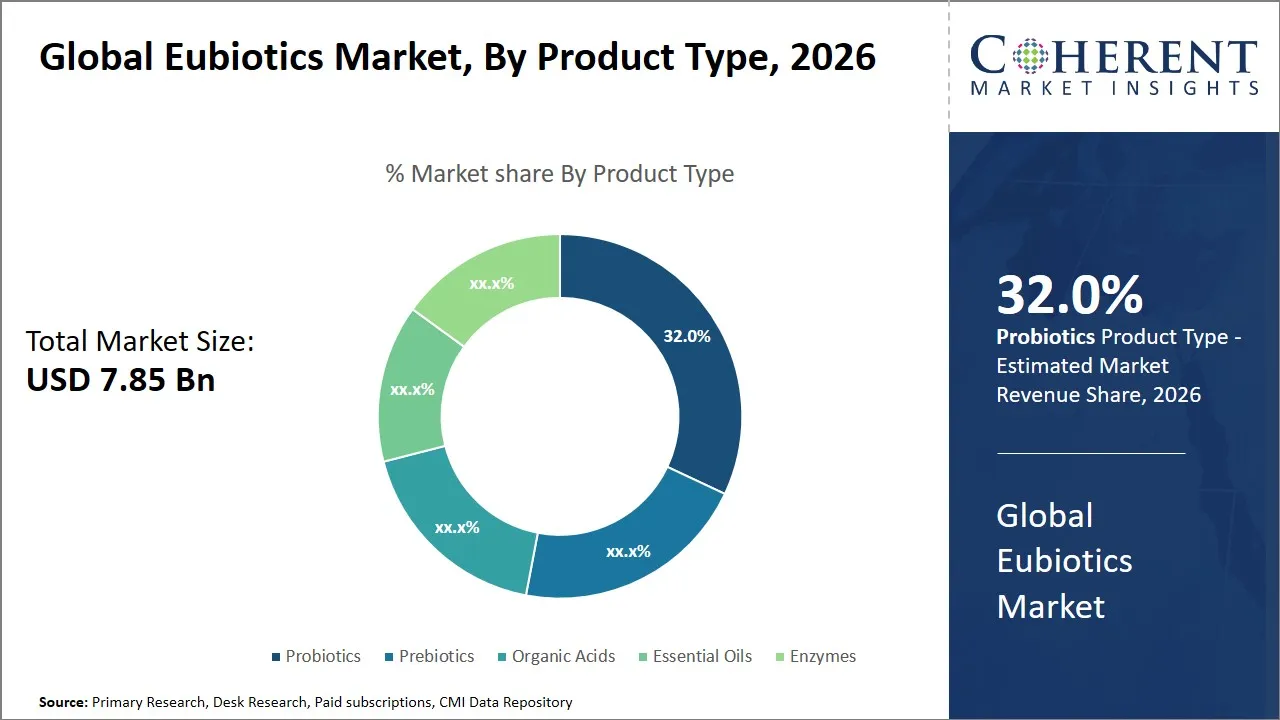
- The probiotics segment is expected to dominate the global eubiotics market, accounting for 32.0% share in 2026.
- The poultry segment is estimated to represent 36.0% of the global eubiotics market share in 2026.
- The dry segment is projected to capture 65.0% of the market share in 2026.
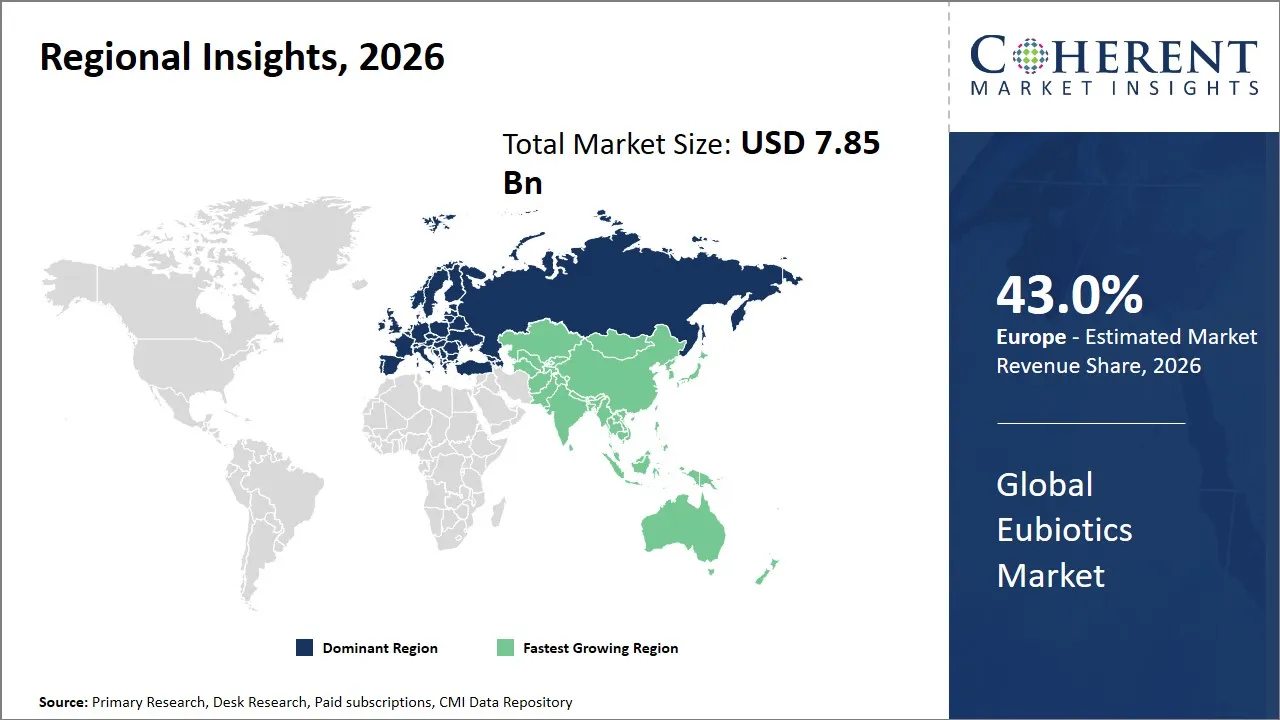
- Europe is expected to dominate the global eubiotics market in 2026, accounting for 43.0% share.
- Asia Pacific is anticipated to witness the fastest growth holding a market share of 28.0% in 2026.
Market Overview
- Eubiotics is a type of animal nutrition feed additive, which is used to support animal health by maintaining a balanced gut microbiota. Eubiotics include products like probiotics, prebiotics, organic acids, enzymes, and phytogenics.
- The eubiotics market is witnessing a high growth due to the rise in ban and restriction on the use of antibiotic growth promoters (AGPs) in different regions. This is motivating the livestock industry to use a more secure and sustainable option.
- Moreover, the growing demand for animal-derived products like meat and dairy products is fueling the production of livestock, which, in turn, is contributing to the growth of the eubiotics market, as animal nutrition is becoming important to increase livestock production and to reduce disease incidence.
Currents Events and their Impact
Current Events | Description and its Impact |
Regulatory Restrictions on Antibiotic Growth Promoters (AGPs) |
|
Rising Global Demand for Animal Protein |
|
Segmental Insights
- Current Industry Events of 2026
- Market Size Estimation
- Regional Breakdown
- Competitive Landscape
- Customer Intelligence
- Segmental Analysis
- Pricing Analysis
- Key Market Drivers, Challenges & Future Trends
- Customized Insights Section
Why Does the Probiotics Segment Dominate the Global Eubiotics Market in 2026?
The probiotics segment is anticipated to hold a market share of 32.0% in 2026, due to the growing awareness about animal health, productivity, and sustainable animal husbandry practices. Probiotics are beneficial microbes that are alive and play an important role in maintaining microbiological balance in animals. They are helpful in increasing nutrient assimilation and improving digestive efficiency. Probiotics are important in improving feed conversion ratios and providing an immune system against infections. They are very helpful in maintaining animal health and are in high demand in the poultry, pig, and ruminant sectors. Probiotics are very helpful in maintaining animal health while providing protection against infections.
The dominance of probiotics in the market can also be attributed to the global trend against antibiotic growth promoters (AGPs), which is supported by stringent legislation promoting antibiotic-free meat production. Probiotics are considered to be safe and effective alternatives to AGPs. In addition to this, constant innovation in probiotic technology is also helping to maintain its position in the market. Probiotics are also helpful in maintaining sustainable practices in animal husbandry by controlling emissions like ammonia and methane.
For instance, in April 2024, DSM Firmenich joined forces with Lallemand Health Solutions to develop symbiotic concepts, blending probiotics with Human Milk Oligosaccharides (HMOs). This represents a leap forward in microbiome-focused nutritional technology. While its primary application is in human nutrition, it also serves as a foundational technology for eubiotics.
(Source: DSM Firmenich)
Why Does the Poultry Segment Dominate the Global Eubiotics Market in 2026?
The poultry segment is projected to hold the highest market share of 36.0% in 2026, attributed to the high production intensity of the poultry business and the short growth cycles of these animals. Birds reared in such environments are more prone to diseases and stress. In order to control these problems, eubiotics have been found to be quite useful. They are basically of two kinds: probiotics and prebiotics. They are quite useful for maintaining the balance of the digestive system of the animals. With the increasing consumption of poultry products across the globe, farmers are opting for these eubiotics to maintain the growth of these animals.
The dominance is further enhanced by the growing trend towards antibiotic-free poultry production, which is being promoted by regulatory restrictions and changing consumer demand. Eubiotics have been identified as a solution to replace antibiotics in poultry production, which is achieved by enhancing immunity and reducing pathogens while maintaining production levels. Eubiotics are easy to deliver in poultry production, making them a highly suitable solution in this segment. Moreover, innovations in precision nutrition and species-specificity are enhancing the efficacy of eubiotics in poultry production, which is helping to address metabolic and environmental stress, thus enhancing their dominance in this segment.
The Dry Segment Dominates the Global Eubiotics Market
The dry segment is expected to dominate the eubiotics market, accounting for 65.0% share in 2026. This is because dry eubiotics outperform their liquid counterparts in terms of their usage and operational benefits. This is because they have a longer shelf life than liquid forms. This makes them more suitable for storage and transportation to different parts of the world. Unlike their liquid counterparts, dry forms such as powders and granules do not easily deteriorate when exposed to temperature and moisture fluctuations. This makes their viability in terms of their active components, such as probiotics, intact. This is particularly important in maintaining their performance in animal feed.
In addition, dry eubiotics have been shown to have higher compatibility with existing animal feed production processes, which include pelleting and extrusion. This has been done without any impact on the quality of animal feed. Moreover, dry eubiotics have been shown to have cost advantages, which include economies of scale. This has been shown to make them cheaper on a per-dose basis. This is a critical factor in a competitive world. Moreover, dry eubiotics have shown their advantage in terms of dosing and uniformity. This has been shown to be effective across herds and flocks. All these factors have cumulatively contributed to the supremacy of dry eubiotics.
Impact of Antibiotic Growth Promoter (AGP) Restrictions and Evolving Antimicrobial Regulatory Policies on the Global Eubiotics Market
Key Regulatory Factor | Detailed Description of Policy/Trend | Resulting Impact on Eubiotics Market Growth and Adoption |
Regulatory Restrictions on Antibiotic Growth Promoters (AGPs) | Governments across major regions (e.g., U.S., Europe, and parts of Asia Pacific) have implemented strict regulations limiting or banning the use of antibiotic growth promoters in animal feed to address antimicrobial resistance (AMR). | Creates direct substitution demand for eubiotics such as probiotics, prebiotics, and organic acids as safer, natural alternatives. |
Increased Veterinary Oversight and Compliance Requirements | Regulatory bodies are enforcing veterinary supervision, prescription-based antibiotic usage, and monitoring systems to control antimicrobial use in livestock production. | Encourages structured adoption of preventive solutions like eubiotics, increasing their integration into routine feed practices. |
Global and National AMR Action Plans | International organizations (WHO, FAO, WOAH) and national governments are promoting responsible antimicrobial use through coordinated AMR strategies and policies. | Strengthens long-term market demand for eubiotics as part of sustainable livestock health management systems. |
Shift Toward Antibiotic-Free and Clean Label Production | Rising regulatory pressure and retailer requirements for “antibiotic-free” or “raised without antibiotics” labeling in animal-derived products. | Increases adoption of eubiotics to meet compliance standards and cater to evolving consumer preferences. |
Regional Insights
Europe Eubiotics Market Analysis and Trends
The Europe region is projected to lead the market with a 43.0% share in 2026, attributed to the presence of a well-developed agricultural and livestock industry, along with stringent government regulations. The governments of the countries in Europe have been promoting sustainable agricultural practices, along with a ban on the use of antibiotic growth promoters. This has led to a rise in the use of eubiotics as a natural growth promoter.
The presence of a well-developed animal feed sector, coupled with support from industry players such as Evonik Industries, BASF SE, and Chr. Hansen Holding A/S, has led to the development of eubiotic products in a variety of animals. Trade policies in the countries of the EU have led to the creation of a seamless trade system, coupled with a well-developed research sector. This has led to the creation of a well-developed market.
For instance, Under Regulation (EC) No 1831/2003, the European Union has implemented a total ban on antibiotic growth promoters in animal feed, which has been in place since January 2006, in order to combat antimicrobial resistance and to promote safe livestock production. Such a move has greatly helped to accelerate the use of eubiotics in the region.
(Source: European Union)
Asia Pacific Eubiotics Market Analysis and Trends
Asia Pacific is anticipated to witness the fastest growth, holding a market share of 28.0% in 2026, driven by increase in livestock production, demand for animal protein, and awareness about animal health and food safety. The governments in countries like China, India, and Vietnam have started to introduce regulations to ban the use of conventional antibiotics, thus driving the demand for eubiotics.
The region is also home to some large-scale animal feed producers like Adisseo (China), Kemin Industries (regional offices), and LALLEMAND Inc., which would help in driving the eubiotics market in the region. Moreover, trade agreements in countries like ASEAN and the use of modern farming techniques would add to the growth of the eubiotics market in the Asia Pacific region.
Eubiotics Market Outlook for Key Countries
How is Germany Helping in the Growth of the Eubiotics Market?
Germany is at the forefront owing to its focus on sustainable animal production without the use of antibiotics. The country has robust policies by the government to encourage the reduction of antibiotic use, which are backed up by a stringent regulatory environment. The major players in Germany, such as BASF and Evonik, are using the robust research environment to their advantage to drive innovation in the eubiotics industry, especially for probiotics and phytogenic compounds. The country has a well-established animal industry, which provides a robust market, as well as an export-oriented industry, which gives them a chance to influence the market in the EU.
For instance, the Federal Government of Germany, Die Bundesregierung introduced DART 2030 (German Antimicrobial Resistance Strategy) that highlights the need to decrease the use of antibiotics in livestock through rigorous monitoring. The DART strategy encourages the adoption of sustainable animal health management practices, which include the use of alternative feed solutions. This has further increased the adoption of eubiotics as an alternative.
(Source: Die Bundesregierung)
How is China Helping in the Growth of the Eubiotics Market?
China is at the forefront in the expanding eubiotics market in Asia Pacific, driven by the growing animal farming industry and the government’s initiatives to improve animal health standards. The policy initiatives to prohibit AGP use are a shot in the arm for the growth of eubiotics. The key players are increasing their activities in this region, with a focus on providing customized solutions in the poultry, swine, and aquatic segments. The large market base in combination with increased investment in feed technology makes China a major contributor to the global eubiotics market.
Key Drivers for the Growth of the U.S. Eubiotics Market
The eubiotics market in the U.S. is marked by robust regulatory frameworks, which support the use of fewer antibiotics in animal feed, as well as rising consumer interest in natural animal products. Organizations like DuPont Nutrition & Biosciences and Novozymes are heavily invested in the development of eubiotics technology, which includes probiotics and enzymes. The agricultural system in the U.S. is robust, and there is a high volume of livestock rearing, especially poultry and cattle. The trade policies in the U.S. also support the export of high-quality feed additives.
India Eubiotics Market Trends
India's eubiotics industry is growing in proportion to the country's growing livestock population, and the country's regulatory environment is gradually becoming conducive to the use of antibiotic substitutes. Domestic and multinational companies like Kemin Industries and Natural Remedies are at the forefront in introducing eubiotics to small and large-scale farmers across the country.
The government is taking steps to improve animal health and productivity, and awareness about zoonotic diseases is on the rise, thus fueling the demand. Trade development and the growth of feed mills are helping to penetrate the market in rural and urban livestock operations.
Feed Additive Approval Frameworks, Product Registration Requirements, and Labeling Standards Across Key Markets
Key Market Factor | Detailed Description of Industry Practice | Resulting Impact on Eubiotics Market |
Feed Additive Authorization & Approval Processes | Eubiotics (probiotics, prebiotics, organic acids) must undergo strict safety and efficacy evaluations before approval for use in animal feed across regions. | Creates high entry barriers, favoring established players with strong regulatory expertise and validated product portfolios. |
Product Registration & Compliance Requirements | Country-specific registration procedures (e.g., strain documentation, safety trials, labeling compliance) are mandatory before commercialization. | Slows time-to-market but ensures product quality and standardization, increasing trust among end users. |
Labeling and Claims Regulations | Regulations govern how eubiotics can be marketed (e.g., gut health claims, performance benefits, antibiotic replacement positioning). | Limits overstatement of benefits but enhances credibility and transparency in product positioning. |
Import/Export and Trade Compliance | Cross-border trade of feed additives requires compliance with regional standards, certifications, and documentation. | Impacts global supply chains and distribution strategies, influencing market expansion and pricing dynamics. |
Market Players, Key Developments, and Competitive Intelligence
Key Developments
- In March 2025, IFF (International Flavors & Fragrances) expanded its Enviva PRO range of probiotics to improve health and performance in swine. The solution improves gut health and reduces the risk of disease, supporting the increasing demand for microbiome-based, antibiotic-free feed additives in the eubiotics market.
- In January 2025, NOVUS International Inc. partnered with Resilient Biotics to create a microbiome-based solution designed to boost swine health and cut down on respiratory illnesses. This partnership developed feed additives that prioritize gut health, without the use of antibiotics.
- In February 2023, Adisseo finalized its purchase of Nor-Feed, a company focused on plant-based feed additives. This acquisition enhanced Adisseo's phytogenic solution lineup, responding to the rising demand for natural, antibiotic-free feed additives in the eubiotics field.
Top Strategies Followed by Global Eubiotics Market Players
Player Type | Strategic Focus | Examples |
Established Market Leaders | Established market leaders significantly investment in R&D, product innovation, and sustainability/antibiotic alternatives. Strategic partnerships and expansion in global presence to emerging markets. | In March 2024, DSM-Firmenich launched advanced probiotic solutions in the animal nutrition segment, including areas such as gut health, feed efficiency, and antibiotic-free livestock production. |
Mid-Level Players | Mid-level players focus on cost-effective and high-quality products to cater to price-sensitive markets. Further, they emphasize on collaborations, joint ventures, and expansion in distribution without heavy capital investments. | In May 2025, Novus International formed a partnership with Resilient Biotics to build the next generation of feed solutions, thereby strengthening their business through innovation-driven partnerships. |
Small-Scale Players | Small-scale players focus on innovation in specific markets with specialized product formulations, adoption of advanced technology in fermentation processes, and a strong focus on regional partnerships. | In June 2024, Lallemand Animal Nutrition strengthened its offering of microbial-based feed additives, targeting niche market opportunities in the livestock segment. |
Market Report Scope
Eubiotics Market Report Coverage
| Report Coverage | Details | ||
|---|---|---|---|
| Base Year: | 2025 | Market Size in 2026: | USD 7.85 Bn |
| Historical Data for: | 2020 To 2024 | Forecast Period: | 2026 To 2033 |
| Forecast Period 2026 to 2033 CAGR: | 6.1% | 2033 Value Projection: | USD 11.92 Bn |
| Geographies covered: |
| ||
| Segments covered: |
| ||
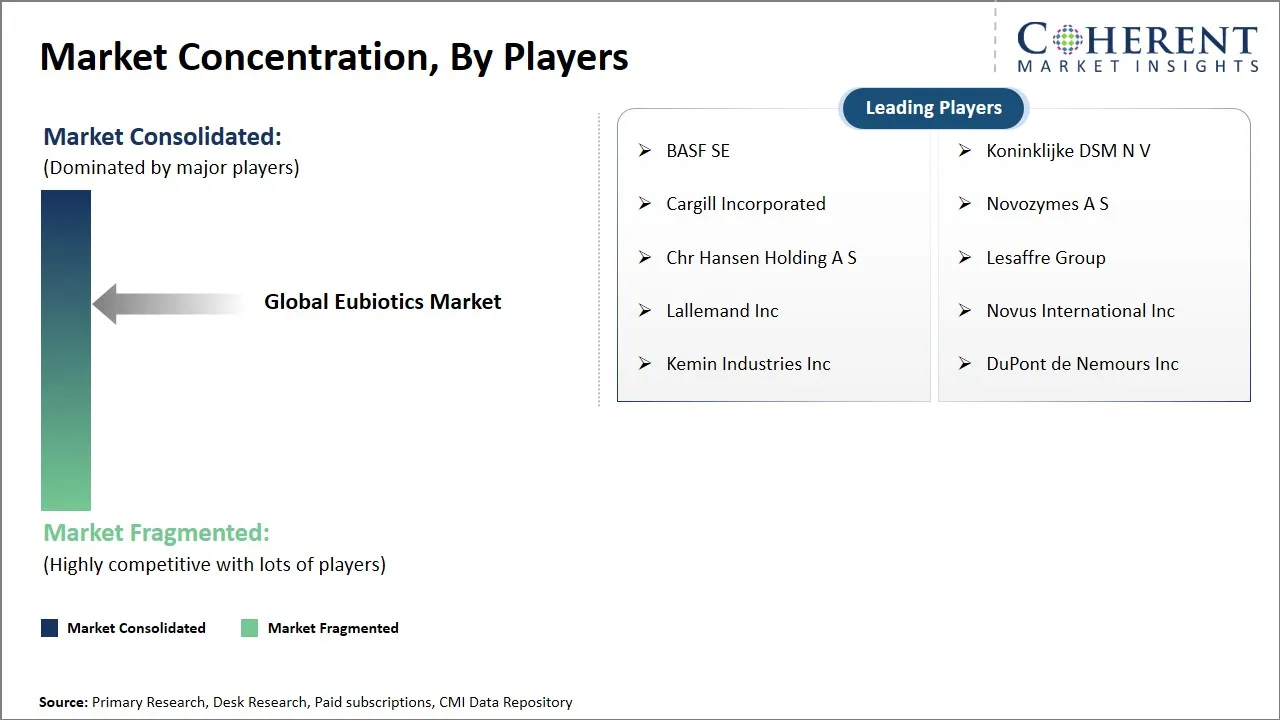
| Companies covered: | BASF SE, Koninklijke DSM N.V, Cargill Incorporated, Novozymes A/S, Chr. Hansen Holding A/S, Lesaffre Group, Lallemand Inc, Novus International Inc, Kemin Industries Inc, and DuPont de Nemours Inc | ||
| Growth Drivers: |
| ||
| Restraints & Challenges: |
| ||
Global Eubiotics Market Dynamics
Global Eubiotics Market Driver – Increasing Demand for Natural and Sustainable Animal Nutrition Solutions
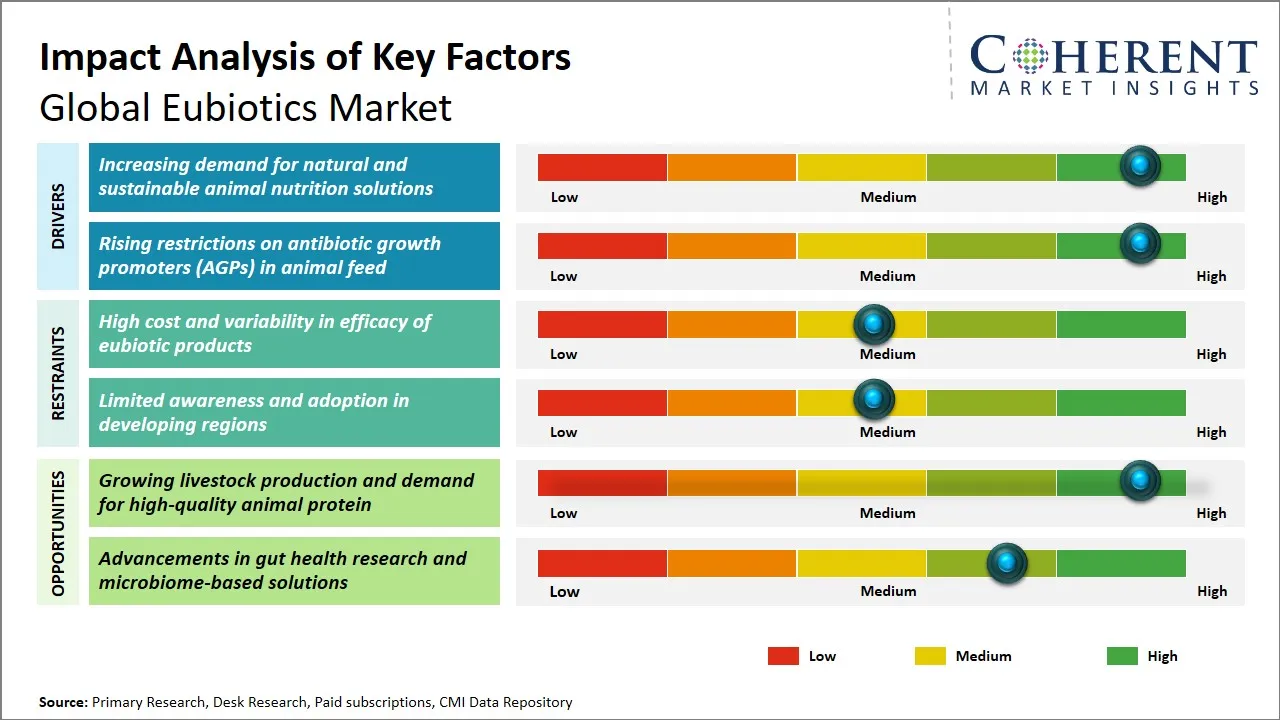
The growing awareness among producers and consumers, about the negative impacts of synthetic additives and Antibiotic Growth Promoters (AGPs) is considered to be a key driver in the growing market potential of natural and sustainable animal nutrition products. The use of eubiotics, which include probiotics, prebiotics, and organic acids, has gained higher acceptability as a safe and sure option in comparison to synthetic additives. The growing use of eubiotics may also be linked to the growing regulations being implemented across the globe against the use of antibiotics to avoid antimicrobial resistance. This has encouraged producers to opt for antibiotic-free production. Additionally, the growing focus on environmentally sustainable livestock production has also shown good market potential for eubiotics, which would help in maintaining feed efficiency while protecting the environment without affecting the ecosystem in any manner.
Moreover, continuous improvements in research on microbes and animal feed technology are making eubiotic products more effective and reliable. Continuous improvements in strain technology, encapsulation, and delivery systems are making eubiotic products more stable and effective in animal species and production systems. This is making producers confident in the use of eubiotics, thus encouraging the commercialization of eubiotics in developed and emerging countries.
For instance, in February 2024, BiomEdit announced that the first-of-its-kind engineered bacteria product had moved into pivotal development as a control for necrotic enteritis in broiler chickens. The product is an example of the growing trend towards microbiome-based eubiotics as a replacement for antibiotics.
(Source: BiomEdit)
Global Eubiotics Market Opportunity - Rising Livestock Production and Increasing Demand for High-Quality Animal Protein
The global market for eubiotics is expected to benefit from the high rate at which livestock production is expanding. This is primarily driven by the growing demand for protein-rich diets in response to the ever-increasing human population. This growing rate in the consumption of meat, dairy products, and other protein-rich foodstuffs is pressuring farmers to ensure high productivity in addition to ensuring the safety and quality of the end products. This has seen the adoption of eubiotics such as probiotics, prebiotics, and organic acids gain popularity in the market. This is mainly because they present a sustainable solution to farmers in the livestock sector in comparison to the use of antibiotic growth promoters. This is in addition to the fact that their adoption is in line with the changing regulations and consumers’ demands.
The expansion of intensive and semi-intensive farming practices in developing economies is also pressuring farmers to ensure high yields in addition to ensuring the immunity of their herds. This is primarily because eubiotics play a crucial role in ensuring the health of the livestock in such farming practices. This is in addition to the fact that they help farmers in ensuring high yields.
For instance, in June 2025, ADM established a dedicated R&D center in Switzerland, which focuses on animal microbiome research and the development of biotic-based solutions in animal farming and aquaculture. This highlights the focus of the industry on furthering eubiotics through R&D, which can help in improving animal health without the use of antibiotics.
(Source: ADM)
Analyst Opinion (Expert Opinion)
- The continued growth of global animal husbandry, especially in poultry, swine, and aquaculture is a major growth driver for the eubiotics industry, as animal producers increasingly focus on optimizing animal gut health to enhance feed efficiency.
- The increasing regulatory environment surrounding antibiotic growth promoters (AGPs) in various countries will boost the growth of natural feed additives, where eubiotics like probiotics, prebiotics, and organic acids will play an essential role in maintaining animal health and productivity.
- The increasing trend towards antibiotic-free animal protein products will force animal producers to adopt eubiotics, thus increasing the importance of eubiotics.
- Furthermore, advancements in microbiome research and precision nutrition will help create targeted eubiotic products, increasing their efficacy, and thus boost their use by large-scale animal farms.
Speak to the analyst
Want personalized insights?
Take the findings above to one of our principal consultants, or have the report rebuilt around the segments, geographies and competitors you actually track.
Market Segmentation
- Product Type Insights (Revenue, USD Bn, 2021 - 2033)
- Probiotics
- Prebiotics
- Organic Acids
- Essential Oils
- Enzymes
- Livestock Insights (Revenue, USD Bn, 2021 - 2033)
- Poultry
- Swine
- Ruminants
- Aquaculture
- Others
- Form Insights (Revenue, USD Bn, 2021 - 2033)
- Dry
- Liquid
- Application Insights (Revenue, USD Bn, 2021 - 2033)
- Gut Health Improvement
- Immunity Enhancement
- Feed Efficiency/Yield Improvement
- Nutrition and Performance
- Regional Insights (Revenue, USD Bn, 2021 - 2033)
- North America
- U.S.
- Canada
- Latin America
- Brazil
- Argentina
- Mexico
- Rest of Latin America
- Europe
- Germany
- U.K.
- Spain
- France
- Italy
- Russia
- Rest of Europe
- Asia Pacific
- China
- India
- Japan
- Australia
- South Korea
- ASEAN
- Rest of Asia Pacific
- Middle East
- GCC Countries
- Israel
- Rest of Middle East
- Africa
- South Africa
- North Africa
- Central Africa
- North America
- Key Players Insights
- BASF SE
- Koninklijke DSM N.V
- Cargill Incorporated
- Novozymes A/S
- Hansen Holding A/S
- Lesaffre Group
- Lallemand Inc
- Novus International Inc
- Kemin Industries Inc
- DuPont de Nemours Inc
Sources
Primary Research Interviews
Industry Stakeholders
- Animal Feed Additive Manufacturers
- Livestock Nutrition Companies
- Contract Feed Manufacturers
- Raw Material Suppliers
- Regulatory and Compliance Experts
- Distributors and Animal Nutrition Consultants
End Users
- Poultry, Swine, Ruminant, and Aquaculture Farmers
- Commercial Livestock Producers
- Feed Mill Operators
- Veterinary Professionals and Animal Nutritionists
Government and International Databases
- Food and Agriculture Organization (FAO) – Livestock production and feed data
- World Organization for Animal Health (WOAH) – Animal health and antimicrobial usage
- U.S. Food and Drug Administration (FDA) – Veterinary Feed Directive, feed additive regulations
- European Food Safety Authority (EFSA) – Feed additive approvals and safety assessments
- National Agricultural Statistics Services (USDA) – Livestock production data
Trade Publications
- Feed Strategy
- All About Feed
- WATTAgNet
- FeedNavigator
- Poultry World
Academic Journals
- Animal Feed Science and Technology
- Poultry Science
- Journal of Animal Science
- Aquaculture Nutrition
- Frontiers in Veterinary Science
Reputable Newspapers
- Bloomberg – Agribusiness and feed additive market insights
- Financial Times – Global food and agriculture trends
Industry Associations
- American Feed Industry Association (AFIA)
- International Feed Industry Federation (IFIF)
- National Chicken Council (NCC)
- European Feed Manufacturers' Federation (FEFAC)
Public Domain Resources
- FAO Reports
- WHO Reports (AMR & food safety)
- USDA Databases
Proprietary Elements
- CMI Data Analytics Tool: Proprietary analytics tool to analyze real-time market trends, consumer behavior, and technology adoption in market
- Proprietary CMI Existing Repository of Information for Last 8 Years
Get access to 250+ pages report
Every segment, forecast, competitor profile and data table behind the analysis above — available for instant download.
- ESOMAR Member
- ISO 9001:2015 Certified
- D-U-N-S Registered
- GDPR & CCPA Compliant
Missing comfort of reading report in your local language? Find your preferred language:
Transform your Strategy with Exclusive Trending Reports
Frequently Asked Questions
The global eubiotics market is estimated to be valued at USD 7.85 billion in 2026 and is expected to reach USD 11.92 billion by 2033.
The CAGR of the global eubiotics market is projected to be 6.1% from 2026 to 2033.
Increasing demand for natural and sustainable animal nutrition solutions and rising restrictions on antibiotic growth promoters (AGPs) in animal feed are the major factors driving the growth of the global eubiotics market.
Eubiotics help in maintaining gut health by altering the intestinal microbiota. This helps in the promotion of beneficial microbes and the control of pathogenic microbes. Probiotics add beneficial microbes to the gut, prebiotics provide beneficial microbes with food, and organic acids help in maintaining a balanced gut by keeping the pH at optimal levels. This balances the gut environment to optimize the feed conversion ratio.
Eubiotics face challenges relating to thermal stability within animal feeds that are processed, such as pelleting, product longevity, as well as survival rates. Moreover, the efficiency of the product could be influenced by various factors, including animal types, farm environments, as well as the nature of animal feeds. Therefore, to overcome these challenges, there is a need to focus on developing advanced technologies for product encapsulation.
High cost and variability in efficacy of eubiotic products and limited awareness and adoption in developing regions are the major factors hampering the growth of the global eubiotics market.
In terms of product type, the probiotics segment is estimated to dominate the market revenue share in 2026.