

Global Fermented Foods Market Size and Forecast – 2026-2033
The Global Fermented Foods Market is estimated to be valued at USD 273.44 Bn in 2026 and is expected to reach USD 405.75 Bn by 2033, exhibiting a compound annual growth rate (CAGR) of 5.8% from 2026 to 2033.
Key Takeaways of the Fermented Foods Market
- Fermented dairy products are expected to account for 32.5 % share of the global fermented foods market in 2026.
- The probiotics segment is projected to capture 35.7 % share of the fermented foods market in 2026.
- The supermarkets/hypermarkets segment are expected to hold 23.7 % share of the fermented foods market in 2026.
- Asia Pacific will lead the fermented foods market in 2026 with an estimated 49.2 % share.
- North America will hold 18.3 % share in 2026 and exhibit the fastest growth.
Market Overview
- Current market trends indicate a surge in innovation, with manufacturers focusing on clean-label and organic fermented food products to attract health-conscious consumers.
- Additionally, there is a growing inclination towards plant-based and dairy-free fermented alternatives, driven by increasing vegan and lactose-intolerant populations.
- The introduction of new technology for fermentation and the addition of functional ingredients are also among the factors that are driving market expansion further, thus making fermented products widespread across the world as part of the modern diets.
Current Events and Its Impact
Current Events | Description and its impact |
EU scrutiny and evolving stance on “probiotic” and functional health claims |
|
South Korea kimchi trade imbalance (exports up; imports also rising) |
|
Segmental Insights
- Current Industry Events of 2026
- Market Size Estimation
- Regional Breakdown
- Competitive Landscape
- Customer Intelligence
- Segmental Analysis
- Pricing Analysis
- Key Market Drivers, Challenges & Future Trends
- Customized Insights Section
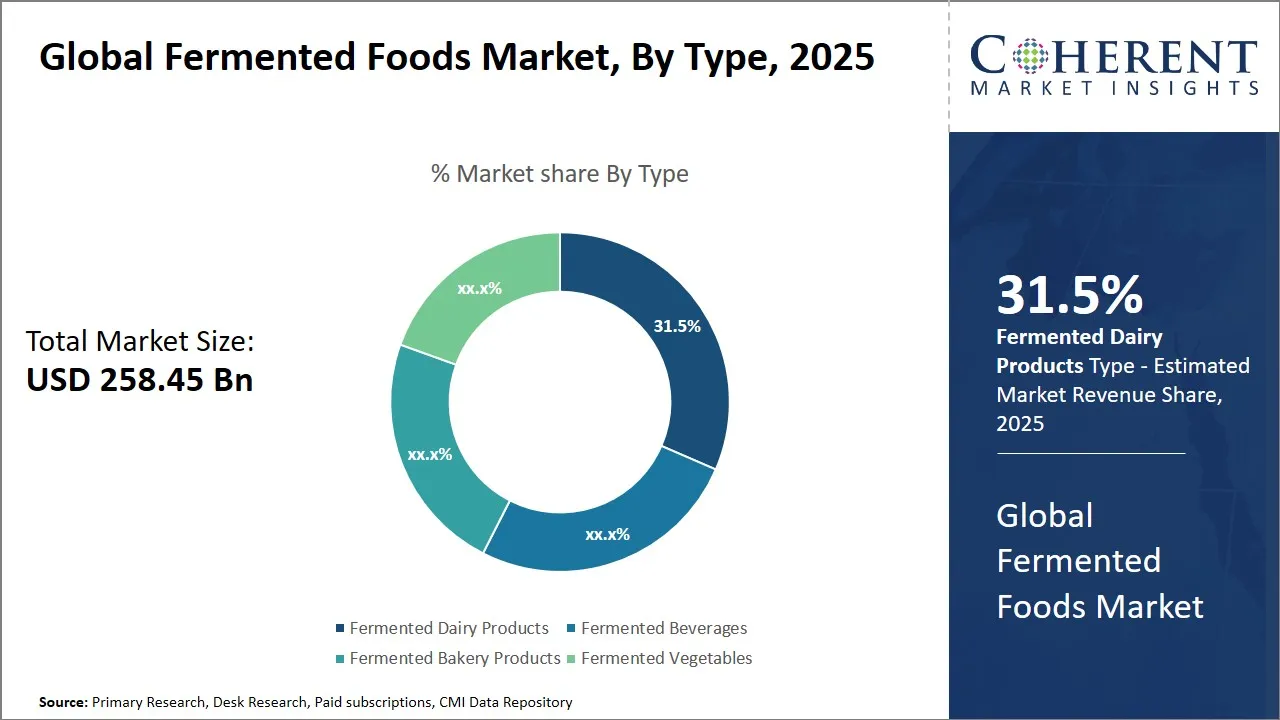
Why Do Fermented Dairy Products Dominate the Fermented Foods Market in 2026?
Fermented dairy products segment is expected to hold 32.5% share within the global fermented foods market in 2026. This popularity can be largely explained by the growing popularity of consumer awareness about the health benefits of the products. Fermented dairy products like cheese, yogurt, buttermilk and kefir have always been a staple ingredient in the diets of various regions around the world, however the most recent scientific discoveries that have highlighted their probiotic benefits have given them a greater following. Fermented dairy products are rich in the probiotics that help to boost the health of the gut, enhance immunity, and improve digestion; this is why it is very attractive to consumers that are health-conscious. In a variety of markets, Nestle sells yogurt and fermented milk products.
The diversity of fermented dairy products also serves the interests of the consumers with a wide range of interests and dietary requirements: lactose-intolerant people may be interested in the ease of digestion of the kefirs, and natural substitutes to processed snacks are available in the form of yogurt and buttermilk.
Why is Probiotics Functionality Driving Market Expansion Amid Global Health and Wellness Trends?
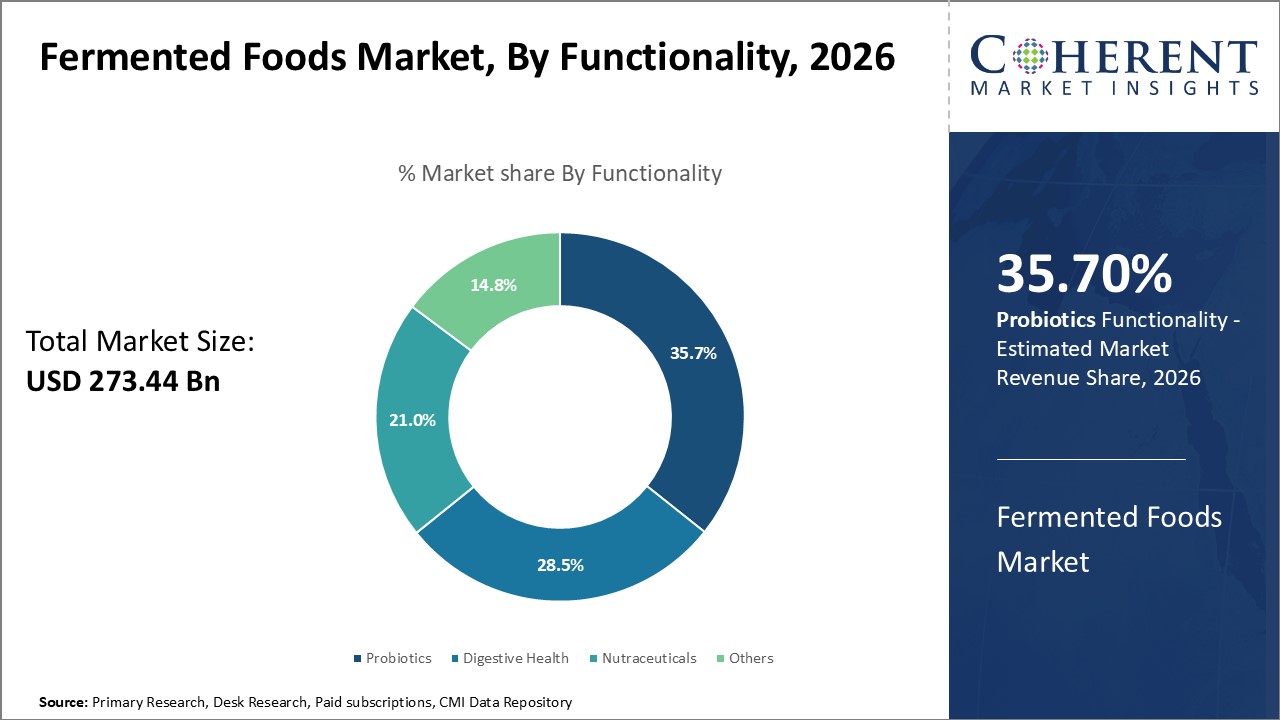
Probiotics segment is projected to hold 35.7% share of the fermented foods market in 2026. The growth in the probiotics market is strongly associated with a growing global interest in health and wellness where consumers are increasingly interested in consuming foods that have added health value to their dietary choices in addition to nutritional value. Probiotics, by definition, live microorganisms with health benefits when taken in sufficient amounts, are a perfect fit the requirement, which makes fermented foods important providers of these advantageous bacteria.
Promotion of digestive health is the key motivator supported by the increasing body of research that suggests that maintenance of healthy gut microbiota correlates with enhanced immune system, psychological health and even some metabolic disorders. This extended knowledge has contributed to the growth in the consumer population of not only the older population but also younger generations that are more focused on preventative health plans and natural supplements. Also, probiotic-containing fermented foods have been viewed as an alternative to modern pharmaceutical intervention, which prompts more people to include them in their everyday meals.
Supermarkets/Hypermarkets Dominate the Fermented Foods Market
Supermarkets/hypermarkets are expected to command 23.7% share of the fermented foods market in 2026, supported by multiple factors that favor these retail formats. There is unmatched accessibility and variety in the products which can be found in supermarkets and hypermarkets where consumers can get a wide selection of fermented foods of dairy, beverages, bakery, and even vegetable foods all under one roof. This convenience is attractive to the busy shoppers who would like to shop in the same location when they are in need of groceries.
In addition, supermarkets and hypermarkets have made massive investment in store design, refrigeration and display equipment that promotes the freshness and visibility of the perishable fermented foodstuffs. This kind of merchandising perfection is not only able to maintain the quality of the products but also affect the purchasing behavior through capturing the attention of the customers and making them impulse buying. They also have the capability to maintain cold-chain logistics, which also facilitates the presence of fermented dairy products and beverages, which need to be kept at lower temperatures to preserve probiotic activity.
Regional Insights
Asia Pacific Fermented Foods Market Analysis and Trends
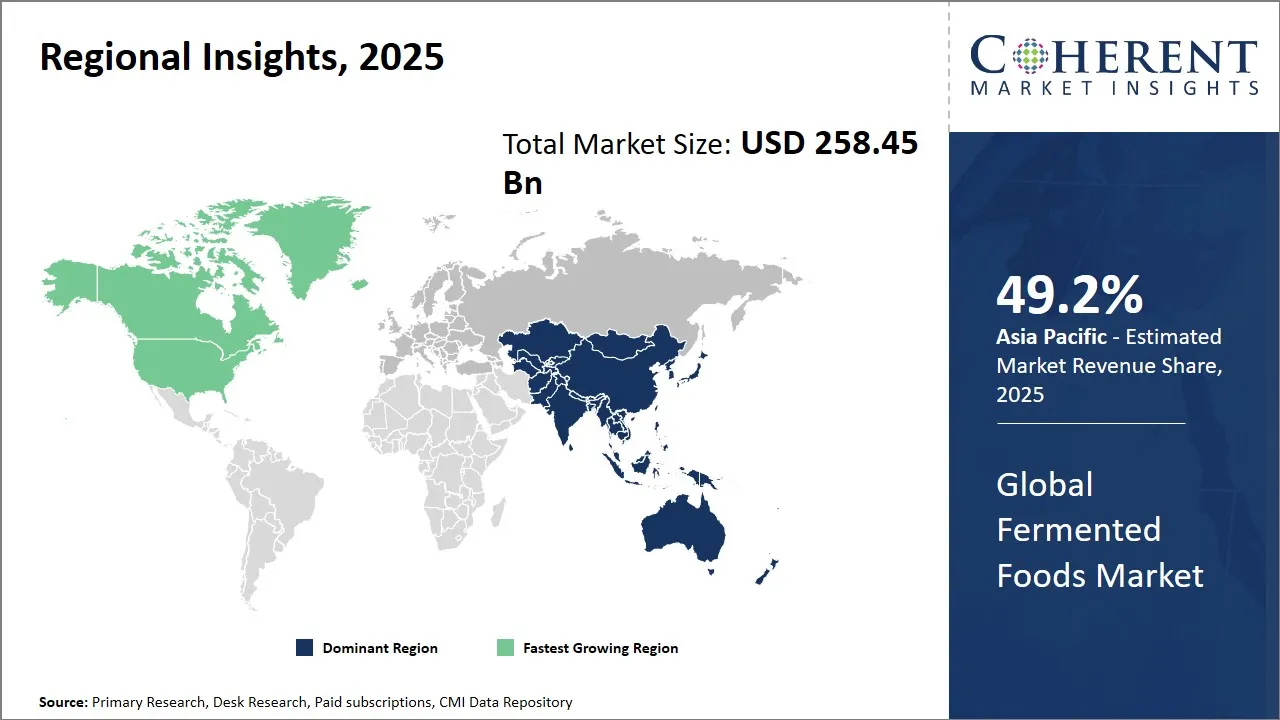
The Asia Pacific region is projected to lead the market with a 49.2% share in 2026, and this is attributed to the fact that the region is rich with the cultural background and a large portion of consumers are keen on buying traditional fermented foods such as kimchi, miso, natto and other fermented dairy and soy foods. The developed market ecosystem has the advantage of a good agricultural basis and raw materials, which are necessary in the fermentation process. Governments in such nations as Japan, South Korea and China actively develop traditional food industries through subsidies and innovation stimulation.
Niche products like kimchi in South Korea, miso and natto in Japan, tempeh in Indonesia, fermented dairy and soy drinks in China and India are not luxuries but necessities at home. As an illustration, per-capita consumption of kimchi in South Koreas is still one of the highest in the world, and the natto and miso used in Japan are part of breakfast.
(Source: https://pmc.ncbi.nlm.nih.gov/articles/PMC10068239/)
North America Fermented Foods Market Analysis and Trends
The North America region is expected to exhibit the fastest growth in the market contributing 18.3% share in 2026, with a share of 18.3 when more consumers will have a better understanding of gut health, wellness, and clean-label foods. This area is marked by a well-developed retail and distribution system and a high level of consumerism of artisanal and health-based fermented products such as kombucha, kimchi, sauerkraut, and yogurt.
The governmental policies which concentrate on the food safety regulations and encouragement of organic and non-GMO foods have prompted the companies to innovate and add more varieties to their fermented foods lines. The availability of products and diversity has largely increased due to the presence of large market players like Danone North America, General Mills and smaller niche players like GTs Living Foods and Wildbrine. Also, the augmented importation of fermented foods in Asia and Europe and the augmented exports of American made goods have contributed to augmented market dynamics.
Global Fermented Foods Market Outlook for Key Countries
Why is Japan a Mature Yet Innovation-Driven Market for Fermented Foods?
The market of fermented foods in Japan is highly connected with the long-term cultural devotion to fermented foods, including miso, natto, and soy sauce. Japanese customers prefer the old way of fermentation, and, at the same time, the innovative probiotic products and functional health food are also well accepted. They have been frontrunners such as companies such as Yakult Honsha and Meiji Holdings that have propelled them into product development and internationalization. The government encouragement of fermented foods being healthy food has favored both local consumption and exportation.
South Korea Fermented Foods Market Trends
South Korea is also a crucial center of fermented foods especially kimchi and fermented seafood. The kimchi industry is popular in various parts of the world and as such, the government promotes it by regulating the industry and providing export incentives. The major players like CJ CheilJedang have achieved a lot in terms of commercialization and technological developments in the production process of fermentation that allow it to be distributed internationally. Korean Wave (Hallyu) has also contributed to the popularization of fermented Korean foods in foreign countries contributing to the increase in exports.
Why is the U.S. a High-Growth, Functionality-Led Market for Fermented Foods?
The market of fermented foods is characterized by high demand of functional and artisanal fermented foods with health claims such as kombucha, yogurt, and probiotic drinks in the U.S. market. The growing customer interest in gut health and organic products has led to product innovation. Large corporations such as Danone, General Mills have expanded their brands to fermented food products and small companies such as GTs Living Foods have established a niche market. Regulatory systems promote product safety as well as consumer confidence.
Germany Fermented Foods Market Trends
Germany is a leading European market with a long-standing tradition of fermented products such as sauerkraut and pickled vegetables. The combination of a strong industrial production and a rich artisan food culture gave a vast variety of products offered in the market. Century-old companies like Zentis and Hengstenberg are the leading suppliers of fermented foods both for domestic and export markets. Germany's friendly regulations and quality control have been successful in attracting and maintaining consumer trust, and on the other hand have opened up the EU market for exports.
Brazil Fermented Foods Market Trends
Brazil's fermented foods market is on the rise as consumers' preference for both traditional and modern types of dairy-fermented health-focused products is gradually becoming the main stream. New government policies that favor local agribusiness and development of food innovation have greatly contributed to the market growth. Major players in the market like Marfrig Global Foods and small-scale organic producers are both promoting the use of fermentation technology adaptively to local demand which primarily of achieving exports to other parts of Latin America. With the help of free trade agreements, the access to regional markets has been considerably improved and thus the footprint of Brazilian fermented foods in the global market has been extended.
Premiumization & Price Elasticity Index
This index analyzes to what extent the consumers are willing to pay extra for the premium positioned fermented foods. It keeps an eye on the price categories (the mass as well as premium), the increase in willingness-to-pay, and the demand's sensitivity to the price changes. The premiumization in fermented foods is due to several reasons such as the presence of live cultures, specific probiotic strains, the use of organic materials, artisanal processing, clean-label positioning, and health or immunity-related claims like gut health or immunity.
Regulatory & Claims Approval Readiness
This benchmarking study measures how prepared fermented food products are to comply with food safety regulations and legally support health or functional claims. It covers approval status for probiotics, labeling compliance, permissible claims (digestive health, immune support, lactose digestion), and alignment with regional authorities such as FSSAI, EFSA, FDA, and CFIA. Fermented foods often face regulatory friction due to variability in live cultures, shelf-life stability, and evidence requirements for functional claims. Companies with robust clinical substantiation, standardized strains, and compliant labeling can scale faster across markets, while others are forced to rely on softer claims like “supports digestion” instead of disease-linked benefits.
Cold Chain & Shelf-Life Economics
This framework analyzes the cost and feasibility of maintaining product quality from production to consumption. It includes refrigeration dependency, shelf-life duration, spoilage risk, logistics costs, and retail wastage. Many fermented foods, particularly those with live and active cultures, require continuous cold storage, increasing transportation and retail costs. Products with shorter shelf-life face higher shrinkage and limit geographic reach, while shelf-stable or pasteurized fermented products benefit from wider distribution and better margins. The dataset highlights the trade-off between product efficacy and economic scalability, which is a critical strategic decision for fermented food manufacturers.
Market Players, Key Development, and Competitive Intelligence
Key Developments
- In March 2025, Fermented Food Holdings, a functional foods manufacturer in the U.S., released the news of expanding its Wildbrine and Bubbies Fine Foods brands. Via these brands, the firm introduced Wildbrine pickled red onions, mild white kimchi, and others, for American consumers.
- In February 2025, Vadasz, the U.K.-based kimchi and chilled pickles firm, added a new live cultured and naturally fermented Kimchi shot, sourced from 100% plant-sourced ingredients. This kimchi improves gut health and is available in an on-the-go format.
- In January 2025, MUJI, a brand of the Japanese retailer, Mrs. Ryohin Keikaku, launched lime fermented chocolate items, using Indonesia-based cacao. This chocolate is available at selected MUJI stores and online through its website in Japan.
Top Strategies Followed by Global Fermented Foods Market Players
Player Type | Strategic Focus | Example |
Established Market Leaders | Heavy investment in R&D and innovation | Companies such as Danone (Activia, Actimel) and Nestlé (Chamyto, LC1) invest aggressively in R&D to clinically validate probiotic strains, improve bioavailability, and extend shelf life without compromising clean-label positioning. |
Mid-Level Players | Cost-effective solutions with balanced quality | For instance, Lifeway Foods balances quality and cost by focusing largely on kefir, avoiding portfolio sprawl while expanding distribution through mass retail. These players win by volume, not by premium science narratives. |
Small-Scale Players | Niche specialization & innovative variants | Brands such as GT’s Living Foods (kombucha) and The Good Bug (India, synbiotic-fermented products) leverage novel fermentation techniques, functional blends, and strong storytelling around gut health and immunity. Many rely on direct-to-consumer channels and regional partnerships with artisanal producers to build credibility fast. |
Market Report Scope
Fermented Foods Market Report Coverage
| Report Coverage | Details | ||
|---|---|---|---|
| Base Year: | 2025 | Market Size in 2026: | USD 273.44 Bn |
| Historical Data for: | 2020 To 2024 | Forecast Period: | 2026 To 2033 |
| Forecast Period 2026 to 2033 CAGR: | 5.8% | 2033 Value Projection: | USD 405.75 Bn |
| Geographies covered: |
| ||
| Segments covered: |
| ||
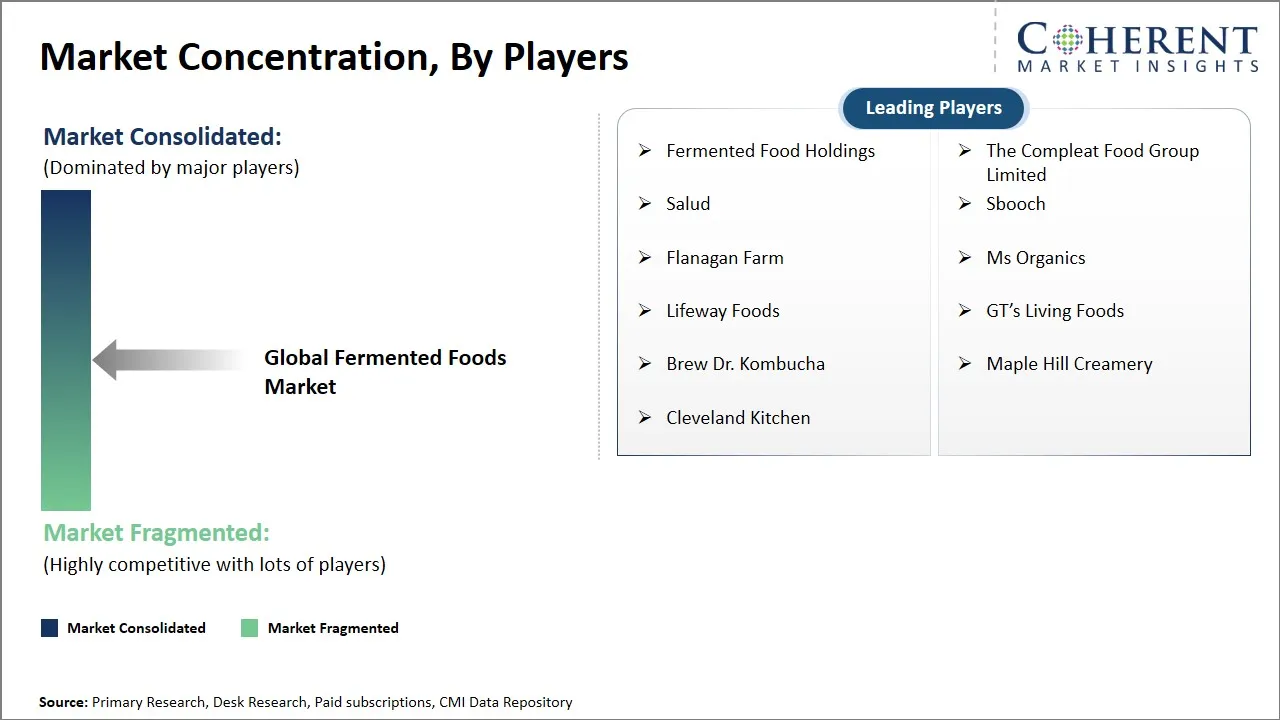
| Companies covered: | Fermented Food Holdings, The Compleat Food Group Limited, Salud, Sbooch, Flanagan Farm, Ms Organics, Lifeway Foods, GT’s Living Foods, Brew Dr. Kombucha, Maple Hill Creamery, and Cleveland Kitchen | ||
| Growth Drivers: |
| ||
| Restraints & Challenges: |
| ||
Fermented Foods Market Dynamics
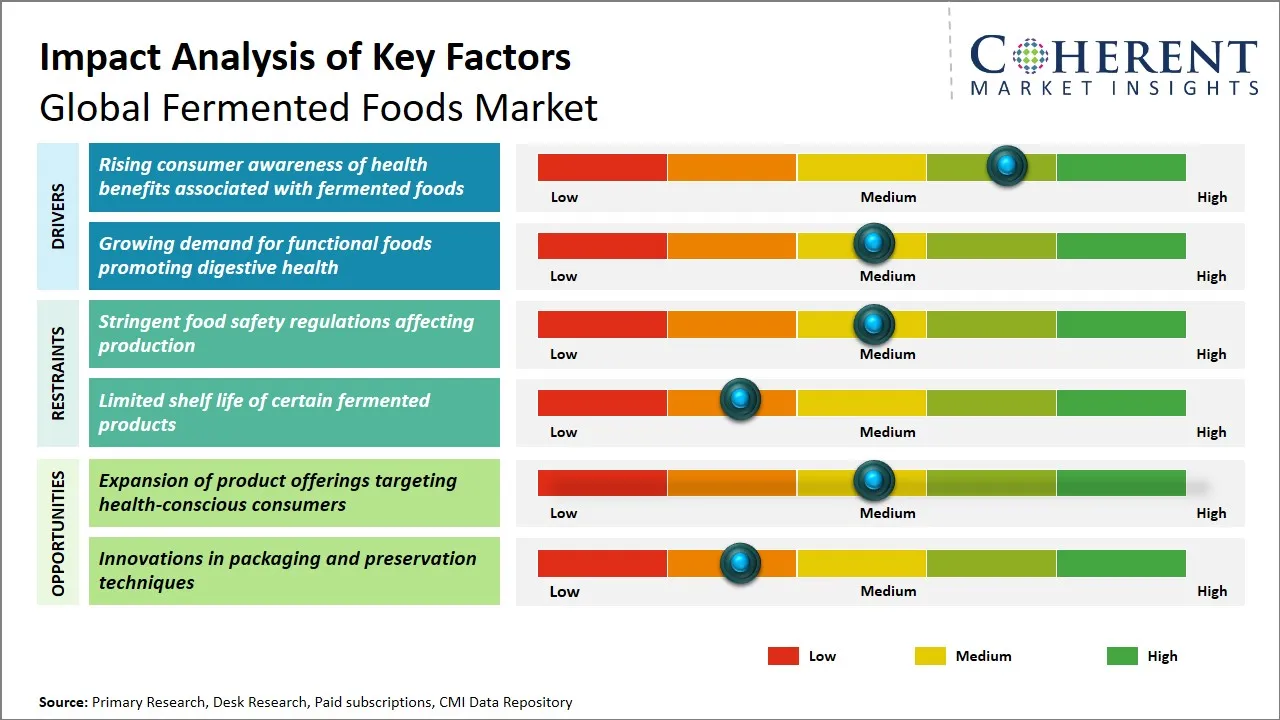
Fermented Foods Market Driver - Rising Consumer Awareness of Health Benefits Associated with Fermented Foods
The global fermented foods market is mainly driven by the increased awareness of health benefits of fermented food products among consumers. The fermented foods have become a major trend among those who have turned to nature and functional ways for supporting health, enhancing immunity, and overall well-being. Fermentation process foods have always been credited with their high content of probiotics which help human digestion and also maintain a healthy gut flora balance. In addition to gut health, consumers are attracted to fermented products for their inflammatory property, mental health improvement through the gut-brain axis, and increased nutrient absorption.
The International Probiotics Association (IPA) World Congress events, for instance, have been very effective in transforming this tidal wave of change by a new research area on gut-brain communication coming from the inflammation reduction side, and microbiome diversity has been influencing the consumers and manufacturers alike. Functional-food sections in retailers are now filled with fermented products as a way of confirming that the awareness is no longer a niche but rather a mainstream one.
(Source: https://pmc.ncbi.nlm.nih.gov/articles/PMC12575349/)
Fermented Foods Market Opportunity - Expansion of Product Offerings Targeting Health-Conscious Consumers
The global market of fermented foods is an opening for the introduction of health-oriented products that are different from the existing ones to a great extent. The idea of gut health and wellness in general getting more and more common as people's requirement for fermented functional products with the like of better digestion, stronger immunity, and probiotic support is constantly growing. That is, besides the fact that people are looking for natural foods, processed food that are minimally processed and contain clean- label ingredients, which is also the case with fermented foods like yogurt, kefir, kimchi, sauerkraut, and kombucha. By creating a product line that includes the ones enriched with more nutrients, low/no-sugar versions, and catering to specific diets like vegan or gluten-free, it is a big chance to reach a lot more customers.
Fermented foods as "daily wellness solutions" have become very popular among investors and buyers at industry trade shows such as Natural Products Expo West and Vitafoods Europe. It is easy to see that the brands which do the opposite i.e. positioning fermentation technologies closely with clean-label claims, functional benefits, and dietary customization are going to be the ones with the biggest gains.
(Source: https://www.expowest.com/en/home.html)
Analyst Opinion (Expert Opinion)
- The fermented foods market has shifted from “craft novelty” to an industrialization race, and the clearest tell is the conference calendar—events now optimize for yield, safety, and repeatable sensory outcomes. The 1st International Conference on Fermented Foods in Bolzano (October 27–30, 2025) signals a clear R&D-to-industry shift, highlighting that competitive advantage in yogurt, kimchi, kefir, and hybrid fermented products will increasingly depend on precise strain selection, sequencing-based quality control, and robust process control.
- The ICOFF inauguration at NOI Techpark (October 29, 2024) underlines the same direction: fermentation is becoming a managed capability, not a recipe. On the commercial side, KombuchaKon and its regional events are pushing standardization, brand discipline, and category rules, while IFT FIRST 2025 in Chicago is where ingredient majors and startups test what’s scalable for retail and foodservice.
- Regionally, India’s WBUAFSASNETCON-25 (December 19–20, 2025) and New Zealand’s Fermentation for Future Food Summit (September 11, 2025) show local supply chains are maturing fast. The winning strategy is to treat fermentation like a manufacturing science, not a marketing story.
Speak to the analyst
Want personalized insights?
Take the findings above to one of our principal consultants, or have the report rebuilt around the segments, geographies and competitors you actually track.
Market Segmentation
- Type Insights (Revenue, USD Bn, 2021 - 2033)
- Fermented Dairy Products
- Cheese
- Yogurt
- Buttermilk
- Kefir
- Fermented Beverages
- Kombucha
- Beer
- Wine
- Others
- Fermented Bakery Products
- Sourdough Bread
- Idli/Dosa Batter
- Others
- Fermented Vegetables
- Kimchi
- Sauerkraut
- Pickles
- Fermented Soy
- Others
- Fermented Dairy Products
- Functionality Insights (Revenue, USD Bn, 2021 - 2033)
- Probiotics
- Digestive Health
- Nutraceuticals
- Others
- Distribution Channel Insights (Revenue, USD Bn, 2021 - 2033)
- Supermarkets/Hypermarkets
- Convenience Stores
- Specialty Stores
- Online Retail
- Others
- Regional Insights (Revenue, USD Bn, 2021 - 2033)
- North America
- U.S.
- Canada
- Latin America
- Brazil
- Argentina
- Mexico
- Rest of Latin America
- Europe
- Germany
- U.K.
- Spain
- France
- Italy
- Russia
- Rest of Europe
- Asia Pacific
- China
- India
- Japan
- Australia
- South Korea
- ASEAN
- Rest of Asia Pacific
- Middle East
- GCC Countries
- Israel
- Rest of Middle East
- Africa
- South Africa
- North Africa
- Central Africa
- North America
- Key Players Insights
- Fermented Food Holdings
- The Compleat Food Group Limited
- Salud
- Sbooch
- Flanagan Farm
- Ms Organics
- Lifeway Foods
- GT’s Living Foods
- Brew Dr. Kombucha
- Maple Hill Creamery
- Cleveland Kitchen
Sources
Primary Research Interviews
- CEO – Leading Fermented Foods Producer (e.g., Danone or Nestlé equivalent)
- Supply Chain Director – Major Fermented Foods Distributor
- Production Lead – Specialty Fermented Products Manufacturer
- Sustainability Officer – Fermented Foods Certification Authority
Stakeholders
- Manufacturers
- End-use Sectors
- Dairy Industry (Yogurt, Kefir, Cheese)
- Plant-based Alternatives Producers
- Beverages (Kombucha, Kimchi, Sauerkraut)
- Regulatory & Certification Bodies (e.g., FDA for probiotics, EFSA compliance in EU)
- E-commerce Platforms and Retailers (Amazon, Whole Foods, Alibaba)
- Technology Integration Players: Probiotic innovators and fermentation tech firms
Databases
- UN Comtrade Database
- India Import Export (EXIM) Database
- USGS Food Commodity Summaries (Fermented Products)
- Eurostat Trade Statistics for Food & Beverages
Magazines
- Food Processing Magazine – Trends in fermented foods supply
- Dairy Foods – Innovations in yogurt and kefir
- Beverage Industry – Fermented beverages market dynamics
- Functional Foods & Nutraceuticals – Probiotics and gut health trends
- Prepared Foods – Plant-based fermentation applications
Journals
- Journal of Food Science – Fermentation microbiology and shelf-life
- Food Microbiology – Safety and pathogen control in fermented foods
- Trends in Food Science & Technology – Probiotic efficacy studies
- International Journal of Food Microbiology – Starter cultures optimization
- Nutrients – Health benefits of fermented foods meta-analysis
Newspapers
- The Wall Street Journal – Global demand for functional fermented foods
- The Guardian – Sustainability in fermentation processes
- Business Standard (India) – Fermented foods imports and Asia growth
- Food Dive – Supply chain disruptions in probiotics
- Reuters – Price volatility in dairy and fermented products
Associations
- International Probiotics Association
- Global Dairy Platform
- Institute of Food Technologists (IFT)
- European Food & Feed Cultures Association (EFFCA)
- International Scientific Association for Probiotics and Prebiotics (ISAPP)
- Sustainable Food Trade Association
Public Domain Sources
- FDA – Guidelines for fermented foods handling and labeling
- European Commission – Novel food regulations on fermented products
- World Health Organization – Safety standards for probiotics
- FAO – Fermented foods statistics and trade assessments
- OECD – Food trade and sustainability reports for fermented products
Proprietary Elements
- CMI Data Analytics Tool, Proprietary CMI Existing Repository of information for last 8 years.
Get access to 250+ pages report
Every segment, forecast, competitor profile and data table behind the analysis above — available for instant download.
- ESOMAR Member
- ISO 9001:2015 Certified
- D-U-N-S Registered
- GDPR & CCPA Compliant
Missing comfort of reading report in your local language? Find your preferred language:
Transform your Strategy with Exclusive Trending Reports
Frequently Asked Questions
The global fermented foods market is estimated to be valued at USD 273.44 Bn in 2026 and is expected to reach USD 405.75 Bn by 2033.
The CAGR of global fermented foods market is projected to be 5.8% from 2026 to 2033.
Rising consumer awareness of health benefits associated with fermented foods and growing demand for functional foods promoting digestive health are the major factors driving the growth of the global fermented foods market.
Stringent food safety regulations affecting production and limited shelf life of certain fermented products are the major factors hampering the growth of the global fermented foods market.
In terms of type, fermented dairy products are estimated to dominate the market revenue share in 2026.
Fermented Food Holdings, The Compleat Food Group Limited, Salud, Sbooch, Flanagan Farm, Ms Organics, Lifeway Foods, GT’s Living Foods, Brew Dr. Kombucha, Maple Hill Creamery, and Cleveland Kitchen are the major players.
They restrict how brands can market probiotic and immunity claims, pushing companies toward compliant wording, education, and substantiated labeling.