

Global Food Antioxidants Market Size and Forecast – 2026-2033
The Global Food Antioxidants Market is estimated to be valued at USD 721.3 Mn in 2026 and is expected to reach USD 1,120.9 Mn by 2033, exhibiting a compound annual growth rate (CAGR) of 6.5% from 2026 to 2033.
Key Takeaways of the Food Antioxidants Market
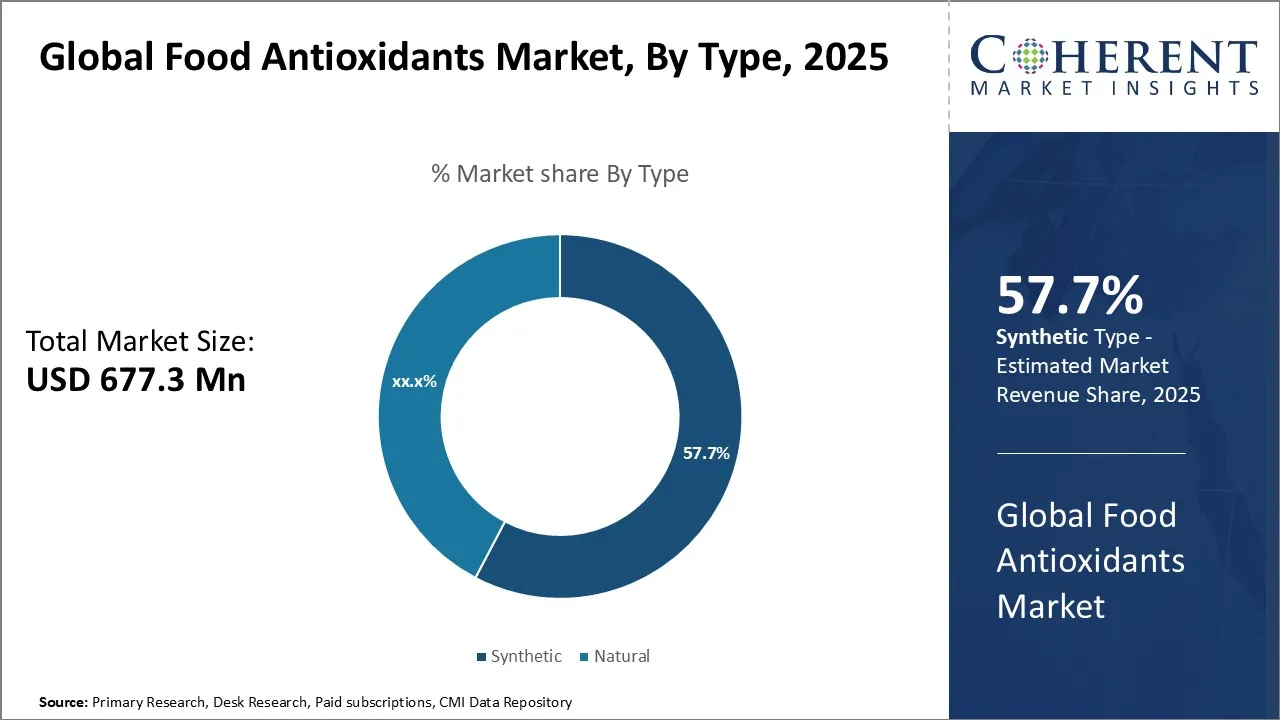
- The synthetic segment is expected to account for 58.7% of the market share in 2026, driven by key factors that make it more preferred compared to natural antioxidants.
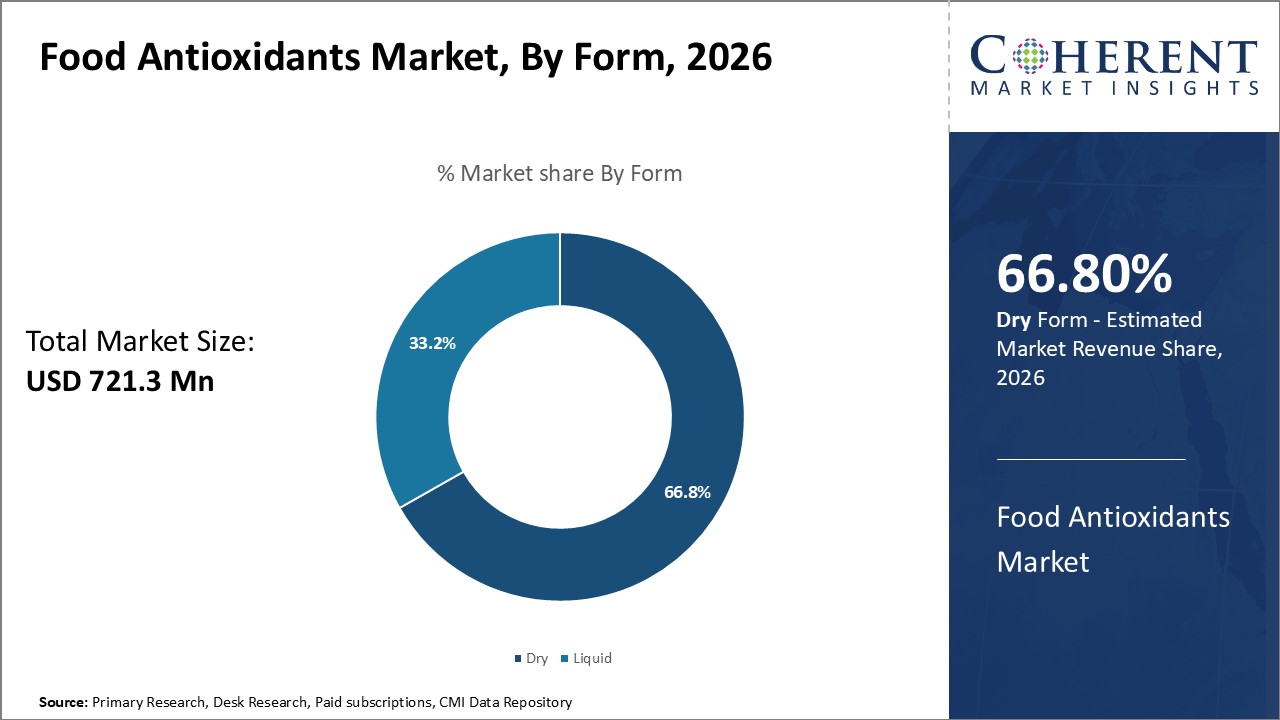
- The dry segment is projected to hold 66.8% of the market share in 2026, due to its practical benefits in terms of storage, handling, and formulation flexibility.
- The meat & poultry segment is projected to hold a 32.6% share of the food antioxidants market in 2026, as these products are highly susceptible to oxidative spoilage, leading to issues like discoloration, off-flavors, and nutrient degradation.
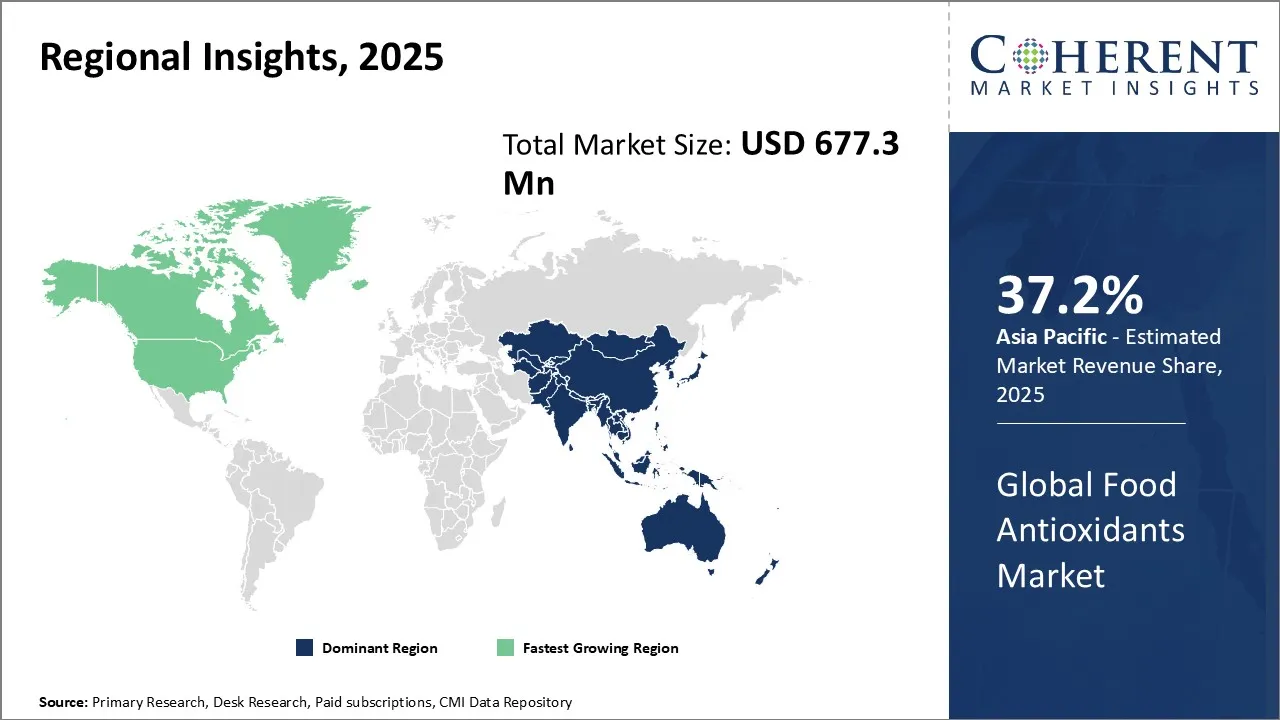
- Asia Pacific is projected to lead the global food antioxidants market in 2026 with a 37.2% share, driven by increasing consumer awareness about health benefits and a growing demand for clean-label, natural ingredients. North America, with a 16.5% share, will be the fastest-growing region, fueled by the rising popularity of health-conscious diets, expanding organic food markets, and increasing consumer demand for antioxidant-rich food products.
Market Overview
A key trend in the food antioxidants market is the rising preference for natural antioxidants derived from plant sources such as rosemary, green tea, and grape seed extract, fueled by growing concerns over synthetic additives. Additionally, innovations in extraction technologies and clean label products are enhancing application scope in processed food, beverages, and dietary supplements. Moreover, regulatory support and advancements in packaging solutions that maintain antioxidant efficacy are further propelling market expansion and encouraging industry players to invest in R&D for sustainable antioxidant solutions.
Current Events and Its Impact
Current Events | Description and its impact |
Surge in Demand for Natural Antioxidants and Clean-Label Products |
|
Tariff Changes and Ongoing Trade Restrictions |
|
Segmental Insights
- Current Industry Events of 2026
- Market Size Estimation
- Regional Breakdown
- Competitive Landscape
- Customer Intelligence
- Segmental Analysis
- Pricing Analysis
- Key Market Drivers, Challenges & Future Trends
- Customized Insights Section
Food Antioxidants Market Insights, By Type – Synthetic Segment Dominates the Market due to its Superior Stability and Cost-Efficiency
Synthetic segment is expected to hold 58.7% share of the market in 2026, driven by several core factors that enhance its preference over natural antioxidants. Primarily, synthetic antioxidants offer higher oxidative stability, which makes them more effective in extending the shelf life of various food products. This is particularly vital in industries where oxidation leads to rancidity, flavor deterioration, and nutrient loss, such as in fats and oils or processed meats. Synthetic antioxidants like Butylated Hydroxyanisole (BHA) and Butylated Hydroxytoluene (BHT) are favored for their proven efficacy in preventing oxidative damage during storage and processing under diverse conditions.
Food Antioxidants Market Insights, By Form – Dry Segment Dominates the Market due to Enhanced Ease of Handling, Longer Shelf Life, and Better Compatibility in Diverse Food Processing Environments
Dry segment his projected to hold 66.8% share of the market in 2026, due to their practical advantages related to storage, handling, and formulation versatility. Dry antioxidants typically provide a longer shelf life compared to their liquid counterparts, as they are less prone to degradation from moisture or microbial contamination. This makes them particularly suitable for use in large-scale food manufacturing, where ingredients may be stored for extended periods before incorporation into final products.
Another crucial driver supporting the prominence of dry antioxidants is their ease of integration into powdered or solid food matrices. Food industries such as bakery, confectionery, and snack production extensively rely on dry antioxidant powders for their compatibility with dry mixes and their ability to evenly disperse throughout the product. This compatibility ensures consistent antioxidant activity, which is essential for maintaining product quality over time.
Food Antioxidants Market Insights, By Application - Meat & Poultry Dominates due to the High Susceptibility of these Products to Oxidative Degradation and Growing Consumer Demand for Fresh and Safe Protein Sources
The meat & poultry segment is expected to command 32.6% share of the food antioxidants market in 2026, because these products are especially vulnerable to oxidative spoilage, which can cause discoloration, off-flavors, and nutrient loss. Oxidation affects both the visual appeal and safety of meat products, making antioxidants critical for preserving freshness and prolonging shelf life. Food antioxidants are increasingly incorporated into fresh, processed, and packaged meat and poultry products to maintain quality and meet consumer expectations.
In addition to quality preservation, antioxidants help inhibit lipid oxidation, which plays a major role in the rancidity of meat fats. Given that fats oxidation directly impacts taste and aroma, antioxidants ensure an improved sensory experience, encouraging repeat consumer purchases. The mounting consumer awareness regarding food safety and nutritional retention further propels antioxidant use in this segment. Meat processors and retailers are keen to adopt antioxidant technologies as part of their quality assurance and branding strategies to emphasize freshness and healthfulness.
Regional Insights
Asia Pacific Food Antioxidants Market Analysis and Trends
The Asia Pacific region is projected to lead the market with a 37.2% share in 2026, due to rising urbanization, increasing disposable income, and a growing preference for processed and packaged foods enriched with health-beneficial ingredients such as antioxidants. Rapid industrialization in countries like China, India, and Japan is bolstered by government support through policies that promote food safety standards and encourage innovation in food additives.
The expanding food and beverage sector, supported by flourishing retail chains and e-commerce platforms, creates opportunities for market penetration and product diversification. Regional players such as Royal DSM (with strong operations in China), Yuan Longping High Tech Agriculture Co., and Synthite Industries in India play critical roles in meeting local demands by developing tailored antioxidant solutions. Trade dynamics in the Asia Pacific are also favorable due to improved supply chain infrastructure and growing export potential, making it a vibrant hub for future growth.
North America Food Antioxidants Market Analysis and Trends
The North America region is expected to exhibit the fastest growth in the market contributing 16.5% share in 2026, driven by a mature food processing industry, high consumer awareness regarding health and wellness, and stringent food safety regulations that encourage the use of natural and effective antioxidants in food products. The robust presence of leading global players such as Cargill, Archer Daniels Midland Company (ADM), and BASF supports an advanced market ecosystem, fostering innovation and product development. Government policies in the U.S. and Canada strongly favor clean label ingredients, pushing manufacturers toward natural antioxidants derived from sources like rosemary, green tea, and tocopherols. Additionally, extensive research and development initiatives, combined with favorable trade agreements, enable companies to efficiently source raw materials and distribute products across domestic and international markets, reinforcing North America’s leadership.
Food Antioxidants Market Outlook for Key Countries
U.S. Food Antioxidants Market Trends
The U.S. food antioxidants market is characterized by high consumer demand for organic and natural food ingredients, prompting manufacturers to innovate in antioxidant formulations. Companies like Cargill and ADM offer a wide range of antioxidants tailored for clean-label food applications, catering to health-conscious consumers. The regulatory environment under the FDA ensures rigorous quality standards, encouraging end-users to prefer natural antioxidants over synthetic ones, thereby shaping market trends significantly.
China Food Antioxidants Market Trends
China’s food antioxidants market benefits from urbanization, increased health awareness, and government emphasis on food safety and quality. Leading companies such as Royal DSM and local manufacturers are investing heavily in R&D to introduce antioxidants that meet domestic tastes and regulatory standards. The expanding middle-class population and enhanced distribution networks across urban and rural areas are key drivers supporting market expansion in China.
Germany Food Antioxidants Market Trends
Germany’s food antioxidants’ strong food manufacturing sector and emphasis on sustainability make it a pivotal market in Europe. BASF and Evonik Industries are notable contributors, focusing on innovative antioxidant solutions for meat, dairy, and bakery segments. Government policies on food safety and stringent regulations on additive usage encourage transparency and quality, which benefits the adoption of advanced antioxidant technologies in the country.
India Food Antioxidants Market Trends
India's food antioxidants market growth is fueled by the booming packaged food industry and rising health consciousness among consumers. Local companies, such as Synthite Industries, leverage indigenous botanical resources to produce natural antioxidants, catering to both domestic and export markets. Government initiatives promoting food processing and safety standards encourage increased use of food antioxidants, while expanding retail penetration supports widespread market uptake.
Brazil Food Antioxidants Market Trends
Brazil’s food antioxidants market is supported by a growing food and beverage industry focused on processed and convenience foods. Companies like Ingredion and other regional manufacturers supply antioxidants to improve shelf life and nutritional quality in products such as meat, dairy, and edible oils. Favorable agricultural production and export potential enhance raw material availability, while government regulations ensure compliance with safety standards, driving market robustness.
Macro and Micro Economic Factors Impacting on Food Antioxidants Market Growth
Macroeconomic Factors
- Rising Population & Food Consumption: Increasing global population drives higher demand for a variety of prepared and packaged foods, which, in turn, boosts the need for antioxidants to extend shelf life and maintain quality.
- Urbanization & Lifestyle Changes: Rapid urbanization, especially in Asia Pacific and emerging markets, increases demand for convenience foods which require antioxidants for preservation.
- Disposable Income Growth: Increasing disposable incomes in developing and emerging economies such as India, Brazil, and China enhance consumer ability to purchase antioxidant-containing processed foods.
- Regulatory Environment: Regulatory approvals and safety concerns significantly impact the market. For instance, regulations banning some synthetic antioxidants (e.g., BHA bans starting 2025 in California) are driving reformulations and increased interest in natural antioxidants.
Microeconomic Factors
- Consumer Awareness and Preferences: Increasing health consciousness and preference for natural, clean-label, and preservative-free foods are boosting the demand for natural antioxidants.
- Food Industry Trends: Growth in processed convenience foods, ready-to-eat meals, functional foods, and nutraceuticals incorporating antioxidants is a major market driver.
- Development & Innovation: Innovations in antioxidant formulations, extraction technologies, and food processing techniques improve the efficacy and stability of antioxidants in food applications.
Market Players, Key Development, and Competitive Intelligence
Key Developments
- In November 2024, McGill University researchers introduced a groundbreaking technology that rapidly measures antioxidants in maple syrup. Using AI, the eco-efficient and user-friendly method provides a faster, more accessible alternative to traditional lab testing. This innovation enhances transparency regarding the syrup's nutritional value and enables on-site quality assessments, eliminating the need for expensive laboratory procedures.
- In August 2022, Kalsec Inc. formed a partnership with Infinome Biosciences to offer naturally sourced and innovative ingredients of exceptional quality.
- In August 2022, Kemin Industries, Inc. introduced ENTEROSURE, a robust intestinal health solution designed to improve control over enteric bacterial pathogens, thereby reducing antibiotic usage.
- In December 2021, Barentz acquired Gangwal in India, strengthening its position as a leading global distributor of specialty drugs and nutraceutical ingredients.
Top Strategies Followed by Global Food Antioxidants Market Players
- Established players dominate the scene through substantial investments in research and development (R&D), aiming to innovate high-performance antioxidant products that meet stringent regulatory standards and evolving consumer demands. Their global reach, coupled with strong brand equity, enables them to leverage economies of scale and maintain competitive pricing strategies while ensuring consistent product quality.
- For instance, DSM Nutritional Products is a leading player in the food antioxidants market, consistently investing in R&D to enhance its antioxidant product line. Its Tocopherols (Vitamin E) and Carotenoids offerings have expanded significantly due to their commitment to meeting both nutritional and sustainability needs.
- Mid-level players navigate the competitive market landscape by carving out a segment that balances cost and quality. Recognizing the price sensitivity of a significant consumer base, these companies focus on developing cost-effective antioxidant solutions that do not compromise on efficacy. By targeting budget-conscious manufacturers and end-users, mid-tier players remain relevant in a market where affordability is a critical determinant.
- For example, NutraScience Labs, a mid-level player in this market, focuses on providing affordable antioxidant formulations, including Vitamin C and Polyphenols, that cater to small and medium-sized food manufacturers.
- Small-scale players in the global food antioxidants market often differentiate themselves by focusing on niche segments or specialized innovations. By emphasizing unique product attributes—such as organic certification, novel antioxidant formulations, or clean-label solutions—these companies appeal to specific consumer preferences unmet by larger competitors.
- For example, FutureCeuticals has positioned itself as a leader in plant-based antioxidants by focusing on unique ingredients such as Acerola Cherry and Turmeric Extracts. The company’s focus on clean-label, organic, and non-GMO formulations appeals to the growing segment of health-conscious consumers who prioritize natural ingredients in their food products.
Market Report Scope
Food Antioxidants Market Report Coverage
| Report Coverage | Details | ||
|---|---|---|---|
| Base Year: | 2025 | Market Size in 2026: | USD 721.3 Mn |
| Historical Data for: | 2020 To 2024 | Forecast Period: | 2026 To 2033 |
| Forecast Period 2026 to 2033 CAGR: | 6.5% | 2033 Value Projection: | USD 1,120.9 Mn |
| Geographies covered: |
| ||
| Segments covered: |
| ||
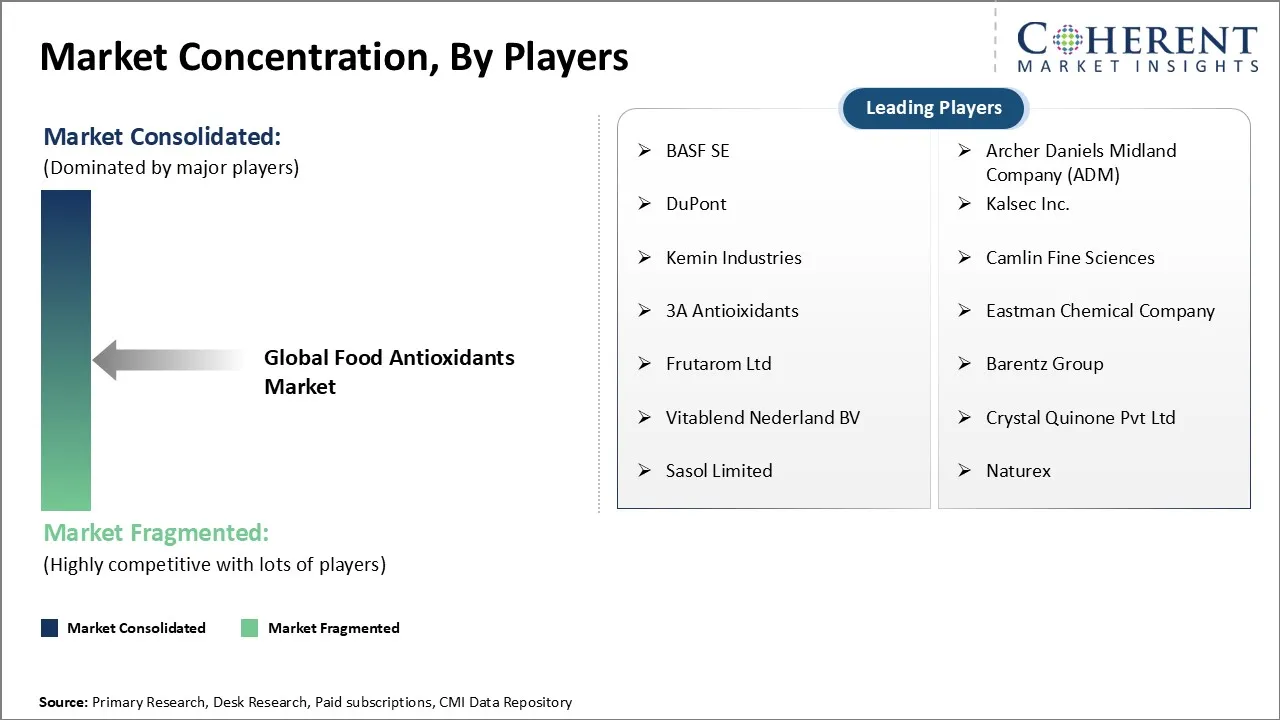
| Companies covered: | BASF SE, Archer Daniels Midland Company (ADM), DuPont, Kalsec Inc., Kemin Industries, Camlin Fine Sciences, 3A Antioixidants, Eastman Chemical Company, Frutarom Ltd, Barentz Group, Vitablend Nederland BV, Crystal Quinone Pvt Ltd, Sasol Limited, and Naturex | ||
| Growth Drivers: |
| ||
| Restraints & Challenges: |
| ||
Food Antioxidants Market Dynamics
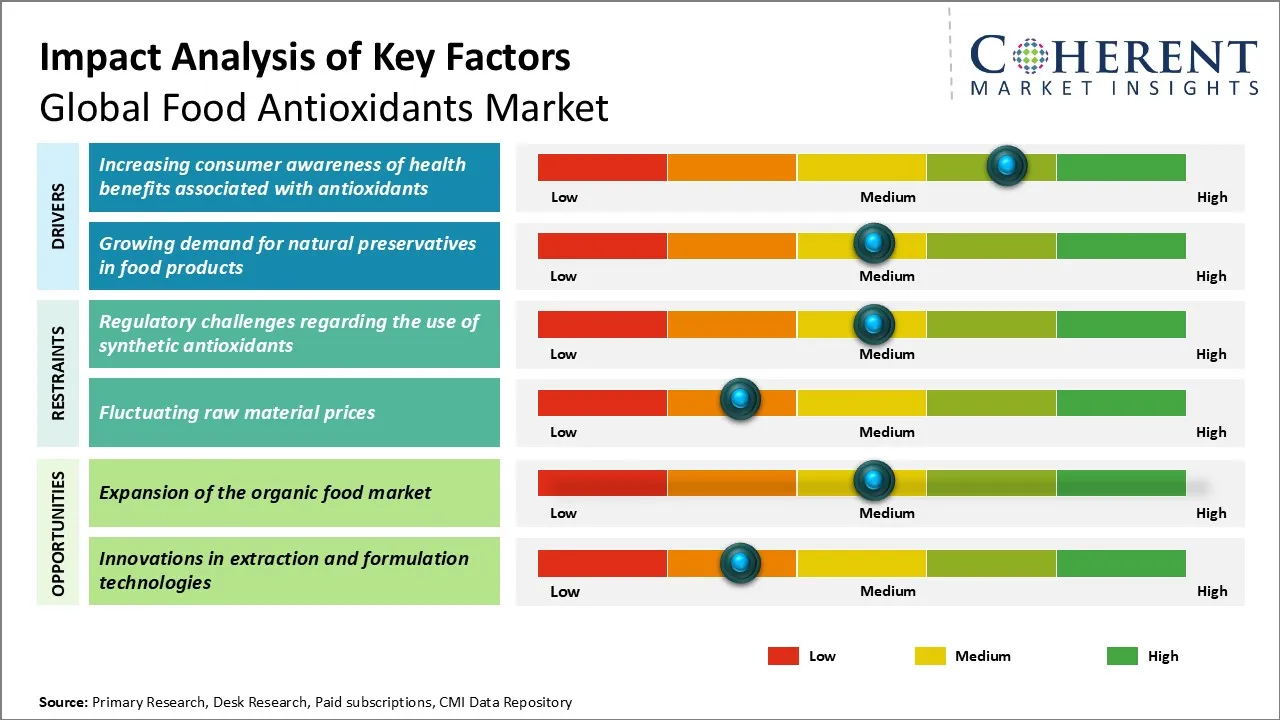
Food Antioxidants Market Driver - Increasing Consumer Awareness Of Health Benefits Associated with Antioxidants
Growing consumer consciousness around health and wellness has significantly propelled the demand for food antioxidants in recent years. As individuals become more informed about the role of oxidative stress in aging and chronic diseases, antioxidants are increasingly recognized for their ability to neutralize free radicals and support overall health. This awareness is driving consumers to seek out foods and supplements enriched with natural antioxidants, such as vitamins C and E, carotenoids, and polyphenols, which are perceived to offer protective benefits against ailments like cardiovascular diseases, cancer, and inflammation.
For instance, Nestlé’s Nescafé has launched coffee blends infused with antioxidants, positioning the product as a health-conscious alternative for coffee drinkers looking for added benefits.
Food Antioxidants Market Opportunity - Expansion of the Organic Food Market
The rapid expansion of the organic food market presents a significant growth opportunity for the global food antioxidants market. As consumer awareness about health and wellness intensifies, there is an increasing demand for clean-label, natural, and organic food products that are free from synthetic additives and preservatives. Organic foods inherently prioritize the use of natural ingredients, and antioxidants derived from natural sources align perfectly with this consumer preference. This trend is fueling the incorporation of natural food antioxidants such as tocopherols, ascorbic acid, and plant polyphenols to enhance shelf life and maintain nutritional quality without compromising the organic certification.
According to the Organic Trade Association (OTA), in 2023, organic food sales in the U.S. alone reached USD 61 billion, marking a 12% increase compared to the previous year. This surge is closely tied to rising health concerns and the desire for natural food alternatives that are free from synthetic additives, which has created a perfect alignment with the growing use of natural antioxidants in organic products.
Analyst Opinion (Expert Opinion)
- The global food antioxidants market is experiencing significant momentum, driven by increasing consumer demand for health-conscious products and the growing awareness of the benefits of antioxidants in preventing oxidative stress. Insights from the Food Ingredients Europe (2023) and the Antioxidants in Food Conference (2022) highlighted key trends, such as the rising popularity of natural antioxidants derived from sources like berries and herbs.
- Companies like DuPont and BASF are at the forefront, with DuPont’s recent launch of a plant-based antioxidant blend that appeals to the clean-label trend. Discussions at these conferences emphasized the importance of innovation in formulation to enhance product stability and shelf life, which is crucial for manufacturers.
- Additionally, the rising trend of functional foods fortified with antioxidants presents lucrative opportunities, particularly in the health and wellness sector. However, challenges such as regulatory scrutiny and the need for extensive research on efficacy were noted. Brands that prioritize transparency in sourcing and invest in clinical studies to back their claims will likely gain a competitive edge.
Speak to the analyst
Want personalized insights?
Take the findings above to one of our principal consultants, or have the report rebuilt around the segments, geographies and competitors you actually track.
Market Segmentation
- Type Insights (Revenue, USD Mn, 2021 - 2033)
- Synthetic
- Natural
- Form Insights (Revenue, USD Mn, 2021 - 2033)
- Dry
- Liquid
- Application Insights (Revenue, USD Mn, 2021 - 2033)
- Meat & Poultry
- Bakery & Confectionery
- Fats & oil
- Fish
- Pet Food
- Others
- Source Insights (Revenue, USD Mn, 2021 - 2033)
- Fruits and Vegetables
- Spices and Herbs
- Nuts and Seeds
- Others
- Regional Insights (Revenue, USD Mn, 2021 - 2033)
- North America
- U.S.
- Canada
- Latin America
- Brazil
- Argentina
- Mexico
- Rest of Latin America
- Europe
- Germany
- U.K.
- Spain
- France
- Italy
- Russia
- Rest of Europe
- Asia Pacific
- China
- India
- Japan
- Australia
- South Korea
- ASEAN
- Rest of Asia Pacific
- Middle East
- GCC Countries
- Israel
- Rest of Middle East
- Africa
- South Africa
- North Africa
- Central Africa
- North America
- Key Players Insights
- BASF SE
- Archer Daniels Midland Company (ADM)
- DuPont
- Kalsec Inc.
- Kemin Industries
- Camlin Fine Sciences
- 3A Antioixidants
- Eastman Chemical Company
- Frutarom Ltd
- Barentz Group
- Vitablend Nederland BV
- Crystal Quinone Pvt Ltd
- Sasol Limited
- Naturex
Sources
Primary Research Interviews
- R&D Director – Major Food Antioxidant Manufacturer
- Procurement Manager – Leading Food Ingredient Distributor
- Product Development Head – Prominent Snack/Food Processing Company
- Sustainability Manager – Global Food Safety Certification Organization
Stakeholders
- Manufacturers (Food antioxidants producers, ingredient suppliers)
- End-use Sectors:
- Food & Beverage (snacks, oils, bakery, beverages)
- Dietary Supplements (antioxidant-enriched products)
- Animal Feed & Pet Food (antioxidant additives)
- Regulatory & Certification Bodies
- E-commerce Platforms and Retailers
- Technology Integration Players: Automation/AI firms for food ingredients and traceability
Databases
- UN Comtrade Database
- India Import Export (EXIM) Database
Magazines
- Food Ingredients First – Trends and news on antioxidants and natural ingredients
- Nutrition & Wellness Magazine – Articles on antioxidant-rich foods
- Health Ingredients Insight – Market and innovation updates on food antioxidants
- Food Chemistry Magazine – Features on chemical profiles of antioxidants
Journals
- Food Chemistry – Research and reviews on antioxidants in food
- Journal of Agricultural and Food Chemistry – Antioxidant properties and applications
- Food Research International – Studies on effectiveness and applications of antioxidants
- Journal of Food Science & Technology – Advances in food antioxidants
Newspapers
- The Financial Times – Market reports on food ingredients and additives
- Asia Health Journal – Growth of antioxidant consumption in Asia-Pacific food sector
- European Food News – Policy and market trends for antioxidants in Europe
- The Guardian – Consumer trends for natural and synthetic antioxidants
Associations
- Institute of Food Technologists (IFT)
- International Food Additives Council (IFAC)
- Council for Responsible Nutrition (CRN)
- European Food Safety Authority (EFSA)
- Natural Products Association
Public Domain Sources
- U.S. FDA – Guidelines on antioxidants as food additives
- European Commission – Food Additives Regulation
- World Health Organization – Assessments of antioxidants’ safety and efficacy
- OECD – Nutritional and safety reports for food antioxidants
- Codex Alimentarius – International food additive standards
Proprietary Elements
- CMI Data Analytics Tool, Proprietary CMI Existing Repository of information for last 8 years.
Get access to 250+ pages report
Every segment, forecast, competitor profile and data table behind the analysis above — available for instant download.
- ESOMAR Member
- ISO 9001:2015 Certified
- D-U-N-S Registered
- GDPR & CCPA Compliant
Missing comfort of reading report in your local language? Find your preferred language:
Transform your Strategy with Exclusive Trending Reports
Frequently Asked Questions
The global food antioxidants market is estimated to be valued at USD 721.3 Mn in 2026 and is expected to reach USD 1,120.9 Mn by 2033.
The CAGR of global food antioxidants market is projected to be 6.5% from 2026 to 2033.
Increasing consumer awareness of health benefits associated with antioxidants and growing demand for natural preservatives in food products are the major factors driving the growth of the global food antioxidants market.
Regulatory challenges regarding the use of synthetic antioxidants and fluctuating raw material prices are the major factors hampering the growth of the global food antioxidants market.
In terms of type, synthetic is estimated to dominate the market revenue share in 2026.
BASF SE, Archer Daniels Midland Company (ADM), DuPont, Kalsec Inc., Kemin Industries, Camlin Fine Sciences, 3A Antioixidants, Eastman Chemical Company, Frutarom Ltd, Barentz Group, Vitablend Nederland BV, Crystal Quinone Pvt Ltd, Sasol Limited, and Naturex are the major players.
Asia Pacific is expected to lead the global food antioxidants market in 2026.