

Global Gardasil Market Size and Forecast – 2026 to 2033
The global Gardasil market is estimated to be valued at USD 5.75 Bn in 2026 and is expected to reach USD 12.64 Bn by 2033, exhibiting a compound annual growth rate (CAGR) of 11.9% from 2026 to 2033. This growth is driven by increasing awareness regarding human papillomavirus related diseases, expanding vaccination programs, and rising government initiatives worldwide. The market’s robust expansion is supported by technological advancements and the introduction of next-generation vaccines targeting a broader spectrum of HPV strains.
Key Takeaways of the Global Gardasil Market
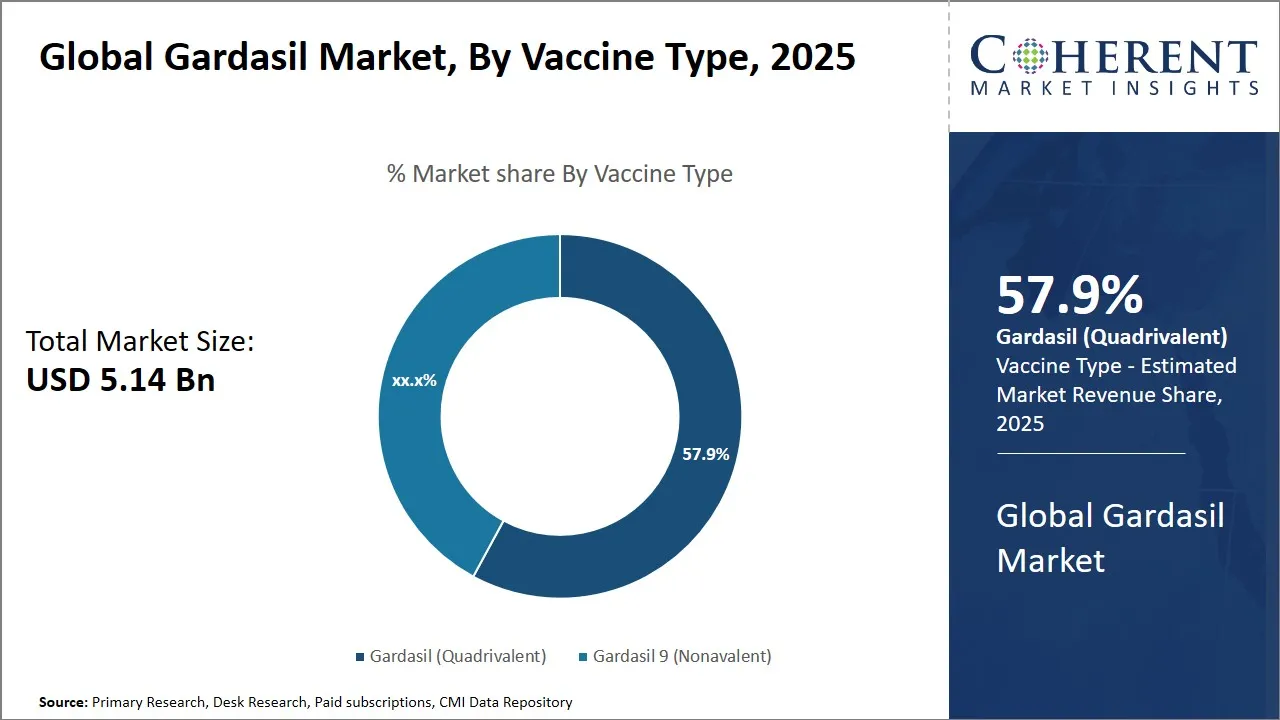
- In terms of vaccine type, Gardasil (quadrivalent) segment is expected to hold the largest share of the market, accounting for 58.9% share in 2026.
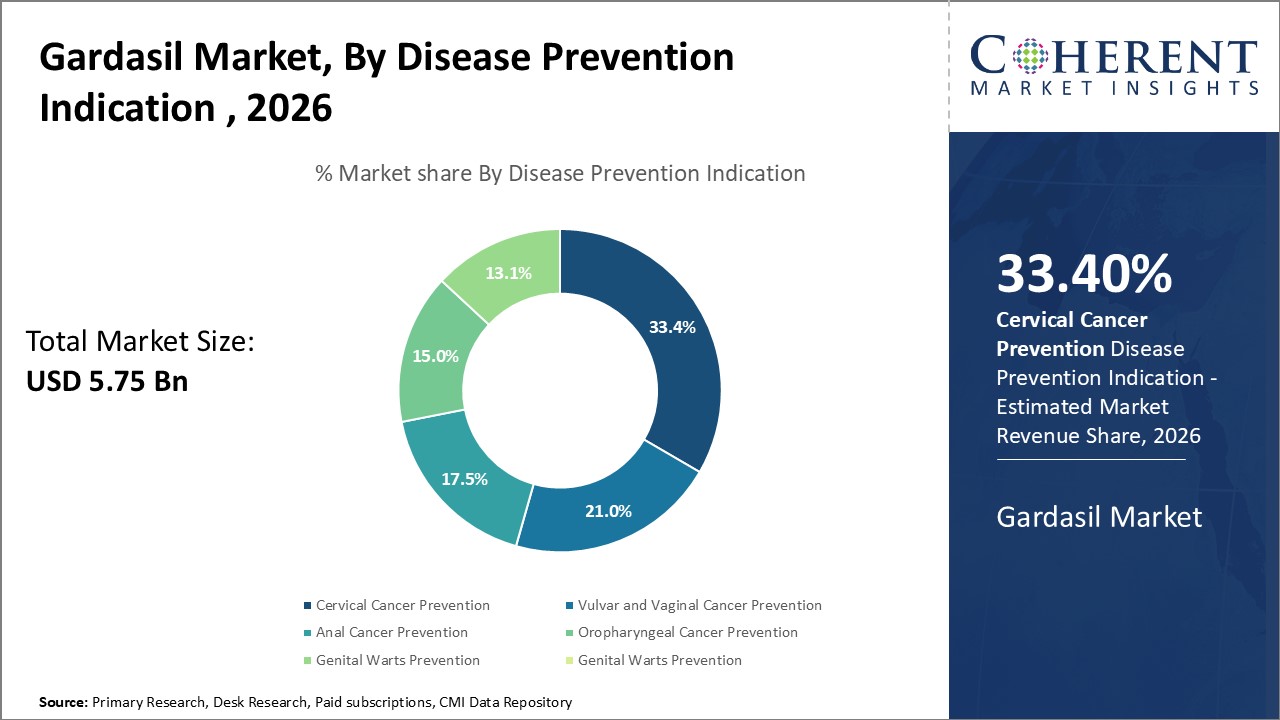
- Within the disease prevention indication, the cervical cancer prevention is projected to lead with a 33.4% share in 2026.
- The 2-dose schedule segment is set to dominate the dosage schedule, capturing 70.6% of the global Gardasil market share in 2026.
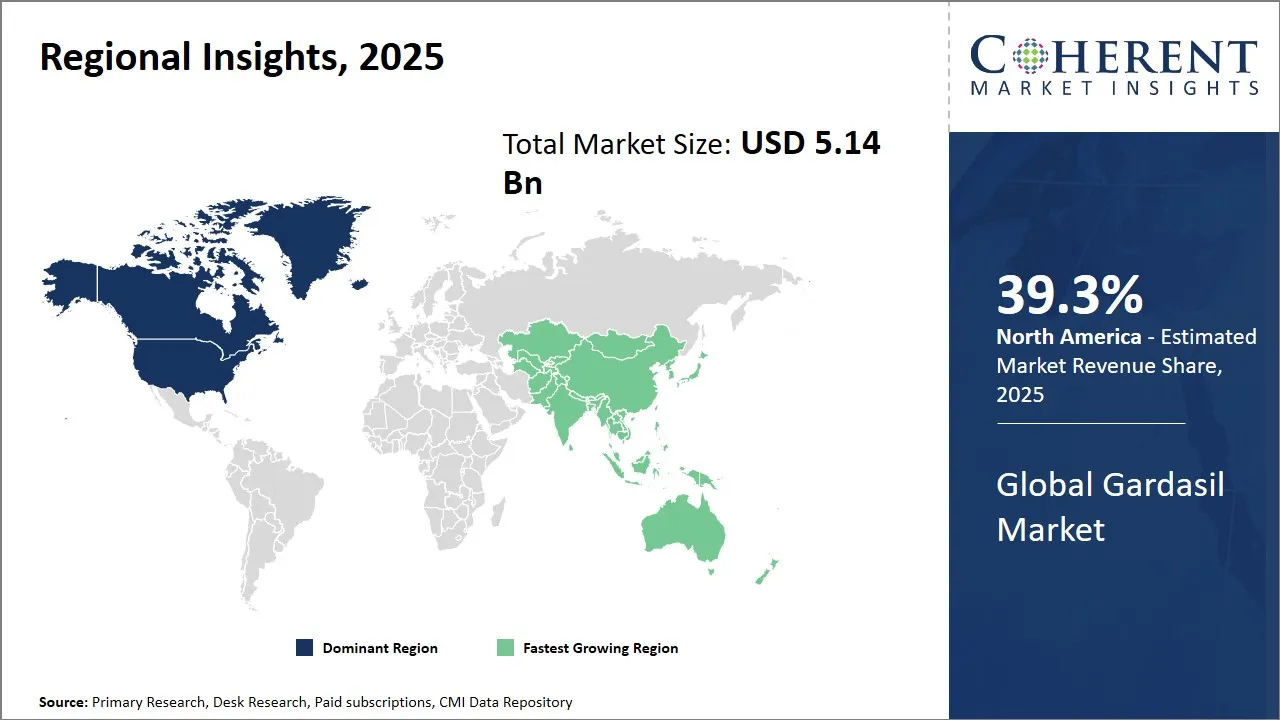
- North America is expected to lead the market, holding a share of 39.3% in 2026. Asia Pacific is anticipated to be the fastest-growing region, with an estimated market share of 24.5% in 2026.
Market Overview
Market trends indicate a strong shift towards preventive healthcare, with Gardasil playing a crucial role in reducing the incidence of cervical and other HPV-associated cancers. Growing demand in emerging economies, coupled with partnerships between governments and pharmaceutical companies, is enhancing vaccine accessibility and affordability. Additionally, ongoing research for expanding indications and improved vaccine formulations is fueling the market growth, making Gardasil a pivotal element in global immunization strategies against HPV infections.
Currents Events and Its Impact
Current Events | Description and Its Impact |
Patent Expiry and Emerging Biosimilar Competition |
|
World Health Organization (WHO) Cervical Cancer Elimination Initiative |
|
Segmental Insights
- Current Industry Events of 2026
- Market Size Estimation
- Regional Breakdown
- Competitive Landscape
- Customer Intelligence
- Segmental Analysis
- Pricing Analysis
- Key Market Drivers, Challenges & Future Trends
- Customized Insights Section
Gardasil Market Insights, By Vaccine Type - Dominance of Gardasil (Quadrivalent) Driven by Broad HPV Protection and Established Usage
When it comes to the vaccine type, Gardasil (quadrivalent) segment is expected to dominate the global Gardasil market with a 58.9% share in 2026. This is mainly because of the product's early launch and the fact that it offers protection against not just one but four HPV strains that are recognized as high-risk. Consequently, Gardasil (Quadrivalent) protects against the strains of HPV causing the most cases of cervical cancer and the others that are responsible for the less serious but still troublesome conditions like genital warts.
The entire range of HPV strains protected by the vaccine has led to it being regarded as the best option by doctors and healthcare providers as well as by public health programs around the world, especially in areas where the HPV vaccination coverage is yet to be developed completely. One more reason for the widespread popularity of the Quadrivalent vaccine is its very long and successful clinical history.
Gardasil Market Insights, By Disease Prevention Indication - Cervical Cancer Prevention Leads Due to High Disease Burden and Screening Synergies
The disease prevention indication division saw the global market for Gardasil with cervical cancer prevention representing 33.4% share in 2026 as the leading segment. The reason for the huge share is due to the extensive global impact of cervical cancer, which still is one of the most frequent causes of cancer-related deaths among women. In addition, the vaccination against the HPV types predominantly responsible for cervical cancer is not only a step towards prevention but also a public health challenge that needs to be addressed.
Gardasil Market Insights, By Dosage Schedule - Preference for 2-Dose Schedule Fueled by Improved Compliance and Regulatory Endorsements
The 2-dose schedule is the leading segment in the Gardasil market with a projected market share of 70.6% in 2026. Several factors that promote vaccination adherence and make the programs more convenient have converged to cause this phenomenon. The simpler program calls for a smaller number of clinical visits than the old 3-dose regime, thus reducing considerably the barriers that are patients' compliance as well as healthcare resources' utilization.
This process of vaccination will be very attractive to healthcare practitioners and patients, particularly teenagers, who might have a hard time going through the entire immunization series, which is lengthy. The 2-dose schedule for the younger age groups has already been given the green light by the regulatory bodies and the global health organizations because the evidence presented has indicated no difference in terms of immunogenicity and long-term protection between the 2-dose and 3-dose regimes.
Gardasil Reimbursement and Financial Assistance Overview
- The list price for each dose of GARDASIL9 is USD 328.34 as of August 2025, though most individuals will not pay the full list price. The actual out-of-pocket cost depends on factors such as insurance coverage and any financial support options available.
- GARDASIL 9 may be covered under commercial, private, Medicare, or Medicaid insurance plans, with reimbursement codes available for billing. Those without insurance may explore Merck's financial assistance program, MerckHelps, to potentially reduce out-of-pocket expenses. The company’s Vaccines for Children (VFC) program provides funding for eligible individuals, with vaccine administration details covered under various CPT and ICD-10-CM codes.
- The commonly used CPT code for GARDASIL 9 is 90651, and vaccine administration is covered by codes such as 90460, 90471, and 90472. It is important to verify specific billing requirements with each insurance plan and adhere to government program guidelines for accurate claims processing.
Regional Insights
North America Gardasil Market Analysis and Trends
North America holds the major share of the global Gardasil market with a contribution of 39.3% in 2026, because of the very well-established healthcare infrastructure, strong government initiatives, and public awareness regarding HPV-related diseases. More specifically, the U.S. is the leading country in the North American region due to large amounts of money put into vaccine research and development, and active public health policies that support HPV vaccination programs in many states.
For instance, in March 2026, Merck opened a USD 1 billion vaccine plant in North Carolina, U.S. The 225,000-square-foot facility will boost domestic production of Merck's vaccines, including Gardasil, which protects against HPV. Merck, a leading global pharmaceutical company, has invested over USD 12 billion in U.S. manufacturing since 2018. This expansion comes amid U.S. efforts to strengthen vaccine production and reduce reliance on foreign imports.
Asia Pacific Gardasil Market Analysis and Trends
The Gardasil market in the Asia Pacific region is growing the fastest with a share of 24.5% in 2026, thanks to the increasing healthcare expenditure, rising HPV awareness, and immunization programs being implemented by governments in countries like China, India, and Australia. Urbanizing rapidly and having better healthcare infrastructure are the factors making vaccine adoption easier in this region.
Public-private partnerships and international collaborations that are increasingly involved have also become a factor in market penetration. There is already a significant industry presence with global companies like Merck enlarging their local operations, while also new regional players are strengthening their distribution and accessibility.
Global Gardasil Market Outlook for Key Countries
U.S. Gardasil Market Trends
The U.S. Gardasil market is primarily influenced by the extensive government-sponsored vaccination campaigns and insurance policies that cover the cost of Gardasil. Merck's powerful marketing and constant R&D activities help to solidify the market position, and they are backed up by cooperation with schools and public health agencies. The healthcare system has such a good cold chain infrastructure that the vaccines can be distributed efficiently to even the most remote places, which in turn helps to maintain high rates of accessibility and uptake.
In April 2022, the WHO SAGE recommended a single-dose HPV vaccine for solid cervical cancer protection. This approach simplifies vaccination efforts, especially in low-income countries, and aims for 90% coverage by 2030. The updated schedule targets girls aged 9-14 and women under 21, with two doses for those over 21. This move supports the global initiative to eliminate cervical cancer.
China Gardasil Market Trends
China's Gardasil market is on a fast track to increase as a result of the government's improving health care services and the incorporation of HPV vaccines into routine immunization in various regions. In addition to the regulatory reforms that pave the way for quicker vaccine approvals, Merck's investment in setting up local manufacturing and distribution facilities further adds to the reliability of the supply. Furthermore, the growing public health campaigns that aim to enlighten the public about the risks of cervical cancer are driving demand in the urban and semi-urban areas.
In February 2026, Merck & Co. announced it would halt shipments of its Gardasil HPV vaccine to China due to plummeting demand. This move is aimed at clearing excess vaccine doses from its inventory. For the full year 2024, Gardasil sales fell 3% to USD 8.6 billion, with a significant 18% decline in Q4 compared to 2023.
U.K. Gardasil Market Trends
The U.K. Gardasil market is on a slow but steady path of growth, mainly due to the powerful public health strategies and government-sanctioned vaccination programs. The National Health Service (NHS) not only gives the vaccine for free to women but also to men, greatly increasing the possible number of beneficiaries and the degree of adoption. The market is influenced by the educational campaigns that are already in place and the provision that is as wide as it is. The U.K.'s dedication to preventive healthcare, combined with continued research into the effectiveness of the HPV vaccine, has made Gardasil an essential weapon in the fight against HPV-related diseases.
In June 2023, the U.K. Health Security Agency (UKHSA) announced that, starting September 2023, the HPV vaccination program for teenagers and eligible gay, bisexual, and other men who have sex with men (GBMSM) under 25 will move to a single-dose regimen. This follows evidence showing that a single dose offers robust protection comparable to the previous two-dose schedule.
Germany Gardasil Market Trends
The Gardasil market in Germany which is already strong, benefits from a healthcare system that covers everyone and the government's commitment to the HPV vaccination for adolescents which is seen as a tough policy. The availability of Gardasil is made smooth due to the presence of large drug distributors and hospitals. Merck together with local pharmaceutical companies, are the biggest investors in educational campaigns and stakeholder engagement, which in turn generate confidence and increase the use of the vaccine. Regulatory efficiency and health insurance policies in reimbursement also play a part in making the market sustainable.
In August 2024, researchers at the German Cancer Research Center (DKFZ) announced a new HPV vaccine designed to both prevent and treat cervical cancer. The vaccine, cPANHPVAX, is heat-stable, inexpensive, and protects against almost all cancer-causing HPV types. Unlike current vaccines, it also triggers cellular immune responses that target existing HPV-infected cells, offering potential therapeutic benefits.
Key Insights of Human Papillomavirus (HPV) Burden, Serotype Prevalence, and Epidemiology
HPV Burden
- According to the World Health Organization (WHO), HPV is responsible for approximately 620,000 cancer cases in women and 70,000 in men annually. Cervical cancer is the leading HPV-related cancer.
- The Centers for Disease Control and Prevention (CDC) estimates that in the United States, HPV causes 47,984 cancer cases annually, with 26,280 in women and 21,704 in men.
Serotype Prevalence
- According to the CDC, HPV types 16 and 18 cause approximately 70% of cervical cancers globally. Other high-risk types such as 31, 33, 45, 52, and 58 also contribute to the burden.
- The HPV Information Centre reports that HPV16 is the most prevalent high-risk type globally, followed by HPV18 and HPV45.
Epidemiology
- The World Health Organization (WHO) states that HPV is the most common sexually transmitted infection worldwide, affecting nearly all sexually active individuals at some point in their lives.
- According to CDC data, the prevalence of HPV is highest among sexually active individuals aged 15‑24 years, with higher infection rates seen in those with multiple sexual partners or early sexual debut.
Market Players, Key Developments, and Competitive Intelligence
Key Developments
- In September 2025, Vidal Health, a Bajaj Finserv Health subsidiary, and Serum Institute of India (SII) have launched a digital HPV vaccine access platform. This innovative, end-to-end solution simplifies the vaccination process, offering a seamless and cashless experience. The platform allows users to book appointments, complete consent digitally, and receive reminders.
- In September 2025, Pakistan's Federal Directorate for Immunization (FDI), in partnership with Gavi, UNICEF, and WHO, launched an HPV vaccination campaign to protect adolescent girls from cervical cancer. The campaign targets 9 to 14-year-old girls across multiple regions, with a goal of vaccinating 90% of 13 million eligible girls. The vaccine will be free and available through fixed centers, schools, and mobile teams.
- In May 2025, Merck & Co., Inc. affirmed that the current 2- and 3-dose regimens for GARDASIL9 should remain in place until further clinical data supports changes. The vaccine, approved for individuals aged 9 to 45, prevents cancers caused by HPV types 16, 18, 31, 33, 45, 52, and 58. Merck emphasized the need for solid data to back single-dose regimens, particularly in terms of efficacy in men.
- In March 2024, Merck & Co., Inc. announced the development of a new multivalent HPV vaccine that aims to offer broader protection against multiple HPV types. The vaccine, utilizing proprietary virus-like particle technology, is designed to provide enhanced coverage, particularly for HPV types that impact African and Asian populations. Merck is also exploring a single-dose regimen for its Gardasil 9 vaccine, which currently requires a 3-dose series for most individuals.
Market Report Scope
Gardasil Market Report Coverage
| Report Coverage | Details | ||
|---|---|---|---|
| Base Year: | 2025 | Market Size in 2026: | USD 5.75 Bn |
| Historical Data for: | 2020 To 2024 | Forecast Period: | 2026 To 2033 |
| Forecast Period 2026 to 2033 CAGR: | 11.9% | 2033 Value Projection: | USD 12.64 Bn |
| Geographies covered: |
| ||
| Segments covered: |
| ||
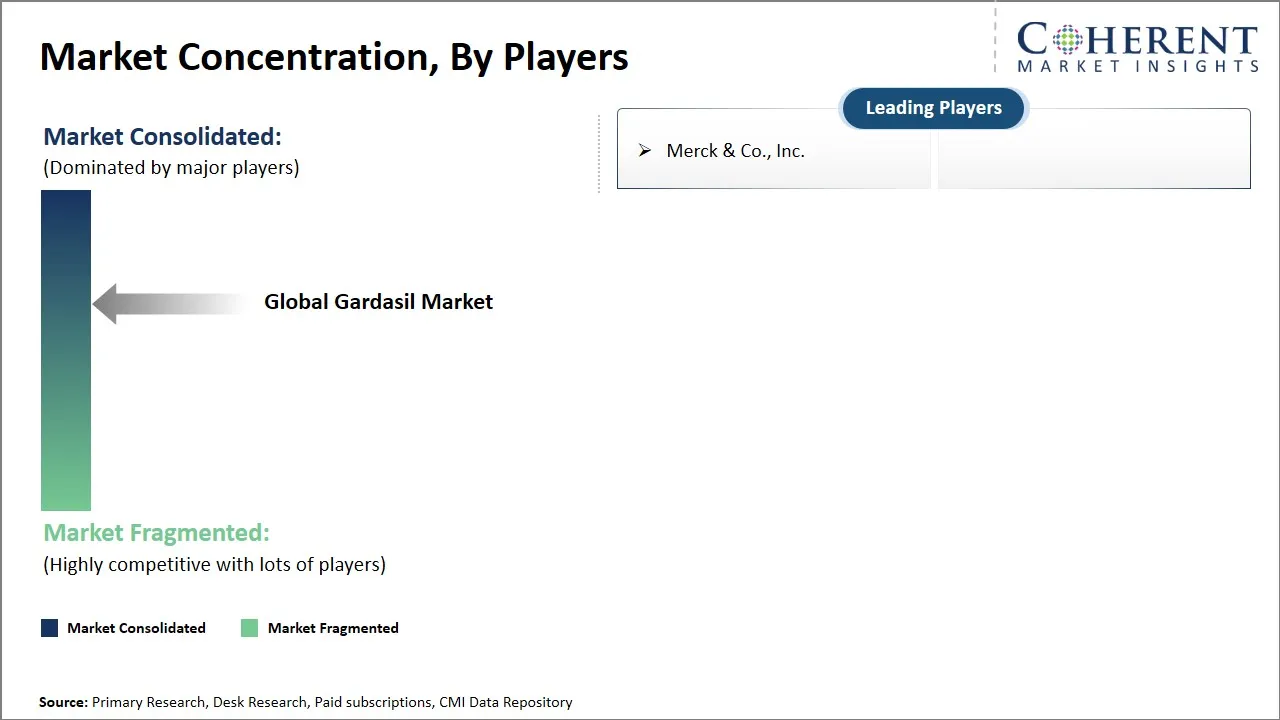
| Companies covered: | Merck & Co., Inc. | ||
| Growth Drivers: |
| ||
| Restraints & Challenges: |
| ||
Gardasil Market Dynamics
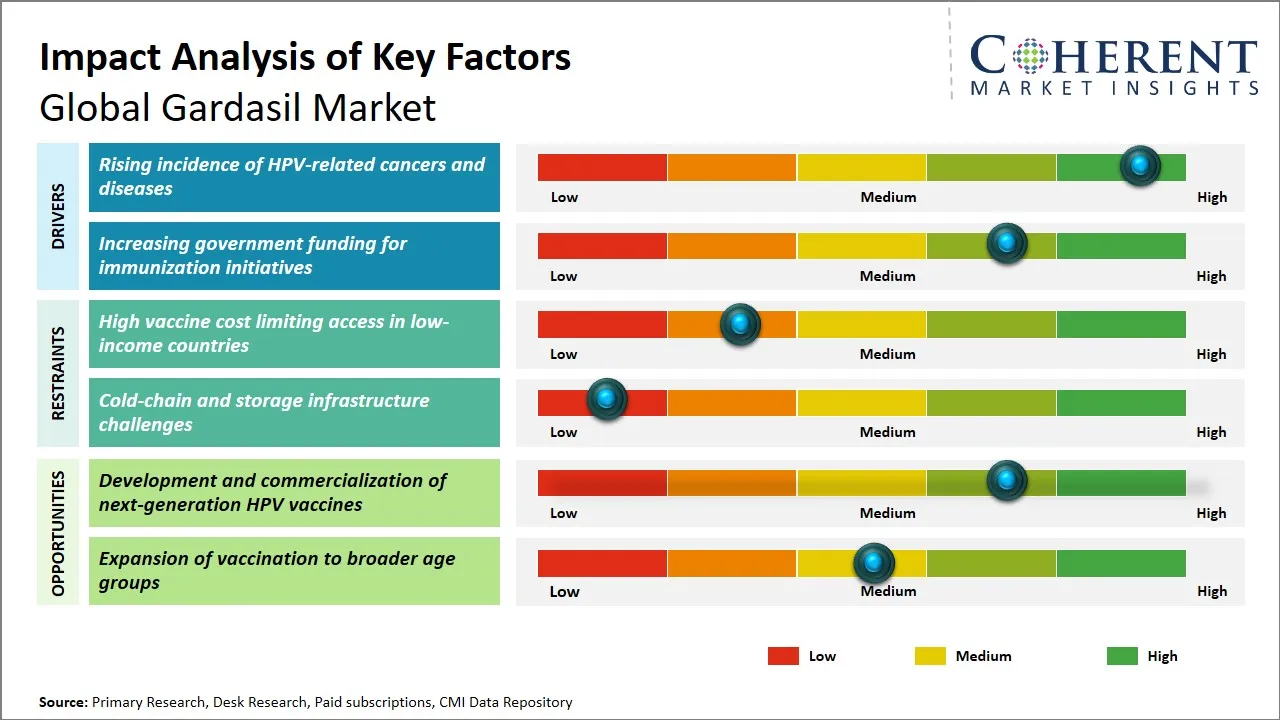
Gardasil Market Driver - Rising Incidence of HPV ‑Related Cancers and Diseases
The increasing incidence of cancers and diseases related to human papillomavirus (HPV) is a major factor in the global demand for Gardasil vaccines. HPV is the virus that most commonly causes cervical cancer and other cancers, such as anal, oropharyngeal, penile, vulvar and vaginal cancers. The medical community is aware of the diseases caused by the virus and nowadays, thanks to the improved diagnostic tools, more and more patients are being diagnosed in different population groups. The rising number of patients is a clear sign that there is a need for prevention methods hence, the use of Gardasil for vaccination will be the main intervention for reducing the occurrence of HPV infections and eventually their serious ramifications.
For instance, in March 2024, the World Health Organization (WHO) continued its efforts to combat cervical cancer caused by HPV. The Global Strategy aims to eliminate cervical cancer as a public health problem by vaccinating 90% of girls by age 15, ensuring 70% of women are screened by age 35 and again at 45, and treating 90% of women with cervical disease. Gardasil, a vaccine for HPV, plays a key role in preventing HPV-related cancers. The vaccine is recommended for all girls aged 9-14 years before they become sexually active. This initiative also includes expanding access to screening and treatment, addressing regional disparities in healthcare access, and ensuring that the prevention measures are implemented effectively worldwide.
Gardasil Market Opportunity - Development and Commercialization of Next-Generation HPV Vaccines
The global Gardasil market is not just a place for the existing vaccine and the prevention of HPV-related diseases, but also a great opportunity for the research and development of the next-generation HPV vaccines and the commercialization of such products, as the demand for the broadest protection against an array of human papillomavirus (HPV) strains keeps on rising. The first part talks about the current HPV vaccines, such as Gardasil 9, which together cover the most common high-risk HPV types associated with cervical cancer. In the second part, it mentions that the research is ongoing, and it has the potential to impact the market by allowing the new vaccines to be sold to a much larger population that even includes older people and men in general who otherwise are not vaccinated.
For an example, RecBio is now working on the next-gen quadrivalent and 9-valent HPV vaccine candidates which will use the new adjuvants and a two-shot regimen aiming at the broader age coverage and improved manufacturing efficiency.
Analyst Opinion (Expert Opinion)
- The Gardasil market is characterized by rapid growth, mainly due to the technological innovations in vaccine production and vigorous regulatory backing. Moreover, it is the increasing knowledge of HPV being a causative factor of cervical cancer that has spurred the demand particularly in developing countries where vaccination programs are being expanded. Nonetheless, the market still faces some impediments like the lack of availability of vaccines in low-income areas and the need for educating people further about the disease.
- There are chances to take in more underserved regions and create vaccines against even more HPV strains. The joining of forces between worldwide health organizations like GAVI and events such as the IPS World Congress are very important for the progress of policies and the exchange of knowledge, thus, affecting the future of HPV prevention strategies all around the world.
Market Segmentation
- Vaccine Type Insights (Revenue, USD Bn, 2021 - 2033)
- Gardasil (Quadrivalent)
- Gardasil 9 (Nonavalent)
- Disease Prevention Indication Insights (Revenue, USD Bn, 2021 - 2033)
- Cervical Cancer Prevention
- Vulvar and Vaginal Cancer Prevention
- Anal Cancer Prevention
- Oropharyngeal Cancer Prevention
- Genital Warts Prevention
- Dosage Schedule Insights (Revenue, USD Bn, 2021 - 2033)
- 2-Dose Schedule
- 3-Dose Schedule
- Gender Insights (Revenue, USD Bn, 2021 - 2033)
- Male
- Female
- Age Group Insights (Revenue, USD Bn, 2021 - 2033)
- Adolescents (typically 9-14 years)
- Young adults (15-26 years)
- Adults (above 26 years)
- End User Insights (Revenue, USD Bn, 2021 - 2033)
- Hospitals and Multispecialty Centers
- Pediatric and Gynecology Clinics
- Academic and Research Institutions
- Corporate, Workplace Vaccination Programs
- Distribution Channel Insights (Revenue, USD Bn, 2021 - 2033)
- Public sector
- Private sector
- Regional Insights (Revenue, USD Bn, 2021 - 2033)
- North America
- U.S.
- Canada
- Latin America
- Brazil
- Argentina
- Mexico
- Rest of Latin America
- Europe
- Germany
- U.K.
- Spain
- France
- Italy
- Russia
- Rest of Europe
- Asia Pacific
- China
- India
- Japan
- Australia
- South Korea
- ASEAN
- Rest of Asia Pacific
- Middle East
- GCC Countries
- Israel
- Rest of Middle East
- Africa
- South Africa
- North Africa
- Central Africa
- North America
- Key Players Insights
- Merck & Co., Inc.
Sources
Primary Research Interviews
- Industry Stakeholders
- Vaccine procurement officials
- Vaccine manufacturer market‑access leads
- End Users
- Hospital immunization directors
- Specialist clinics (gynaecology/oncology)
- Survey of adolescent health outreach programs
- Focus groups with parents of vaccinated adolescents
Government & International Databases
- WHO Immunization Data Portal
- UNICEF Immunization Dashboards
- WHO Market Information for Access to Vaccines (MI4A)
- Joint Reporting Form (WHO/UNICEF)
- National Immunization Program data (various countries)
- Global health observatories (burden of disease databases)
Trade Publications
- “The HPV Vaccine Market” article
- HPV vaccine manufacturing cost analysis
- HPV vaccine market shaping roadmap (GAVI)
- Industry overviews in vaccine sector publications
- Cost-effectiveness modelling articles
- Immunization‑market dashboards in trade tools
Academic Journals
- “HPV Vaccines: An Updated Review”
- “HPV Vaccines – An Overview” (Indian Journal of Dermatology)
- Cost‑effectiveness studies on HPV vaccines
- Bayesian modelling for immunization coverage
- Post-marketing studies on vaccine effectiveness
- Epidemiology papers on HPV and cervical cancer
Reputable Newspapers / Media
- WHO HPV vaccine updates (media coverage)
- National immunization rollout articles
- Reports on vaccine procurement tenders
- Coverage of adolescent vaccination programs
- News on HPV vaccine supply issues
- Media reports on vaccine hesitancy
Industry Associations
- EFPIA (European Federation of Pharmaceutical Industries)
- Immunization Action Coalition (US)
- DCVMN (Developing Countries Vaccine Manufacturers Network)
- GAVI, the Vaccine Alliance
- National immunization technical advisory groups
- Vaccine policy forums
Public Domain Resources
- WHO Global Vaccine Market Report
- UNICEF Vaccine Pricing Data
- Public immunization data (country‑specific)
- Global Cancer Observatory data (HPV/cervical cancer)
- Public epidemiological HPV incidence data
- WHO Immunization Data
Proprietary Elements
- CMI Data Analytics Tool: Proprietary analytics tool to analyze real-time market trends, consumer behavior, and technology adoption in market
- Proprietary CMI Existing Repository of Information for Last 8 Years
Get access to 250+ pages report
Every segment, forecast, competitor profile and data table behind the analysis above — available for instant download.
- ESOMAR Member
- ISO 9001:2015 Certified
- D-U-N-S Registered
- GDPR & CCPA Compliant
Missing comfort of reading report in your local language? Find your preferred language:
Transform your Strategy with Exclusive Trending Reports
Frequently Asked Questions
The global Gardasil market is estimated to be valued at USD 5.75 Bn in 2026 and is expected to reach USD 12.64 Bn by 2033.
The CAGR of the global Gardasil market is projected to be 11.9% from 2026 to 2033.
Rising incidence of HPV‑related cancers and diseases and increasing government funding for immunization initiatives are the major factors driving the growth of the global Gardasil market.
High vaccine cost limiting access in low-income countries and cold-chain and storage infrastructure challenges are the major factors hampering the growth of the global Gardasil market.
In terms of vaccine type, the Gardasil (quadrivalent) is estimated to dominate the market revenue share in 2026.
Merck & Co., Inc. is the major players.
North America is expected to lead the global Gardasil market in 2026.