

Global Green Soil Market Size and Forecast – 2026-2033
The global green soil market is estimated to be valued at USD 826.6 Mn in 2026 and is expected to reach USD 1,416.7 Mn by 2033, exhibiting a compound annual growth rate (CAGR) of 8.0% from 2026 to 2033.
Key Takeaways of the Green Soil Market
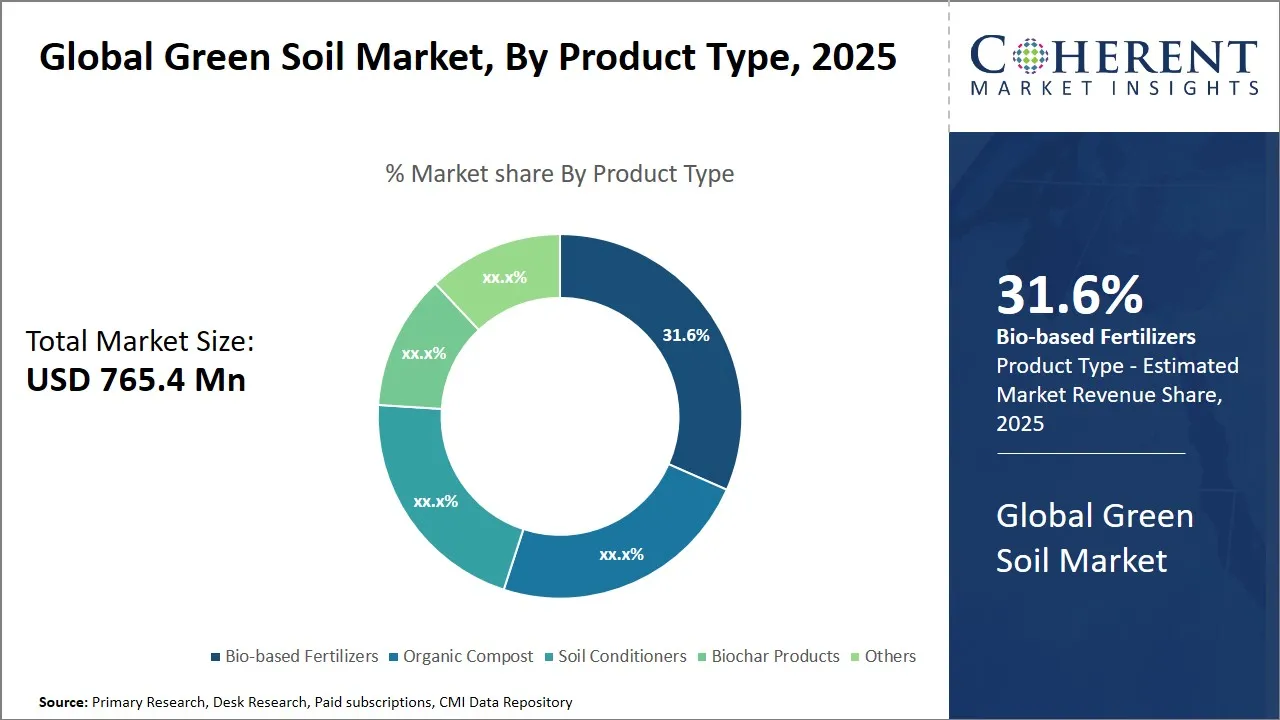
- The bio-based fertilizers segment is projected to capture 32.6 % of the global green soil market share in 2026.
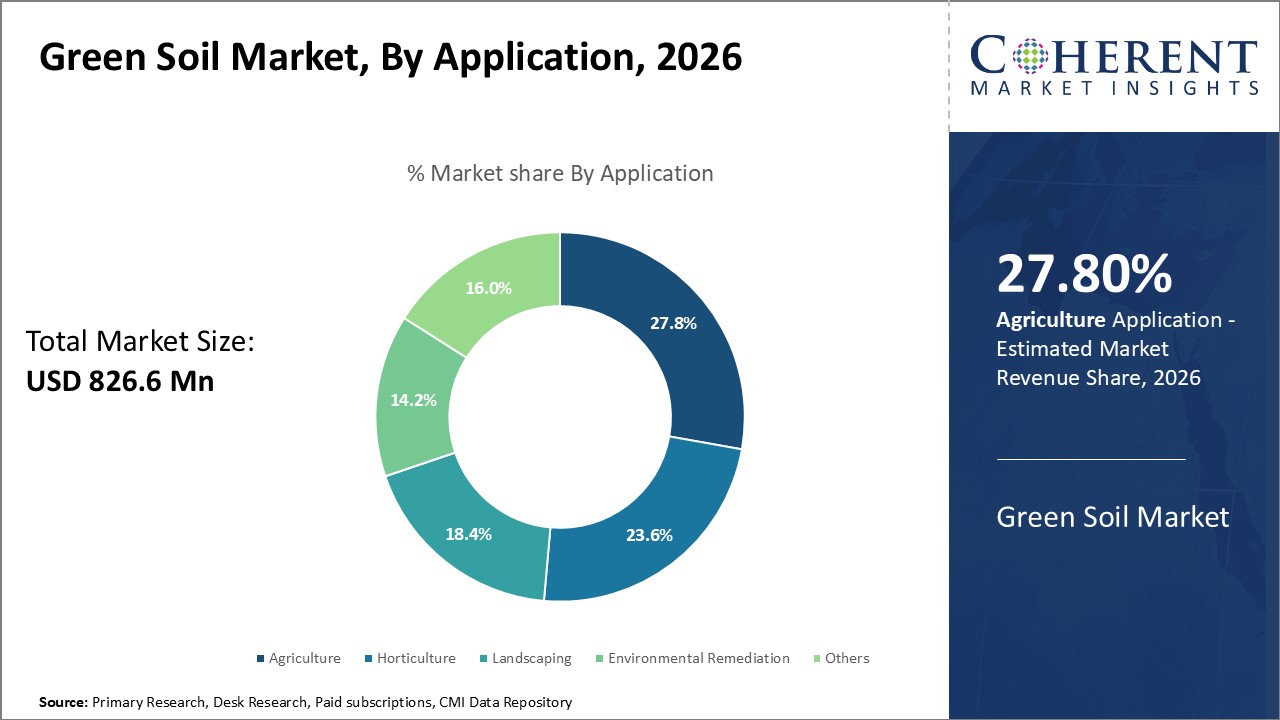
- The agriculture segment is expected to account for 27.8% of the global green soil market share in 2026.
- The direct sales segment is projected to hold 54.7% of the market share in 2026.
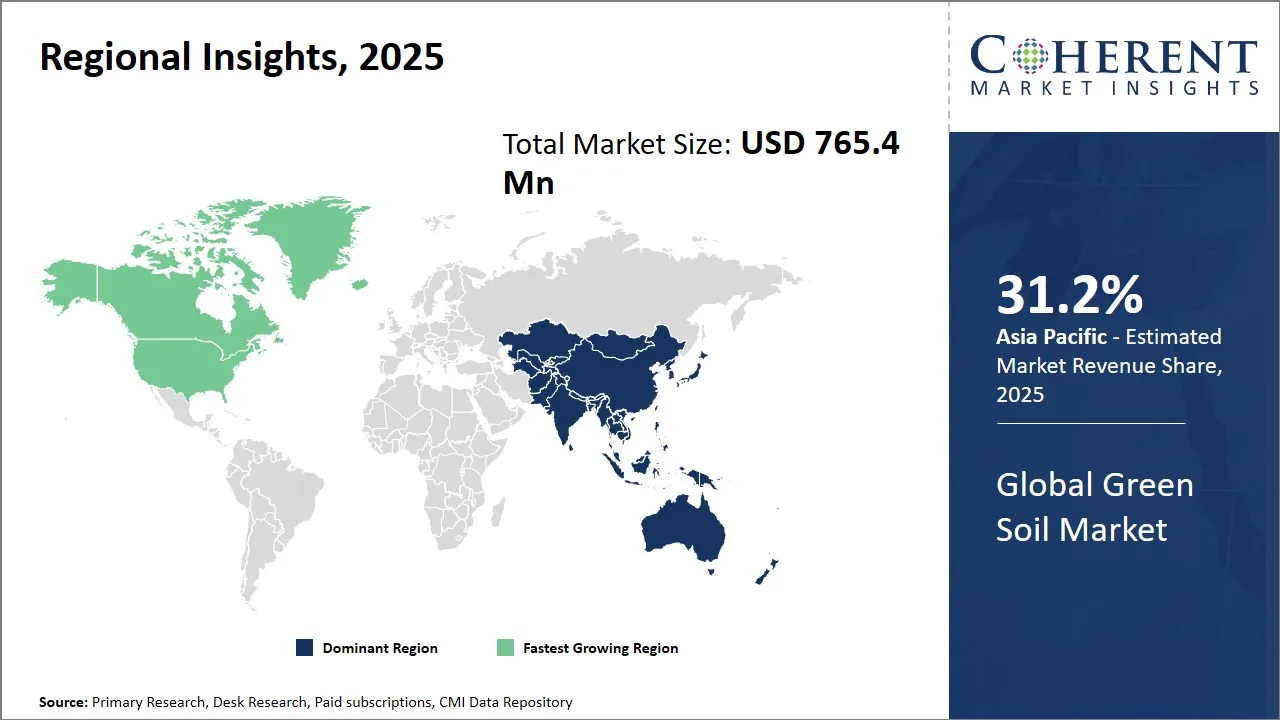
- Asia Pacific is expected to lead the global green soil market in 2026 with a 31.2% share, driven by the increasing demand for sustainable agriculture practices and environmental awareness.
- North America, with a 21.5% share in 2026, is expected to be the fastest-growing region, fueled by the growing adoption of bio-based fertilizers, government incentives for green practices, and innovation in soil management technologies.
Market Overview
Major market trends are an increasing focus on organic cultivation and the incorporation of new green soil solutions that improve crop productivity without dangerous chemicals. Furthermore, demand for the biodegradable soil conditioners and biofertilizers is increasing as customers and businesses look toward sustainability. Advances in soil health tracking and nutrient application further support the market by making accurate and effective application of green soil products possible. All these trends together are responsible for the consistent growth curve of the global green soil market.
Currents Events and their Impact
Current Events | Description and its Impact |
Soil Health in Corporate Sustainability |
|
Regenerative Soil Technology Market Expansion |
|
Segmental Insights
- Current Industry Events of 2026
- Market Size Estimation
- Regional Breakdown
- Competitive Landscape
- Customer Intelligence
- Segmental Analysis
- Pricing Analysis
- Key Market Drivers, Challenges & Future Trends
- Customized Insights Section
Green Soil Market Insights, By Product Type - Bio-based Fertilizers Segment Dominates the Market due to their Sustainable Nutrient Delivery and Enhanced Soil Health Benefits
Bio-based fertilizers segment is expected to hold 32.6% of the global green soil market share in 2026, because they can upgrade the fertility of the soil in a sustainable way and improve long-term agricultural production. In contrast to synthetic fertilizers, bio-based fertilizers are produced from nature-based materials like plant residues, animal manure, and microbial cultures, which enrich the soil with key nutrients in a harmless way. This bio-based origin responds to increasing concerns regarding chemical run-off, soil erosion, and environmental contamination, thus making bio-based fertilizers the choice of environmentally aware farmers and agricultural players.
The efficiency of bio-based fertilizers to enhance soil microbial activity and the quantity of organic matter further stimulates their use. Bio-based fertilizers enable the biological process that enhances nutrient cycling, water holding capacity, and soil structure, and which in turn leads to healthier crop production. This biological process is amenable to the growing world call for sustainable agriculture techniques that urge farmers to adopt bio-based solutions that improve the quality of the soil without harming the environment.
Green Soil Market Insights, By Application – Agriculture Segment Dominates the Market due to Rising Food Demand and Sustainable Farming Initiatives
Agriculture segment is projected to hold 27.8% of the global green soil market share in 2026, stimulated by a mix of rising global food security requirements and development towards sustainable cultivation techniques. With the world's population increasing and cultivatable land diminishing, farmers are forced to embrace green soil solutions that improve soil fertility and crop production sustainably.
Green soil products used in agriculture address some of the most important challenges like soil nutrient loss, erosion, and adverse effects of chemical fertilizers and pesticides. By implementing bio-based fertilizers, organic compost, and soil conditioners, agricultural farmers have the ability to regain soil organic matter and fertility, minimize reliance on synthetic inputs, and increase soil biodiversity. This results in sustainable farming systems with the ability to yield greater outputs over several years of cultivation without compromising ecosystem integrity.
Green Soil Market Insights, By Distribution Channel - Direct Sales Segment Dominates the Market Driven by Personalized Service and Stronger Customer Relationships
Direct sales segment is expected to capture 54.7% of the market share in 2026, due to the fact that this method helps manufacturers and suppliers form tighter relationships with end-users like farmers, agribusinesses, and horticulturists.
This customized model of distribution is very important in a market where the effectiveness of a product greatly relies on accurate application and training of the users. Through direct selling, firms are able to provide tailor-made solutions adapted specifically to the client's soil type and crop needs, ensuring maximum product efficiency and customer satisfaction.
Regional Insights
Asia Pacific Green Soil Market Analysis and Trends
The Asia Pacific region is projected to lead the market with a 31.2% share in 2026, led by growing agricultural modernization and environmental conservation awareness and concerns over soil degradation. The fast rate of industrialization and urbanization in nations such as China and India has contributed to increased concerns regarding soil health, which has spurred the government's support for organic and sustainable agricultural farming practices.
Support from policies in the form of subsidies and training for farmers promotes the use of green soil amendments. The increasing number of domestic and foreign agri-chemical firms, such as Tata Chemicals and Nufarm Asia Pacific, is making the market penetration possible.
North America Green Soil Market Analysis and Trends
The North America region is expected to exhibit the fastest growth in the market contributing 21.5% share in 2026, strongly propelled by sophisticated farm practices, intense environmental laws, and high investments in eco-friendly farming technologies. The market enjoys a well-developed ecosystem for mature markets with high levels of R&D activities aimed at soil health and organic supplements.
The availability of several industry leaders with innovative product offers, including The Andersons, Inc., and BioHuma Netics, Inc., also favors the commanding position of the region. Also contributing is mature trade infrastructure and export capacity, which enables North America to have a strong supply chain and ship products effectively both locally and abroad.
Green Soil Market Outlook for Key Countries
U.S. Green Soil Market Analysis and Trends
The green soil industry of the U.S. is blessed with a mature agricultural industry emphasizing sustainability and soil preservation. Top industry players like the Andersons, Inc., and Growers Solution engage in active research and development of organic fertilizer and soil conditioners. Government stimulus through programs such as the Sustainable Agriculture Research and Education (SARE) program helps to promote environmentally friendly agriculture. Further, the growing demand for organic food items by consumers compels farmers to adopt green soil solutions that enhance soil fertility without chemical residues, supporting market growth nationwide.
China Green Soil Market Analysis and Trends
The market in China mirrors speedy adoption of green soil products catalyzed by government-driven environmental protection policies and subsidies to drive down chemical fertilizer use. Key local participants, such as China National Chemical Corporation (ChemChina), are spending significantly on research and development of green soil amendments. The Chinese government's emphasis on enhancing agricultural sustainability with growing fears of soil contamination triggers market adoption. Export-led growth and the expansion of organic farming areas highlight China's pivotal position in driving the region's green soil market growth path.
India Green Soil Market Analysis and Trends
India is still ahead in the Asia Pacific region with increasing need for green soil technologies as a result of soil degradation issues and water shortages affecting conventional farming practices. The encouragement from the government through schemes such as Paramparagat Krishi Vikas Yojana (PKVY) promotes the application of organic and bio-based soil conditioners. Major producers like Tata Chemicals and Indian Farmers Fertiliser Cooperative Limited (IFFCO) play a major role in innovation and distribution of sustainable soil products. This, coupled with farmer education programs, guarantees strong market growth accommodating localized agronomic issues.
Germany Green Soil Market Analysis and Trends
Germany green soil market is driven by strict environmental laws and a high demand for organic food among consumers, which compel the agriculture industry towards sustainable soil management practices. Major players such as K+S Aktiengesellschaft and COMPO GmbH are market leaders by offering state-of-the-art sustainable green soil products in line with EU agricultural sustainability regulations. Germany's established organic farming industry and incentives by the government encourage uptake of green soil amendment within Germany. In addition, Germany serves as a regional center for green soil solution exports throughout the broader European region.
Brazil Green Soil Market Analysis and Trends
Brazil green soil industry is informed by the country's expansive agricultural sector and growing emphasis on sustainable land use to check deforestation and soil degradation. Green soil uptake is fostered by the government through programs to improve soil health and productivity for principal crops like soybeans and sugarcane. Mosaic Fertilizantes and Fertilizantes Heringer, among other firms, concentrate on bio-based soils designed to suit Brazil's diversified climatic regions. Strategic trade policy and increasing exports of organic products heighten the market potential against the backdrop of increasing environmental awareness among farmers.
Green Life Soil Co. is a company specializing in organic soil production and supply of organic soil products to meet local gardening demands. Its products are certified organic potting mixes, composts, conditioners, and fertilizers, all designed to improve the health of the soil and encourage sustainable gardening.
Macro and Micro Economic Factors Impacting the Green Soil Market Growth
Macro-Economic Factors
- Economic Growth and Food Security: A growing worldwide population and the need for consistent food supply has led to an increase in demand for controlled agriculture like greenhouse cultivation, which leads to an increase in green soil consumption.
- Urbanization and Limited Arable Land: Rapid urbanization decreases the opportunity for traditional agriculture, as manufactured and greenhouse soils drive urban agriculture and vertical farming projects in cities.
- Climate Change and Weather Variability: With varying rainfall and drought, greenhouse soils support controlled environments that allow farming year-round, making soils an agricultural resilience component.
- Government Policies and Incentives: Supports for regenerative agriculture, sustainable agricultural soil practices, and carbon credits schemes (e.g., EU Green Deal and Agreena in Denmark) are all driving adoption in Europe and across the globe.
Micro Economic Factors
- Innovation in Products and Soil Composition: Manufacturers are creating new products that are nutrient dense, microbiome-enhanced, disease-resistant, or other creative formulations that enhance crop yield and profitability.
- Increasing Consumer Demand for Organic Produce: People are increasingly aware and preferring organic crops while avoiding glyphosate (pesticide), and green soils offer an environmentally friendly option.
- Cost-Benefit at the Farm Level: Even though it often requires a significant capital investment, the reduced need for fertilizers and pesticides when utilizing greenhouse amended soils on the farm allows for improved long-term margins.
Market Players, Company Insights, and Competitive Intelligence
Company Insights
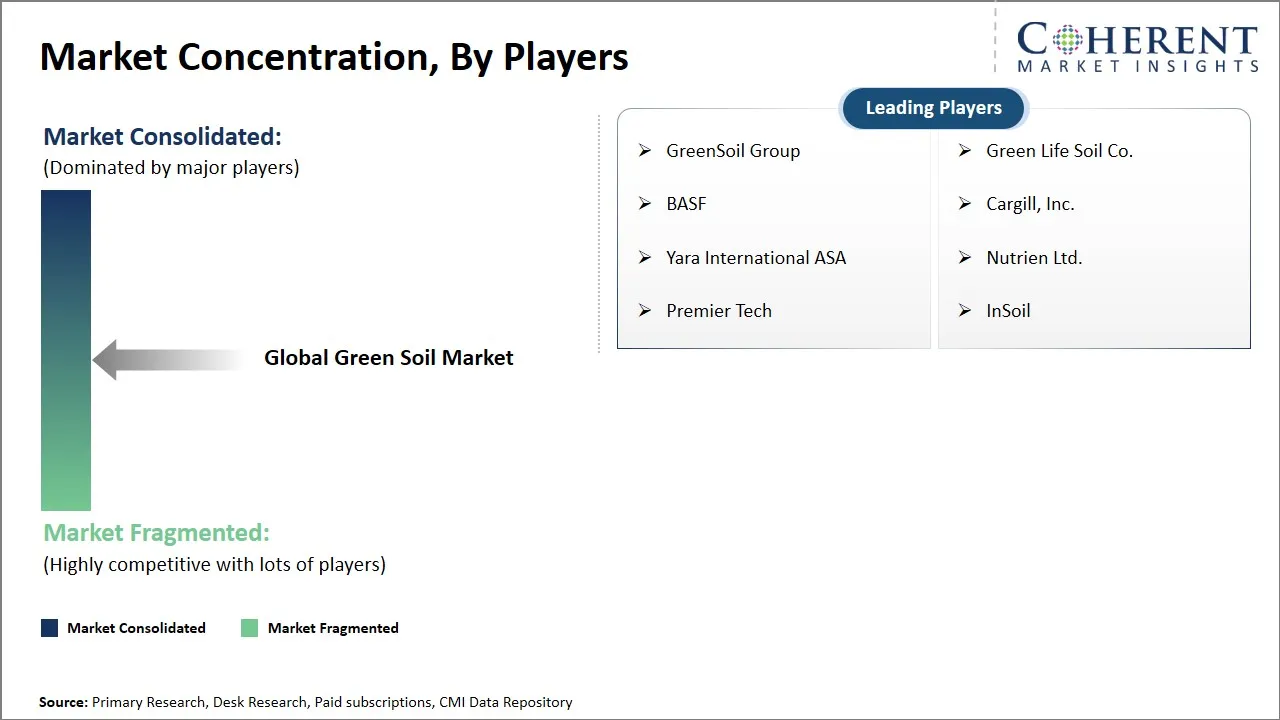
- Green Life Soil Co. is a company specializing in organic soil production and supply of organic soil products to meet local gardening demands. Its products are certified organic potting mixes, composts, conditioners, and fertilizers, all designed to improve the health of the soil and encourage sustainable gardening.
- GreenSoil Group is a global leader in sustainable soil and groundwater remediation, groundwater and soil remediation, and specializes in in-situ, biologically-driven treatment technologies. Their main products and services involve on-site and in-situ bioremediation processes, which use naturally occurring microorganisms that break down contaminants in place at the source of pollution, reducing excavation and off-site disposal. With these forward-thinking, integrated approaches,
Top Strategies Followed by Global Green Soil Market Players
- Established market leaders typically invest heavily in research and development (R&D) as a pathway to innovation, enabling the creation of high-performance, environmentally sustainable soil products that are compliant with environmental regulations and aligned with consumer preferences. These large companies will establish strategic partnerships with major industry participants, original equipment manufacturers (OEMs), and agtech companies to validate their position within the marketplace and develop product variety. Additionally, international expansion constitutes a priority for these larger players.
- For instance, the Scotts Miracle-Gro Company, a leader in the green soil market, consistently supports cutting-edge R&D to develop environmentally sustainable, nutrient-rich soils and organic fertilizers.
- Mid-level market participants offer a slightly different approach centered on quality and affordability. Their primary strategy is to offer low-cost, reliable green soil options that resonate with economically driven customers, including smallholder farmers and local agriculture businesses. While the industry leaders heavily invest in R&D, the mid-tier companies innovate in a selective manner that increases operating performance without incurring significant production costs.
- For instance, Monsanto (which is a part of Bayer), working along with multiple agricultural start-ups, to create bio-based soil enhancers with advanced technologies that utilize AI for discrete agriculture.
- Small-scale players occupy a niche, yet important part of the green soil market, offering tailored or unique attributes within their products, so that they can distinguish themselves away from larger competition. When marketing their products, small companies typically engage with advanced technologies which include biochar-enhanced formulations, microbial inoculants, or soils that are compatible with precision agriculture, while attempting to meet particular farming needs or environmental guidelines.
Market Report Scope
Green Soil Market Report Coverage
| Report Coverage | Details | ||
|---|---|---|---|
| Base Year: | 2025 | Market Size in 2026: | USD 826.6 Mn |
| Historical Data for: | 2020 To 2024 | Forecast Period: | 2026 To 2033 |
| Forecast Period 2026 to 2033 CAGR: | 8.0% | 2033 Value Projection: | USD 1,416.7 Mn |
| Geographies covered: |
| ||
| Segments covered: |
| ||
| Companies covered: | GreenSoil Group, Green Life Soil Co., BASF, Cargill, Inc., Yara International ASA, Nutrien Ltd., Premier Tech, and InSoil | ||
| Growth Drivers: |
| ||
| Restraints & Challenges: |
| ||
Green Soil Market Dynamics
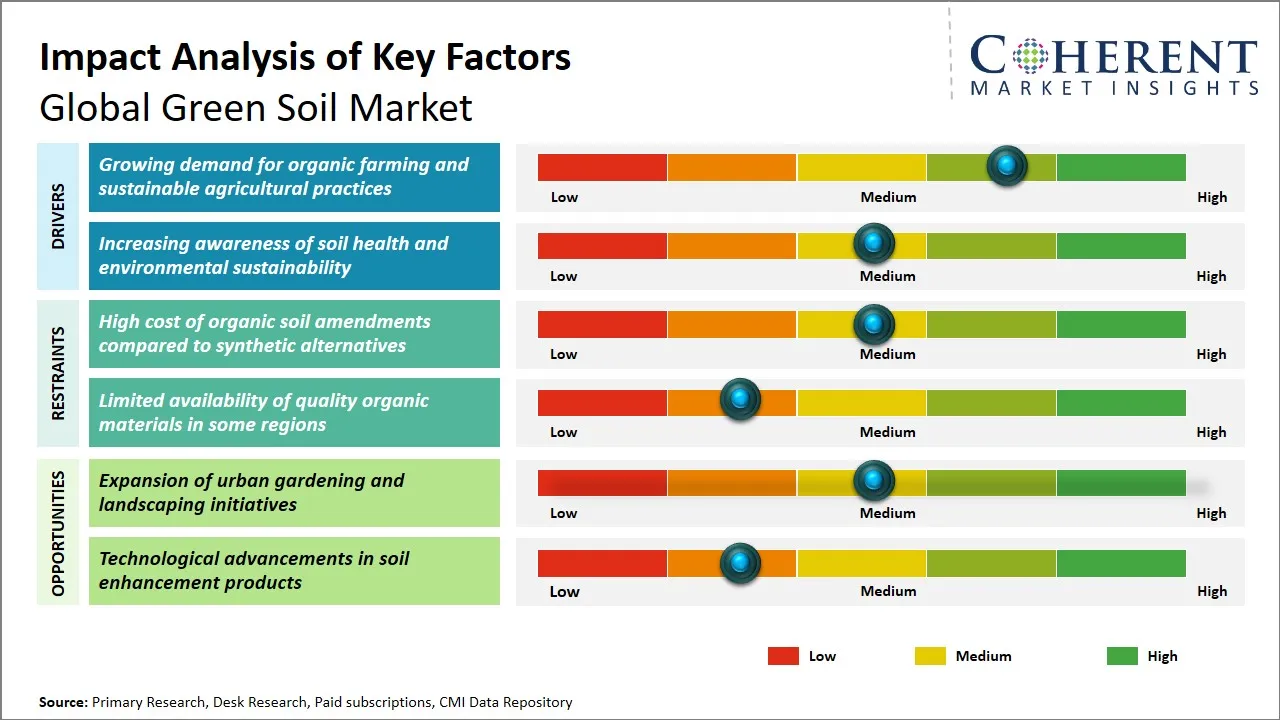
Green Soil Market Driver - Growing Demand for Organic Farming and Sustainable Agricultural Practices
Increased global consciousness regarding environmentally sustainable practices and health issues has heavily influenced the increase in the market for organic farming and sustainable practices for agriculture, which is also influencing the growth of the green soil market. Farmers and other agricultural stakeholders are moving away from conventional farming methods that utilize chemical-based practices, toward providing more sustainable practices, including organic soil amendments and bio-based fertilizers, and this has been largely driven by soil fertility, biodiversity, and environmental issues of synthetic chemicals.
To support and incentivize organic farming, the Indian government, has implemented initiatives such as the National Program for Organic Production (NPOP), and most Indian states have adopted organic farming practices.
Green Soil Market Opportunity - Expansion of Urban Gardening and Landscaping Initiatives
The growing international focus on sustainable living and green conservation has greatly fueled the expansion of urban gardening and landscaping efforts, offering tremendous growth potential to the global market for green soil. High-speed urbanization and minimal availability of green spaces within cities are compelling citizens and authorities in cities to embrace urban gardening as an approach to alleviate air pollution, enhance their looks, and support mental health. It is driven by demand for environmentally friendly soil solutions that sustain healthy plant growth while reducing environmental effect.
Analyst Opinion (Expert Opinion)
- The green soil industry is picking up speed, buoyed by growing interest in sustainable farming and ecological renewal. Trends and observations at the Global Soil Health Conference (2023) and the Sustainable Agriculture Summit (2022) focused on the key breakthroughs, led by companies such as SoilBiotics and AgroThrive in producing organic soil amendments that drive soil health.
- SoilBiotics' recent launch of a green soil product containing rich microbes is an example of innovation for enhancing nutrient availability and soil structure. The conferences highlighted discussions on the critical need for regenerative practices in countering soil degradation and enhancing biodiversity. Yet, imperatives like the exorbitant price of organic inputs and a lack of farmer awareness about the advantages of green soil amendments were an oft-repeated observation.
- Firms that emphasize training farmers and showing the long-term financial returns of investing in green soil solutions will find improved take-up. Strategic partnerships with farm cooperatives also have the potential to improve outreach. The expansion of the green soil market will ultimately rest on its capacity to provide efficient, sustainable solutions that respond to the changing needs of modern farming and environmental protection.
Speak to the analyst
Want personalized insights?
Take the findings above to one of our principal consultants, or have the report rebuilt around the segments, geographies and competitors you actually track.
Market Segmentation
- Product Type Insights (Revenue, USD Mn, 2021 - 2033)
- Bio-based Fertilizers
- Organic Compost
- Soil Conditioners
- Biochar Products
- Others
- Application Insights (Revenue, USD Mn, 2021 - 2033)
- Agriculture
- Horticulture
- Landscaping
- Environmental Remediation
- Others
- Distribution Channel Insights (Revenue, USD Mn, 2021 - 2033)
- Direct Sales
- Indirect Sales
- Regional Insights (Revenue, USD Mn, 2021 - 2033)
- North America
- U.S.
- Canada
- Latin America
- Brazil
- Argentina
- Mexico
- Rest of Latin America
- Europe
- Germany
- U.K.
- Spain
- France
- Italy
- Russia
- Rest of Europe
- Asia Pacific
- China
- India
- Japan
- Australia
- South Korea
- ASEAN
- Rest of Asia Pacific
- Middle East
- GCC Countries
- Israel
- Rest of Middle East
- Africa
- South Africa
- North Africa
- Central Africa
- North America
- Key Players Insights
- GreenSoil Group
- Green Life Soil Co.
- BASF
- Cargill, Inc.
- Yara International ASA
- Nutrien Ltd.
- Premier Tech
- InSoil
Sources
Primary Research Interviews
- R&D Director – Leading producer of sustainable and organic soil blends for greenhouses
- Procurement Manager – Large-scale horticultural products and compost supplier
- Chief Sustainability Officer – Soil health improvement and regenerative agriculture company
- Product Development Head – Major organic soil and compost brand with global presence
Stakeholders
- Manufacturers: Greenhouse soil producers, compost and organic substrate manufacturers, peat alternative firms
- End-use Sectors
- Greenhouse farming (vegetables, fruits, horticulture)
- Landscaping and turf management
- Organic and regenerative agriculture
- Regulatory & Certification Bodies: Soil quality regulators, organic certification authorities, agricultural ministries
- Technology Integration Players: Sustainable soil monitoring and nutrient analytics developers
- Retail & Distribution: Horticulture distributors, e-commerce platforms for organic and garden supplies
Databases
- FAO Soil Data Hub – Soil biodiversity and sustainable soil management database
- UN Comtrade Database – Trade data for soil conditioners and fertilizer inputs
- India Import Export (EXIM) Database – Data on peat, compost, and green soil imports
Magazines
- Organic Farming Magazine – Research and market updates in low-input and organic agriculture
- TerraGreen (TERI) – Sustainable agriculture and environmental technology trends
- AgriBusiness Today – Developments and technology adoption in sustainable soil markets
- Sustainable Agri Review – Case studies on regenerative soil products and compost solutions
Journals
- International Journal of Plant & Soil Science – Peer-reviewed research on soil fertility and plant growth
- Soil & Environmental Health Journal – Soil sustainability, policy, and environmental health studies
- Plant, Soil, and Environment (CAAS) – Experimental agricultural and soil-environmental research
Newspapers
- The Guardian – Coverage of sustainability and regenerative farming trends
- The Financial Times – Global agriculture investment news and soil technology trends
- Asia Health & Agriculture Journal – Regional insights into soil health and sustainable agriculture in APAC
- European Green News – EU soil health policy and organic farming frameworks
Associations
- Soil Association (UK) – Standards and certifications for organic and sustainable soil farming
- Soil Science Society of America (SSSA) – Global authority in soil research and standardization
- World Association of Soil and Water Conservation (WASWAC) – Soil conservation and policy research
- Soil Biodiversity Initiative (GSBI) – International soil biodiversity framework
- Soil and Water Conservation Society (SWCS) – Soil conservation education and advocacy
Public Domain Sources
- FAO – Global Soil Partnership (GSP): Sustainable soil use policy, monitoring, and carbon conservation guidelines
- European Commission – Soil Health Law & Sustainable Agriculture Frameworks: EU policies for soil fertility, restoration, and sustainable farming
- UN Environment Programme – Data on soil degradation prevention and green growth
Proprietary Elements
- CMI Data Analytics Tool, Proprietary CMI Existing Repository of information for last 8 years.
Get access to 250+ pages report
Every segment, forecast, competitor profile and data table behind the analysis above — available for instant download.
- ESOMAR Member
- ISO 9001:2015 Certified
- D-U-N-S Registered
- GDPR & CCPA Compliant
Missing comfort of reading report in your local language? Find your preferred language:
Transform your Strategy with Exclusive Trending Reports
Frequently Asked Questions
The global green soil market is estimated to be valued at USD 826.6 Mn in 2026 and is expected to reach USD 1,416.7 Mn by 2033.
The CAGR of the global green soil market is projected to be 8.0% from 2026 to 2033.
Growing demand for organic farming and sustainable agricultural practices and increasing awareness of soil health and environmental sustainability are the major factors driving the growth of the global green soil market.
High cost of organic soil amendments compared to synthetic alternatives and limited availability of quality organic materials in some regions are the major factors hampering the growth of the global green soil market.
In terms of product type, the bio-based fertilizers segment is estimated to dominate the market revenue share in 2026.
GreenSoil Group, Green Life Soil Co., BASF, Cargill, Inc., Yara International ASA, Nutrien Ltd., Premier Tech, and InSoil are the major players.
Asia Pacific is expected to lead the global green soil market in 2026.