

Global Healthcare Data Storage Market Size and Forecast – 2026 to 2033
The Global Healthcare Data Storage Market is estimated to be valued at USD 7.27 Bn in 2026 and is expected to reach USD 18.86 Bn by 2033, reflecting a compound annual growth rate (CAGR) of 14.6% from 2026 to 2033.
Key Takeaways of the Global Healthcare Data Storage Market
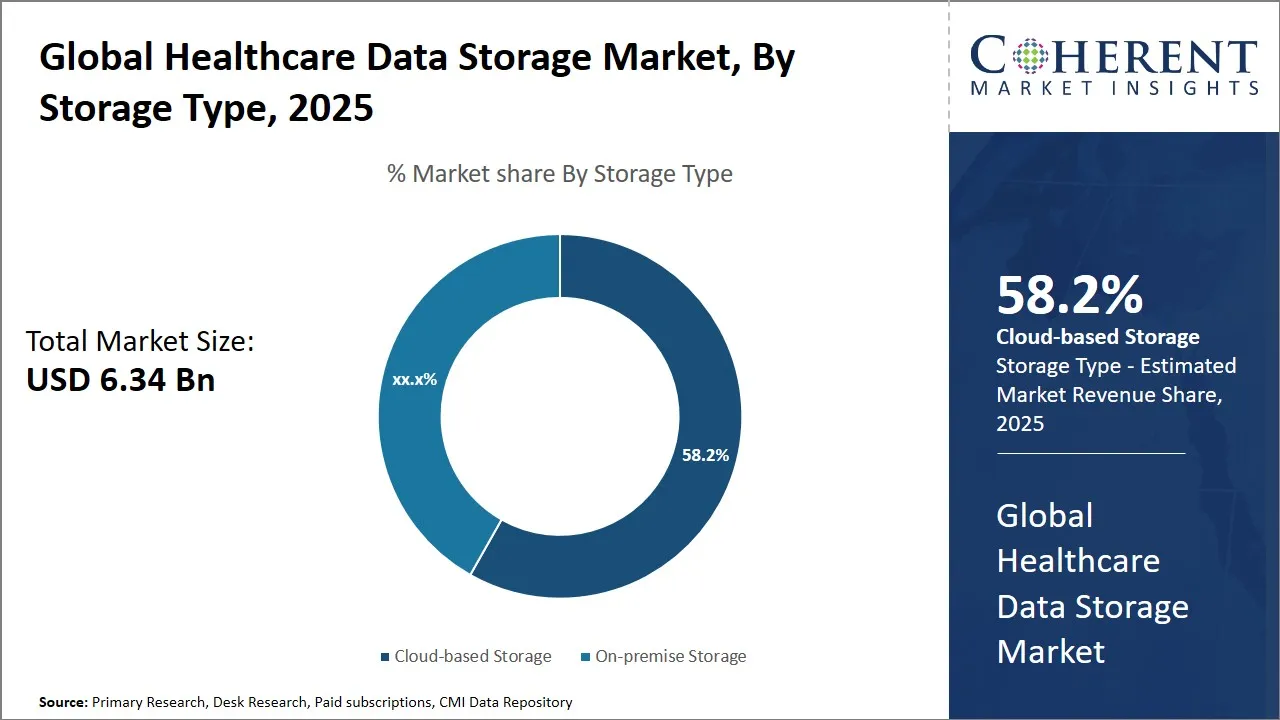
- Cloud-based storage segment is expected to dominate the global healthcare data storage market with a 59.2 % share in 2026.
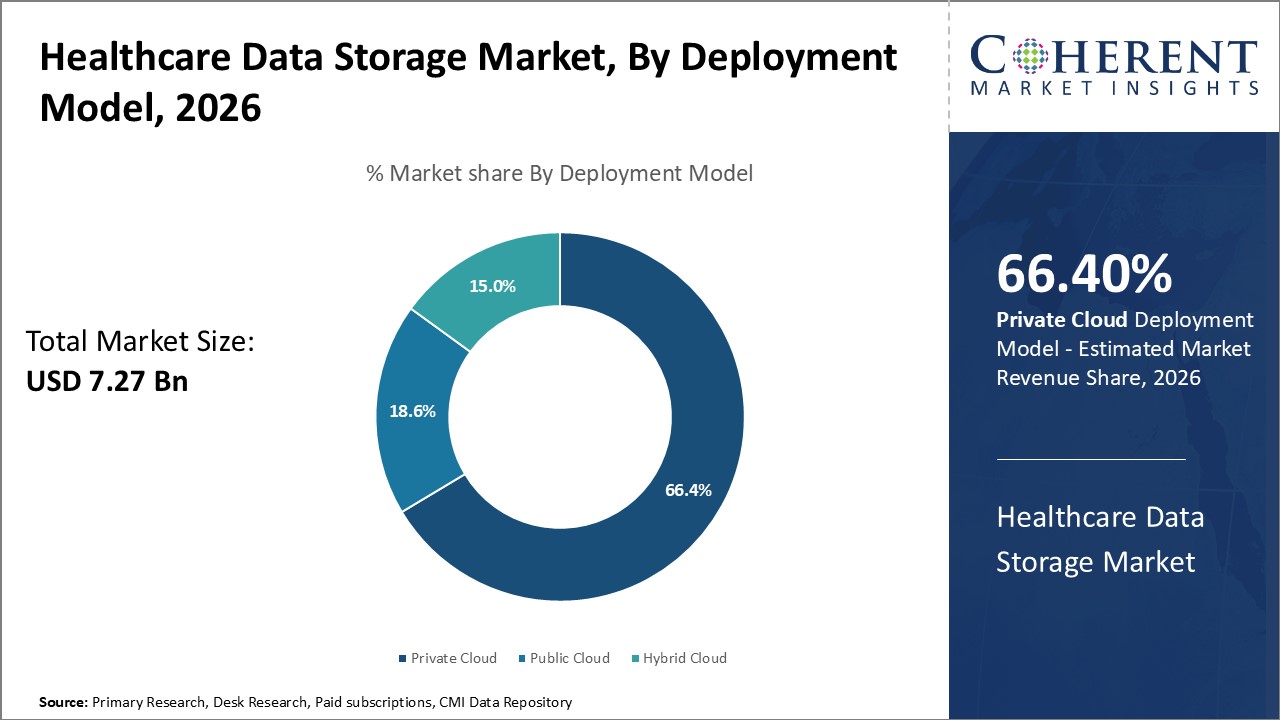
- Private cloud segment is estimated to lead the market with a 66.4 % share in 2026.
- By application, clinical data (EHR/EMR/physician notes) segment is projected to capture the largest share at 33.4 % in 2026.
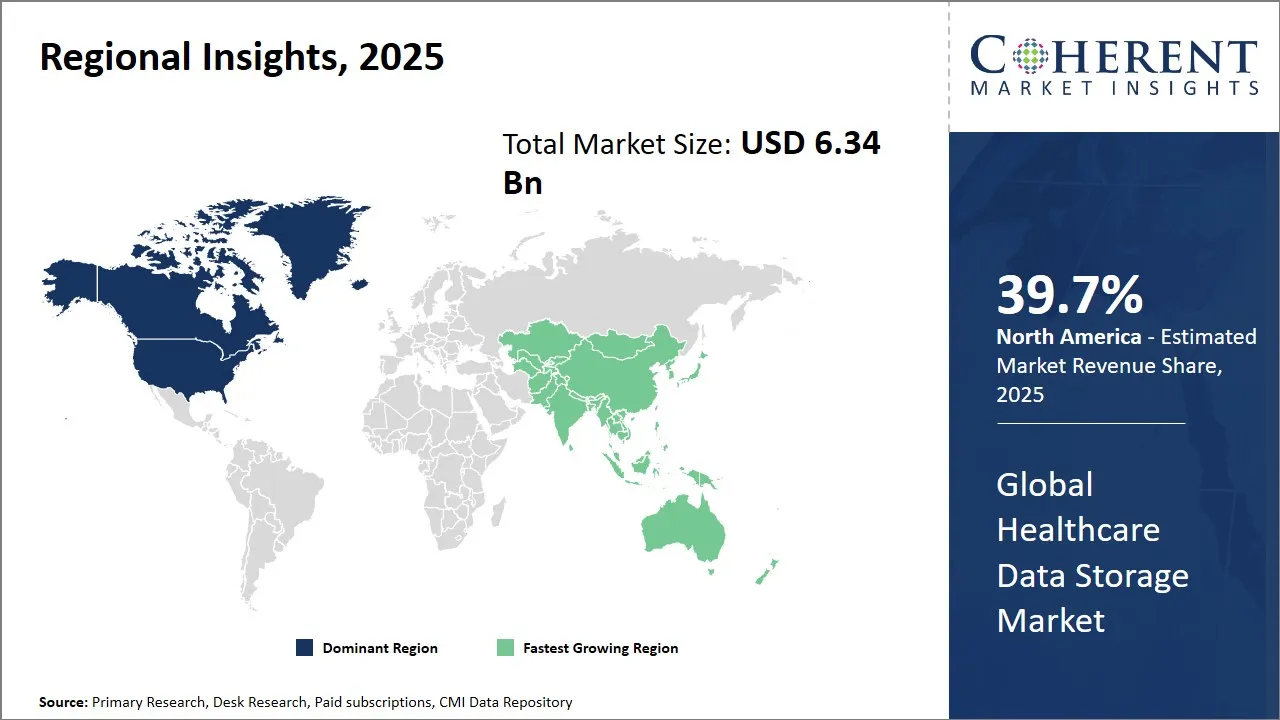
- North America is expected to lead the market, holding a share of 39.7 % in 2026.
- Asia Pacific is anticipated to be the fastest-growing region, with 24.3 % share in 2026.
Current Events and Its Impact
Current Events | Description and its Impact |
Integration of AI & Machine Learning (ML) in Healthcare Diagnostics |
|
Microsoft completes EU Data Boundary milestone |
|
Segmental Insights
- Current Industry Events of 2026
- Market Size Estimation
- Regional Breakdown
- Competitive Landscape
- Customer Intelligence
- Segmental Analysis
- Pricing Analysis
- Key Market Drivers, Challenges & Future Trends
- Customized Insights Section
Why Does Cloud-Based Storage Dominate the Healthcare Data Storage Market in 2026?
By storage type, cloud-based storage is expected to hold 59.2% of the market share in 2026. The unmatched scalability, flexibility, and cost-efficiency of Cloud-based storage are the reasons for its dominant position. Data from healthcare organizations is generated in huge quantities on a daily basis, which includes patient files, laboratory results, etc. Such massive data generation will only need storage solutions that can adjust to the varying demand.
Cloud storage offers the advantages of on-demand scalability, which means that institutions can increase their storage capacity without having to invest hefty amounts of money in physical infrastructure. This feature is crucial for the healthcare sector that is progressively moving towards digitization and applying high-end technologies like telemedicine and IoT devices.
On December 18, 2025, HCA Healthcare U.K., a leading private hospital network, migrated to cloud based MEDITECH Expanse EHR. MEDITECH, a global healthcare information systems provider, enabled unified patient records across hospitals and outpatient facilities. The move strengthens Healthcare Data Storage with secure scalable cloud infrastructure supporting AI and remote care.
Why Is the Private Cloud Segment Preferred in the Healthcare Data Storage Market?
The private cloud segment is projected to dominate with a 66.4% of the market share in 2026. This segment is growing mainly due to the strict privacy, security, and compliance demands of the healthcare sector. Healthcare data by nature is very sensitive because it includes personal health information (PHI). Furthermore, it is subject to rules such as HIPAA, GDPR, and local data protection laws that are quite strong. Through a private cloud setup, one organization is given a lone and thus a less risky environment as far as cloud security is concerned.
The organizations that have this much control can apply filing systems for compliance that are uniquely tailored to the respective legal obligations or internal standards. Also, the organizations’ ability to separate their systems and data works perfectly with risk management strategies that are aimed at keeping breaches and cyberattacks that have become very common in the healthcare sector, safe.
Clinical Data (EHR/EMR/Physician Notes) Leads the Healthcare Data Storage Market in 2026
The Clinical Data (EHR/EMR/Physician Notes) segment is expected to capture 33.4% share in 2026. This prevalence indicates the significance of both types of clinical records - structured and unstructured - in the healthcare sector's day-to-day functions.
Patient data is collected in the form of comprehensive patient narratives, diagnoses, therapy and progress notes. The criticality of this data gives rise to high-performance and reliable storage that correctly handles the data's accuracy, availability, and compliance with the law. Consequently, such solutions are not only very expensive to set up and maintain but also require huge investments in human resources.
Edge vs Centralized Storage Adoption - Healthcare Data Storage Market
Dimension | Edge Storage Adoption | Centralized Storage Adoption |
Storage location | Data stored close to source systems and medical devices | Data stored in centralized data centers or cloud platforms |
Typical adopters | Emergency departments, ICUs, imaging centers, remote clinics | Multi-hospital networks, diagnostic labs, payer-provider systems |
Core objective | Real-time access and uninterrupted local operations | Enterprise-wide data consolidation and long-term record management |
Latency tolerance | Very low latency required | Moderate latency acceptable |
Data handled | Device data, live vitals, point-of-care results, temporary imaging | EHR/EMR records, historical imaging, claims, analytics datasets |
Network dependency | Low dependence on continuous network connectivity | High dependence on stable WAN or cloud connectivity |
Scalability | Limited, site-specific scaling | Highly scalable across regions and facilities |
Security management | Complex due to multiple endpoints | Centralized and easier to standardize |
Compliance management | Decentralized compliance increases operational burden | Centralized compliance simplifies audits and reporting |
Cost structure | Higher cost per site, justified by critical uptime needs | Lower cost per GB due to scale efficiencies |
Analytics suitability | Supports near-device inference only | Best suited for AI training, population health, and predictive analytics |
Governance strength | Weaker without automation and orchestration tools | Strong governance with unified data policies |
Long-term trend | Growing adoption in critical-care and connectivity-limited settings | Dominant backbone for enterprise healthcare data ecosystems |
Regional Insights
North America Healthcare Data Storage Market Analysis and Trends
The leadership of North America in the global healthcare data storage market is attributed to their excellent healthcare infrastructure, which comprises an estimated 39.7% of the market share in 2026, the widespread use of modern technologies, and the presence of favorable governmental policies. The market ecosystem is further matured by the presence of a large number of healthcare practitioners, research entities, and technology suppliers.
HIPAA-like regulations automatically impose high standards on the security and confidentiality of data and thus encourage investment in secure storage solutions. This is the case for companies like IBM, Microsoft, and Oracle that have been able to create hybrid cloud solutions and AI-driven storage platforms for the healthcare sector that are tailored to meet the industry's needs and thus have a very significant presence.
In October 2024, GE HealthCare, a global medical technology and digital health solutions leader, introduced CareIntellect at HLTH 2024. The cloud first platform integrates AI and Healthcare Data Storage to support clinical and operational decision making. CareIntellect for Oncology consolidates multimodal patient data and uses generative AI to summarize insights efficiently. Abu Mirza, Global SVP of Digital Products, stated COVID 19 accelerated AI and cloud adoption across healthcare systems.
Asia Pacific Healthcare Data Storage Market Analysis and Trends
Asia Pacific region is expected to exhibit the fastest growth in the market contributing 24.3% share in 2026, exhibiting the fastest growth rate due to a rapidly expanding healthcare industry and simultaneous digitization activities. Various governments in China, India, Japan, and similar countries are taking the initiative by pouring in enormous funds for the development of healthcare IT infrastructure, which is a major move towards better service and patient data management.
Huawei, Samsung SDS, and Fujitsu are in the forefront of the business with their solid regional presence and technical know-how which enables them to provide cloud and onsite healthcare storage services. Besides, the upgrading of international trade and investments in the form of foreign direct investments make it possible for the companies to transfer technology and expand their infrastructure which is a factor in accelerating market growth.
Healthcare Data Storage Market Outlook for Key Countries
U.S. Healthcare Data Storage Market Trends
The U.S. healthcare data storage market is characterized by a constant influx of innovation and major investments. The country has the advantage of an advanced IT infrastructure, very stringent regulations concerning data security, and a high rate of adoption of cloud computing and AI technologies.
Major players such as IBM Watson Health and Google Cloud Healthcare have set up the secure and scalable platforms that meet the most demanding healthcare data requirements. The combination of big data analytics, personalized medicine, and regulatory compliance is still the main driving force behind the U.S. market's need for advanced storage solutions, making it the strongest market leader so far.
Germany Healthcare Data Storage Market Trends
The healthcare data storage market in Germany is primarily shaped by its well-established healthcare system and robust regulatory framework that is like the GDPR, which applies strict rules for the protection of data. The government supports digital healthcare projects which include turning patient records into electronic form, and developing secure data exchange methods.
Companies such as SAP and Siemens Healthineers are instrumental in delivering comprehensive storage and data management solutions tailored for privacy-compliant healthcare applications. The focus on interoperability and cybersecurity amplifies the need for reliable and adaptable data storage infrastructures.
China Healthcare Data Storage Market Trends
China takes up a position as a major player in a very vibrant and rapidly changing healthcare data storage market that is directly influenced by the digital healthcare ecosystem that is expanding around it. The Government has been bringing changes such as the “Healthy China 2030” initiative which is focused on improving healthcare through digital means and thus is driving the demand for large and secure data storage capacities.
Huawei and Alibaba Cloud are some of the major local players that are responsible for the innovations in the cloud-based storage area that are specifically designed to cater to the Chinese healthcare providers and that come with the features of both affordability and scalability. The application of AI and IoT technologies in the medical field not only creates but also enforces the need for storage solutions as they become inseparable to the sector’s growth.
India Healthcare Data Storage Market Trends
The unfolding global scenario of Indian healthcare data storage mainly stems from digitization of healthcare, government’s commitment to e-health projects through increased budgetary allocations and the rise of telemedicine. One of the government’s supports in the health data ecosystem through programs like Ayushman Bharat has enhanced the scenario of data centralization and accessibility.
The giants like TCS and Wipro offer tailor-made healthcare data storage and management solutions which ease the delivery of healthcare in both rural and urban areas. The factors of affordability and adjustment to local infrastructure issues are the main factors that influence the market dynamics in this region.
Latency & Performance Requirements by Clinical Application in the Healthcare Data Storage Market
- Latency and performance requirements in the healthcare data storage market vary sharply by clinical application. Real-time and near-real-time use cases such as intensive care monitoring, emergency care, surgical systems, and diagnostic imaging demand ultra-low latency and high throughput to support immediate clinical decisions. These environments rely on rapid data ingestion and retrieval, often favoring edge or local storage layers to avoid delays that could impact patient outcomes.
- In contrast, non-urgent clinical applications such as longitudinal EHR access, population health analytics, claims processing, and research databases tolerate higher latency and prioritize reliability, scalability, and data integrity. Centralized or cloud-based storage performs best for these workloads, enabling large-scale data aggregation, analytics, and compliance. As a result, healthcare systems increasingly architect tiered storage models that align performance levels directly with clinical criticality.
Market Players, Key Developments, and Competitive Intelligence
Key Developments
- On December 2, 2025, Atlas Data Storage, a pioneer in synthetic DNA based digital preservation technologies, launched Atlas Eon 100. The scalable DNA platform introduces ultra dense long duration Healthcare Data Storage and archival capabilities. The solution targets permanent preservation of critical datasets including medical research imaging and AI model archives. Atlas positions DNA storage as a future ready alternative to magnetic and cloud based archival systems.
- In November 2025, Hitachi Vantara, the data storage and hybrid cloud subsidiary of Hitachi Ltd, launched VSP One Block High End. The all flash NVMe platform targets AI driven and Healthcare Data Storage workloads requiring continuous availability and strong cyber resilience. The solution supports mission critical environments with advanced data protection rapid recovery and compliance ready security.
- In June 2025, TierPoint, a U.S. based secure IT infrastructure and cloud services provider, partnered with Pure Storage. Pure Storage, an all-flash data storage technology leader, supported the launch of Imaging Storage as a Service. The solution targets Healthcare Data Storage challenges in medical imaging with predictable costs and faster diagnostics. The cloud enabled platform supports AI imaging workloads while ensuring HIPAA compliant security and long-term data retention.
- In March 2025, Huawei, a global ICT and data storage technology leader, launched AI ready data storage at MWC Barcelona. The solutions enhance Healthcare Data Storage and carrier systems supporting AI training inference and mission critical workloads. Huawei introduced advanced OceanStor platforms enabling high performance scalable and energy efficient data management.
Top Strategies Followed by Global Healthcare Data Storage Market Players
Player Type | Strategic Focus | Examples |
Established Market Leaders | Heavy R&D investment in secure scalable and compliant data storage platforms; focus on AI-driven analytics cyber-security blockchain-enabled data integrity and hybrid cloud architectures; deep integration with hospital IT systems EHR vendors and medical device OEMs; aggressive global expansion with localized compliance and support models | IBM advances hybrid cloud and AI-enabled healthcare data platforms integrated with hospital ecosystems; Oracle Health aligns cloud infrastructure with EHR systems and expands healthcare data services globally |
Mid-Level Players | Cost-efficient storage solutions balancing performance security and affordability; modular and scalable architectures for mid-sized hospitals and diagnostic centers; partnerships with cloud providers technology vendors and regional distributors; focus on emerging markets and private healthcare networks | NetApp delivers cost-optimized hybrid cloud storage tailored for healthcare workloads; Dell Technologies offers scalable healthcare data storage solutions through strong regional partner networks |
Small-Scale Players | Niche-focused innovation in areas such as data encryption interoperability regional compliance and specialty data types like imaging or genomics; adoption of edge computing and ML-based data management; local alliances with healthtech startups specialty clinics and research institutions; targeted regional market penetration | Pure Storage focuses on high-speed storage for imaging and analytics-heavy healthcare use cases; Veeam specializes in secure backup recovery and compliance-focused healthcare data protection solutions |
Market Report Scope
Healthcare Data Storage Market Report Coverage
| Report Coverage | Details | ||
|---|---|---|---|
| Base Year: | 2025 | Market Size in 2026: | USD 7.27 Bn |
| Historical Data for: | 2020 To 2024 | Forecast Period: | 2026 To 2033 |
| Forecast Period 2026 to 2033 CAGR: | 14.6% | 2033 Value Projection: | USD 18.86 Bn |
| Geographies covered: |
| ||
| Segments covered: |
| ||
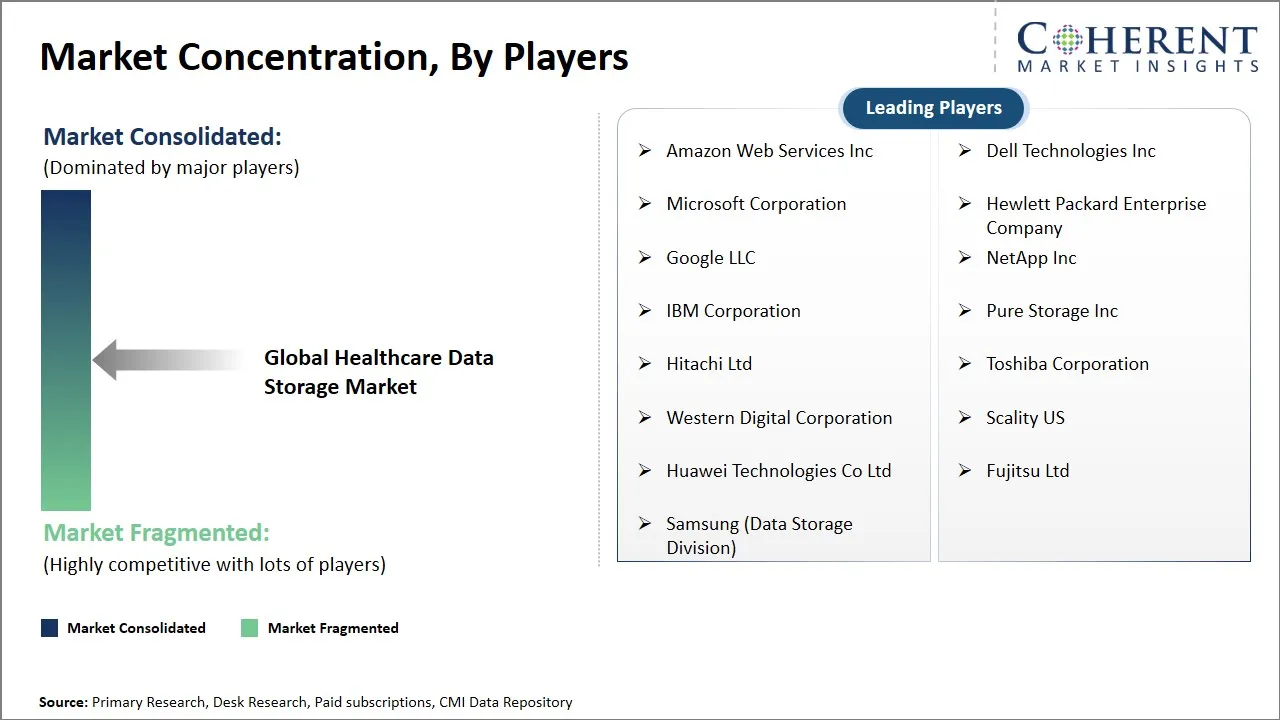
| Companies covered: | Amazon Web Services Inc, Dell Technologies Inc, Microsoft Corporation, Hewlett Packard Enterprise Company, Google LLC, NetApp Inc, IBM Corporation, Pure Storage Inc, Hitachi Ltd, Toshiba Corporation, Western Digital Corporation, Scality US, Huawei Technologies Co Ltd, Fujitsu Ltd, and Samsung (Data Storage Division) | ||
| Growth Drivers: |
| ||
| Restraints & Challenges: |
| ||
Healthcare Data Storage Market Dynamics
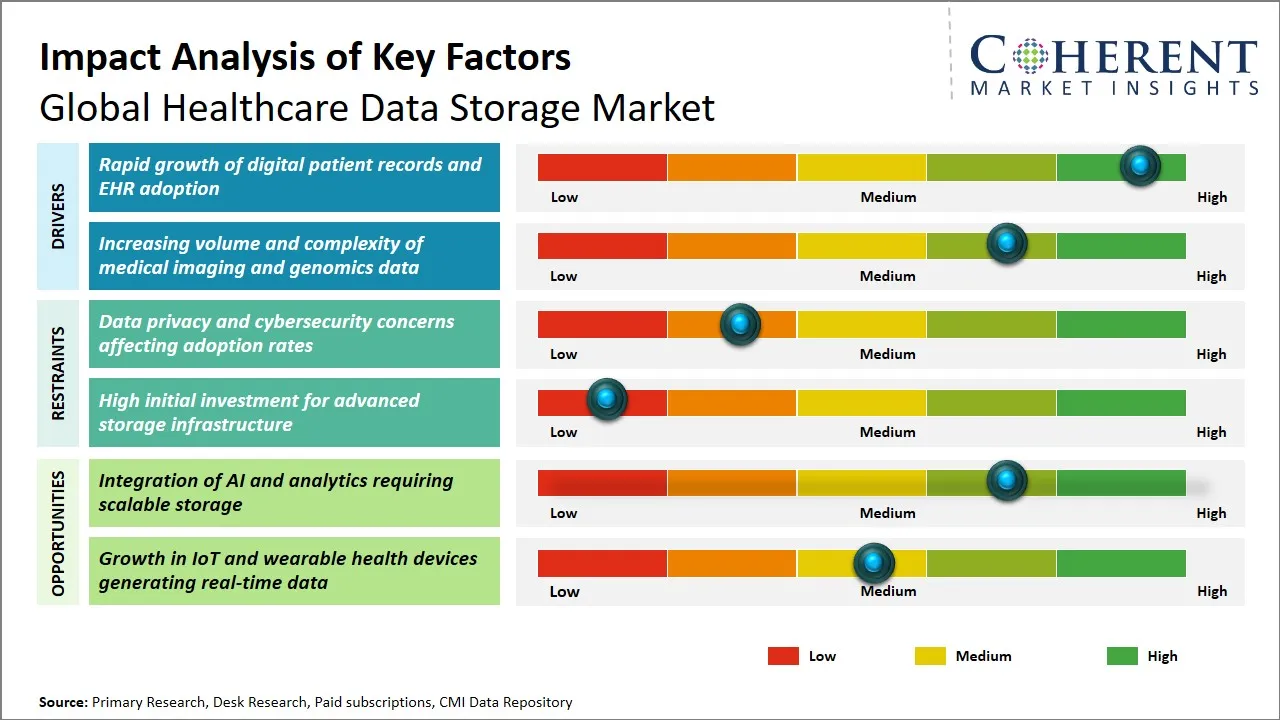
Healthcare Data Storage Market Driver - Rapid Growth of Digital Patient Records and EHR Adoption
The distribution of electronic health records (EHRs) and the fast transformation of patient information have emerged as important factors propelling the healthcare data storage market. The number of health service producers that have fully shifted from using traditional ways of keeping records to using digital forms has increased and along with that the amount of collected data is also growing tremendously. The digital patient records have presented new benefits through increased access, easier sharing of information, and better clinical decision-making. As a result, medical institutions are making huge investments in reliable and secured data storage solutions. Besides that, the implementations of Electronic Health Records (EHRs) in different areas by government support and regulatory requirements have hastened the development of complete digital record-keeping systems.
In January 2025, the Government of India accelerated digital healthcare under Ayushman Bharat Digital Mission. The initiative strengthens Healthcare Data Storage through interoperable electronic health records cloud platforms and AI driven diagnostics. World Economic Forum highlighted India’s digital health model as globally scalable and governance ready. Public private collaboration and digital incentives are driving nationwide hospital and patient data integration.
(Source: https://www.pib.gov.in/PressReleaseIframePage.aspx?PRID=2094604®=3&lang=2)
Healthcare Data Storage Market Opportunity - Integration of AI and Analytics Driving Demand for Scalable Storage
The healthcare sector's rapid evolution and widespread use of AI and cutting-edge analytics present a great opportunity for the global healthcare data storage market to grow. The usage of AI-based tools for predictive analytics, diagnostics, personalized medicine, and operational efficiencies has increased the healthcare providers' reliance on them. This, however, comes with an exponential increase in the volume and complexity of healthcare data. Consequently, there is a demand for highly scalable and adaptable data storage solutions which can cope with a vast amount of structured and unstructured data. Such data includes electronic health records (EHRs), medical images, genomics data, and real-time patient monitoring information. In addition, AI and analytics applications require low-latency data access and powerful processing capabilities, thus the need for sophisticated storage infrastructures such as hybrid cloud environments and edge storage is reinforced.
On December 11, 2025, TileDB, an omnimodal data intelligence platform provider, launched TileDB Carrara with Snowflake integration. Snowflake, a cloud data platform company, enables unified governance and analytics across complex scientific datasets. The solution strengthens Healthcare Data Storage by unifying genomics imaging clinical records and multimodal data. The integration accelerates AI workflows for healthcare and life sciences organizations.
(Source: https://events.tiledb.com/tiledb-tech-talk-x-snowflake)
Analyst Opinion (Expert Opinion)
- The healthcare data storage market is speeding up as the healthcare system has to deal with the very large data volumes coming from EHRs, imaging, AI and remote monitoring. The use of cloud and hybrid storage is increasing because of the requirement for scalability, the fear of cyber-attacks and the compliance with the strict regulations such as HIPAA and GDPR.
- AI ready storage, long term archiving and high-performance imaging platforms are being recognized as the main areas of growth, while interoperability gaps, outdated infrastructure and cost management are still the main issues. The healthcare industry has basically been using the past three years of trade shows to set their agenda with HIMSS, HLTH Global, RSNA, AMIA and MWC Barcelona, all focusing on secure data infrastructure, AI readiness, and healthcare cloud transformation.
- The market is pushed forward by actual deployments and policy support all around the world. Healthcare providers are introducing cloud first storage platforms to integrate clinical and imaging data and to speed up diagnostics. Governments are enlarging the digital health records, the national data exchanges and secure data modernization programs. The recent announcements about AI optimized storage, imaging storage as a service, and ultra long term archival solutions are all signs of a transition towards resilient, future-ready healthcare data storage ecosystems that support AI-driven care delivery.
Speak to the analyst
Want personalized insights?
Take the findings above to one of our principal consultants, or have the report rebuilt around the segments, geographies and competitors you actually track.
Market Segmentation
- Storage Type Insights (Revenue, USD Bn, 2021 - 2033)
- Cloud-based Storage
- On-premise Storage
- Deployment Model Insights (Revenue, USD Bn, 2021 - 2033)
- Private Cloud
- Public Cloud
- Hybrid Cloud
- Application Insights (Revenue, USD Bn, 2021 - 2033)
- Clinical Data (EHR/EMR/Physician Notes)
- Medical Imaging Data Storage
- Laboratory Data Storage
- Patient Monitoring Data Storage
- Clinical Data Management
- End User Insights (Revenue, USD Bn, 2021 - 2033)
- Hospitals and Multispecialty Clinics
- Diagnostic Centers
- Pharmaceutical and Biotechnology Companies
- Health Insurance and Payer Organizations
- Academic and Medical Research Institutes
- Data Type Insights (Revenue, USD Bn, 2021 - 2033)
- Structured Data
- Unstructured Data
- Technology Insights (Revenue, USD Bn, 2021 - 2033)
- Flash Storage
- Disk-based Storage
- Tape-based Storage
- Storage Capacity Insights (Revenue, USD Bn, 2021 - 2033)
- Small (Up to 500 TB)
- Medium (500 TB-5 PB)
- Large (Above 5 PB)
- Service Type Insights (Revenue, USD Bn, 2021 - 2033)
- Data Backup and Recovery
- Data Archiving
- Data Security
- Regional Insights (Revenue, USD Bn, 2021 - 2033)
- North America
- U.S.
- Canada
- Latin America
- Brazil
- Argentina
- Mexico
- Rest of Latin America
- Europe
- Germany
- U.K.
- Spain
- France
- Italy
- Russia
- Rest of Europe
- Asia Pacific
- China
- India
- Japan
- Australia
- South Korea
- ASEAN
- Rest of Asia Pacific
- Middle East
- GCC Countries
- Israel
- Rest of Middle East
- Africa
- South Africa
- North Africa
- Central Africa
- North America
- Key Players Insights
- Amazon Web Services Inc
- Dell Technologies Inc
- Microsoft Corporation
- Hewlett Packard Enterprise Company
- Google LLC
- NetApp Inc
- IBM Corporation
- Pure Storage Inc
- Hitachi Ltd
- Toshiba Corporation
- Western Digital Corporation
- Scality US
- Huawei Technologies Co Ltd
- Fujitsu Ltd
- Samsung (Data Storage Division)
Sources
Primary Research Interviews
- Industry Stakeholders
- Hospital CIOs and Chief Digital Officers
- Healthcare IT Infrastructure Heads
- Clinical Informatics Directors
- Health System Data Governance Leads
- Medical Imaging IT Managers
- Health Information Security Officers
- End Users
- Hospital Administrators
- Diagnostic Center Managers
- Clinical Operations Heads
- Radiology Department Leads
- Laboratory Information Managers
- Telehealth Platform Operators
Government and International Databases
- World Health Organization
- U.S. Department of Health and Human Services
- Centers for Medicare and Medicaid Services
- European Commission Health Data Portal
- OECD Health Statistics
- National Institutes of Health
Trade Publications
- Healthcare IT News
- Health Data Management
- Modern Healthcare
- Fierce Healthcare
- HIT Consultant
- Becker’s Health IT
Academic Journals
- Journal of the American Medical Informatics Association
- The Lancet Digital Health
- Journal of Medical Internet Research
- Health Informatics Journal
- IEEE Journal of Biomedical and Health Informatics
- BMC Medical Informatics and Decision Making
Reputable Newspapers
- The New York Times
- The Wall Street Journal
- Financial Times
- The Guardian
- The Washington Post
- The Hindu
Industry Associations
- Healthcare Information and Management Systems Society
- Radiological Society of North America
- American Health Information Management Association
- International Medical Informatics Association
- Digital Health Canada
- European Society of Radiology
Public Domain Resources
- ClinicalTrials.gov
- Data.gov
- EU Open Data Portal
- National Health Service Digital
- OpenFDA
- U.S. Census Bureau Health Data
Proprietary Elements
- CMI Data Analytics Tool: Proprietary analytics tool to analyze real-time market trends, consumer behavior, and technology adoption in market
- Proprietary CMI Existing Repository of Information for Last 8 Years
Get access to 250+ pages report
Every segment, forecast, competitor profile and data table behind the analysis above — available for instant download.
- ESOMAR Member
- ISO 9001:2015 Certified
- D-U-N-S Registered
- GDPR & CCPA Compliant
Missing comfort of reading report in your local language? Find your preferred language:
Transform your Strategy with Exclusive Trending Reports
Frequently Asked Questions
The global healthcare data storage market is estimated to be valued at USD 7.27 Bn in 2026 and is expected to reach USD 18.86 Bn by 2033.
The CAGR of global healthcare data storage market is projected to be 14.6% from 2026 to 2033.
Rapid growth of digital patient records and EHR adoption and increasing volume and complexity of medical imaging and genomics data are the major factors driving the growth of the global healthcare data storage market.
Data privacy and cybersecurity concerns affecting adoption rates and high initial investment for advanced storage infrastructure are the major factors hampering the growth of the global healthcare data storage market.
In terms of storage type, the cloud-based storage is estimated to dominate the market revenue share in 2026.
The market will move toward AI ready secure and long-term data platforms.
Data security compliance complexity interoperability and legacy systems.