

Global Heme Protein Market Size and Forecast – 2026 To 2033
The global heme protein market is estimated to be valued at USD 812.4 Mn in 2026 and is expected to reach USD 1,543.3 Mn by 2033, exhibiting a compound annual growth rate (CAGR) of 9.60% from 2026 to 2033. This resilient growth is driven by an increasing demand for heme proteins in meat alternatives, nutritional supplements, food color and flavor enhancement, and animal nutrition applications.
Advancements in biotechnology, especially precision fermentation, are expanding the production of animal-free heme proteins with improved functionality, sustainability and formulation flexibility. In April 2024, Swedish startup, Ironic Biotech raised USD 1.08 Mn in pre-seed round to develop plant-derived iron proteins made using precision fermentation for use in food and food supplements. The funding will support innovation in bioavailable, non-animal heme protein ingredients. (Source: Protein Report)
Key Takeaways of the Global Heme Protein Market
- Animal derived heme protein is expected to dominate the global heme protein market with an expected share of 62.8% in 2026, supported by established slaughter by-product valorization, cost-effective raw material access, and strong use in feed, pet nutrition, and functional food applications. In March 2025, VEOS Group listed spray-dried hemoglobin powder under ACTIPRO blood products, reinforcing commercial use of animal-derived heme ingredients.
- Hemoglobin protein is expected to remain the leading product type in the global heme protein market with an expected share of 41.6% in 2026, owing to its high iron content, protein functionality, color contribution, and relevance in animal nutrition and specialized food formulations. In January 2026, APC highlighted that AP 301 spray-dried red cells supplied heme iron and improved maternal hemoglobin outcomes in sow nutrition.
- Powder is expected to hold the largest market share of 58.7% in 2026, as it offers better shelf stability, easier transportation, dosing flexibility, and compatibility with dry blends, feed premixes, supplements, and processed food systems. In December 2024, Nutrients published research evaluating porcine-derived heme iron powder, supporting the powder form’s relevance in iron-fortification and nutrition applications.
- North America is expected to lead the global heme protein market with an expected share of 34.8% in 2026, supported by advanced food-tech commercialization, regulatory pathways for novel food ingredients, and strong adoption of meat alternative products using heme-based functionality. In March 2025, the U.S. Federal Register published Impossible Foods’ petition to expand soy leghemoglobin use in plant-based meat, poultry, and fish analogues.
- Europe is expected to be the fastest-growing region in the global heme protein market with an expected share of 27.6% in 2026, supported by alternative protein innovation, precision fermentation development, and regulatory attention toward sustainable food ingredients. In February 2026, Belgium-based, Paleo announced GMO-free heme proteins produced through precision fermentation, targeting plant-based meat and fish manufacturers with bio-identical animal protein functionality.
- Precision-Fermentation Scale-Up: Fermentation-derived heme protein is becoming strategically important as food manufacturers seek animal-free ingredients that can reproduce meat-like color, aroma, and taste without depending fully on animal raw materials. This trend is likely to improve supply chain flexibility, support premium meat alternative positioning, and create licensing opportunities for ingredient innovators and food-tech companies.
- Circular Protein Valorization: Animal-derived heme protein suppliers are increasingly positioned around circular economy value creation, converting slaughter by-products into functional protein ingredients for food, feed, pet nutrition, and nutraceutical applications. This improves raw material utilization, supports sustainability claims, and helps processors create higher-value revenue streams from materials that were previously treated as low-value by-products.
Segmental Insights
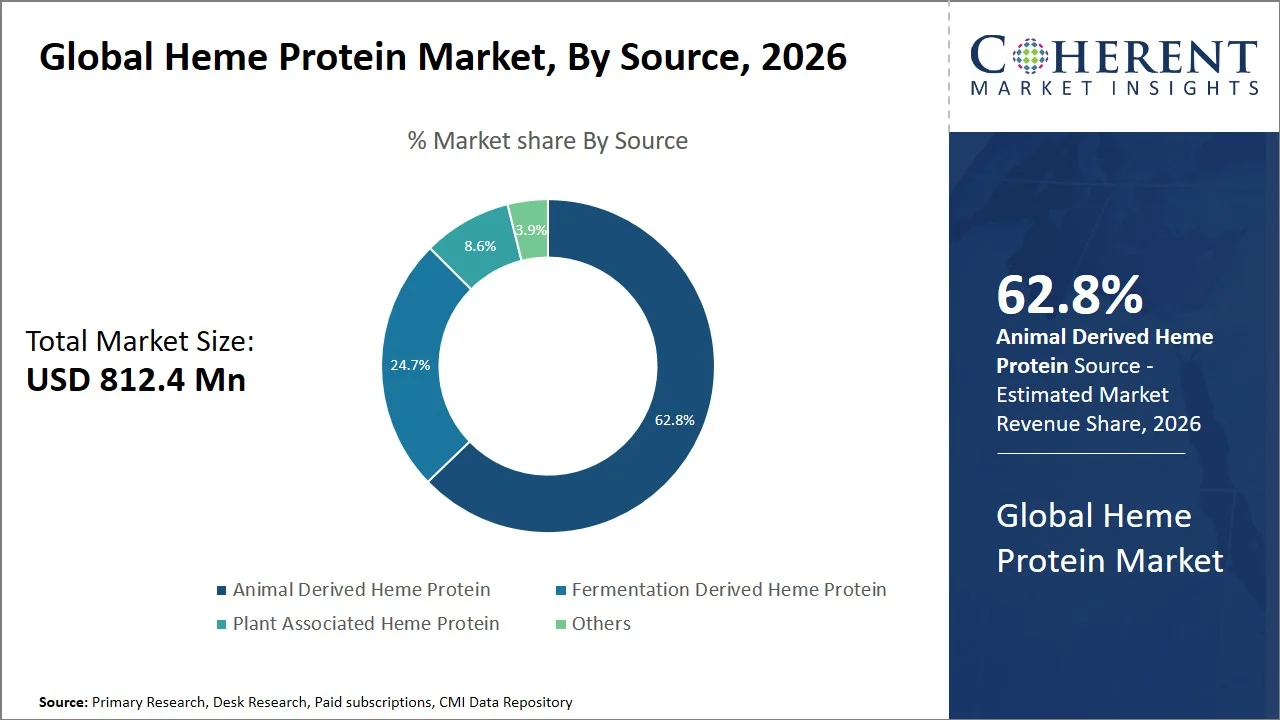
Why Does Animal Derived Heme Protein Dominate the Global Heme Protein Market?
Animal derived heme protein dominates in the global heme protein market with an expected share of 62.8% in 2026 due to its established industrial sourcing from bovine, porcine, and poultry blood streams, which enables larger-scale availability than fermentation or plant-associated alternatives. Demand is supported by animal nutrition, aquaculture, pet food, and functional ingredient manufacturers that require dense protein, natural pigmentation, and digestible iron-bearing ingredients. On the supply side, mature slaughterhouse collection systems, fractionation, plasma separation, and drying infrastructure give this segment a cost and volume advantage. Its strongest adoption is seen in feed, pet nutrition, and aquaculture formulations where performance, palatability, and protein concentration are commercially important. In September 2025, Darling Ingredients reported that it processes porcine and bovine blood across China, Europe, North America, and Australia into blood plasma powder and hemoglobin for animal feed, pet food, and aquaculture applications.
- Current Industry Events of 2026
- Market Size Estimation
- Regional Breakdown
- Competitive Landscape
- Customer Intelligence
- Segmental Analysis
- Pricing Analysis
- Key Market Drivers, Challenges & Future Trends
- Customized Insights Section
Why Does Hemoglobin Protein Represent the Largest Product Type in the Global Heme Protein Market?
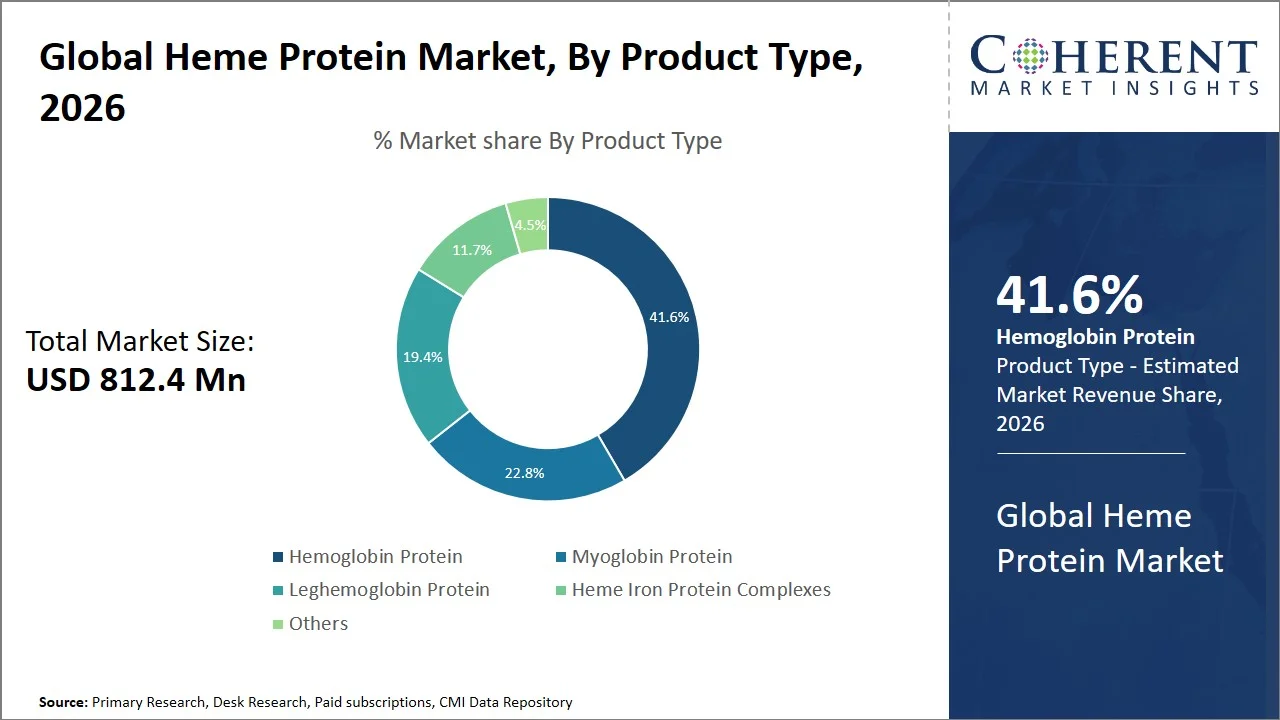
Hemoglobin protein represents the largest product type in the global heme protein market with an expected share of 41.6% in 2026 because it sits at the center of commercial heme protein extraction, offering a concentrated red-cell protein fraction with functional relevance across nutrition, feed, and specialty food systems. Unlike myoglobin and leghemoglobin, hemoglobin benefits from wider raw material availability and clearer integration into existing animal blood processing chains. Demand is supported by formulators seeking iron-associated functionality, protein density, and natural dark coloration without relying on synthetic additives. Supply-side leadership comes from proven separation and drying technologies that convert red blood cells into standardized ingredient formats. The segment is strongly adopted in aquafeed, swine feed, poultry feed, pet food, and selected nutritional applications. In June 2024, the American Chemical Society’s (ACS) Journal of Agricultural and Food Chemistry published research on hemoglobin hydrolyzate promoting iron absorption, strengthening scientific relevance for hemoglobin-derived functional ingredients. (Source: American Chemical Society Publications)
Why Does Powder Dominate the Global Heme Protein Market?
Powder dominates the global heme protein market with an expected share of 58.7% in 2026 because it best matches the handling, shelf-life, and formulation requirements of industrial ingredient buyers. Heme protein powders can be shipped in bulk, stored more efficiently than liquid formats, and dosed precisely into dry premixes, supplement blends, meat alternative bases, aquafeed pellets, and pet food formulations. From a manufacturing perspective, spray drying and air drying reduce moisture, improve microbial stability, and support standardized protein guarantees, which is critical for B2B procurement. Powder formats also allow easier blending with proteins, minerals, binders, flavor systems, and feed additives. This makes powder the preferred commercial format for high-volume nutrition and feed customers. In January 2026, AAFCO’s Official Publication included definitions for spray dried animal blood cells and air-dried animal blood cells, supporting standardized use of dried blood-cell ingredients in animal feed systems. (Source: AFFCO)
Global Heme Protein Market Dynamics
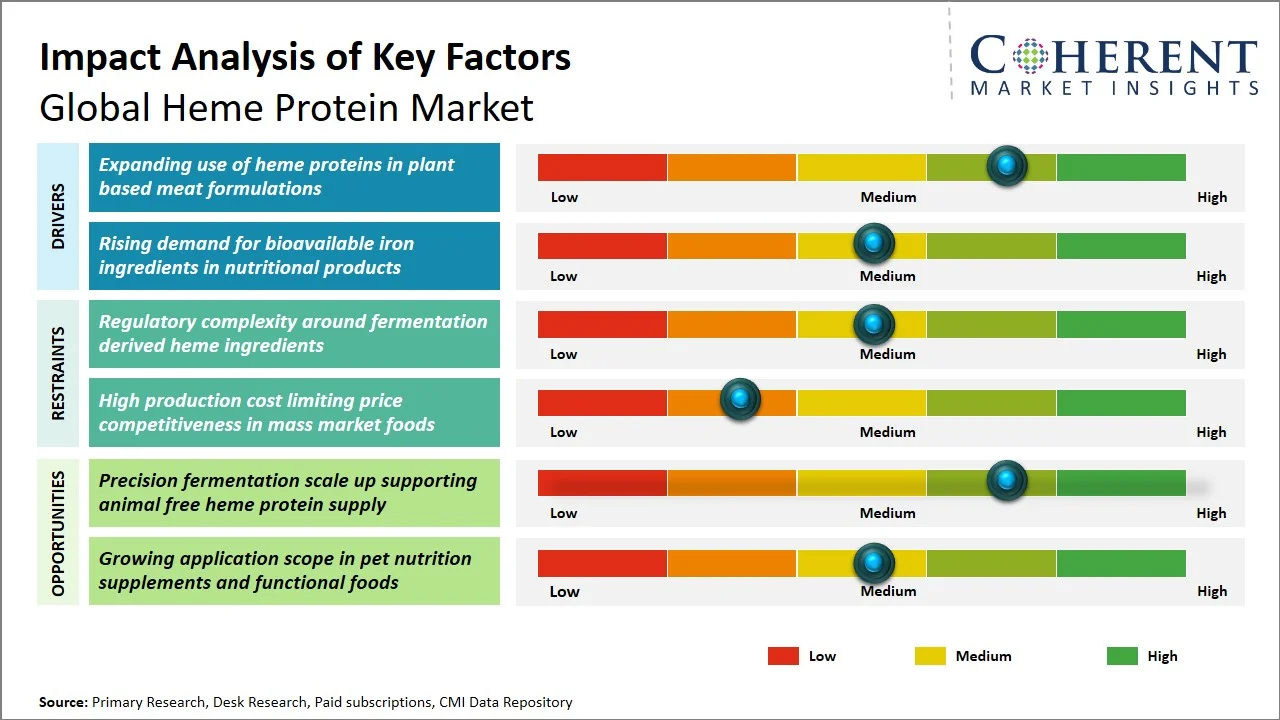
Key Market Drivers
Expanding Use of Heme Proteins in Plant-Based Meat Formulations
The global heme protein market is gaining strong momentum from plant-based meat formulators seeking more realistic sensory performance, especially in taste, aroma, browning behavior, and meat-like color. Heme proteins provide a functional advantage because they help alternative meat products move beyond basic protein substitution toward closer animal-meat replication. This supports premium positioning for burgers, sausages, minced meat analogues, and seafood alternatives. Ingredient suppliers are also benefiting from higher R&D spending by food-tech companies that need differentiated flavor systems and clean-label sensory enhancers. In September 2023, HN Novatech launched ACOMS, described as the world’s first proprietary seaweed-based heme ingredient for plant-based meat applications, and also secured US$ 4 million in funding to support commercialization and regional expansion. (Source: vegconomist Magazine)
Rising Demand for Bioavailable Iron Ingredients in Nutritional Products
Rising interest in bioavailable iron formats is supporting heme protein adoption in nutritional supplements, medical nutrition, fortified foods, and condition-specific dietary products. Compared with many non-heme iron salts, heme iron ingredients offer better positioning for consumers seeking tolerability, efficient absorption, and lower gastrointestinal discomfort. This is especially relevant for women’s health, pediatric nutrition, sports nutrition, and iron-deficiency support products where compliance is a major commercial issue. Manufacturers can use heme protein-based ingredients to differentiate formulations by performance rather than only dosage. In December 2024, the European Journal of Nutrition published a systematic review and meta-analysis comparing heme and non-heme iron administration, noting that heme iron showed fewer total side effects and potential benefits in children with iron deficiency or anemia. (Source: Springer Nature)
Emerging Market Trends
Shift Toward Functional Heme Ingredients Beyond Basic Protein Supply
The market is moving from commodity protein use toward function-led heme protein applications. Buyers are increasingly evaluating heme ingredients for their ability to provide color, iron delivery, aroma enhancement, binding support, and palatability improvement. This trend is important because it expands the value proposition of heme protein from nutrition alone to formulation performance. Food and beverage companies can use heme proteins to improve meat analogue realism, while pet food and feed manufacturers can use them to enhance intake, appearance, and nutrient density. As a result, suppliers that can offer defined specifications, application support, and consistent sensory performance are likely to gain stronger pricing power. This shift also encourages product-grade differentiation, where purity, solubility, odor control, particle size, and regulatory suitability become key commercial decision factors.
Growing Preference for Scalable, Traceable, and Sustainable Heme Protein Supply Chains
Heme protein buyers are placing greater emphasis on traceability, quality documentation, and sustainable sourcing. Animal-derived heme protein suppliers are being pushed to demonstrate hygienic collection, controlled processing, and by-product valorization, while fermentation-derived suppliers are focusing on reproducibility, strain control, and animal-free positioning. This trend is reshaping procurement behavior, especially among multinational food, feed, and nutraceutical companies that require reliable documentation for compliance, ESG reporting, and cross-border sales. The market is also seeing stronger interest in low-waste production models because heme protein can convert underutilized biological streams into higher-value ingredients. Over the forecast period, companies that combine scalable production with transparent sourcing and regulatory-ready documentation are expected to secure stronger B2B relationships and long-term supply contracts.
Current Events and their Impact
Current Events | Description and its Impact |
EFSA Safety Opinion on Soy Leghemoglobin – June 2024 |
|
UK FSA Precision Fermentation Guidance – February 2026 |
|
India DGFT Animal By-Products Export Policy Amendment – September 2025 |
|
Regional Insights
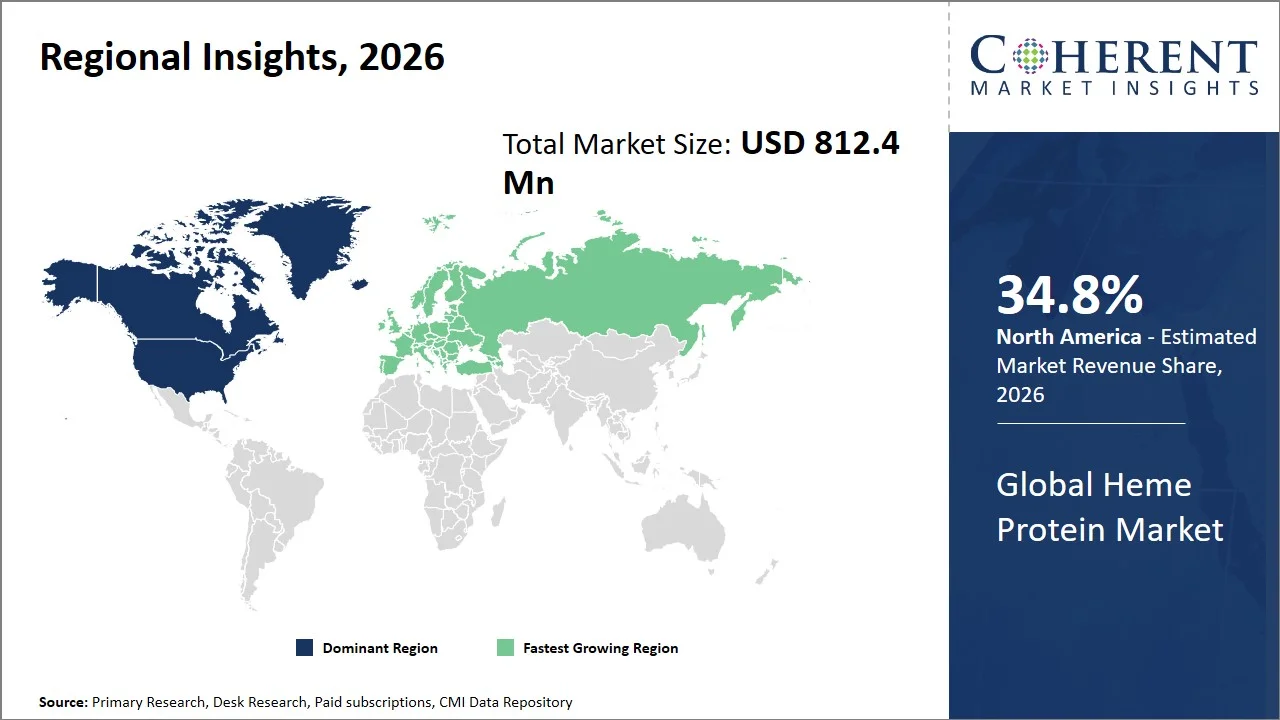
Why Does North America Dominate the Global Heme Protein Market?
North America dominates the global heme protein market with an expected share of 34.8% in 2026 due to its strong convergence of nutraceutical manufacturing, alternative protein innovation, animal nutrition demand, and advanced food biotechnology infrastructure. The region has an established base of dietary supplement brands using high-bioavailability iron formats, while food-tech companies continue to explore heme functionality for meat-like color, aroma, and flavor performance. Its animal feed and pet nutrition industries also support demand for hemoglobin-based ingredients with strong digestibility and protein density. On the supply side, mature regulatory systems, contract manufacturing, and laboratory testing capacity help ingredient suppliers scale premium-grade products. In January 2024, Riverside County announced Colorado Biolabs’ expansion into Jurupa Valley to strengthen manufacturing and laboratory testing capabilities, noting the company’s role in introducing Heme Iron Polypeptide to the U.S. (Source: Colorado Biolabs, Inc)
Why is Europe Emerging as the Fastest-Growing Region in the Global Heme Protein Market?
Europe is emerging as the fastest-growing region in the in the global heme protein market with an expected share of 27.6% in 2026 as sustainability-led food reformulation, alternative protein R&D, and novel ingredient safety assessment gain momentum across the region. European food manufacturers are increasingly focused on improving sensory quality in meat substitutes, which creates demand for heme-like proteins, fermentation-derived functional ingredients, and advanced color/flavor systems. The region also benefits from strong biotechnology research, clean-label positioning, and circular protein valorization from animal by-products. Regulatory scrutiny can lengthen commercialization timelines, but it also supports long-term product credibility for approved ingredients. In January 2025, EIT Food launched PLANTOMYC, a four-year European project developing innovative meat substitutes by combining plant-based ingredients with mycelial protein biomass, supporting Europe’s broader alternative protein innovation ecosystem. (Source: EIT Food)
Global Heme Protein Market Outlook for Key Countries
Why is the U.S. a Key Market for the Global Heme Protein Market?
The U.S. is a key market for heme protein due to its strong base of dietary supplement users, advanced food biotechnology companies, and high-value animal nutrition customers. Heme protein demand is supported by multiple end-use routes, including iron supplements, functional nutrition, meat analogues, pet food, aquafeed, and research-grade hemoproteins. The country’s innovation ecosystem enables faster commercialization of specialty ingredients through formulation science, clinical nutrition positioning, and scalable manufacturing partnerships. Heme iron polypeptides are especially relevant in the U.S. supplement channel because consumers and healthcare practitioners seek iron formats with better tolerability. In September 2025, the NIH Office of Dietary Supplements updated its iron fact sheet, stating that iron is essential for hemoglobin and myoglobin and that heme iron polypeptides are among supplemental iron forms that may have fewer gastrointestinal side effects than common iron salts.
Why is India Important in the Global Heme Protein Market?
India is important in the global heme protein market because it combines large nutritional need, fast-growing nutraceutical consumption, expanding animal nutrition demand, and cost-sensitive food manufacturing. Heme protein ingredients can gain relevance in India through bioavailable iron formulations, women’s health products, pediatric nutrition, and fortified food systems. The country also has a strong downstream feed and pet nutrition base, where protein-dense animal-derived ingredients can be used to improve palatability and amino acid delivery. India’s challenge is price sensitivity, making powder formats and standardized protein complexes more commercially viable than high-cost precision-fermented ingredients in the near term. In April 2025, India’s Press Information Bureau reported that 67.1% of children and 59.1% of adolescent girls were anemic under NFHS-5, highlighting the public-health relevance of effective iron nutrition solutions.
Why Does China Support Growth in the Global Heme Protein Market?
China supports growth in the global heme protein market through its scale in food processing, animal feed, biotechnology research, and urban consumer experimentation with meat alternatives. The country has strong manufacturing capacity for protein ingredients and advanced processing technologies, which supports commercialization of hemoglobin-based feed ingredients and fermentation-enabled food additives. In alternative meat, heme-related proteins can help address taste and appearance gaps, especially for beef and pork analogues targeting younger urban consumers. China also has research depth in synthetic biology and microbial chassis development, which can support future low-cost heme protein production. In May 2025, researchers from Jiangnan University in China published work on engineered Saccharomyces cerevisiae that improved intracellular heme supply and increased porcine myoglobin and soybean hemoglobin titers, indicating China’s technical relevance in heme biosynthesis.
Why is Germany a Strategic Country in the Global Heme Protein Market?
Germany is a strategic country in the global heme protein market because of its advanced biotechnology base, strong alternative protein research ecosystem, high food quality standards, and premium consumer market for sustainable nutrition. German ingredient and food manufacturers are well positioned to develop heme-enabled meat alternatives, fermentation-derived functional proteins, and high-specification nutritional formulations. The country’s emphasis on industrial biotechnology and resilient food systems supports long-term investment in scalable production platforms. Germany also has strong technical capability in process engineering, fermentation optimization, and application testing, which are critical for heme protein commercialization. In May 2026, Germany’s High-Tech Agenda stated that biotechnology would support resilient agricultural and food systems and healthy, sustainable food including alternative protein sources, reinforcing policy alignment for food-biotech innovation.
Why is Japan an Important Growth Market for the Global Heme Protein Market?
Japan is an important growth market for heme protein because its food industry values functionality, sensory precision, safety documentation, and compact nutrition formats. Heme proteins can support Japanese demand across plant-based meat, functional foods, supplements, and seafood-linked nutrition applications. The country’s consumers are receptive to high-quality protein products, while manufacturers focus on taste, convenience, clean formulation, and allergen-conscious product design. Japan also has a strong fermentation heritage, which can support acceptance of precision-fermented or enzymatically processed protein ingredients when regulatory and cost barriers are addressed. In July 2025, Agriculture and Agri-Food Canada reported Japan’s plant-based protein food and drink trends, including processed meat substitute launches such as soy meat products in the Japanese market, showing continued innovation in alternative protein formats.
Technology Adoption Landscape in the Global Heme Protein Market
Technology | Adoption Level | Key Application Area | Business Impact |
Spray Drying | High | Animal-derived hemoglobin, blood-cell powders, feed and pet nutrition ingredients | Improves shelf stability, bulk handling, microbial control, and logistics efficiency for B2B ingredient supply. |
Precision Fermentation | Medium | Leghemoglobin, myoglobin, animal-free heme proteins for meat alternatives | Enables animal-free production, sensory customization, and premium positioning in alternative protein formulations. |
Membrane Filtration and Fractionation | High | Blood plasma separation, red-cell concentration, protein purification | Supports consistent protein quality, better yield recovery, and grade differentiation across food and feed applications. |
Enzymatic Hydrolysis | Medium | Heme iron peptides, nutritional ingredients, digestibility-enhanced formulations | Improves bioavailability, solubility, and formulation flexibility for supplements and functional nutrition. |
Microencapsulation | Medium | Heme iron supplements, fortified foods, flavor-sensitive applications | Helps mask metallic or blood-like notes, protects active compounds, and improves consumer acceptance. |
Fermentation Strain Engineering | Medium | Targeted heme protein expression and improved production efficiency | Supports higher productivity, improved purity, and scalable cost reduction for next-generation heme ingredients. |
How are Animal-Free Heme Technologies and Functional Nutrition Applications Creating New Growth Opportunities in the Global Heme Protein Market?
Animal-free heme technologies and functional nutrition applications are creating a major growth opportunity by expanding heme protein beyond traditional animal-derived feed and ingredient channels. Fermentation-derived heme proteins can help meat alternative manufacturers address one of the largest product gaps in the category: realistic taste, aroma, color, and cooking behavior. This creates premium ingredient opportunities for suppliers able to deliver consistent, food-grade, regulatory-ready heme proteins at scalable cost. At the same time, heme iron protein complexes and hemoglobin-derived ingredients are gaining relevance in nutritional products where bioavailability, tolerability, and consumer compliance are key purchase drivers. The commercial opportunity lies in developing application-specific grades for plant-based meat, supplements, pet nutrition, and functional foods rather than supplying one generic protein ingredient. Companies that invest in purification, odor control, encapsulation, and regulatory documentation can capture higher margins, expand into export markets, and build long-term relationships with food-tech, nutraceutical, and animal nutrition manufacturers.
Market Players, Key Development, and Competitive Intelligence
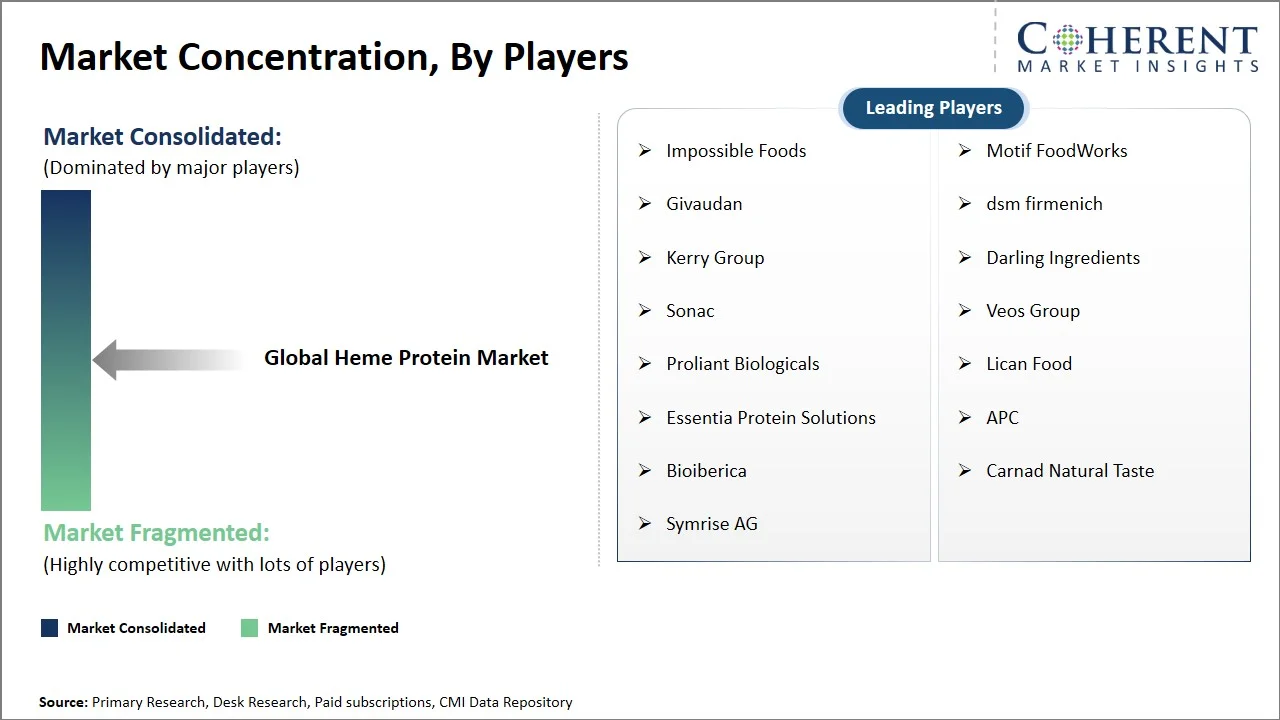
Competitive Landscape
The global heme protein market is moderately fragmented, with competition between animal by-product processors, specialty protein ingredient suppliers, fermentation-based food-tech companies, nutraceutical ingredient manufacturers, and feed ingredient producers. Competition is shifting from raw protein availability toward application performance, regulatory readiness, purity, sensory functionality, and supply reliability.
Key focus areas include
- Product quality and differentiation: Companies compete on protein concentration, iron content, color performance, solubility, odor profile, and application-specific functionality.
- Technology adoption and process efficiency: Spray drying, fractionation, enzymatic hydrolysis, and fermentation optimization are key levers for cost control and product consistency.
- Pricing and cost competitiveness: Animal-derived producers benefit from lower raw material costs, while fermentation-derived players compete through premium positioning and sensory performance.
- Capacity expansion and supply reliability: Large buyers prioritize suppliers with stable sourcing, scalable production, and reduced batch variability.
- Certifications, compliance, and quality control: Food safety documentation, feed-grade compliance, traceability, and export certification increasingly influence supplier selection.
- Product format and specification differentiation: Powder, liquid, concentrate, food-grade, feed-grade, and supplement-grade formats allow suppliers to serve different end-use needs.
- Partnerships and supplier agreements: B2B collaborations with meat alternative, nutraceutical, pet food, and feed manufacturers are becoming central to commercialization.
- Sustainable and circular positioning: Animal-derived suppliers emphasize by-product valorization, while fermentation players focus on animal-free and resource-efficient production models.
Key Developments
- In February 2026, Paleo introduced GMO-free animal myoglobins produced through precision fermentation, offering bio-identical heme proteins for chicken, beef, pork, lamb, tuna, and mammoth applications. The development strengthens the role of fermentation-derived heme proteins in plant-based meat and seafood alternatives by improving taste, aroma, color transition, and iron-linked nutritional value.
- In January 2026, APC highlighted new research showing that heme iron from its AP 301 spray-dried red cells improved maternal hemoglobin levels in highly prolific sows and helped reduce piglet anemia risk at birth. This supports stronger commercial use of hemoglobin-based heme protein ingredients in swine nutrition and animal feed formulations.
- In January 2024, Colorado Biolabs expanded into Jurupa Valley, Riverside County, to strengthen manufacturing and laboratory testing capabilities. The company is known for introducing Heme Iron Polypeptide to the U.S. market, making this expansion relevant for heme iron supplements and high-bioavailability nutritional products.
Market Report Scope
Heme Protein Market Report Coverage
| Report Coverage | Details | ||
|---|---|---|---|
| Base Year: | 2025 | Market Size in 2026: | USD 812.4 Mn |
| Historical Data for: | 2020 To 2024 | Forecast Period: | 2026 To 2033 |
| Forecast Period 2026 to 2033 CAGR: | 9.60% | 2033 Value Projection: | USD 1,543.3 Mn |
| Geographies covered: |
| ||
| Segments covered: |
| ||
| Companies covered: | Impossible Foods, Motif FoodWorks, Givaudan, dsm firmenich, Kerry Group, Darling Ingredients, Sonac, Veos Group, Proliant Biologicals, Lican Food, Essentia Protein Solutions, APC, Bioiberica, Carnad Natural Taste, and Symrise AG | ||
| Growth Drivers: |
| ||
| Restraints & Challenges: |
| ||
Analyst Opinion (Expert Opinion)
- The global heme protein market is expected to maintain a positive outlook during the forecast period, supported by dual demand from conventional animal-derived applications and higher-value fermentation-derived food innovation. The market’s strongest commercial base remains animal-derived heme protein, but higher-margin growth is likely to come from meat alternatives, nutritional supplements, and specialty food ingredients.
- The most attractive growth pockets include fermentation-derived heme proteins for plant-based meat, hemoglobin-based ingredients for nutritional applications, and powder formats for feed, pet nutrition, and supplement manufacturing. North America offers strong commercialization potential, while Europe is likely to gain strategic importance as regulatory clarity improves for novel food and precision-fermented ingredients.
- Key barriers include regulatory approval timelines, consumer concerns around genetically modified production systems, sensory challenges such as metallic or blood-like notes, and cost pressure for fermentation-derived heme proteins. Market players should focus on application-specific product grades, stronger regulatory dossiers, odor and taste masking technologies, traceable sourcing, and partnerships with food-tech and nutraceutical companies to build defensible competitive advantage.
Speak to the analyst
Want personalized insights?
Take the findings above to one of our principal consultants, or have the report rebuilt around the segments, geographies and competitors you actually track.
Market Segmentation
- Source Insights (Revenue, USD Mn, 2021 - 2033)
- Animal Derived Heme Protein
- Fermentation Derived Heme Protein
- Plant Associated Heme Protein
- Others
- Product Type Insights (Revenue, USD Mn, 2021 - 2033)
- Hemoglobin Protein
- Myoglobin Protein
- Leghemoglobin Protein
- Heme Iron Protein Complexes
- Others
- Form Insights (Revenue, USD Mn, 2021 - 2033)
- Powder
- Liquid
- Concentrate
- Others
- Application Insights (Revenue, USD Mn, 2021 - 2033)
- Meat Alternatives
- Nutritional Supplements
- Food Color and Flavor Enhancement
- Animal Feed and Pet Nutrition
- Biomedical and Research Use
- Others
- End-use Industry Insights (Revenue, USD Mn, 2021 - 2033)
- Food and Beverages
- Nutraceuticals
- Animal Nutrition
- Biotechnology and Research
- Pharmaceuticals
- Others
- Regional Insights (Revenue, USD Mn, 2021 - 2033)
- North America
- U.S.
- Canada
- Latin America
- Brazil
- Argentina
- Mexico
- Rest of Latin America
- Europe
- Germany
- U.K.
- Spain
- France
- Italy
- Russia
- Rest of Europe
- Asia Pacific
- China
- India
- Japan
- Australia
- South Korea
- ASEAN
- Rest of Asia Pacific
- Middle East
- GCC Countries
- Israel
- Rest of Middle East
- Africa
- South Africa
- North Africa
- Central Africa
- North America
Source
Primary Research Interviews
- Heme protein ingredient manufacturers and specialty protein suppliers
- Animal blood protein processors and slaughterhouse by-product processing companies
- Precision fermentation and alternative protein technology companies
- Plant-based meat manufacturers using heme-based flavor, color, and aroma systems
- Nutraceutical and dietary supplement manufacturers using heme iron ingredients
- Functional food and fortified food formulators
- Pet food, aquafeed, and animal nutrition companies using hemoglobin or blood protein ingredients
- Food flavor, color, and sensory ingredient developers
- Contract manufacturers, distributors, and importers of specialty food and nutrition ingredients
- Regulatory consultants, food safety experts, nutrition scientists, and biotechnology researchers
Stakeholders
- Heme protein and blood protein ingredient producers: Darling Ingredients, Sonac, VEOS Group, APC, Proliant Biologicals, Essentia Protein Solutions, Bioiberica, Lican Food
- Fermentation-derived and alternative heme developers: Impossible Foods, Motif FoodWorks, Paleo, HN Novatech, Ironic Biotech
- Food ingredient and flavor companies: Givaudan, dsm-firmenich, Kerry Group, Symrise AG, Carnad Natural Taste
- End-use sectors: Meat alternatives, nutritional supplements, functional foods, food color and flavor enhancement, animal feed, pet nutrition, aquafeed, biotechnology, and research applications
- Supporting ecosystem: Precision fermentation technology providers, contract fermentation companies, slaughterhouses, meat processors, rendering companies, specialty ingredient distributors, food safety testing laboratories, and formulation consultants
- Regulatory and certification bodies: FDA, EFSA, UK FSA, FSANZ, Health Canada, FSSAI, USDA, USDA APHIS, European Commission, FAO, WHO, NIH Office of Dietary Supplements
Databases
- FDA GRAS Notice Inventory – heme protein, soy leghemoglobin, and novel food ingredient safety data
- FDA Color Additive Petition Database – color and food additive approvals related to heme ingredients
- EFSA Journal – safety opinions on soy leghemoglobin, novel proteins, and food additives
- EU Novel Food Catalogue – novel food status and regulatory references for alternative proteins
- PubMed – clinical and nutritional studies on heme iron, hemoglobin, myoglobin, and bioavailability
- NIH Office of Dietary Supplements – iron nutrition, heme iron, and dietary supplement references
- FAOSTAT – meat production and animal-source raw material availability indicators
- USDA NASS – livestock, poultry, and animal production data
- USDA ERS – meat, dairy, animal protein, and food consumption data
- Eurostat – livestock, meat processing, and food industry statistics in Europe
- UN Comtrade Database – trade flows for blood fractions, protein substances, food preparations, and animal by-products
- ITC Trade Map – import/export analysis for protein ingredients, animal by-products, and specialty food ingredients
Magazines / Industry Publications
- FoodNavigator
- NutraIngredients
- FeedNavigator
- The Spoon
- Green Queen
- Food Dive
- Food Ingredients First
- New Food Magazine
- Protein Production Technology International
- The Good Food Institute publications
- Alt-Meat Magazine
- Meat + Poultry
- Petfood Industry
- com
- Animal Pharm
Journals
- Food Chemistry
- Meat Science
- Journal of Agricultural and Food Chemistry
- Trends in Food Science & Technology
- Comprehensive Reviews in Food Science and Food Safety
- Frontiers in Nutrition
- Nutrients
- European Journal of Nutrition
- Journal of Food Science
- Food Hydrocolloids
- Animal Feed Science and Technology
- Poultry Science
- Journal of Animal Science
- Aquaculture Nutrition
- Biotechnology Advances
- Applied Microbiology and Biotechnology
Newspapers / Credible News Sources
- Financial Times – food innovation, biotechnology, and sustainable protein investments
- The Wall Street Journal – plant-based meat, food ingredients, and consumer packaged goods trends
- The Hindu BusinessLine – India nutraceuticals, food ingredients, and animal nutrition market updates
Associations
- The Good Food Institute
- International Food Information Council
- Institute of Food Technologists
- International Food Additives Council
- International Association for Food Protection
- European Federation of Food Science and Technology
- American Feed Industry Association
- Pet Food Institute
- European Pet Food Industry Federation
- International Feed Industry Federation
- Global Aquaculture Alliance
- International Union of Food Science and Technology
- Biotechnology Innovation Organization
- Precision Fermentation Alliance
Public Domain Sources
- FDA – food additive, color additive, GRAS, and novel ingredient safety assessments
- EFSA – food additive and novel food safety opinions
- UK Food Standards Agency – precision fermentation and novel food regulatory guidance
- FSANZ – novel food and food additive approvals in Australia and New Zealand
- Health Canada – novel food and food ingredient assessments
- FSSAI – food ingredient standards, nutraceutical regulations, and food safety rules in India
- USDA – livestock, meat processing, animal by-products, and feed-related data
- USDA APHIS – animal-origin ingredient import/export and sanitary requirements
- European Commission – food safety, novel food, animal by-products, and feed regulations
- FAO – animal protein, livestock production, food security, and nutrition data
- WHO – anemia, iron deficiency, and nutrition-related public health data
- NIH Office of Dietary Supplements – iron nutrition and supplement ingredient information
Proprietary Elements
- CMI Data Analytics Tool
- Proprietary CMI Existing Repository of information for last 10 years.
Get access to 250+ pages report
Every segment, forecast, competitor profile and data table behind the analysis above — available for instant download.
- ESOMAR Member
- ISO 9001:2015 Certified
- D-U-N-S Registered
- GDPR & CCPA Compliant
Missing comfort of reading report in your local language? Find your preferred language:
Transform your Strategy with Exclusive Trending Reports
Frequently Asked Questions
The CAGR of the global heme protein market is projected to be 9.60% from 2026 to 2033.
The global heme protein market is estimated to be valued at USD 812.4 Mn in 2026 and is expected to reach USD 1,543.3 Mn by 2033
Growth is driven by rising use in meat alternatives, bioavailable iron supplements, food flavor/color enhancement, and animal nutrition.
Key challenges include high production costs, complex approvals for fermentation-derived heme, labeling concerns, and limited consumer awareness.
Expanding use of heme proteins in plant based meat formulations and rising demand for bioavailable iron ingredients in nutritional products are the major factors driving the growth of the global heme protein market.
The global heme protein market is estimated to be valued at USD 812.4 Mn in 2026 and is expected to reach USD 1,543.3 Mn by 2033.
Regulatory complexity around fermentation derived heme ingredients and high production cost limiting price competitiveness in mass market foods are the major factors hampering the growth of the global heme protein market.