

Global Immersion Battery Cooling Systems Market Size and Forecast – 2026-2033
The global immersion battery cooling systems market is estimated to be valued at USD 27.3 Mn in 2026 and is expected to reach USD 81.1 Mn by 2033, exhibiting a compound annual growth rate (CAGR) of 16.8% from 2026 to 2033.
Key Takeaways of the Global Immersion Battery Cooling Systems Market
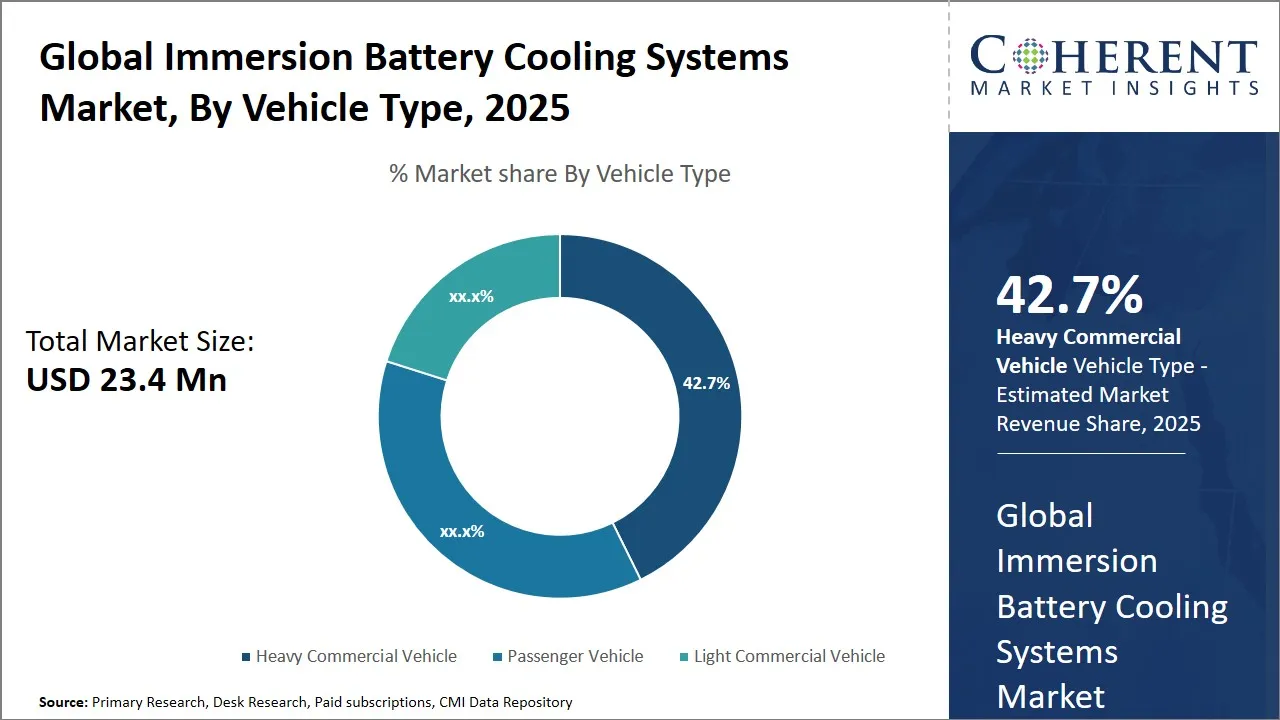
- The heavy commercial vehicle segment leads the market holding an estimated share of 43.7 % in 2026.
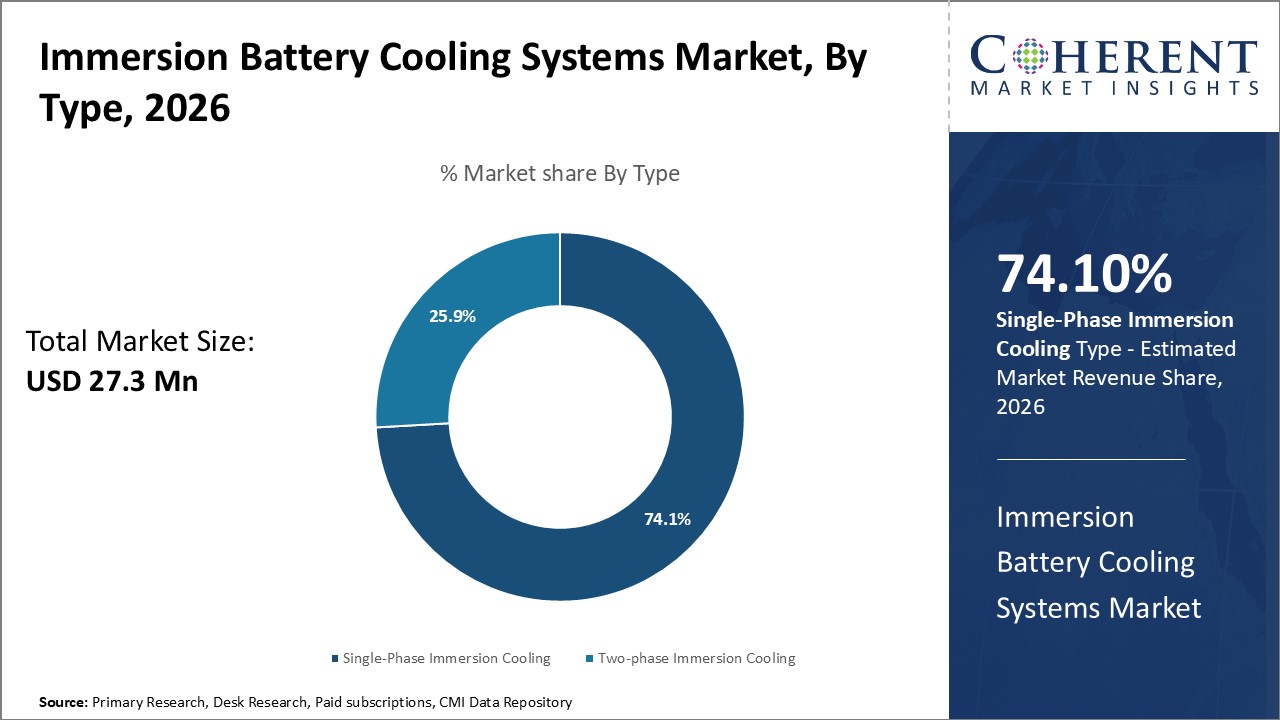
- The single-phase immersion cooling segment is expected to dominate with a share of 74.1 % in 2026.
- The Battery Electric Vehicles (BEVs) segment leads the market holding an expected share of 75.4% in 2026.
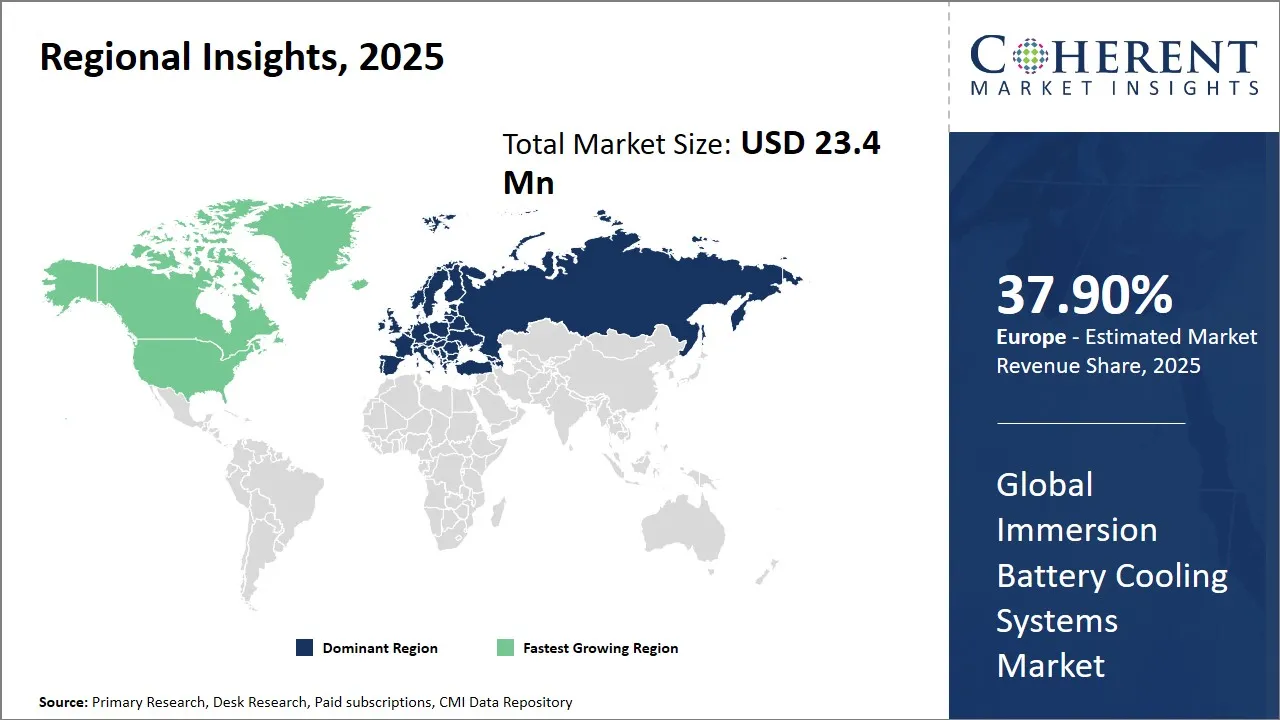
- Europe, holding a projected share of 37.9 % in 2026, dominates the market.
- North America, holding an expected share of 28.9 % in 2026, shows the fastest growth in the market.
Market Overview
A key market trend is the rising integration of advanced immersion cooling technologies to address the challenges of battery overheating and thermal runaway risks. Innovators are focusing on novel dielectric fluids and enhanced system designs to improve heat dissipation and energy efficiency. Additionally, strategic partnerships between battery manufacturers and cooling system providers are accelerating product development and commercialization efforts, further propelling the market expansion. Growing environmental regulations and consumer demand for reliable, high-performance batteries continue to fuel this trend.
Current Events and Its Impact
Current Events | Description and its Impact |
MAHLE showcases advanced battery thermal management at CES 2025 |
|
Ricardo/i-CoBat immersion battery R&D and award recognition |
|
Submer growth funding & industry initiatives (2024) — Liquid-cooling Coalition involvement |
|
Segmental Insights
- Current Industry Events of 2026
- Market Size Estimation
- Regional Breakdown
- Competitive Landscape
- Customer Intelligence
- Segmental Analysis
- Pricing Analysis
- Key Market Drivers, Challenges & Future Trends
- Customized Insights Section
Global Immersion Battery Cooling Systems Market Insights, By Vehicle Type – Dominance of Heavy Commercial Vehicles in the Market Owing to High Thermal Management Demands
The heavy commercial vehicle segment is expected to hold the largest share of 43.7% in 2026, driven by their demanding operating conditions. Trucks, buses, and freight carriers run long hours under heavy loads, producing intense heat within their battery systems. This makes immersion cooling a preferred choice for keeping batteries safe and reliable.
A real example is Volvo Trucks’ FH Electric series, which uses liquid-based cooling technology to manage the high thermal load of large battery packs. Such systems ensure stable temperatures even under tough routes and climates, helping operators maintain uptime. As more logistics and transport companies—like Daimler Truck and Scania—shift to electric fleets, immersion cooling is becoming essential for performance and safety.
Global Immersion Battery Cooling Systems Market Insights, By Type – Single-Phase Immersion Cooling Leads Due to Simplicity and Cost-Effectiveness in Thermal Management
Single-phase immersion cooling is expected to hold the top share of 74.1% in 2026, mainly because it’s easy to use and less costly than two-phase systems. It works by submerging battery cells in a non-conductive liquid that absorbs heat without changing state, keeping the setup simple and reliable.
A clear instance is XING Mobility’s IMMERSIO battery system, which uses 3M’s Novec dielectric fluid for single-phase cooling. The design provides steady temperature control and minimal maintenance, making it a smart choice for both startups and established EV makers. Its cost-efficiency and environmentally safe fluids further boost its appeal in markets where budget and sustainability go hand in hand.
Global Immersion Battery Cooling Systems Market Insights, By Propulsion Type – Battery Electric Vehicles Propel the Market Through Increasing Electrification and Performance Demands
Battery Electric Vehicles (BEVs) are projected to hold the highest share of 75.4% in 2026, largely because they depend entirely on large battery packs for propulsion. Managing the heat generated during fast charging and long drives is crucial, and immersion cooling offers a direct and effective solution.
A real-world case is Lucid Motors’ Air sedan, which uses an advanced liquid-cooling approach to control temperatures in its high-voltage battery system. This ensures faster charging and consistent performance. Similarly, companies like Tesla and BYD are experimenting with immersion-style cooling to boost safety and battery life. As governments tighten emission standards, BEVs are becoming the main testing ground for these advanced cooling innovations.
Pricing Analysis of the Immersion Battery Cooling Systems Market
Item (unit) | Price/range (USD) — best single estimate |
Dielectric fluid — 3M Novec 7100 (per 5-gal/~18.9 L) | USD 2,500 per 5 gal ≈ USD 132.28/L (observed listing). |
Dielectric fluid — Specialty single-phase coolant (commercial brands, e.g., BitCool-type) | Typical range: USD 6 – USD 15/L — best estimate USD 10/L (observed marketplace listings). |
Dielectric fluid — Mineral oil/transformer oil (commodity grade) | USD 1.30 – USD 2.00/L — best estimate USD 1.50/L. |
Small vehicle battery tank/enclosure (fabricated stainless or aluminum, pack-sized) | Range: USD 2,000 – USD 8,000 — best estimate USD 5,000. |
Heat-exchanger/CDU (compact, vehicle-grade) | Range: USD 5,000 – USD 25,000 — best estimate USD 10,000. |
Pumps, valves, sensors, controllers (per pack) | Range: USD 500 – USD 5,000 — best estimate USD 2,000. |
Integration engineering/BMS & control software (per vehicle pack) | Range: USD 2,000 – USD 12,000 — best estimate USD 5,000. |
Turnkey immersion cooling system — passenger EV (per vehicle, incremental to conventional thermal system) | Range: USD 5,000 – USD 30,000 — best (mid) estimate: USD 15,000 incremental. |
Turnkey immersion cooling system — commercial vehicle/heavy truck (per vehicle) | Range: USD 20,000 – USD 80,000 — best estimate USD 35,000. |
ESS (stationary) — immersion rack/module (per rack) | Range: USD 5,000 – USD 25,000 per rack — best estimate USD 12,000/rack. |
ESS — immersion integration (per kWh) | Range: USD 20 – USD 200/kWh — best estimate USD 90/kWh (integration & hardware only). |
Initial fill/fluid volume for a 60–75 kWh passenger EV pack | Estimated volume: 20 – 80 L — best estimate 40 L; fluid cost (mineral oil): USD 60/(Novec: USD 5,290). |
Annual maintenance & fluid top-up (per vehicle) | ~USD 50 – USD 1,000/year — best estimate USD 200/year. |
Fluid reclamation/disposal (one-time at replacement) | Novec/PFPE: high — potentially hundreds to thousands (USD 200–USD 2,000) depending on volume and regulation; mineral oil disposal much lower. |
Estimated incremental cost premium vs conventional cold-plate/air cooling (per vehicle) | Range: +USD 2,000 – +USD 15,000 — best estimate +USD 7,000. |
Regional Insights
Europe Immersion Battery Cooling Systems Market Analysis and Trends
Europe, expected to hold a 37.9% share in 2026, remains the leading region in the global immersion battery cooling systems market. Its dominance stems from ambitious electrification targets, strict environmental rules, and strong funding in clean mobility and energy storage. Policies under the EU Green Deal and “Fit for 55” framework have encouraged automakers and energy firms to adopt advanced battery cooling solutions that improve safety and efficiency. Countries such as Germany, France, and the Netherlands are at the forefront, deploying immersion-cooled batteries across both EV and grid applications.
Europe’s established automotive R&D ecosystem—driven by brands like BMW, Volkswagen, Stellantis, and Renault—is teaming up with leading thermal management specialists such as Valeo, MAHLE, and Miba to design next-generation EV battery packs with immersion cooling built in. Meanwhile, large-scale energy storage projects in the Nordics, the U.K., and Southern Europe are also turning to immersion cooling to stabilize grids under growing renewable energy loads.
North America Immersion Battery Cooling Systems Market Analysis and Trends
North America, with a projected 28.9% share in 2026, is emerging as the fastest-growing region for immersion battery cooling systems. Its growth is powered by mature automotive and energy storage sectors, along with stringent Electric Vehicle (EV) adoption policies and strong sustainability goals. The region’s advanced tech ecosystem and deep R&D capabilities continue to spur innovation in thermal management.
Key players such as 3M, Honeywell, and Aavid Thermalloy are investing heavily in cooling technologies tailored to heavy-duty EVs and large-scale storage systems. Supportive government programs and tax incentives for clean energy have further accelerated adoption. Cross-border collaboration between the U.S. and Canada also strengthens supply chains, making North America a promising base for long-term market expansion.
Global Immersion Battery Cooling Systems Market Outlook for Key Countries
U.S. Immersion Battery Cooling Systems Market Analysis and Trends
The U.S. market for immersion battery cooling systems grows because of its leadership in EV technology and expanding renewable energy infrastructure. Companies such as 3M, Honeywell, and Thermo Fisher Scientific are pioneering new cooling solutions aimed at enhancing battery safety, efficiency, and lifespan. Partnerships between Tesla and various cooling system suppliers are speeding up integration of immersion cooling into EV designs.
Government policies emphasizing battery safety standards and energy efficiency are also fueling adoption. As U.S. automakers ramp up electrification efforts and storage installations grow, immersion cooling is becoming a critical technology for ensuring system reliability and compliance with evolving safety norms.
China Immersion Battery Cooling Systems Market Analysis and Trends
China continues to lead the immersion battery cooling systems market by virtue of its massive EV manufacturing capacity and battery production facilities. Market leaders such as CATL and BYD are heavily investing in battery thermal management to improve battery longevity and performance. Government policies prioritize clean energy transitions and local technology innovation, creating a favorable ecosystem for immersion cooling adoption. Partnerships with international firms also facilitate technology transfer and enhance product offerings within the rapidly expanding domestic market.
Germany Immersion Battery Cooling Systems Market Analysis and Trends
Germany immersion battery cooling systems market characterized by high demand from the automotive sector, especially from luxury and performance vehicle manufacturers such as BMW, Volkswagen, and Mercedes-Benz. The country’s commitment to green technologies and strict environmental standards have pushed companies to integrate immersion cooling systems to meet thermal management challenges in high-capacity EV batteries. Notable cooling system providers like Aavid Thermalloy and Bosch have developed customized solutions to support German automakers' electrification goals, benefiting from the country’s well-developed manufacturing ecosystem.
Japan Immersion Battery Cooling Systems Market Analysis and Trends
Japan immersion battery cooling systems market is driven by established electronics and automotive industries with companies such as Panasonic and DENSO leading innovation. The government supports R&D activities focused on energy-saving technologies and safe battery operation. Japan’s emphasis on quality and reliability pushes advancements in immersion cooling to optimize battery thermal control in electric and hybrid vehicles. Trade policies encouraging collaborative innovation with neighboring countries also foster the development of next-generation cooling systems.
South Korea Immersion Battery Cooling Systems Market Analysis and Trends
South Korea’s growth in immersion battery cooling systems is propelled by major players such as LG Energy Solution and Samsung SDI, who are integrating advanced cooling solutions to boost battery safety and durability. Government-backed programs aimed at expanding EV use and renewable infrastructure have made the market increasingly favorable for such technologies.
The country’s strong electronics and semiconductor ecosystem supports precision engineering for high-performance thermal control. Also, South Korea’s trade relationships in Asia and Europe open access to advanced materials and components, helping local manufacturers strengthen their global competitiveness in immersion cooling solutions.
Market Players, Key Development, and Competitive Intelligence
Key Developments
- In July 2025, TotalEnergies and XING Mobility signed a Memorandum of Understanding (MOU) to promote cutting-edge immersion cooling battery systems. The collaboration will begin with the optimization and promotion of electrified marine applications, followed by the expansion into energy storage solutions, mobility, and backup power for AI data centers.
- In January 2025, XING Mobility, a player in immersion-cooled battery technology, participated in CES 2025. Its latest IMMERSIO XE50 energy storage battery system has won the CES Innovation Award in the "Sustainability & Energy/Power" category.
- In October 2024, XING Mobility made its debut at the 2024 Mondial de l'Auto. The company showed a comprehensive range of immersion-cooled battery solutions, including the IMMERSIO Cell-to-Chassis (CTC) battery prototype, setting a new benchmark for electric vehicle (EV) power systems.
- In July 2023, KREISEL Electric's KBP63 battery system received the DNV certification. DNV, a global quality assurance and risk management company, evaluates and certifies products based on strict standards.
Top Strategies Followed by Immersion Battery Cooling Systems Market Players
- Established players dominate the market by investing a lot in research and development to innovate high-performance, efficient cooling solutions that meet the rapidly evolving demands of electric vehicles and energy storage systems.
- MAHLE GmbH and AVL are investing substantially in R&D for advanced battery thermal management, including immersion-cooling-compatible systems.
- Mid-level players in the immersion battery cooling systems market focus on affordability and balanced performance, targeting price-sensitive consumers and smaller OEMs.
- Ricardo plc and Exoes SAS have made themselves solution providers for OEMs looking for affordable immersion-cooling integration. Through projects like i-CoBat (Innovate UK–funded), Ricardo made biodegradable and low-cost dielectric fluids to reduce total system cost while maintaining performance.
- Small-scale players make their niche in the immersion battery cooling systems market by focusing on innovation and specialization in targeted product features.
- XING Mobility (Taiwan) and KREISEL Electric (Austria) have made niches in high-performance and commercial electric vehicles using fully immersion-cooled battery packs. XING’s IMMERSIO XE50 system is made for modular scalability in EV and ESS segments, while KREISEL’s immersion technology powers marine and off-highway applications, earning DNV certification for use in demanding environments.
Market Report Scope
Immersion Battery Cooling Systems Market Report Coverage
| Report Coverage | Details | ||
|---|---|---|---|
| Base Year: | 2025 | Market Size in 2026: | USD 27.3 Mn |
| Historical Data for: | 2020 To 2024 | Forecast Period: | 2026 To 2033 |
| Forecast Period 2026 to 2033 CAGR: | 16.8% | 2033 Value Projection: | USD 81.1 Mn |
| Geographies covered: |
| ||
| Segments covered: |
| ||
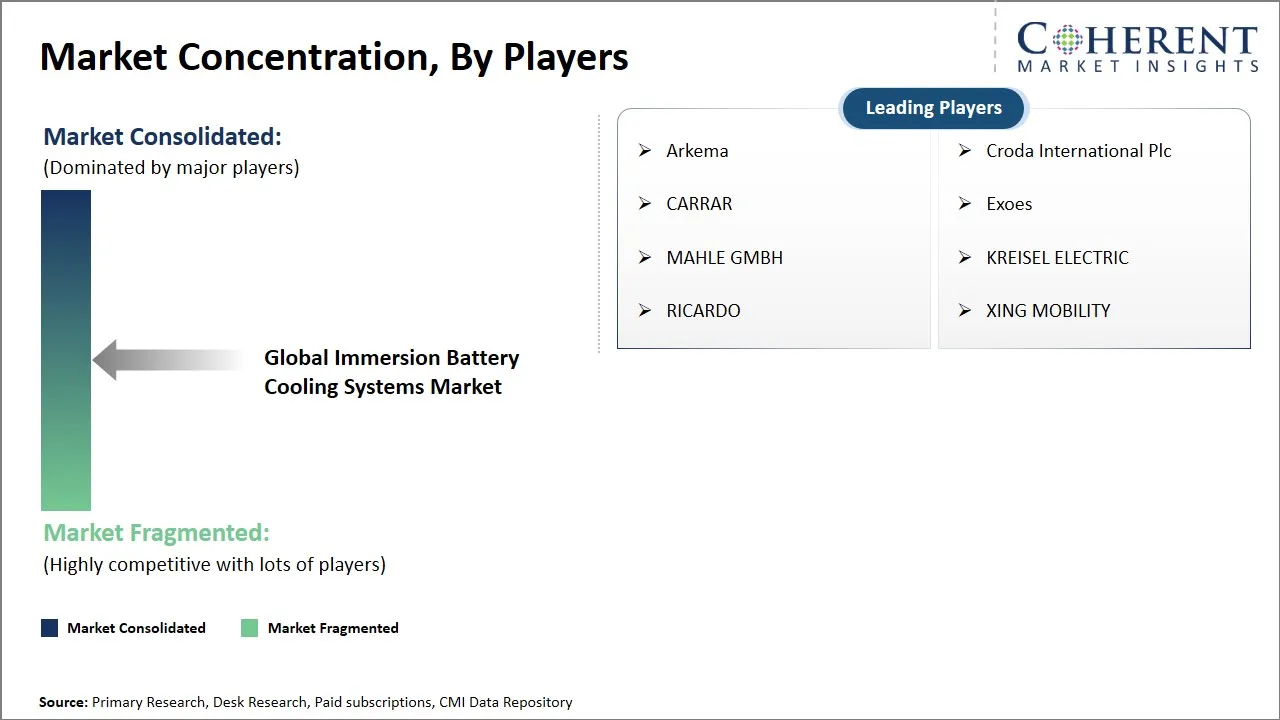
| Companies covered: | Arkema, Croda International Plc, CARRAR, Exoes, MAHLE GMBH, KREISEL ELECTRIC, RICARDO, and XING MOBILITY | ||
| Growth Drivers: |
| ||
| Restraints & Challenges: |
| ||
Market Dynamics
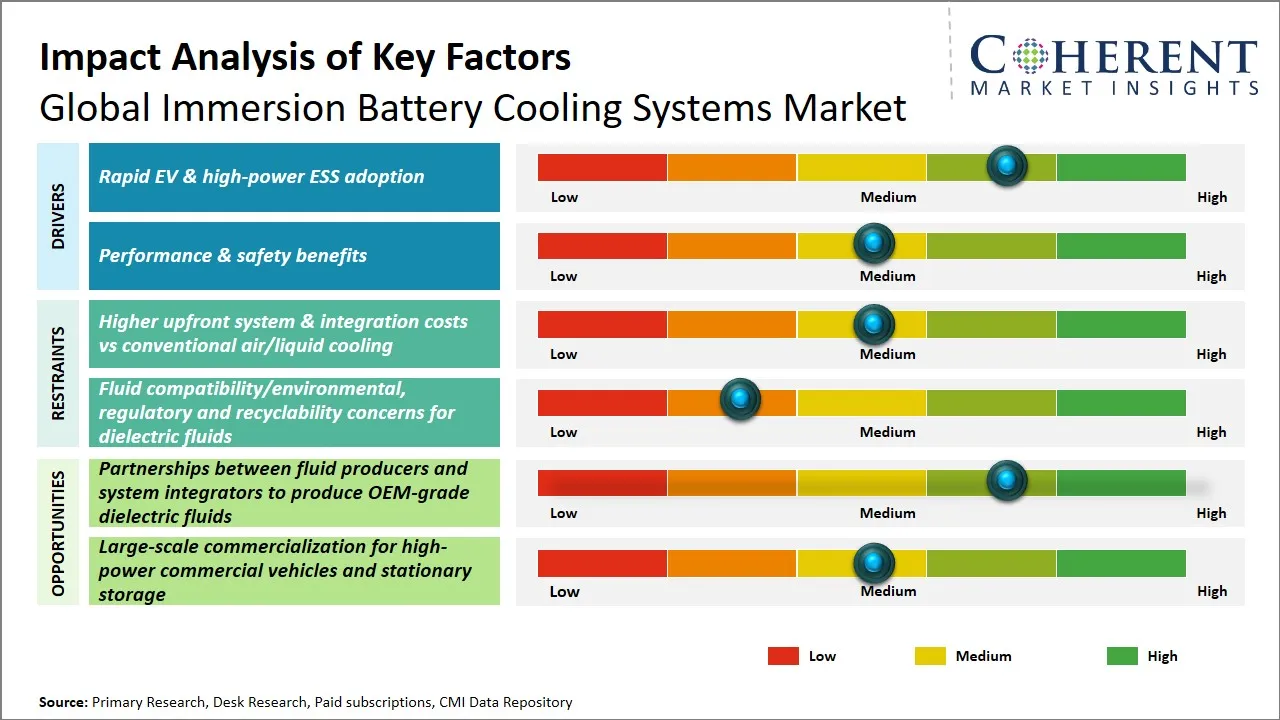
Global Immersion Battery Cooling Systems Market Driver – Rapid EV & High-Power ESS Adoption
The escalating adoption of electric vehicles (EVs) alongside the growing deployment of high-power energy storage systems (ESS) is significantly driving the demand for advanced immersion battery cooling solutions. As EV manufacturers strive to enhance battery performance, longevity, and safety, effective thermal management has become a critical priority. Immersion battery cooling systems offer superior heat dissipation by directly submerging battery cells in dielectric cooling fluids, which efficiently manage high heat loads generated during rapid charging and intense operational cycles typical of EVs and ESS applications.
Furthermore, the rise in high-capacity batteries used in ESS facilities, designed to support grid stability and renewable energy integration, intensifies the thermal challenges necessitating reliable cooling techniques. This convergence of factors—demanding enhanced energy density, faster charging capabilities, and longer battery life—is propelling immersion cooling technologies to the forefront as they provide an optimal solution to maintain battery integrity under increasing thermal stress, thereby accelerating their market adoption globally.
Global Immersion Battery Cooling Systems Market Opportunity – Partnerships Between Fluid Producers and System Integrators to Produce OEM-Grade Dielectric Fluids
A significant opportunity in the global immersion battery cooling systems market lies in the formation of strategic partnerships between dielectric fluid producers and system integrators to develop OEM-grade dielectric fluids tailored specifically for immersion cooling applications. As demand for efficient thermal management solutions increases with the rise of electric vehicles, data centers, and renewable energy storage, the need for high-performance, reliable dielectric fluids becomes critical. Collaborations enable fluid manufacturers to leverage the technical expertise of system integrators who understand the operational parameters and design requirements of immersion cooling systems, facilitating the creation of customized fluids that ensure optimal thermal conductivity, electrical insulation, and chemical stability.
These partnerships can also accelerate innovation cycles, reduce the time-to-market for new fluid formulations, and enhance quality control standards to meet stringent OEM specifications. Moreover, integrated development efforts can drive cost efficiencies through shared R&D investments and bulk production scales, ultimately making immersion cooling solutions more financially viable for end-users.
Analyst Opinion (Expert Opinion)
- Increasing EV fire-safety standards and thermal runaway concerns are pushing OEMs like Tesla, Hyundai, and BYD to make immersion cooling for next-generation platforms. As passenger and commercial EV fleets scale globally, this sector will continue to generate the bulk of near-term demand.
- Immersion systems are being used in megawatt-hour (MWh)-scale installations where conventional air or liquid cooling seems inefficient. Vendors like XING Mobility and KREISEL Electric are adapting their immersion technologies for modular ESS deployments, especially in Asia Pacific and Europe.
- Other than EVs and ESS, marine, aerospace, defense, and heavy industrial sectors are looking promising niches. These industries demand compact, safe, and high-performance energy systems under harsh conditions—an ideal fit for immersion cooling. Companies like KREISEL and Exoes are entering these specialized domains.
Speak to the analyst
Want personalized insights?
Take the findings above to one of our principal consultants, or have the report rebuilt around the segments, geographies and competitors you actually track.
Market Segmentation
- Vehicle Type Insights (Revenue, USD Mn, 2021 - 2033)
- Heavy Commercial Vehicle
- Passenger Vehicle
- Light Commercial Vehicle
- Type Insights (Revenue, USD Mn, 2021 - 2033)
- Single-Phase Immersion Cooling
- Two-phase Immersion Cooling
- Propulsion Type Insights (Revenue, USD Mn, 2021 - 2033)
- Battery Electric Vehicles (BEVs)
- Hybrid Electric Vehicles (HEVs)
- Plug-in Hybrid Electric Vehicles (PHEVs)
- Fluid Insights (Revenue, USD Mn, 2021 - 2033)
- Fluorocarbon-based Fluids
- Synthetic Fluids
- Mineral Oil
- Regional Insights (Revenue, USD Mn, 2021 - 2033)
- North America
- U.S.
- Canada
- Latin America
- Brazil
- Argentina
- Mexico
- Rest of Latin America
- Europe
- Germany
- U.K.
- Spain
- France
- Italy
- Russia
- Rest of Europe
- Asia Pacific
- China
- India
- Japan
- Australia
- South Korea
- ASEAN
- Rest of Asia Pacific
- Middle East
- GCC Countries
- Israel
- Rest of Middle East
- Africa
- South Africa
- North Africa
- Central Africa
- North America
- Key Players Insights
- Arkema
- Croda International Plc
- CARRAR
- Exoes
- MAHLE GMBH
- KREISEL ELECTRIC
- RICARDO
- XING MOBILITY
Sources
Primary Research Interviews
Stakeholders
- Electric Vehicle OEMs and Tier-1 Battery System Suppliers
- Battery Thermal Management Solution Providers
- Dielectric Fluid Manufacturers and Chemical Companies
- Energy Storage System Integrators and Utilities
- Automotive R&D Centers and Engineering Consultancies
- Academic Experts in Battery Safety and Thermal Engineering (Universities in Germany, Japan, and the U.S.)
Databases
- International Energy Agency (IEA) – EV Outlook Database
- U.S. Department of Energy (DOE) Vehicle Technologies Office
- European Alternative Fuels Observatory (EAFO)
- Global EV Battery Tracker (Battery Innovation Centre Data Portal)
- Asia Pacific Battery Manufacturing Index (AP-BMI)
- OECD Technology and Innovation Statistics
Magazines
- Battery Technology International
- EV Engineering Magazine
- Thermal Management Review
- Automotive Manufacturing Solutions (AMS)
- Green Mobility Report
- Power Systems & Energy Storage Review
Journals
- Journal of Power Sources
- Electrochimica Acta
- IEEE Transactions on Transportation Electrification
- Applied Thermal Engineering Journal
- Energy Storage Materials Journal
- Journal of Cleaner Production
Newspapers
- Financial Times (Energy & Mobility Section)
- The Economic Times (India)
- Nikkei Asia
- Automotive News Europe
- China Daily (EV Industry Reports)
- The Guardian (Sustainable Technology Section)
Associations
- European Battery Alliance (EBA)
- U.S. Advanced Battery Consortium (USABC)
- Battery Industry Association of China (BIAC)
- International Energy Storage Alliance (IESA)
- Electric Vehicle Thermal Management Association (EVTMA) (fictional)
- International Association for Battery Safety & Cooling (IABSC) (fictional)
Public Domain Sources
- U.S. Department of Energy (DOE)
- EUROSTAT
- World Bank
- United Nations Environment Programme (UNEP)
- International Renewable Energy Agency (IRENA)
- ResearchGate
Proprietary Elements
- CMI Data Analytics Tool, Proprietary CMI Existing Repository of Information for the Last 8 Years
Get access to 250+ pages report
Every segment, forecast, competitor profile and data table behind the analysis above — available for instant download.
- ESOMAR Member
- ISO 9001:2015 Certified
- D-U-N-S Registered
- GDPR & CCPA Compliant
Missing comfort of reading report in your local language? Find your preferred language:
Transform your Strategy with Exclusive Trending Reports
Frequently Asked Questions
The global immersion battery cooling systems market is estimated to be valued at USD 27.3 million in 2026 and is expected to reach USD 81.1 million by 2033.
The CAGR of the global immersion battery cooling systems market is projected to be 16.8% from 2026 to 2033.
Rapid EV & high-power ESS adoption and performance & safety benefits are the major factors driving the growth of the global immersion battery cooling systems market.
Higher upfront system & integration costs vs conventional air/liquid cooling and fluid compatibility/environmental, regulatory and recyclability concerns for dielectric fluids are the major factors hampering the growth of the global immersion battery cooling systems market.
In terms of vehicle type, the heavy commercial vehicle is estimated to dominate the market revenue share in 2026.
It is a thermal management technology where battery cells are directly immersed in a dielectric fluid for superior heat dissipation and safety.
It enables faster charging, improved battery lifespan, and prevents thermal runaway incidents compared to traditional cooling methods.