

Global Incense Burner Market Size and Forecast – 2026-2033
The global incense burner market is estimated to be valued at USD 881.2 Mn in 2026 and is expected to reach USD 1,128.8 Mn by 2033, exhibiting a compound annual growth rate (CAGR) of 3.6% from 2026 to 2033.
Key Takeaways of the Incense Burner Market
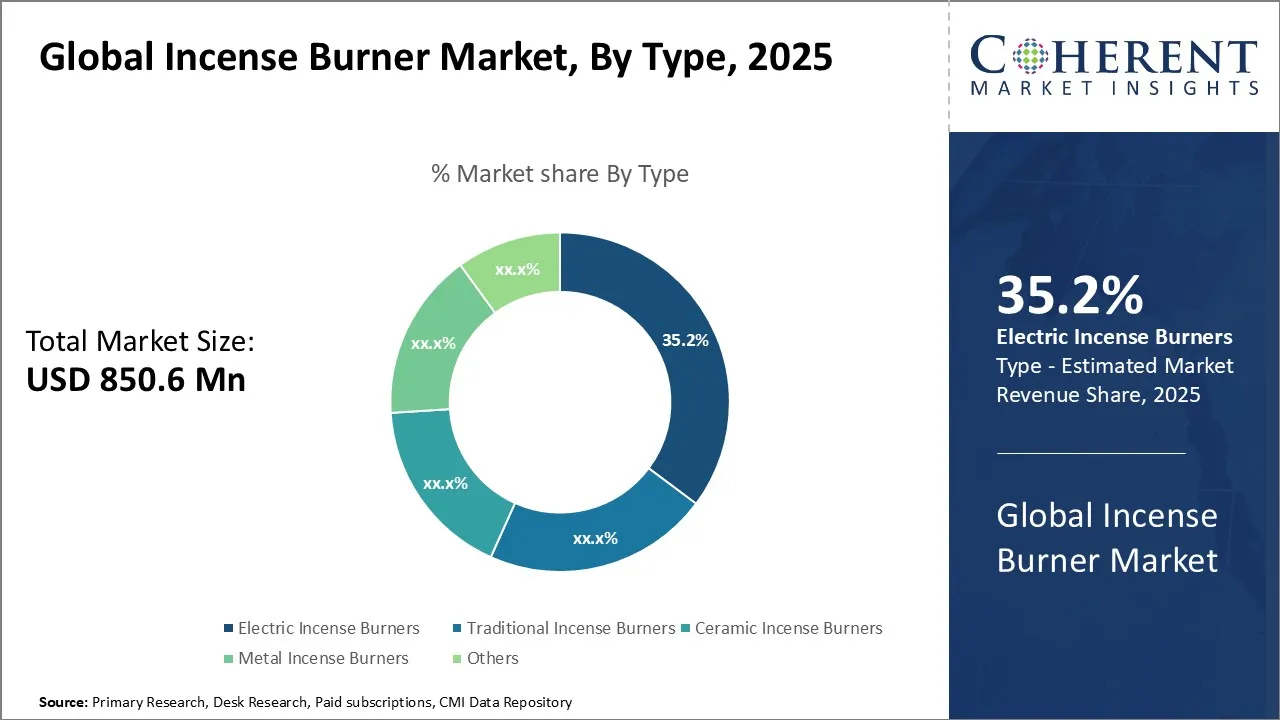
- The electric incense burners segment is expected to capture 36.2% of the market share in 2026.
- The wood segment is projected to account for 26.7% of the market share in 2026.
- The residential segment is projected to hold 35.6% share in 2026.
- Europe is set to lead the global incense burner market in 2026 with a 31.1% share. Asia Pacific, with an estimated 19.5% share in 2026, is projected to be the fastest-growing region.
Market Overview
A market trends indicate a growing preference for eco-friendly and artisanal incense burners made from sustainable materials. Additionally, the integration of modern design aesthetics with traditional functionality is driving market demand. Consumers are increasingly seeking products that combine spiritual benefits with home decor appeal, supported by rising awareness of aromatherapy and mindfulness practices. These factors, coupled with expanding e-commerce channels, are fostering steady the market expansion.
Currents Events and their Impact
Current Events | Description and its Impact |
Tightening indoor air quality regulations in major cities |
|
Growth of electric and USB-powered aroma devices |
|
Segmental Insights
- Current Industry Events of 2026
- Market Size Estimation
- Regional Breakdown
- Competitive Landscape
- Customer Intelligence
- Segmental Analysis
- Pricing Analysis
- Key Market Drivers, Challenges & Future Trends
- Customized Insights Section
Incense Burner Market Insights, by Type - Electric Incense Burners Segment Dominates the Market Driven by Convenience and Innovation
The electric incense burners segment is projected to hold 36.2% of the market share in 2026, due to its blend of convenience, safety, and contemporary appeal. With lifestyles turning out to be more fast-paced, there has been an inclination among the consumers towards products that are easier to use without a reduction in sensory perception. Electric incense burners are a response to these changing tastes, as they do not require the use of traditional combustion techniques with open flames or charcoal, which decrease the risk of fires and occupational exposure to smoke.
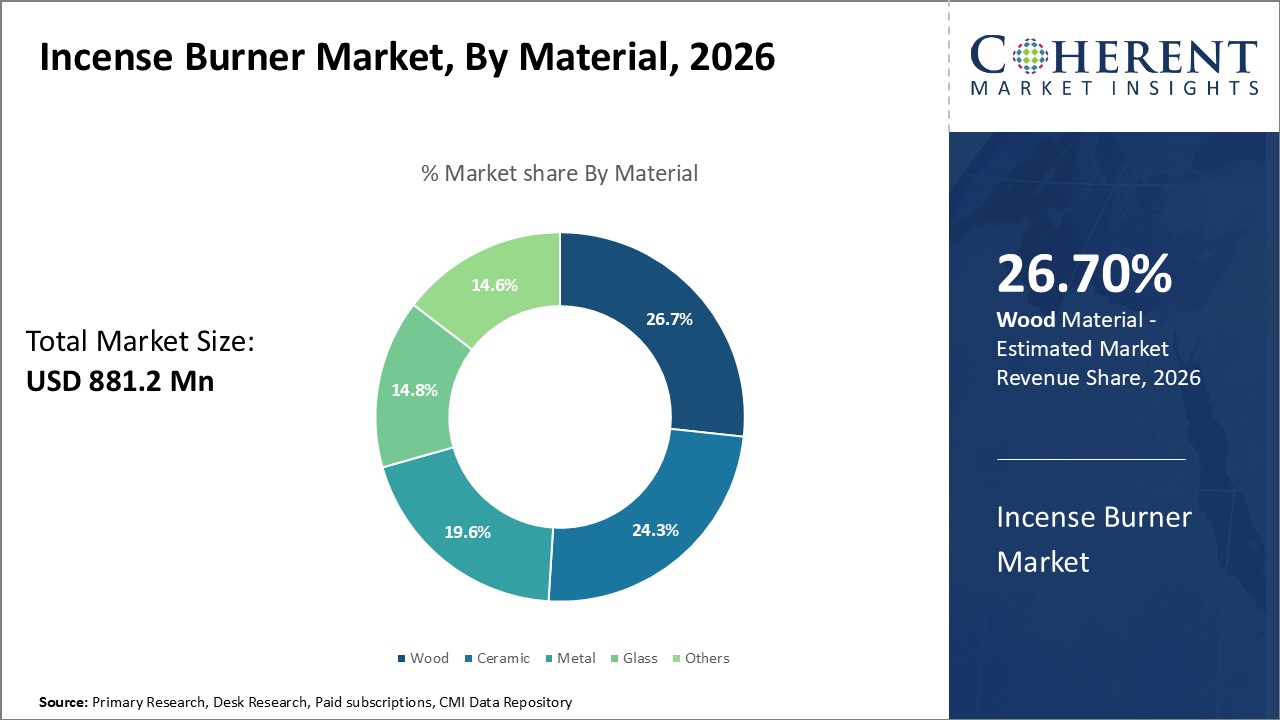
Incense Burner Market Insight, by Material – Wood Segment Dominates Fueled by Cultural Significance and Craftsmanship
The wood segment is expected to capture 26.7% of the market share in 2026, propelled by its deep-rooted cultural significance and aesthetic appeal. Wood incense burners are part of numerous spiritual, religious, and traditional activities across the globe and, therefore, are very popular among buyers that want to experience the authenticity of the products. The wooden burners with their natural texture, warmth and craftsmanship elicit the feeling of heritage and ritual that digital or man-made substitutes cannot easily reproduce.
The need to use wooden incense burners is motivated by the level of appreciation by the consumers towards the artisanism that is used in making the incense burners, the organic nature of the wooden incense burners that add value to the sensory and visual experience of using incense. Wooden burners, in contrast to metal or ceramic, may include detailed carvings and hand-made details, which can be functional and are also frequently ornamental. This is a feature that is very attractive to the users and collectors who seek to have a combination of functionality and decorations to their homes and in areas that incorporate natural or rustic designs.
Incense Burner Market Insights, by Application – Residential Segment Dominates the Market Driven by Rising Home Wellness Trends
The residential segment is projected to account for 35.6% of the market share in 2026, underpinned by increasing consumer interest in home wellness and personalized self-care environments. Since people spend more time at home, especially due to recent tendencies in remote work and mindfulness, the emphasis on the formation of comfortable, fragranced environments conducive to relaxation, clear thinking, and the reduction of stress is increasingly high. Incense burners are highly suitable to this change of lifestyle; it is a convenient tool that can give its users an option to make their living environments better.
Regional Insights
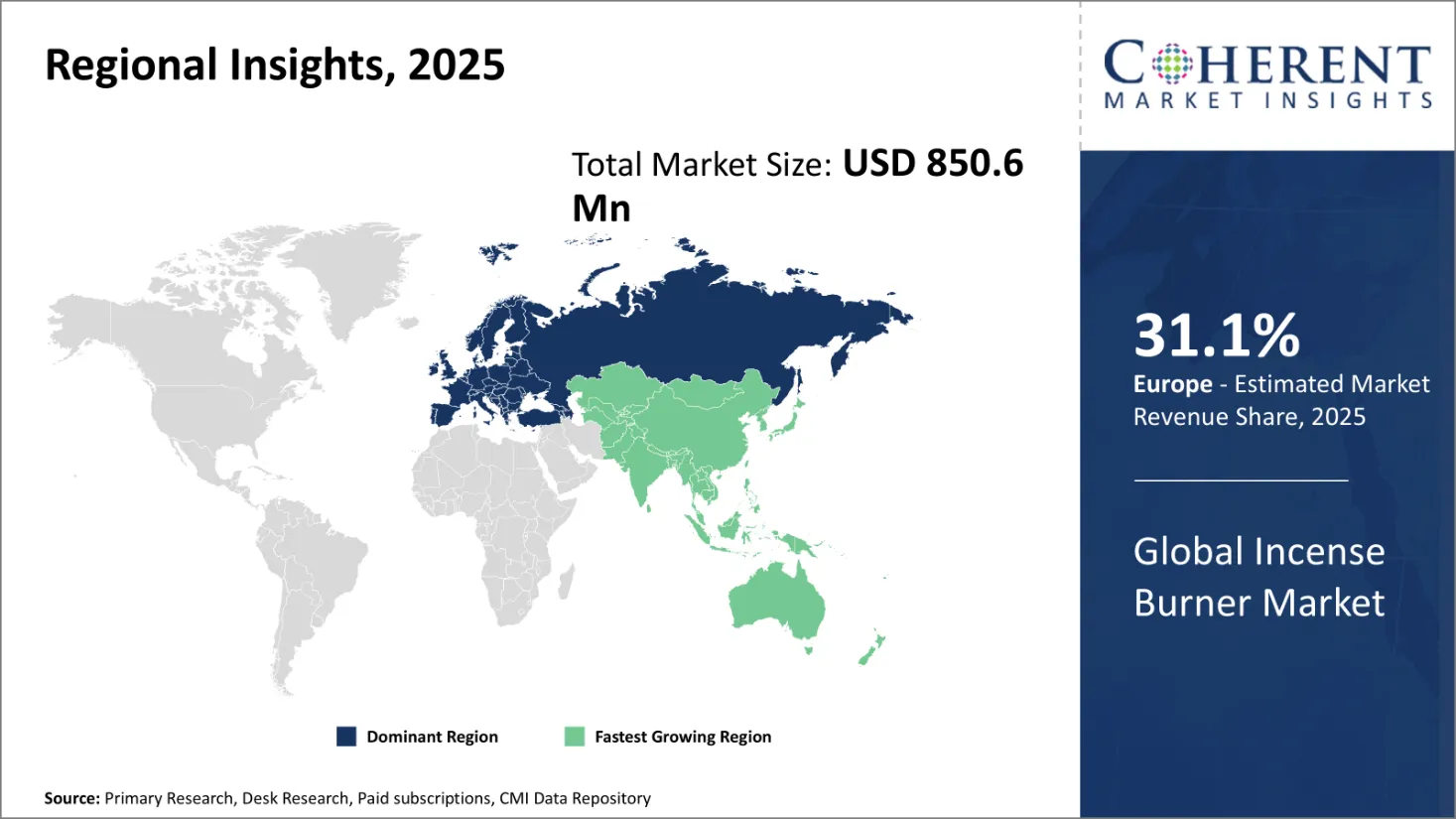
Europe Incense Burner Market Analysis and Trends
The Europe region is projected to lead the market with a 31.1% share in 2026, due to the increasing consumer preference towards the improvement of their homes, wellness, and high-end lifestyle adornment. The local rise in the usage of aromatherapy and holistic wellness systems, especially in such states as Germany, France, and the U.K., has increased interest in aesthetically designed and environmentally friendly incense burners. This is in tandem with the growing trend of sustainable and crafted home accessories and this supports the overall sustainability theme of Europe consideration, therefore, the utilization of natural substances like ceramic, glass, and recycled metals in the production of burners.
Asia Pacific Incense Burner Market Analysis and Trends
The Asia Pacific region is expected to exhibit the fastest growth in the market contributing 19.5% share in 2026, driven by deep-rooted cultural practices, religious traditions, and widespread usage in daily rituals, meditation, and wellness activities. Countries like India, China and Japan have a high demand because the countries use incense burners extensively in their temples, homes and also in their commercial areas. The area enjoys a well-developed supply chain network that includes the suppliers of raw materials, artisans, and mass producers. The policies of the governments in such countries as India promote and preserve traditional crafts, which is helpful to local manufacturers.
Also, the fact that there are big players like Nippon Kodo (Japan), Cycle Pure Agarbathies (India) and Morning Star Enterprise (India) is also influential by providing a great variety of products that are designed to meet the needs of domestic and export market. The markets are strengthened because trade dynamics have favored Asia Pacific as major exporters to the rest of the regions in the world.
Incense Burner Market Outlook for Key Countries
India Incense Burner Market Analysis and Trends
The market of incense burners in India is still on top because it has a long relationship in the use of incense both in the spiritual and secular world. The rich domestic production platform enjoys the extended accessibility of raw materials including bamboo and aromatic resins. The government programs aimed at stimulating cottage industry owners and handicraft help to empower small-scale manufacturers and allow them to offer various products at varying prices, such as cheap clay burners, and expensive brass and ceramic products. Cycle Pure Agarbathies and Satya Sai Baba Nag Champa, which are known as leading companies, take advantage of their brands and export capacity, which strengthen the role of Indias as a cornerstone in the international market of incense burners.
China Incense Burner Market Analysis and Trends
The market of incense burners in China is characterized by a dynamic development with the complex of production and an increasing number of city consumers who need wellness and aromatherapy. Modern designs and traditional motifs are combined and are attractive to both local and foreign customers. Huge subsidies and exhibitions by the government to support traditional cultural products enhance the market visibility. Important stakeholders like the Shenzhen Shining Incense Manufacture and Guangzhou Suizhou Crafts Co. focuses more on innovation and export relationship and elevates the China position in the world supply chain.
Japan Incense Burner Market Analysis and Trends
Japan continues to maintain a prominent role with its niche market characterized by a strong emphasis on craftsmanship and premium quality. Incense burners from Japan often serve ceremonial, cultural, and aesthetic purposes, blending traditional artistry with contemporary design. The government’s cultural preservation policies actively support small artisan workshops, while companies like Nippon Kodo focus on maintaining heritage and expanding global reach. Japan’s meticulous quality standards set benchmarks that influence product development internationally.
U.S. Incense Burner Market Analysis and Trends
The U.S. incense burner market reflects growing consumer interest in holistic wellness, meditation, and alternative therapies, which has elevated demand for incense burners and related products. While domestic manufacturing is limited, a diverse range of imported products from Asia Pacific and Europe fills market gaps. Retailers and online platforms promote artisanal and eco-friendly incense burners, catering to niche audiences. Key importers and distributors include companies such as Incense Warehouse and Shoyeido North America, who facilitate access to premium Japanese and Indian products, expanding the profile and acceptance of incense burners in Western lifestyles.
Macro and Micro Economic Factors Impacting the Incense Burner Market Growth
Macro-Economic Factors
- Rising Global Wellness and Holistic Living: Increasing consumer awareness and interest in wellness practices such as aromatherapy, meditation, and mindfulness drive the demand for incense burners used in these practices.
- Economic Growth and Disposable Income: Growing middle-class populations and higher disposable incomes allow more spending on lifestyle and wellness products, boosting incense burner sales, especially in emerging markets.
- Urbanization: Increased urbanization supports the growth by expanding the consumer base seeking spiritual, wellness, and home décor products.
- E-Commerce Expansion: The rise of online retail platforms enables wider market reach, convenience, and access to diverse incense burner designs, supporting market expansion.
Micro Economic Factors
- Consumer Behavior and Preferences: Shifts toward aromatherapy, natural and organic products, and aesthetic home decor strongly influence purchases. Increasing preference for eco-friendly materials like ceramics and metals also impacts product design and market growth.
- Technological Innovations: Introduction of electric and smart incense burners caters to convenience and safety-conscious consumers, broadening the product range and attracting tech-savvy buyers.
- Supply Chain and Production Costs: Availability and cost of raw materials such as wood, bamboo, ceramics, and metals affect production scalability and pricing strategies.
- Regulatory and Health Concerns: Stringent environmental regulations regarding emission of volatile compounds and consumer awareness of indoor air quality pose challenges, requiring market adaptation toward safer and compliant products.
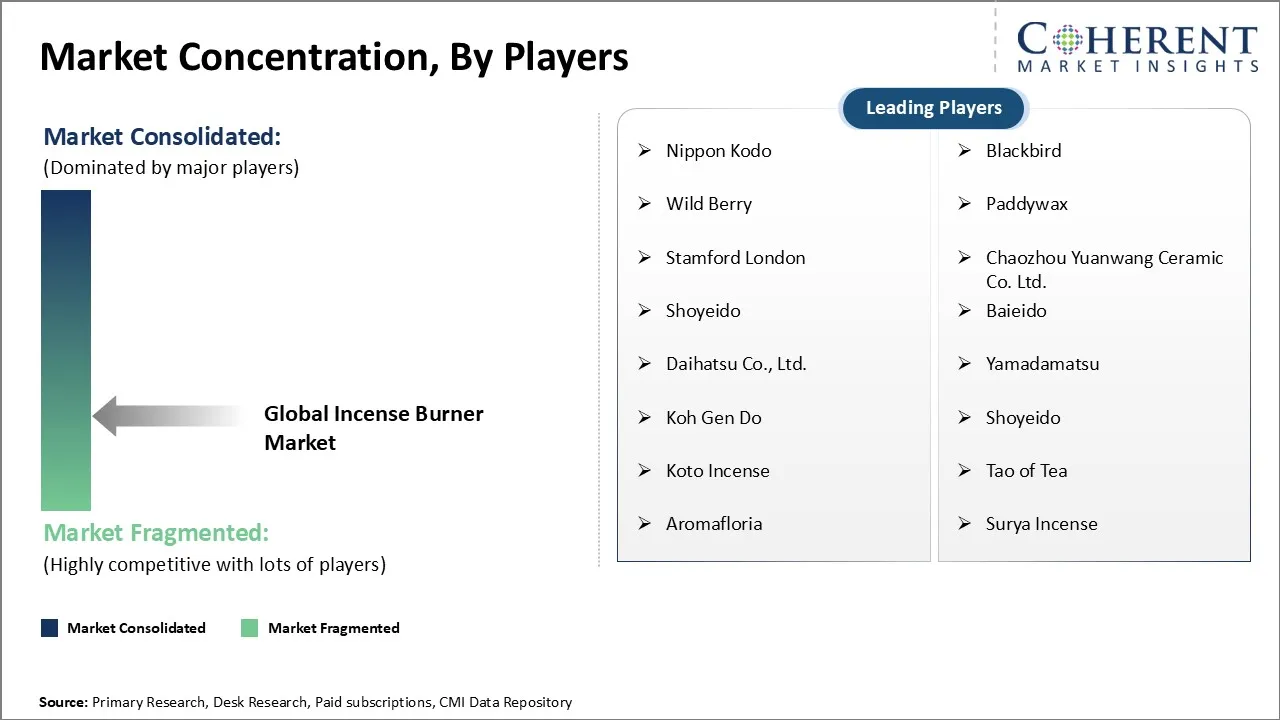
Market Players, Key Development, and Competitive Intelligence
Key Development
- In March 2025, LoveNspire introduced a new collection of handmade incense burners, combining traditional craftsmanship with modern design to cater to contemporary consumer preferences.
Top Strategies Followed by Global Incense Burner Market Players
- The established market players use their huge resources in the sector to keep and expand their influence. One of the key options is to make heavy investment in research and development (R&D) to develop high-performance products that are responsive to the changing tastes and preferences of the consumers, including the use of sustainable materials and multifunctional designs.
- For example, Nippon Kodos Kayuragi Series combines the current minimalist design with sustainable packaging to appeal to the young and fashionable consumers. The fact that Shoyeidos incorporates the old Kyoto craftsmanship with an intelligent-temperature burners proves how the old brand can balance the cultural authenticity with innovation.
- The middle market in the incense burner industry adopts alternative strategy with their focus being on the provision of affordable solutions that are decent in quality and affordable to attract the price-sensitive consumers. This segment also appreciates the need of offering dependable products without interfering with the standard performance features thus capturing a large consumer base in emerging and developed markets. In an effort to increase its competitiveness, mid-tier firms tend to enter into strategic alliances and joint ventures that would help them to increase their production capacity and gain technological expertise.
- An example of inexpensive aromatherapy devices, including Aromafumes Natural Mist Diffuser Series, is sold through Amazon and health-store chains in Europe and the U.S. and is manufactured at low production costs, with support of artisan cooperatives.
- Small scale players are more agile in that they cut out a niche in the incense burner market. They often play the game of specializing their products, or their design, which helps them stand out with respect to bigger companies. These companies are also able to stay competitive and attractive to the niche consumer groups that are interested in customized or technologically advanced incense burners by implementing the latest technologies like 3D printing, integration of smart sensors, or the use of environment-friendly materials.
Market Report Scope
Incense Burner Market Report Coverage
| Report Coverage | Details | ||
|---|---|---|---|
| Base Year: | 2025 | Market Size in 2026: | USD 881.2 Mn |
| Historical Data for: | 2020 To 2024 | Forecast Period: | 2026 To 2033 |
| Forecast Period 2026 to 2033 CAGR: | 3.6% | 2033 Value Projection: | USD 1,128.8 Mn |
| Geographies covered: |
| ||
| Segments covered: |
| ||
| Companies covered: | Nippon Kodo, Blackbird, Wild Berry, Paddywax, Stamford London, Chaozhou Yuanwang Ceramic Co. Ltd., Shoyeido, Baieido, Daihatsu Co., Ltd., Yamadamatsu, Koh Gen Do, Shoyeido, Koto Incense, Tao of Tea, Aromafloria, and Surya Incense | ||
| Growth Drivers: |
| ||
| Restraints & Challenges: |
| ||
Incense Burner Market Dynamics
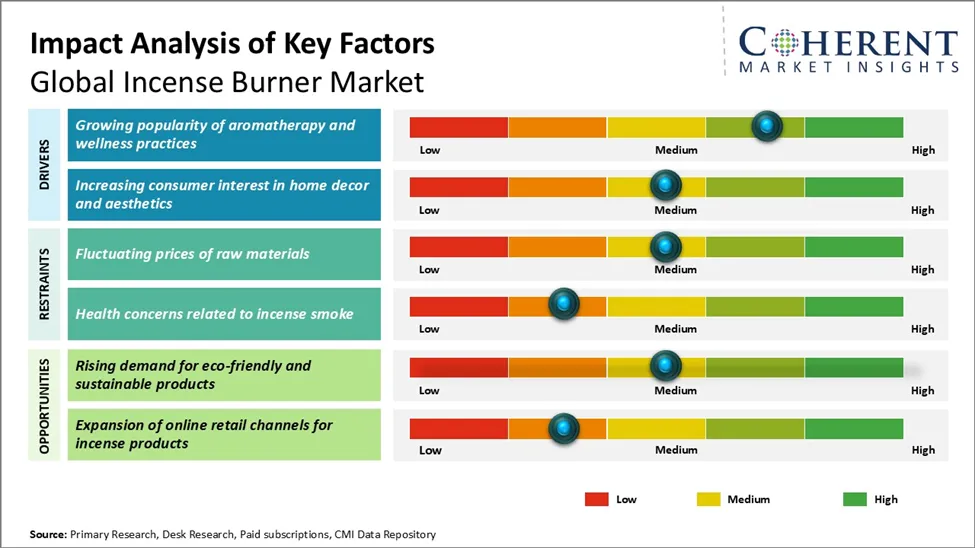
Incense Burner Market Driver - Growing Popularity of Aromatherapy and Wellness Practices
The increased interest in the health and wellness world in the world has greatly increased the demand of incense burners since the products are directly linked with aromatherapy and conscious living habits. The growing interest of consumers in natural and traditional means of improving mental health and stress reduction, as well as sleep quality, has made incense burners a major tool in the daily routine of self-care. Sandalwood, lavender, and jasmine are some examples of aroma products that come with incense burners to create relaxing ambiances thus can be used in homes, yoga studios, spa, and meditation centers. Moreover, the increased tendency of incorporating sense-making into daily life makes people pursue sensorial experiences that help one achieve relaxation and mindfulness.
An example is in yoga and spa facilities in India and Southeast Asia, backflow incense burners are incorporated into the sessions because they help create a calming atmosphere that helps to focus and maintain emotional equilibrium. The Backflow Incense Burner, Meditate Relax 17.5 cm Incense Burner, and other products, are becoming popular in wellness areas like yoga studios, spas, and home meditation areas where the aesthetic experience of flowing incense balances the sensorial experience of aromatherapy.
Incense Burner Market Opportunity - Rising Demand for Eco-Friendly and Sustainable Products
The increasing environmental conservation and sustainability focus in the world is also generating a strong opportunity in the global incense burner market of the environmentally friendly and sustainable product. There is a growing trend of consumers shifting to products with less impact on the environment and manufacturers are producing incense burners with biodegradable, recyclable and natural materials, including bamboos, clay, and coconut shells. The increase in this trend is supported by the growing awareness of plastic pollution and carbon footprint caused by conventional manufacturing operations.
Analyst Opinion (Expert Opinion)
- Incense burner market is undergoing a renewal, as it is stimulated by the increased interest in wellness and mindfulness activities. The Global Aromatherapy Conference (2023) and the International Home and Gift Fair (2022) showed some of the future trends, with such brands as Paddywax and Himalayan Glow developing to gain the interests of consumers.
- The new launch of eco-friendly, handcrafted incense burners by Paddywaxes satisfies the current trend of home decor products that are sustainable. Debates during these conferences were on the significance of cultural storytelling and craftsmanship, where consumers are demanding products that can be related to personal values and heritage. Nonetheless, the threats that were often cited as a possible growth inhibitor in the market included low-quality imports and unstable prices of raw materials.
- Firms with a focus on quality and authenticity improving their online visibility will probably succeed. Also, using social media to demonstrate the sensory experiences related to burning incense will also increase consumer involvement. Finally, the growth of the incense burner markets will depend on its capacity to combine both traditional and contemporary design, consider the issue of quality, and appeal to the consumers who change their needs in wellness and sustainability.
Speak to the analyst
Want personalized insights?
Take the findings above to one of our principal consultants, or have the report rebuilt around the segments, geographies and competitors you actually track.
Market Segmentation
- Type Insights (Revenue, USD Mn, 2021 - 2033)
- Electric Incense Burners
- Traditional Incense Burners
- Ceramic Incense Burners
- Metal Incense Burners
- Others
- Material Insights (Revenue, USD Mn, 2021 - 2033)
- Wood
- Ceramic
- Metal
- Glass
- Others
- Application Insights (Revenue, USD Mn, 2021 - 2033)
- Residential
- Commercial
- Others
- Regional Insights (Revenue, USD Mn, 2021 - 2033)
- North America
- U.S.
- Canada
- Latin America
- Brazil
- Argentina
- Mexico
- Rest of Latin America
- Europe
- Germany
- U.K.
- Spain
- France
- Italy
- Russia
- Rest of Europe
- Asia Pacific
- China
- India
- Japan
- Australia
- South Korea
- ASEAN
- Rest of Asia Pacific
- Middle East
- GCC Countries
- Israel
- Rest of Middle East
- Africa
- South Africa
- North Africa
- Central Africa
- North America
- Key Players Insights
- Nippon Kodo
- Blackbird
- Wild Berry
- Paddywax
- Stamford London
- Chaozhou Yuanwang Ceramic Co. Ltd.
- Shoyeido
- Baieido
- Daihatsu Co., Ltd.
- Yamadamatsu
- Koh Gen Do
- Shoyeido
- Koto Incense
- Tao of Tea
- Aromafloria
- Surya Incense
Sources
Primary Research Interviews
- Product Development Manager – Prominent Incense Burner Manufacturer
- Global Sourcing Head – Major Home Fragrance Brand
- Procurement Lead – Leading Decorative Homeware Retailer
- Sustainability Officer – Industry Certification Organization (Eco Homewares)
Stakeholders
- Manufacturers
- End-use Sectors
- Residential (Aromatherapy, Home Décor, Meditation)
- Commercial (Spas, Yoga Studios, Hotels, Religious Institutions)
- Regulatory & Certification Bodies
- E-commerce Platforms and Retailers
- Technology Integrators: Smart home product automation providers
Databases
- UN Comtrade Database
- India Import Export (EXIM) Database
Magazines
- Home Fragrance News – Trends in incense products and burners
- Decorative Living – Consumer interest in decorative incense burners
- Retail Home & Lifestyle – Retail and e-commerce updates for home fragrances
- Global Aromatherapy Insights – Incense and related market news
Journals
- International Journal of Aromatherapy – Health and wellness aspects of incense usage
- Journal of Sensory Studies – Sensory impact and user experience with incense products
- Journal of Material Culture – Cultural significance and trends in incense burner design
- Journal of Cleaner Production – Sustainable sourcing and manufacturing of aroma devices
Newspapers
- The Times of India – Regional production updates, incense exporter news
- South China Morning Post – Asia-Pacific incense market trends
- The Guardian – Consumer wellness trends impacting incense sales
- Nikkei Asia – Growth of home fragrance demand
Associations
- World Fragrance Association
- International Federation of Aromatherapists
- Home Fragrance Industry Consortium
- Asia-Pacific Incense Producers Council
Public Domain Sources
- World Customs Organization – Commodity classification for incense burners
- European Commission – Product safety and import guidelines for home leads
- US Consumer Product Safety Commission (CPSC) – Safety standards for home fragrance devices
- World Health Organization – Indoor air quality and incense use
Proprietary Elements
- CMI Data Analytics Tool, Proprietary CMI Existing Repository of information for last 8 years.
Get access to 250+ pages report
Every segment, forecast, competitor profile and data table behind the analysis above — available for instant download.
- ESOMAR Member
- ISO 9001:2015 Certified
- D-U-N-S Registered
- GDPR & CCPA Compliant
Missing comfort of reading report in your local language? Find your preferred language:
Transform your Strategy with Exclusive Trending Reports
Frequently Asked Questions
The global incense burner market is estimated to be valued at USD 881.2 Mn in 2026 and is expected to reach USD 1,128.8 Mn by 2033.
The CAGR of the global incense burner market is projected to be 3.6% from 2026 to 2033.
Growing popularity of aromatherapy and wellness practices and increasing consumer interest in home decor and aesthetics are the major factors driving the growth of the global incense burner market.
Fluctuating prices of raw materials and health concerns related to incense smoke are the major factors hampering the growth of the global incense burner market.
In terms of type, the electric incense burners segment is estimated to dominate the market revenue share in 2026.
Nippon Kodo, Blackbird, Wild Berry, Paddywax, Stamford London, Chaozhou Yuanwang Ceramic Co. Ltd., Shoyeido, Baieido, Daihatsu Co., Ltd., Yamadamatsu, Koh Gen Do, Shoyeido, Koto Incense, Tao of Tea, Aromafloria, and Surya Incense are the major players.
Europe is expected to lead the global incense burner market in 2026.